
Essential AI Voice Assistants: Navigating ChatGPT's Sponsored Links
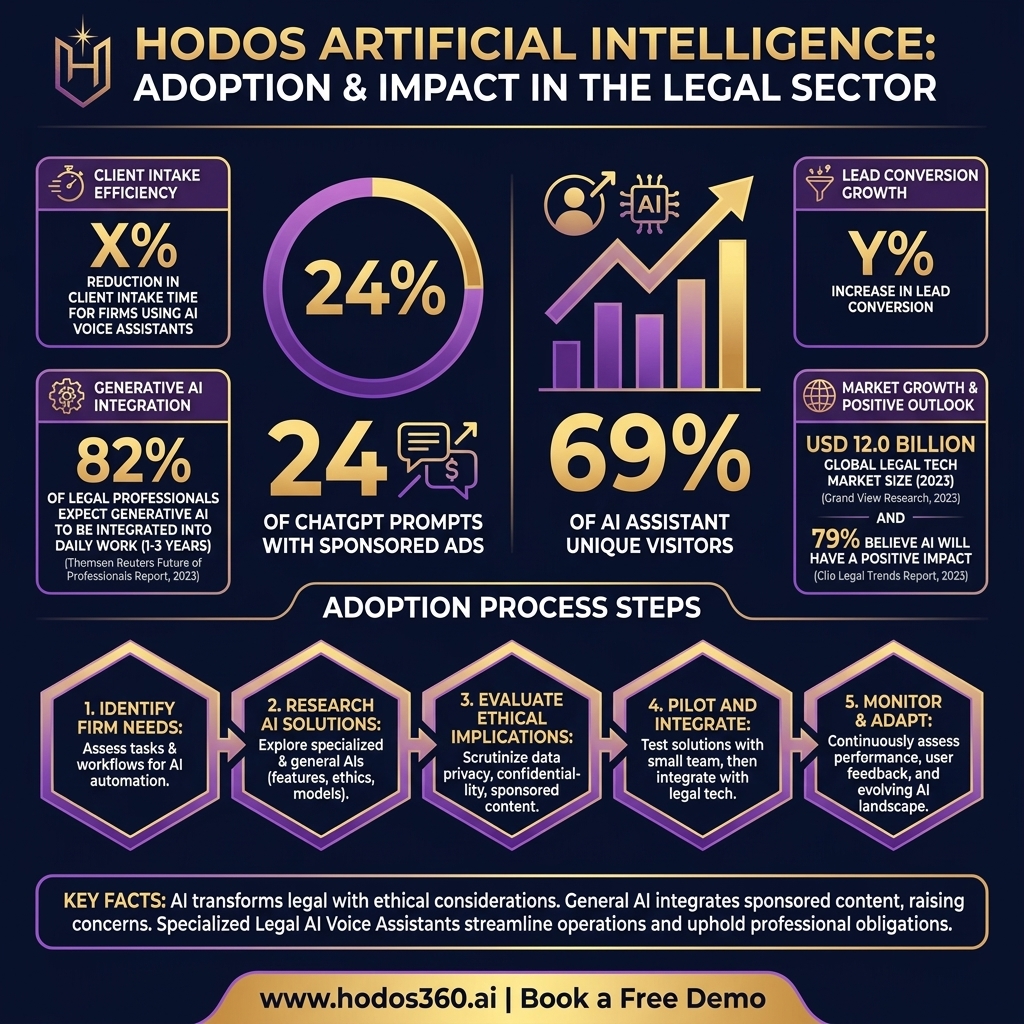
The legal landscape is perpetually reshaped by technological advancements, and few innovations have captured the imagination—and concern—of professionals quite like artificial intelligence. Recently, a pivotal development emerged from the general AI sphere that casts a long shadow on its broader application: the integration of sponsored content within conversational AI. According to a trending Stock Titan report, sponsored ads appeared in a significant 24% of hotel-related ChatGPT prompts by May 2026. This data, linked by Comscore's opt-in panel to site visits and engagement, reveals a clear commercial trajectory for platforms like OpenAI’s ChatGPT, which represented about 69% of AI-assistant unique visitors during the period. This shift from pure information retrieval to monetized recommendations creates an undeniable tension, forcing legal professionals to critically assess where and how AI Voice Assistants fit into their ethical obligations and client-centric practices.
While consumers increasingly encounter sponsored links and advertising options within their daily AI interactions, law firms are simultaneously exploring how specialized AI Voice Assistants can ethically streamline operations, enhance client intake, and provide 24/7 support. The stark contrast between a general-purpose AI testing commercial models and a purpose-built legal AI assistant designed for fiduciary duties highlights a crucial divergence. For managing partners and legal tech innovators, understanding this evolving ecosystem is not merely about adopting new tools; it's about safeguarding client trust, ensuring compliance, and strategically positioning their firms in an AI-driven future where the line between helpful advice and paid promotion can easily blur. As the market for AI assistants opens up to more independent options, firms must discern which solutions truly serve their professional mandate.
The New Frontier of Conversational AI: Beyond Generic Prompts
The evolution of conversational AI, exemplified by platforms like ChatGPT, marks a significant shift from its origins as a research tool to a formidable commercial entity. Initially lauded for its ability to generate human-like text and answer complex queries, the introduction of sponsored links within its responses signals a new era of monetization. The Comscore analysis, indicating that sponsored-ad presence increased from 6% in March 2026 to 24% by May for hotel-related prompts, underscores a deliberate strategy by OpenAI to integrate advertising into user interactions. For the average user, this might simply be a new way to discover products or services. However, for the legal industry, where impartiality, confidentiality, and professional integrity are non-negotiable, the implications are profound. Imagine a client seeking legal advice from an AI assistant, only to be subtly directed towards a service provider with a sponsored listing—a scenario fraught with ethical hazards that demand vigilance from hoteliers and legal practitioners alike.
This development compels law firm owners and attorneys to reconsider the role of generic AI platforms in their practice. Learn more about AI Marketing: The Ultimate Shift for Law Firms. While the accessibility and broad capabilities of tools like ChatGPT are appealing, their inherent design for monetization through ads, particularly when testing new options, makes them unsuitable for sensitive legal applications. The risk of inadvertently endorsing a sponsored service, or of clients perceiving a lack of objectivity, runs counter to the fundamental principles of legal ethics. As these platforms continue to expand their user base and integrate more ad options, the need for specialized, ethically designed AI Voice Assistants for law firms becomes not just a matter of efficiency, but of professional imperative. The ability of users to distinguish between unbiased information and paid placements is critical, especially when the stakes involve legal rights and responsibilities.
The Blurred Lines of AI-Driven Recommendations
The ethical quandary deepens when AI-driven recommendations are influenced by commercial interests. When a user asks an AI assistant for information, there's an inherent expectation of neutrality and helpfulness. The introduction of sponsored content blurs this line, making it difficult for the user to discern whether a suggestion is genuinely the 'best' option or simply the one that paid to appear. This lack of transparency can lead to deceptive practices, particularly in industries where trust is paramount. Learn more about AI Voice Calls: Ultimate Efficiency for Law Firms. For example, if a general-purpose AI assistant were to recommend a specific expert witness or a legal research tool based on a sponsored link rather than objective merit, it could compromise the integrity of legal counsel. The legal profession, guided by stringent ethical codes, must be acutely aware of this distinction and ensure that any AI tools used in practice uphold the highest standards of impartiality and disclosure. The responsibility falls on firms to understand how these links appear and influence choices.
AI Voice Assistants in Legal: A Paradigm Shift for Client Engagement
In stark contrast to the commercialization trends of general AI, specialized AI Voice Assistants for law firms represent a paradigm shift focused purely on enhancing client engagement and operational efficiency within an ethical framework. These dedicated platforms are engineered to address the specific needs of a legal practice, offering services like 24/7 phone answering, ensuring no potential client call goes unanswered. They excel at lead qualification, intelligently routing inquiries to the appropriate legal team member or practice area, and seamlessly booking appointments based on attorney availability. Furthermore, with multilingual support, these AI Voice Assistants break down communication barriers, serving a diverse client base with ease and professionalism. The core value proposition here is not about monetizing user interactions, but about optimizing the firm's ability to serve clients effectively and ethically. This allows law firms to focus on delivering high-quality legal services, knowing their initial client interactions are handled with precision and care, unlike the general options available to hoteliers.
Consider a scenario where a prospective client calls a law firm after hours. Learn more about Autonomous AI Agents: Essential for Law Firms' Future. Instead of reaching voicemail, they are greeted by an AI Voice Assistant that can qualify their need, gather essential information, explain the firm's relevant services, and even schedule an initial consultation for the next business day. This level of responsiveness significantly improves client satisfaction and lead conversion rates, providing a competitive edge in a demanding market. Firms like HODOS 360 are at the forefront of this innovation, developing AI-powered legal workflows that integrate seamlessly with existing case management and client intake systems. By deploying such specialized AI, law firms can ensure consistent, professional, and unbiased interactions from the very first touchpoint, establishing trust and efficiency without the ethical compromises associated with ad-supported AI. Discover how specialized AI Voice Assistants can ethically transform your firm's client interactions.
- ✓24/7 Client Answering & Support: Ensures no call is missed, providing immediate assistance and capturing leads around the clock.
- ✓Automated Lead Qualification & Nurturing: Intelligently assesses client needs and routes them to the correct department or attorney, improving conversion rates.
- ✓Seamless Appointment Scheduling: Integrates with calendars to book consultations efficiently, reducing administrative burden.
- ✓Multilingual Communication Capabilities: Broadens client reach by supporting various languages, enhancing accessibility and inclusivity.
- ✓Enhanced Client Data Security & Privacy: Operates within secure, compliant environments, safeguarding sensitive legal information.
- ✓Consistent Brand Voice & Professionalism: Maintains a unified and professional communication standard across all client interactions.
- ✓Reduced Administrative Overhead: Frees up staff from repetitive tasks, allowing them to focus on high-value legal work.
Ethical AI Deployment: Safeguarding Trust and Compliance
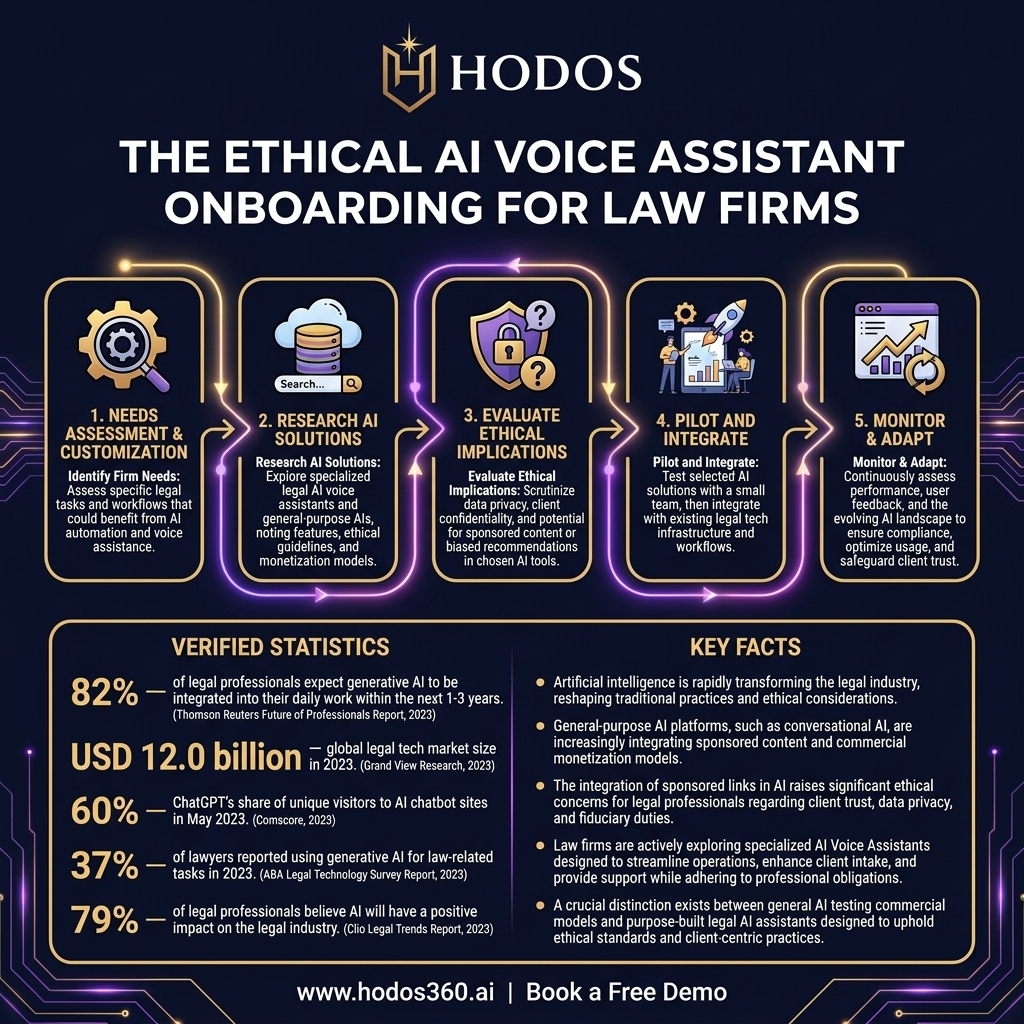
The deployment of AI in the legal sector is inextricably linked to stringent ethical considerations. Unlike general consumer applications, legal AI must operate within a framework that upholds attorney-client privilege, ensures data confidentiality, avoids conflicts of interest, and guards against the unauthorized practice of law (UPL). The American Bar Association (ABA) Model Rules of Professional Conduct, particularly Rule 1.6 (Confidentiality of Information) and Rule 5.3 (Responsibilities Regarding Nonlawyer Assistants), provide critical guidance. Firms must ensure that any AI Voice Assistant acts as a compliant nonlawyer assistant, incapable of offering legal advice, and strictly adheres to privacy protocols. This distinction is vital: while a general AI might be designed to provide information or recommendations, a legal AI Voice Assistant must be configured to facilitate communication and administrative tasks, always under the supervision of a licensed attorney. The choice of AI partner, therefore, becomes paramount in safeguarding both the firm’s reputation and its adherence to professional standards.
Consider the case of a law firm, 'LexCorp Legal,' that adopted a specialized AI Voice Assistant designed explicitly for legal intake, compared to 'Global Law Solutions,' which attempted to adapt a general-purpose AI. Learn more about AI Website Design: Essential Prompts for Law Firms. LexCorp Legal's system, built with robust security features and programmed to only collect non-privileged information until an attorney-client relationship is formally established, maintained impeccable ethical compliance. Global Law Solutions, however, faced challenges with data privacy and the potential for its AI to inadvertently suggest external, potentially sponsored, services, raising red flags with regulatory bodies and clients. This illustrates the critical need for AI solutions that are purpose-built for the legal domain, where the nuances of ethical practice are embedded in their very architecture. Firms must actively manage the setup and options within their AI tools.
Navigating Data Privacy and Client Confidentiality
Data privacy and client confidentiality are cornerstones of the legal profession, making the choice of AI platforms a critical decision. Specialized AI Voice Assistants for law firms are engineered with secure, closed-loop systems, ensuring that sensitive client information is protected from external breaches and unauthorized access. This contrasts sharply with general consumer AI platforms, which may have broader data collection policies or be more susceptible to vulnerabilities, especially when handling a vast array of user data for various purposes, including ad targeting. The risk of exposing privileged information through an unsecured or inappropriately configured AI tool is a serious concern, potentially leading to professional malpractice claims or regulatory sanctions. Learn more about AI Website Redesign: Essential for Modern Legal Firms. Firms must prioritize AI solutions that offer robust encryption, strict access controls, and transparent data handling policies, understanding that the integrity of client data is non-negotiable. Explore the full potential of ethical AI in your legal practice.
The HODOS 360 Advantage: Building a Future-Proof Legal Practice
In an era where AI’s commercial aspirations are increasingly evident, HODOS 360 stands as a beacon for law firms seeking to leverage technology without compromising ethical integrity. Our AI Voice Assistants are meticulously designed for the legal sector, offering 24/7 phone answering, sophisticated lead qualification, and seamless appointment booking, all while adhering to the highest standards of data security and client confidentiality. Unlike general AI platforms that might expose users to sponsored links or non-specialized recommendations, HODOS 360’s solutions are purpose-built to support legal workflows, ensuring that every client interaction is professional, unbiased, and compliant with ABA guidelines. We understand that for law firms, trust is currency, and our AI is engineered to enhance, not erode, that trust. This commitment extends across our full suite of services, from our AI Law Firm Management System to our AI Marketing Platform and Web & Mobile Development, all integrated to create a cohesive, intelligent ecosystem for your practice.
Our platform’s AI-powered legal workflows automate routine tasks, from client intake to document generation, freeing attorneys to focus on complex legal strategy. Learn more about Essential AI Search for Law Firms: Beyond Hosting Limits. The emphasis is on augmenting human capabilities and streamlining operations ethically, rather than introducing commercial distractions. For instance, our AI Voice Assistants for law firms provide multilingual support, ensuring that a diverse client base receives consistent, high-quality service, a stark contrast to the generic options that may not understand legal nuances or ethical boundaries. By choosing HODOS 360, law firms are not just adopting AI; they are investing in a future-proof practice that prioritizes client relationships, operational excellence, and unwavering ethical compliance in an increasingly complex digital world. This strategic partnership allows firms to confidently navigate the evolving AI landscape, leveraging powerful tools that are aligned with their professional values and business objectives, ensuring every user interaction is professional.
Strategic Implementation for ROI and Ethical Growth
Implementing AI Voice Assistants strategically is key to realizing both significant return on investment (ROI) and ethical growth for law firms. Firms must approach AI adoption with a clear strategy, focusing on specific pain points such as missed calls, inefficient lead qualification, or high administrative costs for client intake. Measuring ROI involves tracking metrics like lead conversion rates, client satisfaction scores, and the reduction in staff time spent on routine tasks. Beyond quantitative metrics, ethical growth means ensuring that AI tools enhance, rather than detract from, the firm's professional reputation and client trust. This requires a commitment to ongoing training for staff, regular audits of AI performance, and a robust understanding of how AI interacts with legal ethics. By prioritizing these elements, firms can not only achieve substantial operational efficiencies but also build a reputation as forward-thinking, ethically sound legal innovators. Every setup must consider the ethical implications.

Key Takeaways and Next Steps for Legal Innovators
The emergence of sponsored content in general AI platforms like ChatGPT marks a critical juncture for the legal industry. While the broader AI landscape races to monetize interactions, law firms must remain steadfast in their commitment to ethical practice and client trust. The lesson from the 24% of ChatGPT prompts featuring sponsored ads is clear: not all AI is created equal, especially when professional responsibility is paramount. Specialized AI Voice Assistants offer a powerful alternative, providing unparalleled efficiency for client intake, lead qualification, and 24/7 support, all within a secure and ethically compliant framework. Law firms that proactively embrace these purpose-built legal AI solutions will not only streamline their operations but also reinforce their dedication to unbiased, client-centric service. The strategic advantage lies in choosing AI partners who truly understand the unique demands and ethical imperatives of the legal profession.
As the legal tech market continues to evolve, the distinction between generic, ad-supported AI and specialized, ethical legal AI will become increasingly important. For legal innovators, the next step is to carefully evaluate AI solutions, prioritizing those that align with professional conduct rules and enhance client relationships without introducing commercial conflicts. This means looking beyond broad capabilities to the specific ethical safeguards and legal-centric design of the technology. Ready to embrace AI that understands the unique demands of the legal profession? Learn how.
Frequently Asked Questions
What are AI Voice Assistants for law firms?+
AI Voice Assistants for law firms are specialized conversational AI tools designed to automate and enhance client interactions. They handle tasks such as 24/7 phone answering, lead qualification, appointment booking, and multilingual support, allowing law firms to improve responsiveness and efficiency while maintaining professional standards and ethical compliance. They are distinct from general AI platforms.
How do specialized AI Voice Assistants differ from general AI like ChatGPT?+
Specialized AI Voice Assistants for law firms are purpose-built for the legal industry, prioritizing client confidentiality, ethical compliance, and unbiased service. In contrast, general AI like ChatGPT is designed for broad consumer use and may integrate sponsored content or advertising, which poses significant ethical conflicts for legal professionals due to the risk of perceived impartiality or UPL.
What ethical considerations should law firms prioritize when using AI Voice Assistants?+
Law firms must prioritize attorney-client privilege, data confidentiality, conflict of interest avoidance, and preventing the unauthorized practice of law (UPL). AI Voice Assistants must be configured to only perform administrative tasks, not provide legal advice, and operate under strict data security protocols, aligning with ABA Model Rules like Rule 1.6 and 5.3.
Can AI Voice Assistants handle complex legal inquiries?+
No, AI Voice Assistants for law firms are designed to handle administrative tasks and routine inquiries, not complex legal advice. Their role is to triage calls, gather preliminary information, qualify leads, and schedule appointments, effectively acting as a highly efficient nonlawyer assistant. Complex legal matters always require human attorney intervention.
How can AI Voice Assistants help with lead generation and client intake?+
AI Voice Assistants significantly boost lead generation by answering calls 24/7, ensuring no potential client is missed. During client intake, they efficiently gather initial information, qualify leads based on predefined criteria, and seamlessly book consultations. This automation streamlines the process, reduces response times, and improves the overall client experience, leading to higher conversion rates.