


AI Website Redesign: Essential for Modern Legal Firms
For years, the legal industry approached its online presence with a predictable rhythm: a website refresh every few years, primarily focused on aesthetic updates, perhaps a new color palette or a revamped 'About Us' page. This strategy, while once sufficient, is now decidedly passé. Consider the journey of Sterling & Associates, a respected mid-sized firm that, despite a costly website overhaul in late 2024, found their client acquisition numbers stagnant. Their new site was visually appealing, but it lacked the dynamic intelligence that today's digital-first clients demand. Meanwhile, their agile competitor, Lex AI Partners, having invested in a truly AI-driven website redesign, reported a staggering 30% increase in qualified leads within the same period, fundamentally altering their market position. This stark contrast underscores a critical shift: as the recent FinancialContent article on DSC Web Services aptly highlights, a website redesign is no longer just about looks—it's profoundly about artificial intelligence.
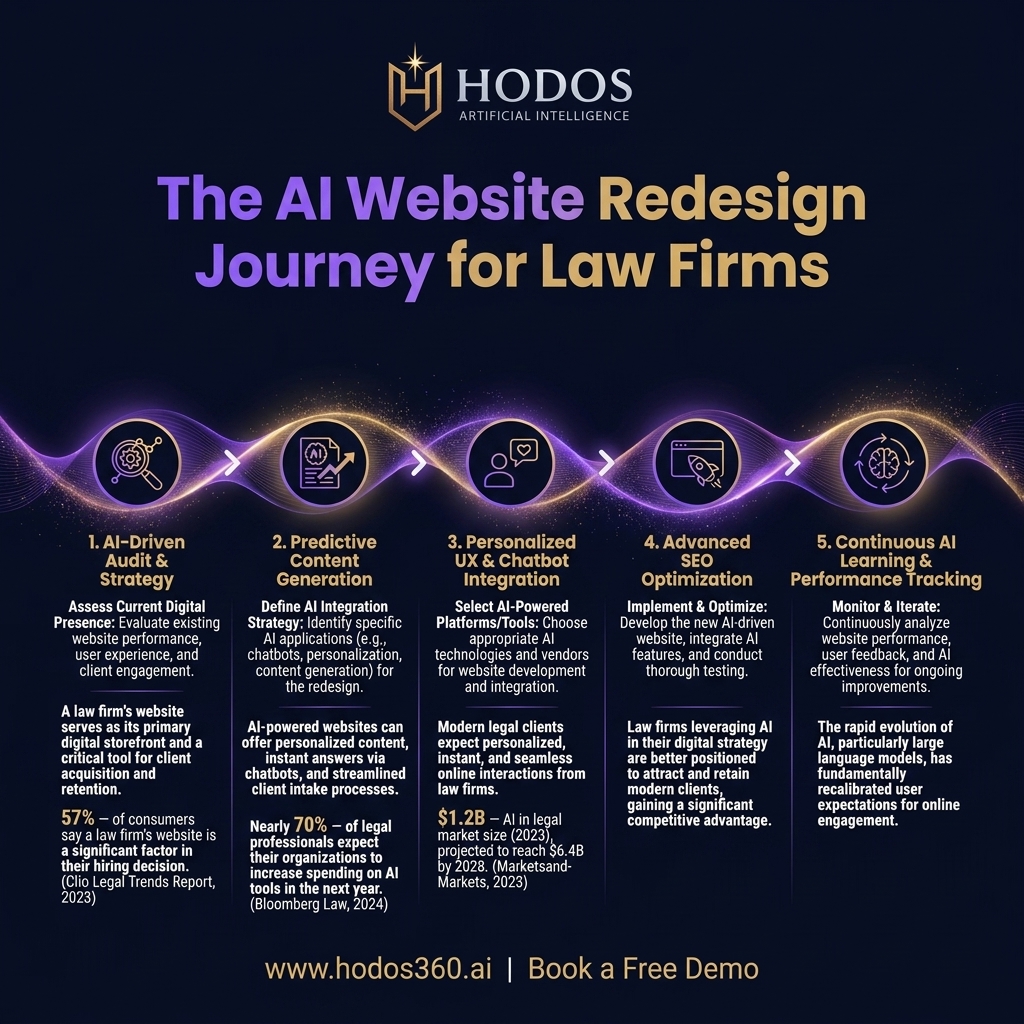
The rapid evolution of AI, particularly since the mainstreaming of large language models like ChatGPT in late 2022, has fundamentally recalibrated user expectations for online interaction. Clients no longer passively browse; they expect personalized experiences, instant answers, and seamless engagement. For law firms, this means that an outdated digital storefront, no matter how polished, can be a significant liability. The influence of artificial intelligence is permeating every aspect of the digital realm, from how content is generated and consumed to how potential clients discover and interact with legal services. Firms that fail to integrate AI into their core digital strategy risk not only falling behind competitors but also failing to meet the evolving demands of a sophisticated clientele who are increasingly accustomed to intelligent, responsive online platforms.
This isn't merely a technological upgrade; it's a strategic repositioning. Law firms must now view their website as a living, learning entity that actively contributes to business development, client satisfaction, and operational efficiency. The goal is to transform a static online brochure into a dynamic, AI-powered ecosystem that understands, anticipates, and responds to client needs. This comprehensive guide will delve into the essential components of an AI website redesign, exploring how legal firms can leverage the power of artificial intelligence to build high-performing digital assets that not only look good but also intelligently drive growth and deliver unparalleled value.
The Paradigm Shift: Why AI is Essential for Legal Website Redesign
The legal landscape is undergoing an unprecedented digital transformation, driven by client expectations shaped by their interactions with tech giants outside the legal sphere. A Thomson Reuters Legal Executive Institute report from late 2025 indicated that nearly 75% of prospective legal clients begin their search online, with a significant preference for firms offering immediate, personalized digital engagement. This data point alone reveals the inadequacy of traditional website strategies. What was once a 'nice-to-have' is now a foundational element of a firm's business development. Casey Flaherty, a prominent legal operations expert and former corporate counsel, has long championed the shift from merely 'pretty' legal tech to 'performant' legal tech, a sentiment that resonates deeply with the current imperative for AI-driven websites. He frequently emphasizes that technology, including a firm's website, must demonstrably improve outcomes, not just aesthetics.
The competitive pressure to adopt AI in digital strategy is mounting. Firms that have historically relied on word-of-mouth or traditional advertising are finding these channels less effective as digital natives ascend to positions of influence. The influence of artificial intelligence extends to every touchpoint, from initial search queries to the depth of information a client expects to find. Learn more about AI Document Management: Essential for Modern Law Firms. Websites are no longer static digital billboards; they are dynamic ecosystems that must adapt to user behavior, provide instant value, and constantly optimize for conversion. This necessitates an AI-powered approach to website redesign, moving beyond superficial changes to embed intelligence at the core of the digital experience. The website redesign process must now encompass predictive analytics, automated content generation, and personalized user journeys to truly deliver a competitive edge.
The global investment in legal tech underscores this paradigm shift. According to Bloomberg Law, venture capital funding for legal AI startups surged by 40% in 2024 alone, signaling robust investor confidence in AI's transformative potential for the legal sector. This influx of capital is fueling innovation in areas directly relevant to web presence, such as AI-powered client intake, automated legal research integration, and sophisticated data analytics for marketing. Law firms that embrace this wave of innovation, recognizing their website as the primary digital interface for these advanced capabilities, are best positioned for future success. Failing to integrate AI into the core of their digital services is akin to a firm in the 2000s refusing to adopt email—a fundamental misjudgment of the technological tide.
AI-Powered User Experience: Beyond Aesthetics
The true power of an AI website redesign lies in its ability to deliver a hyper-personalized user experience that goes far beyond a visually appealing layout. A recent Clio Legal Trends Report from 2025 revealed that over 70% of potential legal clients abandon a law firm's website if they cannot quickly find answers to their initial queries or easily schedule a consultation. This highlights a critical flaw in many traditional legal websites: a lack of immediate, interactive support. AI-powered features, such as intelligent chatbots and virtual assistants, directly address this unmet need. These tools can engage visitors 24/7, answer common legal questions, guide them through relevant content, and even pre-qualify leads based on their specific needs and location, ensuring that human attorneys spend their valuable time on high-potential cases.
Beyond immediate interaction, AI can personalize content delivery. Imagine a website that, after a user's initial visit, remembers their areas of interest and presents tailored articles, case studies, or attorney profiles on subsequent visits. This is the reality of AI-driven personalization, where algorithms analyze user behavior, search history, and demographics to dynamically adapt the website's content and layout. For instance, a potential client searching for 'employment law' in California might see different featured content than someone looking for 'estate planning' in New York. Learn more about AI Legal Tech Boom 2026: Unlocking Billions in Valuation. This level of responsiveness cultivates a sense of understanding and efficiency, significantly enhancing the client's journey and building trust before the first human interaction. The goal is to make every visitor feel like the website was designed specifically for their individual needs, fostering a stronger connection with the firm.
Furthermore, AI-powered websites significantly enhance accessibility and inclusivity. Multilingual support, once a complex and costly endeavor, can now be integrated seamlessly through AI translation services, allowing firms to serve a broader, more diverse clientele. AI can also optimize website interfaces for users with disabilities, ensuring compliance with accessibility standards and expanding a firm’s reach. This commitment to an inclusive digital presence not only broadens a firm's potential client base but also reflects a modern, forward-thinking approach to legal services. The influence of artificial intelligence here is not just about efficiency but about expanding justice and access to legal services for all segments of the population, a crucial aspect of modern legal business.
Elevating Client Intake and Engagement
One of the most immediate and impactful applications of AI in website redesign for law firms is the transformation of client intake and engagement. Traditional intake processes are often bottlenecks, requiring manual data entry, phone tag, and significant administrative overhead. AI voice assistants, like those offered by HODOS 360's AI Voice Assistants service, can revolutionize this. These intelligent systems can answer incoming calls 24/7, conduct initial lead qualification by asking structured questions, provide preliminary information about the firm's services, and even book appointments directly into attorneys' calendars. Learn more about Scaling Legal AI: Essential Strategies to Prevent Tool Sprawl. This frees up administrative staff to focus on more complex tasks and ensures that no potential client inquiry goes unanswered, even outside business hours. This kind of automated, intelligent service elevates the client's first impression and streamlines the entire engagement funnel, directly impacting the firm's growth and efficiency.
SEO in the Age of AI: Predictive Analytics and Content Generation
Search Engine Optimization (SEO) has always been critical for legal firms, but the advent of AI has fundamentally reshaped its strategies. Google's continuous updates, particularly the 'Helpful Content System' iterations throughout 2024-2026, have increasingly prioritized genuinely useful, expert-driven content, even when partially assisted by AI. This means that merely stuffing keywords is no longer effective; instead, firms need sophisticated AI tools that can analyze search intent, identify content gaps, and predict emerging legal trends to generate truly valuable content. Sam Altman, CEO of OpenAI, has often articulated his vision for AI's role in personalizing search and content, a vision that is rapidly becoming reality as search engines become more intelligent. AI-powered SEO goes beyond reactive keyword targeting; it's about proactive, data-driven content strategy.
AI marketing platforms are at the forefront of this evolution, leveraging predictive analytics to give law firms an unparalleled edge. These platforms can analyze vast datasets of search queries, competitor strategies, and industry trends to identify not just what clients are searching for now, but what they *will* be searching for in the near future. This allows firms to create highly relevant, optimized content before competitors even realize the trend exists. Learn more about Voice Search Optimization: The Ultimate Guide for Law Firms. For example, an AI might detect a surge in queries related to 'AI ethics in corporate governance' months before it becomes a mainstream legal topic, enabling a firm to publish authoritative articles and position themselves as thought leaders. This strategic foresight is invaluable in a crowded legal market, ensuring that a firm's website consistently ranks high for critical search terms.
Furthermore, AI's capability extends to content generation itself. While human oversight remains paramount for legal accuracy and ethical considerations (as per ABA Model Rule 1.1 Competence regarding the use of technology), AI can rapidly draft initial content, summarize complex legal documents, and generate variations of marketing copy tailored for different audiences or platforms. This dramatically reduces the time and resources required for content creation, allowing firms to maintain a robust and fresh online presence without overburdening their legal or marketing teams. The synergy between human legal expertise and AI's generative power creates a potent combination for maintaining a dominant online footprint and attracting a steady stream of qualified leads through superior search visibility.
Optimizing for Voice Search and Multilingual Services
The rise of smart speakers and voice assistants has fundamentally altered how individuals search for information, including legal services. People speak differently than they type, using more natural, conversational language. AI-powered website redesigns are crucial for optimizing for this shift. AI tools can analyze common voice queries, identify long-tail keywords, and structure website content to provide direct, concise answers that voice assistants can easily extract. Learn more about Conversational AI: Essential Strategies for Legal Success. This ensures that when a potential client asks their smart device, 'Find a family lawyer near me,' your firm's AI-optimized site is more likely to be the top result. Additionally, the ability of AI to provide instant, high-quality multilingual support directly on the website removes language barriers, making legal services accessible to a broader demographic and significantly expanding a firm's potential market reach, especially in diverse urban centers.
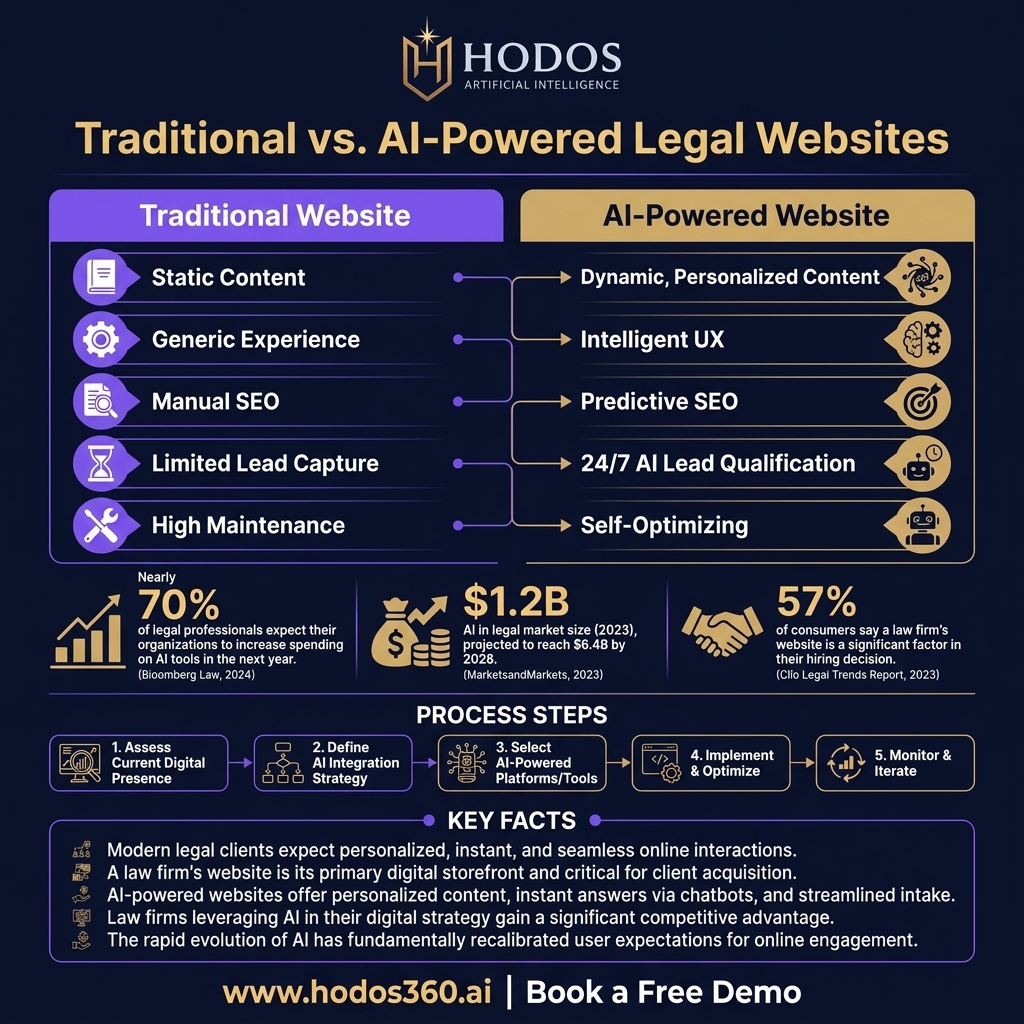
- ✓Enhanced Client Experience: AI personalizes content, offers 24/7 support via chatbots and voice assistants, and streamlines the intake process, leading to higher client satisfaction.
- ✓Superior SEO Performance: Predictive AI analytics identify emerging trends and optimize content for both traditional and voice search, ensuring higher rankings and visibility.
- ✓Operational Efficiency: AI automates routine tasks like lead qualification and appointment booking, freeing legal professionals to focus on core legal work.
- ✓Competitive Advantage: Firms leveraging AI for their website redesign gain a significant edge in client acquisition and retention over those relying on outdated digital strategies.
- ✓Data-Driven Decisions: AI provides actionable insights into website performance, user behavior, and marketing ROI, allowing for continuous optimization.
- ✓Scalability and Accessibility: AI enables easy integration of multilingual support and accessibility features, expanding a firm's reach to diverse client bases.
- ✓Future-Proofing Your Firm: Investing in AI website redesign positions a law firm at the forefront of legal tech innovation, ready for future industry shifts.
The Competitive Edge: Firms Embracing AI vs. Those Lagging
The legal market is witnessing a clear divergence: firms that are aggressively embracing AI for their digital presence are rapidly outmaneuvering those that cling to traditional methods. Consider the tale of two firms: Legacy Legal Group, a respected but conservative practice that views their website primarily as an online brochure, and Quantum Law, an innovative firm that partnered with a platform like HODOS 360 for a comprehensive AI transformation. Legacy Legal Group, despite a solid reputation, saw a gradual decline in new client inquiries, attributing it to 'market saturation.' Quantum Law, on the other hand, reported a 40% increase in qualified leads and a 25% reduction in client intake time, directly correlating these gains to their AI-powered website. This isn't anecdotal; a Gartner report from early 2026 predicted that law firms leveraging AI for digital client acquisition would see a 25% higher client conversion rate by 2028 compared to their non-AI counterparts.
This dramatic difference in performance highlights a critical human conflict: the tension between disruption and tradition. Firms like Legacy Legal Group often struggle with the perceived cost and complexity of AI adoption, or a reluctance to deviate from 'how things have always been done.' However, the real cost lies in inaction. As Elena Rodriguez, managing partner at Quantum Law, stated during a panel at LegalTech NYC 2026, "Our decision to invest in an AI-powered website wasn't just about technology; it was about investing in our future. Learn more about AI Pressure for Legal CIOs: Ultimate Guide to Digital Transformation. We recognized that client expectations had shifted, and we had to meet them where they were—online, and expecting intelligent interaction." Her firm's proactive stance allowed them to capture market share and establish themselves as leaders in digital-first legal services, creating a significant competitive moat.
Moreover, the firms lagging in AI adoption face increasing operational inefficiencies. Without AI-powered lead qualification or automated scheduling, their administrative staff are bogged down with routine inquiries, diverting valuable resources from core legal work. The manual processes not only slow down client intake but also introduce human error, potentially leading to missed opportunities or client dissatisfaction. The argument that AI is too expensive or too complex for smaller firms is increasingly being debunked by accessible, scalable platforms. The actual business case for AI website redesign is now overwhelmingly clear: it's an investment that pays dividends in both client acquisition and internal efficiency, solidifying a firm's position in an increasingly competitive digital marketplace.
Navigating Ethical Considerations and Regulatory Compliance
While the benefits of AI in website redesign are profound, law firms must navigate the ethical considerations and regulatory compliance inherent in using artificial intelligence. The ABA Model Rules of Professional Conduct, particularly Rule 1.1 (Competence) and Rule 7.1 (Communications Concerning a Lawyer's Services), provide a framework for responsible AI adoption. Firms must ensure that any AI-generated content, client communication, or data processing adheres to professional standards of accuracy, confidentiality, and truthfulness. This often requires robust human oversight, clear disclosures about AI involvement in client interactions, and stringent data privacy protocols, especially in light of evolving legislation like the EU AI Act or state-specific data protection laws. The responsible integration of AI is not just a legal obligation but a cornerstone of maintaining client trust and upholding the integrity of the legal profession.

Key Takeaways and Next Steps
The message is clear: an AI website redesign is no longer a luxury but a fundamental requirement for law firms aiming to thrive in the modern legal landscape. The traditional approach of prioritizing aesthetics over intelligence is rapidly becoming obsolete, replaced by a demand for dynamic, personalized, and highly efficient digital experiences. From enhancing user experience with intelligent chatbots and personalized content to revolutionizing SEO with predictive analytics and content generation, AI offers a transformative pathway for legal firms to attract and retain clients more effectively than ever before. The competitive divide between firms embracing this shift and those resisting it will only widen, impacting market share, client satisfaction, and overall business performance.
For law firm owners and legal professionals, the journey towards an AI-powered website begins with a strategic assessment of your current digital footprint and a clear vision for its future. Identify areas where AI can streamline client intake, improve lead qualification, and enhance content relevance. Look for partners who understand both the intricacies of legal practice and the cutting edge of AI development. The goal is not simply to add AI features but to fundamentally embed artificial intelligence into the core functionality and strategy of your website, transforming it into a powerful asset that continually learns, adapts, and performs.
Embracing this transformation is a commitment to innovation, efficiency, and superior client service. By integrating AI into your website development, you are not just updating a digital presence; you are building a future-proof foundation for sustained growth and unparalleled competitive advantage. Platforms like HODOS 360, with their specialized Web & Mobile Development services, offer comprehensive AI-powered website building, responsive design, and SEO optimization tailored specifically for the unique needs of law firms, ensuring your firm is not just visible, but intelligently engaging and converting. The time to act is now, to ensure your firm is at the forefront of this digital evolution.
Frequently Asked Questions
What specifically makes an AI website redesign different from a traditional one?+
An AI website redesign integrates artificial intelligence into core functionalities, moving beyond mere aesthetics. It includes features like AI-powered chatbots for 24/7 support, personalized content delivery based on user behavior, predictive analytics for SEO, and automated lead qualification. Traditional redesigns primarily focus on visual appeal, basic functionality, and manual content updates, lacking the dynamic, intelligent interaction and self-optimization capabilities that AI brings.
How can AI on my law firm's website improve client acquisition?+
AI improves client acquisition by offering instant, personalized engagement. AI chatbots can answer initial queries and qualify leads around the clock, while personalized content guides visitors to relevant services. Predictive SEO ensures your firm ranks higher for critical search terms, and AI voice assistants streamline appointment booking. This creates a seamless, efficient journey from initial interest to qualified lead, significantly boosting conversion rates.
Are there ethical considerations for law firms using AI on their websites?+
Yes, ethical considerations are paramount. Law firms must ensure AI-generated content is accurate, uphold client confidentiality, and provide clear disclosures about AI's role in client interactions, aligning with ABA Model Rules like Competence (Rule 1.1) and Communications (Rule 7.1). Robust human oversight is crucial to prevent misinformation or unintended legal advice, maintaining professional integrity and client trust in all digital engagements.
What role does AI play in SEO for legal websites today?+
AI plays a transformative role in SEO for legal websites by enabling predictive analytics and advanced content generation. AI tools analyze vast data to identify emerging search trends and content gaps, allowing firms to create highly relevant and optimized content proactively. It also helps optimize for voice search, understanding conversational queries, and ensures content aligns with evolving search engine algorithms that prioritize helpful, expert-driven information.
How can an AI-powered website enhance my firm's operational efficiency?+
An AI-powered website significantly enhances operational efficiency by automating routine tasks. AI voice assistants and chatbots can handle 24/7 client inquiries, qualify leads, and book appointments automatically, reducing the burden on administrative staff. This frees up your legal professionals to focus on higher-value legal work, improving overall productivity, streamlining the client intake process, and reducing operational overhead, leading to a more efficient and profitable firm.