


Personal Injury AI: The Ultimate Assistant for Law Firms
The legal industry, often perceived as slow to adopt technological shifts, is currently undergoing a profound transformation driven by artificial intelligence. A prime example of this accelerating evolution arrived on September 2, 2026, with the announcement from Law.com detailing personal injury solutions startup Hona's launch of Lia, an AI assistant poised to revolutionize how personal injury firms manage client interactions and case workflows. This move isn't just about incremental improvements; it represents a significant leap towards truly intelligent legal operations, challenging traditional practices and setting new benchmarks for efficiency and client satisfaction in a highly competitive sector. For law firm owners and attorneys, understanding the implications of such innovations is no longer optional—it's essential for survival and growth in the modern legal landscape.
Before Lia, many personal injury firms grappled with an overwhelming volume of routine inquiries, repetitive documentation tasks, and the constant pressure of client communication, often leading to burnout and missed opportunities. The promise of Personal Injury AI lies in its ability to offload these burdens, allowing legal professionals to focus on high-value strategic work. Hona's Lia, specifically designed for the personal injury domain, aims to automate initial client intake, answer frequently asked questions, schedule appointments, and even qualify leads, thereby freeing up valuable human resources. This development mirrors broader trends seen across the legal tech spectrum, where companies like Clio have invested heavily in integrated practice management solutions, and startups like Harvey AI have attracted significant funding for their generative AI legal research tools, demonstrating a clear market demand for intelligent automation. The friction between traditional methods and the imperative for modernization is creating both challenges and unparalleled opportunities for firms willing to embrace the future.
This pivotal moment, marked by the emergence of specialized AI tools like Lia, underscores a larger narrative: the legal profession is at an inflection point. Firms that strategically integrate Personal Injury AI solutions are not just enhancing their operational capabilities; they are redefining client service standards and gaining a significant competitive advantage. The question is no longer *if* AI will impact your practice, but *how* deeply you will leverage it to thrive. From optimizing client intake to automating complex legal workflows, the right AI integration can transform a firm's operational backbone, improve profitability, and elevate its standing in the market. Understanding these advancements, and the robust platforms supporting them, is crucial for any firm looking to future-proof its operations.
Ready to transform your practice with cutting-edge AI? Discover how HODOS 360's AI Law Firm Management System can streamline your operations.
The Rise of AI in Personal Injury Law: A Game Changer
The launch of Hona's Lia AI assistant is more than just a product announcement; it's a testament to the maturation of Personal Injury AI and its specific application within a demanding legal niche. For years, general AI tools offered broad capabilities, but the real power emerges when AI is tailored to industry-specific challenges. Mark Hodes, CEO of Hona, emphasized in a recent interview, "Our goal with Lia was to build an AI that doesn't just process information, but truly understands the nuances of a personal injury claim, from initial client contact to the intricacies of medical record review." This deep specialization allows Lia to offer unparalleled support, moving beyond simple chatbots to intelligent agents capable of contextual understanding. This trend of niche AI development is gaining traction, mirroring the success of platforms like Harvey AI, which, after securing a significant funding round and partnering with firms like Allen & Overy, demonstrated the immense value of AI trained on specific legal datasets and workflows. The competitive landscape is heating up, with firms that invest early in these specialized tools poised to capture a larger market share.
Before specialized Personal Injury AI became viable, many firms relied on manual processes or generic practice management software, which often fell short in addressing the unique demands of personal injury cases. According to the 2023 ABA TechReport, while 58% of law firms reported using some form of legal tech, only a fraction were leveraging AI beyond basic research tools. This gap highlights a significant opportunity for innovation. The core challenge in personal injury often revolves around high volumes of client inquiries, the need for rapid lead qualification, and meticulous tracking of medical treatments and appointments—all areas where AI can excel. Lia's ability to automate these processes, as highlighted by Law.com, directly addresses these pain points. By providing 24/7 availability and instant responses, AI assistants drastically improve client satisfaction, ensuring that potential clients receive immediate attention, a critical factor in a time-sensitive practice area. Learn more about Siri AI Revolution: Essential Legal Voice Assistant Strategies. This shift from reactive to proactive client management is a game-changer for firms striving for operational excellence and a stellar client experience.
Moreover, the competitive pressure in the personal injury sector is intense, with firms constantly vying for visibility and new clients. The ability to respond swiftly and efficiently to new leads can be the difference between securing a case and losing it to a competitor. Personal Injury AI acts as a force multiplier, enabling smaller firms to compete with larger, more resourced practices by leveling the playing field in terms of responsiveness and operational efficiency. Imagine a scenario where a potential client calls at 10 PM after an accident; a human assistant might miss the call, but an AI voice assistant like Lia can engage, qualify, and even book an initial consultation, ensuring the firm is always 'on.' This round-the-clock capability not only improves conversion rates but also builds a reputation for accessibility and modern service. This strategic adoption of AI is becoming a non-negotiable for firms aiming for sustained growth and market leadership in a rapidly evolving legal landscape, demonstrating a clear divide between firms embracing innovation and those risking obsolescence.
This evolution is not merely about replacing human tasks but augmenting human capabilities. Partners at forward-thinking firms, such as Sarah Chen, a managing partner at a prominent personal injury firm in California, have noted, "Integrating AI has allowed our paralegals and junior attorneys to dedicate more time to complex legal analysis and client advocacy, rather than being bogged down by administrative minutiae. It's transformed our team's focus and significantly boosted morale." This shift is not about job displacement but job evolution, where AI handles the routine, allowing legal professionals to engage in more strategic, intellectually stimulating work. The value proposition of Personal Injury AI extends beyond mere cost savings to encompass improved work-life balance for legal teams and a higher quality of legal service for clients.
Streamlining Client Communication and Intake
One of the most immediate and impactful benefits of Personal Injury AI is its capacity to revolutionize client communication and intake processes. Historically, the initial stages of a personal injury case involved extensive manual data collection, repetitive questioning, and often, delays in response times, which could frustrate potential clients and lead them to seek assistance elsewhere. AI-powered solutions, such as Hona's Lia, fundamentally alter this dynamic. These systems can engage with potential clients 24/7 through various channels—phone, chat, web forms—collecting crucial preliminary information, answering common questions about the firm's services or the personal injury process, and setting realistic expectations. This automation ensures that no lead is missed due to after-hours calls or staff unavailability, a critical advantage in a competitive market where responsiveness often dictates client acquisition.
Beyond initial contact, AI can significantly enhance the efficiency and accuracy of the client intake process. By leveraging natural language processing (NLP), AI assistants can parse complex narratives provided by clients, identify key facts, extract relevant dates, and even flag potential red flags or missing information that a human intake specialist might overlook. This detailed data collection, performed swiftly and consistently, feeds directly into the firm's case management system, creating a comprehensive client profile from day one. This not only saves valuable paralegal and attorney time but also reduces the likelihood of errors, ensuring that cases start on a solid informational footing. Learn more about AI Email Marketing: Essential Tools for Law Firms. For instance, an AI might automatically identify if a client has failed to mention a previous injury that could impact their current claim, prompting the system to ask follow-up questions or alert a human attorney for review. This level of intelligent intake transforms a historically arduous process into a seamless, client-friendly experience.
Furthermore, Personal Injury AI extends its utility to ongoing client communication throughout the lifecycle of a case. Imagine an AI assistant that can provide clients with real-time updates on their case status, remind them of upcoming appointments (e.g., doctor visits, court dates), or prompt them to submit necessary documents. This proactive communication reduces the burden of client inquiries on legal staff and keeps clients informed and engaged, fostering greater trust and satisfaction. This capability is particularly vital in personal injury, where cases can span months or even years, and clients often feel anxious about the progress. The ability of AI to maintain consistent, personalized communication, even offering multilingual support, ensures that all clients feel heard and valued, regardless of language barriers. This continuous engagement, powered by AI, is a hallmark of modern, client-centric legal service, differentiating leading firms from their peers.
Enhancing Case Management and Workflow Automation
The true power of Personal Injury AI extends far beyond client communication, deeply integrating into the core mechanics of case management and legal workflow automation. Modern AI-powered platforms are designed to act as intelligent co-pilots, assisting attorneys and staff in navigating the complexities of personal injury claims with unprecedented efficiency. Consider the laborious process of document review in a personal injury case, which often involves sifting through hundreds, if not thousands, of pages of medical records, police reports, and insurance policies. AI tools can rapidly analyze these documents, identify key entities (e.g., injuries, treatments, dates, responsible parties), extract relevant clauses from insurance documents, and even summarize voluminous medical histories into concise, actionable reports. This drastically reduces the time and cost associated with discovery and case preparation, allowing attorneys to focus on strategic legal arguments rather than manual data extraction. Thomson Reuters' Legal Executive Institute reports consistently highlight that firms leveraging AI for document review see an average reduction of 30-50% in review time.
Beyond document analysis, Personal Injury AI facilitates sophisticated workflow automation. From the moment a client is onboarded, AI can trigger a series of automated tasks: creating case folders, generating initial demand letters, scheduling follow-up communications, and populating relevant data fields in the firm's practice management system. This ensures consistency, reduces human error, and accelerates the pace at which cases progress. For instance, an AI system can monitor court dockets for relevant updates, alert attorneys to upcoming deadlines, or even generate drafts of standard pleadings based on case specifics. This level of automation frees up paralegals and junior attorneys from mundane, repetitive tasks, allowing them to engage in more complex legal research, client counseling, or strategic planning. The seamless integration of AI into these workflows transforms a fragmented, manual process into a cohesive, intelligent operation, significantly boosting overall firm productivity and ensuring compliance with critical deadlines.
Furthermore, Personal Injury AI offers advanced capabilities in predictive analytics, providing insights that were previously unattainable. By analyzing historical case data—including settlement amounts, jury verdicts, judge tendencies, and specific injury types—AI models can help attorneys assess the potential value of a case, evaluate settlement offers more effectively, and refine litigation strategies. Learn more about AI Web Development: Essential Collaboration for Law Firms. This data-driven approach moves personal injury law from intuition-based decision-making to evidence-based strategy, giving firms a powerful edge in negotiations and trial preparation. For example, an AI might identify patterns in cases involving specific insurance carriers or particular types of accidents, allowing attorneys to anticipate defense tactics and prepare more robust arguments. This foresight, powered by AI, translates directly into better outcomes for clients and increased profitability for firms. The ability to harness vast amounts of data and derive actionable intelligence is a hallmark of the most successful firms in the modern legal landscape, and Personal Injury AI is at the forefront of this revolution.
However, implementing such advanced systems requires careful planning and strategic integration. A fragmented approach, where AI tools operate in silos, diminishes their potential. The most effective Personal Injury AI solutions are those that seamlessly integrate with existing practice management systems, calendaring tools, and document repositories. This holistic integration creates a unified ecosystem where data flows freely, and AI can provide comprehensive support across all aspects of a case. Without proper integration, the benefits of AI remain limited, and firms risk creating new inefficiencies. Therefore, choosing a platform that offers robust integration capabilities is paramount. This strategic approach ensures that AI becomes an indispensable part of the firm's operational fabric, enhancing every stage of the legal process.
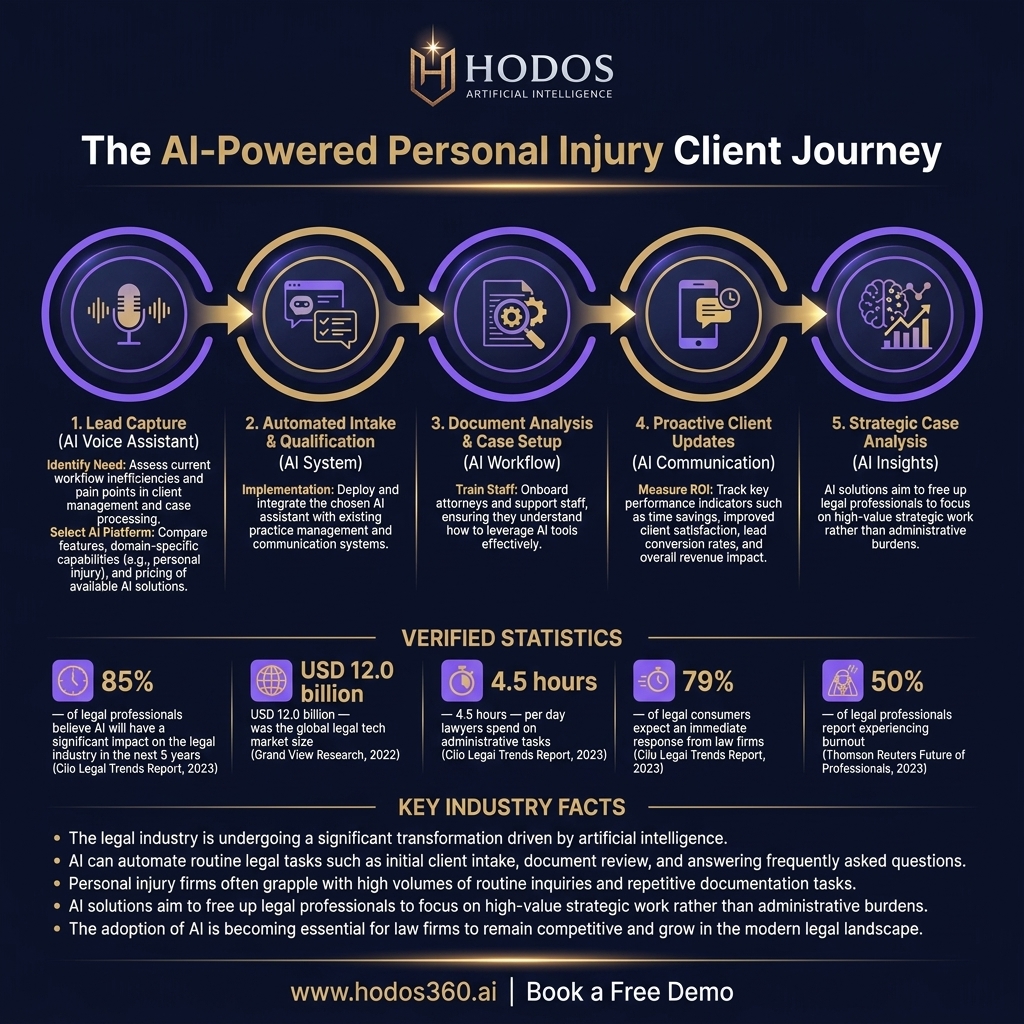
- ✓Automated Client Intake: AI-powered forms and chat bots collect initial client information, answer FAQs, and qualify leads 24/7, reducing response times and improving lead conversion.
- ✓Intelligent Document Analysis: AI rapidly reviews and extracts key data from medical records, police reports, and insurance policies, significantly cutting down on discovery and case preparation time.
- ✓Workflow Automation: AI triggers automated tasks like case folder creation, draft generation for standard documents (e.g., demand letters), and scheduling follow-ups, ensuring consistency and efficiency.
- ✓Predictive Analytics: AI models analyze historical data to estimate case value, assess settlement offers, and inform litigation strategies, providing data-driven insights for better outcomes.
- ✓Proactive Client Communication: AI assistants send automated case updates, appointment reminders, and document requests, reducing client inquiries and enhancing satisfaction.
- ✓Deadline Management: AI monitors court dockets and internal calendars, alerting legal teams to critical deadlines and ensuring compliance with procedural rules.
- ✓Resource Optimization: By automating repetitive tasks, AI frees up paralegals and attorneys to focus on complex legal work, client advocacy, and strategic thinking, boosting overall team morale and productivity.
Navigating Ethical Considerations and Data Security
While the benefits of Personal Injury AI are undeniable, its implementation in legal practice comes with critical ethical considerations and stringent data security requirements that cannot be overlooked. The legal profession is bound by strict rules of professional conduct, particularly concerning client confidentiality and attorney competence. ABA Model Rule 1.6 mandates that lawyers protect client information, a principle that extends to how AI systems handle sensitive data. Firms deploying AI must ensure that these tools are designed with robust encryption, access controls, and data anonymization techniques to prevent breaches. The recent increase in cyberattacks targeting law firms underscores the urgency of this, with reports from the FBI indicating a rising trend in data exfiltration attempts against legal entities. Simply adopting an AI tool without a thorough understanding of its data handling protocols is a perilous venture that could lead to severe ethical violations, reputational damage, and financial penalties.
Furthermore, the ethical obligation of competence, outlined in ABA Model Rule 1.1, requires lawyers to understand the benefits and risks associated with technology. This means attorneys must not only be proficient in using Personal Injury AI tools but also understand their limitations, potential biases, and how to verify their outputs. Relying solely on AI-generated content or advice without human oversight can lead to malpractice. For instance, if an AI assistant provides incorrect legal information to a client, the attorney remains ultimately responsible. This necessitates a hybrid approach where AI augments human expertise rather than replacing it entirely. Firms must implement clear guidelines for AI use, including review protocols for AI-generated documents and communications, and provide ongoing training for staff to ensure they are competent in leveraging these advanced tools responsibly. Learn more about Legal AI Assistant: The Ultimate Guide to Firm Growth. The legal community, through organizations like the American Bar Association, is actively developing guidance on ethical AI use, emphasizing transparency and accountability.
Data security is another paramount concern, especially given the highly sensitive nature of personal injury cases, which often involve protected health information (PHI) and detailed personal financials. Firms leveraging Personal Injury AI must ensure their chosen platforms comply with relevant data privacy regulations, such as HIPAA for health information and various state-specific data protection laws. This includes understanding where data is stored, who has access to it, and the security measures in place to prevent unauthorized access or loss. Cloud-based AI solutions, while offering immense scalability, introduce complexities regarding data sovereignty and vendor security practices. Firms must conduct rigorous due diligence on AI vendors, scrutinizing their security certifications, incident response plans, and data retention policies. A single data breach could jeopardize client trust, expose the firm to litigation, and incur substantial regulatory fines, highlighting that security is not an afterthought but a foundational requirement for any AI implementation.
Ultimately, the ethical integration of Personal Injury AI requires a proactive and informed approach. It's not enough to simply purchase a subscription; firms must invest in understanding the technology, establishing clear ethical guidelines, and implementing comprehensive data security frameworks. The goal is to harness AI's power while upholding the core tenets of the legal profession: client confidentiality, competence, and zealous advocacy. By doing so, firms can confidently leverage AI to enhance their practice, secure in the knowledge that they are operating within the bounds of ethical responsibility and regulatory compliance. This balanced approach ensures that innovation serves justice, rather than compromising it, establishing a precedent for responsible technology adoption across the legal sector.
Ensuring Compliance and Client Trust
Ensuring compliance and maintaining client trust are non-negotiable pillars for any law firm, especially when integrating advanced technologies like Personal Injury AI. The legal landscape is rife with regulations, from attorney-client privilege to data privacy laws, and any AI implementation must meticulously adhere to these standards. The use of AI in client communication, for instance, must be transparent. Clients should be aware when they are interacting with an AI assistant, and clear pathways for human intervention must be available. This transparency is crucial for building and maintaining trust, as clients expect a certain level of human oversight and empathy in sensitive legal matters. Firms must develop clear internal policies for AI disclosure and client consent, aligning with ethical guidelines issued by bar associations and legal bodies.
Furthermore, compliance extends to the accuracy and reliability of the information processed or generated by Personal Injury AI. If an AI system is used to draft documents or provide summaries, these outputs must be thoroughly reviewed by a human attorney to ensure legal accuracy and adherence to specific case facts and legal precedents. Federal Rules of Civil Procedure, particularly those related to discovery and electronically stored information (ESI), underscore the need for verifiable and accurate data handling. Learn more about AI Marketing: The Ultimate Guide to Loyalty & Growth. A firm’s responsibility for the integrity of its legal work does not diminish with the introduction of AI; if anything, it becomes more critical to validate AI outputs to prevent errors that could jeopardize a client's case or lead to sanctions. This robust review process is essential for maintaining professional standards and safeguarding client interests.
Maintaining client trust also hinges on the firm's ability to demonstrate a commitment to data privacy and security. In an era of increasing cyber threats, clients need assurance that their sensitive personal and case information is protected from breaches. Firms must invest in secure AI platforms that offer end-to-end encryption, multi-factor authentication, and regular security audits. Beyond technical safeguards, firms should educate clients about the security measures in place, fostering confidence in the firm's ability to handle their data responsibly. A proactive approach to data security, coupled with transparent communication about AI usage, not only ensures compliance but also reinforces the firm's reputation as a trustworthy and forward-thinking legal partner. This dual focus on ethical deployment and robust security is paramount for successful Personal Injury AI integration.
The Competitive Edge: Firms Embracing AI
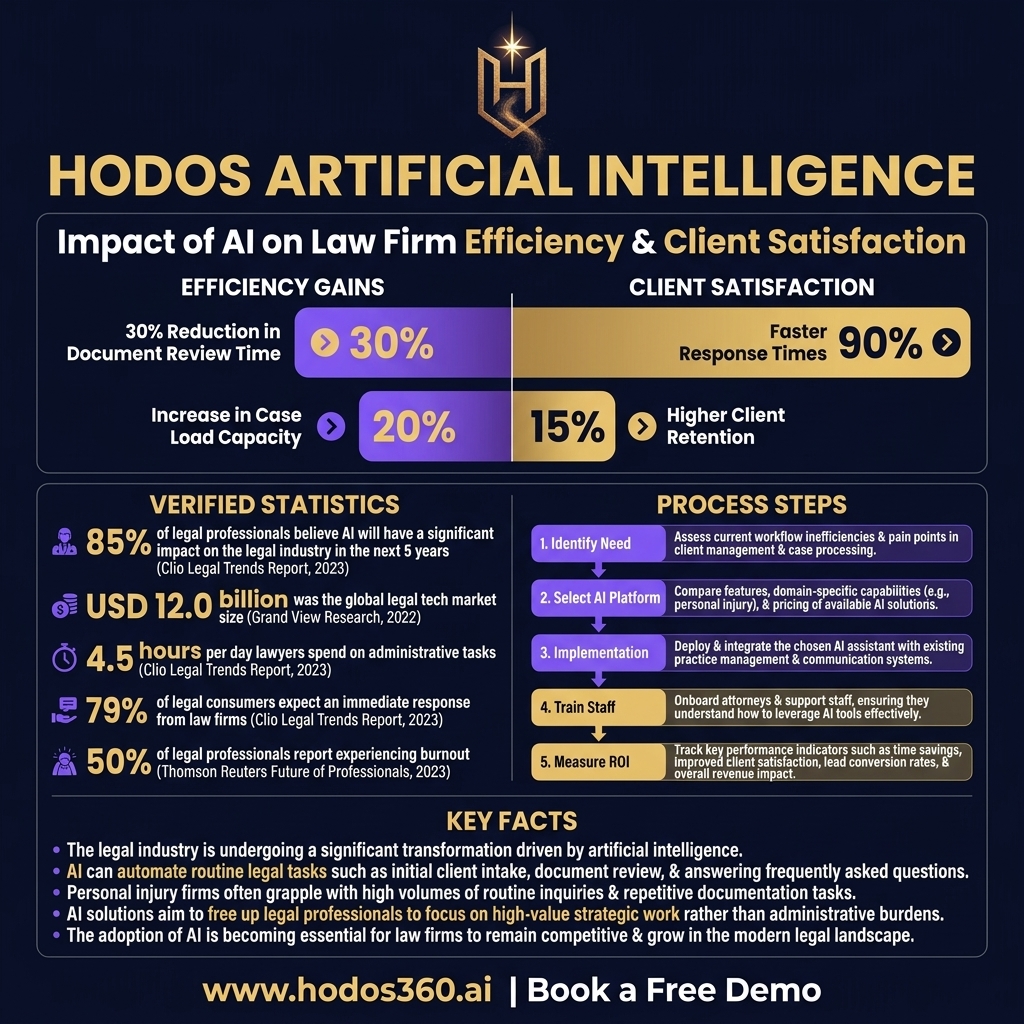
In today's hyper-competitive legal market, simply offering quality legal services is no longer enough to stand out. Firms that are proactively embracing Personal Injury AI are not just adapting; they are forging a significant competitive edge. This advantage manifests in multiple dimensions, from enhanced operational efficiency to superior client service and improved profitability. As noted by industry analysts at McKinsey, early adopters of AI across various sectors are realizing efficiency gains of 15-20% within the first few years of implementation. For personal injury firms, this translates directly into the ability to handle more cases with the same or fewer resources, reduce overhead costs, and ultimately, increase revenue per attorney. The ability to automate routine tasks, streamline intake, and accelerate document review means that valuable attorney time is reallocated to strategic legal work, client advocacy, and business development, tasks that directly impact the firm’s bottom line.
Moreover, the firms that integrate Personal Injury AI are redefining the client experience. In an age where consumers expect instant gratification and personalized service, AI-powered tools provide 24/7 availability, rapid response times, and consistent communication, setting a new standard for client engagement. This superior service not only attracts new clients but also fosters loyalty and generates positive referrals, a critical component of growth in the personal injury sector. Firms that continue to rely solely on traditional, manual processes risk falling behind, perceived as outdated and less responsive in the eyes of potential clients. The narrative of disruption versus tradition is playing out in real-time, with innovative firms like the ones partnering with HODOS 360 demonstrating the tangible benefits of a tech-forward approach. This isn't just about efficiency; it's about building a modern, client-centric brand that resonates with today's consumers.
The competitive edge also comes from the strategic insights that Personal Injury AI can provide. Learn more about AI-Native Law Firms: Essential Blueprint for Future Legal Success. By leveraging advanced analytics, firms can gain a deeper understanding of market trends, competitor strategies, and potential case outcomes. This data-driven intelligence empowers firms to make more informed decisions about case selection, resource allocation, and marketing efforts. For example, an AI marketing platform could identify underserved geographic areas for personal injury claims or pinpoint specific demographics most likely to seek legal assistance for certain types of accidents, allowing firms to tailor their outreach efforts with precision. This level of strategic foresight, fueled by AI, allows firms to operate not just efficiently, but intelligently, positioning them as leaders in their field. The investment in AI is no longer a cost but a strategic imperative for firms aiming to dominate their market segment.
Finally, the adoption of Personal Injury AI contributes to a firm's long-term sustainability and attractiveness to top talent. Younger generations of legal professionals, digital natives accustomed to technological solutions, are increasingly drawn to firms that embrace innovation. A tech-forward firm offers a more stimulating and efficient work environment, reducing burnout from repetitive tasks and allowing attorneys to engage in more intellectually rewarding work. This not only aids in recruitment but also in retention, ensuring a stable and skilled workforce. Firms that resist this technological wave risk becoming less appealing to both clients and prospective employees, creating a vicious cycle of stagnation. The competitive advantage, therefore, is holistic, impacting every facet of a firm's operation, from its financial health to its human capital and market reputation.
Future-Proofing Your Practice
Future-proofing a legal practice in the era of rapid technological advancement means proactively integrating Personal Injury AI and other legal tech innovations into the firm's strategic planning. It's about building resilience and adaptability into the core of your operations, ensuring that your firm can not only withstand but thrive amidst evolving market demands and technological shifts. The legal industry has historically been reactive, but the pace of AI development demands a forward-thinking approach. Firms that invest in scalable, integrated AI solutions today are better positioned to absorb future innovations and maintain their competitive standing, avoiding the costly and disruptive process of playing catch-up later.
This proactive approach involves a continuous assessment of emerging technologies and their potential impact on legal workflows, client service, and business models. For personal injury firms, this means looking beyond current AI assistants to anticipate the next wave of innovation—perhaps AI that can predict litigation outcomes with even greater accuracy, or fully autonomous systems for certain types of claims. By partnering with legal tech providers that offer modular and expandable platforms, firms can ensure their initial investments are future-compatible. This strategic foresight allows for incremental adoption and integration, minimizing disruption while maximizing long-term benefits. It's about creating a technological infrastructure that is flexible enough to evolve with the industry, safeguarding against obsolescence.
Ultimately, future-proofing isn't just about technology; it's about cultivating a culture of innovation within the firm. It involves encouraging attorneys and staff to experiment with new tools, providing training, and fostering an environment where continuous learning is valued. The most successful firms will be those that view Personal Injury AI not as a one-time implementation but as an ongoing journey of optimization and adaptation. This cultural shift, combined with strategic technological investments, ensures that the firm remains agile, competitive, and relevant for decades to come, ready to leverage whatever the next wave of legal innovation brings. Firms that embrace this mindset will not only survive but lead the transformation of the legal profession.

Key Takeaways and Next Steps
The emergence of specialized Personal Injury AI solutions, exemplified by Hona's Lia, signals a definitive shift in the legal landscape. For personal injury firms, this isn't merely an incremental upgrade but a fundamental redefinition of operational efficiency, client engagement, and competitive strategy. The ability of AI to automate routine tasks, streamline client intake, enhance case management, and provide data-driven insights offers an unparalleled opportunity for firms to optimize their practices, improve client outcomes, and secure a stronger market position. However, capitalizing on these opportunities requires a strategic, informed, and ethical approach to technology adoption, prioritizing both innovation and adherence to professional responsibilities. The distinction between firms that will thrive and those that will struggle in the coming years will largely depend on their willingness and ability to thoughtfully integrate these advanced tools into their core operations.
Integrating Personal Injury AI is not a 'set it and forget it' solution; it demands careful consideration of ethical guidelines, robust data security protocols, and continuous staff training. Firms must ensure that AI tools are used competently, transparently, and in a manner that upholds client confidentiality and trust. The legal profession's foundational principles remain paramount, even as technology evolves. This means establishing clear internal policies for AI use, implementing rigorous review processes for AI-generated content, and conducting thorough due diligence on AI vendors to ensure compliance with privacy regulations. By balancing innovation with responsibility, firms can harness the transformative power of AI without compromising their professional integrity or client relationships.
For firms looking to navigate this evolving landscape and leverage the full potential of Personal Injury AI, platforms like HODOS 360 offer a comprehensive suite of services designed for the modern legal practice. Our AI Law Firm Management System integrates case management, billing, client intake, and document automation with AI-powered legal workflows, providing a holistic solution for operational excellence. Beyond internal efficiencies, our AI Marketing Platform and AI Voice Assistants ensure firms can attract, engage, and retain clients more effectively, while our Web & Mobile Development services build the digital presence necessary to compete. The future of personal injury law is intelligent, integrated, and client-centric, and HODOS 360 is built to empower firms to lead this charge.
In conclusion, the era of Personal Injury AI is here, offering unprecedented opportunities for growth and efficiency. Firms that embrace this technology strategically, ethically, and comprehensively will not only gain a significant competitive advantage but also redefine the standards of legal service. The time to act is now, to explore how these advanced solutions can transform your practice, making it more resilient, profitable, and client-focused. Engaging with expert platforms and continuously educating your team will be critical steps in this journey, ensuring your firm is well-equipped to thrive in the intelligent legal future. The choice is clear: adapt, innovate, and lead, or risk being left behind in the wake of rapid technological progress.
Frequently Asked Questions
What specifically does Personal Injury AI do for law firms?+
Personal Injury AI automates routine tasks like client intake, answering FAQs, and scheduling. It also assists with document review, extracting key information from medical records and police reports. Furthermore, it streamlines case management, automates workflows, and provides data-driven insights for strategic decision-making, ultimately improving efficiency, client communication, and profitability for personal injury firms.
How does AI enhance client communication in personal injury cases?+
AI enhances client communication by providing 24/7 availability for inquiries, rapid response times, and consistent updates. AI assistants can qualify leads, book appointments, and send automated reminders for medical visits or court dates. This proactive approach reduces client anxiety, improves satisfaction, and frees up legal staff from repetitive communication tasks, ensuring clients feel continuously informed and valued.
Are there ethical concerns when using Personal Injury AI?+
Yes, ethical concerns include maintaining client confidentiality (ABA Model Rule 1.6), ensuring attorney competence (ABA Model Rule 1.1) in using AI, and preventing bias. Firms must implement robust data security, provide transparent disclosure to clients about AI use, and maintain human oversight to verify AI outputs, ensuring responsible and compliant technology integration to protect client interests and firm reputation.
How can AI help with case management for personal injury firms?+
AI significantly boosts case management by automating document analysis, extracting critical data from vast amounts of records efficiently. It can also automate workflow triggers, ensuring tasks like demand letter generation or court filings are initiated promptly. Additionally, AI offers predictive analytics, helping assess case value and refine litigation strategies based on historical data, leading to more informed decisions and better outcomes.
What kind of competitive advantage does AI offer personal injury firms?+
AI offers a competitive advantage by enabling firms to achieve greater operational efficiency, handle more cases, and reduce overhead. It enhances client service through 24/7 responsiveness and personalized communication, attracting and retaining clients. Furthermore, AI provides data-driven strategic insights for market positioning and case valuation, allowing firms to differentiate themselves and lead in a rapidly evolving legal market.