

AI Marketing: The Ultimate Shift for Law Firms
The legal landscape, often perceived as resistant to rapid technological shifts, is now witnessing an undeniable paradigm shift in its most outward-facing function: marketing. For years, law firms relied on traditional agencies, their expertise a cornerstone of brand building and client outreach. However, a recent seismic event in the retail sector has sent ripples across industries, prompting legal professionals to re-evaluate their own strategies. Bata India, a footwear giant, made headlines by completely overhauling its marketing calendar, replacing conventional agencies with an AI-powered system, specifically partnering with Zocket. This bold move, targeting an ambitious $1 million in savings and a significant boost in engagement, isn't just a retail anecdote; it's a potent harbinger of the future, demonstrating AI's capacity to drive an entire marketing engine with unparalleled efficiency and precision. This transition underscores a critical question for law firms: are you prepared to embrace an AI-driven marketing model that promises not just cost savings, but a truly transformative approach to client acquisition and brand authority?
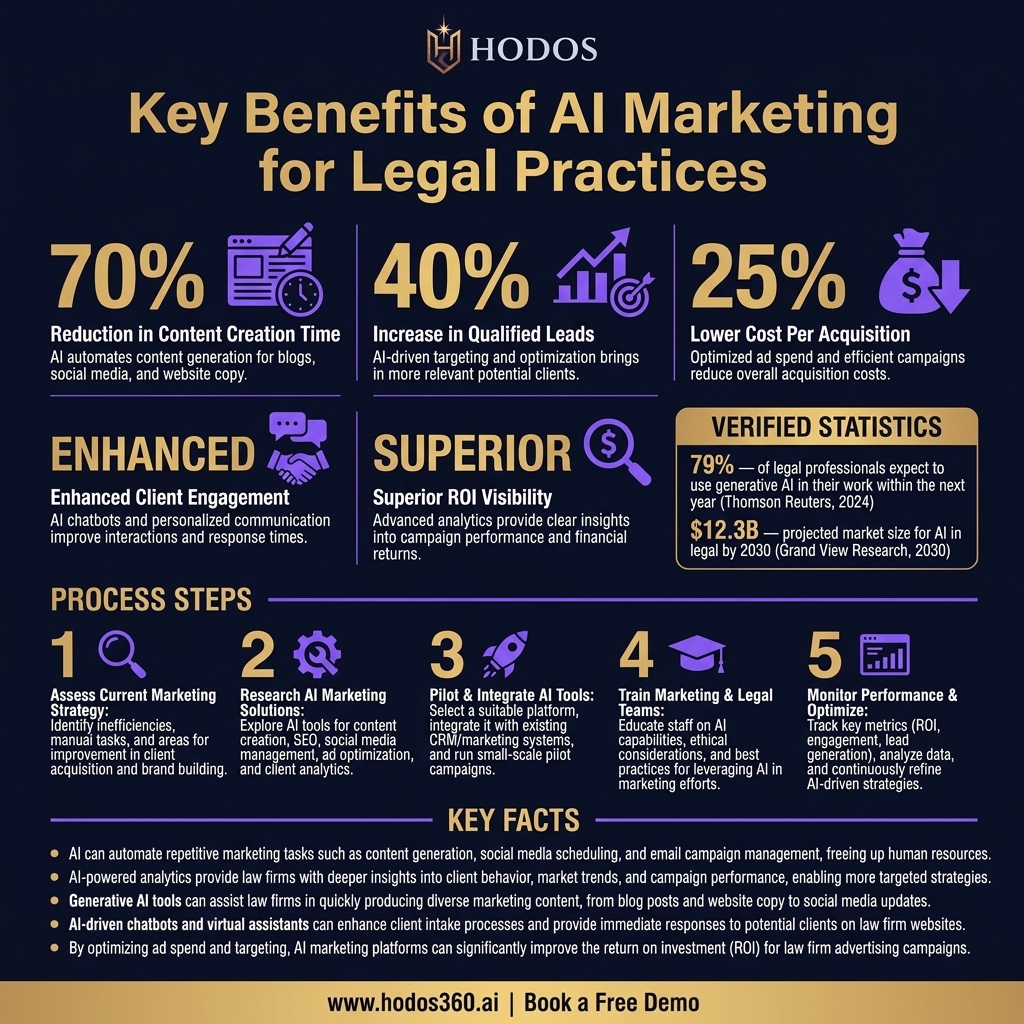
The implications of Bata India’s strategic pivot extend far beyond consumer goods, offering a compelling blueprint for the legal sector. Law firms, much like large corporations, face intense competition for client attention, the constant demand for fresh, relevant content, and the imperative to demonstrate clear return on investment (ROI) from their marketing spend. Traditional agency models, while valuable, often come with significant overheads, slower iteration cycles, and a degree of opacity regarding performance metrics. The new AI-powered model, as championed by Bata India’s CMO Saurabh Vashistha, promises agility, data-driven optimization, and a direct line of sight into creative production and campaign performance. This isn't about replacing human strategists entirely but augmenting them with tools that can analyze vast datasets, generate tailored content, automate distribution, and predict market trends with a speed and scale previously unimaginable. As the legal industry navigates an increasingly digital-first world, understanding and adopting these AI marketing capabilities is no longer an option but an imperative for sustained growth and competitive advantage.
Discover how HODOS 360’s AI Marketing Platform can transform your firm's outreach, mirroring the efficiency and impact seen in leading global brands.
The Bata India Precedent: Reshaping Marketing Paradigms
The decision by Bata India to replace its entire marketing agency roster with an AI-powered creative production system marks a watershed moment in corporate strategy, providing a compelling case study for every industry, including legal. In early 2026, under the visionary leadership of Saurabh Vashistha, the Chief Marketing Officer at Bata India, the company embarked on an ambitious digital transformation, partnering with AI marketing startup Zocket. This move wasn't merely an experiment; it was a full-scale commitment to an AI-led model designed to manage everything from online reputation management and social media automation to content generation and campaign deployment. Vashistha articulated a clear rationale: the desire for enhanced agility, faster response times to market shifts, and a more direct, data-driven approach to their creative engine.
The core of Bata India’s success lies in its new AI-powered model's ability to process vast amounts of consumer data, identify emerging trends, and generate highly targeted marketing content at an unprecedented pace. This enables the brand to maintain a constant, relevant presence across diverse digital channels, responding dynamically to consumer sentiment and market fluctuations. Learn more about AI Agents Search: The Essential API for Real-Time Legal Web Data. For law firms, this precedent offers invaluable lessons. Imagine an AI marketing platform capable of analyzing legal news, legislative changes, and client inquiries to automatically generate blog posts, social media updates, and email newsletters tailored to specific practice areas or client demographics. This level of automated, data-informed content generation and distribution can dramatically reduce the burden on marketing teams, allowing attorneys to focus on legal work while their digital presence remains robust and responsive. The AI-powered marketing engine demonstrated by Bata India is not just about cost reduction; it's about building a more intelligent, adaptive, and ultimately more effective marketing strategy.
Beyond Agencies: The AI-Powered Marketing Engine for Law Firms
The notion of an "AI-powered marketing engine" is rapidly transitioning from futuristic concept to practical reality for law firms seeking a competitive edge in client acquisition. While traditional agencies offer human creativity and strategic oversight, they often struggle with the sheer volume and velocity required for modern digital marketing, particularly for firms needing to reach highly specific niches or manage complex content calendars. This is where HODOS 360’s AI Marketing Platform steps in, offering a suite of tools that automate, optimize, and scale marketing efforts in ways human-only teams cannot. The platform integrates AI video creation, allowing firms to quickly produce engaging visual content for social media and website use without extensive production costs. It also streamlines social media automation, ensuring consistent brand messaging and engagement across platforms.
The transition from a traditional agency shifts model to an AI-driven one for law firms represents a strategic rebuild of their marketing engine. Learn more about Essential AI Voice Assistant Strategies for Modern Law Firms. This shift empowers firms to take greater control over their brand narrative and client outreach. Consider the painstaking process of content generation: researching topics, drafting articles, optimizing for SEO, and then distributing across multiple channels. HODOS 360’s AI can automate much of this, leveraging natural language generation (NLG) to draft compelling blog posts, whitepapers, and case studies based on provided legal expertise or public data. This capability, coupled with sophisticated analytics and ROI tracking, allows firms to precisely measure the impact of every campaign, identifying what resonates with potential clients and optimizing future efforts.
- ✓AI Video Creation: Generate professional marketing videos quickly and cost-effectively for social media and web.
- ✓Social Media Automation: Schedule posts, manage engagement, and maintain consistent brand voice across all platforms.
- ✓Content Generation: Draft articles, blog posts, and legal updates using advanced Natural Language Generation (NLG).
- ✓Targeted Ad Campaigns: Optimize ad spend by identifying ideal client demographics and legal needs.
- ✓SEO Optimization: Ensure content ranks highly in search results, driving organic traffic to your firm's website.
- ✓Real-time Analytics: Monitor campaign performance with granular data, providing actionable insights for continuous improvement.
- ✓Lead Qualification: Automate initial client inquiries and lead scoring to streamline the intake process.
Automating Content Generation and Distribution
One of the most immediate and profound impacts of AI in legal marketing is the automation of content generation and its subsequent distribution. Law firms constantly need to produce high-quality, authoritative content to establish thought leadership and attract clients. Historically, this has been a labor-intensive process, requiring significant time from attorneys or expensive external writers. AI, however, can dramatically accelerate this. Platforms like HODOS 360 can analyze vast legal databases, court rulings, and industry news to identify trending topics relevant to a firm's practice areas. Using advanced natural language processing (NLP) and generation (NLG) models, the AI can then draft initial versions of blog posts, articles, social media updates, and even email newsletters. Learn more about Proven Strategy: AI-Built Websites Can Convert for Law Firms. These drafts, while requiring attorney review for accuracy and nuance, drastically reduce the time and effort involved in creative production.
Beyond creation, AI excels at optimizing and automating content distribution. Once content is generated, an AI marketing platform can schedule its release across various social media channels, email lists, and firm websites, ensuring optimal timing for maximum reach and engagement. It can also personalize distribution by identifying which content types and topics resonate with specific segments of a firm's target audience. For example, a corporate law firm might use AI to distribute updates on M&A trends to its corporate client list, while simultaneously sharing insights on new compliance regulations with its regulatory advisory clients. This granular level of targeting, powered by AI, ensures that marketing messages are not only delivered efficiently but also to the right audience, at the right time, and in the most effective format.
Implementing AI Marketing: A Strategic Blueprint for Legal Practices
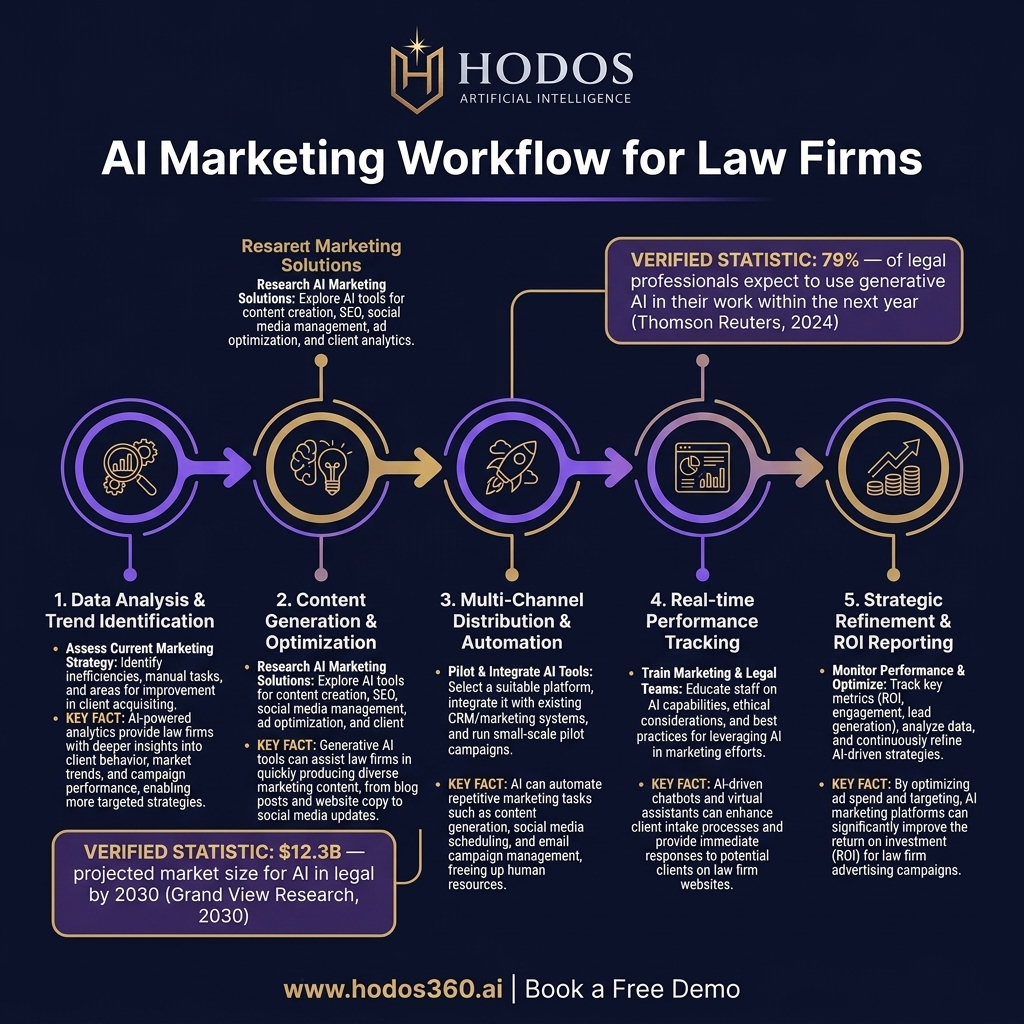
For law firms contemplating the integration of AI into their marketing operations, the path requires a strategic blueprint, not merely a tactical adoption of new tools. The successful transition, much like Bata India's, hinges on a phased approach that aligns technology with business objectives. The first step involves a comprehensive audit of existing marketing efforts, identifying pain points such as high agency costs, slow content cycles, or ineffective lead generation. This audit should also pinpoint areas where AI can deliver the most immediate impact, such as automating repetitive tasks like social media scheduling or initial content drafting. Firms must then select an AI-powered model platform that offers a robust suite of services tailored to the legal sector's unique demands, emphasizing features like secure data handling, compliance capabilities, and integration with existing practice management systems. For instance, a firm might look for AI that can seamlessly integrate with its AI Law Firm Management System for client intake automation, ensuring a smooth transition from lead generation to client onboarding.
The implementation phase is critical and demands careful planning. Learn more about Voice AI: An Essential Leap for Law Firms' Client Engagement. Firms should begin with pilot projects, testing AI capabilities in specific areas, such as a targeted social media campaign for a new practice group or the automated generation of FAQs for their website. This iterative approach allows for learning and refinement, addressing any initial challenges related to data quality, AI model training, or workflow adjustments. Training legal marketing teams and even attorneys on how to effectively leverage AI tools is paramount. This isn't about replacing human roles but rather upskilling them to become AI-augmented strategists, focusing on high-level strategy, ethical oversight, and the uniquely human aspects of client relationships. As Brad Smith, President of Microsoft, often emphasizes, responsible AI deployment requires human oversight and ethical guardrails.
Personalized Client Engagement at Scale
One of the most transformative aspects of AI marketing for law firms is its ability to deliver highly personalized client engagement at scale, a feat previously difficult and resource-intensive for even the largest firms. AI algorithms can analyze client data—from website browsing behavior and past interactions to demographic information and expressed legal needs—to create detailed client profiles. This enables firms to segment their audience with unprecedented precision, delivering tailored content and communications that resonate deeply with individual prospects and existing clients. For example, an AI system can identify a potential client who has repeatedly visited pages related to corporate mergers and acquisitions and then automatically send them an email with a recently published article on M&A trends, or an invitation to a relevant webinar.
Moreover, AI can power personalized interactions through various channels, extending beyond email to chatbots on firm websites, social media responses, and even initial lead qualification through AI Voice Assistants. Learn more about Voice AI: Ultimate Competitive Landscape for Law Firms. These AI-driven tools can provide instant answers to common questions, guide prospects through initial intake forms, and even book appointments with attorneys, all while maintaining a consistent brand voice and professional demeanor. This not only enhances the client experience by providing immediate, relevant support but also frees up valuable human resources within the firm to focus on complex legal matters and high-touch client service. The ability to engage with thousands of potential clients individually, providing relevant and timely information, represents a monumental shift in how law firms can cultivate relationships and convert leads into loyal clients.
Measuring Success: ROI Tracking and Analytics in AI Marketing
In the legal sector, demonstrating clear return on investment (ROI) for marketing expenditures has historically been a challenge, often relying on anecdotal evidence or broad assumptions. However, the advent of sophisticated AI marketing platforms has fundamentally changed this dynamic, offering unparalleled precision in ROI tracking and analytics. Unlike traditional agency models where performance metrics can sometimes be opaque or delayed, AI-powered systems provide real-time, granular data on every aspect of a marketing campaign. This includes everything from website traffic and lead generation numbers to conversion rates, cost-per-acquisition, and ultimately, the revenue generated from AI-driven initiatives. By integrating with client intake systems and billing platforms, AI can trace a prospect's journey from their first interaction with an ad or piece of content all the way through to becoming a paying client, providing a clear, quantifiable link between marketing efforts and firm profitability.
This data-driven approach is essential for law firms operating in a competitive environment where every marketing dollar must deliver demonstrable value. The analytics capabilities of modern AI platforms allow firms to continuously optimize their strategies, identifying underperforming campaigns and reallocating resources to those that yield the best results. Learn more about Legora's Strategic Leap: Essential AI Law Firm Management. For example, if an AI detects that a particular social media campaign targeting small businesses is generating high engagement but low conversion rates, it can suggest adjustments to the call-to-action, ad copy, or landing page content. This iterative optimization, powered by machine learning, ensures that marketing spend is always working as efficiently as possible. Furthermore, AI can predict future trends and client behaviors, allowing firms to proactively adjust their strategies and allocate budgets more effectively. This level of insight empowers law firm leaders to make informed decisions, transforming marketing from a cost center into a predictable, revenue-generating engine.
Ethical Considerations and Future Outlook for AI in Legal Marketing
While the transformative potential of AI marketing for law firms is immense, its adoption also necessitates a rigorous examination of ethical considerations. The legal profession is bound by strict rules of professional conduct, such as ABA Model Rule 7.1 (Communications Concerning a Lawyer's Services), which prohibits false or misleading communications about a lawyer's services. When AI generates content or personalizes outreach, firms must ensure that these communications remain accurate, truthful, and avoid any implication of specific outcomes or guarantees. The potential for AI to inadvertently generate biased content, based on historical data that reflects societal inequalities, is another critical concern.
Navigating Data Privacy and Bias
Firms must implement robust oversight mechanisms and regularly audit AI-generated content to ensure fairness, inclusivity, and compliance with all ethical guidelines. The responsible use of AI, as emphasized by legal tech leaders like Andrew Arruda, co-founder of ROSS Intelligence, is paramount to maintaining public trust and upholding the integrity of the profession. This also extends to data privacy, where regulations like the General Data Protection Regulation (GDPR) and CCPA dictate how client information can be collected, processed, and used in marketing efforts. AI systems must be designed and operated with privacy-by-design principles, ensuring secure data handling and transparency.
Looking ahead, the future outlook for AI in legal marketing is one of continuous evolution and increasing sophistication. We can anticipate AI becoming even more adept at predictive analytics, identifying emerging legal needs before they become widespread, and allowing firms to proactively position themselves. The integration of AI with immersive technologies could further revolutionize client engagement. However, this future also brings new regulatory challenges, particularly concerning data privacy and the use of personal information in marketing, as highlighted by frameworks like the EU AI Act enforcement. Law firms that proactively address these ethical and regulatory challenges, while strategically leveraging AI's capabilities, will not only outcompete their peers but also redefine what it means to effectively serve clients in the digital age.
Ready to optimize your marketing and client acquisition with cutting-edge AI? Explore HODOS 360's comprehensive AI solutions designed specifically for the legal sector.

Key Takeaways and Next Steps
The bold move by Bata India to fully embrace an AI-powered model for its marketing engine serves as an undeniable testament to the transformative power of artificial intelligence across industries, offering a clear roadmap for the legal sector. Law firms can no longer afford to view AI marketing as a distant future concept; it is a present reality that is reshaping competitive landscapes and client expectations. The ability to automate creative production, generate personalized content at scale, optimize distribution, and track ROI with unprecedented precision is not merely an efficiency gain—it is a strategic imperative for growth.
For law firm owners and legal professionals, the next steps are clear: begin by evaluating your current marketing infrastructure and identifying areas ripe for AI integration. Seek platforms that offer comprehensive solutions tailored to the legal industry's unique needs, ensuring compliance and ethical considerations are at the forefront. The transition is not about replacing human ingenuity but augmenting it, empowering your team to focus on high-value strategic tasks and deepen client relationships. By embracing AI marketing, you are not just adopting a new tool; you are rebuilding your firm’s marketing engine for a future where agility, data-driven insights, and personalized engagement are the hallmarks of success. Unlock this potential and drive your firm's growth into the next era of legal practice.
Frequently Asked Questions
How can AI marketing help my law firm acquire new clients?+
AI marketing streamlines client acquisition by automating lead generation, personalizing outreach, and optimizing ad spend. It analyzes data to identify ideal client profiles, creates targeted content that resonates with specific legal needs, and distributes it across optimal channels. This precision ensures your marketing efforts reach the most promising prospects, improving conversion rates and reducing the cost of acquiring new clients significantly.
Is AI marketing ethical for law firms given professional conduct rules?+
Yes, AI marketing can be ethical if implemented with careful oversight. Firms must ensure AI-generated content adheres to ABA Model Rule 7.1, prohibiting misleading communications. This requires human review of AI outputs for accuracy, compliance, and avoidance of bias. Responsible AI use involves establishing clear ethical guidelines, data privacy protocols (e.g., GDPR compliance), and regular audits to maintain professional standards and client trust.
What specific marketing tasks can AI automate for a law firm?+
AI can automate a wide array of marketing tasks, including content generation (blog posts, social media updates, email drafts), social media scheduling and engagement, SEO optimization, ad campaign management, email marketing personalization, and initial lead qualification. It can also analyze marketing data to provide performance insights and suggest optimizations, freeing up human staff for higher-level strategy and client interaction.
How does AI marketing track ROI for legal services?+
AI marketing platforms track ROI by integrating data from various sources: ad platforms, website analytics, CRM systems, and even client intake and billing software. This allows for a comprehensive view of a prospect's journey, from initial touchpoint to conversion and revenue generation. AI algorithms analyze this data to attribute revenue directly to specific marketing campaigns, providing clear, quantifiable insights into profitability and optimizing future spend.
Will AI marketing replace human marketing teams or agencies at law firms?+
AI marketing is designed to augment, not entirely replace, human marketing teams and agencies. While AI excels at automating repetitive tasks, data analysis, and content generation, human strategists remain crucial for creative oversight, ethical compliance, nuanced client relationships, and high-level strategic planning. The future involves a collaborative model where AI empowers human teams to achieve greater efficiency, precision, and impact.
Unlock the future of legal marketing with HODOS 360. Request a free demo today to see our AI Marketing Platform in action and discover its tailored benefits for your law firm.