


AI Marketing: The Ultimate Guide for Law Firm Growth
The legal landscape, often perceived as resistant to rapid technological shifts, is now at the precipice of a profound transformation, particularly in how law firms attract and retain clients. Traditional marketing strategies, once reliable, are increasingly struggling to cut through the digital noise and reach a new generation of legal consumers. It's a challenge that many firms, from boutique practices to large national outfits, grapple with daily, leading to stagnant growth and missed opportunities. However, a new paradigm is emerging, driven by artificial intelligence, that promises to revolutionize client acquisition and brand visibility for legal professionals.
This shift is exemplified by innovators like Seva Ustinov, co-founder and CEO of Plurio, whose company is at the forefront of AI-powered performance marketing automation. Ustinov's vision, as highlighted in a recent Pulse 2.0 interview, is to empower marketing teams with AI agents that analyze campaigns, predict outcomes, and optimize performance autonomously. His firm, which secured a notable $3.5 million seed round, is demonstrating how AI can move beyond simple automation to deliver truly intelligent, self-optimizing marketing strategies. For law firms, this isn't just about adopting new tools; it's about fundamentally rethinking their approach to growth in a competitive, digital-first world where every marketing dollar needs to work harder.
The implications for the legal sector are immense. Imagine a world where your firm's marketing efforts are not just reactive but proactively anticipate client needs, optimize ad spend in real-time, and generate highly qualified leads with unprecedented efficiency. This isn't a distant future; it's the present reality being shaped by platforms like HODOS 360 and the broader AI marketing revolution. By understanding the core principles and practical applications of AI marketing, legal professionals can navigate this new frontier, secure a competitive edge, and ensure their practice thrives in the decades to come. The question is no longer *if* AI will transform legal marketing, but *how quickly* your firm will embrace it. Discover how AI can revolutionize your law firm's growth today!
The Dawn of Autonomous Legal Marketing: Lessons from Plurio's Innovation
The concept of autonomous performance marketing, championed by figures like Seva Ustinov at Plurio, represents a significant leap from traditional digital advertising. Ustinov's vision extends beyond mere automation, aiming for an AI agent that acts as a strategic co-pilot, constantly analyzing vast datasets to identify optimal campaign parameters. This involves real-time bid adjustments, audience segmentation refinement, and creative optimization, all executed without constant human intervention. For law firms, which often operate with lean marketing teams or outsource to agencies that may not specialize in legal nuances, this level of autonomous optimization is a game-changer. It means freeing up valuable human capital from repetitive tasks, allowing attorneys and marketing managers to focus on high-level strategy and client engagement, rather than the minutiae of ad campaign management. The challenge for many firms has been the sheer complexity and time commitment required to run effective, data-driven campaigns across multiple platforms like Google Ads, LinkedIn, and social media. AI offers a solution to this perennial struggle, promising efficiency and precision that manual efforts simply cannot match.
Traditionally, legal marketing has relied on a mix of SEO, content marketing, and paid advertising, often with varying degrees of success and difficulty in measuring direct ROI. A 2023 report by the American Bar Association (ABA) indicated that while most firms engage in some form of digital marketing, only a fraction feel confident in their ability to accurately track client acquisition costs and the direct revenue generated by these efforts. This gap in accountability is precisely where AI performance marketing platforms like Plurio, and by extension, HODOS 360's AI Marketing Platform, shine. They are engineered to provide granular insights, showing not just clicks and impressions, but also conversion rates, lead quality, and the ultimate impact on a firm's bottom line. Learn more about AI Search Visibility: The Ultimate Guide for Law Firms. This level of transparency is crucial for legal practice owners who need to justify every expense and ensure their marketing budget is driving tangible growth.
The core of this innovation lies in AI's ability to process and interpret data at a scale and speed impossible for humans. For instance, an AI agent can simultaneously monitor hundreds of ad variations, target demographics, and keyword performances across different platforms. It learns from every interaction, identifying patterns and correlations that predict which strategies will yield the highest return on investment for specific legal services, be it personal injury, corporate law, or family law. This continuous learning loop ensures that campaigns are not static but dynamically adapt to market shifts, competitor actions, and evolving client behaviors. The result is not just more efficient spending but a more effective allocation of resources that directly contributes to securing new clients and expanding the firm's client base, transforming marketing from a cost center into a powerful growth engine.
Moreover, the adoption of such sophisticated AI tools is creating a noticeable divide in the legal sector. Firms that embrace these technologies early are gaining a significant competitive advantage, often outranking and outperforming those still reliant on traditional, less optimized approaches. This isn't just about having a larger budget; it's about leveraging technology to maximize the impact of existing resources. As Seva Ustinov articulated, the goal is to provide autonomous optimization, turning complex performance marketing into a streamlined, self-improving process. For law firms, this means not only attracting more clients but attracting the *right* clients – those who are most likely to convert and provide long-term value to the practice.
Beyond Basic Automation: Predictive Analytics in Client Acquisition
The true power of AI in performance marketing extends far beyond simple task automation; it lies in its predictive capabilities. Unlike rule-based automation, which executes predefined actions, AI-driven predictive analytics anticipates future trends and client behaviors. For a law firm, this means an AI platform can analyze historical client data, market trends, and even external factors like economic indicators or legislative changes, to forecast which legal services will be in demand and which marketing channels will be most effective. This allows firms to shift from a reactive marketing posture, where campaigns are launched in response to immediate needs, to a proactive one, where strategies are developed and deployed to capitalize on emerging opportunities before competitors even recognize them.
Consider the intricate process of lead qualification. Traditionally, this involves significant human effort, often leading to missed opportunities or wasted time on unqualified leads. Learn more about Legal AI Models: The Essential Shift to In-House Development. AI, however, can analyze lead data points—such as geographic location, online behavior, engagement with past content, and demographic information—to assign a 'lead score,' predicting the likelihood of conversion. This intelligent lead scoring allows law firm marketing teams to prioritize their outreach, focusing resources on the most promising prospects. For example, a platform might identify that individuals searching for 'estate planning attorney' in a specific affluent zip code who have also downloaded a firm's whitepaper on wealth transfer have a 70% higher conversion rate than general website visitors. This level of precision ensures that marketing efforts are not just broad but deeply targeted and highly effective, minimizing ad spend waste and maximizing conversion rates.
Crafting a Digital Edge: AI's Role in Content and Social Media
In today's digital ecosystem, content is king, and social media is its kingdom. Law firms, however, often struggle with the consistent creation of high-quality, engaging content and maintaining an active, strategic social media presence. This is where AI-powered content generation and social media automation become invaluable assets. AI can analyze vast amounts of legal precedents, legislative updates, and public queries to identify trending topics and generate relevant blog posts, articles, and updates. Platforms can even adapt the tone and style of content to match a firm's brand voice, ensuring consistency and professionalism across all digital touchpoints. This capability allows firms to establish themselves as thought leaders, attracting potential clients by providing valuable information and insights.
Beyond written content, AI is revolutionizing visual and multimedia marketing. The creation of compelling video content, for instance, has traditionally been costly and time-consuming. AI video creation tools can now transform text-based articles or outlines into professional-looking videos, complete with voiceovers, animations, and relevant visuals, in a fraction of the time and cost. This is particularly impactful for platforms like YouTube or LinkedIn, where video content significantly boosts engagement. For law firms aiming to explain complex legal concepts or introduce their team, AI-generated videos offer an accessible and scalable solution. Learn more about AI-Native Law Firms: The Ultimate Guide to Thriving in a New Era. A recent Gartner report indicated that by 2027, generative AI will produce 30% of outbound marketing messages from large organizations, highlighting the rapid adoption and increasing sophistication of these tools.
Social media automation, another cornerstone of AI marketing, ensures that a firm's online presence is consistently active and engaging without requiring constant manual oversight. AI can schedule posts, analyze optimal posting times for maximum reach, and even suggest content based on audience engagement metrics. Moreover, AI-driven tools can monitor social media for mentions of the firm, relevant legal discussions, or potential client inquiries, allowing for timely responses and proactive engagement. This not only enhances brand visibility but also fosters a sense of responsiveness and accessibility, crucial for building trust with prospective clients. The HODOS 360 AI Marketing Platform, for example, integrates these capabilities, offering a comprehensive suite for content generation, social media automation, and detailed analytics to measure impact.
The strategic deployment of AI in content and social media isn't just about efficiency; it's about amplifying a firm's voice and reach. By leveraging AI to create and distribute content tailored to specific client segments and legal needs, law firms can significantly improve their SEO rankings, drive organic traffic, and position themselves as authorities in their respective practice areas. This proactive digital strategy is essential in a crowded legal market where visibility directly translates to client acquisition. Unlock your firm's full marketing potential with HODOS 360's AI Marketing Platform. Start your transformation!
The Data Advantage: Measuring ROI and Optimizing Legal Campaigns
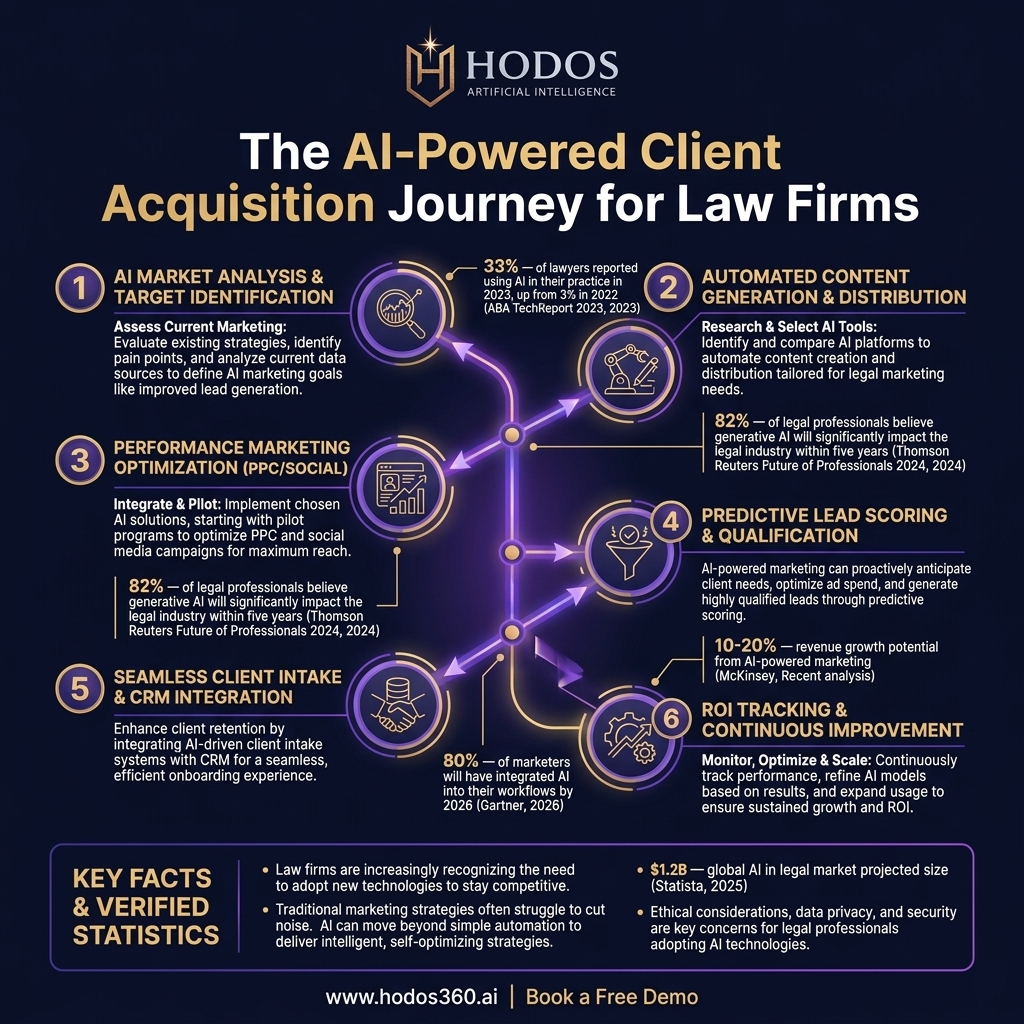
One of the most persistent challenges in legal marketing has been the accurate measurement of Return on Investment (ROI). Many firms invest heavily in advertising, but struggle to definitively link marketing spend to new client intake and revenue generation. This opacity makes strategic decision-making difficult, often leading to budget allocations based on intuition rather than empirical data. AI marketing platforms fundamentally change this by providing unparalleled data analytics and real-time ROI tracking. These platforms integrate data from various touchpoints – website visits, ad clicks, social media engagement, lead form submissions, and even CRM data – to create a holistic view of the client journey. This allows firms to understand exactly which marketing efforts are most effective in attracting and converting high-value clients.
For instance, an AI platform can track a client from their initial search query to their first consultation, detailing every interaction along the way. It can attribute specific revenue figures to particular campaigns, channels, or even individual keywords. This granular attribution model provides law firm owners with the confidence to scale successful campaigns and reallocate resources from underperforming ones. A study by McKinsey & Company highlighted that companies leveraging advanced analytics in their marketing efforts see a 15-20% increase in marketing effectiveness and a significant reduction in customer acquisition costs. For law firms, this translates directly into more efficient client acquisition and improved profitability.
Beyond simple tracking, AI excels at identifying patterns and anomalies that human analysts might miss. Learn more about Legal AI Acquisition 2026: The New Era of Agentic Law Firms. It can pinpoint subtle shifts in market demand, emerging competitor strategies, or changes in client sentiment that require immediate adjustments to marketing campaigns. This continuous optimization ensures that campaigns are always performing at their peak, maximizing the impact of every marketing dollar. For example, if a particular ad creative for a corporate law service starts to underperform in a specific demographic, the AI can automatically test new variations or reallocate budget to more effective creatives without manual intervention. This proactive, data-driven approach is a stark contrast to traditional methods, where campaign adjustments often occur weeks or months after performance dips, leading to significant wasted spend.
The ability to accurately measure and optimize ROI is not merely a financial benefit; it's a strategic imperative. It empowers law firms to make informed decisions about their growth trajectory, identify lucrative niche markets, and build a sustainable client acquisition pipeline. Without this data-driven clarity, firms are essentially operating in the dark, hoping for the best. With AI marketing, however, they gain a powerful lens through which to view their marketing performance, ensuring that every effort contributes demonstrably to the firm's success. This data advantage is what separates the thriving, forward-thinking legal practices from those struggling to keep pace in an increasingly competitive environment.
- ✓Client Acquisition Cost (CAC): Track the average cost to acquire a new client through specific campaigns or channels.
- ✓Return on Ad Spend (ROAS): Measure the revenue generated for every dollar spent on advertising, providing direct financial impact.
- ✓Lead Conversion Rate: Analyze the percentage of leads that convert into paying clients, indicating lead quality and sales funnel effectiveness.
- ✓Client Lifetime Value (CLTV): Estimate the total revenue a client is expected to generate over their relationship with the firm, guiding long-term marketing strategy.
- ✓Website Traffic & Engagement: Monitor website visitors, bounce rates, time on page, and specific page views to understand content effectiveness.
- ✓Social Media Engagement: Track likes, shares, comments, and reach to gauge brand visibility and audience interaction.
- ✓Channel Performance: Compare the effectiveness of different marketing channels (e.g., PPC, SEO, social, email) to optimize budget allocation.
Navigating Ethical AI in Legal Marketing
While the promise of AI marketing is vast, its implementation in the legal sector necessitates a careful consideration of ethical boundaries and professional responsibility. Law firms are bound by stringent rules regarding advertising and client solicitation, primarily governed by the American Bar Association (ABA) Model Rules of Professional Conduct. For instance, ABA Model Rule 7.1, "Communications Concerning a Lawyer's Services," mandates that all communications about a lawyer's services must not be false or misleading. This rule becomes particularly relevant with AI-generated content or automated ad copy, requiring careful oversight to ensure accuracy and avoid any misrepresentation of legal services or outcomes.
Furthermore, the use of AI in targeting and personalization must align with ABA Model Rule 7.3, "Solicitation of Clients," which prohibits direct solicitation that involves coercion, duress, or harassment. Learn more about AI App Development: Essential for Law Firms' Digital Future. While AI can identify highly probable clients, the methods of outreach must remain ethical, respectful, and compliant with privacy regulations like the GDPR or CCPA. Firms must ensure that their AI marketing platforms are not engaging in deceptive practices or creating overly aggressive campaigns that could be construed as unethical solicitation. The responsibility ultimately lies with the firm to review and approve all AI-generated marketing outputs and strategies, maintaining human oversight to safeguard ethical integrity and client trust.
Future-Proofing Your Practice: Integrating AI Marketing with Firm Operations
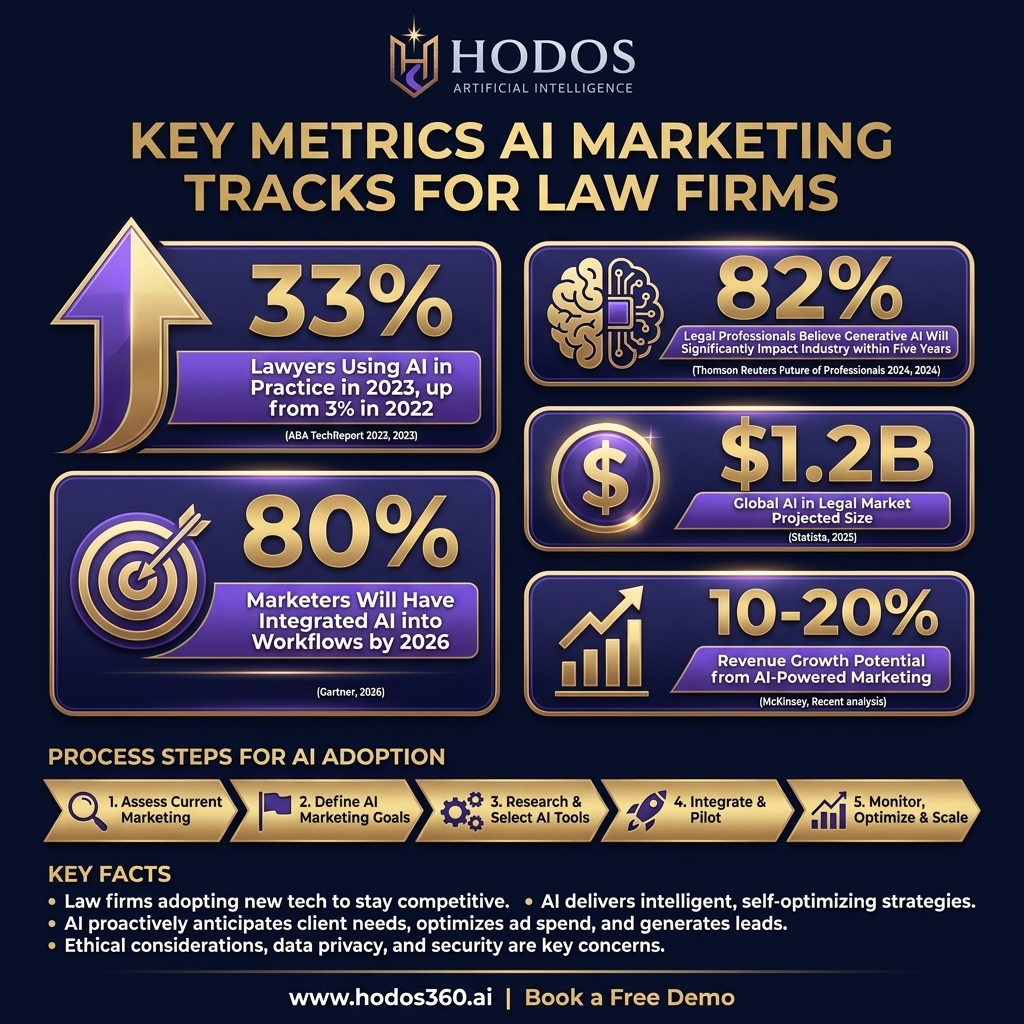
The true long-term value of AI marketing for law firms emerges when it is seamlessly integrated with other critical firm operations. An AI marketing platform doesn't exist in a vacuum; its effectiveness is amplified when it communicates and shares data with the firm's broader technological ecosystem, including case management systems, client intake platforms, and document automation tools. This holistic approach creates an end-to-end client journey, from initial lead generation through case resolution, all powered by intelligent automation. Imagine a scenario where a qualified lead identified by the AI marketing platform is automatically funneled into an AI-powered client intake system, which then populates initial client information into a case management system and even drafts preliminary engagement letters using document automation. This level of integration dramatically reduces administrative overhead, minimizes human error, and accelerates the entire client onboarding process.
Firms that embrace such integrated AI solutions are not just optimizing individual processes; they are building a future-proof practice. At LegalTech NYC 2026, discussions frequently revolved around the concept of the 'connected law firm,' where AI acts as the central nervous system, ensuring data flows efficiently and intelligently across all departments. Early adopters, like some of the larger firms partnering with AI legal research platforms such as Harvey AI or using advanced practice management suites like Clio, are already demonstrating the competitive edge gained through this synergy. They're reporting not only increased client acquisition but also higher client satisfaction due to more streamlined, responsive service. This contrasts sharply with firms that maintain siloed systems, where valuable client data remains fragmented, leading to inefficiencies and a disjointed client experience.
Moreover, the competitive landscape is rapidly evolving. Learn more about AI Adoption in Legal: An Essential Guide to Scaling GenAI. As more legal tech startups secure significant funding rounds—like OpenAI's multi-billion dollar raises and the continued growth of specialized legal AI companies—the pressure on traditional firms to innovate intensifies. Firms that delay adopting these integrated AI solutions risk being outmaneuvered by more agile competitors who can acquire clients more efficiently, deliver services more cost-effectively, and provide a superior overall client experience. The investment in AI is no longer a luxury but a strategic necessity for long-term survival and growth. It's about building an infrastructure that can adapt to future challenges and leverage technological advancements to their fullest potential, ensuring the firm remains relevant and prosperous in a rapidly changing legal market.
This integration also extends to the insights generated by AI marketing. When marketing data, such as the types of cases most frequently sought or the demographics of new clients, is fed back into strategic planning, it informs decisions about resource allocation, attorney specialization, and even firm expansion. For example, if AI marketing consistently reveals a high demand for environmental law services in a particular region, the firm can strategically invest in expanding that practice area or opening a new office. This creates a virtuous cycle where marketing insights drive strategic growth, which in turn fuels more targeted and effective marketing. It is this intelligent feedback loop that truly future-proofs a legal practice, transforming it into a dynamic, data-driven enterprise ready for the challenges and opportunities of tomorrow.
The Human Element: Attorneys as Strategic AI Partners
Despite the incredible advancements in AI marketing, it's crucial to remember that AI is a tool, not a replacement for human intellect and judgment in the legal field. Attorneys and legal professionals remain indispensable as strategic partners to AI, guiding its implementation, interpreting its insights, and ensuring ethical compliance. The human element provides the contextual understanding, emotional intelligence, and nuanced decision-making that AI, for all its processing power, cannot replicate. For instance, while AI can identify a demographic most likely to seek a divorce attorney, it's the human attorney who crafts the empathetic messaging, builds the personal rapport, and provides the compassionate counsel that defines a successful client relationship.
Attorneys' roles are shifting from executing repetitive marketing tasks to overseeing and refining AI-driven strategies. This involves setting the strategic objectives for AI campaigns, reviewing AI-generated content for accuracy and ethical considerations, and leveraging AI insights to inform broader business development initiatives. The synergy between human expertise and AI efficiency allows firms to achieve outcomes that neither could accomplish alone. It empowers legal professionals to focus on the high-value, client-centric aspects of their work, while AI handles the data-intensive, repetitive tasks of marketing optimization. This partnership ensures that law firms not only grow efficiently but also maintain the professional integrity and personal touch that are hallmarks of the legal profession.

Key Takeaways and Next Steps
The era of AI-powered performance marketing has arrived, fundamentally reshaping how law firms can attract, engage, and retain clients. From the autonomous optimization pioneered by startups like Plurio to the comprehensive platforms enabling sophisticated content creation and ROI tracking, AI offers an unprecedented opportunity for legal practices to achieve sustainable growth. It's about moving beyond guesswork and intuition, embracing a data-driven approach that maximizes efficiency, minimizes wasted spend, and delivers measurable results. Firms that strategically integrate AI into their marketing efforts will not only gain a significant competitive advantage but also future-proof their operations against an increasingly dynamic market.
The journey toward an AI-driven marketing strategy is not just about adopting new software; it's about fostering a culture of innovation and continuous improvement within your firm. It requires an understanding of both the immense potential and the ethical responsibilities inherent in these powerful tools. By leveraging AI to automate repetitive tasks, personalize client outreach, and gain deeper insights into market trends, legal professionals can dedicate more time to what they do best: providing exceptional legal services. Embrace this transformation, and position your firm at the forefront of the legal industry's digital evolution.
Ready to transform your law firm's client acquisition and marketing ROI? HODOS 360’s AI Marketing Platform provides the comprehensive suite of tools—from AI video creation and social media automation to content generation and advanced analytics—designed specifically for legal professionals. Schedule a free demo with HODOS 360 and discover the future of legal marketing!
Frequently Asked Questions
What is AI performance marketing for law firms?+
AI performance marketing for law firms utilizes artificial intelligence to automate, optimize, and track marketing campaigns with the goal of achieving measurable results, such as lead generation and client acquisition. It involves AI agents analyzing data, predicting outcomes, and making real-time adjustments to ad spend, targeting, and content to maximize ROI and efficiency for legal services.
How does AI help law firms acquire new clients?+
AI helps law firms acquire new clients by identifying high-value leads through predictive analytics, optimizing ad spend for maximum conversion, automating personalized outreach, and generating engaging content tailored to potential clients' needs. It streamlines the entire client acquisition funnel, ensuring more effective targeting and resource allocation.
What are the ethical considerations of using AI in legal marketing?+
Ethical considerations include ensuring AI-generated content is accurate and not misleading (ABA Model Rule 7.1), avoiding coercive or harassing solicitation (ABA Model Rule 7.3), and upholding data privacy regulations. Law firms must maintain human oversight to review AI outputs and strategies, ensuring compliance with professional conduct rules and preserving client trust.
Can AI create legal marketing content and social media posts?+
Yes, AI can generate a wide range of legal marketing content, including blog posts, articles, and social media updates, by analyzing legal trends and audience queries. It can also assist with AI video creation and automate social media scheduling and engagement, freeing up attorneys' time while maintaining a consistent and professional online presence for the firm.
How can law firms measure the ROI of AI marketing efforts?+
AI marketing platforms provide robust analytics that track key metrics such as Client Acquisition Cost (CAC), Return on Ad Spend (ROAS), lead conversion rates, and client lifetime value. By integrating data from various marketing channels and CRM systems, firms gain a clear, granular understanding of which efforts are driving revenue and overall growth.
Is AI marketing only for large law firms?+
No, AI marketing is beneficial for law firms of all sizes. While large firms may have more resources for custom solutions, many AI marketing platforms, like HODOS 360, offer scalable services suitable for boutique and mid-sized firms. AI democratizes advanced marketing capabilities, allowing smaller practices to compete effectively with larger ones by optimizing their limited budgets.