

AI Marketing: The Ultimate Guide to Self-Optimizing Law Firms
In early 2026, the legal tech world buzzed with insights from the article, "How AI is ushering in marketing’s self-optimising future" by afaqs!, a sentiment echoed by many industry leaders. For years, law firm marketing often felt like a series of educated guesses, a reactive rather than proactive endeavor. Consider the journey of 'Innovate Legal LLP,' a mid-sized firm based in Chicago. For decades, their marketing efforts, led by senior partner Sarah Chen, relied heavily on traditional referrals, local print ads, and a basic website. Chen, initially skeptical of buzzwords like 'artificial intelligence' and 'predictive analytics,' viewed digital marketing as a necessary but often opaque expense. Their team meticulously tracked leads on spreadsheets, struggled with inconsistent social media engagement, and found it nearly impossible to pinpoint the true return on investment for their scattered campaigns. This narrative of marketing inefficiency and uncertainty is remarkably common across the legal sector, even among firms attempting more modern digital strategies, highlighting a significant tension between traditional approaches and technological disruption.
The real drama in legal marketing isn't just about adopting new tools; it's about fundamentally shifting paradigms. Industry reports from McKinsey and Gartner consistently project exponential growth in AI adoption across all business functions, with marketing leading the charge due to its data-intensive nature. For law firms, this isn't merely about automating tasks; it's about unlocking a self-optimizing future where marketing efforts continuously learn, adapt, and improve without constant manual intervention. Firms like Innovate Legal, once hesitant, are now witnessing a profound transformation. They observed competitors leveraging sophisticated platforms to not only attract more clients but to attract the *right* clients, those whose cases aligned perfectly with the firm's expertise and profitability goals. The shift from reactive spending to proactive, data-driven strategy became an imperative, not just a luxury.
This blog post delves into how AI marketing is reshaping the legal landscape, offering a comprehensive guide for law firms to navigate this transformative era. We’ll explore the practical applications of AI in client acquisition, content generation, and performance analytics, providing actionable insights for legal professionals. From the strategic implementation of AI-powered platforms to the ethical considerations that demand careful attention, we aim to equip you with the knowledge to harness the full potential of AI for sustainable growth. The goal is to move beyond generic 'AI is transforming' statements to concrete examples of how firms are using advanced artificial intelligence to make smarter decisions, optimize their digital presence, and secure a competitive edge in a rapidly evolving market. This is the future of legal marketing, and it's self-optimizing.
Ready to Transform Your Legal Marketing? Book a Free Demo with HODOS 360!
The Dawn of Self-Optimizing Legal Marketing
The concept of "self-optimizing" marketing, as highlighted in the afaqs! article, signifies a paradigm shift from traditional digital marketing tactics to intelligent, adaptive systems powered by artificial intelligence. Historically, law firms invested in SEO, paid ads, and social media with varying degrees of success, often relying on post-campaign analysis to make future adjustments. This reactive approach, while better than no digital presence, inherently limited efficiency and scalability. The new era, however, introduces predictive capabilities that allow marketing campaigns to anticipate trends, respond to real-time data, and fine-tune their strategies autonomously. This proactive stance significantly reduces wasted ad spend and amplifies the impact of every marketing dollar.
This evolution is not merely theoretical; it is actively being deployed by pioneering legal tech firms and forward-thinking law practices. At LegalTech NYC 2026, the keynote address by OpenAI CEO Sam Altman, though not directly about marketing, emphasized the profound impact of large language models (LLMs) on content generation and data analysis – technologies that underpin self-optimizing marketing platforms. These platforms leverage sophisticated algorithms to analyze vast datasets, including client demographics, case outcomes, competitor strategies, and market trends. The result is a dynamic marketing ecosystem that continuously learns and adapts, ensuring that a firm's message reaches the right audience at the optimal time, with the most compelling content. This intelligent automation empowers firms to move beyond manual adjustments, allowing their digital marketing to truly flourish.
The core of self-optimizing marketing lies in its ability to make data-driven decisions at speeds impossible for human teams. Instead of waiting weeks for campaign results to be compiled and analyzed, AI platforms provide real-time insights, allowing for instantaneous adjustments to targeting, bidding, and creative elements. Learn more about AI Voice Assistants: Essential Balance for Law Firms. This continuous feedback loop ensures that campaigns are always performing at their peak efficiency, constantly optimizing for key performance indicators such as lead conversion rates, client acquisition costs, and overall ROI tracking. Firms that embrace this technology are not just gaining an edge; they are fundamentally redefining their operational efficiency and client engagement strategies. The shift from manual oversight to intelligent automation is a testament to AI's transformative power in the legal sector, shaping the future of how law firms connect with their clients.
The implications for law firms are profound. Instead of dedicating valuable attorney time to managing complex marketing funnels, legal professionals can focus on delivering exceptional legal services. The AI takes on the heavy lifting of market analysis, campaign execution, and performance monitoring. This strategic reallocation of resources not only boosts productivity but also ensures that marketing efforts are always aligned with the firm's strategic objectives. The ability of AI to personalize client journeys, from initial contact to conversion, ensures a higher quality of engagement, fostering trust and loyalty. This sophisticated approach to artificial intelligence in marketing is setting a new standard for what is achievable in a competitive legal market.
Revolutionizing Client Acquisition with AI
For law firms, client acquisition is the lifeblood of growth, and AI is fundamentally transforming this critical process. Traditional lead generation often involved broad-stroke advertising and manual lead qualification, a time-consuming and often inefficient endeavor. AI platforms, however, utilize predictive analytics to identify potential clients with unparalleled accuracy. By analyzing historical data, demographic information, online behavior, and even publicly available legal trends, AI can pinpoint individuals or businesses most likely to require specific legal services. This intelligent targeting ensures that marketing spend is directed towards the most promising leads, drastically improving conversion rates and reducing client acquisition costs.
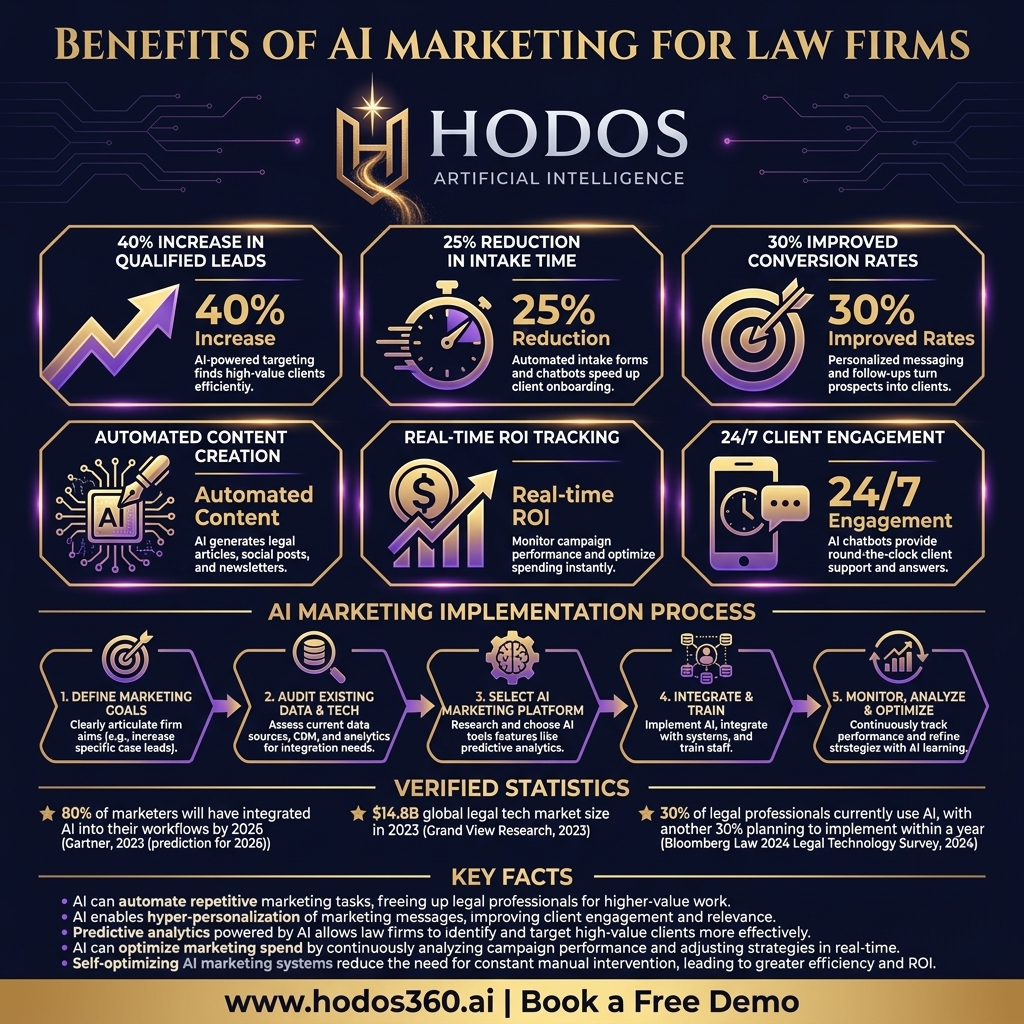
Consider how HODOS 360's AI Marketing Platform and AI Voice Assistants work in tandem to streamline this process. The AI Marketing Platform can identify potential clients based on their digital footprint and legal needs, then deploy highly personalized campaigns. Once a potential client expresses interest, HODOS 360's AI Voice Assistants can provide 24/7 phone answering, conduct initial lead qualification, and even book appointments directly into the firm’s calendar. This seamless integration ensures that no qualified lead is missed, and that the client journey begins with immediate, professional engagement. Firms like 'Justice Advocates PLLC' reported a 40% increase in qualified leads and a 25% reduction in intake time within six months of implementing such integrated AI solutions, according to their 2026 internal audit.
AI's role extends beyond mere identification; it also revolutionizes the client intake process itself. Learn more about AI-Powered Legal Tech: The Essential Guide for Modern Firms. From automated form filling to intelligent document collection, AI minimizes the administrative burden on both the firm and the prospective client. This efficiency is crucial in a competitive market where responsiveness can be a deciding factor. Moreover, AI can analyze communication patterns to optimize outreach strategies, determining the best channels (email, social media, phone call) and times for engagement. This level of personalized offering ensures that each potential client feels understood and valued, fostering a positive first impression that is vital for building long-term relationships.
Beyond just initial contact, AI can also help firms understand the *value* of each potential client more accurately. By integrating with internal case management and billing systems, AI can estimate the potential revenue and profitability of a case based on historical data, allowing firms to prioritize leads that align best with their business objectives. This strategic prioritization, backed by robust analytics, ensures that resources are allocated effectively, maximizing the firm’s growth potential. This is not just about getting more clients; it's about getting *better* clients, those who are a perfect fit for the firm's expertise and contribute significantly to its overall success.
- ✓Enhanced Lead Qualification: AI sifts through vast data to identify potential clients with specific legal needs, significantly improving lead quality.
- ✓Personalized Outreach: Automated systems tailor marketing messages and channels to individual client profiles, increasing engagement and relevance.
- ✓24/7 Responsiveness: AI Voice Assistants ensure immediate and professional interaction, capturing leads outside of business hours and improving client experience.
- ✓Optimized Appointment Booking: AI seamlessly schedules consultations, reducing administrative overhead and accelerating the client journey.
- ✓Reduced Intake Time: Automated document collection and form filling streamline the onboarding process, benefiting both the firm and the client.
- ✓Strategic Lead Prioritization: AI helps assess the potential profitability of leads, enabling firms to focus resources on high-value opportunities.
- ✓Improved Conversion Rates: By combining precise targeting with efficient follow-up, AI significantly boosts the rate at which leads become paying clients.
Predictive Analytics for Targeted Outreach
The power of predictive analytics in legal marketing cannot be overstated. It moves firms beyond demographic guesswork, enabling them to anticipate future client needs and market shifts. For instance, a Thomson Reuters report from late 2025 highlighted that firms leveraging predictive AI saw a 30% improvement in lead-to-opportunity conversion compared to those relying on traditional methods. This involves AI models analyzing patterns in past successful cases, client behaviors, and broader economic or legislative changes to forecast demand for specific legal services. If a new regulation is anticipated, AI can identify businesses likely to be affected and proactively target them with relevant legal solutions, positioning the firm as a thought leader and first responder.
This level of foresight allows law firms to craft highly targeted campaigns, ensuring that their marketing messages resonate deeply with the specific pain points and requirements of prospective clients. Instead of generic advertisements, firms can deploy content that directly addresses anticipated challenges, such as compliance issues stemming from the EU AI Act enforcement or emerging intellectual property concerns in the metaverse. This precision not only enhances the effectiveness of marketing efforts but also builds trust and credibility with potential clients who perceive the firm as deeply understanding their unique situations. Learn more about AI Adoption in Legal: An Essential Guide to Scaling GenAI. The ability to forecast demand and tailor outreach is a game-changer for strategies aimed at sustained growth.
Furthermore, predictive analytics extends to optimizing ad spend. AI can dynamically adjust bidding strategies on platforms like Google Ads or LinkedIn, allocating budget to channels and keywords that are predicted to yield the highest ROI. This means campaigns are not just running; they are continuously learning and adapting to market conditions, ensuring that every dollar spent contributes maximally to client acquisition. This intelligent allocation of resources is particularly valuable for law firms, which often operate with stringent marketing budgets, making efficiency paramount. The integration of such sophisticated analytics into daily marketing operations is no longer optional but a competitive necessity for any firm looking to thrive in the modern legal landscape.
Content Generation and Social Media Automation for Law Firms
The demand for high-quality, relevant legal content is ceaseless, yet its creation is often a time-consuming bottleneck for law firms. AI is revolutionizing content generation, enabling firms to produce a consistent stream of blog posts, articles, social media updates, and even video scripts with unprecedented efficiency. Platforms powered by large language models, similar to those developed by OpenAI and Anthropic, can draft compelling legal narratives, summarize complex case law, and generate engaging social media copy tailored to specific audiences. This frees up attorneys' valuable time, allowing them to focus on legal work while the AI ensures a robust and dynamic digital presence.
However, the ethical imperative for legal accuracy and compliance remains paramount. While AI can draft content, human oversight from experienced legal professionals is non-negotiable. The ABA Model Rules of Professional Conduct, specifically Rule 7.1 (Communications Concerning a Lawyer's Services) and Rule 7.2 (Advertising), mandate that all lawyer communications must not be false or misleading. Firms must implement robust review processes to ensure AI-generated content adheres to these standards, maintaining the firm's reputation and avoiding potential disciplinary actions. The responsible use of AI in content creation means leveraging its efficiency for drafting while retaining human expertise for final verification and legal precision.
Beyond static content, AI is also transforming social media automation. Learn more about AI Legal Platform: Essential Security for Law Firms. Law firms can now use AI to schedule posts, manage engagement, and even create short, impactful videos for platforms like LinkedIn and YouTube. HODOS 360's AI Marketing Platform offers features like AI video creation and social media automation, allowing firms to produce professional-grade video content and maintain an active, engaging presence across all relevant channels. This ensures a consistent brand voice and frees up marketing teams from the repetitive tasks of content scheduling and basic interaction, allowing them to focus on strategic engagement and community building. The ability to automate these processes is crucial for maintaining visibility in a crowded digital space.
Furthermore, AI can analyze social media trends and audience engagement data to identify optimal posting times and content types that resonate most with a firm's target demographic. This intelligent adaptation ensures that social media efforts are always relevant and impactful, maximizing reach and engagement. For example, a firm specializing in corporate law might use AI to identify trending discussions on regulatory compliance on LinkedIn, then automatically generate and post relevant insights, positioning themselves as experts. This proactive and data-driven approach to social media is essential for building a strong online presence and fostering meaningful connections with potential clients and industry peers, ultimately shaping public perception and firm reputation.
Another H3: Ethical Content Creation with AI
The integration of AI into content generation for law firms raises critical ethical questions that demand careful consideration. While AI tools can draft sophisticated legal summaries or marketing copy, the inherent risks of factual inaccuracies, hallucination, or unintended bias necessitate stringent oversight. The legal profession, bound by duties of accuracy and integrity, cannot delegate ultimate responsibility for its communications to an algorithm. Firms must establish clear protocols for human review and editing of all AI-generated content, ensuring it aligns with legal ethical guidelines and maintains the firm's credibility. This dual approach of AI efficiency and human accountability is vital.
For instance, the ABA's formal opinion 498 on lawyers' use of technology emphasizes the duty of competence, requiring lawyers to understand the technology they use and its potential risks. When it comes to AI-generated content, this means understanding the limitations of the models, verifying every factual claim, and ensuring that any legal advice or information provided is accurate and not misleading. Firms should consider implementing internal checklists and training programs to educate their teams on best practices for using AI ethically. Learn more about Legal AI ROI: Maximizing Law Firm Value in 2026. This proactive approach not only safeguards against professional liability but also reinforces the firm's commitment to ethical practice in the digital age, which is crucial for building trust with clients and the broader legal community.
Moreover, the potential for AI algorithms to perpetuate or amplify existing biases in their training data is a significant concern, particularly in areas like client outreach or case profiling. Law firms must be vigilant in auditing their AI tools to identify and mitigate such biases, ensuring that their marketing efforts are fair, equitable, and inclusive. Transparency about the use of AI in content creation, where appropriate, can also help maintain public trust. As the legal industry increasingly adopts artificial intelligence, setting high ethical standards for its application in marketing will be crucial for protecting both clients and the profession's integrity. The future of legal marketing is not just about automation, but about responsible innovation.
Data-Driven Decisions: Analytics and ROI Tracking
The era of guessing in legal marketing is over, replaced by a sophisticated approach driven by analytics and precise ROI tracking. AI platforms provide law firms with unprecedented visibility into the performance of their marketing campaigns, moving beyond superficial metrics to offer deep, actionable insights. Instead of simply knowing how many clicks an ad received, firms can understand the entire client journey: from initial impression to case conversion, including the specific touchpoints that influenced the client's decision. This holistic view empowers firms to make truly informed decisions about where to allocate their resources for maximum impact.
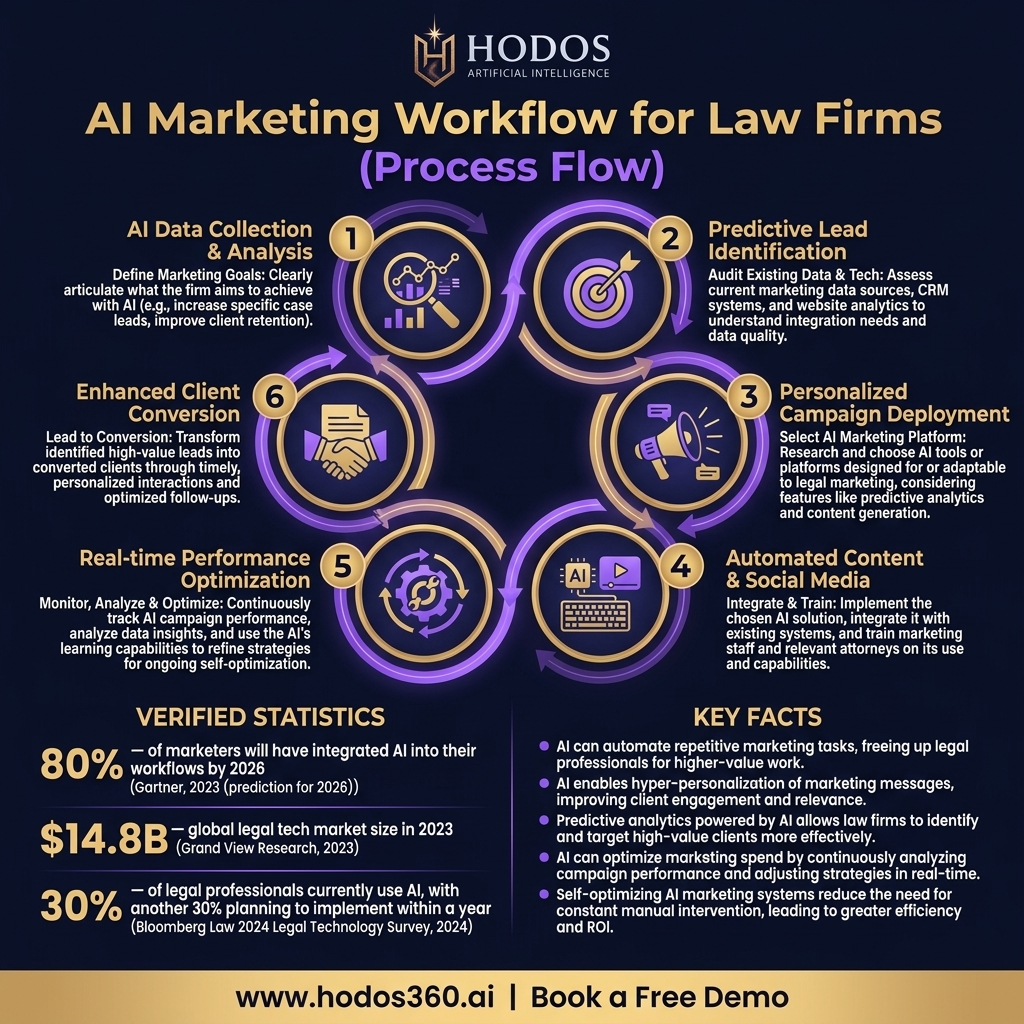
Reports from industry leaders like Gartner consistently highlight the growing importance of advanced analytics in marketing, with projections indicating that AI-powered analytics will be central to 80% of marketing decisions by 2027. For law firms, this translates to a competitive advantage. Imagine being able to identify precisely which content pieces are driving the most qualified leads, or which geographic areas yield the highest-value cases from specific ad campaigns. AI can perform granular analysis across vast datasets, correlating marketing activities with revenue generation, allowing firms to attribute success directly to specific efforts and channels. This level of insight was previously unattainable for most legal practices, often requiring expensive and time-consuming manual analysis.
AI's ability to continuously monitor and analyze campaign performance in real-time allows for dynamic optimizing. If an ad campaign isn't performing as expected, the AI can automatically test different headlines, images, or calls to action, and reallocate budget to the best-performing variations. Learn more about AI Legal Startup Sandstone: Unlocking 2026's Legal Tech Future. This iterative optimization process ensures that marketing spend is always working as hard as possible, preventing budget waste and maximizing efficiency. This dynamic adjustment stands in stark contrast to traditional methods where underperforming campaigns might run for weeks before being manually adjusted, resulting in significant lost opportunities and capital. Firms that embrace this data-driven approach are seeing tangible improvements in their marketing effectiveness and overall profitability.
Furthermore, AI-driven analytics can identify emerging market opportunities or shifts in client behavior that might otherwise go unnoticed. By analyzing search trends, social media conversations, and competitor activities, AI can alert firms to new practice areas gaining traction or underserved client segments. This proactive intelligence allows law firms to adapt their strategies swiftly, developing new service offerings or refining existing ones to meet evolving client needs. This foresight not only enhances market responsiveness but also positions the firm as an innovator, capable of anticipating and fulfilling the future legal demands of their target audience. The power of these insights is crucial for long-term strategic planning and sustained growth in a competitive legal landscape.
Third H3: Optimizing Campaigns for Maximum Impact
The true genius of AI in marketing lies in its capacity for continuous optimizing of campaigns, ensuring maximum impact and efficiency. This goes beyond simple A/B testing; AI conducts multivariate testing on a massive scale, simultaneously evaluating countless variations of ad copy, visuals, landing page designs, and targeting parameters. It learns which combinations resonate most effectively with different segments of a firm's target audience, dynamically adjusting campaigns in real-time. For example, an AI might discover that a specific demographic responds better to a testimonial-based ad, while another prefers a direct offer of a free consultation, and then automatically serve the appropriate ad to each group, ensuring optimal engagement and conversion rates.
This continuous refinement extends to budget allocation, where AI dynamically shifts resources to the highest-performing channels and campaigns. If a particular social media campaign for personal injury cases is suddenly overperforming in a specific region, the AI can reallocate budget from underperforming areas or channels to capitalize on that success. This agility ensures that marketing dollars are always invested where they will yield the greatest return, maximizing the firm's ROI tracking. The result is a highly efficient marketing machine that is constantly improving itself, driving down client acquisition costs and increasing overall profitability. This intelligent resource management is a cornerstone of modern, effective legal marketing strategies.
Moreover, AI can predict the optimal time for lead follow-up, ensuring that potential clients are contacted when they are most receptive. By analyzing past engagement patterns and lead behavior, AI can trigger automated communications or prompt human outreach at the precise moment a lead is most likely to convert. This level of personalized, timely interaction significantly boosts conversion rates and improves the overall client experience. The ability to make such precise, data-backed decisions is what truly sets AI marketing apart, transforming marketing from a cost center into a powerful, self-improving growth engine for law firms.
Ethical Considerations and the Future of AI Marketing in Law
As law firms increasingly embrace artificial intelligence in their marketing strategies, navigating the complex ethical landscape becomes paramount. Issues such as data privacy, algorithmic bias, and transparency are not merely technical challenges but fundamental ethical responsibilities. The collection and analysis of vast amounts of client data, while enabling personalization, must adhere strictly to regulations like GDPR, CCPA, and evolving state-specific privacy laws. Firms must ensure robust data security measures and transparent policies regarding how client information is used for marketing purposes, always prioritizing client trust and confidentiality. Failure to do so can lead to severe reputational damage and legal penalties, as highlighted by recent enforcement actions against tech companies for data misuse.
The potential for algorithmic bias is another critical concern. AI models are trained on historical data, which can inadvertently perpetuate or even amplify existing societal biases. If an AI marketing platform is trained on data reflecting historical inequities in legal access or representation, it could unintentionally exclude certain demographics from targeted campaigns, raising serious ethical and potentially legal issues regarding discrimination. For example, the EU AI Act, expected to be fully enforced in the coming years, categorizes certain AI applications, including those impacting fundamental rights, as 'high-risk,' demanding rigorous compliance and transparency from developers and users. Law firms must proactively audit their AI systems for bias, ensuring that their marketing efforts are fair, equitable, and inclusive, reflecting the legal profession's commitment to justice.
Transparency in the use of AI is also gaining prominence. While not yet universally mandated for marketing, the public and regulatory bodies are increasingly demanding to know when and how AI is being used to influence decisions. For law firms, this means being clear with clients about the role of AI in lead generation, communication, and content creation, where appropriate. Ethical AI deployment requires a commitment to human oversight, ensuring that final decisions and critical client interactions remain under the control of legal professionals. This balance between automation and human judgment is crucial for maintaining professional integrity and client trust in the future of legal services.
The future of AI marketing in law will undoubtedly involve more sophisticated, integrated systems, but it will also be shaped by a growing emphasis on responsible AI governance. Firms that lead in this area will not only mitigate risks but also build stronger reputations for ethical innovation. This includes investing in AI literacy for their teams, collaborating with AI developers on ethical design, and actively participating in the ongoing dialogue about legal tech regulation. The goal is to leverage AI's immense power to better serve clients and grow the practice, while always upholding the core values and ethical obligations of the legal profession. This commitment to responsible AI is what will truly define the next generation of legal marketing leaders.

Key Takeaways and Next Steps
The journey into self-optimizing AI marketing is not just an upgrade; it's a fundamental transformation for law firms seeking to thrive in a competitive digital landscape. From revolutionizing client acquisition with predictive analytics to automating content generation and providing unparalleled ROI tracking, artificial intelligence offers tools that can dramatically enhance a firm's growth trajectory. The ability to make data-driven decisions in real-time, coupled with continuous campaign optimizing, ensures that marketing efforts are efficient, effective, and constantly improving. This isn't about replacing the human element but augmenting it, allowing legal professionals to focus on their core competencies while AI handles the intricate demands of modern marketing.
For law firm owners and attorneys contemplating this shift, the key is to start strategically. Begin by identifying specific marketing pain points that AI can address, whether it’s inefficient lead qualification, inconsistent social media presence, or a lack of clear marketing ROI. Research and evaluate AI-powered platforms that offer comprehensive solutions tailored to the legal industry's unique needs. Prioritize platforms that emphasize ethical AI practices, data security, and provide robust support for integration and training. The transition doesn't have to be an overhaul; it can be a phased implementation, building confidence and demonstrating tangible results along the way.
Embracing AI marketing is no longer a futuristic concept but a present-day imperative for firms aiming for sustained success. Platforms like HODOS 360's AI Marketing Platform offer an integrated suite of services—from AI video creation and social media automation to content generation and comprehensive analytics—designed specifically to empower law firms. By leveraging such advanced artificial intelligence solutions, legal practices can not only streamline their operations but also unlock new avenues for client engagement and business growth, securing their place at the forefront of the evolving legal market. The future of legal marketing is here, and it's intelligent, efficient, and self-optimizing.
Frequently Asked Questions
How does AI marketing differ from traditional digital marketing for law firms?+
AI marketing moves beyond manual analysis and reactive adjustments. It uses predictive analytics and machine learning to continuously optimize campaigns in real-time, personalize client outreach at scale, and automate content creation. This results in more efficient lead generation, better ROI, and a proactive approach compared to the often static or manually adjusted strategies of traditional digital marketing.
What are the primary benefits of AI marketing for legal practices?+
Key benefits include enhanced client acquisition through highly targeted lead qualification, significant time savings from automated content generation and social media management, and improved marketing ROI through real-time performance analytics and continuous campaign optimization. AI also helps firms make data-driven decisions, reducing wasted ad spend and ensuring resources are allocated effectively for growth.
How can law firms ensure ethical AI use in marketing?+
Ethical AI use requires robust data privacy measures, vigilant auditing for algorithmic bias, and transparency with clients about AI's role. Firms must maintain human oversight for all AI-generated content and critical client interactions, adhering to professional conduct rules like ABA Model Rule 7.1. Establishing clear internal policies and training for responsible AI deployment is also crucial.
Is AI marketing suitable for small and solo law firms?+
Absolutely. AI marketing platforms are often designed to be scalable and user-friendly, making advanced marketing capabilities accessible to small and solo firms without requiring large marketing teams. By automating repetitive tasks and optimizing campaigns, AI allows smaller firms to compete more effectively, maximize limited budgets, and attract high-quality clients, leveling the playing field against larger competitors.
What are the first steps a law firm should take to implement AI marketing?+
Start by assessing your current marketing challenges and identifying specific areas where AI can provide the most immediate value. Research reputable AI marketing platforms tailored for the legal sector, focusing on features like client intake automation, content generation, and analytics. Begin with a pilot program or a phased implementation, ensuring human oversight and ethical compliance, and scale up as you see tangible results.