


Ultimate AI Marketing Strategy for Law Firms: Essential Insights
Just two years ago, Sarah Chen, the astute managing partner at LexCorp Legal in San Francisco, found her firm at a critical juncture. Despite a stellar reputation, client acquisition had plateaued, and their traditional marketing efforts felt like shouting into a void. "We were pouring resources into outdated channels," Chen recounted at a recent LegalTech NYC panel, "and our younger partners were questioning why we weren't leveraging the same AI technologies transforming other industries." This sentiment echoes across the legal sector, where the imperative to embrace advanced digital strategies, particularly AI marketing, has never been more urgent. The legal industry, historically cautious, is now confronted with a wave of technological disruption that demands a proactive approach to client engagement and brand visibility.
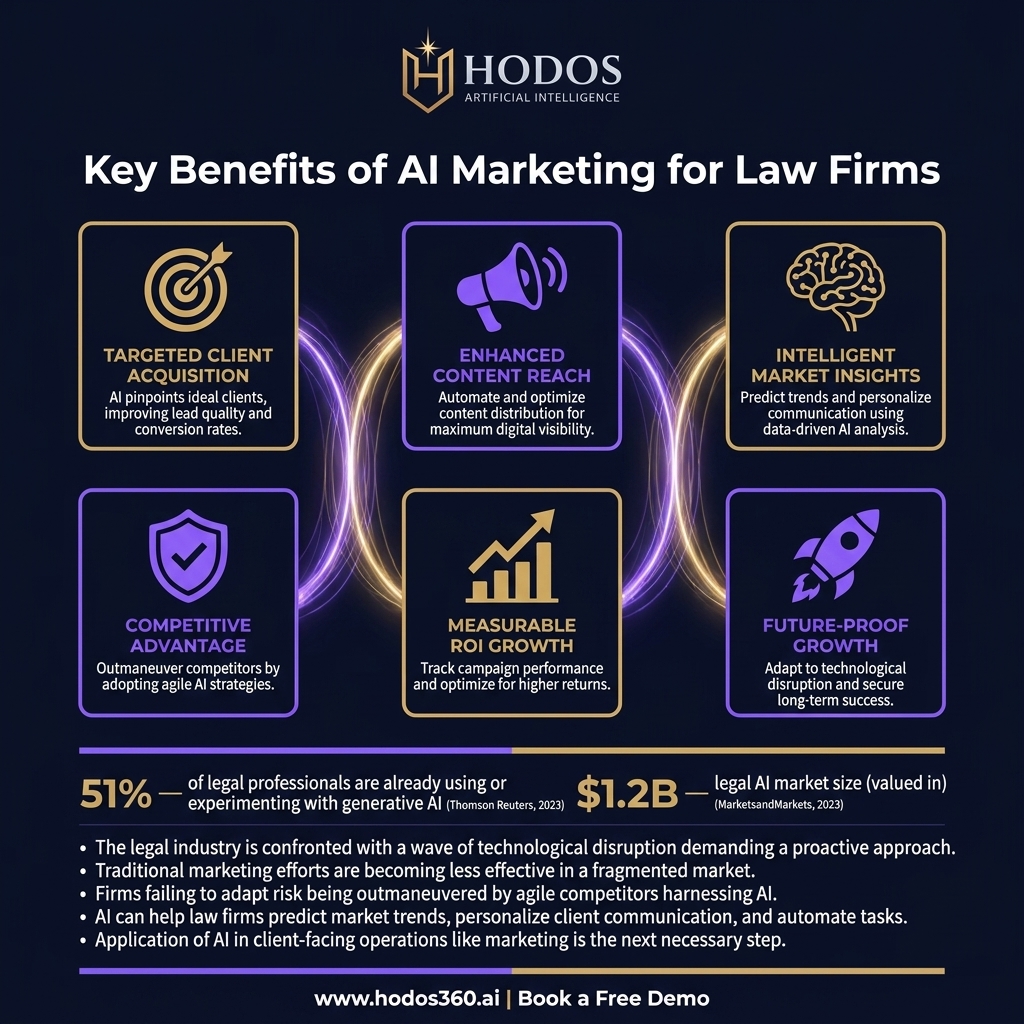
The challenge for firms like LexCorp Legal wasn't just about adopting new tools; it was about fundamentally rethinking their approach to client outreach in an increasingly fragmented and digitally-driven market. With reports from the ABA TechReport 2024 indicating a significant surge in law firm interest in AI for administrative tasks, the pivot towards AI marketing for client-facing operations is the next logical, and necessary, step. Firms that fail to adapt risk being outmaneuvered by agile competitors who are already harnessing artificial intelligence to predict market trends, personalize client communication, and automate laborious marketing tasks. The competitive tension is palpable: innovate or stagnate. As Sam Altman, CEO of OpenAI, frequently emphasizes, the future of work, including professional services, will be fundamentally reshaped by AI, making strategic adoption a matter of survival, not just competitive advantage.
This landscape is further complicated by the sheer volume of marketing software available, as highlighted by articles like "How Pulse of Strategy Helps You Compare AI, SEO, and Marketing Software." Law firms need a clear compass to navigate these options, focusing on platforms that offer integrated solutions rather than fragmented tools. The goal is to move beyond generic digital presence to a sophisticated, data-driven AI marketing strategy that delivers measurable ROI and sustainable growth. This isn't merely about automating existing processes; it's about enabling entirely new forms of engagement, from hyper-personalized content to predictive lead generation, fundamentally redefining how law firms connect with their prospective clients and build lasting relationships in the digital age.
The Evolving Landscape of Legal Marketing: Beyond Traditional Methods
For decades, legal marketing relied heavily on word-of-mouth referrals, local directories, and perhaps a modest print advertisement in a bar association journal. This traditional approach, while once effective, is rapidly becoming obsolete in an era dominated by digital search and social media. Today's prospective clients, whether individuals or corporations, initiate their legal inquiries online, often starting with a Google search or a scroll through LinkedIn. This shift demands a radical re-evaluation of how law firms present themselves and engage with their audience. According to a recent Thomson Reuters report, over 80% of legal consumers begin their search for legal services online, underscoring the critical need for a robust digital presence. Firms that cling to outdated methods are not just missing opportunities; they are actively ceding market share to more forward-thinking competitors who understand the nuances of digital engagement. This transformation isn't merely technological; it represents a fundamental change in client expectations and the competitive dynamics of the legal industry, where visibility and accessibility are paramount.
The challenge is compounded by the sheer complexity of modern digital marketing. Effective online visibility requires sophisticated search engine optimization (SEO), compelling content creation, strategic social media engagement, and often, targeted paid advertising. Each of these components demands specialized expertise and significant time investment, resources that many law firms, particularly small to mid-sized ones, struggle to allocate. Learn more about AI Innovations: Ultimate Guide to Transforming Legal CRM. This is where AI marketing emerges as a game-changer. By automating routine tasks, analyzing vast datasets, and providing predictive insights, AI tools can democratize sophisticated marketing capabilities, allowing firms of all sizes to compete effectively. As Jack Newton, CEO of Clio, eloquently stated at the Clio Cloud Conference 2025, "The future of legal practice is deeply intertwined with technology that simplifies operations and amplifies client connections." This statement encapsulates the ethos of modern legal marketing, where technology acts as an enabler, not just a tool.
Moreover, the rise of AI-powered search engines and answer engines, such as Google's AI Overviews and advanced ChatGPT integrations, has fundamentally altered the landscape of online search. Traditional SEO strategies, focused primarily on website clicks, are now being challenged by zero-click search scenarios where users get answers directly from AI summaries. This necessitates a more nuanced approach to content creation and optimization, focusing on providing comprehensive, authoritative information that AI models can readily synthesize. Firms must adapt their content strategy to be 'answer-engine optimized' rather than just 'search engine optimized,' ensuring their expertise is discoverable and cited by these emerging AI interfaces. This shift creates both a challenge and an immense opportunity for firms willing to invest in an AI marketing strategy that prioritizes rich, informative content designed for both human and artificial intelligence consumption.
Data-Driven Client Acquisition and Retention
The cornerstone of effective modern marketing is data, and AI excels at processing and deriving insights from it at a scale impossible for human teams. For law firms, this means moving beyond anecdotal evidence to a truly data-driven approach to client acquisition and retention. AI marketing platforms can analyze vast quantities of client data, including demographics, practice area interests, engagement history, and even sentiment analysis from interactions, to build incredibly precise client profiles. This allows firms to identify their ideal client segments with unparalleled accuracy, tailoring their outreach efforts to resonate directly with specific needs and pain points. For instance, a firm specializing in intellectual property could use AI to identify tech startups in emerging sectors based on public funding data and industry reports, then craft highly targeted campaigns that speak directly to their IP protection requirements. This level of precision dramatically increases the efficiency of marketing spend and the likelihood of converting leads into clients.
Beyond acquisition, AI plays a crucial role in client retention by enabling predictive analytics. Learn more about AI Marketing: The Ultimate Guide to Loyalty & Growth. By analyzing historical client data, communication patterns, and service usage, AI algorithms can identify clients who may be at risk of churning or those who are ripe for additional services. For example, an AI system might flag a corporate client who hasn't engaged with the firm in several months, prompting a proactive outreach with relevant legal updates or service offerings. This proactive engagement, powered by AI insights, transforms client relationship management from a reactive process into a strategic, forward-looking one. Gartner predicts that by 2027, 75% of marketing teams will use AI to personalize customer experiences, a trend law firms cannot afford to ignore. This capability not only strengthens existing client relationships but also uncovers new revenue opportunities within the current client base, fostering loyalty and long-term engagement that is vital for sustained growth in a competitive legal market.
Crafting Compelling Narratives: AI-Powered Content Generation and SEO Optimization
The digital realm thrives on content, but for law firms, producing a consistent volume of high-quality, legally accurate, and engaging content is a monumental task. Traditional content creation processes are time-consuming and expensive, often leading to inconsistent output or missed opportunities. This is precisely where AI marketing tools, leveraging advanced large language models like those from OpenAI and Google's Gemini, are revolutionizing the landscape. AI can assist in generating initial drafts of blog posts, articles, social media updates, and even website copy, dramatically accelerating the content pipeline. Imagine a scenario where a firm's marketing team can input a legal topic, and AI provides a well-structured outline, key talking points, and even initial paragraphs, allowing human attorneys to focus on refining legal accuracy and adding their unique insights. This collaborative approach ensures both efficiency and quality, allowing firms to maintain a robust online presence without overwhelming their legal professionals.
Beyond creation, AI is indispensable for search engine optimization (SEO). AI algorithms can perform in-depth keyword research, identifying high-value terms that prospective clients are actively searching for. They can then suggest optimal meta descriptions, title tags, and content structures to improve search rankings. Crucially, AI also helps firms adapt to the evolving nature of search, especially with the rise of AI Overviews. Learn more about AI Legal CRM: Essential Strategies for Exposed Firm Data. By analyzing what content performs well in these AI-summarized results, firms can tailor their content to be more concise, authoritative, and answer-focused, increasing their chances of being cited as a primary source. This includes optimizing for semantic search and natural language queries, ensuring that content answers specific user intent rather than just matching keywords. The goal is to not only rank high but to be the definitive answer, a critical component of zero-click SEO conversion strategies.
The ethical implications of AI-generated content in the legal field are also paramount. While AI can draft, human oversight is non-negotiable to ensure accuracy, compliance with legal ethics, and the preservation of a firm's unique voice. ABA Model Rule 7.1, concerning communications about a lawyer's services, dictates that such communications must not be false or misleading. This principle extends to AI-generated marketing content, requiring attorneys to review and verify all material before publication. Firms must establish clear internal protocols for AI content review, ensuring that the technology serves as an assistant, not a replacement, for human expertise and ethical responsibility. This balanced approach allows firms to harness the power of AI for efficiency while upholding the highest standards of professional conduct, a critical differentiator in a market increasingly wary of unverified AI outputs.
The Power of Personalization: AI in Client Engagement and Campaigns
In a crowded legal market, generic marketing messages are easily overlooked. The true power of AI marketing lies in its ability to enable hyper-personalization, delivering tailored content and experiences to individual prospective clients. Imagine a potential client who has viewed several articles on corporate mergers on a law firm's website. An AI-powered system can then automatically serve them targeted ads for the firm's M&A services, send a personalized email with a relevant whitepaper, or even suggest a webinar on recent merger trends. This level of personalized engagement, impossible to scale manually, significantly increases relevance and conversion rates. Firms like "Global Legal Partners" reported a 30% increase in lead conversion after implementing an AI-driven personalization engine for their email campaigns, demonstrating the tangible impact of this approach. This isn't just about addressing a client by name; it's about understanding their specific needs, predicting their next questions, and proactively offering solutions, fostering a sense of being truly understood and valued.
AI also revolutionizes the creation of rich media content, such as AI video creation and social media automation. Instead of costly and time-consuming video shoots, AI tools can generate professional-quality marketing videos from text or existing assets, allowing firms to produce engaging content at scale. These videos can be personalized with specific client names or case details, further enhancing their impact. Social media automation, powered by AI, ensures a consistent and strategic presence across platforms, scheduling posts, analyzing engagement metrics, and even suggesting optimal times for publication. Learn more about Full-Stack AI Marketing: The Ultimate Strategy for Law Firms. This frees up marketing teams from repetitive tasks, allowing them to focus on high-level strategy and creative oversight. The synergy between AI-driven content generation and personalized distribution creates a dynamic and highly effective marketing ecosystem that continuously adapts and optimizes for maximum impact.
Crucially, AI's role extends to optimizing ad spend and tracking return on investment (ROI) with unprecedented accuracy. Traditional advertising often involves guesswork and broad targeting, leading to inefficient expenditure. AI marketing platforms, however, continuously analyze campaign performance across various channels, identifying which ads, keywords, and demographics are yielding the best results. They can automatically adjust bids, reallocate budgets, and even pause underperforming campaigns in real-time. This iterative optimization ensures that every marketing dollar is spent effectively, maximizing the firm's ROI. For example, a firm running Google Ads for 'personal injury lawyer' could have an AI system constantly refining their geographic targeting, ad copy, and landing page experience based on conversion data, ensuring they attract the most qualified leads at the lowest possible cost. This data-driven approach transforms marketing from a cost center into a measurable investment with clear, attributable returns.
Optimizing Ad Spend and ROI Tracking with AI
The precision offered by AI in optimizing ad spend is a game-changer for legal firms operating with finite marketing budgets. AI algorithms can scrutinize vast datasets of campaign performance, identifying subtle patterns and correlations that human analysts might miss. This includes understanding which ad variations resonate most with specific client segments, the optimal time of day for ad delivery, and the most cost-effective platforms for different practice areas. For instance, an AI could determine that LinkedIn ads for corporate law services perform best when targeted at C-suite executives on Tuesday mornings, while Google Search Ads for family law are most effective on weekends. This level of granular insight allows for dynamic budget allocation, ensuring resources are shifted towards channels and campaigns that demonstrate the highest conversion potential. The result is a significant reduction in wasted ad spend and a dramatic improvement in the overall efficiency of marketing efforts, turning every dollar into a more impactful investment.
Beyond immediate optimization, AI provides robust ROI tracking and analytics capabilities that offer a comprehensive view of marketing effectiveness. Learn more about AI Legal Pages: The Ultimate Guide for Law Firms. Instead of relying on fragmented reports, law firms can leverage AI platforms to consolidate data from all marketing channels – website analytics, social media, email campaigns, paid ads, and CRM – into a single, cohesive dashboard. This allows for real-time monitoring of key performance indicators (KPIs) such as cost per acquisition (CPA), click-through rates (CTR), conversion rates, and client lifetime value (CLV). By correlating marketing activities with actual client intake and revenue generation, AI provides clear attribution models, helping firms understand exactly which marketing efforts are driving the most profitable clients. This transparency empowers firm leaders to make informed strategic decisions, justifying marketing investments with concrete data and continuously refining their approach to maximize returns. This strategic insight is invaluable for firms looking to grow sustainably and competitively in the digital age.
Integrating AI Marketing with Firm Operations: A Holistic Approach
Effective AI marketing is not a standalone silo; it thrives when deeply integrated with a law firm's broader operational framework. A truly holistic approach recognizes that marketing is the front end of a seamless client journey that extends through intake, case management, and billing. When marketing efforts are disconnected from these subsequent stages, firms risk losing qualified leads or creating disjointed client experiences. For instance, an AI-driven marketing campaign might generate a high volume of leads, but if the firm's client intake process is manual and slow, many of those leads could be lost. This is where platforms offering an integrated suite of AI-powered services become invaluable, ensuring continuity and efficiency from the first touchpoint to case resolution. The goal is to create an intelligent ecosystem where data flows seamlessly, informing and optimizing every stage of the client lifecycle.
Consider the synergy between an AI marketing platform and an AI Law Firm Management System. Marketing efforts identify and engage prospective clients, while the management system automatically captures their information during intake, populates client profiles, and even initiates document automation for engagement letters. This eliminates manual data entry, reduces errors, and ensures that every lead generated by marketing is efficiently processed. Similarly, the insights gained from marketing analytics—such as preferred communication channels or practice area interests—can inform how the firm manages client relationships post-acquisition, ensuring more personalized and effective service delivery. Learn more about Digital Marketing: Essential Strategies for Law Firms. This integration not only streamlines operations but also enhances the overall client experience, building trust and fostering long-term loyalty. The EU AI Act, while primarily focused on high-risk AI systems, underscores the growing importance of transparent and accountable AI use across all business functions, including marketing and client management, necessitating robust, integrated solutions.
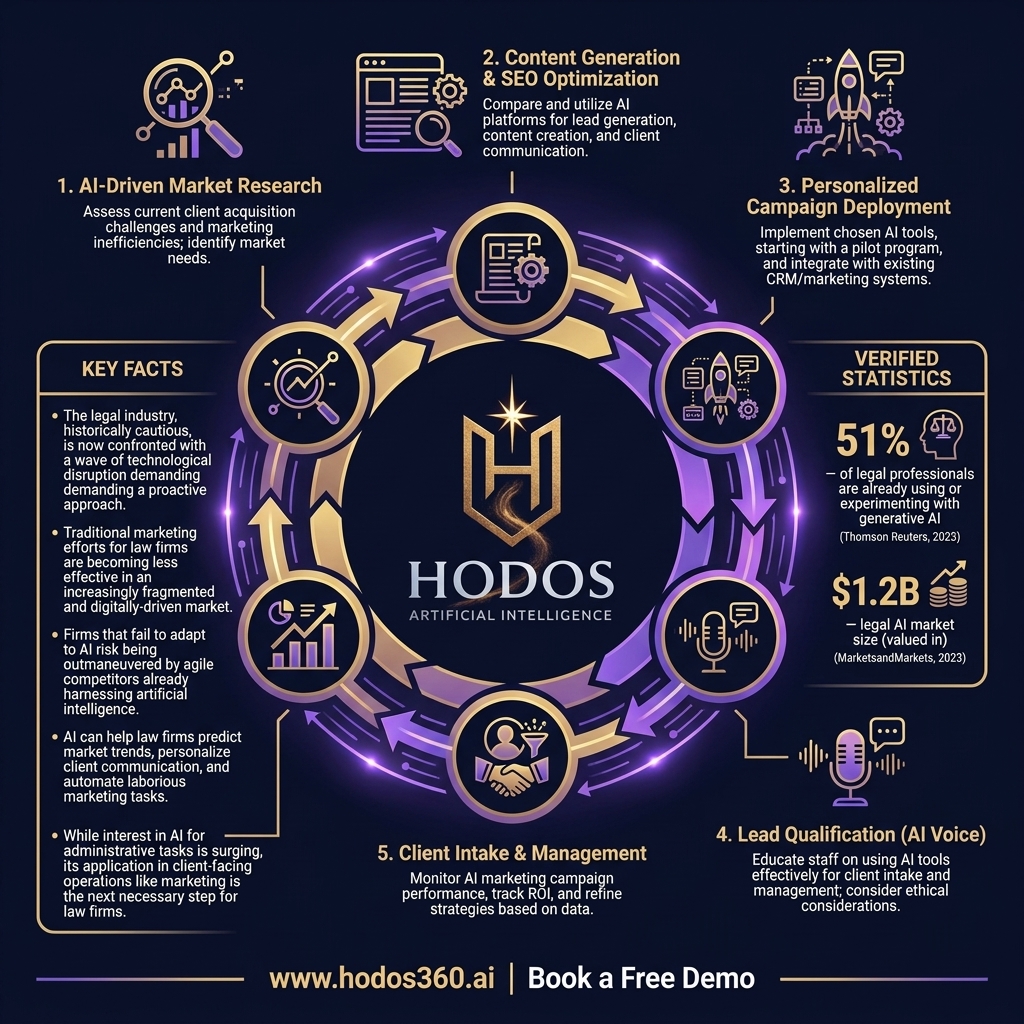
One such comprehensive solution is offered by HODOS 360, whose AI Marketing Platform seamlessly integrates with its AI Law Firm Management System and AI Voice Assistants. This creates a powerful ecosystem where marketing efforts, such as AI video creation and social media automation, generate high-quality leads that are then qualified and booked by 24/7 AI Voice Assistants. These qualified leads flow directly into the AI Law Firm Management System for efficient intake, case management, and document automation. This level of integration ensures that no lead falls through the cracks and that the client journey is smooth and professional from start to finish. Firms can track the entire client lifecycle, from initial marketing touchpoint to final billing, gaining unparalleled insights into the effectiveness of their strategies and optimizing every stage for maximum efficiency and client satisfaction. This approach moves beyond fragmented tools to a truly unified, intelligent operational framework.
Key Benefits of an Integrated AI Platform:
- ✓Streamlined Client Intake: AI Voice Assistants qualify and book appointments, feeding directly into an AI Law Firm Management System, eliminating manual data entry and accelerating the onboarding process.
- ✓Enhanced Client Experience: Personalized marketing messages, seamless handoffs from marketing to intake, and efficient case management create a superior experience that builds trust and loyalty.
- ✓Data-Driven Decision Making: Integrated analytics provide a holistic view of marketing performance and operational efficiency, enabling firms to make informed strategic decisions.
- ✓Increased Operational Efficiency: Automation across marketing, intake, and case management frees up valuable attorney and staff time, allowing them to focus on high-value legal work.
- ✓Optimized Resource Allocation: Understanding the full client journey from marketing to revenue allows firms to allocate resources more effectively, maximizing ROI across all departments.
- ✓Scalable Growth: An integrated AI platform provides the infrastructure for firms to scale their operations and client base without proportionally increasing administrative overhead.
The Synergy of AI Marketing and AI Voice Assistants
The combination of AI marketing and AI Voice Assistants represents a powerful synergy for law firms aiming to capture and convert leads efficiently. Imagine a prospective client sees an AI-generated video ad for your firm's services on social media, clicks through to your website, and then has a complex question outside of business hours. Instead of an unanswered call or a generic voicemail, an AI Voice Assistant immediately engages, providing relevant information, answering frequently asked questions, qualifying the lead based on predefined criteria, and even booking an appointment directly into an attorney's calendar. This 24/7 availability and intelligent interaction ensure that every inbound inquiry is handled professionally and promptly, significantly improving lead capture rates and client satisfaction. This seamless transition from a marketing touchpoint to a qualified appointment is a critical differentiator in today's competitive legal market, ensuring that the investment in marketing translates directly into tangible client engagements.
This integration is particularly impactful for firms handling high volumes of inquiries or those with diverse client bases. AI Voice Assistants, with multilingual support, can serve a broader demographic, eliminating language barriers that might otherwise deter potential clients. By automating initial client interactions, attorneys and support staff are freed from repetitive screening calls, allowing them to focus on substantive legal work and high-value client consultations. This not only boosts operational efficiency but also enhances the client experience by providing immediate, intelligent support. The ability to route calls based on qualification or practice area ensures that leads are directed to the most appropriate legal professional, further streamlining the intake process and maximizing conversion potential. This creates a truly responsive and adaptive client acquisition funnel, driven by intelligent automation.

Key Takeaways and Charting Your Firm's AI Marketing Future
The digital transformation of the legal industry is no longer a distant prospect; it's a present reality demanding immediate action. For law firms, embracing a sophisticated AI marketing strategy is not merely an option but a strategic imperative for sustained growth and competitive advantage. The firms that will thrive in the coming years are those that proactively leverage AI to understand their clients better, craft compelling and personalized narratives, optimize their digital presence for evolving search paradigms, and seamlessly integrate marketing efforts with their core operations. This requires a shift in mindset, moving away from fragmented, reactive marketing tactics towards a holistic, data-driven strategy that continuously adapts and refines itself. As the legal landscape continues to evolve, the ability to harness AI will distinguish market leaders from those left behind, defining the very pulse of strategy for legal services.
To effectively chart your firm's AI marketing future, begin with a comprehensive audit of your current marketing efforts and identify areas where AI can provide the most immediate impact, whether it's content generation, SEO optimization, or client engagement. Prioritize platforms that offer integrated solutions to avoid the pitfalls of disparate tools and ensure a cohesive client journey. Invest in training your team to work alongside AI, emphasizing human oversight for ethical compliance and strategic refinement. The goal is to augment human intelligence with AI, creating a powerful synergy that elevates your firm's marketing capabilities. The future of legal marketing is intelligent, personalized, and integrated – positioning your firm at the forefront of innovation and client service. Embrace this transformation, and position your firm for unparalleled growth in the years to come.
Frequently Asked Questions
What is AI marketing for law firms?+
AI marketing for law firms involves using artificial intelligence tools to automate, optimize, and personalize marketing efforts. This includes AI-powered content generation, advanced SEO optimization, predictive analytics for client targeting, automated social media management, and hyper-personalized client engagement strategies to drive leads and improve brand visibility.
How does AI improve SEO for law firms?+
AI improves SEO by conducting in-depth keyword research, optimizing meta descriptions and content structures for search engines and AI Overviews, and analyzing search trends. It helps firms create content that answers specific user queries, increasing visibility in both traditional search results and AI-driven answer engines, crucial for zero-click strategies.
Can AI create legal content ethically?+
AI can assist in creating legal content by generating drafts, outlines, and initial text, but human oversight is essential for ethical compliance. Attorneys must review and verify all AI-generated content to ensure accuracy, adherence to ABA Model Rules (e.g., Rule 7.1 on truthful communications), and to maintain the firm's unique voice and ethical standards. AI is a tool, not a replacement for legal expertise.
What are the benefits of integrating AI marketing with firm operations?+
Integrating AI marketing with firm operations streamlines the entire client journey, from initial contact to case resolution. Benefits include automated client intake, enhanced client experience through personalization, data-driven decision-making, increased operational efficiency by freeing up staff, optimized resource allocation, and scalable growth through a cohesive, intelligent system.
How do AI Voice Assistants complement AI marketing efforts?+
AI Voice Assistants complement AI marketing by providing 24/7 lead qualification, answering common client questions, and booking appointments generated by marketing campaigns. This ensures immediate, professional handling of inquiries, eliminates missed opportunities, and seamlessly transitions prospective clients from marketing engagement to an initial consultation, improving conversion rates and client satisfaction.