


AI Marketing Tools: Essential Strategies for Law Firms
For years, the mid-sized Chicago firm of Smith & Associates relied heavily on traditional referral networks and local print advertising. Their marketing budget, while substantial, yielded increasingly diminishing returns, and their online footprint remained largely stagnant. This familiar narrative, common across countless legal practices, began to shift dramatically in late 2024. Inspired by insightful discussions at LegalTech NYC about the burgeoning capabilities of artificial intelligence in business operations, Managing Partner Eleanor Vance made a pivotal decision: to invest in advanced AI Marketing Tools.
Within a mere six months, Smith & Associates witnessed a remarkable 40% surge in client intake inquiries, accompanied by a significant boost in their digital engagement metrics.
Vance, reflecting on this transformation, remarked, "We weren't just chasing leads; we were building a truly engaged community, and AI made that process scalable and efficient."
This success story from Smith & Associates is far from an isolated incident; it signifies a profound, industry-wide shift. Law firms today face an intensely competitive landscape where traditional marketing methodologies often fall short. The challenge isn't merely to attract clients but to build a robust, sustainable pipeline that consistently fuels growth.
As the inc.com article aptly points out, "It’s Time to Turbocharge Your Flywheel," and for legal practices, AI Marketing Tools are proving to be the ultimate accelerant, offering unprecedented opportunities to optimize every stage of the client journey and redefine what's possible in legal marketing.
Turbocharging Your Law Firm's Marketing Flywheel with AI
The concept of a marketing flywheel, popularized by HubSpot, posits that customer success drives growth, creating a self-sustaining cycle of attraction, engagement, and delight. For law firms, this means moving beyond linear sales funnels to a continuous loop where satisfied clients become powerful advocates. AI Marketing Tools are uniquely positioned to turbocharge this flywheel, providing the momentum needed to accelerate each stage.
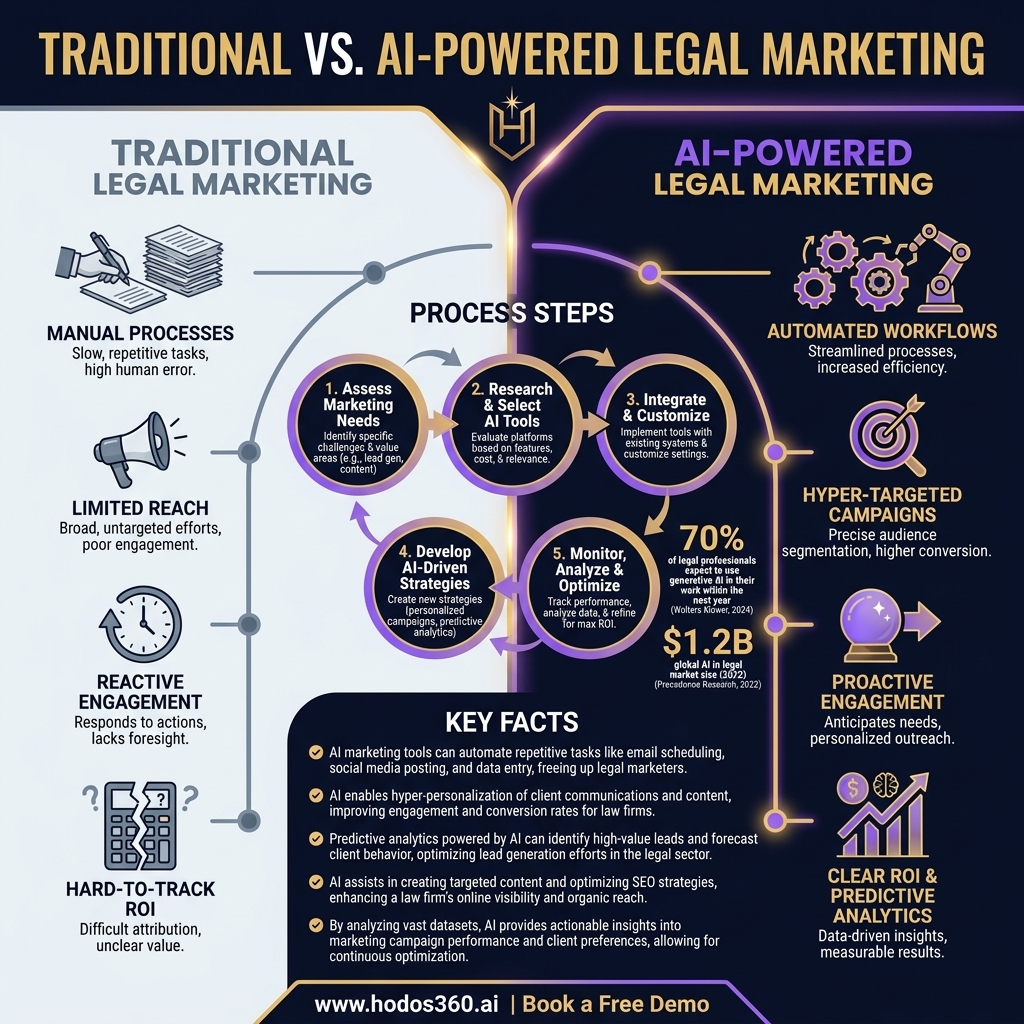
Consider the traditional challenges: identifying prospective clients, personalizing outreach, and fostering long-term relationships. These tasks, often manual and time-consuming, can now be streamlined and amplified by AI, creating efficiencies that were previously unattainable.
AI's ability to analyze vast datasets allows firms to understand client behavior, preferences, and pain points with unprecedented accuracy.
This deep insight informs more effective strategies, from hyper-targeted ad campaigns to highly personalized content. For example, a firm specializing in intellectual property might use AI to identify emerging tech startups expressing interest in patent protection, then automatically generate tailored outreach messages. Learn more about Voice AI: The Essential Leap for Law Firm Client Engagement.
This level of precision ensures that marketing efforts are not only efficient but also resonate deeply with the intended audience, transforming casual interest into genuine engagement. According to a 2024 report by McKinsey & Company, firms leveraging AI in their marketing efforts reported a 15-20% increase in lead conversion rates and a significant reduction in customer acquisition costs, underscoring the tangible ROI.
The 'delight' phase of the flywheel is equally critical, and AI plays a crucial role in enhancing post-engagement experiences. From automated follow-ups to proactive communication, AI ensures clients feel valued and supported, fostering loyalty and encouraging referrals. This sustained positive experience is what truly fuels the flywheel, turning clients into enthusiastic proponents of your firm.
The integration of AI across these stages isn't just about automation; it's about creating a more intelligent, responsive, and ultimately more human-centered marketing ecosystem that continuously adapts and improves.
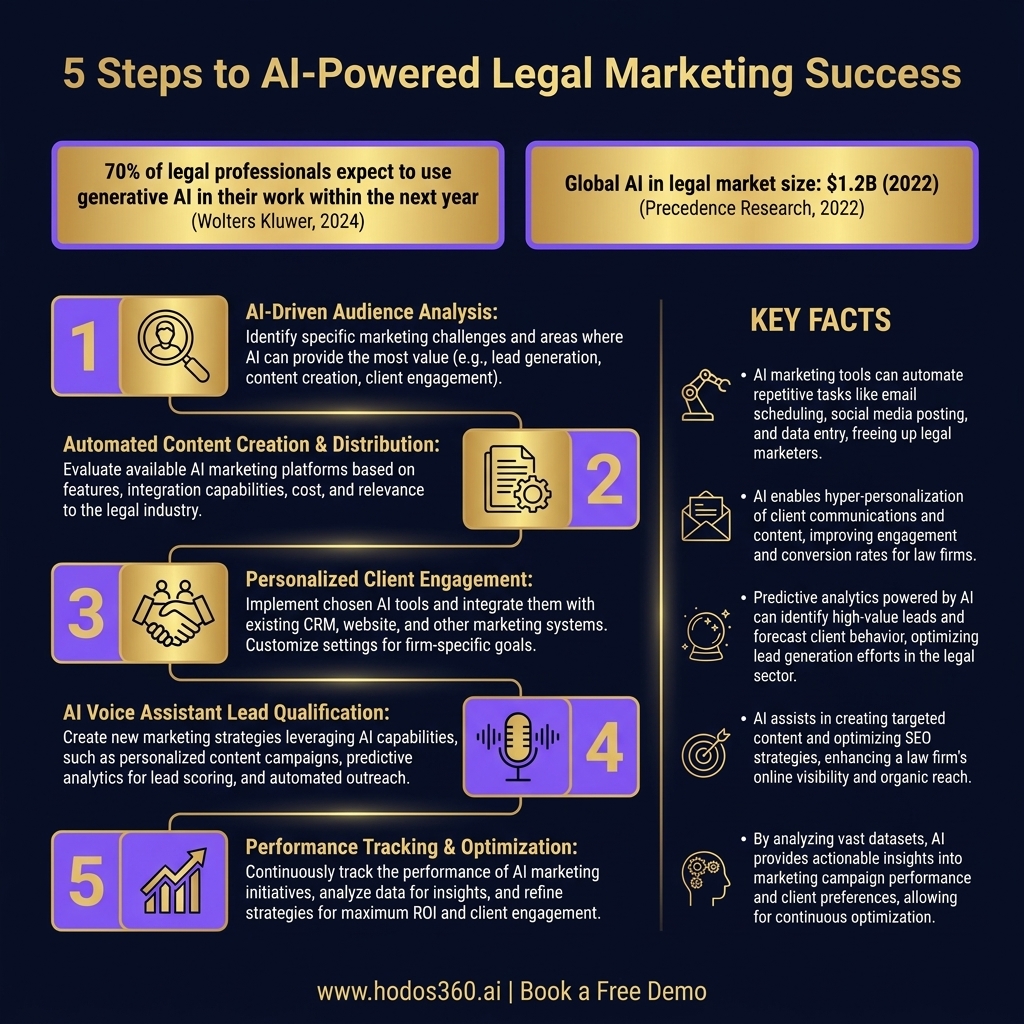
- ✓AI-Driven Audience Analysis: Utilizing machine learning to identify ideal client profiles, predict legal needs, and segment audiences for hyper-targeted campaigns, moving beyond basic demographics to psychographic insights.
- ✓Automated Content Creation: Generating tailored blog posts, social media updates, email newsletters, and even initial drafts of legal explainers, significantly reducing the burden on marketing teams and ensuring consistent content flow.
- ✓Personalized Client Engagement: Deploying AI chatbots for website interaction, personalizing email sequences based on user behavior, and customizing ad experiences to resonate deeply with individual prospects.
- ✓AI Voice Assistant Lead Qualification: Employing intelligent voice assistants for 24/7 phone answering, pre-qualifying leads based on specific criteria, and seamlessly scheduling appointments, ensuring no potential client is missed.
- ✓Performance Tracking & Optimization: Using AI to analyze marketing campaign data in real-time, identify underperforming elements, and suggest optimizations for improved ROI and greater efficiency.
- ✓Predictive Analytics for Future Trends: Leveraging AI to forecast market shifts, emerging legal needs, and competitor strategies, allowing firms to proactively adjust their marketing efforts and maintain a competitive edge.
- ✓Enhanced Reputation Management: Monitoring online sentiment, identifying potential crises, and even drafting responses to reviews or social media comments, protecting and enhancing the firm's brand image.
Practical AI Marketing Tools for Legal Practice
Beyond the theoretical framework of the marketing flywheel, the practical application of AI Marketing Tools offers tangible benefits for law firms. The options available today range from sophisticated platforms that integrate multiple functionalities to specialized tools designed for specific marketing tasks. For instance, firms are increasingly leveraging AI for advanced lead generation, moving past generic contact forms to intelligent systems that can identify and score leads based on their likelihood to convert.
This capability is paramount in a legal market where every qualified lead represents a significant opportunity. Firms like Linklaters, for example, have openly discussed their exploration of AI to enhance client relationship management, recognizing the strategic advantage of data-driven insights.
The real power of these tools lies in their ability to automate repetitive, time-consuming processes, freeing up legal professionals to focus on high-value tasks.
Imagine the hours saved when AI can automatically segment your email lists, personalize mass communications, or even suggest optimal times for social media posts based on audience engagement patterns. This efficiency doesn't just cut costs; it allows for a more agile and responsive marketing strategy.
Learn more about AI Legal Assistant 2026: Revolutionizing Law Firm Efficiency. The adoption curve for such technologies is steep, and firms that hesitate risk falling behind. Sam Altman, CEO of OpenAI, frequently emphasizes the transformative power of AI in amplifying human capabilities, a sentiment that resonates deeply within the legal tech sphere as firms seek to maximize their marketing impact.
While the hype around AI can sometimes overshadow its practical utility, the best AI Marketing Tools are those that seamlessly integrate into existing workflows, providing actionable intelligence and automating critical functions. From AI-powered social media schedulers that optimize posting times to advanced analytics dashboards that track campaign performance in real-time, these tools are designed to provide a comprehensive view of your marketing ecosystem.
The goal is not to replace human marketers but to empower them with capabilities that enhance precision, reach, and efficiency, ensuring that every marketing dollar spent contributes directly to tangible growth. Firms that embrace this evolution are already seeing a significant competitive edge, establishing themselves as leaders in a rapidly changing legal landscape.
AI-Powered Content Generation and SEO Optimization
In the digital age, content is king, and for law firms, high-quality, SEO-optimized legal content is critical for attracting and engaging prospective clients. AI has revolutionized this domain, enabling firms to generate compelling blog posts, articles, and website copy with unprecedented speed and scale. Tools can analyze search trends, identify relevant keywords, and even draft initial content outlines or full articles, significantly reducing the time and resources traditionally required.
This capability allows firms to establish themselves as authoritative thought leaders across diverse legal niches, from corporate law to personal injury, ensuring their expertise is visible to those actively searching for legal solutions. The challenge lies in ensuring accuracy and ethical compliance, requiring human oversight to validate AI-generated content against legal standards.
Beyond creation, AI also plays a pivotal role in search engine optimization (SEO). AI-powered platforms can conduct deep keyword research, analyze competitor content strategies, and identify technical SEO issues on a firm’s website. Learn more about AI Software Development's **Revolutionary** 2026 Shift. This ensures that content isn't just well-written but also highly discoverable by search engines.
For example, AI can optimize meta descriptions and titles, suggest internal linking opportunities, and even detect content gaps that, if filled, could attract more organic traffic. The continuous algorithmic updates from search engines demand an agile SEO strategy, and AI provides the necessary tools for real-time monitoring and adaptation, keeping law firms at the forefront of search results.
This strategic use of AI ensures that a firm's digital presence is not only compelling but also highly effective in capturing the attention of potential clients.
Enhancing Digital Presence with AI Video and Social Automation
A compelling digital presence extends beyond text-based content; visual media, particularly video, has become indispensable for client engagement. AI video creation tools empower law firms to produce professional-quality explainer videos, client testimonials, and firm introductions without the need for extensive production budgets or specialized skills.
These tools can animate text, synthesize realistic voiceovers, and even create dynamic graphics, making complex legal concepts accessible and engaging. A firm can quickly generate a series of short videos explaining different practice areas or common legal questions, distributing them across various platforms to enhance visibility and build trust.
This democratizes video content, allowing even smaller firms to compete effectively with larger counterparts in the visual space.
Coupled with AI video, social media automation platforms ensure that a firm's message reaches the right audience at the optimal time. Learn more about AI Marketing Revolution 2026: Autonomous Agents for Law Firms.
These tools can schedule posts across multiple platforms, analyze engagement metrics to refine future strategies, and even personalize interactions with followers. For instance, AI can identify trending legal topics on platforms like LinkedIn or X (formerly Twitter) and suggest relevant content or engagement opportunities. This not only saves significant time but also ensures a consistent and strategic social media presence, critical for building brand awareness and fostering community.
By integrating AI video creation with sophisticated social media automation, law firms can craft a dynamic and impactful digital presence that resonates with modern clients, further boosting their marketing momentum.
Revolutionizing Client Engagement with AI Voice Assistants
The initial point of contact often dictates the trajectory of a potential client's relationship with a law firm. Traditional phone answering services can be costly, limited by business hours, and sometimes lack the nuanced understanding required for effective lead qualification. This is where AI Voice Assistants enter the picture, revolutionizing client engagement from the very first interaction.
Imagine a prospective client calling your firm at 10 PM on a Sunday; an AI Voice Assistant can answer immediately, provide essential information, qualify their legal needs, and even book an appointment directly into your calendar. This 24/7 availability ensures that no lead is ever missed due to timing or staffing constraints, a critical advantage in today's fast-paced legal market.
The sophistication of these assistants, leveraging natural language processing, allows for remarkably human-like conversations, building trust and confidence from the outset.
Beyond mere answering, these AI Voice Assistants are powerful lead qualification tools. They can ask targeted questions to ascertain the nature of the inquiry, its urgency, and the caller's financial capacity, ensuring that attorneys only engage with truly qualified prospects.
This dramatically reduces wasted time and resources, optimizing the intake process. Furthermore, multilingual support capabilities break down language barriers, allowing firms to serve a broader, more diverse client base without the need for additional human interpreters. Learn more about Essential AI Web Development: Build Legal Apps with Ease.
Calls can be intelligently routed based on the inquiry type or urgency, ensuring that specialized legal teams receive relevant leads promptly. HODOS 360's AI Voice Assistants exemplify this capability, offering seamless integration and advanced features that transform initial client interactions into efficient, productive engagements.
The deployment of AI Voice Assistants also contributes significantly to client satisfaction.
By providing instant responses and clear pathways to legal assistance, firms demonstrate a commitment to accessibility and responsiveness. This proactive approach to client service sets firms apart in a competitive market, fostering a positive reputation. Moreover, the data collected from these interactions provides invaluable insights into common client queries, peak call times, and areas where the firm's services are most in demand.
This feedback loop allows for continuous improvement of both marketing strategies and client service offerings, reinforcing the overall marketing flywheel and ensuring sustained growth. The strategic adoption of AI Voice Assistants is not just about automation; it's about elevating the entire client experience.
Ethical AI Deployment in Legal Marketing
While the promise of AI Marketing Tools is immense, their deployment in the legal sector necessitates a rigorous adherence to ethical guidelines and professional responsibility. ABA Model Rule 7.1, "Communications Concerning a Lawyer's Services," mandates that lawyers shall not make false or misleading communications about their services.
This rule is paramount when utilizing AI for content generation or targeted advertising. Firms must ensure that AI-generated content is accurate, does not create unjustified expectations, and avoids misleading implications. The responsibility for the content ultimately rests with the attorney, regardless of its AI origin.
This requires robust human oversight and quality control processes to review and validate all AI outputs before public dissemination, particularly concerning sensitive legal advice or claims of expertise.
Furthermore, data privacy and client confidentiality are non-negotiable. Learn more about AI Marketing Automation: Law Firms' 2026 Growth Catalyst.
The EU AI Act, while primarily focused on high-risk AI systems, sets a precedent for transparency and accountability that legal firms should heed globally. When AI Marketing Tools collect and process client data for personalization or lead qualification, firms must ensure compliance with regulations like GDPR, CCPA, and other relevant privacy laws.
Transparency about data collection practices and clear consent mechanisms are essential to maintain client trust and avoid potential legal repercussions. The tension between leveraging cutting-edge technology for competitive advantage and upholding the highest ethical standards is a critical conflict that firms must navigate carefully, prioritizing client trust and professional integrity above all else.
Failing to do so not only risks sanctions but also irreparable damage to a firm's reputation.
Measuring Impact: AI-Driven Analytics and ROI Tracking
For any marketing investment, demonstrating clear return on investment (ROI) is crucial, and AI Marketing Tools excel in providing granular, actionable insights. Traditional marketing analytics often provide a fragmented view, making it challenging to attribute success accurately. AI, however, can integrate data from disparate sources—website traffic, social media engagement, email campaigns, call logs from AI Voice Assistants, and even client intake forms—to provide a holistic and precise understanding of campaign performance.
This allows law firms to identify which strategies are most effective in attracting and converting clients, and where resources might be reallocated for greater impact. According to a 2023 report by Thomson Reuters, legal firms that consistently track and analyze their marketing ROI demonstrate a 25% higher growth rate compared to those that do not, highlighting the critical importance of data-driven decision-making.
Beyond basic tracking, AI-powered analytics can uncover hidden patterns and predictive insights. For instance, AI can analyze past campaign data to forecast the success of future initiatives, identify optimal budget allocations, or even predict future client needs based on market trends and historical data. This predictive capability transforms marketing from a reactive expense into a proactive, strategic investment.
Firms can conduct sophisticated A/B testing with AI, automatically optimizing ad copy, landing page designs, and call-to-actions to maximize conversion rates. This continuous optimization loop ensures that marketing efforts are not static but are constantly refined and improved, driving exponential growth over time.
The ability to clearly articulate the ROI of marketing efforts is also vital for internal stakeholders and partners.
AI-driven dashboards provide transparent, easy-to-understand visualizations of key performance indicators, demonstrating the value generated by marketing investments. This empowers firm leadership to make informed decisions about resource allocation and future strategy, fostering a culture of data-driven growth. As the legal market becomes increasingly competitive, the firms that master AI-driven analytics and ROI tracking will be those that not only survive but thrive, consistently staying ahead of the curve and securing their position as industry leaders.
The insights gained from these tools are invaluable for continuous improvement and sustainable success.

The Strategic Imperative: Future-Proofing Your Firm with AI
The legal industry stands at a critical juncture, where the adoption of AI is no longer an option but a strategic imperative for long-term viability and growth. The firms that are embracing AI Marketing Tools today are not just gaining a competitive edge; they are actively future-proofing their practices against an ever-evolving market.
From turbocharging client acquisition to optimizing internal workflows, AI offers a comprehensive solution for modern legal challenges. The narrative of Smith & Associates, transforming from traditional reliance to digital dominance, underscores the profound impact AI can have when strategically implemented. This isn't about replacing human expertise but augmenting it, enabling legal professionals to focus on the intricate legal work they do best while AI handles the complexities of outreach and engagement.
For law firm owners and legal professionals contemplating this shift, the time to act is now. The journey towards an AI-powered practice begins with understanding the specific needs of your firm and exploring the tools that align with your strategic goals. Whether it's leveraging AI for sophisticated content generation, optimizing your digital presence, or revolutionizing client intake with AI Voice Assistants, the path to enhanced efficiency and accelerated growth is clear.
Embracing these advanced AI Marketing Tools allows firms to build a resilient, client-centric practice capable of navigating the demands of the 21st-century legal landscape, securing a prosperous and sustainable future. The era of intelligent legal marketing has arrived, and the firms that lead with AI will define its trajectory.
Frequently Asked Questions
What are the primary benefits of AI marketing for law firms?+
AI marketing significantly boosts efficiency by automating repetitive tasks, personalizes client outreach for higher engagement, provides deep data insights for strategic decision-making, and ensures 24/7 client interaction, leading to increased lead conversion and a stronger digital presence. It allows firms to scale their marketing efforts without commensurate increases in human resources.
How does AI ensure ethical marketing practices in the legal field?+
While AI offers powerful capabilities, ethical oversight is crucial. Firms must implement strict review processes for AI-generated content to ensure compliance with ABA Model Rules, particularly regarding accuracy and avoiding misleading claims. Transparency with clients about data usage and adherence to privacy regulations like GDPR are also paramount to maintaining professional responsibility and trust.
Can AI marketing tools truly personalize client engagement?+
Absolutely. AI excels at analyzing vast amounts of client data to understand individual preferences, behaviors, and legal needs. This enables hyper-personalized content, targeted advertisements, and tailored communication strategies, fostering deeper connections. AI Voice Assistants, for instance, can provide personalized responses, making each client interaction feel unique and valued.
What's the initial investment like for AI marketing platforms?+
The initial investment varies widely depending on the scope and sophistication of the AI Marketing Tools. Some solutions offer subscription models that are accessible for smaller firms, while comprehensive platforms require a more substantial upfront commitment. The key is to assess potential ROI, considering the efficiency gains, increased lead generation, and reduced operational costs that AI can deliver.
How can a small law firm leverage AI marketing effectively?+
Small firms can start by focusing on specific, high-impact AI tools, such as AI-powered content optimization for SEO, social media automation for consistent online presence, or AI Voice Assistants for 24/7 lead capture. Prioritizing tools that address their most pressing marketing challenges allows them to gain significant advantages without overwhelming resources, building momentum gradually.