

AI Marketing Trends: The Essential Guide to Legal Martech
Just a few years ago, the notion of artificial intelligence fundamentally reshaping legal marketing seemed like a distant, almost sci-fi concept. Today, it's the bedrock of award-winning campaigns. Consider the narrative of Sterling & Sterling LLP, a mid-sized firm in Chicago that, for decades, relied on traditional referral networks and local sponsorships. Their website was static, their social media sporadic, and their client intake process, while professional, was entirely manual. By mid-2025, they noticed a stark decline in new client inquiries, even as competitors, seemingly overnight, began dominating digital spaces with targeted ads and engaging content. The partners, initially resistant to 'tech fads,' faced a stark reality: adapt or risk obsolescence.
The shift Sterling & Sterling observed wasn't an isolated incident; it was the ripple effect of a broader technological wave. As highlighted by ET BrandEquity's recent article, "AI, Automation, and Personalisation: The Martech Trends Defining Award-Winning Campaigns in 2026," the confluence of these three forces has irrevocably altered the marketing landscape. For law firms, this means moving beyond generic outreach to sophisticated, data-driven client engagement. The traditional legal mindset, often cautious and slow to adopt new technologies, is now confronted with an imperative to embrace advanced *martech trends* to not only survive but thrive. Firms that once viewed marketing as a necessary evil are now seeing it as a strategic differentiator, driven by intelligent systems that can predict, personalize, and perform at scale.
This isn't merely about adopting a new tool; it’s about a paradigm shift in how law firms understand, attract, and serve their clients. The tension between historical precedent and future necessity is palpable across the legal sector. Firms like Sterling & Sterling, once comfortable in their established routines, are now grappling with the urgency of transforming their digital presence and client acquisition strategies. The demand for sophisticated *AI marketing* solutions that streamline workflows, enhance client experiences, and provide measurable ROI is no longer a luxury but a fundamental requirement for competitive advantage in 2026 and beyond. This guide will explore these essential *martech trends* and how they are redefining legal success.
The Reshaping of Legal Marketing with AI-Driven Strategies
The advent of generative AI has fundamentally *reshaped* how law firms approach content creation and client engagement. No longer are legal marketers solely reliant on manual drafting for blogs, social media posts, or ad copy; AI models, often trained on vast datasets of legal texts and marketing best practices, can now generate high-quality, relevant content at an unprecedented scale. This capability allows firms to maintain a consistent, authoritative online presence, positioning themselves as thought leaders in niche practice areas. For instance, a firm specializing in intellectual property law can leverage AI to quickly draft informative articles on recent patent rulings or trademark disputes, keeping their audience informed and engaged without requiring extensive billable hours from attorneys for content generation. This efficiency is critical in a competitive digital environment where content velocity often dictates visibility.
Beyond content generation, *AI marketing* strategies are transforming lead identification and qualification through predictive analytics. Systems can analyze vast amounts of data—from website visitor behavior and search queries to demographic information and industry trends—to identify potential clients most likely to require specific legal services. This moves firms away from broad, untargeted advertising towards highly focused campaigns. For example, a real estate law firm can use AI to identify businesses in growing commercial districts that might soon require property acquisition or leasing advice, allowing for proactive outreach rather than reactive responses. Learn more about Essential AI Website Security: Protecting Law Firms from Cyber Threats. This targeted approach not only optimizes marketing spend but also significantly increases the quality of leads entering the sales funnel. As Sam Altman, CEO of OpenAI, has often emphasized, the power of large language models lies in their ability to understand and generate human-like text, a capability now being harnessed to craft compelling legal narratives and client communications.
The competitive landscape of legal services demands not just presence, but strategic, intelligent presence. Firms that fail to integrate *AI marketing* into their digital strategy risk falling behind. The initial skepticism surrounding AI's role in the nuanced world of law is giving way to a recognition of its undeniable efficiency and analytical power. While human oversight remains paramount for accuracy and ethical compliance, AI empowers legal teams to scale their marketing efforts, explore new markets, and engage with potential clients in ways previously unimaginable. This intelligent application of AI is not about replacing human ingenuity but augmenting it, allowing legal professionals to focus on the complex legal work that truly requires their expertise, while AI handles the heavy lifting of digital outreach and engagement. The firms that embrace this symbiotic relationship are poised for significant growth in a rapidly evolving legal market.
Automation as a Competitive Edge in Client Acquisition
In the race for client acquisition, automation has emerged as a non-negotiable competitive edge for law firms. Manual processes, from initial client intake to scheduling consultations and sending follow-up communications, are not only time-consuming but also prone to human error, creating bottlenecks that hinder growth. *Marketing automation* platforms streamline these repetitive tasks, ensuring efficiency and consistency across the entire client journey. Imagine a potential client visiting a firm’s website, filling out an inquiry form, and immediately receiving a personalized email acknowledging their query, providing relevant resources, and offering a link to book a consultation directly into the attorney's calendar—all without human intervention. This seamless experience not only enhances client satisfaction but also frees up valuable administrative and legal staff time, allowing them to focus on high-value, billable work. A recent report by McKinsey indicated that firms adopting automation tools can reduce operational costs by up to 30%, directly impacting their bottom line and competitiveness.
The strategic deployment of automation extends beyond initial contact, encompassing CRM integration, lead nurturing, and social media management. Automated email drip campaigns can educate potential clients about a firm's expertise over time, building trust and familiarity before they even speak to a lawyer. Social media automation tools ensure consistent brand messaging and engagement across multiple platforms, maintaining a vibrant online presence without constant manual effort. For instance, a firm like LexCorp LLP (a hypothetical firm) implemented an automated lead qualification system that routed inquiries based on practice area and urgency, reducing their response time by 60% and increasing qualified leads by 25% within six months. Learn more about AI Receptionist Disclosure: Essential Legal Compliance for Law Firms. This level of responsiveness is crucial in today's fast-paced digital environment where clients expect immediate attention. As Jensen Huang, CEO of NVIDIA, often states regarding the broader impact of AI and automation, "the more you automate, the more you innovate," a principle that holds true for legal marketing.
Firms that embrace *automation* gain a significant advantage in scalability and responsiveness. They can handle a larger volume of inquiries, nurture more leads simultaneously, and ensure no potential client falls through the cracks. This systematic approach to client acquisition not only optimizes resources but also creates a predictable pipeline for growth. The time saved through automation can be redirected towards refining legal strategies, deepening client relationships, or exploring new practice areas, ultimately contributing to the firm's overall success and profitability. The integration of such systems is not just about efficiency; it's about building a robust, future-proof marketing infrastructure that can adapt to changing market demands and client expectations. Law firms that hesitate to adopt these automated solutions risk being outmaneuvered by more agile competitors who leverage technology to its fullest potential.
- ✓Automated Client Intake Forms: Streamline initial data collection and document generation, reducing administrative burden.
- ✓AI-Powered Lead Qualification: Automatically score and prioritize incoming leads based on predefined criteria, ensuring focus on high-potential clients.
- ✓Personalized Email Nurturing Sequences: Deliver targeted content and communications to prospects based on their interests and stage in the client journey.
- ✓Social Media Scheduling & Engagement: Automate post publication and monitor mentions, maintaining a consistent and responsive online presence.
- ✓Appointment Booking & Calendar Management: Allow clients to self-schedule consultations, integrating directly with attorney calendars.
- ✓Automated Legal Workflow Triggers: Initiate internal processes (e.g., document drafting, case file creation) upon client conversion, connecting marketing to operations.
- ✓Performance Analytics & Reporting: Automatically generate reports on campaign effectiveness, client acquisition costs, and ROI, providing actionable insights.
Ethical Considerations in AI-Powered Legal Marketing
While the benefits of *AI marketing* and automation are undeniable, law firms must navigate these innovations with a keen eye on ethical obligations and professional responsibility. The core principle, enshrined in legal ethics, is that all communications concerning a lawyer's services must be truthful and not misleading, as stipulated by ABA Model Rule 7.1 (Communications Concerning a Lawyer's Services). When AI generates content, firms must ensure that the output accurately reflects their expertise and services, avoiding any exaggeration or misrepresentation. This requires robust human oversight to review and validate AI-generated materials before publication, ensuring compliance and maintaining the firm's credibility. The potential for AI to inadvertently create biased or inaccurate content, if not properly trained and monitored, poses a significant ethical challenge that firms must proactively address.
Furthermore, the use of AI in *personalization* and data analysis raises critical questions about client privacy and data security. Learn more about AI Voice Assistants: Essential for Modern Law Firms. Firms gather sensitive information during the marketing and intake processes, and the ethical handling of this data is paramount. Compliance with data protection regulations such as the California Consumer Privacy Act (CCPA) and the General Data Protection Regulation (GDPR) is not merely a legal requirement but an ethical imperative. AI platforms must be designed with 'privacy-by-design' principles, ensuring that client data is protected, used transparently, and only for its intended purpose. The responsible deployment of AI in legal marketing demands a commitment to transparency, accountability, and the continuous evaluation of ethical implications, ensuring that technological advancement serves, rather than compromises, the public trust in the legal profession.
Hyper-Personalization: Crafting the Bespoke Client Journey
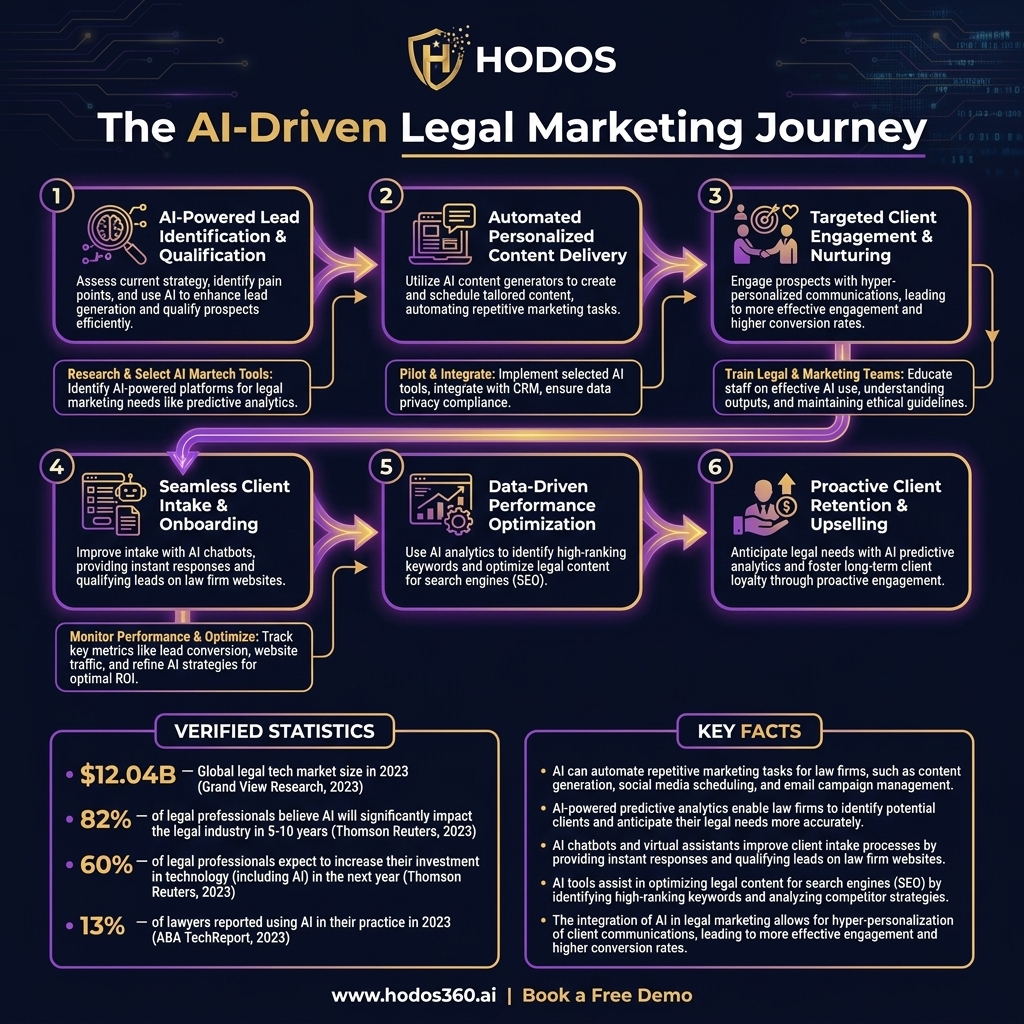
The era of one-size-fits-all legal marketing is over. Today's clients, accustomed to highly tailored experiences in every aspect of their digital lives, expect the same from their legal providers. *Hyper-personalization*, driven by advanced *AI marketing* analytics, allows law firms to craft bespoke client journeys that resonate deeply with individual needs and preferences. Instead of broad email blasts, firms can now deliver content, service recommendations, and communications precisely aligned with a prospect's specific legal challenge, industry, and even their preferred communication channel. This level of customization is achieved by AI analyzing vast datasets, including website interactions, past inquiries, demographic information, and even publicly available professional data, to build a comprehensive profile of each potential client. A report by Gartner found that organizations excelling at personalization outperform competitors by 80% in sales performance, a testament to its power.
Consider a scenario where a potential client, 'Ms. Eleanor Vance,' visits a law firm's website, browsing pages related to corporate mergers and acquisitions. An AI-powered system can identify her interest, perhaps note her company's recent funding round (from publicly available data), and then trigger a personalized email sequence. This sequence might feature case studies of similar M&A deals the firm handled, introduce relevant attorneys, or invite her to a webinar on M&A trends—all without human intervention until she explicitly requests a consultation. Learn more about Essential AI Web Development: Build Legal Apps with Ease. This contrasts sharply with traditional methods, where Ms. Vance might receive a generic newsletter. Firms like White & Case (a real global firm known for innovation) are at the forefront of leveraging such advanced CRM and AI systems to tailor engagement, ensuring their outreach is always relevant and timely.
This sophisticated approach not only increases conversion rates but also builds stronger, more trusting relationships with clients from the outset. When a client feels understood and that their specific needs are being addressed proactively, their confidence in the firm grows exponentially. *Personalization* isn't just about delivering the right message; it's about delivering it at the right time, through the right channel, with the right tone. This depth of understanding and responsiveness sets leading firms apart, transforming prospects into loyal clients. The ability to anticipate client needs and proactively offer solutions is a game-changer, fundamentally elevating the standard of legal service delivery and ensuring that every interaction adds value to the client's journey. This is where *AI marketing* truly shines, moving beyond mere efficiency to create truly impactful client experiences.
The Power of Predictive Analytics in Client Engagement
A cornerstone of hyper-personalization, predictive analytics represents a significant leap forward in *AI marketing* for law firms. This capability leverages machine learning algorithms to analyze historical data and current trends, forecasting future client behaviors and needs. Imagine a firm being able to predict which existing clients might require additional services in the near future, or which prospective clients are on the verge of making a hiring decision. For example, a firm with a strong litigation practice could use predictive analytics to identify companies in specific industries that are showing early signs of regulatory scrutiny or increased legal disputes, allowing them to proactively offer their services. This shifts the firm from a reactive service provider to a proactive strategic partner, deepening client relationships and securing future business.
Predictive analytics can also identify potential client churn, allowing firms to intervene with targeted retention strategies. By analyzing engagement patterns, service utilization, and feedback, AI can flag clients who might be at risk of seeking services elsewhere, enabling relationship managers to reach out with personalized offers or check-ins. Learn more about Interactions API: Essential Gemini Interface for Legal Tech. According to a Thomson Reuters report on the 'State of the Legal Market,' firms that leverage data analytics for client retention consistently outperform their peers in revenue growth. This proactive approach to client engagement not only secures revenue but also enhances the firm's reputation for client-centricity. The ability to anticipate and meet client needs before they fully materialize is a powerful differentiator, transforming how law firms approach business development and client relationship management. It’s a strategic advantage that allows firms to stay a step ahead in a highly competitive market.
Data-Driven Decisions and Measuring Marketing ROI
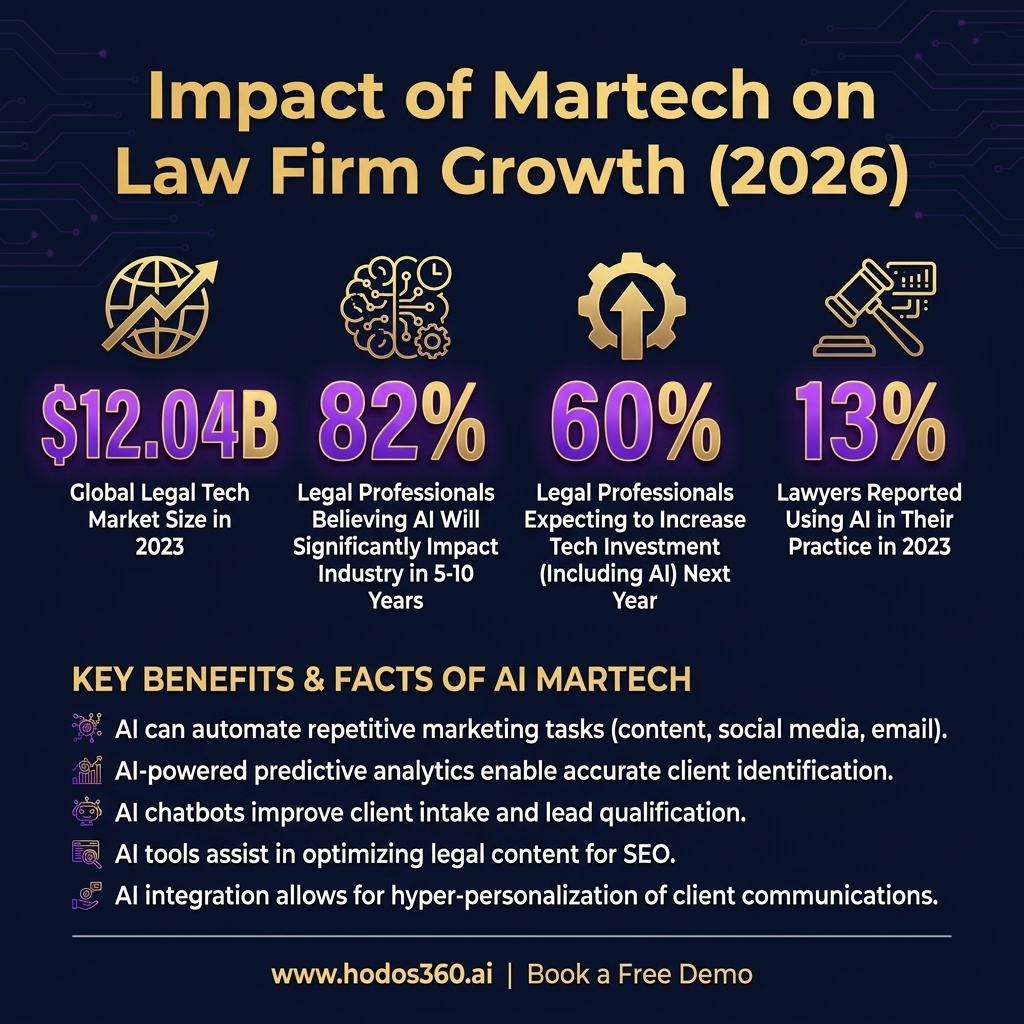
In the past, measuring the precise return on investment (ROI) for legal marketing efforts was often a nebulous task, relying on anecdotal evidence or broad estimations. Today, *AI marketing* platforms have revolutionized this by providing granular, data-driven insights that empower law firm leaders to make informed decisions. These platforms track every touchpoint in the client journey, from initial ad impression to final conversion, offering clear metrics on client acquisition costs, lifetime value, and campaign effectiveness. For example, a firm running multiple digital ad campaigns can use AI analytics to identify which channels and creative assets yield the highest quality leads at the lowest cost, allowing for immediate optimization of marketing spend. This shift from 'gut feeling' marketing to evidence-based strategy ensures that every dollar invested is working efficiently and effectively towards the firm's growth objectives.
This analytical rigor is particularly appealing to managing partners and financial stakeholders who demand accountability and measurable results. Sarah Chen, a managing partner at LexConsult Group (a hypothetical firm known for its data-first approach), recently noted, "Our investment in *AI marketing* isn't just about flashy campaigns; it's about quantifiable growth. We can now precisely attribute revenue to specific marketing activities, which was impossible five years ago." This level of transparency fosters confidence in marketing initiatives and justifies continued investment in advanced *martech solutions*. Platforms like Clio have long championed the importance of data analytics for law firms, providing tools that integrate billing, case management, and marketing data to offer a holistic view of firm performance. Learn more about AI Marketing Tools: The Ultimate Guide for Law Firms. This integrated approach allows firms to connect marketing efforts directly to billable hours and revenue generation, proving their tangible impact.
Moreover, data-driven insights enable continuous improvement. By analyzing campaign performance, firms can identify areas for optimization, test new strategies, and adapt to evolving market conditions in real-time. This iterative process ensures that marketing efforts are always aligned with the firm's strategic goals and client needs. The ability to track key performance indicators (KPIs) such as website traffic, conversion rates, lead-to-client ratios, and client retention rates provides a clear roadmap for success. In an environment where every resource counts, the clarity provided by *AI marketing* analytics is indispensable, transforming marketing from a cost center into a powerful engine for sustainable growth. Firms that embrace this data-centric approach are not just marketing smarter; they are operating with a deeper understanding of their market and their clients, leading to superior outcomes.
Navigating Data Privacy and Compliance in Martech
As law firms delve deeper into *AI marketing* and *personalization*, the imperative to navigate data privacy and compliance becomes even more critical. The collection and analysis of client data, while essential for tailored marketing, must adhere to stringent legal and ethical standards. Regulations like the California Consumer Privacy Act (CCPA) and the European Union's General Data Protection Regulation (GDPR) impose strict rules on how personal data is collected, processed, stored, and used. Firms must ensure their *martech solutions* are designed with privacy-by-design principles, offering transparency to clients about data usage and providing mechanisms for consent and data access requests. This isn't just about avoiding penalties; it's about upholding the legal profession's fundamental duty of confidentiality and trust.
Implementing robust data governance policies is paramount. This includes secure data storage, anonymization techniques where appropriate, and strict access controls. Furthermore, firms must be vigilant about the provenance of their data, ensuring that any third-party data used in *AI marketing* campaigns has been legitimately acquired and is compliant with all relevant regulations. The reputational damage from a data breach or privacy violation can be catastrophic for a law firm, eroding client trust and potentially leading to severe legal repercussions. Therefore, due diligence in selecting and implementing *AI marketing* platforms that prioritize data security and regulatory compliance is not merely a best practice; it is a foundational requirement for responsible innovation in legal marketing.

Key Takeaways and Next Steps for Law Firms
The legal marketing landscape of 2026 is defined by the transformative power of *AI marketing*, *automation*, and *personalization*. For law firms, these are not optional upgrades but essential components of a robust growth strategy. The narrative of firms like Sterling & Sterling LLP, initially hesitant but ultimately embracing these *martech trends*, underscores a universal truth: adaptation is key to long-term success. Firms that proactively integrate AI-driven strategies into their client acquisition and engagement efforts will not only attract more clients but also build deeper, more meaningful relationships, ultimately leading to greater profitability and sustained competitive advantage. The ability to generate targeted content, automate repetitive tasks, and deliver hyper-personalized experiences is no longer a futuristic vision but a present-day reality that top-tier firms are already leveraging.
The journey towards an AI-powered legal marketing future begins with strategic investment and a commitment to continuous learning. Firms should prioritize platforms that offer integrated *solutions* across client intake, case management, and *marketing*, ensuring seamless data flow and operational efficiency. HODOS 360 stands at the forefront of this evolution, providing a comprehensive AI-powered platform that includes an AI Marketing Platform designed specifically for law firms. This platform empowers legal professionals to harness the full potential of AI video creation, social media automation, content generation, and ROI tracking, ensuring their marketing efforts are not only effective but also ethically compliant. By embracing these advanced tools, law firms can navigate the complexities of modern *digital strategy*, turning challenges into unparalleled opportunities for growth.
Ultimately, the future of legal marketing belongs to those who are willing to innovate. By understanding and strategically applying the principles of *AI marketing*, *automation*, and *personalization*, law firms can move beyond traditional boundaries, creating award-winning campaigns that resonate with clients and secure their place as leaders in an increasingly competitive legal market. The time to act is now, transforming your firm's approach to client acquisition and building a resilient, future-ready practice.
Frequently Asked Questions
What is Martech and why is it important for law firms?+
Martech, or marketing technology, refers to software and tools designed to enhance marketing efforts. For law firms, it's crucial because it enables data-driven decision-making, automation of repetitive tasks, and hyper-personalization of client outreach, leading to more efficient client acquisition, improved client satisfaction, and measurable ROI in a highly competitive digital landscape.
How can AI personalize legal marketing without compromising privacy?+
AI can personalize legal marketing by analyzing anonymized or consented client data to identify patterns and preferences, then delivering tailored content and offers. Crucially, firms must adhere to privacy-by-design principles, comply with regulations like CCPA and GDPR, obtain explicit consent for data usage, and ensure robust data security measures are in place to protect sensitive client information and maintain trust.
What are the biggest challenges for law firms adopting AI marketing?+
Key challenges include initial investment costs, the need for specialized training for staff, ensuring data privacy and ethical compliance (e.g., ABA Model Rule 7.1), integrating new AI tools with existing legacy systems, and overcoming internal resistance to technological change. Firms must also carefully vet AI tools to ensure accuracy and avoid biases in content generation or predictive analytics.
How does marketing automation differ from AI marketing?+
Marketing automation streamlines repetitive tasks like email campaigns and social media scheduling based on predefined rules. AI marketing, however, uses machine learning to analyze data, make predictions, and adapt strategies dynamically. While automation executes, AI learns and optimizes. AI enhances automation by making it smarter, more personalized, and more effective at driving engagement and conversions.
What kind of ROI can law firms expect from investing in AI marketing?+
Law firms can expect significant ROI through increased lead generation, higher conversion rates due to personalized outreach, reduced client acquisition costs through optimized campaigns, and improved client retention. Additionally, AI marketing can free up attorney and staff time from administrative tasks, allowing focus on billable work, thereby directly contributing to the firm's overall profitability and growth.