


AI Web Development: The Ultimate Shift for Law Firms
Just two years ago, Sarah Chen, managing partner at Chen & Associates, found her firm's online presence to be more of a liability than an asset. Their website, built in 2018, was clunky, slow, and mobile-unfriendly, a stark contrast to their cutting-edge legal services. She often recounted the frustration of losing potential clients who bounced after just seconds, a common tale echoing across the legal industry as traditional web development firms grappled with evolving digital demands. This narrative isn't unique; it's a microcosm of the larger 'defining shift' highlighted recently by The Globe and Mail, which noted how AI and self-service platforms are fundamentally reshaping the web development landscape. For law firms, this isn't merely a technological upgrade; it's a strategic imperative for survival and growth in an increasingly digital-first world.
The advent of artificial intelligence has ushered in an era where web development is no longer a static, labor-intensive process but a dynamic, intelligent ecosystem. Firms like Chen & Associates are now exploring how AI-powered platforms can automate everything from site design and content generation to SEO optimization and client interaction. This shift is prompting many legal professionals to reconsider their approach to digital presence, moving away from bespoke, expensive solutions towards agile, AI-driven frameworks that offer speed, scalability, and enhanced user experience. The legal sector, traditionally cautious in tech adoption, is now at a crucial juncture, where embracing this evolution in web technology isn't just about staying competitive, but about redefining what a modern law firm looks like online. The implications for client acquisition, operational efficiency, and even the very definition of a law firm's brand are profound.
The AI-Driven Shift in Legal Web Development
The web development industry is undergoing a seismic shift, largely driven by the rapid advancements in artificial intelligence. What once required teams of dedicated developers and extensive coding knowledge is now being augmented, and in some cases, automated by intelligent algorithms. Companies like Google and OpenAI are continuously pushing the boundaries of generative AI, with models capable of producing coherent text, designing sophisticated layouts, and even writing functional code snippets. Learn more about AI Chatbot Development: The Essential Guide for Law Firms. This directly impacts law firms, who often face high costs and long timelines for traditional website builds. The promise of AI is not to entirely replace human expertise but to empower it, allowing legal marketing teams and smaller firms to create and maintain high-quality, professional online presences with unprecedented efficiency, fundamentally changing how legal digital assets are conceived and executed.
Consider the insights from industry leaders. Jensen Huang, CEO of NVIDIA, has frequently emphasized that AI is not just a tool but a new form of industrial revolution, enabling individuals and smaller entities to achieve feats previously exclusive to large corporations. In the legal context, this translates to law firms, regardless of size, being able to leverage sophisticated AI-powered website builders that can analyze their practice areas, target audience, and competitive landscape to suggest optimal design, content structure, and SEO strategies. Learn more about AI in Advertising: Essential Growth Strategies for Law Firms. This capability was once the exclusive domain of expensive digital agencies, making it inaccessible for many small to mid-sized law firms. Now, AI levels the playing field, making high-quality AI web development accessible and affordable, democratizing the creation of a robust digital footprint.
The impact extends beyond mere aesthetics. AI is fundamentally changing the underlying architecture and functionality of legal websites. For instance, platforms are now integrating AI to perform real-time performance optimization, detect broken links, and even predict user behavior patterns to dynamically adjust content presentation. This proactive approach ensures that a law firm’s website remains at peak efficiency, minimizing downtime and maximizing engagement. Learn more about Legal AI: The Ultimate Guide for Small Firms' Smart Decisions. The evolution of these tools also means that updates and scaling are far more straightforward. Instead of a complete overhaul every few years, AI-driven sites can adapt incrementally, ensuring that the firm's online presence is always current with the latest web standards and user expectations, a critical factor for maintaining relevance in a fast-paced digital world.
This shift also brings a new focus on data-driven decision-making for legal professionals. AI algorithms can crunch vast amounts of data related to website traffic, user interaction, and conversion rates, providing actionable insights that traditional manual analysis often missed. For instance, an AI might identify that potential clients searching for 'estate planning attorney' in a specific geographic area are more likely to convert if presented with a short video testimonial rather than a lengthy text explanation. Learn more about Full-Stack AI Marketing: The Ultimate Strategy for Law Firms. This level of granular insight allows law firms to continually refine their digital strategy, ensuring their website isn't just a static brochure but a dynamic, high-converting asset. The ability to quickly iterate and adapt based on real-time data is a hallmark of this new era of AI web development, distinguishing it sharply from previous paradigms.
Beyond Basic Websites: AI for Enhanced Client Experience
For law firms, the website is often the first point of contact with a potential client. In the age of AI, this interaction is moving far beyond basic websites to become a deeply personalized and efficient experience. AI-powered chatbots, for example, are no longer simple FAQ machines; they are sophisticated AI voice assistants capable of natural language processing, understanding complex legal queries, and even performing initial lead qualification. Learn more about AI Marketing: An Essential Guide for Law Firm CMOs. Firms like Allen & Overy, known for their embrace of legal tech, have explored similar AI integrations to streamline client intake and provide immediate, accurate information, setting a new standard for responsiveness. This immediate engagement can significantly improve client satisfaction and reduce the burden on administrative staff, ensuring that potential clients receive prompt attention even outside of business hours, a crucial differentiator in a competitive market.
The personalization enabled by AI extends to content delivery. Imagine a potential client visiting a law firm's website. Instead of a generic display, AI algorithms can analyze their browsing history, geographic location, and even the source of their referral to present tailored content—perhaps articles relevant to their specific legal issue, or testimonials from clients with similar cases. This level of customized experience fosters trust and demonstrates the firm's understanding of individual needs. Learn more about Essential Website Design: Powering Law Firm Growth in 2026. McKinsey's 2024 report on digital customer experience highlighted that personalized interactions lead to a 15-20% increase in customer loyalty and conversion rates, a statistic directly applicable to the legal sector's efforts in client acquisition and retention. This intelligent content delivery is a cornerstone of advanced AI web development.
Automated Content Generation and SEO Optimization
Another significant area where AI is enhancing client experience is through automated content generation and SEO optimization. High-quality, relevant content is the bedrock of effective digital marketing, but generating it consistently can be a drain on legal professionals' time. AI-powered content tools can assist in drafting blog posts, legal explainers, and even case summaries, freeing up attorneys to focus on billable work. Moreover, these tools are often integrated with advanced SEO capabilities, analyzing search trends and competitor strategies to ensure the generated content is optimized for visibility. This means a law firm's website is not just informative but discoverable, drawing in a steady stream of qualified leads. The ability of AI to rapidly produce and optimize content represents a profound evolution in legal digital transformation, ensuring firms remain competitive in search rankings.
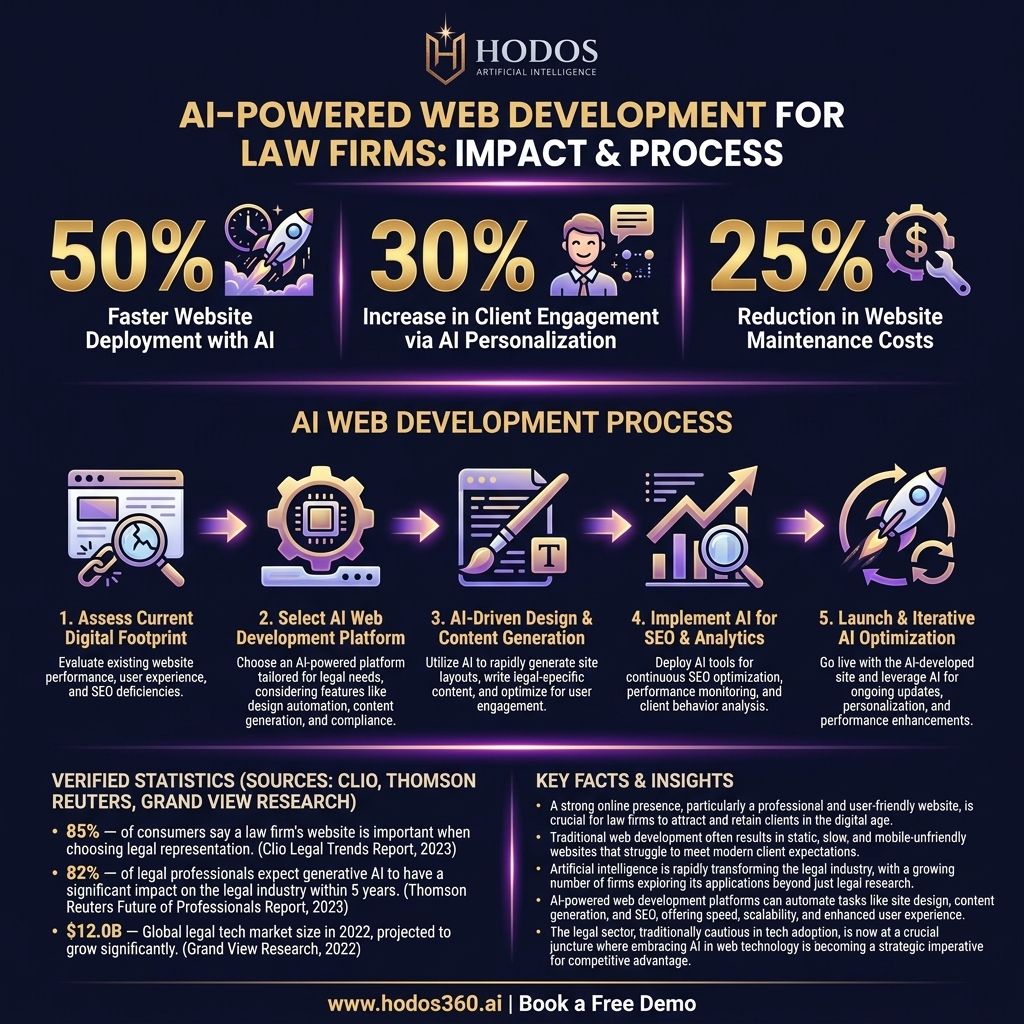
The role of AI in SEO optimization is particularly transformative. Traditional SEO involved manual keyword research, backlink building, and constant content updates—a laborious and often hit-or-miss process. AI platforms, however, can conduct real-time analysis of search engine algorithms, identify emerging trends, and predict keyword performance with remarkable accuracy. This predictive capability allows law firms to proactively adjust their website content and structure, ensuring they rank highly for critical legal search terms. For example, an AI might detect a sudden surge in searches for 'cryptocurrency legal advice' and recommend immediate content creation around that topic, complete with optimized keywords and meta descriptions. This dynamic, intelligent approach to SEO is crucial for any law firm aiming to survive and thrive in the modern digital landscape, making their digital presence a powerful lead generation engine.
Streamlining Operations with AI-Powered Website Building
The operational benefits of AI-powered website building for law firms are substantial, extending far beyond superficial improvements. One of the most immediate advantages is the dramatic reduction in development time and cost. Traditional web development projects often span months and incur significant expenses, requiring extensive back-and-forth between the firm and external agencies. AI-driven platforms, however, can generate initial website drafts based on simple inputs (e.g., firm name, practice areas, desired aesthetic) in a matter of hours or days. This rapid prototyping allows law firms to launch or refresh their online presence much faster, responding swiftly to market demands or competitive pressures. This efficiency is critical for firms looking to reallocate resources from web maintenance to core legal services, directly impacting their bottom line.
Furthermore, AI simplifies the ongoing management and maintenance of the website. For many law firms, updating content, ensuring mobile responsiveness, or fixing minor bugs often requires contacting a developer or agency, leading to delays and additional costs. AI-powered systems are designed with user-friendliness in mind, allowing legal professionals with minimal technical expertise to make updates, publish new articles, or adjust design elements through intuitive interfaces. This self-sufficiency is a game-changer, empowering firms to maintain a dynamic and current online presence without constant external reliance. It represents a significant shift towards greater autonomy and control over digital assets, allowing firms to be agile and responsive to their clients' evolving needs without the traditional bottlenecks.
Automated Compliance and Accessibility Features
Beyond mere aesthetics and content, AI-powered website building platforms are increasingly incorporating automated compliance and accessibility features, which are paramount for legal entities. Law firm websites must adhere to various legal and ethical guidelines, including accessibility standards (e.g., WCAG) and data privacy regulations. Manually ensuring compliance across a complex site can be daunting and prone to error. AI can continuously scan the website for potential compliance issues, such as inaccessible elements for users with disabilities or outdated privacy policy links, and even suggest or implement fixes automatically. This proactive compliance management protects firms from potential legal liabilities and reinforces their commitment to ethical digital practices, aligning with principles like ABA Model Rule 1.1 on competence in the use of technology. Such automation is vital for any modern law firm aiming to uphold the highest professional standards online.
The integration of AI into backend operations also extends to security. With the increasing threat of cyberattacks, maintaining a secure website is non-negotiable for law firms, given the sensitive client data they handle. AI systems can monitor website traffic for suspicious activity, detect and mitigate DDoS attacks, and even identify vulnerabilities before they can be exploited. This layer of intelligent security provides peace of mind, allowing law firms to focus on their core practice without constant worry about their digital infrastructure. The holistic approach of AI web development platforms, combining design, content, SEO, compliance, and security, makes them an indispensable tool for law firms navigating the complexities of the digital age, ensuring their online presence is not only effective but also robust and trustworthy.
The Future of Legal Digital Presence: Embracing AI
Looking ahead, the future of legal digital presence is inextricably linked with the continued evolution and integration of artificial intelligence. We are on the cusp of a truly predictive and adaptive web, where law firm websites will not just respond to user queries but anticipate them, offering legal guidance or directing clients to relevant resources before they even explicitly ask. Imagine a website that, based on a potential client's initial search query and brief interaction, can suggest a specific attorney within the firm best suited for their case, pre-populate an intake form, and even schedule an initial consultation. This level of proactive engagement, driven by sophisticated AI, promises to redefine client service and engagement, setting new benchmarks for efficiency and personalized legal assistance. Firms that embrace this proactive approach will undoubtedly gain a significant competitive edge.
However, embracing AI in web development also necessitates a careful consideration of ethical and professional responsibilities. The ABA Model Rules of Professional Conduct, particularly Rule 1.6 (Confidentiality of Information) and Rule 1.1 (Competence), impose obligations on attorneys regarding the use of technology and the protection of client data. Law firms must ensure that any AI-powered tools used in their digital presence adhere to stringent data privacy standards, secure client information, and do not inadvertently create attorney-client relationships or provide legal advice without human oversight. The shift towards AI-driven websites requires a robust framework for ethical deployment, ensuring that technological advancement is balanced with professional integrity and client trust. This is not merely a technical challenge but a professional one, demanding vigilance and informed decision-making from firm leadership.
The competitive landscape is rapidly changing, and law firms that resist this evolution risk falling behind. Early adopters, such as those leveraging platforms like HODOS 360 for their comprehensive AI Law Firm Management System alongside Web & Mobile Development, are already demonstrating superior client acquisition and retention rates. They are building digital ecosystems that are not just visually appealing but are intelligent, adaptive, and seamlessly integrated with their internal operations. This holistic approach ensures that the website is not a standalone asset but a central hub for all client interactions, from initial contact through case management and billing. The facts clearly indicate that firms investing in AI web development are better positioned to survive and thrive in an increasingly digital-first legal marketplace, distinguishing themselves from those clinging to traditional methods.
Moreover, the future will see AI playing a greater role in the continuous improvement of websites through A/B testing and multivariate analysis, all automated. AI will not just build the site but will actively learn from user interactions, constantly optimizing layouts, call-to-action placements, and content delivery to maximize conversion rates. This means that a law firm's website will become a living, breathing entity that continuously refines itself for optimal performance. This dynamic optimization ensures that the website remains a cutting-edge tool, always adapting to the latest trends and user preferences, ensuring long-term relevance and effectiveness. The evolution of these capabilities means that AI web development is not a one-time project but an ongoing, intelligent process of digital refinement.
Strategic Imperatives for Law Firms in the AI Era
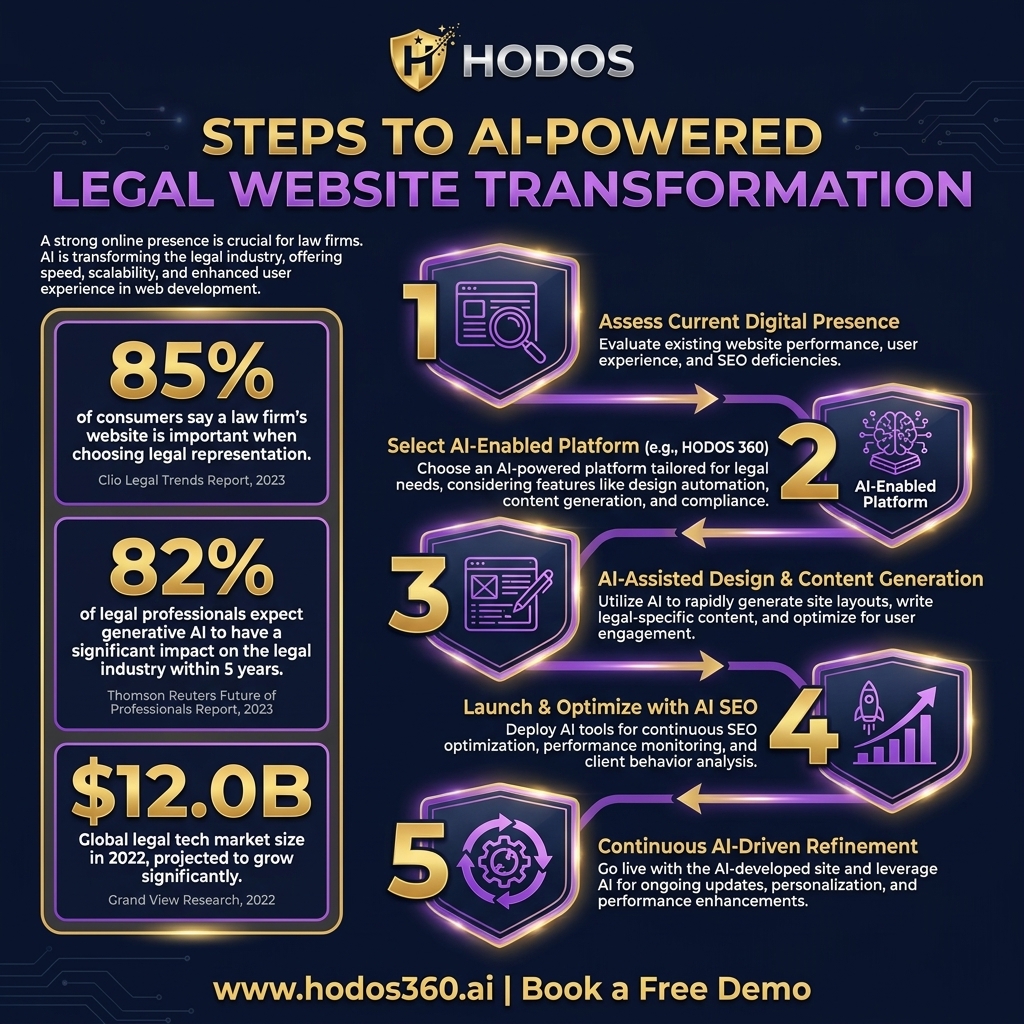
For law firms looking to navigate this transformative era, several strategic imperatives emerge. First, it is crucial to conduct a comprehensive audit of your current digital presence. Understand its strengths, weaknesses, and how it measures against competitors already leveraging AI web development. This involves analyzing website performance, user experience, SEO rankings, and conversion rates. Without a clear understanding of your starting point, it's impossible to chart an effective course forward. Many firms, focused on their core legal work, have allowed their websites to stagnate, presenting a significant opportunity for improvement through AI integration. This initial assessment helps identify critical areas where AI can deliver the most immediate and impactful benefits, guiding strategic investment decisions.
Second, firms must prioritize vendor selection carefully. The market is inundated with various AI-powered platforms and website builders, each promising different capabilities. For law firms, the key is to choose a provider that not only offers robust AI web development tools but also understands the unique needs and regulatory landscape of the legal industry. This includes features like secure data handling, compliance with legal advertising rules, and seamless integration with other legal tech solutions, such as AI Marketing Platform for social media automation or AI Voice Assistants for client communication. A vendor like HODOS 360, offering a suite of integrated AI services tailored for law firms, can provide a cohesive and comprehensive solution, reducing fragmentation and ensuring synergy across all digital touchpoints. This integrated approach is essential for maximizing the value of AI investments.
- ✓Invest in AI Literacy: Educate your team on the capabilities and limitations of AI in web development and legal tech. Understanding the tools is critical for effective deployment.
- ✓Prioritize Data Security and Privacy: Ensure any AI platform adheres to stringent legal data protection standards (e.g., ABA Model Rule 1.6) to safeguard client information.
- ✓Focus on User Experience (UX): Leverage AI to create intuitive, personalized, and accessible websites that cater to the modern legal client's expectations.
- ✓Embrace Continuous Optimization: Utilize AI's analytical capabilities for ongoing SEO, content, and design improvements, making your website a dynamic asset.
- ✓Integrate with Existing Legal Tech: Choose platforms that seamlessly connect with your existing case management, billing, and client intake systems for a unified digital ecosystem.
- ✓Monitor and Adapt: The AI landscape is rapidly changing. Regularly review your AI web development strategy and adapt to new technologies and best practices.
Finally, law firms must cultivate a culture of innovation and continuous learning. The evolution of AI is relentless, and what is cutting-edge today may be commonplace tomorrow. Encouraging attorneys and staff to engage with new technologies, participate in legal tech conferences like LegalTech NYC, and provide feedback on AI tool performance is vital. This proactive engagement ensures that the firm remains at the forefront of digital innovation, continually refining its online presence to meet the evolving demands of clients and the market. The ultimate goal is not just to build a website, but to create an intelligent, adaptive digital ecosystem that serves as a powerful engine for growth, client satisfaction, and operational excellence in the modern legal profession. This strategic adoption ensures that law firms are not merely reacting to the shift but actively shaping their digital future.

Key Takeaways and Next Steps
The web development landscape for law firms is undergoing an undeniable and profound shift, driven by the transformative power of artificial intelligence. This isn't a speculative future; it's the current reality shaping how legal services are marketed, delivered, and accessed. Firms that embrace AI web development are gaining significant advantages in client acquisition, operational efficiency, and overall digital footprint. From automated content generation and hyper-personalized client experiences to streamlined compliance and robust security, AI is fundamentally redefining what a law firm's online presence can achieve. The ability to build, manage, and optimize sophisticated websites with unprecedented speed and intelligence is no longer a luxury but a strategic imperative for any firm aiming to survive and thrive in the competitive legal market. Ignoring this evolution is akin to practicing law without a computer in the late 20th century.
For law firms ready to harness this power, the next steps are clear: assess your current digital standing, explore integrated AI solutions that cater specifically to the legal sector, and foster a culture of technological adoption. Platforms like HODOS 360 offer a comprehensive suite of AI-powered services, including Web & Mobile Development that leverages cutting-edge AI to build high-converting, SEO-optimized, and responsive websites tailored for law firms. By integrating these advanced tools, legal practices can not only enhance their online visibility and client engagement but also streamline their internal operations, ultimately freeing up valuable time for billable work. The future of legal practice is digital and intelligent; ensuring your firm's website is at the vanguard of this transformation is paramount. Don't let your firm be left behind in this defining shift.
Frequently Asked Questions
How does AI specifically benefit law firm web development?+
AI streamlines web development by automating design, content generation, and SEO, significantly reducing time and cost. It enables personalized client experiences through smart chatbots and tailored content, enhances compliance, and provides advanced security, making websites more efficient and effective for legal client acquisition and retention. This shift allows law firms to focus more on legal work.
Will AI replace human web developers for law firms?+
While AI automates many routine tasks, it won't entirely replace human developers. Instead, it augments their capabilities, allowing them to focus on more complex, creative, and strategic aspects of design and functionality. For law firms, this means AI empowers smaller teams or even non-technical staff to manage high-quality websites, making expertise more accessible rather than redundant. It's an evolution, not a replacement.
What are the security implications of using AI for legal websites?+
AI can significantly enhance website security by proactively monitoring for threats, detecting vulnerabilities, and mitigating attacks in real-time. However, law firms must choose reputable AI platforms that prioritize data privacy and adhere to legal ethical guidelines (e.g., ABA Model Rule 1.6). Robust security features are non-negotiable for protecting sensitive client information on any AI web development platform.
How can a law firm ensure its AI-powered website is compliant with legal standards?+
Modern AI web development platforms often include automated compliance checks for accessibility (WCAG) and data privacy regulations. Law firms should ensure their chosen platform offers these features and that they maintain human oversight. It's crucial to align AI implementation with professional obligations like ABA Model Rule 1.1 (Competence) and 1.6 (Confidentiality) to avoid ethical pitfalls. This ensures the website remains legally sound.
Is AI web development suitable for small law firms?+
Absolutely. AI web development is particularly beneficial for small law firms as it democratizes access to sophisticated digital tools. It allows them to create professional, high-performing websites without the extensive budget or technical expertise typically required. This enables smaller firms to compete more effectively with larger entities, ensuring they can survive and thrive by leveraging advanced digital strategies economically. It's a key part of the industry shift.