


AI Law Firm Management: Essential Strategies for Selection
The legal industry stands at a pivotal juncture, grappling with the rapid evolution of artificial intelligence. A recent report from Legal Futures highlighted a city firm’s meticulous approach to this transformation, detailing a rigorous head-to-head challenge between five leading AI companies to determine the best technology for its lawyers. This anecdote underscores a critical shift: the conversation among law firm leaders is no longer *if* to adopt AI, but *how* to strategically choose and integrate the most effective AI Law Firm Management solutions to maintain a competitive edge and avoid being among those 'sleepwalking into a crisis,' as some industry commentators have warned.
This deliberate, comparative evaluation process reflects a growing understanding that not all AI is created equal, nor is every solution suitable for every firm. As the American Bar Association’s 2023 TechReport indicated a significant uptick in firms exploring or actively using AI, the challenge lies in moving beyond superficial feature comparisons to a deep assessment of how these advanced *tools* truly enhance *existing processes*, support attorney *judgment*, and deliver tangible value. For law firms navigating this complex landscape, understanding the strategies behind successful AI selection is paramount to unlocking efficiency, improving client service, and securing future growth.
The Strategic Imperative: Navigating AI Selection in Legal Tech
The competitive landscape in legal services is intensifying, driven by client demands for efficiency and innovation. Firms that fail to strategically adopt and integrate advanced AI Law Firm Management systems risk falling behind. Major players like Kirkland & Ellis and Allen & Overy are not merely experimenting; they are making significant investments, as evidenced by Allen & Overy's groundbreaking partnership with Harvey AI. This collaboration, announced in 2023, signaled a clear intent to embed AI deeply into their operations, moving beyond simple automation to sophisticated legal reasoning. Such initiatives highlight that the market isn't just about *using* AI; it's about leveraging it to *improve existing processes* and gain a decisive operational and intellectual advantage.
The sheer volume of AI solutions available, from specialized e-discovery platforms to comprehensive practice management suites, can be overwhelming. Firms must discern between disparate *tools* and integrated AI Law Firm Management systems that offer holistic solutions for case management, billing, client intake, and document automation. According to Thomson Reuters' 2024 Future of Legal Report, firms that strategically invest in integrated legal technology see a significantly higher return on investment and improved lawyer satisfaction. Learn more about Essential AI Legal Adoption: Akin's Firmwide Success Blueprint. Without a clear strategy, firms risk fragmenting their tech stack, creating data silos, and ultimately hindering rather than helping their operational efficiency. This necessitates a proactive approach to selection, carefully outlining needs and capabilities.
This complexity underscores why a firm like the one highlighted by Legal Futures opted for a head-to-head challenge. It’s a pragmatic response to the tension between vendor promises and real-world application. Rather than passively adopting off-the-shelf solutions, leading firms are demanding demonstrable proof of concept and performance. This rigorous due diligence helps them avoid the pitfalls of premature or ill-suited adoption, ensuring that the chosen *technology outlines* a clear path to enhanced productivity and better client outcomes. It’s a model for how to make informed decisions in a rapidly evolving technological environment, ensuring that the investment aligns with long-term strategic goals.
The "Head-to-Head" Challenge: A Blueprint for Due Diligence
The concept of a "head-to-head" challenge, as undertaken by the City firm, serves as an invaluable blueprint for rigorous due diligence in selecting AI Law Firm Management systems. This isn’t a passive vendor demonstration but an active, real-world stress test where competing AI platforms are evaluated side-by-side using the firm's actual (or anonymized) data and workflows. Imagine a firm like Ashworth & Finch LLP, setting up a controlled environment where different AI solutions process a batch of contracts for review, draft a series of legal memos, or manage a simulated client intake process. This direct comparison allows for objective benchmarking across critical metrics like accuracy, speed, user-friendliness, and integration capabilities, providing concrete data that goes beyond marketing claims and helps firms *chose* the most effective system.
Key criteria for such an evaluation extend beyond basic functionalities. Firms must assess the AI's ability to seamlessly integrate with *existing processes* and infrastructure, its scalability to accommodate future growth, and the vendor’s commitment to ongoing support and innovation. The involvement of actual legal professionals – from partners to paralegals – in this challenge is crucial. Their direct feedback on user experience, workflow disruption, and practical utility provides invaluable insights that no technical specification sheet can offer. Learn more about Website Design Cost 2026: Strategic Investment for Law Firms. As legal tech consultant Casey Flaherty often emphasizes, technology’s true value is realized not in its features, but in its adoption and impact on daily practice. This hands-on approach ensures that the chosen AI Law Firm Management system genuinely empowers lawyers, rather than creating new complexities.
Defining clear Key Performance Indicators (KPIs) is paramount for the success of these trials. For AI Law Firm Management systems, these might include quantifiable metrics such as reduction in time spent on administrative tasks, improvement in document drafting speed and accuracy, enhanced client intake efficiency, or a measurable increase in billable hours due to automation. Firms should benchmark these KPIs *between* competing platforms, using identical scenarios. For instance, comparing how quickly and accurately different AI tools can identify relevant clauses in a complex M&A agreement or generate initial drafts of discovery requests. This data-driven approach allows firms to objectively *chose* the solution that best meets their specific operational needs and strategic objectives, ensuring that the substantial investment in AI delivers tangible, measurable benefits.
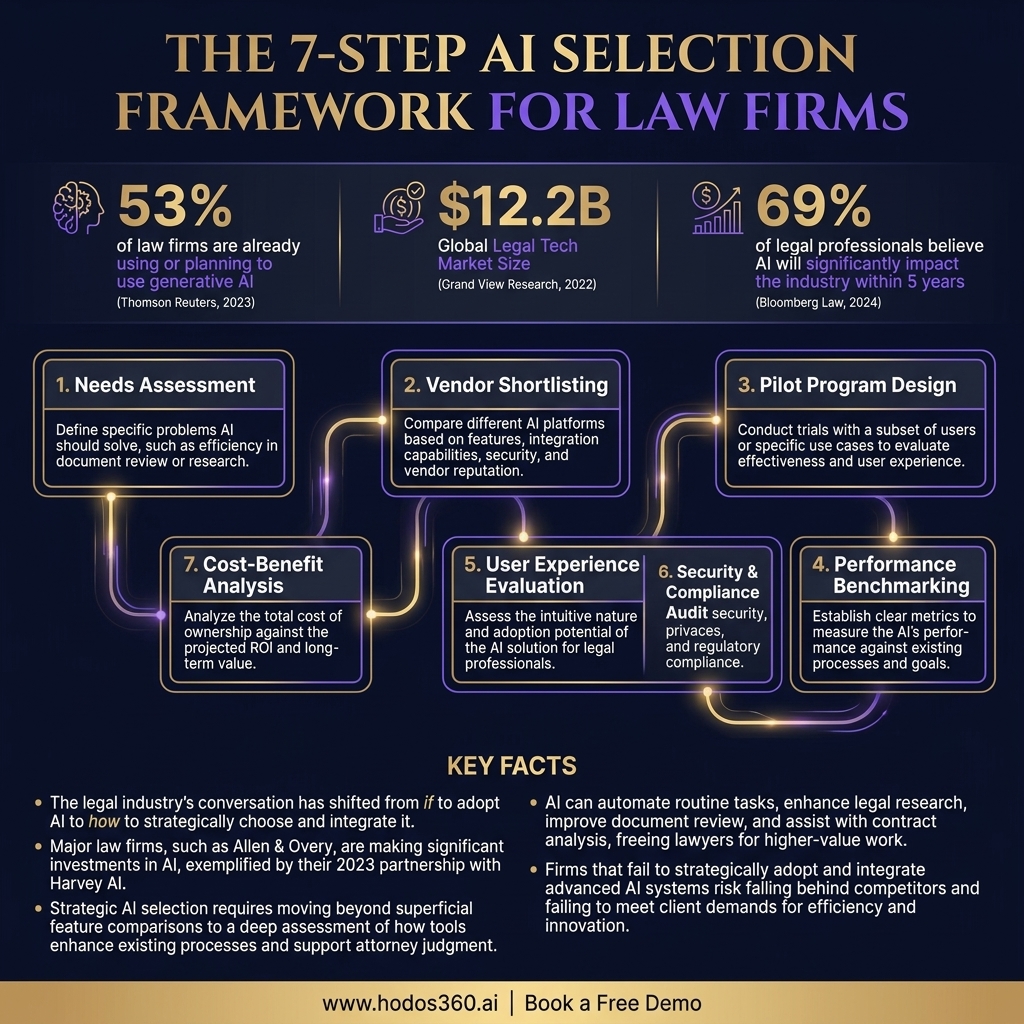
- ✓Needs Assessment: Clearly define current pain points, desired outcomes, and specific functionalities required from an AI Law Firm Management system.
- ✓Vendor Shortlisting: Identify 3-5 top AI vendors based on market reputation, industry focus, and initial feature review.
- ✓Pilot Program Design: Develop a structured 'head-to-head' challenge, providing each vendor with identical, anonymized firm data and specific tasks to perform.
- ✓Performance Benchmarking: Establish quantifiable KPIs (e.g., accuracy, speed, efficiency gains) and objectively measure each AI solution's performance against these metrics.
- ✓User Experience Evaluation: Gather feedback from a diverse group of end-users (partners, associates, paralegals) on ease of use, integration with *existing processes*, and impact on daily workflows.
- ✓Security & Compliance Audit: Thoroughly vet each vendor's data security protocols, privacy policies, and compliance with relevant legal and ethical standards (e.g., ABA Model Rules).
- ✓Cost-Benefit Analysis: Conduct a comprehensive financial review, considering not just licensing fees but also implementation costs, training, and projected ROI.
Beyond Features: Evaluating AI's Impact on Workflow and Culture
While technical specifications are important, the true success of AI Law Firm Management hinges on its integration into human workflows and its impact on firm culture. The narrative often shifts from fear of AI replacing lawyers to the reality of AI augmenting human capabilities, a sentiment frequently echoed by leaders like Jack Newton, CEO of Clio. He consistently emphasizes that AI should empower legal professionals to focus on higher-value, strategic work, not automate them out of a job. Firms must evaluate how a proposed AI system enhances, rather than disrupts, the collaborative *processes* between lawyers and support staff, ensuring that the technology genuinely supports and elevates attorney *judgment*.
Successful AI adoption requires robust change management and comprehensive training programs. Firms that simply deploy AI *tools* without preparing their staff for new *processes* are destined for limited success. The 'upskilling program' mentioned in competitor titles is not merely a buzzword; it's a necessity. Lawyers and paralegals need to understand how to interact with AI, interpret its outputs, and leverage its insights effectively. Learn more about Voice AI Adoption: Essential for Law Firms' Future Growth. This cultural shift transforms the firm into a learning organization, where continuous improvement is driven by both human intellect and intelligent automation. Neglecting this human element is a prime example of 'sleepwalking into a crisis' of adoption, regardless of the technology's inherent power.
Ethical considerations are paramount, particularly concerning data privacy and algorithmic bias. Law firms handle highly sensitive client information, making robust data security and compliance with regulations like GDPR, CCPA, and ABA Model Rule 1.6 (Confidentiality of Information) non-negotiable. Furthermore, firms must be vigilant about potential biases in AI algorithms, which can inadvertently perpetuate or amplify existing societal inequalities if not carefully managed. Ensuring human oversight and maintaining attorney *judgment* in critical decision-making *between* AI suggestions and final legal action is vital to uphold professional responsibilities and avoid ethical pitfalls. The goal is to enhance legal services, not compromise their integrity.
Navigating AI Governance and Regulatory Compliance
The evolving regulatory landscape for AI, exemplified by the EU AI Act, demands proactive AI governance from law firms. This means not only adhering to current data protection laws but also anticipating future regulations and ensuring chosen AI Law Firm Management systems can adapt. Firms must establish clear internal policies for AI usage, data input, and output verification, safeguarding client interests and maintaining professional standards as outlined in ABA Model Rule 1.1 (Competence), which implicitly requires lawyers to stay abreast of technological advancements. Learn more about AI-Powered Web Development: The Essential Guide for Law Firms. This proactive stance helps firms avoid the 'crisis of judgment' that can arise from over-reliance on opaque AI systems and ensures that human legal expertise remains central to every decision.
Integration, Data Security, and Ethical AI Deployment
Seamless integration is the bedrock of an effective AI Law Firm Management system. A powerful AI *tool* operating in isolation is merely a sophisticated calculator; its true value emerges when it connects effortlessly with *existing processes* such as practice management software, document management systems, and accounting platforms. Firms need to scrutinize vendors for robust APIs and a proven track record of successful integrations. Without this, data silos emerge, requiring manual data entry or reconciliation, which negates the very efficiency gains AI promises. The goal is a unified ecosystem where information flows freely and securely, enhancing decision-making and operational fluidity *between* different departments and functionalities.
Beyond functionality, data security and compliance are non-negotiable pillars for any legal tech solution. Law firms are custodians of highly sensitive and confidential client data, making them prime targets for cyberattacks. Therefore, any AI Law Firm Management system must adhere to the highest industry standards, such as ISO 27001 and SOC 2 compliance. Learn more about Voice Assistant Market: An Essential Guide for Law Firms. Firms must conduct thorough due diligence on vendor security protocols, encryption methods, and data residency policies. This includes understanding how client data is stored, processed, and protected, ensuring strict adherence to ABA Model Rule 1.6, which mandates the protection of client confidentiality. A breach, regardless of its origin, can have catastrophic consequences for a firm's reputation and its clients.
Ethical AI deployment extends to transparent data handling and algorithmic accountability. Firms must demand clarity from vendors regarding how their AI models are trained, what data sources are used, and how potential biases are mitigated. The 'crisis of judgment' warning is particularly relevant here; if an AI's decision-making process is opaque, it becomes difficult for lawyers to exercise their professional *judgment* effectively or to explain AI-assisted outcomes to clients. Law firms must ensure that the chosen AI Law Firm Management solution provides sufficient explainability and audit trails, allowing for human oversight and intervention when necessary, thereby upholding the principles of fairness, transparency, and accountability inherent in the legal profession.
Protecting Client Confidentiality in the AI Era
Protecting client confidentiality in the AI era requires a multi-layered approach. Firms must ensure that any AI Law Firm Management system processes data in a way that respects privacy, utilizing anonymization or pseudonymization techniques where appropriate. Cloud-based AI solutions, while convenient, necessitate robust vendor contracts that clearly define data ownership, usage, and destruction policies. Learn more about AI Websites: Essential Digital Growth for Law Firms. This vigilance extends to training staff on the ethical use of AI, ensuring they understand the boundaries of what information can be fed into AI *tools* and how to verify AI-generated output before relying on it in client matters. This commitment to confidentiality is not merely a legal obligation but a cornerstone of client trust and a fundamental aspect of professional responsibility.
Future-Proofing Your Firm: Continuous Innovation and Scalability
The legal tech landscape is in perpetual motion, driven by breakthroughs from companies like OpenAI and Anthropic. Therefore, selecting an AI Law Firm Management system isn't a one-time decision but an investment in a partner committed to continuous innovation and scalability. Firms must choose vendors that demonstrate a clear roadmap for future development, regularly releasing updates, and incorporating emerging AI capabilities. A static solution will quickly become obsolete, leaving firms with outdated *tools* that no longer *improve existing processes* or meet evolving client demands. This foresight ensures that the initial investment continues to yield returns and keeps the firm at the forefront of technological advancement.
Scalability is another critical factor for future-proofing. As a law firm grows—expanding its client base, increasing its caseload, or diversifying its practice areas—its AI Law Firm Management system must be able to scale effortlessly. This means the system should handle increasing data volumes, accommodate more users, and integrate new functionalities without requiring a complete overhaul. A solution that serves a boutique firm well today might buckle under the demands of a mid-sized or large firm tomorrow. Evaluating a vendor's infrastructure, cloud architecture, and ability to support growth is crucial, ensuring the chosen *technology outlines* a path for seamless expansion rather than becoming a bottleneck.
The ultimate competitive advantage lies not just in adopting AI, but in how intelligently a firm *uses* it to differentiate itself and drive strategic growth. Firms that master this will avoid being 'sleepwalking into a crisis' and instead lead the market. AI Law Firm Management can enable firms to offer new, innovative services, enhance their marketing efforts through data-driven insights, and improve client acquisition by demonstrating superior efficiency and responsiveness. By strategically choosing and continuously optimizing their AI solutions, firms can transform their operations, attract top talent, and secure a resilient and prosperous future in a rapidly changing legal world, ensuring their *judgment* is augmented, not replaced.
Strategic Growth Through AI Adoption
Strategic growth through AI Law Firm Management transcends mere cost savings; it's about unlocking new revenue streams and enhancing market position. AI-powered analytics can identify emerging legal trends, inform business development strategies, and even predict case outcomes, allowing firms to proactively advise clients. By automating routine tasks, lawyers can dedicate more time to complex legal strategy, client counseling, and business development, ultimately increasing the firm's capacity for high-value work and fostering sustainable expansion in a competitive marketplace. This proactive integration of AI ensures that firms are not just reacting to change but actively shaping their future.

Key Takeaways and Next Steps
The journey to selecting the optimal AI Law Firm Management system is complex but undeniably critical for modern legal practice. As the City firm's head-to-head challenge demonstrates, a rigorous, data-driven evaluation process is essential to cut through the hype and identify solutions that truly enhance efficiency, support attorney *judgment*, and align with a firm's strategic objectives. Prioritizing seamless integration, robust data security, ethical deployment, and a vendor's commitment to innovation are paramount. The firms that embrace this strategic approach will not only *improve existing processes* but also cultivate a culture of technological agility and future-readiness.
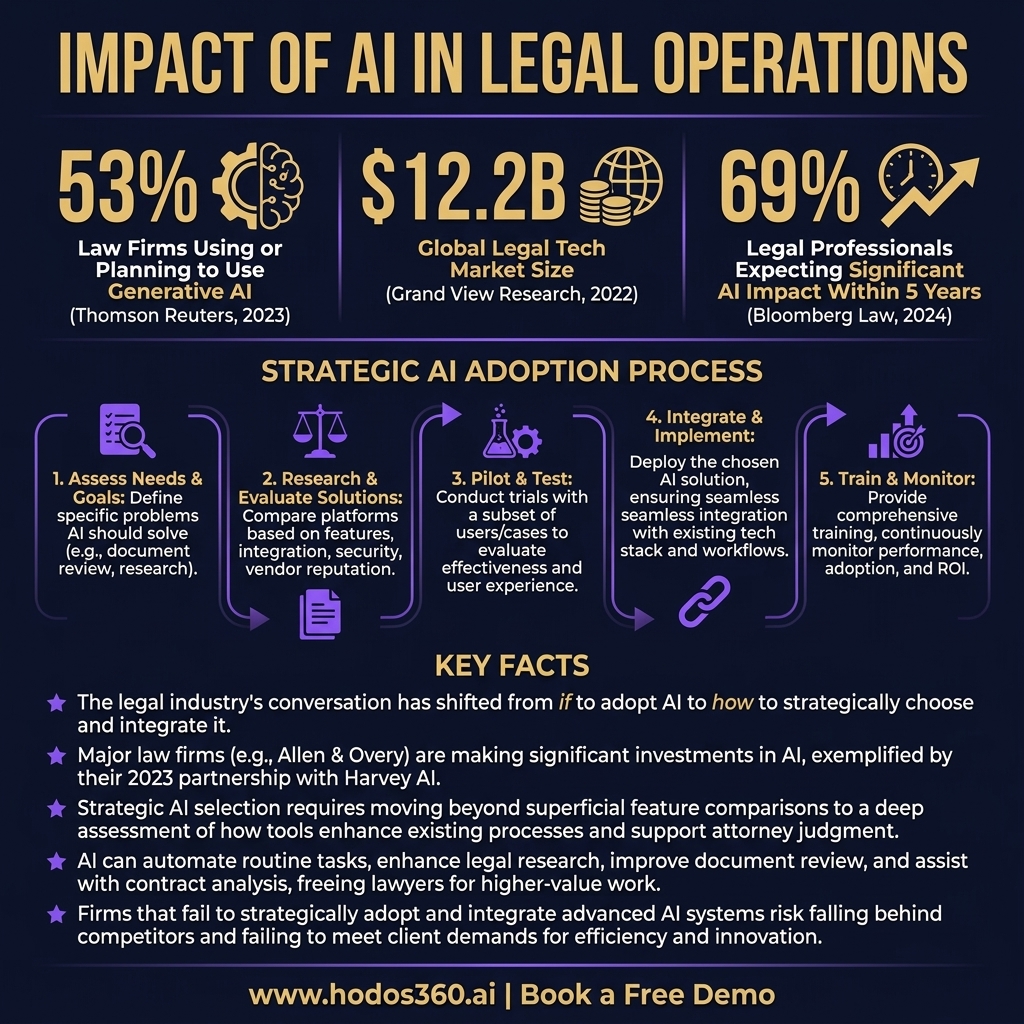
For law firm owners and legal professionals, the next steps involve a comprehensive needs assessment, active engagement with potential vendors, and a willingness to invest in both the *technology outlines* and the necessary training for successful adoption. The future of legal practice is intrinsically linked to intelligent technology, and making informed choices today will define a firm's trajectory for years to come. HODOS 360 stands as a comprehensive partner in this journey, offering integrated AI Law Firm Management solutions designed to empower firms to navigate these complexities with confidence, ensuring they are not just adopting AI, but adopting the *right* AI for sustainable success and competitive advantage, helping them to avoid 'sleepwalking into a crisis' and instead thrive.
Frequently Asked Questions
What is AI Law Firm Management and why is it crucial for modern firms?+
AI Law Firm Management refers to integrated systems that leverage artificial intelligence to automate, optimize, and streamline various aspects of law firm operations, including case management, billing, client intake, and document automation. It's crucial for modern firms to enhance efficiency, reduce administrative burdens, improve client service, and maintain a competitive edge in a rapidly evolving legal landscape. Strategic adoption helps firms improve existing processes and elevate attorney judgment.
How can a 'head-to-head' challenge help choose the best AI solution?+
A 'head-to-head' challenge involves rigorously testing multiple AI solutions side-by-side using a firm's actual data and workflows. This method provides objective benchmarks on performance, accuracy, user experience, and integration capabilities. It allows firms to directly compare competing *tools* in real-world scenarios, making an informed decision based on empirical evidence rather than marketing claims, ensuring they *chose* the best fit for their *existing processes* and specific needs.
What are the key ethical considerations when adopting AI in a law firm?+
Key ethical considerations include client confidentiality (ABA Model Rule 1.6), data privacy, algorithmic bias, and the preservation of attorney *judgment*. Firms must ensure AI systems protect sensitive client information, are free from biases that could lead to unfair outcomes, and do not diminish the lawyer's professional responsibility or competence (ABA Model Rule 1.1). Human oversight and transparency are vital to uphold ethical standards.
How important is integration with existing firm processes and systems?+
Integration is paramount for successful AI adoption. A powerful AI solution that doesn't seamlessly connect with a firm's *existing processes* (e.g., practice management, document management) can create data silos, inefficiencies, and operational friction. Robust integration ensures a unified workflow, maximizing the AI's utility by allowing information to flow freely and accurately across all firm operations, thereby truly helping to *improve existing processes*.
Will AI replace lawyers in the future?+
Most experts agree that AI will not replace lawyers but rather augment their capabilities. AI *tools* excel at automating repetitive, data-intensive tasks, freeing lawyers to focus on complex legal strategy, client counseling, and exercising their unique human *judgment*. The future of law involves a collaborative synergy *between* human legal expertise and intelligent AI Law Firm Management systems, leading to more efficient, effective, and accessible legal services.
What specific benefits can AI bring to small to mid-sized law firms?+
For small to mid-sized law firms, AI Law Firm Management offers transformative benefits by leveling the playing field with larger competitors. It can automate administrative tasks, streamline client intake, improve document review speed, and enhance research capabilities, all without the need for extensive in-house IT teams. This leads to significant cost savings, increased efficiency, better client service, and allows these firms to *improve existing processes* and scale effectively, ensuring they thrive.