


AI Use in Legal: An Essential Guide to General Counsel Oversight
The legal profession, often perceived as a bastion of tradition, has astonishingly emerged as the frontrunner in artificial intelligence adoption across all business units. A recent Law.com article, drawing from comprehensive industry reports, highlighted this unprecedented surge, noting that legal and governance teams now account for a significant percentage of all enterprise AI use. This revelation isn't merely a statistic; it signals a profound shift, placing general counsel and law firm leaders at the epicenter of a technological transformation that demands sophisticated oversight and strategic implementation. The stakes are undeniably high, as firms grapple with the immense potential of AI to revolutionize operations against the backdrop of complex ethical considerations, data privacy concerns, and an evolving regulatory landscape.
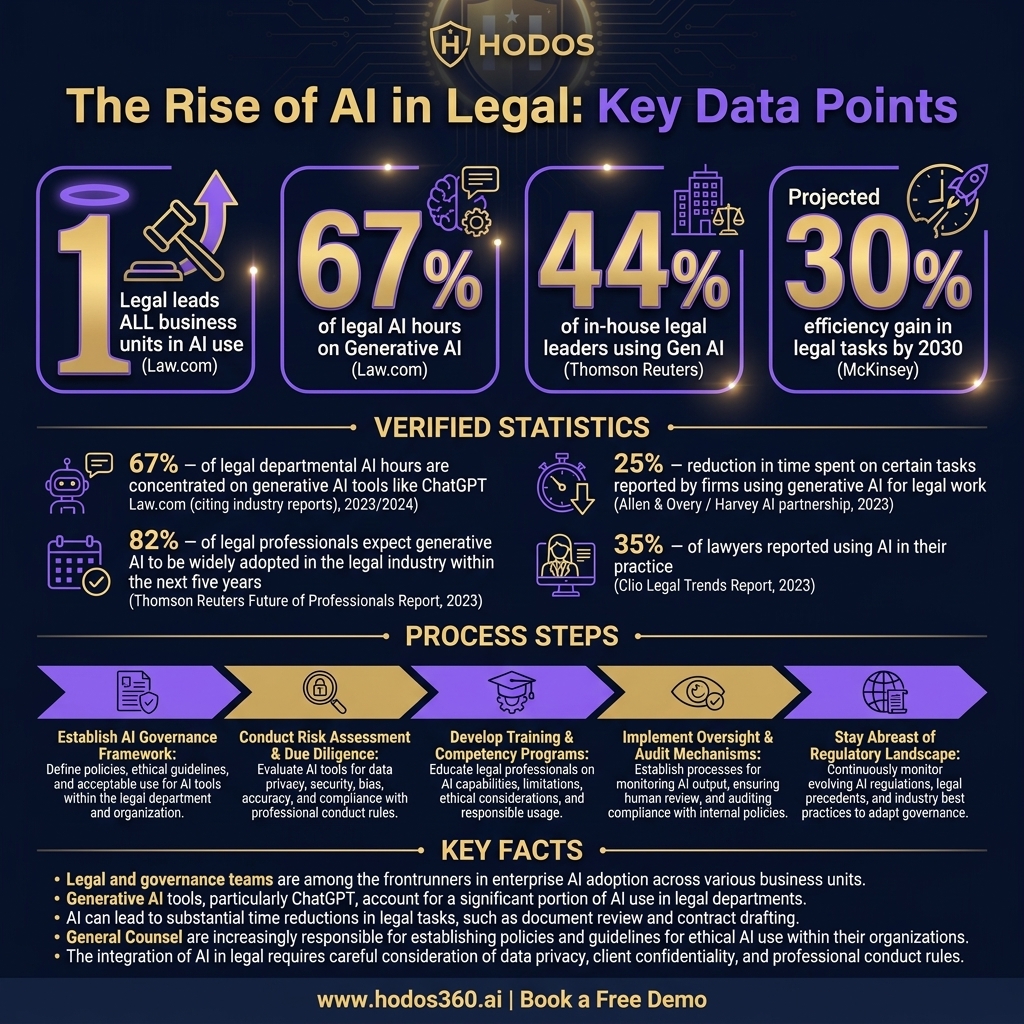
The findings underscore a critical truth: AI use in legal is no longer a futuristic concept but a present-day reality driving efficiency and innovation. The report specifically pointed to generative AI tools, with ChatGPT dominating legal AI hours, accounting for a staggering 67% of departmental tool concentration. This rapid integration, while promising significant gains in areas like document review, contract drafting, and legal research, simultaneously introduces novel challenges. Firms like Allen & Overy's early partnership with Harvey AI, a generative AI platform for legal work, showcased the immediate benefits – a reported 25% reduction in time spent on certain tasks. Yet, this success story also serves as a stark reminder of the responsibilities that accompany such powerful tools, from ensuring accuracy and mitigating bias to safeguarding client confidentiality and adhering to professional conduct rules. The tension between accelerating innovation and maintaining rigorous ethical standards is the defining drama of this era.
This guide delves into the multifaceted implications of this widespread AI use in legal, offering a roadmap for general counsel and legal professionals to not only understand but proactively shape their firm’s AI strategy. From establishing robust governance frameworks to navigating the intricacies of data security and ethical deployment, we explore how firms can harness AI’s power responsibly. The goal is to move beyond mere adoption to truly integrate AI in a manner that enhances client service, optimizes internal operations, and ensures sustained competitive advantage, all while upholding the core tenets of legal practice. The journey requires vigilance, foresight, and a commitment to continuous learning in a rapidly evolving technological frontier.
The Unprecedented Surge of AI in Legal Operations
The Law.com report, which has sent ripples across the legal industry, confirms what many industry insiders have observed: legal departments and law firms are leading the charge in enterprise AI adoption. This isn't just about isolated pilot programs; it’s a systemic shift, with AI use in legal now outpacing other business units like finance or marketing in terms of hours logged and tool concentration. The primary driver behind this acceleration is the emergence of sophisticated generative AI models, which have moved beyond simple automation to capabilities that mimic human reasoning and content creation. Companies like OpenAI, with its ChatGPT platform, and Anthropic, led by Dario Amodei with a focus on safety, have democratized access to powerful AI, making it feasible for even mid-sized law firms to explore transformative applications. This widespread availability has fueled a competitive rush, as firms realize that delaying AI integration could mean falling behind in efficiency, cost-effectiveness, and ultimately, client acquisition.
This rapid embrace of AI is not without precedent in other sectors, but its impact on the legal profession is uniquely profound due to the nature of legal work—information-intensive, document-heavy, and requiring nuanced interpretation. The Thomson Reuters Institute's annual report on the state of the legal market consistently highlights pressures on profitability and efficiency, pushing firms to seek innovative solutions. Generative AI offers a compelling answer, enabling attorneys to offload repetitive, time-consuming tasks. For instance, drafting initial legal memoranda, summarizing lengthy depositions, or conducting preliminary case research, which once consumed dozens of attorney hours, can now be accelerated dramatically. This shift frees up legal professionals to focus on higher-value activities: strategic counsel, complex problem-solving, and direct client engagement—the very aspects of legal practice that demand human judgment and empathy.
However, the enthusiasm is tempered by a clear-eyed understanding of the complexities involved. The Law.com report also indicated that while AI use in legal is prevalent, the strategies for oversight and governance are still maturing. Learn more about AI Legal Partnership: The Ultimate Guide to Enterprise AI. This creates a tension between the desire to innovate and the imperative to maintain professional standards. The challenge for firms isn't just to adopt AI, but to integrate it intelligently and responsibly. This involves not only selecting the right tools, but also redesigning legal workflows to incorporate AI seamlessly, training legal teams to interact effectively with AI systems, and establishing clear protocols for review and validation of AI-generated output. Without these foundational elements, the promise of AI can quickly turn into peril, risking inaccuracies, breaches of confidentiality, or even ethical misconduct, potentially impacting a firm's reputation and its clients' interests.
The global legal tech market, propelled by this surge, is projected to reach unprecedented valuations. Companies like Clio, known for its comprehensive practice management solutions, have been quick to integrate AI capabilities into their platforms, recognizing the demand from their vast user base. Similarly, larger players like LexisNexis and Westlaw have intensified their AI research and development, offering enhanced predictive analytics and generative research tools. This competitive landscape, characterized by rapid innovation and significant investment, means that the tools available to legal professionals are becoming increasingly sophisticated. For instance, a recent McKinsey & Company report projected that AI could automate up to 30% of current legal tasks by 2030, a statistic that underscores both the opportunity and the necessity for firms to strategically engage with this technology now, rather than later, to remain competitive and relevant in an evolving market.
Data Privacy, Confidentiality, and Model Bias
The ethical implications surrounding AI use in legal are multifaceted, but none are more immediate or critical than those concerning data privacy, client confidentiality, and algorithmic bias. When a law firm feeds sensitive client data into an AI model, whether for document review or contract analysis, it raises profound questions about where that data resides, who has access to it, and how it is protected. ABA Model Rule of Professional Conduct 1.6 on Confidentiality of Information mandates that lawyers make reasonable efforts to prevent the inadvertent or unauthorized disclosure of, or unauthorized access to, information relating to the representation of a client. This rule extends directly to the use of AI tools, requiring firms to conduct thorough due diligence on AI vendors' security protocols, data handling practices, and terms of service to ensure that client information remains sacrosanct and is not inadvertently used to train public models or exposed to third parties. The potential for a breach, even an accidental one, carries severe reputational and financial consequences, making robust data governance paramount.
Beyond confidentiality, the specter of algorithmic bias looms large. AI models are trained on vast datasets, and if these datasets reflect historical biases present in legal documents, case law, or societal data, the AI itself can perpetuate and even amplify those biases. For example, an AI tool used for predictive justice could inadvertently disadvantage certain demographics if its training data was skewed by past discriminatory legal outcomes. ABA Model Rule 1.1 on Competence requires lawyers to provide competent representation, which now includes understanding the risks and benefits associated with relevant technology. Learn more about Interactions API: Essential Gemini Interface for Legal Tech. This means attorneys must be aware of the potential for bias in AI tools and implement safeguards to review and validate AI-generated outputs, ensuring fairness and equity. Addressing bias isn't just an ethical imperative; it's a matter of justice and maintaining public trust in the legal system, especially as generative AI becomes more integrated into critical decision-making processes.
The global regulatory environment is also rapidly catching up to the pace of AI innovation. The European Union AI Act, for instance, represents a landmark piece of legislation categorizing AI systems based on their risk level and imposing stringent requirements on high-risk AI applications, which could include certain legal tech solutions. These requirements encompass data governance, human oversight, transparency, and robustness. For law firms operating internationally or handling cases with cross-border implications, understanding and complying with such regulations is not optional. The lack of a unified global framework for AI governance means that firms must navigate a patchwork of emerging laws and guidelines, requiring continuous monitoring and adaptation of their AI strategies. This regulatory complexity adds another layer to the challenge of implementing AI use in legal ethically and compliantly, demanding proactive engagement from general counsel and legal leadership to stay ahead of potential legal pitfalls.
Navigating the Ethical and Regulatory Labyrinth of Legal AI
The burgeoning AI use in legal demands more than just technological adoption; it necessitates a deep dive into the ethical and regulatory frameworks that govern its deployment. The rapid pace of AI development means that legal statutes and professional guidelines often lag, creating a 'grey area' that general counsel must navigate with extreme caution. One of the most significant challenges is ensuring transparency and explainability in AI systems, especially when they influence critical legal decisions. If an AI tool suggests a particular strategy or outcome, attorneys need to understand *how* that conclusion was reached to fulfill their professional obligations and to effectively advise clients. This 'black box' problem, where AI's internal logic is opaque, directly conflicts with the lawyer's duty to provide competent and informed counsel, as highlighted by ABA Model Rule 1.1.
Moreover, the very definition of 'legal advice' is being reshaped. When a client interacts with an AI-powered chatbot for initial legal guidance, who is responsible for the accuracy and completeness of that information? Firms must establish clear disclaimers and supervision mechanisms to ensure that AI tools act as assistants, not as unsupervised legal practitioners. The line between technology-assisted legal services and the unauthorized practice of law is becoming increasingly blurred, requiring careful consideration and policy development. The Law.com report, in emphasizing the prevalence of generative AI, underscores this urgency. As AI becomes more sophisticated, its outputs may appear indistinguishable from human work, necessitating robust internal controls to verify accuracy, prevent hallucinations, and ensure that the final legal product always benefits from human review and professional judgment. This commitment to human oversight is a cornerstone of responsible AI governance.
Beyond professional ethics, the regulatory landscape is a dynamic battleground. Governments worldwide are grappling with how to regulate AI to protect consumer rights, ensure fair competition, and manage national security risks. Learn more about Legal AI Training: Essential Skills for Modern Law Firms. The EU AI Act, with its risk-based approach, is a prime example of proactive regulation, but other jurisdictions are developing their own frameworks. For instance, in the United States, various state bar associations are issuing guidance on the ethical use of AI, reflecting a decentralized but growing push for clarity. Firms must stay abreast of these evolving regulations, not just as a matter of compliance, but as a strategic imperative to avoid costly litigation or regulatory penalties. This means investing in legal expertise that specializes in AI law and technology, or partnering with external counsel who possess such specialized knowledge. The complexity demands a proactive, rather than reactive, approach to AI use in legal, ensuring that firms are not just compliant today, but future-proofed for tomorrow's regulatory challenges.
The tension between innovation and regulation creates opportunities for firms to lead by example. Those that proactively develop robust AI governance frameworks, invest in ethical AI training for their staff, and prioritize transparency in their AI tools will distinguish themselves. This commitment extends to engaging with policymakers and contributing to the development of sensible AI regulations that foster innovation while safeguarding public interest. The dialogue around AI is no longer confined to technologists; it's a critical conversation for legal minds, shaping the future of justice and commerce. Firms that embrace this role, like Linklaters which has openly discussed its internal AI policies, position themselves not just as users of technology, but as thought leaders in its responsible evolution, thereby strengthening their brand and client trust.
Operationalizing AI: Transforming Legal Workflows and Firm Management
Moving from theoretical understanding to practical implementation, operationalizing AI use in legal involves a fundamental rethinking of legal workflows and overall firm management. It's not simply about plugging in new software; it's about strategically integrating AI to enhance every facet of a firm's operations, from client intake to case resolution. For instance, HODOS 360’s AI Law Firm Management System offers sophisticated tools for automating routine tasks like document generation, scheduling, and billing, freeing up legal professionals to focus on strategic work. This level of automation significantly boosts efficiency, allowing firms to handle a larger caseload without proportionally increasing overhead. The key lies in identifying which parts of the workflow are most amenable to AI intervention – repetitive, data-intensive tasks are prime candidates – and then carefully designing the integration to ensure seamless human-AI collaboration. This strategic approach ensures that AI acts as an accelerant to human expertise, not a replacement.
The transformation extends beyond internal efficiency to how firms engage with clients and market their services. An AI Marketing Platform, for example, can analyze market trends, predict client needs, and even assist in generating targeted content for social media and video campaigns, allowing firms to reach potential clients more effectively. Similarly, AI Voice Assistants can provide 24/7 client support, answering common queries, qualifying leads, and even booking appointments, thereby enhancing client accessibility and responsiveness. This comprehensive integration of AI across administrative, operational, and client-facing functions represents a holistic approach to firm management. The goal is to build a digital ecosystem where AI tools work in concert, providing a competitive edge in a crowded legal market. Firms that embrace this integrated strategy, like those leveraging HODOS 360's comprehensive suite, are better positioned to attract and retain clients by offering more efficient, transparent, and responsive services.
Successful operationalization also hinges on effective change management and continuous training. Attorneys and staff must be educated not just on *how* to use AI tools, but *why* they are being implemented and *how* they contribute to the firm’s overall strategy. Learn more about AI-Powered Websites: Essential Digital Workforce for Law Firms. This involves demystifying AI, addressing fears about job displacement, and highlighting the opportunities for professional growth and enhanced job satisfaction that come with working alongside intelligent systems. Firms must invest in ongoing professional development programs that equip their teams with AI literacy, ethical guidelines for AI interaction, and best practices for leveraging AI-generated insights. Without this human element, even the most advanced AI tools will fail to deliver on their promise. As Jensen Huang, CEO of NVIDIA, often emphasizes, the true power of AI is unlocked when it augments human intelligence, not when it attempts to replace it entirely. This collaborative paradigm is crucial for successful digital transformation within the legal sector.
Furthermore, the selection and implementation of AI tools must be guided by a clear understanding of the firm's specific needs and strategic objectives. A 'one-size-fits-all' approach rarely works. Firms should conduct thorough audits of their existing workflows, identify pain points, and then seek AI solutions that directly address those challenges. This might involve adopting specialized tools for e-discovery, contract analysis, or predictive analytics, or a comprehensive AI Law Firm Management System that integrates multiple functionalities. The investment in AI should be viewed not as a cost, but as a strategic asset that yields long-term returns in efficiency, accuracy, and client satisfaction. By meticulously planning and executing their AI operationalization strategy, law firms can transform their practices, making them more resilient, competitive, and future-ready in an increasingly AI-driven legal landscape.
Implementing Robust AI Governance Frameworks
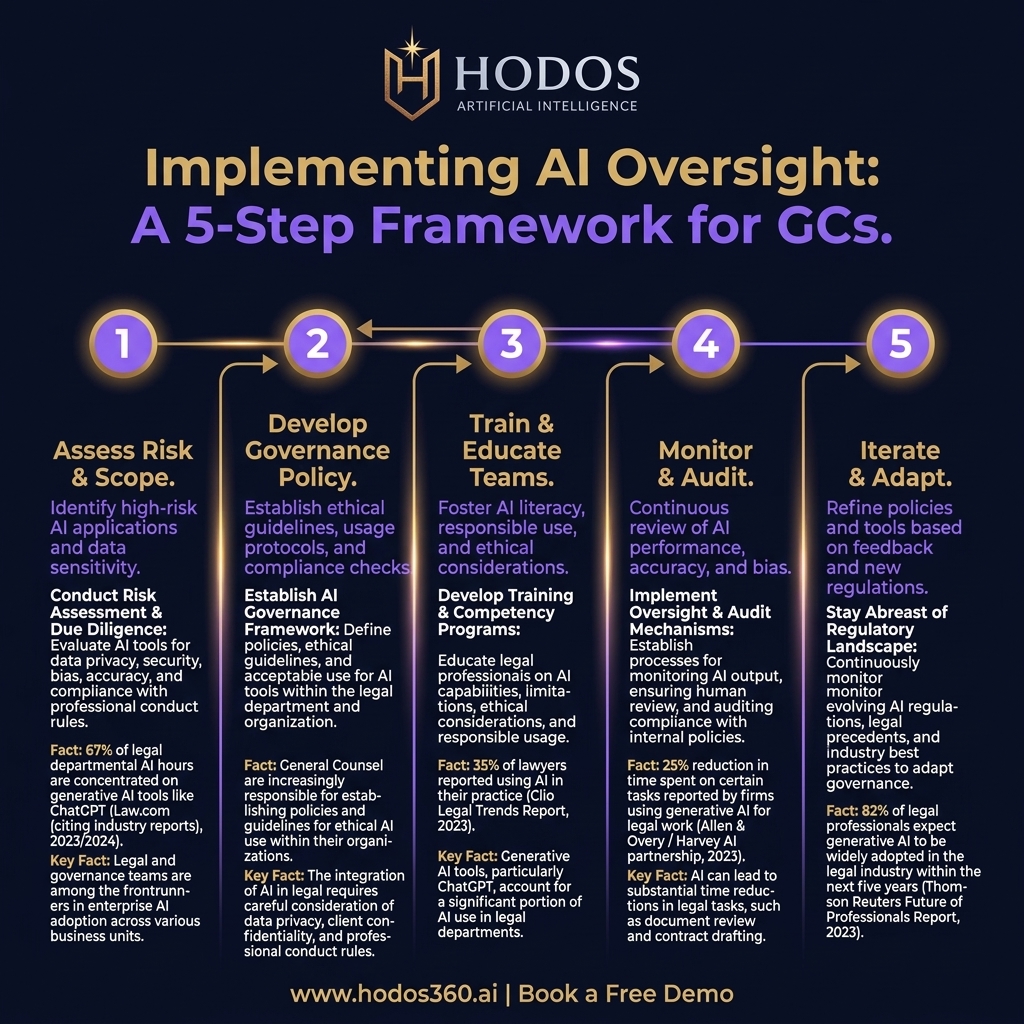
The cornerstone of responsible AI use in legal is the establishment of robust AI governance frameworks. As corporate legal teams and law firms increasingly rely on AI, a clear set of policies and procedures is essential to manage risks and ensure compliance. This framework should define acceptable AI use cases, outline data privacy protocols, establish human oversight mechanisms, and mandate regular audits of AI system performance. It’s not enough to simply acquire AI tools; firms must actively manage their deployment and outputs. Learn more about AI Website Development: Essential Strategies for Law Firms. For instance, a governance framework might specify that all AI-generated legal drafts must undergo review by at least two human attorneys before being sent to a client, or that sensitive client data must only be processed by AI models hosted on secure, private servers, not public cloud platforms. Such internal policies act as a critical safeguard against ethical missteps and regulatory non-compliance, ensuring that the firm's AI strategy aligns with its professional obligations and risk appetite.
The Evolving Mandate: General Counsel as AI Stewards
The findings of the Law.com report place general counsel (GCs) at the forefront of the AI revolution, transforming their role from traditional legal guardians to essential AI stewards. This evolving mandate requires GCs to possess not only deep legal acumen but also a foundational understanding of AI technologies, their capabilities, and their inherent risks. They are now tasked with advising their organizations on the ethical deployment of AI, navigating the complex regulatory landscape, and mitigating legal exposure arising from AI use. This includes developing internal policies for responsible AI, ensuring compliance with data protection laws like GDPR and CCPA, and anticipating future legal challenges related to AI-generated content, intellectual property, and liability. The GC's office becomes the central hub for AI governance, bridging the gap between technological innovation and legal imperative, a complex balancing act that demands foresight and proactive engagement. Their leadership is crucial in shaping how AI use in legal evolves within their organizations.
This heightened responsibility means GCs must actively participate in the selection, implementation, and oversight of AI tools used across the firm or corporate legal department. They need to engage directly with technology vendors, scrutinizing their data security practices, intellectual property indemnification clauses, and commitment to transparency. For example, when Goldman Sachs explored generative AI for its legal department, its general counsel would have been instrumental in assessing the risks associated with proprietary information being processed by third-party models and ensuring that vendor contracts included robust protections. The GC’s role extends to educating internal stakeholders—from partners to paralegals—about the ethical guidelines and best practices for interacting with AI. This internal advocacy builds a culture of responsible innovation, where the benefits of AI are embraced without compromising the firm’s integrity or client trust. It’s a proactive approach to risk management that sets the tone for the entire organization's engagement with emerging technologies.
Furthermore, GCs are increasingly expected to contribute to the broader industry dialogue on AI regulation and ethical standards. Learn more about Autonomous AI Marketing: The Ultimate Guide for Law Firms. Their practical experience at the intersection of law and technology makes them invaluable voices in shaping future legislation and professional guidelines. By participating in bar association committees, industry forums, and legal tech conferences like LegalTech NYC, GCs can help influence the development of sensible, balanced regulations that foster innovation while protecting public interests. This leadership role is not merely about reacting to existing laws but actively shaping the legal framework for AI, ensuring that it remains flexible enough to accommodate technological advancements while upholding core legal principles. The insights gained from the widespread AI use in legal within their own firms are critical contributions to this ongoing societal and legal debate, positioning GCs as key architects of the future of legal practice, rather than mere observers.
Ultimately, the general counsel's mandate as an AI steward is about safeguarding the firm's long-term viability and reputation in an AI-driven world. It involves a continuous cycle of assessment, adaptation, and education. As AI technologies evolve, so too must the governance frameworks and the GC's understanding of their implications. This dynamic responsibility underscores the strategic importance of the GC role in the modern enterprise. Their ability to effectively manage the risks and opportunities presented by AI use in legal will be a defining factor in the success and resilience of law firms and corporate legal departments in the coming decades, reinforcing their position as indispensable leaders in the digital transformation journey. The proactive embracing of this stewardship will differentiate leading firms in the market.
Leveraging AI for Enhanced Client Experience
Beyond internal efficiencies, strategic AI use in legal profoundly impacts the client experience. Firms can leverage AI to offer more responsive, transparent, and personalized services, thereby building stronger client relationships and enhancing their market reputation. For example, AI-powered predictive analytics can help estimate case outcomes and timelines with greater accuracy, providing clients with more realistic expectations and better strategic planning. This level of foresight, once the exclusive domain of highly experienced attorneys, is now augmented by data-driven insights, leading to more informed client decisions. Furthermore, AI can automate routine client communications, such as sending status updates or document requests, ensuring clients are always kept in the loop without burdening legal teams with manual tasks. This proactive communication fosters trust and demonstrates a firm's commitment to transparency, which are increasingly valued by modern clients. The integration of AI-powered website building and responsive design through services like HODOS 360 can also create seamless online experiences for clients, from initial inquiry to secure document sharing, reinforcing a perception of modern, efficient service delivery.

Future-Proofing Your Practice: Strategic AI Integration for Sustainable Growth
As the Law.com report unequivocally demonstrates, AI use in legal is not a passing fad but a foundational shift. For law firms and legal departments, future-proofing their practice means moving beyond mere contemplation of AI to strategic, thoughtful integration that supports sustainable growth. This involves developing a long-term AI roadmap that aligns with the firm's overall business objectives, anticipating technological advancements, and adapting to evolving regulatory landscapes. Firms that proactively invest in AI literacy across their organization, foster a culture of innovation, and commit to continuous evaluation of AI tools will be best positioned to thrive. This strategic foresight is about building resilience, ensuring that the firm can adapt to future disruptions and maintain its competitive edge in an increasingly digital and AI-driven legal market. The goal is to cultivate an adaptive ecosystem where AI and human expertise synergize to deliver unparalleled legal services, making the firm a leader in its field.
Strategic AI integration also means looking beyond immediate efficiency gains to the transformative potential of AI in shaping new service offerings and business models. For example, firms might leverage AI to develop specialized legal products, such as automated compliance checks for startups, or offer predictive legal consulting services based on advanced data analytics. This innovative approach to service delivery can open up new revenue streams and attract a diverse clientele seeking cutting-edge legal solutions. The firms that are actively exploring these new frontiers, much like Thomson Reuters investing heavily in generative AI for its legal research products, are not just adopting technology; they are reinventing what it means to provide legal services. This kind of forward-thinking strategy ensures that a firm remains relevant and valuable in a rapidly changing legal landscape, differentiating itself from competitors who cling to traditional methods.
Critically, future-proofing involves a commitment to ethical AI development and deployment. Firms must embed ethical considerations into every stage of their AI strategy, from procurement to operational use. This includes prioritizing transparency, explainability, fairness, and accountability in all AI systems. By demonstrating a strong commitment to responsible AI, firms can build greater client trust and enhance their reputation as ethical innovators. This isn't just about avoiding legal pitfalls; it's about upholding the core values of the legal profession in the digital age. As the debate around AI ethics intensifies globally, firms that can articulate and demonstrate a robust ethical framework for their AI use in legal will gain a significant competitive advantage, attracting both clients and top talent who seek to work with responsible leaders.
Ultimately, the path to sustainable growth in the era of pervasive AI use in legal is paved with strategic planning, ethical vigilance, and a willingness to embrace continuous transformation. Firms that view AI not as a threat, but as a powerful partner in delivering justice and value, will be the ones that define the future of the legal profession. This journey requires courage, investment, and a collaborative spirit, but the rewards—enhanced efficiency, superior client outcomes, and a future-ready practice—are immeasurable. By carefully considering the insights from the Law.com report and proactively implementing robust AI strategies, law firms can navigate this exciting new frontier with confidence and emerge stronger than ever. The opportunity to reshape legal practice for the better is here, and those who seize it strategically will lead the way.
Frequently Asked Questions
Why is the legal industry leading in AI adoption?+
The legal industry is information-intensive and document-heavy, making it ripe for AI automation and augmentation. Generative AI tools, in particular, excel at tasks like document review, contract drafting, and legal research, which are central to legal practice. This allows firms to significantly enhance efficiency, reduce costs, and free up attorneys for higher-value strategic work, driving rapid adoption across the sector.
What are the primary ethical concerns with AI use in legal?+
Key ethical concerns include client confidentiality and data privacy, as sensitive information is processed by AI. Algorithmic bias is another critical issue, where AI models might perpetuate historical prejudices if not carefully managed. Additionally, ensuring transparency and explainability of AI outputs, and avoiding the unauthorized practice of law by unsupervised AI, are paramount for ethical deployment.
How can General Counsel ensure compliance with AI regulations?+
General Counsel must develop robust AI governance frameworks, including internal policies for responsible AI use, data handling protocols, and human oversight mechanisms. Staying abreast of evolving global regulations like the EU AI Act and state bar guidelines is crucial. Regular audits of AI systems and due diligence on AI vendors are also essential to ensure continuous compliance and mitigate risks.
What role does AI play in transforming legal workflows?+
AI transforms legal workflows by automating repetitive tasks such as document generation, scheduling, billing, and initial legal research. This streamlines operations, boosts efficiency, and allows legal professionals to focus on complex problem-solving and client strategy. Integrated AI Law Firm Management Systems can create seamless, end-to-end digital workflows that enhance productivity and accuracy across the firm.
How does AI impact the client experience in law firms?+
AI enhances the client experience by enabling more responsive and transparent services. AI-powered tools can provide more accurate case outcome predictions, automate routine client communications for status updates, and offer 24/7 support through AI voice assistants. This leads to more informed clients, improved communication, and a perception of modern, efficient service, strengthening client relationships and satisfaction.