

AI Legal Partnership: The Ultimate Guide to Enterprise AI
On June 18, 2026, the legal tech world watched closely as Eudia and Consilio announced a groundbreaking strategic partnership, poised to deliver enterprise-grade AI across the entire legal lifecycle. This collaboration isn't merely another industry handshake; it represents a profound shift in how law firms and in-house legal departments will leverage artificial intelligence to manage complex operations, from client intake to litigation support.
Consilio, a global leader in legal services, brings its vast expertise and client network, while Eudia contributes its cutting-edge 'Expert Digital Twins' technology. This alliance signals a clear message: integrated, sophisticated AI is no longer a luxury but an indispensable component of modern legal practice.
The announcement, prominently featured by Consilio, arrives amidst a period of intense innovation and consolidation within legal technology. Firms are grappling with unprecedented pressures to enhance efficiency, reduce costs, and deliver superior client outcomes, all while navigating an increasingly complex regulatory landscape. The promise of AI, particularly generative AI, has been widely discussed at events like LegalTech NYC 2026, where the consensus was clear: firms that successfully integrate AI will gain a decisive competitive advantage.
This partnership exemplifies the trend of specialized AI developers aligning with established legal service providers to bridge the gap between innovation and practical, scalable implementation for large-scale legal operations.
The tension between legacy systems and the imperative for digital transformation creates a palpable drama in the legal sector.
Many firms, while acknowledging AI's potential, struggle with the sheer complexity of integrating disparate AI tools into a cohesive, secure, and compliant workflow. The Eudia-Consilio strategic partnership aims to alleviate this by offering a unified, enterprise-level solution. As Andy S. Gardner, CEO of Consilio, likely highlighted in internal communications, this move enables their clients to access advanced AI capabilities without the burden of extensive in-house development or fragmented vendor management.
It's a strategic response to the market's demand for comprehensive, outcome-based AI services, designed to empower legal teams with intelligence and automation previously unimaginable. To truly thrive in this evolving landscape, law firms must understand the implications of such alliances and proactively explore integrated AI solutions.
Discover how these advancements can revolutionize your practice today. [CTA: Explore HODOS 360’s AI Law Firm Management System]
The Strategic Imperative Behind AI Legal Partnerships
The decision by major players like Consilio to forge strategic alliances with specialized AI developers like Eudia underscores a critical shift in the legal tech ecosystem. Building enterprise-grade AI from the ground up requires immense capital investment, specialized talent in machine learning and natural language processing, and years of dedicated research and development.
This 'build vs. buy' dilemma increasingly favors 'partner' for established service providers. For instance, the legal industry's AI R&D spend pales in comparison to tech giants, making partnerships a more agile and cost-effective route to innovation. A recent report by Thomson Reuters indicated that over 60% of law firms plan to increase their AI tech spend by 20% or more in the next two years, yet only a fraction possesses the internal expertise to develop bespoke solutions, highlighting the reliance on external partnerships.
This strategic imperative is driven by the escalating demand from clients – both corporate legal departments and sophisticated individual clients – for more efficient, transparent, and data-driven legal services. Law firms that fail to adopt advanced AI risk being outmaneuvered by competitors who embrace digital transformation.
The pressure to reduce legal spend while maintaining quality has never been higher. Firms that adopted AI early, like Allen & Overy with its partnership with Harvey AI, have demonstrated tangible benefits, prompting a competitive scramble. Learn more about AI Legal Platform: Essential Security for Law Firms.
This creates a compelling narrative of disruption versus tradition, where firms that hesitate risk falling behind in a rapidly evolving market, facing potential loss of market share and top talent.
Moreover, the complexity of enterprise AI extends beyond mere technology; it involves deep integration into existing legal workflows, ensuring compliance with stringent regulatory frameworks, and addressing ethical considerations.
Such integrations require profound domain expertise, which Eudia’s ‘Expert Digital Twins’ technology, designed to mimic human expert decision-making, can provide. This specialized approach allows Consilio to rapidly deploy sophisticated AI capabilities that would otherwise take years to develop internally, thus accelerating their market responsiveness. It’s a pragmatic approach to delivering advanced legal technology at scale, reflecting a mature understanding of both technological capabilities and market needs.
The shift towards these robust AI legal partnerships also reflects the increasing maturity of the legal tech market. Initial forays into AI often involved point solutions for specific tasks like e-discovery or contract review. However, the current trend, exemplified by the Eudia-Consilio alliance, is towards integrated platforms that offer end-to-end AI capabilities across the entire legal lifecycle.
This holistic approach is crucial for achieving true operational efficiency and strategic insights, moving beyond mere task automation to truly transformative legal intelligence. Law firms must now consider how such integrated platforms can be woven into their operational fabric to enhance every facet of their service delivery.
Unpacking Eudia's Expert Digital Twins and Consilio's Global Reach
At the heart of this AI legal partnership lies Eudia's innovative 'Expert Digital Twins' technology. Unlike generic large language models (LLMs), Expert Digital Twins are AI agents specifically trained on vast datasets of legal knowledge, case law, regulations, and expert decision-making patterns to replicate the cognitive processes of highly skilled legal professionals.
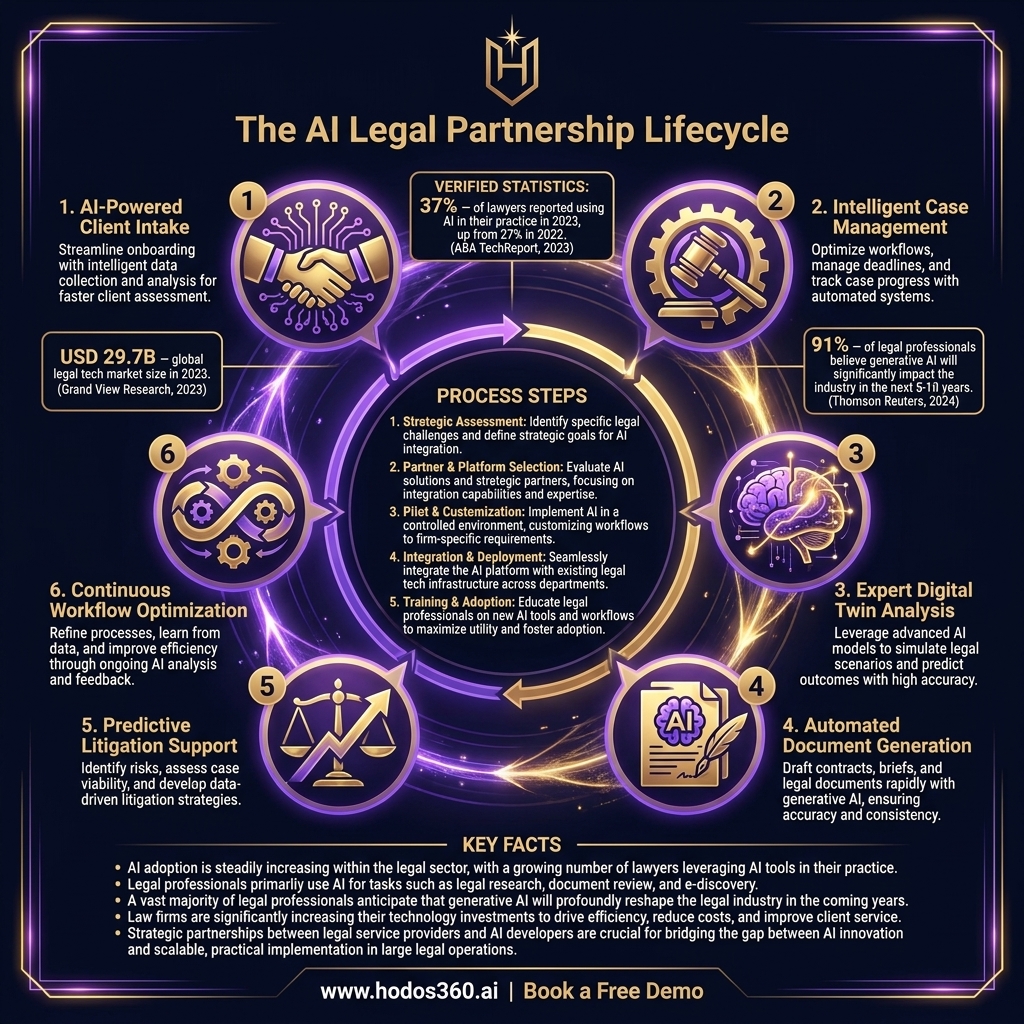
This technology moves beyond simple document generation or data extraction, offering predictive analytics, strategic guidance, and sophisticated problem-solving capabilities. For example, an Expert Digital Twin might analyze a complex M&A contract, not just identifying clauses but predicting potential regulatory hurdles or litigation risks based on historical data and expert legal reasoning, a level of insight that traditional AI tools struggle to achieve.
Consilio, on the other hand, brings its formidable global presence and deep operational expertise to the table. With a vast network of legal professionals and a client base comprising leading corporations and law firms worldwide, Consilio possesses the infrastructure and client relationships necessary to deploy Eudia's advanced AI solutions at an unprecedented scale.
Their experience in managing complex legal matters, including e-discovery, document review, and legal consulting, provides the perfect real-world testing ground and deployment channel for Eudia's technology. This combination ensures that the AI isn't just theoretically powerful but practically applicable and integrated into the demanding realities of global legal services.
The synergy between Eudia's specialized AI and Consilio's operational prowess creates a powerful offering. Learn more about AI for Law Firms: Essential Guide to Scaling Legal AI. Imagine a global legal team leveraging Eudia's Digital Twins to rapidly assess the legal implications of a new product launch across 50 jurisdictions, with Consilio's experts providing the final layer of human oversight and localized nuance.
This collaboration dramatically reduces the time and resources traditionally required for such tasks, enhancing both efficiency and accuracy. While other companies like Kira Systems excel in contract analysis and Harvey AI focuses on generative AI for legal research, Eudia’s Expert Digital Twins offer a more holistic, decision-support-oriented approach, making it a powerful complement to Consilio's comprehensive service portfolio.
Integrating such advanced AI, however, necessitates rigorous attention to data privacy and ethical guidelines. The responsible use of AI in legal practice is paramount, as outlined by principles such as those in ABA Model Rule 1.6 (Confidentiality of Information), which dictates that lawyers must protect client information.
This partnership must ensure that Eudia's AI models are trained and operated in a manner that respects confidentiality, avoids algorithmic bias, and maintains the highest standards of data security, especially when handling sensitive client data. The success of this collaboration will hinge not just on technological capability, but on its adherence to these critical ethical and professional responsibilities.
The Synergy of AI and Human Expertise in Legal Operations
The Eudia-Consilio partnership exemplifies the growing understanding that AI in legal is about augmentation, not replacement. The 'Expert Digital Twins' are designed to empower legal professionals, handling the voluminous, repetitive, and data-intensive aspects of legal work, thereby freeing up lawyers to focus on strategic thinking, client relationships, and complex problem-solving that requires human nuance.
This augmented intelligence model is crucial for improving job satisfaction among legal teams and maximizing the value they provide. Learn more about AI Search Optimization: An Essential Guide for Law Firms. As Professor Daniel Martin Katz of Illinois Tech Chicago-Kent College of Law often emphasizes, the future of legal work involves a symbiotic relationship between advanced technology and human intellect, where each elevates the other's capabilities.
This partnership directly addresses that vision by providing tools that make lawyers more effective, not obsolete.
The Impact on the Legal Lifecycle: From Intake to Litigation
The integration of Eudia's Expert Digital Twins with Consilio's services promises a transformative impact across every stage of the legal lifecycle. Starting with client intake, AI can automate the initial qualification process, rapidly assess potential conflicts of interest, and streamline document automation for engagement letters, drastically reducing the time from initial contact to formal representation.
This not only enhances client experience but also improves a firm's capacity to onboard new matters efficiently. For instance, AI-powered systems can analyze incoming inquiries, route them to the most appropriate legal expert, and even generate preliminary case assessments, ensuring a seamless and intelligent start to every legal matter.
Moving into case management, the partnership will enable predictive insights into litigation outcomes, optimal resource allocation, and real-time tracking of matter progress. AI can analyze vast amounts of historical data to identify patterns that influence case duration, settlement amounts, and potential risks, empowering legal teams with data-driven decision-making.
During the discovery phase, the AI's ability to quickly identify relevant documents and flag critical information within massive datasets will dramatically reduce costs and accelerate the process, a significant pain point for many firms. This efficiency directly translates to better client service and a more competitive edge in a highly contested legal market.
Furthermore, the impact extends to document review, contract drafting, and even billing. Eudia's Expert Digital Twins can rapidly review contracts for compliance, identify deviations from standard clauses, and suggest optimal language, enhancing accuracy and speed. Learn more about Legal AI ROI: Proven Strategies for Measuring Investment Return.
Automated time tracking and AI-driven billing systems can ensure greater transparency and fairness in invoicing, reducing disputes and improving client satisfaction. This holistic approach to AI integration, as discussed at recent industry summits like the ABA Techshow, signifies a move towards truly intelligent legal workflows that optimize every operational facet, from the mundane to the highly strategic.
The ultimate goal of such an AI legal partnership is to empower law firms to deliver higher quality legal services more efficiently and cost-effectively. It enables a proactive rather than reactive approach to legal challenges, allowing firms to anticipate issues and advise clients strategically. The ability to harness enterprise AI for tasks ranging from routine administrative processes to complex legal analysis means that firms can reallocate human talent to higher-value work, fostering innovation and enhancing professional development.
This is the paradigm shift that HODOS 360 champions, offering integrated AI Law Firm Management solutions designed to bring these benefits to law firms of all sizes. [CTA: Request a Demo of HODOS 360’s AI Marketing Platform]
- ✓Enhanced Client Intake & Onboarding: AI automates lead qualification, conflict checks, and initial document generation, accelerating the client journey.
- ✓Streamlined Case & Matter Management: Predictive analytics offer insights into case outcomes and optimize resource allocation for complex matters.
- ✓Accelerated Document Review & Generation: Expert Digital Twins rapidly analyze, draft, and review legal documents, ensuring accuracy and compliance.
- ✓Optimized Billing & Financial Management: AI-driven time tracking and invoice generation improve transparency and reduce administrative burdens.
- ✓Proactive Risk Identification: AI models scan for potential legal risks and compliance issues, enabling preemptive action.
- ✓Improved Legal Research Efficiency: AI assists in quickly identifying relevant statutes, case law, and scholarly articles, enhancing research capabilities.
Navigating the Ethical and Practical Challenges of Enterprise AI Adoption
While the benefits of an AI legal partnership like Eudia-Consilio are compelling, law firms must navigate a complex array of ethical and practical challenges during adoption. Foremost among these is data security and client confidentiality. Integrating enterprise AI means entrusting sensitive client data to advanced algorithms and cloud-based platforms.
Firms must ensure that any AI solution adheres to the highest standards of cybersecurity and data governance, complying with regulations such as the GDPR or the hypothetical EU AI Act, which, by 2026, will likely have significant enforcement implications for AI systems dealing with personal data.
The failure to secure client data not only leads to severe legal repercussions but also erodes client trust, which is the bedrock of legal practice.
Another significant challenge involves addressing algorithmic bias. AI models, particularly those trained on historical data, can inadvertently perpetuate and amplify existing biases, leading to discriminatory outcomes.
This is a critical ethical concern in legal contexts, where fairness and impartiality are paramount. Law firms must demand transparency from their AI vendors regarding data sources, training methodologies, and bias detection mechanisms. As stated in various ABA opinions on the use of technology, lawyers maintain a duty of competence (ABA Model Rule 1.1) that extends to understanding the risks and benefits of technology used in practice.
This includes understanding potential biases and implementing safeguards to mitigate them, ensuring that AI tools serve justice rather than undermine it.
The practical integration of new AI systems into legacy IT infrastructure presents another hurdle. Learn more about Essential AI Web Development for Law Firms: Harvard's Impact.
Many law firms operate with existing case management systems, document management systems, and billing software that may not seamlessly integrate with advanced AI platforms. This requires careful planning, significant investment in IT infrastructure, and potentially a phased implementation strategy. Overcoming resistance from legal professionals, who may be skeptical or apprehensive about adopting new technologies, also requires robust change management strategies, comprehensive training programs, and clear demonstrations of the AI's value proposition.
The human element of adoption is often underestimated but is crucial for successful technological transformation.
Finally, the question of ethical oversight and accountability remains paramount. While AI can provide powerful insights and automation, the ultimate responsibility for legal advice and outcomes rests with the human lawyer.
Firms must establish clear protocols for reviewing AI-generated outputs, ensuring that legal professionals understand the limitations of the technology and exercise independent judgment. This involves developing internal guidelines, conducting regular audits of AI performance, and fostering a culture of continuous learning and adaptation. The Eudia-Consilio partnership will need to provide clear frameworks for how human lawyers can effectively collaborate with and oversee their Expert Digital Twins to maintain professional standards and client trust.
The Role of Responsible AI Development in Legal Tech
The emergence of powerful AI in legal tech necessitates a strong commitment to responsible AI development. This means prioritizing ethical design principles such as transparency, explainability, and accountability in every AI solution. Legal tech providers and law firms alike must work collaboratively to ensure AI systems are not only effective but also fair, unbiased, and auditable.
Learn more about Legal AI Workflows: Essential Shifts Beyond Microsoft Word for Firms. The legal profession's core values of justice and integrity must be embedded into the very fabric of AI tools, guiding their development and deployment. This proactive approach to responsible AI is essential for building trust in these transformative technologies and ensuring their long-term benefit to society and the legal system.

Key Takeaways and Next Steps for Forward-Thinking Law Firms
The strategic AI legal partnership between Eudia and Consilio is a clear indicator of the legal industry's inevitable trajectory towards advanced AI integration. For forward-thinking law firms, the key takeaway is simple: AI is no longer a futuristic concept but a present-day strategic imperative. Firms that embrace integrated, enterprise-grade AI solutions will be better positioned to enhance efficiency, deliver superior client value, and maintain a competitive edge in an increasingly digital legal landscape.
The era of piecemeal AI solutions is giving way to comprehensive platforms that promise end-to-end transformation, driving both operational excellence and strategic growth.
Law firms must now proactively evaluate their current technology stack and develop a robust AI adoption strategy. This involves assessing current pain points, identifying areas where AI can deliver the most significant impact, and seeking out partners who offer integrated, secure, and ethically developed AI solutions.
Platforms like HODOS 360 are designed to provide law firms with comprehensive AI Law Firm Management, AI Marketing, and AI Voice Assistant solutions, enabling seamless digital transformation. The future of legal practice is intelligent, automated, and deeply integrated with AI, and firms that act decisively today will lead the way tomorrow.
[CTA: Book a Free Demo with HODOS 360]
Frequently Asked Questions
What is the significance of the Eudia-Consilio partnership?+
The Eudia-Consilio partnership signifies a major step towards delivering integrated, enterprise-grade AI solutions across the entire legal lifecycle. It combines Eudia's advanced 'Expert Digital Twins' AI with Consilio's global legal services reach, offering law firms a unified platform for enhanced efficiency, data-driven insights, and streamlined operations, setting a new standard for legal tech collaboration.
How does enterprise-grade AI differ from basic legal AI tools?+
Enterprise-grade AI, like that offered by Eudia and Consilio, provides comprehensive, integrated solutions across multiple legal functions, rather than standalone tools for specific tasks. It focuses on scalability, security, and deep integration into existing workflows, offering predictive analytics and strategic decision support beyond basic automation, tailored for large-scale legal operations and complex matters.
What are the primary benefits for law firms using such integrated AI?+
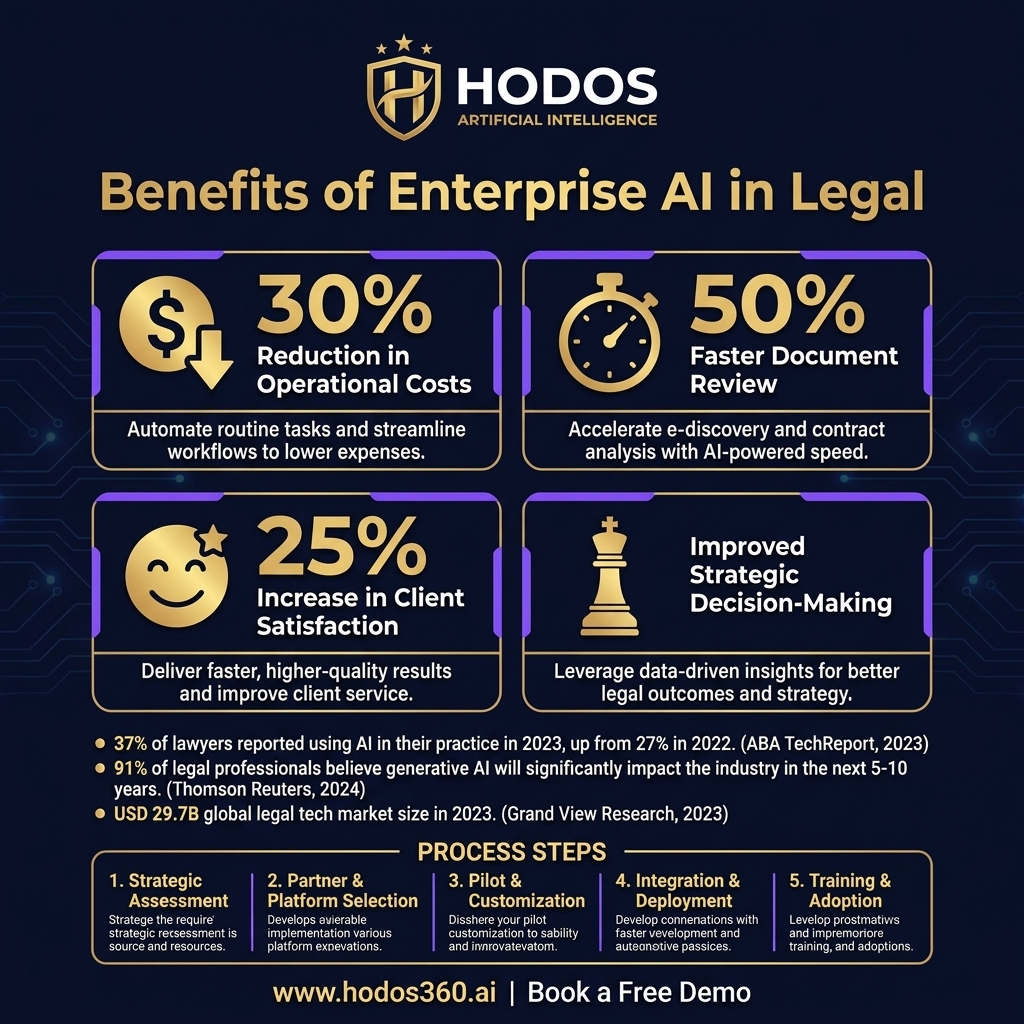
Law firms benefit from significant improvements in efficiency, cost reduction, and client satisfaction. Integrated AI streamlines client intake, automates document review, optimizes case management, and enhances legal research. This allows lawyers to focus on high-value strategic work, reduces administrative burdens, and provides data-driven insights for better decision-making and competitive advantage in the market.
What ethical considerations should law firms keep in mind?+
Law firms must prioritize data security, client confidentiality, and guard against algorithmic bias. It's crucial to ensure AI tools comply with data protection regulations (e.g., GDPR) and ethical guidelines (e.g., ABA Model Rules), maintaining human oversight for all AI outputs. Transparency in AI processes and continuous evaluation are essential to uphold professional standards and client trust.
How can law firms begin integrating advanced AI into their operations?+
Law firms should start by assessing their current operational pain points and identifying areas where AI can offer the greatest impact. This involves evaluating existing technology, researching integrated AI solutions from reputable providers, and developing a phased implementation strategy. Prioritizing comprehensive training for staff and establishing clear ethical guidelines are crucial for successful adoption and long-term benefits.