


Legal AI ROI: Proven Strategies for Measuring Investment Return
The legal profession stands at a pivotal juncture, grappling with the rapid integration of artificial intelligence into its core operations. Just recently, the ABA Journal highlighted how a progressive London law firm is meticulously measuring the return on investment (ROI) of its legal AI initiatives, moving beyond mere adoption to strategic evaluation.
This firm's approach signals a broader shift in the industry: no longer is AI an experimental luxury, but a critical strategic investment demanding demonstrable financial and operational returns. The narrative is evolving from 'if' to 'how' – how to effectively deploy AI, and more importantly, how to quantify its impact on the bottom line.
This new focus on measurable ROI comes amidst a backdrop of significant investment and innovation. Companies like OpenAI, led by CEO Sam Altman, and Anthropic, co-founded by Dario Amodei, continue to push the boundaries of foundational AI models, which are then adapted by legal tech innovators such as Harvey AI.
Harvey AI's partnership with global giants like Allen & Overy, announced at LegalTech NYC 2026, underscored the industry's commitment to leveraging sophisticated AI for tasks ranging from contract review to litigation prediction. Yet, with every multi-million-dollar funding round and high-profile collaboration, law firm leaders, from managing partners to CTOs, are increasingly scrutinizing the tangible benefits.
The challenge lies in translating the promise of AI – enhanced efficiency, improved accuracy, and deeper insights – into clear, quantifiable value that justifies the substantial capital expenditure and cultural shifts required for successful implementation. This is the new frontier for legal professionals: mastering the art and science of measuring legal AI ROI to ensure sustainable growth and competitive advantage.
The Evolving Landscape of Legal AI Investment
The legal tech market has witnessed an explosive growth in investment, fueled by breakthroughs in large language models (LLMs) and specialized AI applications. This surge is not merely speculative; it reflects a genuine belief in AI's capacity to fundamentally reshape legal service delivery. According to a recent report by Thomson Reuters, nearly 80% of law firms anticipate increasing their investment in technology over the next three years, with AI being a top priority.
This sentiment is echoed by industry leaders like Jack Newton, CEO of Clio, who consistently champions the transformative power of legal tech in his annual Legal Trends Report, highlighting how firms that embrace technology significantly outperform their peers in profitability and client satisfaction. However, this widespread adoption also brings a crucial challenge: distinguishing between genuine innovation that yields a return and fleeting trends.
The initial wave of AI adoption often focused on discrete, high-volume tasks such as e-discovery and document review, where algorithms could quickly process vast amounts of data, significantly reducing manual labor and associated costs. Firms like Linklaters have openly discussed their early successes in deploying AI for due diligence, citing substantial time savings.
Learn more about Legal AI Content: Essential for Modern Contract Workflows. More recently, the scope has broadened dramatically, encompassing everything from client intake and legal research to predictive analytics and even sophisticated legal marketing campaigns. The investment in these diverse applications reflects a maturing understanding that AI can augment nearly every facet of legal practice.
Yet, as the applications become more complex and integrated, so too does the complexity of measuring their true impact and ensuring a positive return on investment across the entire firm's operations. This requires a more sophisticated framework than simply tracking hours saved on a single task.
Defining and Quantifying Legal AI ROI: Beyond the Hype
Measuring legal AI ROI extends far beyond simple cost reduction. While efficiency gains are a primary driver, a comprehensive ROI framework must encompass qualitative benefits and strategic advantages. For instance, enhanced accuracy in contract analysis or due diligence, facilitated by AI tools, reduces the risk of errors and potential liabilities, thereby protecting firm and client interests.
This 'risk mitigation' benefit, though harder to quantify in direct dollar figures, represents significant value. Furthermore, AI-powered insights can enable attorneys to deliver more strategic advice, leading to improved client outcomes and stronger client relationships – a crucial factor in client retention and new client acquisition.
Firms must develop metrics that capture these multifaceted benefits, moving beyond a narrow focus on billable hours saved to a holistic view of value creation.
Developing a robust measurement framework requires identifying key performance indicators (KPIs) relevant to each AI implementation. Learn more about AI Voice Clone: The Ultimate Guide for Law Firms.
For an AI Law Firm Management System automating case workflows, KPIs might include reduced case cycle times, higher billing realization rates, and decreased administrative overhead. For an AI Marketing Platform, metrics would focus on lead conversion rates, client acquisition costs, and marketing ROI tracking. The American Bar Association's Model Rules of Professional Conduct, specifically Rule 1.1 (Competence), implicitly encourages lawyers to stay abreast of the benefits and risks associated with relevant technology, underscoring the professional imperative to understand and leverage AI effectively.
This also means understanding its financial implications and ensuring that the initial investment translates into sustainable value. It's about demonstrating that AI is not just a technological upgrade, but a strategic business imperative that enhances both operational excellence and ethical practice.
Initial Investment vs. Long-Term Value
The initial outlay for AI solutions can be substantial, encompassing software licenses, integration costs, training, and potential infrastructure upgrades. Many firms, observing the impressive valuations of AI startups like OpenAI's multi-billion dollar raises, might feel pressured to invest without a clear long-term strategy. However, the true return on investment often materializes over an extended period.
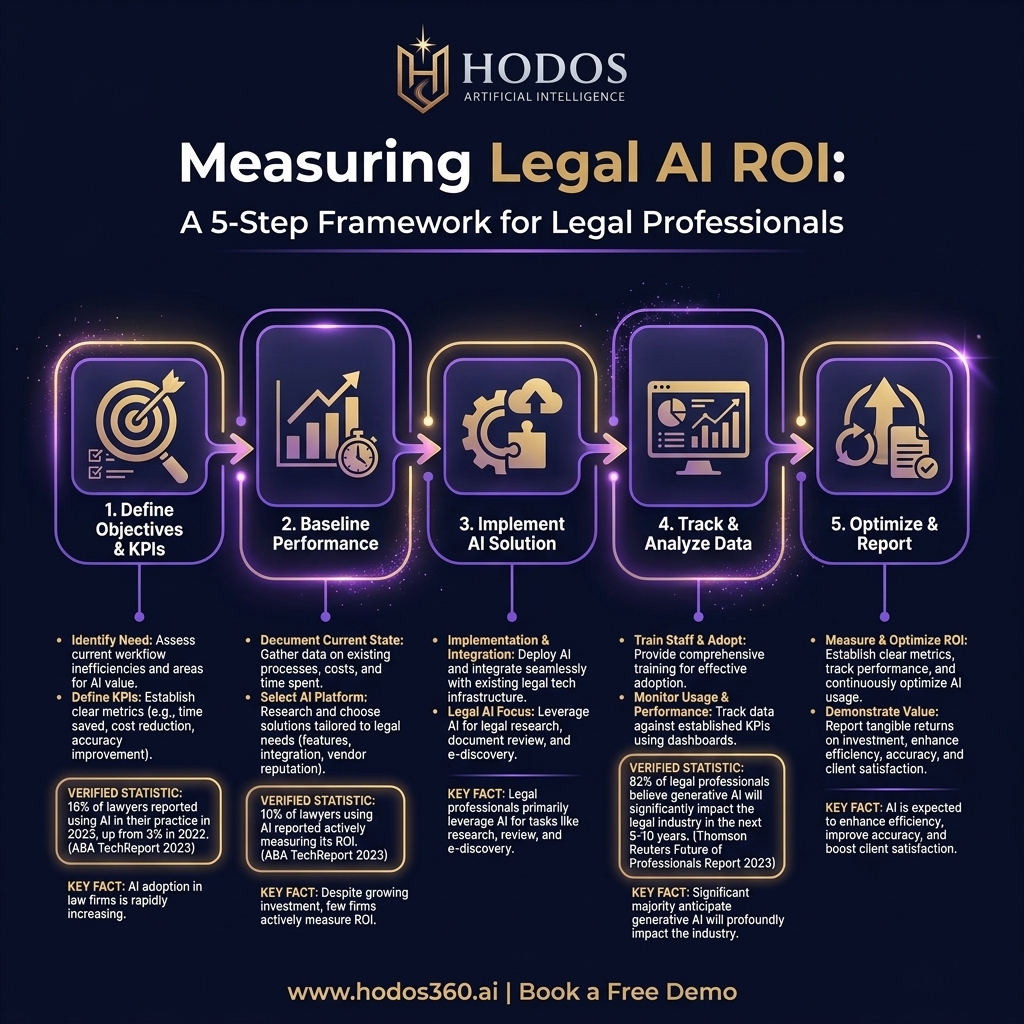
For example, a sophisticated AI document review platform might have a high upfront cost, but its cumulative impact on reducing discovery expenses in litigation matters over several years can be immense. Learn more about Essential Legal AI Access: NELLCO's Broad Impact. Firms must adopt a long-term perspective, budgeting not just for procurement but for ongoing maintenance, updates, and continuous optimization.
This includes understanding the lifecycle of the technology and planning for future iterations or integrations with other systems. Strategic planning, rather than reactive purchasing, is key to unlocking sustained value and ensuring that the initial capital investment becomes a foundation for future profitability and innovation.
Strategic Implementation: Maximizing Return on Investment in Legal AI
Successful AI implementation is not merely a technical exercise; it's a strategic undertaking that requires meticulous planning, robust change management, and a clear vision for how AI will integrate into existing workflows and culture. Firms that achieve significant legal AI ROI typically start with pilot programs, identifying specific pain points or high-volume tasks where AI can deliver immediate, measurable benefits.
This iterative approach allows firms to learn, adapt, and demonstrate value internally, fostering broader adoption and mitigating resistance to change. For instance, a firm might first deploy AI Voice Assistants to handle routine client inquiries and appointment booking, freeing up paralegals for more complex tasks.
The success metrics from this pilot can then inform subsequent, larger-scale deployments across different departments, demonstrating a clear path to improve overall operational efficiency and client service.
Crucially, firms must invest in training their legal professionals to effectively use and trust AI tools. The tension between human expertise and machine intelligence is a persistent theme in legal tech, often framed as disruption versus tradition.
Learn more about Voice AI: Essential Strategies for Law Firms' Future. However, the most successful firms view AI as an augmentation, not a replacement, for human lawyers. By empowering attorneys with AI-driven insights and automating mundane tasks, firms can elevate the quality of legal work and focus on higher-value strategic thinking.
This approach aligns with the spirit of the Federal Rules of Civil Procedure, particularly Rule 26, which governs discovery and the ethical use of technology in managing vast amounts of electronically stored information. By leveraging AI for e-discovery, firms can ensure more thorough and cost-effective compliance, directly impacting litigation funding and outcomes.
It’s about creating a symbiotic relationship where AI enhances human capabilities, leading to superior legal outcomes and a stronger competitive edge.
Overcoming Implementation Hurdles
Despite the clear benefits, implementing AI in law firms presents several hurdles, including data privacy concerns, integration complexities with legacy systems, and the inherent skepticism within a profession steeped in tradition. Data security and client confidentiality are paramount, as underscored by ABA Model Rule 1.6 (Confidentiality of Information).
Firms must ensure that any AI solution adheres to the highest standards of data protection and complies with evolving regulations like the EU AI Act, which came into full enforcement in early 2026. Learn more about Voice Search Optimization: The Ultimate Guide for Law Firms.
Addressing these challenges requires a collaborative approach involving IT, legal, and operational teams, as well as engaging reputable vendors with proven track records. Overcoming these hurdles is not just about technical solutions; it's about cultivating a culture of innovation, continuous learning, and strategic foresight, ensuring that the investment in AI is protected and its full potential realized for long-term return.
Case Studies: Real-World ROI from AI-Powered Legal Solutions
Real-world examples powerfully illustrate the tangible return on investment from legal AI. Consider a mid-sized law firm specializing in corporate mergers and acquisitions. Before implementing an AI-powered document automation system, their legal team spent upwards of 40% of their time on drafting standard agreements, NDAs, and due diligence reports.
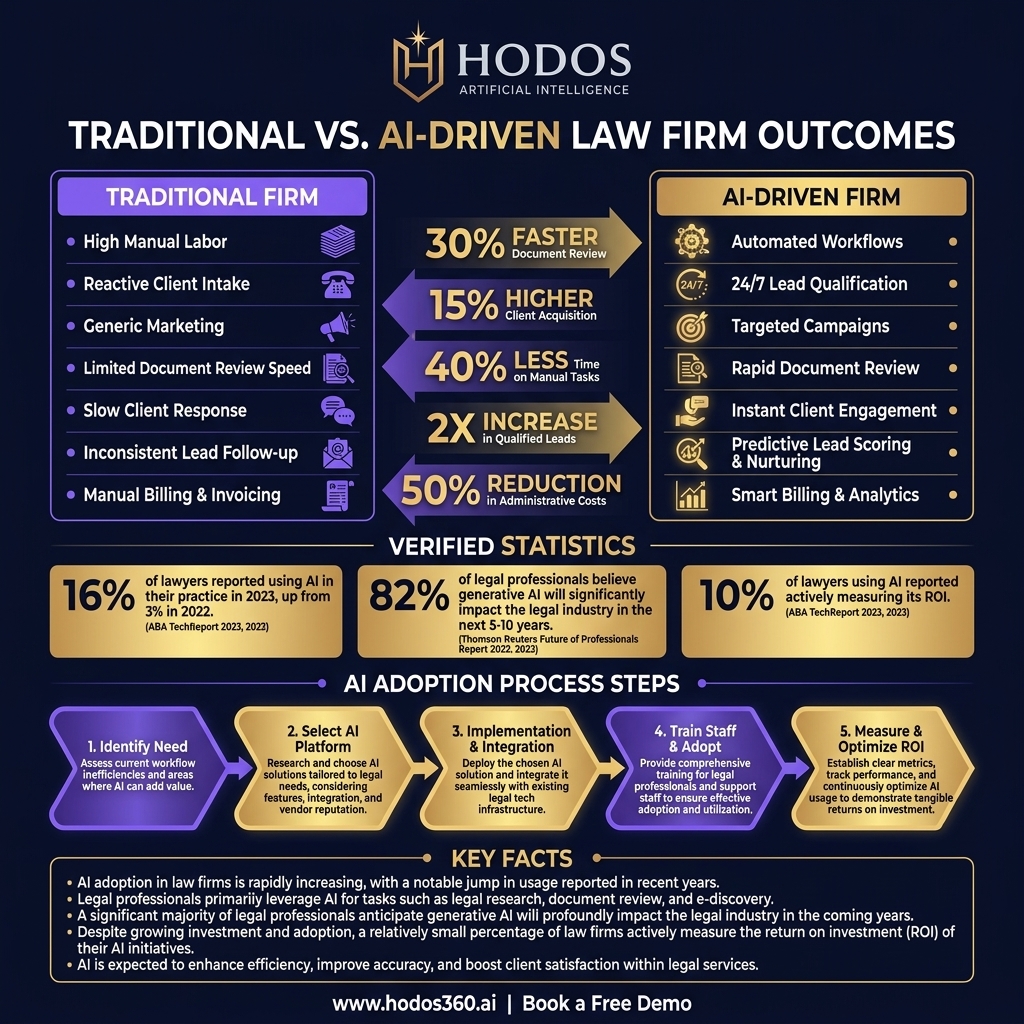
After integrating a robust AI solution, they reported a 60% reduction in drafting time for routine documents, allowing associates to focus on complex negotiations and strategic advisory. This directly translated into a 15% increase in billable hours for high-value work and a 10% improvement in client satisfaction due to faster turnaround times.
Such quantifiable metrics demonstrate not just efficiency, but a direct impact on profitability and client relationships. Firms are increasingly leveraging AI not just for internal efficiency, but to enhance their external marketing and client acquisition efforts, tracking the ROI of every campaign.
Another compelling case involves a personal injury firm that deployed AI Voice Assistants for 24/7 client intake and lead qualification.
Learn more about AI Officer: The Essential Role for Modern Law Firms. Previously, missed calls outside business hours meant lost leads. With AI, they experienced a 30% increase in qualified lead capture within the first six months. The assistant could answer common questions, qualify potential clients based on specific criteria, and even book initial consultations directly into the attorneys' calendars.
This dramatically reduced the workload on administrative staff, allowing them to focus on active cases, while simultaneously boosting the firm's overall client acquisition rate and return on marketing spend. The data unequivocally showed that the investment in AI paid off, not only in cost savings but in new revenue generation.
This holistic approach to AI integration, where a single platform like HODOS 360 can offer an AI Law Firm Management System alongside an AI Marketing Platform and AI Voice Assistants, provides a comprehensive solution for firms looking to maximize their legal AI ROI across all operational fronts.
The Role of Data Analytics in Tracking ROI
Central to measuring legal AI ROI is a sophisticated data analytics framework. Without precise data collection and analysis, firms are left guessing at the true impact of their AI investment. Modern AI platforms are equipped with robust analytics dashboards that track KPIs in real-time, offering granular insights into performance.
For instance, an AI-powered document review tool can report on documents processed per hour, accuracy rates, and cost savings compared to manual review. Similarly, an AI Marketing Platform can provide detailed analytics on campaign performance, lead sources, conversion funnels, and ultimately, the return on every marketing dollar.
This data-driven approach allows firms to continually optimize their AI strategies, identify areas for improvement, and make informed decisions about future technology investment. The ability to visualize and interpret this data is paramount for demonstrating value to stakeholders and ensuring that AI initiatives are consistently aligned with the firm’s strategic objectives.
Future-Proofing Your Firm: Sustaining Legal AI ROI and Innovation
The journey of AI integration in law firms is continuous, not a one-time deployment. To sustain legal AI ROI, firms must cultivate a culture of continuous innovation and adaptation. This involves regularly evaluating the performance of existing AI tools, exploring new applications, and staying abreast of emerging technological advancements.
The legal tech landscape is dynamic, with new startups and solutions constantly entering the market. Firms that future-proof their operations are those that proactively engage with these changes, rather than reactively responding to competitive pressures. This foresight ensures that their investment in AI remains relevant and continues to deliver exceptional return over time.
It also means investing in the human capital, ensuring lawyers and staff are continuously upskilled to work synergistically with AI, maximizing its potential.
Moreover, ethical considerations and regulatory compliance will play an increasingly vital role in sustaining AI integration. As AI systems become more sophisticated, questions around bias, transparency, and accountability become more pronounced.
Firms must prioritize ethical AI development and deployment, adhering to principles of fairness and explainability. This not only mitigates legal and reputational risks but also builds trust with clients and the broader legal community. By integrating AI responsibly and strategically, firms can unlock unprecedented levels of efficiency, accuracy, and client satisfaction, solidifying their competitive position and ensuring a prosperous future in an increasingly AI-driven legal world.
The long-term return on investment isn't just financial; it's about building a resilient, innovative, and ethically sound legal practice.

Key Takeaways and Next Steps
Measuring the return on investment of legal AI is no longer optional; it is a strategic imperative for law firms aiming for sustainable growth and competitive advantage. As demonstrated by leading firms and the broader industry trends, a comprehensive approach to ROI involves looking beyond immediate cost savings to encompass enhanced efficiency, risk mitigation, improved client outcomes, and expanded client acquisition capabilities.
By defining clear KPIs, leveraging robust data analytics, and adopting a phased, strategic implementation, firms can effectively track and demonstrate the tangible value of their AI investment. The future of legal practice is inextricably linked with AI, and those who master its measurement will be best positioned to thrive.
Embracing AI with a clear focus on legal AI ROI transforms technological adoption into a powerful engine for profitability and innovation, ensuring your firm not only keeps pace but sets the standard in the evolving legal landscape.
Frequently Asked Questions
What is legal AI ROI and why is it important for law firms?+
Legal AI ROI refers to the measurable financial and operational benefits a law firm gains from its investment in artificial intelligence technologies. It's crucial because it allows firms to justify technology expenditures, optimize resource allocation, identify successful strategies, and ultimately drive profitability. Without clear ROI metrics, AI adoption risks becoming an unquantified expense rather than a strategic asset for growth.
What are the key metrics for measuring legal AI ROI?+
Key metrics extend beyond direct cost savings. They include reduced case cycle times, increased billing realization rates, lower administrative overhead, improved accuracy and reduced error rates (risk mitigation), higher client satisfaction scores, increased lead conversion rates, and better client retention. Specific metrics depend on the AI application, whether it's for case management, marketing, or client communication.
How can law firms overcome challenges in AI implementation?+
Overcoming challenges involves a multi-faceted approach. Firms should conduct pilot programs to demonstrate early wins, invest in comprehensive training for staff, address data privacy and security concerns proactively, and ensure seamless integration with existing systems. Cultivating a culture that views AI as an augmentation to human expertise, rather than a replacement, is also vital for successful adoption and maximizing return.
What role do data analytics play in tracking legal AI ROI?+
Data analytics are fundamental to tracking legal AI ROI. Robust AI platforms provide dashboards that collect and analyze real-time data on KPIs, allowing firms to monitor performance, identify trends, and make data-driven decisions. This granular insight helps optimize AI strategies, prove value to stakeholders, and continually refine technology investments to ensure they align with the firm’s strategic objectives.
Can AI truly improve client acquisition and marketing ROI for law firms?+
Absolutely. AI Marketing Platforms can automate content generation, optimize social media campaigns, and provide analytics to track lead sources and conversion funnels, improving marketing ROI. AI Voice Assistants can offer 24/7 client intake, qualify leads, and book appointments, significantly increasing the capture of new clients and enhancing the overall client acquisition process. The data clearly shows increased lead conversion and reduced client acquisition costs.