


Essential Legal AI Access: NELLCO's Broad Impact
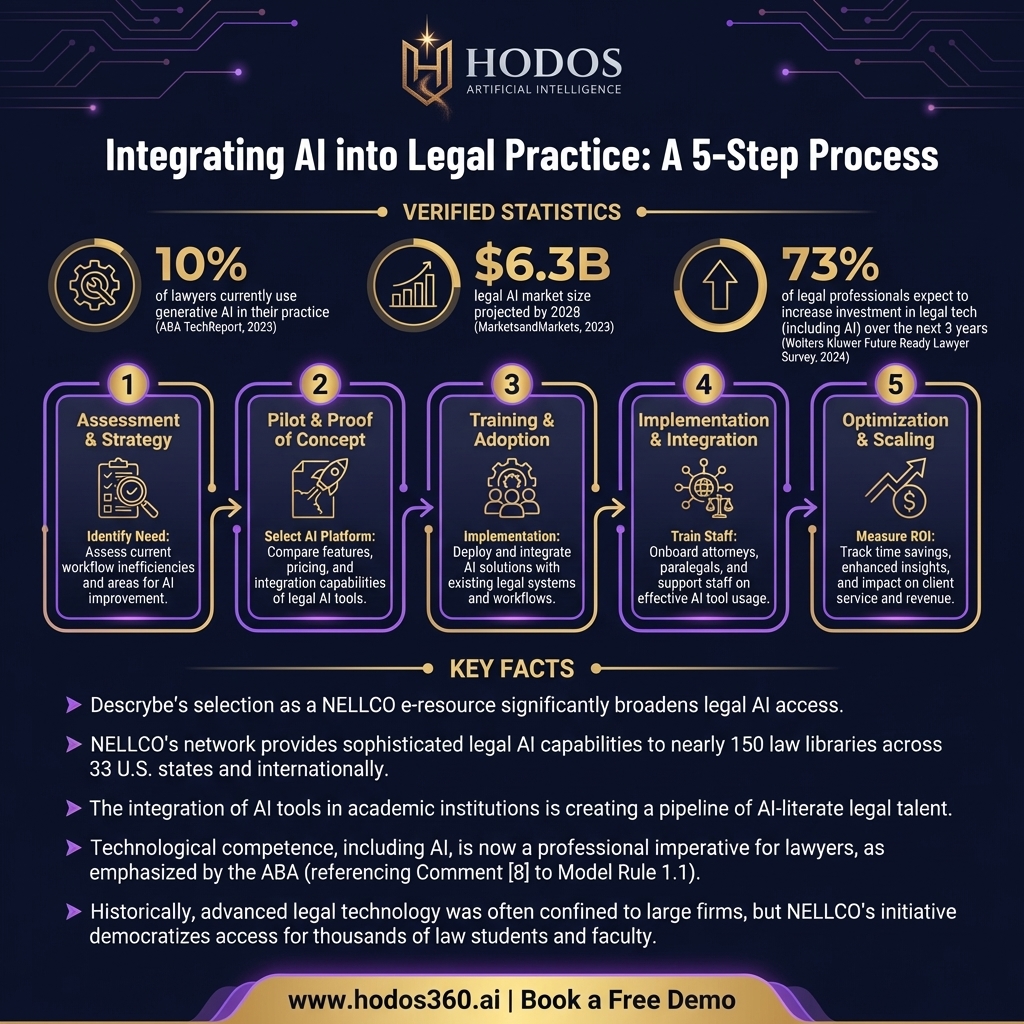
The legal industry is witnessing an unprecedented acceleration in the adoption of artificial intelligence, a trend powerfully underscored by the recent announcement that Descrybe has been selected as a NELLCO e-resource. This strategic designation, highlighted by veteran legal tech journalist Robert Ambrogi on LawSites, is not merely a product endorsement; it represents a significant leap forward in democratizing legal AI access across nearly 150 law libraries in 33 U.S. states and internationally.
For law firm owners and legal professionals, this move signals a critical juncture: the foundational tools that will shape future legal practice are now becoming standard in academic institutions, creating a pipeline of AI-literate talent ready to transform the profession. The initial skepticism surrounding AI's role in law has largely given way to a pragmatic embrace, as evidenced by firms like Allen & Overy's pioneering partnership with Harvey AI, demonstrating the tangible benefits of purpose-built legal intelligence.
Historically, advanced legal technology was often siloed within large firms or specialized departments. However, NELLCO's decision to integrate Descrybe into its network dramatically broadens the scope of legal AI access, making sophisticated analytical and research capabilities available to thousands of law students and faculty. This shift is particularly impactful given the evolving demands placed on legal professionals.
As the American Bar Association (ABA) emphasized in its 2023 Tech Report, technological competence is no longer optional but a professional imperative, often referencing Comment [8] to Model Rule 1.1. Equipping the next generation of lawyers with hands-on experience in AI tools like Descrybe ensures they enter the workforce prepared to leverage technology for enhanced efficiency, deeper insights, and superior client service.
This proactive integration by academic institutions is setting a new benchmark for legal education, directly influencing the readiness of future associates for the tech-driven legal landscape.
This development transcends mere academic convenience; it's a systemic shift poised to bridge the gap between theoretical legal education and the practical application of cutting-edge technology in law firms.
The widespread availability of purpose-built legal AI access through NELLCO's network will not only elevate the research capabilities of students and faculty but also accelerate the broader industry's adoption curve. Firms that once hesitated to invest heavily in AI may find their new hires already proficient in these tools, driving internal demand for more sophisticated, integrated solutions.
This narrative arc—from early skepticism to widespread adoption—is defining the current era of legal tech, with NELLCO's move serving as a powerful catalyst for innovation and a clear indicator of AI's indispensable role in the modern legal ecosystem.
The Strategic Imperative of Expanding Legal AI Access in Education
NELLCO's selection of Descrybe represents a profound recognition of the strategic imperative to embed advanced AI within legal education. This consortium, serving a vast network of academic and research institutions, understands that preparing law students for the complexities of modern practice requires more than traditional casebooks and statutory analysis.
It demands a fluency in the tools that are reshaping legal workflows, from discovery to brief writing. Kara Peterson, a key figure behind Descrybe, emphasized that their platform is 'purpose-built' for legal applications, distinguishing it from general-purpose AI models that may lack the nuanced understanding of legal language and context.
This focus on specialized AI is critical; it ensures that students are learning with tools designed specifically for the unique demands of legal reasoning and data analysis, rather than adapting generic AI to legal tasks.
The widespread legal AI access facilitated by NELLCO means that students will no longer graduate into a profession where AI is an abstract concept, but rather a practical reality.
Learn more about Essential AI Web Development: Build Legal Apps with Ease. They will have already engaged with AI in their research, draft preparation, and case analysis, developing a crucial skillset that many experienced attorneys are still striving to acquire. This early exposure is vital for fostering a generation of legal professionals who can not only use AI but also critically evaluate its outputs, understand its limitations, and navigate its ethical implications.
This proactive approach by NELLCO and its member libraries, including institutions that are part of the broader legal tech discourse, is a testament to the growing consensus that technological literacy is as fundamental as legal theory in contemporary practice.
Bridging the Gap Between Academia and Legal Practice
One of the most significant long-term impacts of expanded legal AI access in academia is its potential to bridge the perennial gap between law school education and the practical demands of legal practice. Historically, new associates often face a steep learning curve adapting to the technological realities of a law firm.
By integrating tools like Descrybe, law schools are directly addressing this challenge. Graduates will enter firms not just with theoretical knowledge, but with practical experience using AI for tasks such as identifying relevant precedents, summarizing complex documents, and even assisting in due diligence. This familiarity will reduce onboarding time and allow new lawyers to contribute more effectively from day one.
Consider the insights shared at recent LegalTech NYC conferences, where partners from firms like Clifford Chance and Hogan Lovells consistently highlight the need for junior lawyers to possess robust tech skills. Learn more about ActiveCampaign 2026: AI Marketing Unleashes Law Firm Growth. The NELLCO initiative directly responds to this call, ensuring that the talent pipeline is equipped with the necessary competencies.
This also creates a virtuous cycle: as more students become proficient in AI, firms will be incentivized to adopt more sophisticated AI tools, knowing that their workforce is ready to leverage them. This ensures that the investment in legal AI access within academic settings translates directly into enhanced efficiency and innovation within the legal industry at large.
Descrybe's Role in Modernizing Legal Research and Practice Management
The selection of Descrybe by NELLCO underscores the critical need for purpose-built legal AI solutions that go beyond general-purpose large language models. Descrybe, as a specialized legal AI, is designed to understand the intricate nuances of legal language, precedent, and statutory interpretation, making it significantly more reliable for legal professionals than tools not specifically trained on legal data.
Its capabilities likely extend to sophisticated legal research, allowing users to quickly identify highly relevant cases, statutes, and secondary sources, dramatically reducing the time traditionally spent on manual review. This is particularly vital in an era where the volume of legal information is exploding, making efficient information retrieval paramount for effective practice.
The integration of such tools into academic settings ensures that future lawyers are not just consumers of information, but strategic users of advanced analytical platforms.
Moreover, the kind of legal AI access Descrybe provides can significantly impact practice management by streamlining various administrative and analytical tasks.
While the immediate benefit is often seen in research, the underlying technology can be adapted for document automation, contract analysis, and even early-stage case assessment. Learn more about Wordsmith AI's $100M Valuation: An Essential LegalTech Milestone. This aligns perfectly with the evolving landscape of legal tech, where integrated platforms are becoming the norm.
Firms are increasingly seeking tools that offer comprehensive solutions, from client intake to billing and document generation. For instance, platforms like Thomson Reuters' CoCounsel and LexisNexis's AI offerings are constantly evolving to provide more integrated functionalities, reflecting the industry's demand for holistic solutions. This competitive drive among legal tech providers is ultimately benefiting the end-users, pushing the boundaries of what specialized legal AI can achieve.
Ready to enhance your firm's efficiency with AI? Discover how HODOS 360's AI Law Firm Management System can revolutionize your operations.
The Broader Implications for Law Firm Efficiency and Innovation
The widespread availability of legal AI access through academic channels creates a profound ripple effect for law firm efficiency and innovation. As a new generation of lawyers enters the workforce already adept at leveraging AI tools, the internal pressure for firms to adopt and integrate these technologies will intensify.
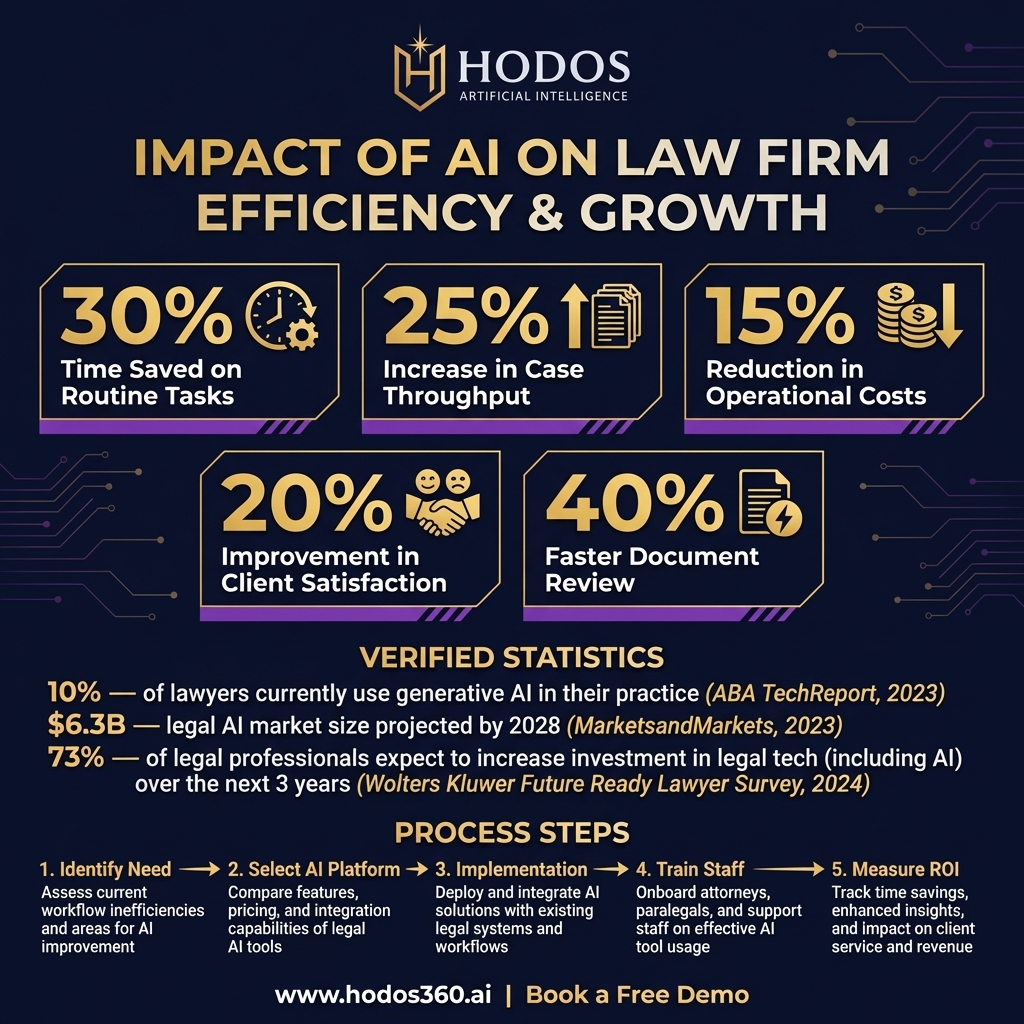
This isn't merely about keeping up with the latest trends; it's about maintaining a competitive edge in a rapidly evolving market. A 2024 report by McKinsey & Company predicted that legal AI adoption could free up to 30% of a lawyer's time on routine tasks, allowing them to focus on higher-value strategic work, client engagement, and complex problem-solving.
Firms that embrace this shift are not just becoming more efficient; they are fundamentally reshaping their service delivery models, offering faster, more cost-effective, and more precise legal solutions to clients.
The human element of this transformation is equally compelling. Firms that invest in comprehensive AI solutions often report higher attorney satisfaction, as the drudgery of repetitive tasks is mitigated, allowing legal professionals to engage more deeply with intellectual challenges.
This also plays a crucial role in talent acquisition and retention. Top legal talent, particularly younger associates, are increasingly seeking out firms that demonstrate a commitment to technological innovation and provide them with the tools to excel. Learn more about AI Legal Tech Boom 2026: Unlocking Billions in Valuation.
The tension between traditional, paper-heavy practices and AI-forward firms is becoming a defining conflict in the industry, with the latter often attracting the brightest minds and the most forward-thinking clients. The NELLCO initiative will only accelerate this divergence, making AI proficiency a baseline expectation rather than a niche skill.
This broadens the conversation beyond individual tools to an ecosystem of technology. Firms are not just looking for a single AI solution but for integrated platforms that can manage various aspects of their practice. This includes everything from AI-powered legal workflows that automate document generation to advanced analytics for case strategy.
The goal is to create a seamless technological environment where AI enhances every stage of the legal process, from initial client intake to final case resolution. This holistic approach to legal tech is what truly drives innovation, allowing firms to scale their operations, improve accuracy, and deliver unparalleled value to their clients.
The growing familiarity with specialized AI from law school will empower this transition.
Navigating Ethical Considerations and Data Privacy in Legal AI
While the benefits of expanded legal AI access are undeniable, the ethical considerations and data privacy implications remain paramount. The legal profession, bound by strict rules of confidentiality and professional conduct, must approach AI adoption with diligence and caution. ABA Model Rule 1.6 on Confidentiality of Information is directly relevant, requiring lawyers to take reasonable precautions to prevent the disclosure of client information.
This means firms must thoroughly vet any AI vendor to ensure robust data security protocols, encryption, and compliance with privacy regulations like GDPR or CCPA. The responsible use of AI also extends to understanding its limitations and potential for bias, ensuring that AI-generated outputs are always reviewed and validated by human attorneys, thereby upholding Model Rule 1.1 on Competence.
The discussions around the EU AI Act and various state bar guidelines on generative AI highlight the evolving regulatory landscape. Learn more about AI Marketing Automation: An Essential Guide for Law Firms. Attorneys have an ethical duty to understand how AI tools process data, where that data resides, and who has access to it.
Firms must implement clear policies and provide ongoing training to their staff on the ethical deployment of AI, including avoiding the input of confidential client information into public or unsecure AI models. The narrative of AI in law is not just about efficiency; it's also about maintaining the integrity of the legal profession and safeguarding client trust.
This continuous vigilance ensures that the benefits of AI are realized without compromising fundamental ethical duties.
HODOS 360's Vision for AI-Powered Legal Transformation
As the legal industry increasingly embraces purpose-built tools like Descrybe, and as legal AI access becomes more widespread from educational institutions to law firms, comprehensive platforms like HODOS 360 are providing the integrated solutions necessary for law firms to thrive in this new era. Our vision aligns perfectly with the current trajectory of legal tech: to empower law firms with a holistic suite of AI-powered services that streamline operations, enhance client engagement, and drive profitability.
We recognize that the future of legal practice isn't about isolated AI tools, but about an integrated AI ecosystem that supports every facet of a firm's work. The HODOS 360 AI Law Firm Management System is specifically designed to address these complex needs, offering a unified platform that replaces disparate systems and introduces intelligent automation where it matters most.
This holistic approach means moving beyond simple task automation to a system where AI proactively assists with strategic decisions, identifies potential bottlenecks, and optimizes resource allocation. For example, while Descrybe enhances legal research, HODOS 360 extends AI's reach to the entire client lifecycle and firm management.
Learn more about AI Legal Tech: The Essential Guide to Funding and Growth. Our platform integrates AI across case management, ensuring that every document, deadline, and communication is intelligently organized and accessible. It transforms client intake, using AI to qualify leads and gather essential information efficiently, setting the stage for stronger client relationships from the outset.
This comprehensive integration ensures that the benefits of specialized AI, like that provided by Descrybe, are amplified by a robust operational backbone, creating a truly future-ready law firm.
Explore how HODOS 360's integrated AI solutions can transform your firm's efficiency and client service. Book a free demo today!
- ✓AI-Powered Case Management: Streamline every aspect of your cases with intelligent tracking, task automation, and predictive analytics to manage workloads effectively.
- ✓Automated Billing & Invoicing: Reduce administrative overhead and improve cash flow with AI-driven time tracking, expense management, and automated invoice generation.
- ✓Intelligent Client Intake: Accelerate client onboarding using AI-powered forms, lead qualification, and automated data entry, ensuring a seamless and professional first impression.
- ✓Advanced Document Automation: Generate complex legal documents with unparalleled speed and accuracy, leveraging AI to populate templates and ensure compliance.
- ✓Centralized Calendar & Deadline Management: Never miss a critical date with AI-assisted scheduling, automated reminders, and seamless integration with case workflows.
- ✓AI-Powered Legal Workflows: Optimize repetitive processes, from discovery to compliance checks, with customizable AI workflows that enhance efficiency and reduce human error.
The Future of Legal Practice: Integrated AI Ecosystems
The future of legal practice is unequivocally moving towards integrated AI ecosystems, where various specialized tools and overarching management platforms work in concert. The NELLCO-Descrybe partnership exemplifies the growing understanding that siloed technologies, while useful, fall short of realizing AI's full transformative potential. The true power emerges when legal AI access is not just about individual tasks, but about creating a seamless, intelligent layer across an entire firm's operations.
This trend is evident in the strategic moves of major legal tech players, such as Clio's aggressive acquisition strategy, which aims to consolidate various legal services into a single, comprehensive platform. These integrations are designed to eliminate data silos, improve data flow, and provide a unified view of client matters and firm performance.
For law firms, this means a shift in mindset from purchasing point solutions to investing in platforms that offer scalability, interoperability, and long-term strategic value. The ability to connect legal research AI with case management, marketing, and client communication tools will define the next generation of successful law firms.
This integrated approach not only boosts efficiency but also enhances collaboration, improves data-driven decision-making, and ultimately elevates the quality of legal services delivered. The increasing exposure to such integrated systems in law school will only accelerate this transition, making these sophisticated ecosystems the expected standard rather than a luxury for the few.

Key Takeaways and Next Steps for Forward-Thinking Law Firms
The NELLCO-Descrybe announcement is more than just a headline; it's a clear signal that legal AI access is becoming a fundamental component of legal education and, by extension, legal practice. For forward-thinking law firms, the key takeaway is clear: the time to strategically embrace AI is now.
Firms that proactively integrate AI into their operations will not only gain significant efficiencies and cost savings but will also be better positioned to attract top talent, offer superior client service, and maintain a competitive edge in an increasingly tech-driven legal market. The investment in AI is no longer optional; it's a strategic imperative for long-term growth and sustainability.
Ignoring these advancements risks falling behind a rapidly innovating profession, as highlighted by reports from organizations like the Legal Executive Institute.
The next steps for law firms involve a multi-faceted approach. First, assess your current technological infrastructure and identify areas where AI can deliver the most immediate impact, such as legal research, document review, or client intake.
Second, invest in continuous education and training for your legal and administrative staff to ensure they are proficient and comfortable with AI tools, understanding both their capabilities and their ethical boundaries. Third, explore comprehensive, integrated AI platforms that can provide a holistic solution for your firm's needs, rather than relying on disparate, siloed tools.
Platforms like HODOS 360 are designed to be your partner in this evolution, providing the tools to manage this change effectively and harness the full power of AI.
Ready to lead the future of legal practice? Visit HODOS 360 to learn more about our AI-powered solutions and schedule a personalized consultation.
Frequently Asked Questions
What does NELLCO's selection of Descrybe mean for law firms?+
NELLCO's decision means that future legal professionals will enter the workforce with hands-on experience in purpose-built legal AI. This will accelerate AI adoption in law firms, as new hires will expect and effectively utilize such tools, driving demand for more sophisticated, integrated AI solutions across the industry and boosting overall firm efficiency and innovation.
How does purpose-built legal AI differ from general AI tools?+
Purpose-built legal AI, like Descrybe, is specifically trained on vast datasets of legal documents, cases, and statutes. This specialization allows it to understand legal nuances, context, and terminology with greater accuracy and reliability than general-purpose AI, which may struggle with the complexities and specific language of the legal domain, potentially leading to errors or irrelevant results.
What are the ethical considerations when adopting AI in a law firm?+
Key ethical considerations include client confidentiality (ABA Model Rule 1.6), ensuring data privacy and security, and maintaining attorney competence (ABA Model Rule 1.1) by understanding AI's limitations and supervising its outputs. Firms must vet AI vendors, implement clear policies for AI use, and provide training to prevent the inadvertent disclosure of sensitive client information or reliance on inaccurate AI-generated content.
How can AI improve law firm efficiency and profitability?+
AI significantly improves efficiency by automating repetitive tasks like legal research, document review, and client intake, freeing up attorneys for higher-value work. This reduces operational costs, improves turnaround times, and enhances accuracy. Ultimately, greater efficiency translates into increased profitability through optimized resource allocation, better client service, and the ability to handle more matters with existing staff.
What role do law libraries play in the broader adoption of legal AI?+
Law libraries, through initiatives like NELLCO's, serve as critical incubators for AI literacy. By providing students and faculty with early legal AI access, they foster a generation of tech-savvy legal professionals. This academic exposure normalizes AI, demystifies its use, and accelerates its integration into mainstream legal practice, influencing hiring trends and the overall technological evolution of the legal industry.