


AI Marketing Automation: Essential Strategies for Law Firms
The legal landscape is undergoing a profound transformation, driven by the relentless pace of artificial intelligence. For law firms, the question is no longer *if* AI will impact their operations, but *how* strategically they can integrate it to gain a competitive edge. This paradigm shift is perhaps nowhere more evident than in marketing and client acquisition, a domain traditionally reliant on relationships and referrals, but now ripe for disruption by intelligent automation. Just this week, MarTech reported on Jon Miller, the visionary co-founder of Marketo, who is once again challenging the status quo, this time rethinking B2B marketing automation for the AI age. Miller, a prominent figure whose previous venture fundamentally reshaped how businesses approached lead generation and customer engagement, is now signaling a new era where the old playbooks are breaking, and innovative AI-powered strategies are rebuilding the path to market.
Miller’s insights underscore a critical reality for law firms: the strategies that worked a decade ago are rapidly becoming obsolete. The legal profession, often perceived as slow to adopt new technologies, can no longer afford to ignore the advancements in AI that are redefining how businesses attract, engage, and convert clients. For instance, while firms like Allen & Overy have publicly embraced AI tools like Harvey AI for legal research and drafting, the integration of AI into the *front office* – specifically marketing and business development – remains an untapped frontier for many. Yet, the data is compelling: a recent Thomson Reuters report indicated that firms leveraging advanced technology saw significantly higher revenue growth. The human conflict here is palpable: traditionalists, wary of diluting the personal touch, clash with innovators who recognize AI's potential to amplify human effort, not replace it. The challenge for law firm owners and managing partners is to bridge this gap, understanding that AI marketing automation isn't just about efficiency; it's about precision, personalization, and ultimately, superior client service in a competitive market.
Rethinking Legal B2B Marketing in the AI Age: Lessons from Marketo's Legacy
Jon Miller’s return to the forefront of marketing automation, as highlighted by MarTech, is more than just a personal career move; it's a bellwether for the entire B2B landscape, including the legal sector. Miller's original work with Marketo helped define the category of marketing automation, enabling businesses to scale their outreach and nurture leads with unprecedented efficiency. However, the rise of generative AI, predictive analytics, and conversational AI has fundamentally altered the underlying assumptions of that original playbook. What worked for segmentation and email campaigns in the 2010s is no longer sufficient in a world where prospects expect hyper-personalized interactions and instant gratification. For law firms, this means moving beyond generic newsletters and static website content to dynamic, context-aware engagement that anticipates client needs before they even articulate them.
The core tension Miller identifies is between the established "playbook" and the disruptive force of AI. Consider the traditional B2B legal marketing funnel: content creation, SEO, paid ads, webinars, and networking events, all leading to a consultation. Each step, while valuable, often involves significant manual effort and generalized messaging. AI, however, promises to inject intelligence at every touchpoint. For instance, instead of relying on broad demographic targeting, AI can analyze vast datasets of public records, corporate filings, news articles, and even social media sentiment to identify companies facing specific legal challenges, allowing firms to proactively offer tailored solutions. This shift from reactive marketing to proactive, predictive engagement is the essence of Miller's "rebuilding" narrative, emphasizing a need for AI marketing automation that is far more sophisticated and adaptive than its predecessors.
Moreover, the competitive environment within legal services demands this evolution. Learn more about AI Legal Management: The Essential Build vs. Buy Strategy. While some large firms have the resources to build in-house AI capabilities, the majority of mid-sized and small firms risk being left behind. The advent of platforms like Harvey AI, which secured a significant partnership with Allen & Overy, showcased how quickly advanced AI can integrate into core legal functions. The challenge now is extending that integration to client-facing activities. Firms that ignore this trend will find their client acquisition costs rising, their lead conversion rates stagnating, and their ability to differentiate diminishing. The market is not waiting; firms like Dentons and Hogan Lovells are already exploring AI-driven insights for business development, demonstrating a clear path forward for those willing to embrace the change.
Miller's focus on rethinking the B2B go-to-market strategy for the AI age directly translates to the legal industry's need for advanced legal tech marketing. It’s about leveraging AI not just for internal efficiencies, but as a strategic asset to understand market shifts, predict client needs, and deliver personalized value propositions at scale. This involves a deep dive into data analytics to identify emerging legal trends, understanding client pain points through sentiment analysis, and automating the initial stages of client outreach in a highly ethical and compliant manner. The future of law firm growth strategies lies in adopting this integrated, intelligent approach to marketing, moving from a one-size-fits-all model to a highly targeted, AI-driven engagement framework.
Strategic AI Integration for Client Acquisition & Engagement
For law firms, the application of AI marketing automation in client acquisition and engagement is multi-faceted, extending across various touchpoints. One of the most immediate impacts is in content generation. Historically, producing high-quality, SEO-optimized legal content—from blog posts on recent rulings to detailed practice area guides—has been a labor-intensive process. Today, AI-powered content generation tools can draft initial versions of articles, summarize complex legal documents for client-facing explanations, and even suggest topics based on trending legal queries. This dramatically reduces the time and cost associated with content creation, freeing up attorneys to focus on high-value legal work while maintaining a robust digital presence. Firms can leverage these tools to populate their websites and social media channels with fresh, relevant information, ensuring they remain top-of-mind for potential clients seeking specific legal expertise.
Beyond content, AI transforms social media automation and personalized outreach. Platforms can analyze engagement metrics to identify the best times to post, the most effective content formats, and even tailor messaging to different segments of a firm's audience. Imagine an AI system that identifies a local business struggling with a new regulation, then automatically drafts a personalized social media message or email, highlighting a firm's relevant expertise and a recent success story. Learn more about Legal Tech Strategy: Essential Build vs. Buy Insights. This level of precision moves far beyond traditional email blasts, creating a much more impactful and relevant interaction. According to a McKinsey report, companies that effectively personalize their customer interactions see a 10-15% increase in revenue, a principle that applies equally to the professional services sector, including law firms.
Moreover, AI excels at predictive lead scoring and client journey mapping. By analyzing historical data, including website visits, content downloads, email opens, and previous interactions, AI algorithms can assign a "score" to each prospect, indicating their likelihood to convert. This allows marketing teams to prioritize high-potential leads, ensuring that valuable attorney time is spent on the most promising opportunities. For example, a firm might track a corporate client's engagement with articles on mergers and acquisitions, signaling a potential need for M&A legal services. This intelligent prioritization is critical for maximizing ROI on marketing efforts and streamlining the client intake solutions process. This strategic application of AI ensures that every marketing dollar and every attorney hour is invested where it has the greatest potential for return, enhancing the overall efficiency and effectiveness of the firm's business development initiatives.
AI-Powered Content and Social Media for Legal Influence
The ability of AI to generate and optimize content is a game-changer for legal firms aiming to establish thought leadership and expand their digital footprint. Tools like OpenAI's GPT-4 or Anthropic's Claude 3 can assist in drafting articles, case summaries, and even initial responses to FAQs, significantly reducing the burden on legal professionals. This doesn't mean AI replaces the lawyer's expertise; rather, it acts as a powerful co-pilot, handling the initial heavy lifting of content creation, allowing attorneys to refine and imbue the content with their unique legal insights and experience. This approach ensures that the firm's online presence is consistently updated with high-quality, relevant information, which is crucial for SEO optimization and attracting organic traffic.
Furthermore, AI-driven platforms can manage a firm's social media presence with unparalleled efficiency. From scheduling posts across multiple platforms to analyzing engagement metrics and identifying trending legal topics, AI ensures that a firm’s message reaches the right audience at the optimal time. Learn more about ActiveCampaign 2026: AI Marketing Unleashes Law Firm Growth. For instance, an AI can detect a surge in queries about a new data privacy regulation and automatically schedule posts linking to the firm's expert analysis, thereby positioning the firm as a timely and authoritative source. This proactive social media automation not only saves time but also amplifies the firm's reach and influence, turning social media channels into dynamic lead generation engines. By automating repetitive tasks, legal professionals can dedicate more time to complex client matters and strategic business development, ultimately fostering greater firm growth and client satisfaction.
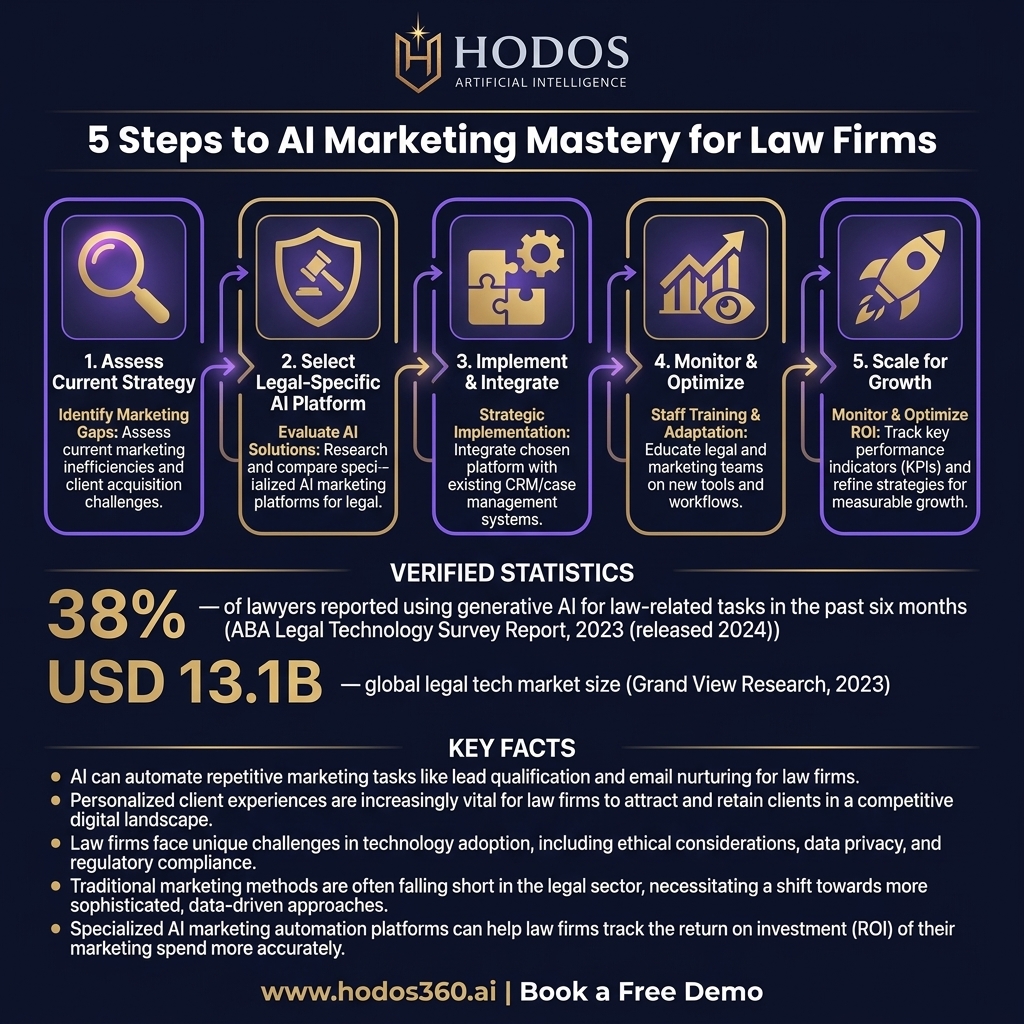
Beyond Marketing Automation: Elevating Client Experience with AI Voice & Web
While AI marketing automation focuses on attracting and nurturing leads, the client journey doesn't end there. The subsequent stages—initial contact, qualification, and information gathering—are equally critical and often fraught with inefficiencies in traditional law firm settings. This is where AI-powered solutions like AI voice assistants and sophisticated web development come into play, creating a seamless and superior client experience from the very first interaction. Imagine a potential client calling a firm after hours with an urgent inquiry. Instead of reaching voicemail, an intelligent AI voice assistant can engage in a natural language conversation, qualify the lead, gather essential details, and even book an appointment directly into an attorney's calendar. This 24/7 availability and instant response capability significantly reduce client frustration and increase the likelihood of conversion, especially in competitive practice areas. Firms using such systems report a substantial decrease in missed opportunities and an improvement in client satisfaction scores, as outlined in a recent Gartner report on customer service automation.
Moreover, the firm's digital storefront—its website—is often the first point of contact. An AI-powered website building platform can analyze user behavior, identify conversion bottlenecks, and dynamically optimize content and layout to improve user experience and lead capture. Learn more about AI Marketing Automation: Law Firms' 2026 Growth Catalyst. This goes beyond basic responsive design; it involves intelligent personalization, where the website adapts its offerings based on the visitor's location, browsing history, or stated legal needs. For instance, a visitor searching for "divorce lawyer" might see different content and call-to-actions than one searching for "corporate litigation." This level of dynamic customization, coupled with robust SEO optimization, ensures that the firm's website isn't just a static brochure but a high-converting asset. Firms like LegalZoom and Avvo have long demonstrated the power of digital-first approaches, and AI now allows traditional firms to compete on this playing field with bespoke, high-performance digital experiences.
The integration of AI voice assistants and intelligent web development creates a powerful synergy with marketing automation efforts. Leads generated through AI-driven content and social media can be seamlessly handed off to a voice assistant for qualification, which then directs them to a personalized experience on the firm's AI-optimized website. This holistic approach ensures that every touchpoint in the client journey is optimized for efficiency, personalization, and conversion. It's about building a digital ecosystem that not only attracts clients but also provides them with an exceptional, responsive experience from start to finish, reflecting the modern expectations of a digitally fluent clientele. This comprehensive strategy is essential for firms looking to not just survive but thrive in the increasingly digital legal market.
Optimizing Client Journeys with AI Voice Assistants
AI voice assistants are rapidly becoming indispensable for legal practices, extending client service capabilities far beyond traditional office hours. These intelligent systems can handle initial inquiries, answer common FAQs about practice areas or firm policies, and even conduct basic lead qualification by asking pre-defined questions to assess the potential client's needs and urgency. This automation ensures that no valuable lead is missed, even if they call at 3 AM. Furthermore, the ability to offer multilingual support broadens a firm's reach, allowing it to cater to a diverse client base without requiring additional human resources. Learn more about AI Marketing: The Essential Guide to Legal Personalization. By automating routine call handling and information gathering, attorneys and support staff are freed from administrative burdens, allowing them to focus on complex legal matters. This not only improves operational efficiency but also enhances client satisfaction by providing immediate, professional assistance. The strategic deployment of AI voice assistants represents a significant leap forward in client communication and accessibility for law firms.
Building High-Converting Legal Websites with AI
In today's digital-first world, a law firm's website is its most critical marketing asset. AI-powered web development platforms offer sophisticated tools that go beyond simple templates. These platforms utilize AI to analyze user data, predict optimal layouts, and generate content variations that resonate most effectively with target audiences. This translates into high-converting templates and a user experience meticulously crafted to guide visitors toward desired actions, whether it's booking a consultation or downloading a resource. Learn more about AI Marketing: Essential Legal Safeguards for Law Firms. Crucially, AI also plays a pivotal role in SEO optimization, continuously monitoring search trends and competitor strategies to ensure the firm's website ranks prominently for relevant legal queries. This dynamic optimization ensures that the firm captures maximum organic traffic, effectively turning its website into a 24/7 lead generation machine. By leveraging AI in web development, firms can build a powerful digital presence that not only looks professional but actively contributes to their bottom line.
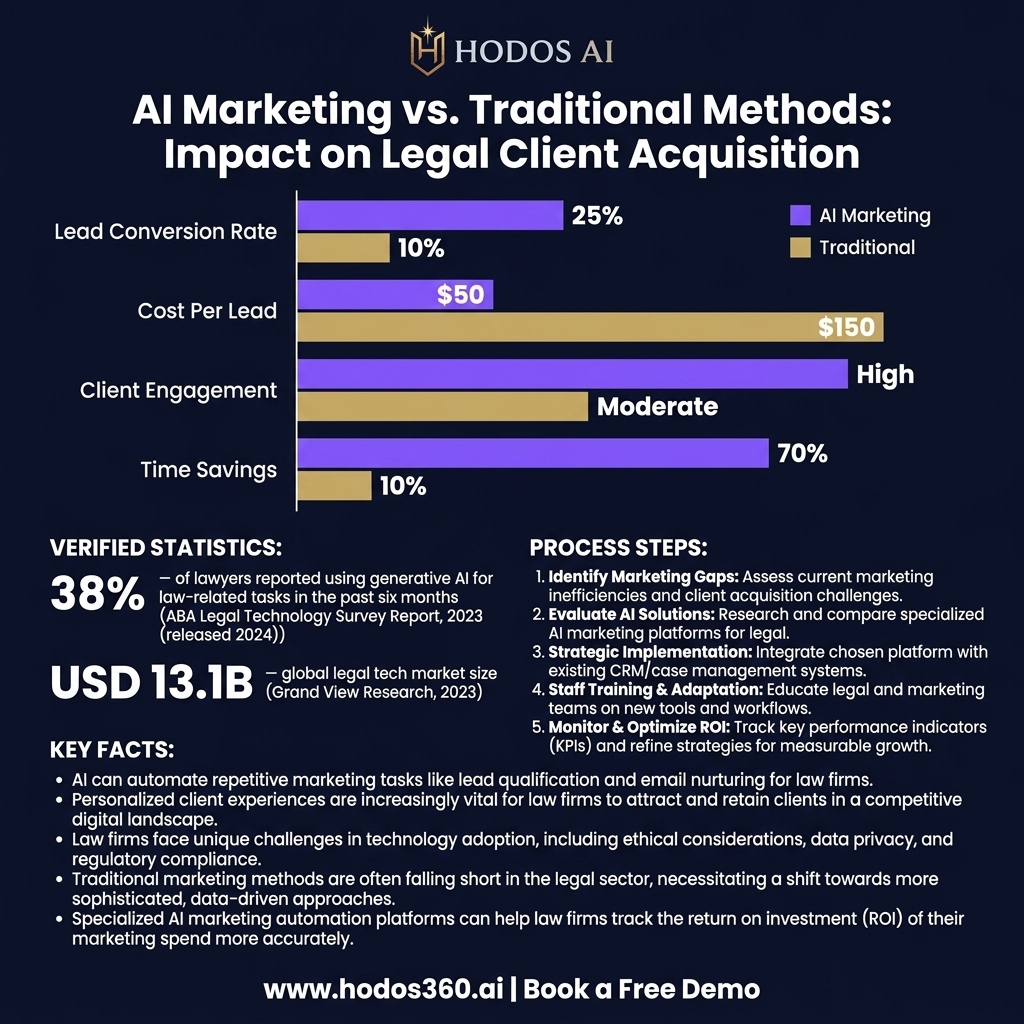
Navigating the Ethical and Practical Landscape of AI in Legal Marketing
While the benefits of AI marketing automation are clear, law firms must navigate the ethical and practical landscape with diligence. The legal profession operates under strict rules of professional conduct, and the use of AI must align with these mandates. For instance, ABA Model Rule 1.6 (Confidentiality of Information) and Rule 7.1 (Communications Concerning a Lawyer’s Services) are paramount. Firms must ensure that AI tools used for client intake or communication do not inadvertently compromise client confidentiality or make misleading claims. This requires robust data security measures and careful oversight of AI-generated content to ensure accuracy and compliance with advertising regulations. The EU AI Act, though primarily focused on high-risk AI systems, sets a global precedent for transparency and accountability, pushing all AI developers and users, including legal tech providers, towards more responsible practices. Firms should also be mindful of state-specific bar ethics opinions, such as those issued by the California Bar on the use of generative AI, which often emphasize the attorney's ultimate responsibility for all work product and client communications, regardless of AI assistance.
Another critical consideration is data privacy. As AI systems process vast amounts of client and prospect data, adherence to regulations like GDPR, CCPA, and evolving state privacy laws becomes non-negotiable. Firms must ensure that their AI workflows for marketing are designed with privacy-by-design principles, obtaining necessary consents, anonymizing data where appropriate, and implementing strong access controls. A data breach involving marketing data could severely damage a firm's reputation and lead to significant legal and financial repercussions. This isn't merely a technical challenge; it's a governance issue that requires clear policies, regular audits, and continuous training for all personnel involved in AI deployment. The human element of oversight is irreplaceable, ensuring that AI serves as an augmentative tool rather than an autonomous decision-maker in sensitive client interactions.
Furthermore, the potential for AI bias is a real concern in marketing. If an AI system is trained on biased historical data, it could inadvertently lead to discriminatory targeting or messaging, violating anti-discrimination laws and ethical principles. For example, an AI designed to identify high-value clients might inadvertently exclude certain demographics if the training data disproportionately represented others. Firms must actively audit their AI systems for bias, ensuring fairness and equitable access to legal services. This demands a proactive approach to data curation and algorithm review, often requiring collaboration with AI ethics experts. The responsible adoption of AI in legal marketing, therefore, is not just about technological prowess but about upholding the core values of justice, fairness, and client trust that define the legal profession.
Future-Proofing Your Firm with an Integrated AI Marketing Platform
The insights from Jon Miller and the broader industry underscore a clear imperative: law firms must embrace AI marketing automation not as an optional add-on, but as a foundational element of their growth strategy. The firms that are thriving in today's competitive landscape are those actively investing in digital transformation, integrating AI across their operations from case management to client acquisition. Consider the example of Clio, a legal tech giant that has consistently expanded its ecosystem, including through strategic acquisitions, to offer a more comprehensive platform to law firms. This trend towards integrated solutions highlights the need for a single, powerful platform that can unify various AI-driven marketing and operational functions. Firms that adopt fragmented tools risk creating data silos and inefficiencies, undermining the very benefits AI is designed to deliver.
An integrated AI platform provides a holistic view of the client journey, from initial lead generation to ongoing client management. This means that data collected during marketing campaigns can seamlessly flow into client intake, billing, and case management systems, eliminating manual data entry and reducing errors. For example, a lead qualified by an AI voice assistant could automatically populate a new client profile in the firm's management system, streamlining the onboarding process. This level of integration is not just about efficiency; it's about creating a superior, consistent experience for clients and a more productive environment for attorneys and staff. The competitive advantage will increasingly go to firms that can leverage such platforms to offer personalized service at scale, manage their reputation effectively, and adapt quickly to market changes.
Ultimately, the choice facing law firms is stark: cling to outdated methods and risk obsolescence, or strategically invest in AI marketing automation and integrated legal tech to secure a resilient future. Firms that recognize AI not as a threat but as an unparalleled opportunity to enhance their reach, deepen client relationships, and optimize their operations will be the ones that lead the legal industry into its next chapter. The journey of digital transformation is continuous, but the starting point is clear: adopting comprehensive AI-powered platforms that address the full spectrum of a firm's needs, from generating new leads to managing complex cases. This forward-thinking approach ensures that firms are not just reacting to market shifts but actively shaping their growth trajectory, positioning themselves as innovators and leaders in the legal field.

Key Takeaways and Next Steps
The legal profession stands at the precipice of a new era, one defined by intelligent automation and data-driven strategy. The insights from Jon Miller, the evolving landscape of legal tech, and the increasing sophistication of client expectations all point to a singular conclusion: AI marketing automation is no longer a luxury but a strategic imperative for law firms seeking sustainable growth. Firms must move beyond traditional marketing silos and embrace integrated platforms that offer a unified approach to client acquisition, engagement, and management. This involves leveraging AI for everything from generating compelling content and automating social media to deploying intelligent voice assistants and building high-converting websites. The ethical considerations surrounding AI, particularly concerning data privacy and bias, demand careful attention and robust governance frameworks, ensuring that technology serves the profession's core values.
For law firm owners and managing partners, the next steps involve a critical assessment of their current marketing infrastructure and a commitment to strategic investment in AI. This means exploring comprehensive solutions that can streamline workflows, enhance client experience, and provide actionable insights. Platforms like HODOS 360, which offers an integrated suite of AI Law Firm Management, AI Marketing, AI Voice Assistants, and Web & Mobile Development services, are designed precisely to meet these evolving needs. By adopting such a holistic platform, firms can not only navigate the complexities of the AI age but also redefine their market position, attract a new generation of clients, and secure a future of sustained success. The time to act is now, transforming potential disruption into unprecedented opportunity.
Frequently Asked Questions
What is AI marketing automation for law firms?+
AI marketing automation for law firms involves using artificial intelligence to streamline and enhance various marketing tasks. This includes automating content creation, personalizing client outreach, managing social media, qualifying leads with AI voice assistants, and optimizing websites for conversion and SEO. It enables firms to engage potential clients more effectively and efficiently, saving time and resources while improving client acquisition rates and overall marketing ROI.
How does AI impact client acquisition in the legal sector?+
AI significantly impacts client acquisition by enabling more precise targeting, personalized communication, and efficient lead qualification. AI tools can analyze market data to identify potential clients with specific legal needs, generate tailored marketing content, and automate initial client interactions. This allows law firms to attract higher-quality leads, nurture relationships more effectively, and convert prospects into clients at a faster rate, ultimately driving substantial firm growth.
What ethical considerations should law firms address when using AI in marketing?+
Law firms must carefully address ethical considerations such as client confidentiality (ABA Model Rule 1.6), truthful advertising (Rule 7.1), data privacy (GDPR, CCPA), and potential AI bias. It's crucial to ensure AI tools do not compromise sensitive client information, make misleading claims, or inadvertently discriminate. Firms must maintain human oversight, implement robust data security, and comply with all legal and ethical guidelines regarding AI use in professional services.
Can AI voice assistants truly qualify leads for law firms?+
Yes, AI voice assistants can effectively qualify leads for law firms by engaging callers in natural language conversations, asking pre-defined questions, and gathering essential information about their legal needs and urgency. They can filter out unqualified inquiries, identify high-potential prospects, and even book appointments directly into attorney calendars, all while providing 24/7 service. This frees up human staff and ensures that attorneys focus on genuinely promising leads.
How does AI-powered web development benefit law firm marketing?+
AI-powered web development benefits law firm marketing by creating highly optimized, responsive, and high-converting websites. AI analyzes user behavior to suggest optimal layouts and content, personalizes visitor experiences, and continuously enhances SEO to ensure prominent search engine rankings. This results in a website that not only looks professional but also actively attracts organic traffic, captures leads more effectively, and serves as a powerful digital asset for client acquisition and firm branding.
What role does data analytics play in AI marketing for law firms?+
Data analytics is foundational to AI marketing for law firms. AI systems leverage vast amounts of data—from website traffic and social media engagement to client demographics and case outcomes—to identify patterns, predict trends, and measure campaign effectiveness. This allows firms to track ROI, refine their strategies, personalize outreach, and make data-driven decisions that optimize marketing spend and improve client acquisition rates. It transforms marketing from guesswork into a precise, measurable science.