


Voice Search Optimization: The Ultimate Guide for Law Firms
Just a few years ago, the idea of a prospective client asking their smart speaker to "find a top-rated personal injury lawyer near me" seemed like a distant tech fantasy. Today, it's a rapidly evolving reality shaping the future of legal client acquisition. Consider Sarah Chen, managing partner at Lex Counsel LLP in San Francisco.
Initially, Chen was skeptical of what she termed 'talk-to-your-phone' tech, believing traditional referrals and organic web searches would remain paramount. However, by late 2024, her firm began noticing a subtle but persistent shift: a plateau in certain traditional online inquiries, coupled with anecdotal evidence from junior associates whose friends and family increasingly relied on voice assistants for local service searches.
This prompted Lex Counsel to dive deep into the emerging field of voice search optimization (VSO), a strategic move that has since redefined their digital outreach and client engagement. This guide is designed to equip law firms, much like Lex Counsel, with the knowledge and tools to not just adapt, but to thrive in this new, voice-first digital age.
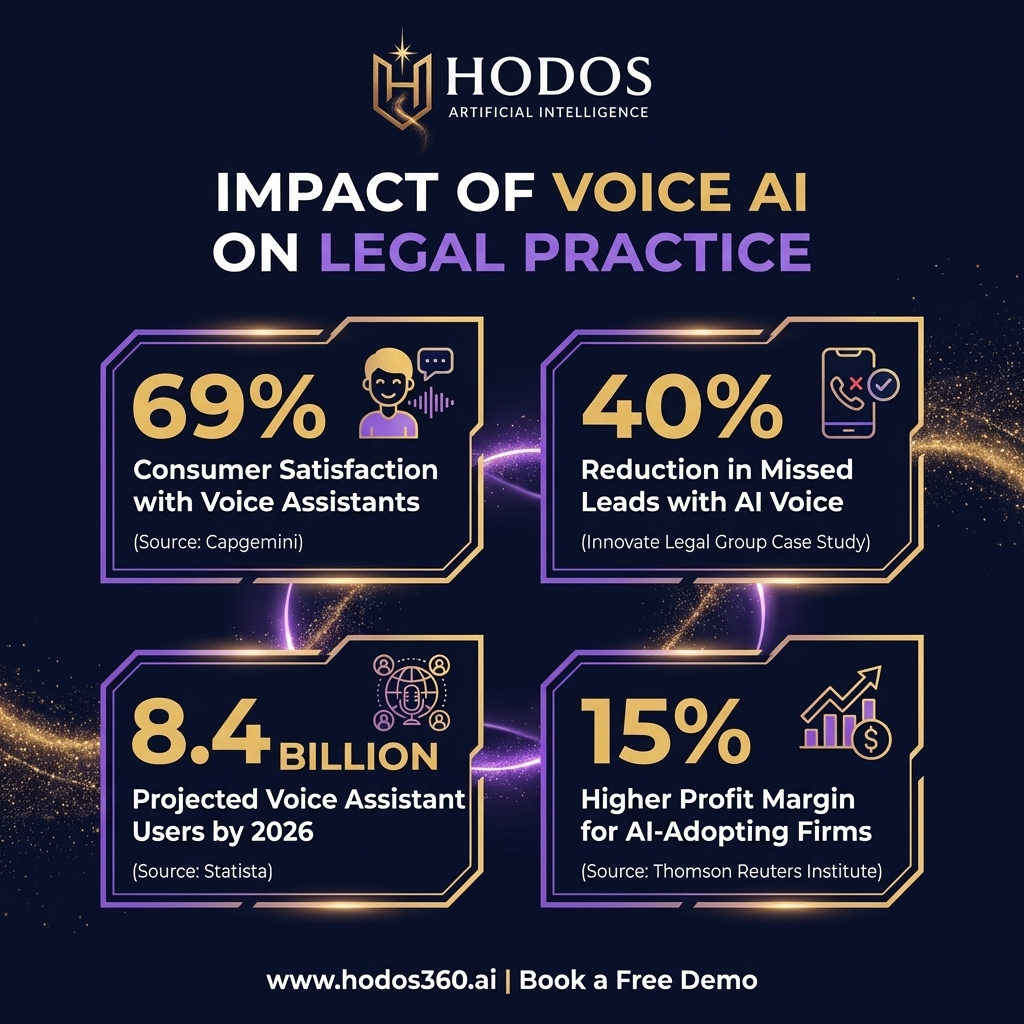
The proliferation of smart devices—from smartphones and smart speakers to in-car infotainment systems—has fundamentally altered how individuals seek information and services. According to a 2023 report by Statista, the number of digital voice assistant users worldwide is projected to reach over 8.4 billion by 2026, exceeding the global population.
This isn't merely a convenience; it's a paradigm shift in user behavior, particularly for high-intent local searches. For law firms, this trend presents both a formidable challenge and an unprecedented opportunity. Those who master voice search optimization will unlock a new funnel of qualified leads, enhance their online visibility, and streamline their client intake processes.
Conversely, firms that remain anchored in traditional SEO practices risk becoming invisible to a growing segment of the market. The stakes are high, and the time to act is now. Understanding the nuances of how voice assistants interpret and respond to legal queries is no longer optional; it's an essential component of a future-proofed legal marketing strategy.
The Shifting Sands of Legal Client Acquisition: Why Voice Search Matters Now
The legal market is intensely competitive, with firms constantly vying for client attention. Traditional avenues like paid ads, content marketing, and even robust organic search engine optimization (SEO) remain vital, but they are increasingly crowded. The rise of voice search offers a less saturated, yet incredibly potent, channel for lead generation.
Unlike typed queries, which are often concise and keyword-driven, voice searches are typically longer, more conversational, and phrased as questions. Learn more about AI in MarTech: The Ultimate Guide to Predictive Power. This natural language interaction demands a different optimization approach, one that prioritizes context, intent, and direct answers.
For instance, a typed search might be "divorce lawyer Dallas," while a voice search would likely be "Hey Google, who is the best divorce lawyer in Dallas who handles complex asset division?" This shift requires law firms to anticipate client questions, not just keywords, and to structure their online content accordingly.
Firms like Morgan & Morgan, known for their aggressive digital marketing, are already experimenting with AI-driven content generation that can be easily parsed by voice assistants, setting a high bar for the industry.
The data unequivocally supports the urgency of embracing voice search. MobileAppDaily's "Voice Search Optimization: The Complete Guide" underscores the critical need for businesses to adapt to this evolving search landscape. Beyond general consumer trends, legal-specific data from the ABA TechReport indicates a growing adoption of AI and voice technologies within legal practices, albeit often focused on internal efficiencies rather than client-facing marketing.
However, the external client demand is undeniable. A study by Capgemini revealed that 69% of consumers are satisfied with using voice assistants, and this satisfaction translates into increased usage for service discovery. Learn more about AI Marketing Automation: Essential Lead Flow for Law Firms. For law firms, this means a significant portion of their potential client base is already using voice to find solutions.
Ignoring this trend is akin to ignoring mobile optimization a decade ago – a strategic misstep that can lead to significant market share erosion. Firms that proactively integrate voice search optimization into their digital strategy will not only capture new leads but also build a reputation as modern, accessible, and client-focused legal service providers.
- ✓Increased Local Visibility: Voice searches are predominantly local, making VSO crucial for firms targeting specific geographic areas.
- ✓Higher Conversion Rates: Voice queries are often high-intent, leading to more qualified leads ready to engage with legal services.
- ✓Competitive Advantage: Early adopters can establish dominance in a less crowded search channel.
- ✓Enhanced User Experience: Optimizing for voice improves overall website accessibility and user satisfaction.
- ✓Future-Proofing: Aligning with evolving consumer behavior ensures long-term relevance in the digital legal landscape.
- ✓Direct Answers & Featured Snippets: Voice assistants often pull answers from featured snippets, offering a direct path to top visibility.
Ready to capture the next wave of legal clients? Explore HODOS 360's AI Voice Assistant solutions today.
Deconstructing Voice Search: Understanding the Legal Client's Query
To effectively optimize for voice search, law firms must first understand the fundamental differences between how people type and how they speak. Typed queries tend to be short, keyword-dense fragments (e.g., "estate planning lawyer"). Voice queries, however, mimic natural conversation, often taking the form of full questions, longer phrases, and incorporating more context (e.g., "Hey Siri, what do I need to do to set up a living trust for my family?").
This shift necessitates a focus on natural language processing (NLP) and semantic search. Learn more about AI Voice: Legal's 2026 Paradigm Shift & Innovation Catalyst. Google's advancements, particularly with its BERT and MUM updates, have dramatically improved its ability to understand the intent and context behind complex, conversational queries.
This means search engines are no longer just matching keywords; they are interpreting the meaning behind the words, making it crucial for legal content to be comprehensive, authoritative, and directly answer potential client questions. Firms must think beyond traditional keywords and anticipate the full spectrum of questions a prospective client might ask their voice assistant.
Optimizing for Local SEO and Long-Tail Keywords
For law firms, local SEO is paramount, and voice search amplifies its importance. A significant portion of voice queries includes location-based modifiers, such as "lawyer near me" or "best personal injury attorney in Seattle." Optimizing for these local searches involves several key strategies. First, ensuring your Google My Business profile is meticulously updated, verified, and complete with accurate service areas, contact information, and operating hours is non-negotiable.
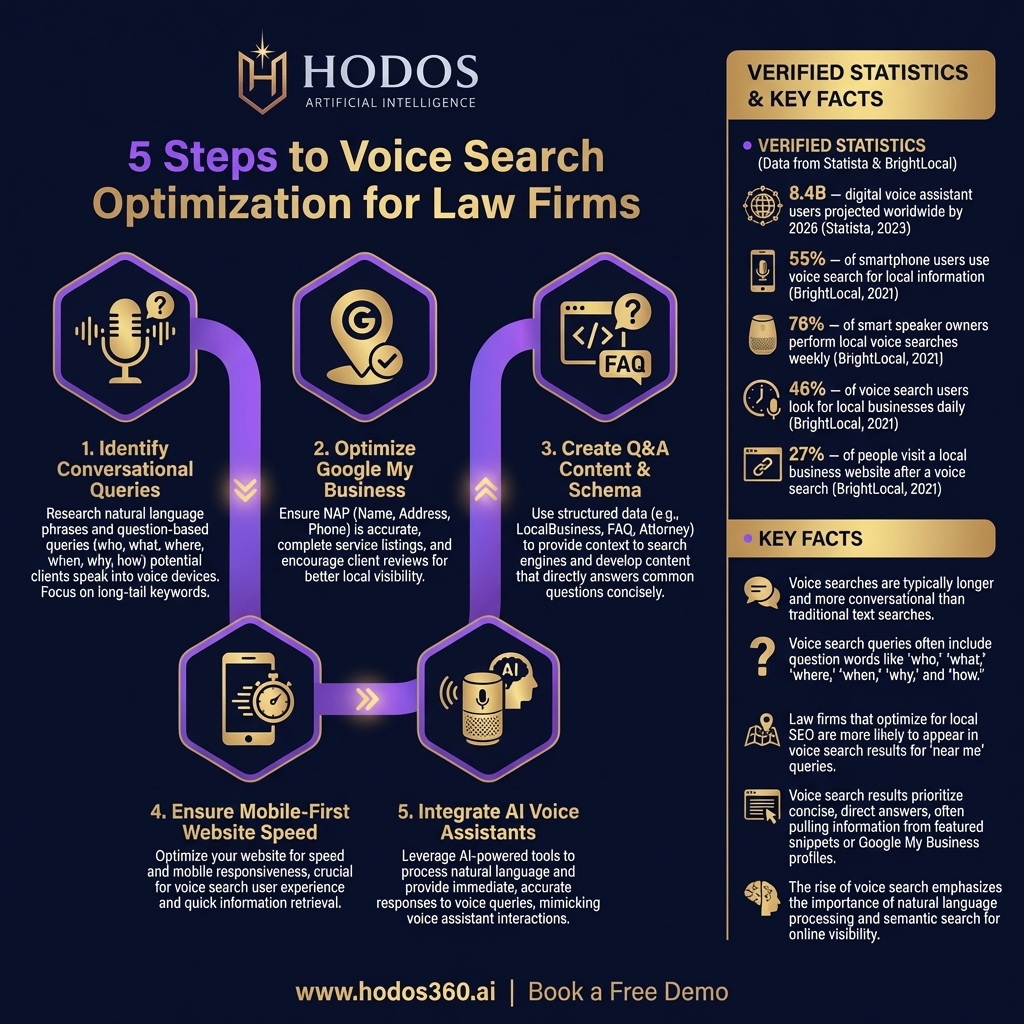
Encourage clients to leave reviews, as high ratings and positive feedback significantly influence local voice search rankings. Learn more about Wordsmith AI's $100M Valuation: An Essential LegalTech Milestone. Second, focus on long-tail keywords that capture specific user intent and location. Instead of just "criminal defense lawyer," consider "experienced criminal defense lawyer for DUI cases in downtown Chicago."
These longer, more specific phrases are precisely what conversational voice queries tend to use. By creating content that addresses these specific, localized questions, law firms can position themselves as the direct answer a voice assistant provides to a high-intent local query, effectively bypassing competitors that rely solely on broad, generic keywords.
Crafting a Voice SEO Strategy for Your Law Firm
Developing an effective voice search optimization strategy for a law firm requires a multi-faceted approach that goes beyond traditional keyword stuffing. The core revolves around creating highly relevant, question-and-answer-based content. Law firms should conduct thorough research to identify common questions potential clients ask about their legal issues.
Tools like AnswerThePublic, Google's "People Also Ask" feature, and even internal client intake logs can reveal invaluable insights into these queries. Each question should be addressed directly and comprehensively on your website, ideally in dedicated FAQ sections, blog posts, or service pages. Learn more about Legora's Strategic Leap: Essential AI Law Firm Management.
Think of your website as a helpful, knowledgeable legal assistant. For example, a family law firm might create content answering, "How long does a divorce typically take in Texas?" or "What are the legal grounds for child custody modification?" This type of content, rich in natural language and directly addressing user intent, is highly favored by voice assistants seeking to provide concise, authoritative answers.
Firms that proactively build this content library will see a significant boost in their voice search visibility.
Technical Foundations: Schema Markup and Core Web Vitals
Beyond content, the technical foundations of your website play a crucial role in voice search optimization. Schema markup, specifically JSON-LD, is essential. This structured data helps search engines understand the context of your content, allowing them to extract specific information like your firm's address, phone number, practice areas, and even answers to FAQs.
Implementing LocalBusiness schema, Attorney schema, and FAQPage schema can significantly improve your chances of appearing in voice search results and gaining featured snippets. Furthermore, website performance, measured by Google's Core Web Vitals (Largest Contentful Paint, First Input Delay, and Cumulative Layout Shift), is critically important.
Learn more about Legal AI Problem: Mastering Ethical Tech in Law Firms 2026. Voice assistants prioritize fast-loading, mobile-friendly websites because users expect immediate answers. A slow website will not only deter human visitors but also signal to voice algorithms that your site may not provide the optimal user experience.
Firms leveraging modern web development practices, like those offered by HODOS 360's Web & Mobile Development services, can ensure their sites are technically optimized for the voice-first era.
Don't let your law firm be left behind. Discover how HODOS 360's AI Marketing Platform can amplify your voice search presence.
The Transformative Power of AI Voice Assistants in Legal Operations
While voice search optimization focuses on how clients find you, AI Voice Assistants extend the utility of voice technology directly into your firm's operations and client engagement. The traditional law firm model often struggles with missed calls, inconsistent lead qualification, and a lack of 24/7 availability – all critical pain points in a client-centric legal market.
Imagine a prospective client calling your firm after hours, only to reach voicemail. That's a lost opportunity. This is where dedicated AI Voice Assistants, like those offered by HODOS 360, become game-changers. These intelligent systems can answer calls around the clock, qualify leads based on predefined criteria, book appointments directly into your calendar, and even provide multilingual support, ensuring no potential client is left unheard.
David Lee, a partner at Innovate Legal Group, shared at LegalTech NYC 2026 how his firm implemented AI voice assistants, leading to a 40% reduction in missed lead opportunities and a noticeable improvement in initial client satisfaction scores. This shift moves beyond mere presence to proactive, intelligent client interaction.
Beyond Search: Enhancing Client Experience and Intake with AI Voice
The capabilities of AI Voice Assistants extend far beyond initial contact. They can significantly enhance the entire client experience and streamline the intake process. For instance, an AI assistant can gather preliminary case details, explain standard fee structures, and answer frequently asked questions, freeing up your administrative staff and junior attorneys for higher-value tasks.
Multilingual support is another critical advantage, allowing firms to serve diverse communities without the immediate overhead of human interpreters, thereby expanding market reach and fulfilling ethical obligations regarding communication under ABA Model Rule 1.4 (Communication). Furthermore, by automating initial call routing, AI voice assistants ensure that urgent matters reach the appropriate legal professional immediately, minimizing delays and demonstrating responsiveness.
This level of proactive, intelligent engagement not only improves client satisfaction but also positions your firm as a leader in legal innovation, demonstrating a commitment to efficiency and accessibility that resonates deeply with modern clients. The ethical considerations around AI use in client communication are being actively discussed by organizations like the ABA, emphasizing the need for transparency and supervision, which HODOS 360's solutions are designed to facilitate.
Future-Proofing Your Practice: The HODOS 360 Integrated AI Ecosystem
The true power of AI in the legal sector lies not in isolated tools, but in an integrated ecosystem that leverages synergy across different functions. This is precisely the vision behind HODOS 360. Our AI Voice Assistants, while powerful on their own for voice search optimization and client intake, become even more transformative when integrated with our broader suite of services.
Imagine a scenario where a voice assistant qualifies a lead, books an appointment, and then seamlessly transfers all collected client data directly into the AI Law Firm Management System. This system then automatically initiates client intake workflows, generates initial documents, and schedules follow-ups, all without manual data entry or redundant tasks.
This level of integration eliminates friction points, reduces administrative burden, and ensures a consistent, high-quality client journey from first contact to case resolution. Firms that embrace this holistic approach to AI, much like pioneering ventures such as Harvey AI's partnership with Allen & Overy, are not just adopting technology; they are fundamentally reshaping their operational DNA.
The competitive landscape in legal tech is fierce, marked by rapid innovation and significant investment. Companies like OpenAI and Anthropic, with their multi-billion dollar funding rounds, are pushing the boundaries of what AI can do, and the legal sector is a prime beneficiary. For law firms, the choice is clear: either adapt and integrate these powerful tools or risk being outmaneuvered by more agile competitors.
The Thomson Reuters Institute's 2025 "State of the Legal Market" report highlighted that firms investing strategically in AI saw, on average, a 15% higher profit margin compared to their less tech-forward counterparts. HODOS 360 provides a complete, AI-powered platform that ensures your firm is not just participating in the future of legal practice but leading it.
From AI-driven marketing that captures voice search leads to intelligent voice assistants that manage client interactions, and an AI-powered management system that optimizes internal workflows, we offer the comprehensive solution needed to secure your firm's relevance and profitability in the years to come.

Key Takeaways and Next Steps
The era of voice search and AI-powered client interaction is not a distant future; it is the present reality for law firms seeking to maintain a competitive edge. Mastering voice search optimization is essential for capturing the next generation of legal clients who increasingly rely on conversational interfaces to find services.
This involves a strategic focus on natural language content, robust local SEO, and meticulous technical optimization with schema markup and core web vitals. Beyond mere visibility, the integration of AI Voice Assistants transforms how law firms engage with and onboard clients, offering 24/7 availability, efficient lead qualification, and a superior client experience.
By embracing a comprehensive AI ecosystem, firms can streamline operations, reduce administrative burden, and ensure they are future-proofed against evolving market demands. The time for passive observation is over; proactive adoption of voice AI is the strategic imperative for modern legal practice. Don't just adapt to the future – define it.
Ready to lead the legal industry with AI? Schedule a free demo of HODOS 360 today and transform your practice.
Frequently Asked Questions
What is voice search optimization (VSO) for law firms?+
Voice search optimization for law firms involves tailoring your online content and website's technical structure to rank prominently for spoken queries made through voice assistants like Google Assistant, Siri, and Alexa. This includes optimizing for conversational language, long-tail keywords, local intent, and providing direct, concise answers to common legal questions to capture leads from clients using voice search.
How do voice searches differ from traditional text searches?+
Voice searches are typically longer, more conversational, and often phrased as questions (e.g., "Where can I find a divorce lawyer?"). Text searches are usually shorter, keyword-driven fragments (e.g., "divorce lawyer"). Voice search algorithms prioritize natural language understanding, context, and direct answers, emphasizing semantic search over strict keyword matching.
What role do AI Voice Assistants play in client intake?+
AI Voice Assistants can revolutionize client intake by providing 24/7 phone answering, qualifying leads based on predefined criteria, booking appointments directly into firm calendars, and offering multilingual support. They streamline the initial contact process, ensure no lead is missed, and free up human staff for more complex legal tasks, significantly improving efficiency and client satisfaction.
Is local SEO important for voice search?+
Yes, local SEO is critically important for voice search, as a significant percentage of voice queries are local in nature (e.g., "attorney near me"). Optimizing your Google My Business profile, encouraging local reviews, and creating content with local long-tail keywords are essential strategies to ensure your firm appears in relevant voice search results for potential clients in your geographic area.
How can HODOS 360 help my law firm with voice search and AI?+
HODOS 360 offers an integrated AI platform designed for law firms. Our AI Voice Assistants provide 24/7 lead qualification and appointment booking, directly enhancing your voice search lead capture. Coupled with our AI Marketing Platform for content generation and SEO, and our AI Law Firm Management System for seamless client intake and workflow automation, HODOS 360 provides a holistic solution to thrive in the voice-first era.