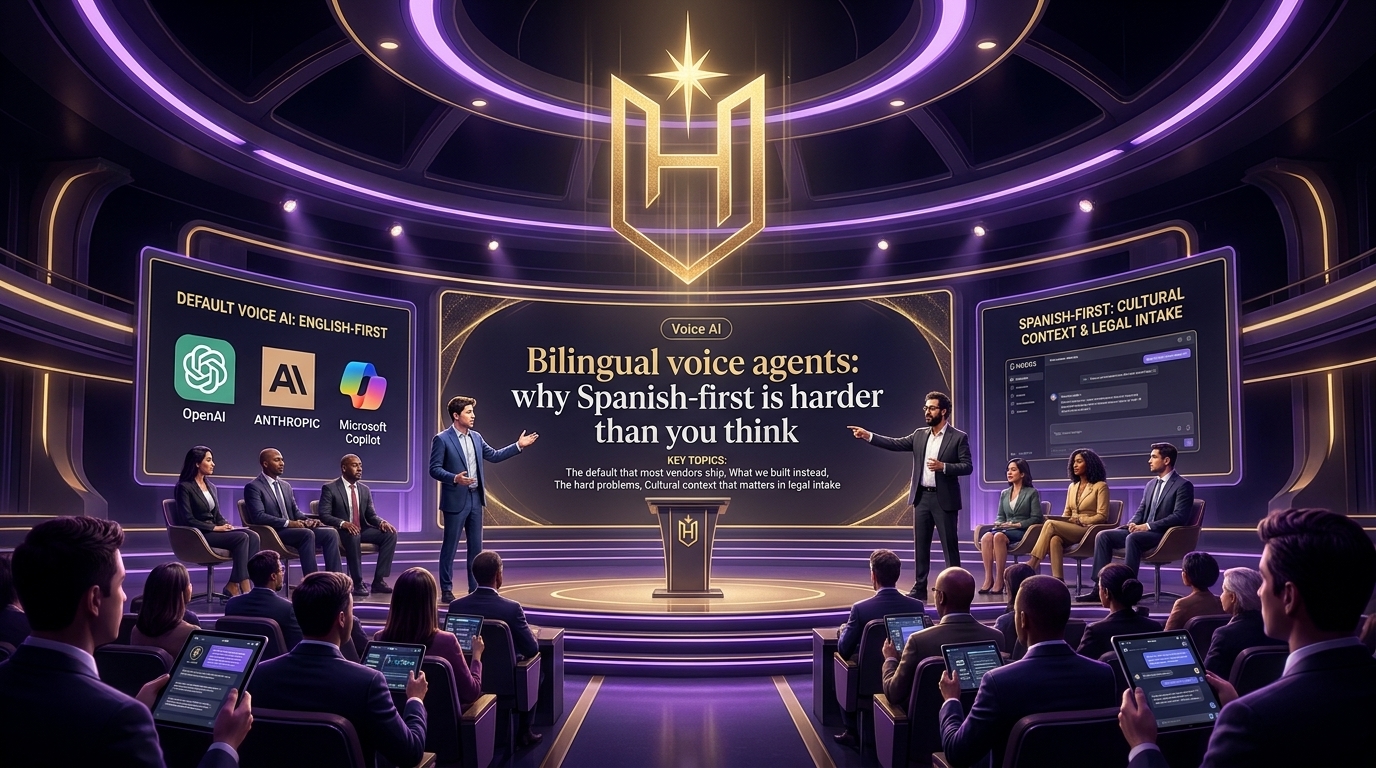


Legal AI Problem: Mastering Ethical Tech in Law Firms 2026
The legal profession, a bastion of tradition and meticulous precision, finds itself navigating an unprecedented era of technological disruption. As of March 2026, the promise of artificial intelligence (AI) continues to captivate, yet a palpable tension persists—the 'AI problem' plaguing law firms globally, as highlighted by recent industry discussions.
This isn't merely a theoretical debate; it's a practical challenge involving everything from data integrity and client confidentiality to the very essence of legal ethics. While companies like the Australian start-up Mary Technology have recently raised significant capital, like their reported $7 million, to tackle the misuse of artificial intelligence, the overarching issue demands a more comprehensive, integrated approach than piecemeal fixes.
Law firms are realizing that successful AI adoption isn't just about implementing new tools; it's about fundamentally rethinking operations, ethics, and client engagement in a rapidly evolving digital landscape.
This transformative period demands more than just awareness; it requires strategic action. The stakes are incredibly high: firms that embrace AI responsibly and effectively will not only enhance their operational efficiency but also solidify their competitive edge, attract top talent, and deliver unparalleled client value.
Conversely, those that falter risk falling behind, entangled in the very problems AI was meant to solve. The challenge, therefore, is not to shy away from AI, but to master its complexities, ensuring its power is harnessed ethically and productively. This means moving beyond the reactive mindset of addressing individual AI problems and instead building a proactive framework that integrates advanced legal technology seamlessly into every facet of practice.
HODOS 360 offers such a framework, empowering law firms to transform challenges into opportunities.
The narrative unfolding in the legal sector isn't just about technological adoption; it's a story of evolution, survival, and ultimately, triumph for those who choose foresight over fear. The legal profession is grappling with how to integrate sophisticated artificial intelligence while maintaining the highest standards of professional conduct and client trust.
This comprehensive exploration delves into the core of the legal AI problem, dissecting its multifaceted nature—from algorithmic bias to data security—and revealing how a holistic platform can provide the definitive solution. We will examine the critical considerations for attorneys and firm owners, offering a roadmap to not only mitigate risks but to leverage AI as a powerful catalyst for growth and innovation.
Don't let the complexities of AI hold your firm back. Book a free demo with HODOS 360 today and discover how to ethically integrate AI into your practice.
The Unseen Pitfalls of AI in Law & Legal Tech
The rapid ascent of artificial intelligence in the legal sphere has undeniably brought about efficiency gains, yet it has simultaneously unearthed a series of profound challenges that demand rigorous scrutiny. The core of the 'AI problem' often lies hidden beneath layers of algorithmic complexity and data reliance.
One of the most significant concerns is algorithmic bias. AI systems, particularly those built on machine learning, are only as unbiased as the data they are trained on. If historical legal data reflects societal prejudices or systemic inequalities, the AI model will inevitably perpetuate and even amplify these biases, leading to inequitable outcomes in case predictions, sentencing recommendations, or even client intake processes.
A 2023 report by the American Bar Association (ABA) highlighted that nearly 60% of legal professionals expressed concerns about AI's potential to exacerbate existing biases if not carefully managed, underscoring a critical ethical dilemma for the profession.
Another pressing pitfall is data privacy and security.
Law firms handle an immense volume of highly sensitive client information, from financial records to personal health details. Integrating AI tools, especially those that process data in the cloud or rely on external models, introduces new vulnerabilities. The potential for data breaches, unauthorized access, or non-compliance with stringent regulations like GDPR or CCPA is a constant threat.
The headlines are replete with examples of companies facing severe repercussions for data mishandling, and the legal profession, with its fiduciary duties, cannot afford such lapses Learn more about Law Firm Return on Investment: Maximize AI in 2026. Furthermore, the opacity of some AI systems, often termed the "black box problem," makes it difficult for attorneys to understand *how* a particular conclusion was reached, which directly conflicts with the lawyer's duty of competence and transparency to clients.
This lack of interpretability can undermine trust and accountability, particularly when an AI's output forms the basis of critical legal advice or strategy.
Moreover, the phenomenon of AI 'hallucination' poses a tangible risk. Generative AI models, while adept at producing coherent text, can sometimes fabricate information, cite non-existent cases, or misinterpret facts.
For a profession where precision and factual accuracy are paramount, this is an unacceptable flaw. The misuse of artificial intelligence in this context can lead to disastrous legal errors, professional negligence claims, and severe reputational damage. The ongoing discussions in the legal community, including those sparked by reports from leading legal tech blogs and discussions around firms like August and Firmus, consistently circle back to these foundational issues.
It's clear that while technology news today often focuses on breakthroughs, the legal profession must equally focus on the robust safeguards and ethical frameworks necessary to prevent these unseen pitfalls from becoming catastrophic liabilities. For any legal company looking to truly solve the AI problem, a deep understanding and proactive mitigation of these risks are non-negotiable.
Navigating the Ethical & Regulatory Minefield
The ethical and regulatory landscape surrounding AI in law is a dynamic and complex minefield, constantly shifting as technology evolves. Legal professionals are bound by strict rules of professional conduct, such as those outlined in the ABA Model Rules, which demand competence, confidentiality, and diligent representation.
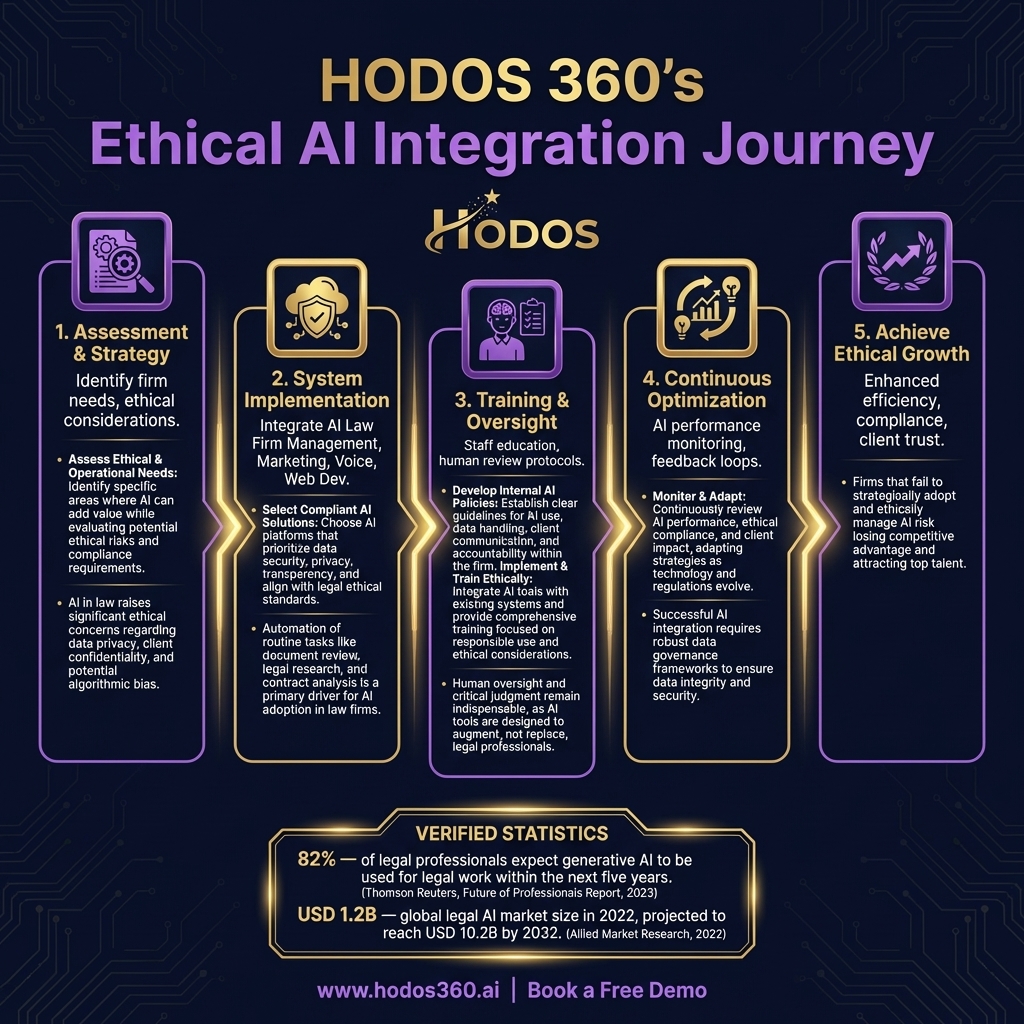
Model Rule 1.1 on Competence, for instance, has been interpreted to include technological competence, meaning attorneys must understand the benefits and risks associated with relevant technology, including AI. This places a significant burden on firms to not only adopt AI but to understand its inner workings, limitations, and potential for error or bias.
The failure to do so could lead to professional misconduct claims, underscoring the critical need for continuous education and responsible implementation.
Beyond professional ethics, a labyrinth of data privacy laws and emerging AI-specific regulations further complicates matters. The European Union's AI Act, for example, is setting a global precedent for regulating high-risk AI systems, and while not directly applicable to all jurisdictions, its principles are likely to influence future legislation worldwide.
Domestically, attorneys must contend with state-specific data privacy laws, industry-specific regulations, and the ever-present threat of cyberattacks. The integration of AI tools, particularly those involving client data for tasks like document review or predictive analytics, necessitates a meticulous approach to compliance Learn more about Legal AI ROI: Maximizing Law Firm Value in 2026.
Firms must ensure that their AI solutions are designed with privacy-by-design principles, offering robust encryption, anonymization capabilities, and clear consent mechanisms. The proliferation of AI, as often discussed in OpenAI news today, means that regulatory bodies are playing catch-up, but law firms cannot afford to wait for definitive guidelines; proactive compliance is essential.
The challenge extends to accountability. When an AI system makes a mistake—perhaps generating a false legal citation or miscategorizing a critical document—who is ultimately responsible? The attorney, the software vendor, or the data provider? Current legal frameworks are still grappling with these questions. The default often falls on the attorney who supervises the AI's use, highlighting the imperative for human oversight and critical evaluation of AI-generated output.
This underscores why a 'set it and forget it' approach to AI is perilous. Firms must establish clear protocols for AI validation, quality control, and human review at every stage where AI interacts with sensitive legal work. Navigating this minefield successfully requires not just technological prowess but a deep commitment to ethical governance and a forward-thinking approach to regulatory compliance, ensuring that AI serves justice rather than undermining it.
Beyond the Hype: Practical AI Applications for Law Firms 2026
While the ethical and regulatory hurdles are substantial, the practical applications of AI offer transformative potential for law firms willing to navigate these complexities responsibly. Moving beyond the speculative hype, 2026 sees AI firmly entrenched in streamlining operations, enhancing legal research, and revolutionizing client engagement.
For instance, AI-powered document review tools can sift through millions of pages of discovery documents in a fraction of the time it would take human paralegals, drastically reducing costs and accelerating case timelines. This isn't about replacing human judgment but augmenting it, allowing legal professionals to focus on higher-value strategic tasks rather than tedious, repetitive work.
Predictive analytics, another burgeoning area, can analyze historical case data to forecast litigation outcomes, inform settlement strategies, and even identify potential risks, providing attorneys with an unprecedented data-driven edge. This represents a paradigm shift from reactive legal practice to proactive, insight-driven counsel.
Client intake and lead qualification, traditionally time-consuming processes, are being revitalized by AI voice assistants and intelligent chatbots.
These tools can provide 24/7 support, answer common client queries, pre-qualify leads based on specific criteria, and even schedule initial consultations, freeing up valuable human resources. This not only improves client satisfaction through immediate responses but also ensures that attorneys' time is spent on genuinely promising leads.
Furthermore, AI-driven content generation and social media automation are empowering law firms to enhance their marketing efforts dramatically. From drafting initial blog posts and social media updates to creating AI-powered video content, these platforms allow firms to maintain a robust online presence, engage potential clients, and track marketing ROI with unprecedented precision Learn more about AI Legal Startup Sandstone: Unlocking 2026's Legal Tech F....
The ability to automate mundane marketing tasks means firms can allocate their creative energy to crafting compelling narratives and building stronger client relationships.
In the realm of law firm management, AI is proving to be a game-changer. Integrated systems leverage AI for everything from automated billing and expense tracking to intelligent calendar management and workflow optimization.
This means less time spent on administrative overhead and more time dedicated to billable hours and strategic planning. Document automation, a cornerstone of efficiency, uses AI to generate complex legal documents, contracts, and briefs from templates, drastically reducing drafting time and minimizing errors. The benefits extend to case management, where AI can identify patterns, flag critical deadlines, and suggest optimal resource allocation.
The legal profession is realizing that a holistic approach to AI, integrating these diverse applications, can lead to exponential gains in productivity and profitability. This forward-looking adoption of AI is critical for any legal company aiming to thrive in the competitive legal market of 2026 and beyond.
A firm's success in this new era hinges on its ability to strategically implement and master these powerful tools.
Future-Proofing Your Practice: Strategic AI Adoption
Future-proofing a legal practice in the age of AI isn't a passive exercise; it demands a strategic, proactive approach to technology adoption. Firms that merely dabble in AI, implementing isolated tools without a cohesive strategy, risk creating more fragmentation and inefficiency. The key lies in viewing AI not as a collection of disparate gadgets, but as an integral part of a holistic ecosystem designed to enhance every aspect of the firm's operations.
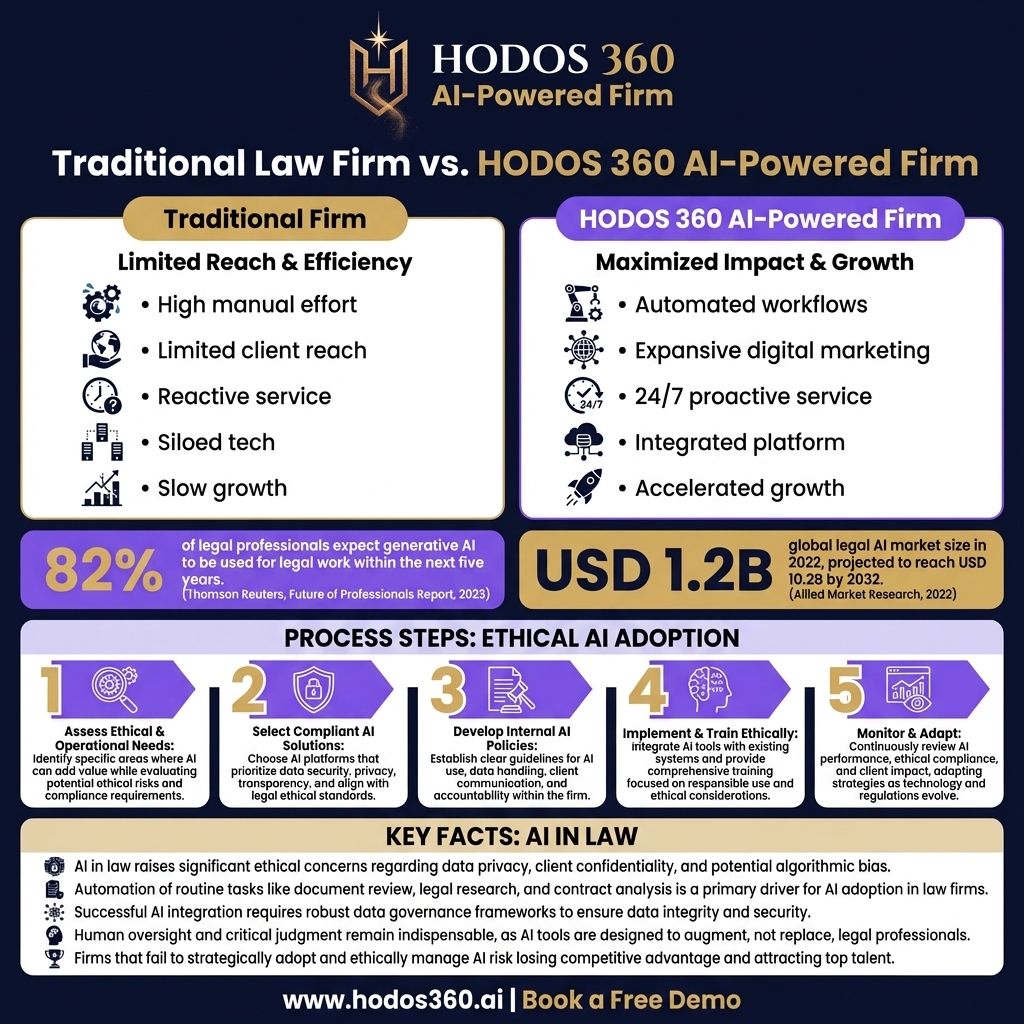
This means developing a comprehensive AI strategy that aligns with the firm's overall business objectives, client service philosophy, and ethical obligations. It involves a thorough assessment of existing workflows, identifying pain points where AI can deliver the most significant impact, and then carefully selecting and integrating solutions that work synergistically.
One critical component of strategic adoption is investment in continuous learning and change management. AI tools are only as effective as the people who use them. Firms must commit to ongoing training for all staff—from partners to paralegals—ensuring they understand not only how to operate AI systems but also how to critically evaluate their outputs and integrate them ethically into legal practice.
This cultural shift, moving from skepticism to informed engagement, is paramount. As reported by Reuters, legal tech adoption is accelerating, but the success stories often involve firms that prioritize human-AI collaboration over pure automation. It's about empowering attorneys with better tools, not replacing their expertise Learn more about Agentic AI Unleashed: 2026's Power in Legal Work.
Furthermore, selecting the right technology partner is crucial. Firms need partners who offer integrated solutions, understand the unique challenges of the legal profession, and provide robust support and ethical safeguards.
Moreover, a future-proof practice embraces an iterative approach to AI integration. This involves starting with pilot programs, measuring impact, gathering feedback, and then scaling successful initiatives.
It's about continuous improvement and adaptation, acknowledging that the AI landscape is constantly evolving, as evidenced by the rapid pace of developments in technology news today. Firms should prioritize solutions that offer scalability, flexibility, and interoperability with existing systems to avoid technological silos. By strategically adopting AI, law firms can not only mitigate the 'AI problem' but transform it into a competitive advantage.
This approach enables firms to optimize resource allocation, enhance client acquisition and retention through superior service, and ultimately, secure a resilient and prosperous future in an increasingly AI-driven legal world. The firms that will thrive in 2026 and beyond are those that strategically embed AI into their DNA, ensuring it serves as a powerful engine for innovation and ethical practice.

How HODOS 360 Leads the Way in Responsible Legal AI
In a legal landscape grappling with the 'AI problem'—the ethical dilemmas, operational inefficiencies, and competitive pressures—HODOS 360 emerges as the definitive, integrated solution for forward-thinking law firms. We don't just offer tools; we provide a complete ecosystem designed to ethically harness the power of artificial intelligence across every facet of your practice.
Our AI Law Firm Management System is a testament to this, integrating case management, billing, client intake, and document automation into a single, intuitive platform. This system is engineered to streamline your workflows with AI-powered insights, ensuring compliance, reducing administrative burden, and freeing your legal team to focus on high-value client work.
It addresses the core need for efficiency without compromising on the precision and ethical standards demanded by the legal profession, a significant step in solving the fundamental AI problem.
Beyond internal operations, HODOS 360 empowers your firm's growth through our cutting-edge AI Marketing Platform. This suite includes AI video creation, social media automation, and advanced content generation, allowing your firm to craft compelling narratives and reach target audiences with unprecedented effectiveness.
With integrated analytics and ROI tracking, you can precisely measure the impact of your marketing spend, ensuring every dollar contributes to client acquisition and brand visibility. This is crucial in today's competitive environment, where digital presence is paramount. Complementing this, our AI Voice Assistants provide 24/7 phone answering, expert lead qualification, and seamless appointment booking, ensuring no potential client goes unheard.
With multilingual support and intelligent call routing, these assistants elevate client experience and optimize your firm's intake process, directly tackling the challenge of consistent client engagement.
Finally, HODOS 360’s Web & Mobile Development services ensure your firm has a robust, modern digital foundation. We build AI-powered websites with responsive design and SEO optimization, utilizing high-converting templates that attract and retain clients.
In an era where a firm's online presence is its virtual storefront, our development solutions ensure you stand out, providing a professional, accessible, and high-performing digital experience. Each of these four pillars—Law Firm Management, Marketing, Voice Assistants, and Web Development—is built with ethical AI principles at its core, designed to enhance, not complicate, your practice.
We understand the nuances of the legal profession and offer a solution that is not only technologically advanced but also deeply aligned with your professional responsibilities.
HODOS 360 provides a holistic answer to the 'AI problem' by offering a unified, intelligent platform that integrates seamlessly, ethically, and effectively.
It’s about more than just technology; it’s about empowering your firm to thrive in the 2026 legal landscape and beyond. By choosing HODOS 360, you're not just adopting AI; you're investing in a future where efficiency, ethical practice, and unparalleled client service converge. We invite you to experience the transformative power of a truly integrated AI solution.
Don't just adapt to the future of law—shape it. Explore our services and book your personalized demo today to see how HODOS 360 can revolutionize your law firm.
- ✓Enhanced Efficiency & Productivity: Automate routine tasks like document generation, billing, and scheduling, freeing legal professionals for strategic work.
- ✓Ethical AI Implementation: Systems designed with built-in safeguards to mitigate bias, ensure data privacy, and maintain compliance with professional conduct rules.
- ✓Superior Client Engagement: 24/7 AI voice assistants and intelligent marketing platforms ensure seamless client intake, communication, and lead qualification.
- ✓Data-Driven Decision Making: AI-powered analytics provide insights into case outcomes, firm performance, and marketing ROI, enabling smarter strategic choices.
- ✓Robust Digital Presence: AI-optimized web and mobile development creates high-converting online platforms, enhancing visibility and client attraction.
- ✓Integrated Workflow Management: A unified platform connects all aspects of your firm, from case management to marketing, eliminating silos and improving collaboration.
Frequently Asked Questions
What is the primary 'AI problem' facing law firms today?+
The primary 'AI problem' stems from the dual challenge of harnessing AI's immense potential while mitigating significant risks. These include algorithmic bias leading to inequitable outcomes, critical data privacy and security concerns, the 'black box' problem of AI transparency, and the potential for AI 'hallucinations' or factual errors. Firms must navigate these issues to ensure ethical and effective AI integration.
How does HODOS 360 address AI's ethical challenges?+
HODOS 360 integrates ethical AI principles by design across all its services. Our systems are built with a focus on data privacy, transparency, and human oversight. We provide tools that augment, rather than replace, human judgment, and ensure that AI workflows are compliant with professional conduct rules like the ABA Model Rules, helping firms maintain integrity and trust.
Can AI truly improve client intake and marketing for law firms?+
Absolutely. HODOS 360's AI Voice Assistants offer 24/7 lead qualification and appointment booking, ensuring no potential client is missed. Our AI Marketing Platform automates content generation, social media, and video creation, significantly enhancing your firm's digital footprint and client acquisition strategies. These tools streamline processes, improve client experience, and provide measurable ROI.
Is HODOS 360 suitable for small and large law firms?+
Yes, HODOS 360 is designed for scalability and adaptability, making it suitable for law firms of all sizes. Our modular yet integrated platform allows firms to adopt solutions based on their specific needs and grow with the system. Whether you're a boutique practice or a large corporate firm, HODOS 360 provides tailored AI-powered tools to enhance efficiency, ethics, and growth.
What role does human oversight play with HODOS 360's AI solutions?+
Human oversight remains paramount with all HODOS 360 AI solutions. Our platform is built to augment legal professionals, not replace them. Attorneys maintain ultimate control and responsibility for legal advice and strategy. AI tools handle repetitive tasks and provide intelligent insights, allowing human experts to focus on critical analysis, ethical decision-making, and direct client interaction, ensuring accountability.