


AI Officer: The Essential Role for Modern Law Firms
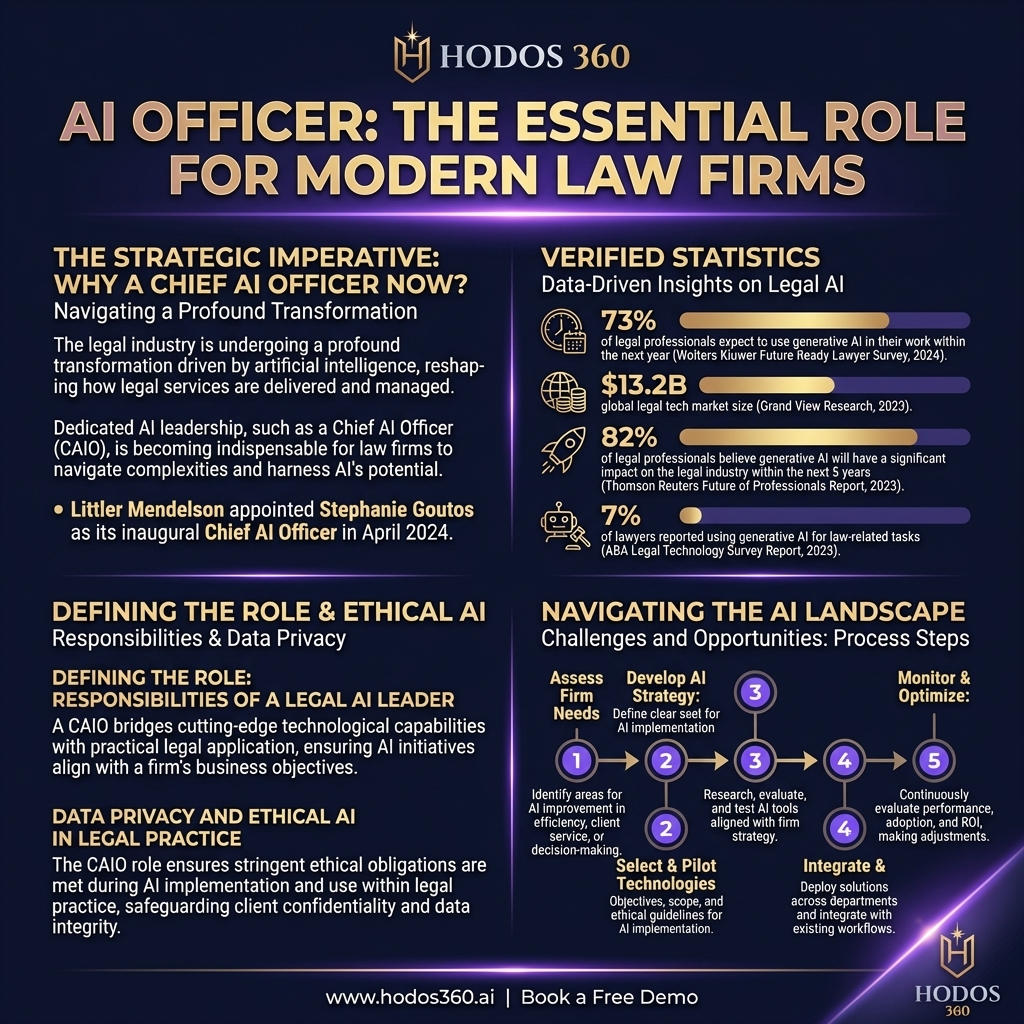
The legal industry, traditionally resistant to rapid technological shifts, is now witnessing a profound transformation driven by artificial intelligence. This shift is reshaping how legal services are delivered, managed, and consumed. A significant indicator of this evolution came in April 2026, with Littler, a global employment law firm, announcing the appointment of Stephanie Goutos as its inaugural Chief AI Officer.
This strategic move by Littler Mendelson, a firm known for its forward-thinking approach, is more than just a personnel change; it's a clear declaration that dedicated AI leadership is now indispensable for navigating the complexities and harnessing the immense potential of AI in legal practice.
Goutos, with her background in legal innovation at Gunderson Dettmer, embodies the blend of legal and technological expertise required to steer such an ambitious undertaking, signaling a new era where specialized oversight is key.
This development at Littler mirrors a broader industry trend where visionary leaders, from Sam Altman of OpenAI to Dario Amodei of Anthropic, continually highlight the necessity of expert guidance for effective AI integration.
For law firms, this means moving beyond experimental pilot projects to a structured, firm-wide AI strategy. Firms that proactively embrace this approach are not merely adapting; they are gaining significant competitive advantages in operational efficiency, client satisfaction, and talent retention. The role of a Chief AI Officer (CAIO) is to bridge the gap between cutting-edge technological capabilities and practical legal application, ensuring AI initiatives align seamlessly with the firm's business objectives and stringent ethical obligations.
This leadership position is rapidly ascending to the same strategic importance as a Chief Technology Officer or Chief Operating Officer within the modern legal enterprise.
Ready to transform your firm's operations with intelligent automation? Discover how a comprehensive AI strategy can elevate your practice. This isn't just about buzzwords; it's about tangible improvements to efficiency, client satisfaction, and your firm's bottom line. Consider that lawyers often spend upwards of 25% of their time on administrative tasks that don't directly generate revenue, such as document review, client intake, and billing.
AI tools are specifically designed to automate these repetitive, time-consuming processes, freeing up your legal professionals to focus on higher-value, strategic work. For instance, AI-powered e-discovery platforms can reduce document review time by 50-90%, drastically cutting costs and accelerating case timelines. Similarly, natural language processing (NLP) tools can analyze thousands of contracts in minutes, identifying key clauses, risks, and compliance issues with unparalleled accuracy, a task that would take human paralegals days or weeks.
Learn more about AI Lead Flow: Essential Strategies for Law Firm Growth. The global legal tech market, projected to reach $35.6 billion by 2027, underscores the widespread adoption and proven ROI of these technologies. For law firm owners, this translates to a significant competitive advantage: reduced operational overhead, faster service delivery, and the ability to handle more cases without proportionally increasing headcount.
Implementing AI means not just working smarter, but also meeting the rising client demand for more efficient and transparent legal services. Start by identifying your firm’s biggest operational bottlenecks – whether it's client onboarding, legal research, or compliance checks – and explore how targeted AI solutions can provide immediate relief and long-term strategic benefits.
- ✓The Strategic Imperative: Why a Chief AI Officer Now?
- ✓Defining the Role: Responsibilities of a Legal AI Leader
- ✓Navigating the AI Landscape: Challenges and Opportunities for Law Firms
- ✓Real-World Impact: How AI Leadership Drives Firm Success
- ✓Building an AI-Powered Future: A Blueprint for Law Firms
- ✓Key Takeaways and Next Steps
The Strategic Imperative: Why a Chief AI Officer Now?
The legal profession stands at an inflection point where artificial intelligence has transitioned from a theoretical concept to an indispensable operational reality. Littler Mendelson's appointment of Stephanie Goutos as its Chief AI Officer is a powerful testament to this shift, highlighting the critical need for specialized leadership to integrate AI strategically across all firm functions.
A 2023 Thomson Reuters report revealed that while 82% of law firms acknowledge AI's transformative potential, a significant portion lacks a coherent, firm-wide AI strategy. This disparity underscores the urgent demand for a dedicated CAIO to translate AI aspirations into actionable, impactful initiatives. Without such leadership, AI efforts often remain fragmented, leading to suboptimal investments.
The complexity of the evolving AI landscape further solidifies the CAIO's necessity. The market is saturated with rapidly advancing solutions, from large language models for legal research and contract review to sophisticated predictive analytics. Discerning genuine innovation from fleeting trends requires an individual with a profound understanding of both legal practice and AI capabilities.
Learn more about AI Marketing Automation: An Essential Guide for Law Firms. Firms without this dedicated expertise risk making costly errors in technology selection or, conversely, missing out on solutions that could provide significant operational leverage, like those offered by Harvey AI in partnership with firms such as Allen & Overy.
Moreover, client expectations are rapidly evolving, demanding greater efficiency, transparency, and value-driven legal services. They expect law firms to leverage technology to reduce costs and enhance outcomes. Firms demonstrating a clear, ethically sound AI strategy, spearheaded by a dedicated expert, will gain a crucial competitive edge in attracting and retaining top-tier clients.
This client-driven pressure is a powerful catalyst for establishing CAIO roles, as firms slow to adapt risk ceding market share to more agile competitors.
Finally, the escalating regulatory and ethical considerations surrounding AI in legal practice necessitate expert guidance. With forthcoming regulations like the EU AI Act and ongoing discussions from bodies like the American Bar Association (ABA) on responsible AI use, firms face significant compliance challenges.
A Chief AI Officer is uniquely positioned to ensure AI deployments adhere to all relevant laws, uphold stringent ethical standards, and protect client confidentiality, particularly referencing ABA Model Rule 1.6.
Data Privacy and Ethical AI in Legal Practice
The ethical implications of AI are paramount, especially in legal where client confidentiality and data integrity are non-negotiable. The stakes are incredibly high; a single data breach can lead to severe reputational damage, hefty regulatory fines, and even disbarment for attorneys, eroding client trust built over decades.
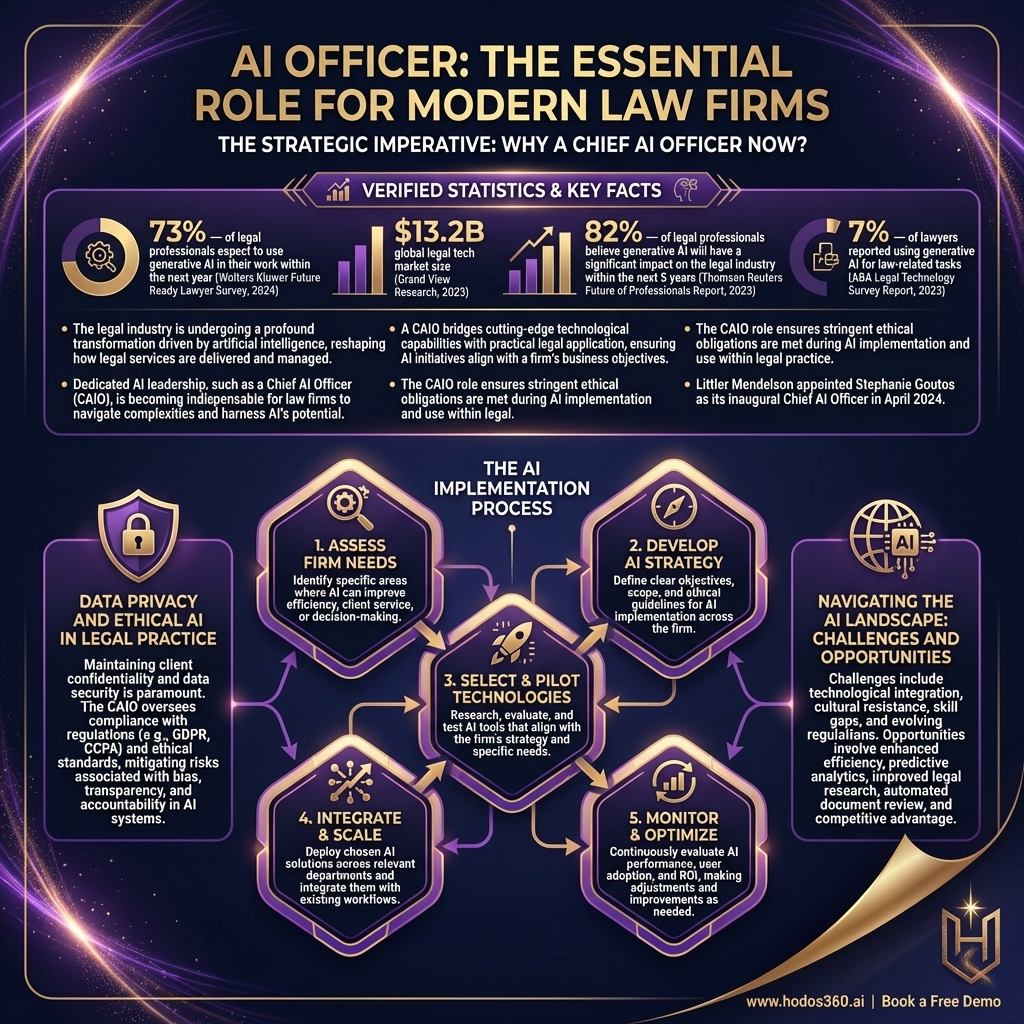
The average cost of a data breach in the legal sector was $6.75 million in 2023, according to IBM’s Cost of a Data Breach Report, underscoring the financial imperative of robust ethical oversight. The CAIO is responsible for stringent data governance, ensuring AI applications comply with GDPR, CCPA, and critically, ABA Model Rule 1.6 on client confidentiality, which mandates safeguarding all information related to representation.
This extends to understanding and adhering to evolving ethical opinions, such as those from state bar associations addressing generative AI use, which often emphasize the need for lawyers to understand the technology's limitations and risks.
Implementing a 'privacy-by-design' approach, the CAIO ensures that data anonymization and pseudonymization techniques are applied rigorously before any sensitive client information is used to train or interact with AI models.
Learn more about Voice AI: Essential Strategies for Law Firms' Future. For instance, generative AI use for drafting must prevent inadvertent disclosure of sensitive client data, demanding strict protocols to avoid 'data leakage' through prompts or outputs. This means establishing a "human-in-the-loop" requirement for reviewing all AI-generated content before it is finalized or shared.
The CAIO develops internal guidelines, such as acceptable use policies for AI tools and clear data input protocols, trains professionals on secure prompt engineering and recognizing AI's inherent limitations, and monitors AI systems for biases or privacy breaches through regular audits and anomaly detection. This proactive stance not only protects client interests and firm reputation but also fortifies the firm's long-term viability by maintaining the foundational trust essential to the legal profession.
Defining the Role: Responsibilities of a Legal AI Leader
The responsibilities of a Chief AI Officer in a law firm, as exemplified by Littler's Stephanie Goutos, are multi-faceted, encompassing strategy, ethics, innovation, and cultural transformation. This role demands a unique synthesis of legal acumen, technological expertise, and change management skills. The CAIO acts as the central orchestrator for all AI initiatives, ensuring their alignment with the firm’s overarching business objectives and ethical obligations.
A core responsibility is strategic vision and roadmap development. The CAIO constructs a comprehensive AI roadmap, outlining both short-term gains and long-term transformative goals. This involves assessing current technological capabilities, pinpointing high-impact areas for AI (e.g., e-discovery, litigation analytics, client intake, document automation), and prioritizing investments.
They continuously monitor the evolving AI landscape, evaluating vendors from Clio to emerging generative AI startups, to ensure the firm adopts best-in-class solutions and remains competitively differentiated.
Another critical area is implementation and integration oversight. The CAIO collaborates closely with IT teams, practice group leaders, and external vendors to deploy AI solutions efficiently.
Integrating an AI-powered document automation system requires technical proficiency and a deep understanding of legal document structures. Learn more about AI Marketing: Essential Strategies for Law Firm Growth. The CAIO ensures new AI tools are seamlessly woven into existing legal workflows, enhancing productivity without disruption.
This includes managing data migration, customizing AI models, and overseeing pilot programs, often leveraging comprehensive platforms like HODOS 360 for integrated firm management.
Furthermore, the CAIO is the firm's champion for AI literacy and adoption. They are tasked with fostering a firm-wide culture where legal professionals embrace AI as an indispensable tool.
This involves designing targeted training programs, demonstrating AI's practical benefits, and addressing resistance. Illustrating how AI voice assistants can manage routine client inquiries, freeing up paralegals, can significantly boost morale. This cultural shift is crucial for maximizing the utility of even the most advanced AI tools.
Elevate your firm's efficiency and client satisfaction with cutting-edge AI. Explore HODOS 360's integrated AI solutions today. This isn't just about adopting new technology; it's about fundamentally transforming how your firm operates, freeing up valuable lawyer time for strategic, client-facing work. Consider the staggering statistics: lawyers often spend upwards of 30-40% of their time on administrative and repetitive tasks, a significant drain on resources that could be better utilized.
AI solutions can dramatically mitigate this. For instance, AI-powered e-discovery tools can review millions of documents in mere hours, a task that would take human teams weeks, reducing costs by as much as 50-70% while improving accuracy. Learn more about Ethical AI in Legal Tech: An Essential Guide for Law Firms.
Similarly, intelligent legal research platforms leverage machine learning to pinpoint relevant precedents and statutes far faster than traditional methods, giving your team a critical advantage. Beyond research and review, AI excels at contract analysis, identifying critical clauses, risks, and inconsistencies in seconds, a boon for due diligence and transactional practices.
Automating client intake, scheduling, and even initial query responses via AI chatbots can enhance client responsiveness 24/7, improving their experience and freeing your staff for more complex interactions. By integrating these capabilities, HODOS 360 empowers law firm owners to not only cut operational costs and reduce human error but also to gain a significant competitive edge, attract top talent, and ultimately, deliver superior client outcomes.
The future of legal practice is here, offering unprecedented opportunities for growth and service excellence.