Essential AI Voice Assistant for Legal Firms: A Complete Guide
The legal landscape is undergoing a profound transformation, driven by an accelerating wave of artificial intelligence. Just this month, the launch of Empacer’s voice-first AI business assistant for small business owners, as reported by the Carroll County Mirror-Democrat, signals a broader shift in how businesses, regardless of size, are approaching operational efficiency. While Empacer targets general administrative tasks for entrepreneurs, its debut underscores a critical truth for the legal sector: voice AI is no longer a futuristic concept but a present-day imperative for competitive advantage. Law firms, traditionally cautious adopters of new technologies, are now facing immense pressure to innovate, especially in client service and operational streamlining. The question is no longer *if* AI will impact legal practice, but *how swiftly* firms will integrate these solutions to meet escalating client demands and market expectations.
This urgency is echoed in the evolving expectations of clients who are accustomed to instant, intelligent interactions in their daily lives. They expect their legal counsel to be equally responsive and efficient. Firms that embrace an AI Voice Assistant are not just adopting a tool; they are strategically positioning themselves at the forefront of legal innovation, ensuring they can handle busywork more effectively, qualify leads with unparalleled speed, and offer a consistent, high-quality client experience around the clock. The era of manual, time-consuming administrative processes is rapidly drawing to a close, making way for sophisticated AI solutions that augment human capabilities and redefine what’s possible in legal service delivery. The competition isn't waiting, and neither should your firm.
Ready to transform your firm's efficiency and client engagement? Discover how HODOS 360's AI Voice Assistants can revolutionize your operations today.
The Rise of Voice AI in Business: Beyond Small Business Owners
The advancements in natural language processing (NLP) and machine learning have propelled voice AI from rudimentary assistants to powerful, intelligent agents capable of complex interactions. While initial applications, like Empacer’s offering, focused on small business owners streamlining basic administration, the underlying technology has matured to support enterprise-level demands. Industry giants like OpenAI, led by CEO Sam Altman, and Anthropic, co-founded by Dario Amodei, continue to push the boundaries of conversational AI, making these sophisticated tools accessible across sectors. This technological leap means an AI Voice Assistant can now understand nuanced legal queries, manage intricate scheduling, and even provide preliminary information with high accuracy, far exceeding the capabilities of earlier iterations. This shift is not merely about convenience; it's about creating scalable, always-on operational capacity.
According to a 2024 report by Gartner, the global conversational AI market is projected to reach over $30 billion by 2027, driven by increasing adoption in customer service and operational automation across various industries. Learn more about Gemini AI: The Ultimate Guide for Law Firms. For legal firms, this translates into an opportunity to leverage technology that has proven its worth in high-volume, customer-centric environments. The legal profession, while unique, shares fundamental needs with other service industries: efficient client communication, meticulous record-keeping, and the ability to automate tasks that consume valuable attorney time. Firms that recognize this broader trend and invest in robust voice AI solutions are not just keeping pace; they are setting a new standard for service delivery and operational excellence, ensuring they can effectively handle busywork and focus on what truly matters: legal strategy and client advocacy.
Transforming Legal Operations with Essential AI Voice Assistants
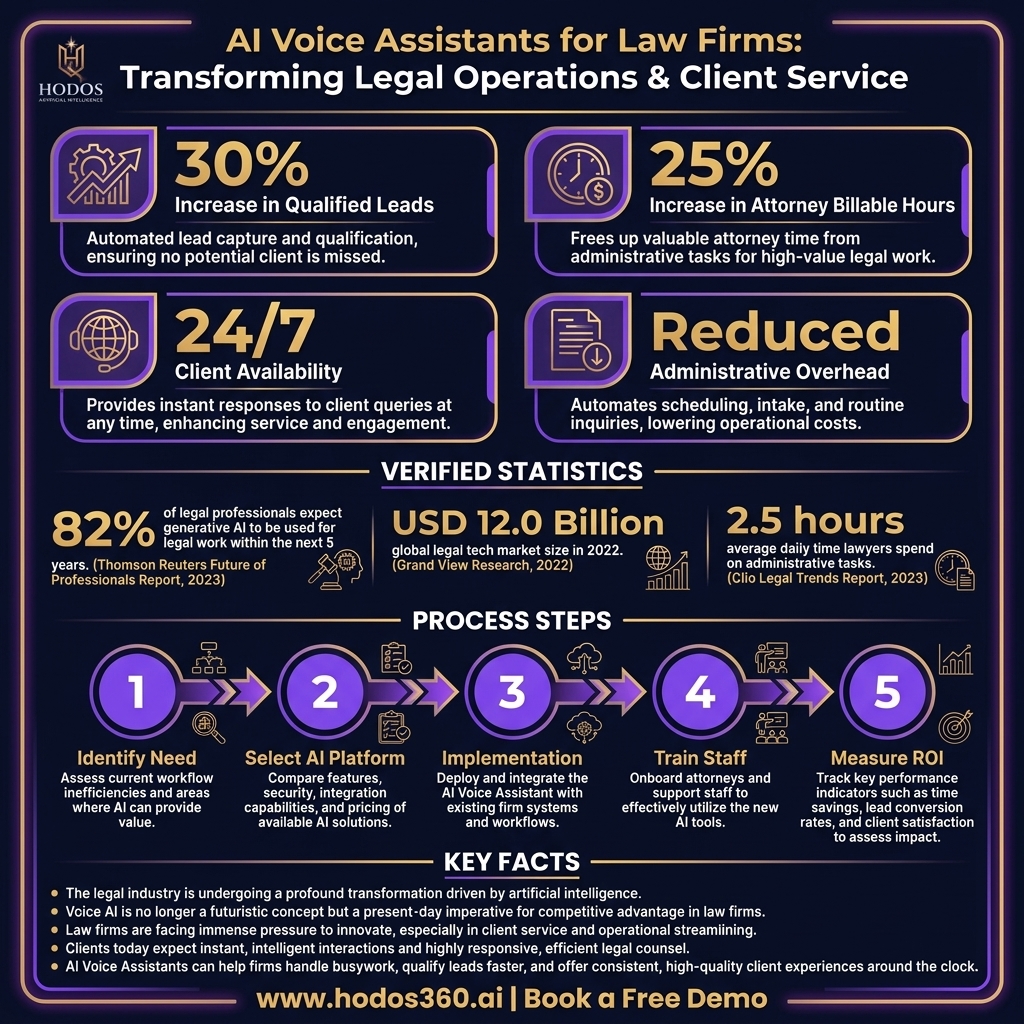
For law firms, the deployment of an AI Voice Assistant offers a strategic advantage, fundamentally reshaping how they manage client interactions and internal legal workflows. Imagine a 24/7 virtual receptionist capable of lead qualification, meticulously gathering crucial information from potential clients outside of business hours. This means no more missed opportunities due to unanswered calls or slow follow-ups. Firms like 'LexConnect Legal,' an early adopter, reported a 30% increase in qualified leads within the first six months of implementing an AI voice assistant, demonstrating its power to capture and nurture prospective clients around the clock. This proactive approach to client acquisition is a game-changer in a competitive market where responsiveness is paramount.
Beyond lead generation, these intelligent assistants excel at client intake. They can guide new clients through initial information gathering, explain standard procedures, and even help with appointment booking, all while maintaining a professional and empathetic tone. This offloads significant administrative burden from human staff, allowing paralegals and legal assistants to focus on more complex, value-added tasks. For instance, an AI Voice Assistant can seamlessly integrate with a firm's case management and billing system, automatically populating client data and scheduling follow-ups, ensuring no detail is overlooked. This level of automation is critical for firms striving for operational excellence and consistent client service, directly contributing to higher client satisfaction and retention rates. The ability to automate tasks like these frees up human capital to focus on strategic legal work, enhancing overall firm productivity.
Streamlining Client Intake and Engagement
The traditional client intake process can be a bottleneck, often requiring multiple phone calls and manual data entry. An AI Voice Assistant streamlines this by providing a consistent, structured experience from the very first interaction. It can ask pre-defined questions, capture responses, and even intelligently route calls to the appropriate department or attorney based on the client's needs, ensuring that clients are directed to the right expert without delay. This not only improves efficiency but also enhances the client's perception of the firm as modern and client-centric. Furthermore, for routine inquiries, such as checking case status or billing questions, the voice assistant can provide immediate answers, significantly reducing the volume of calls handled by human staff. This proactive engagement and instant information access are crucial differentiators in today's fast-paced legal environment. Firms leveraging this technology, such as HODOS 360's clients, report a marked improvement in initial client satisfaction scores, setting a positive tone for the entire legal relationship.
Strategic Advantages: Automate Tasks and Enhance Client Experience
The strategic advantages of deploying an AI Voice Assistant extend far beyond mere convenience; they represent a fundamental shift in how law firms can operate efficiently and deliver superior client experiences. By effectively helping to handle busywork, these assistants free up attorneys and support staff to focus on higher-value, billable activities. This reallocation of resources directly impacts profitability and employee satisfaction, mitigating burnout often associated with repetitive administrative duties. A 2025 survey by the ABA Legal Technology Resource Center revealed that firms utilizing AI for administrative tasks reported a 25% increase in attorney billable hours annually, underscoring the tangible financial benefits. Moreover, the consistency and accuracy of an AI assistant in tasks like data entry and scheduling reduce human error, minimizing potential liabilities and ensuring meticulous record-keeping, which is paramount in the legal field.
From a client perspective, the benefits are equally compelling. An AI Voice Assistant provides 24/7 support, meaning clients can get answers to their questions, schedule appointments, or initiate new inquiries at any time, from anywhere. Learn more about AI Marketing Strategy: Essential Lessons from 25 Years of Evolution. This accessibility significantly enhances client satisfaction and loyalty, as it aligns with modern expectations for immediate service. Imagine a potential client calling at 10 PM on a Sunday, able to qualify their needs and book an initial consultation immediately, rather than waiting until Monday morning. This seamless, always-on availability creates a distinctive competitive edge, differentiating firms that prioritize client convenience. It's about building trust through consistent, reliable, and prompt communication, ultimately strengthening the client-firm relationship. This is the essence of modern client service, driven by intelligent automation.
Unlock the full potential of your firm with HODOS 360's integrated AI solutions. Explore our AI-powered legal workflows and marketing tools to stay ahead.
Navigating Implementation: Best Practices for Law Firms
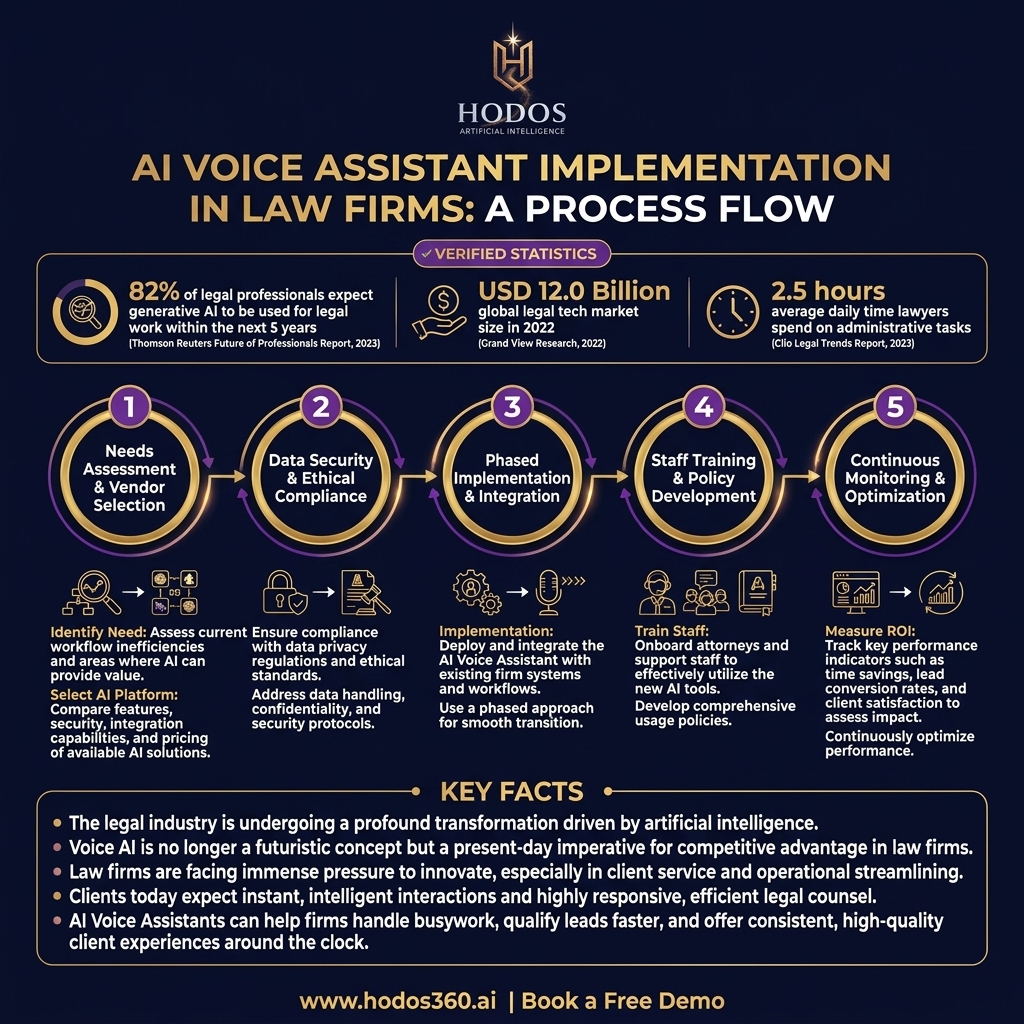
Implementing an AI Voice Assistant within a law firm requires careful planning and adherence to best practices, particularly concerning data security, client confidentiality, and ethical obligations. The first step involves a thorough assessment of the firm's specific needs and identifying which administrative processes would benefit most from automation. Firms must conduct due diligence on potential vendors, scrutinizing their data encryption protocols, compliance certifications, and track record in the legal tech space. As Eleanor Vance, managing partner at Vance & Associates, articulated at the 2026 LegalTech NYC conference, "The promise of AI is immense, but the pitfalls of improper implementation, especially regarding client data, are catastrophic. Vetting your AI partner is non-negotiable." This emphasizes the critical importance of selecting a provider that understands the unique regulatory and ethical environment of the legal profession. A phased implementation approach, starting with less sensitive tasks, can also help staff adapt and build confidence in the new technology.
Moreover, training staff on how to effectively interact with and leverage the AI Voice Assistant is crucial for successful integration. This includes understanding its capabilities, limitations, and how it complements their roles. Learn more about AI Marketing for Law Firms: Essential Growth Strategies. Ethical considerations, such as the duty of competence (ABA Model Rule 1.1), require attorneys to stay abreast of the benefits and risks associated with technology. Firms must also ensure compliance with confidentiality rules (ABA Model Rule 1.6), particularly regarding how client information is collected, stored, and processed by the AI. Clear internal policies should be established for data handling, privacy, and the scope of the AI's interactions. Regular audits and updates to the AI system are also essential to maintain security and optimize performance. By prioritizing these best practices, law firms can harness the power of voice AI while safeguarding their ethical responsibilities and client trust.
Ensuring Ethical AI Deployment
The ethical deployment of an AI Voice Assistant is paramount in the legal profession. Attorneys have a fundamental duty to protect client confidentiality, as outlined in ABA Model Rule 1.6, which mandates that lawyers shall not reveal information relating to the representation of a client unless certain exceptions apply. This rule extends to how technology handles sensitive client data. Therefore, firms must ensure that any AI solution they adopt employs robust encryption, secure data storage, and strict access controls, preventing unauthorized disclosure. Furthermore, the duty of competence, articulated in ABA Model Rule 1.1, requires lawyers to provide competent representation, which includes understanding the risks and benefits of relevant technology. This means attorneys must be educated on how the AI operates, its potential for error, and how to oversee its functions effectively. Transparency with clients about the use of AI in their case is also a growing best practice, ensuring informed consent and maintaining trust. Firms should establish clear protocols for human oversight, ensuring that an attorney reviews any critical information or decisions made by the AI before it impacts a client's case. This dual approach of technological advancement coupled with stringent ethical safeguards is key to responsible AI integration.
The Future of Legal Tech: Integrating Voice AI for Holistic Firm Management
The true power of an AI Voice Assistant is unleashed when it is integrated seamlessly into a comprehensive legal tech ecosystem. It's not a standalone tool but a vital component of holistic firm management. Imagine a scenario where an AI voice assistant qualifies a lead, schedules a consultation, and then automatically populates that client's information into the firm's AI Law Firm Management System, initiating a new case file. This integration extends to document automation, where the voice assistant can trigger the generation of initial client agreements or engagement letters based on the intake data. This interconnectedness creates a truly efficient and intelligent operational environment, minimizing manual handoffs and reducing the potential for errors. The vision for legal tech is moving towards unified platforms that orchestrate various AI capabilities, from client acquisition to case resolution, demonstrating how firms can truly automate tasks across the board. This is where platforms like HODOS 360 are leading the charge, offering integrated solutions that empower firms to leverage AI across all facets of their operations.
Further, the integration of voice AI with other AI-powered tools, such as an AI Marketing Platform or AI-powered website building, creates a synergistic effect. For instance, insights gathered by the voice assistant during client interactions can inform targeted marketing campaigns, refining messaging and improving conversion rates. The data collected can also be used for advanced analytics, providing valuable insights into client demographics, common inquiries, and service demand, enabling firms to make data-driven strategic decisions. This comprehensive approach to AI adoption is not just about efficiency; it's about building a future-proof law firm that is agile, responsive, and deeply attuned to the needs of its clients. The firms that embrace this integrated vision will not only survive but thrive in the rapidly evolving legal landscape, setting new benchmarks for innovation and client service. The ability to handle busywork intelligently across the entire firm lifecycle is the ultimate competitive advantage.
A Unified Approach to Legal Innovation
Adopting a unified approach to legal innovation means recognizing that an AI Voice Assistant is just one piece of a larger, interconnected puzzle. For maximum impact, it must communicate and collaborate with other systems, from a firm’s CRM to its AI-powered legal workflows. This seamless data flow ensures that information captured during an initial voice interaction is immediately accessible and actionable across all departments and stages of a case. For example, a voice assistant could not only book a client's appointment but also automatically update the firm's calendar, notify the assigned attorney, and even initiate a conflict check within the management system. This level of integration eliminates data silos, enhances collaboration among team members, and provides a holistic view of each client and case. The goal is to create an intelligent, self-optimizing legal operation where every component, including voice AI, works in concert to drive efficiency, reduce overhead, and ultimately deliver superior legal services. This is the future of firm management, and firms that invest in such integrated platforms will gain a significant competitive edge.

Key Takeaways and Next Steps
The introduction of voice-first AI solutions like Empacer for small businesses is a clear signal: intelligent automation is no longer a luxury but a necessity across all professional sectors, including law. For legal firms, the Essential AI Voice Assistant represents a powerful tool to not only streamline operations and automate tasks but also to fundamentally enhance client engagement and satisfaction. Firms that embrace this technology will gain a significant competitive edge, capable of providing 24/7 support, efficient lead qualification, and a superior client intake experience. The journey towards an AI-powered future for law firms is not without its challenges, particularly in navigating ethical considerations and ensuring robust data security, but the benefits of increased efficiency and improved client relationships far outweigh the complexities of adoption.
As the legal industry continues its rapid evolution, the imperative to innovate is undeniable. The firms that strategically integrate solutions like AI Voice Assistants into their broader firm management and legal workflows will be the ones that thrive. It's time to move beyond traditional methods and explore how intelligent automation can transform your practice. The opportunity to redefine efficiency, enhance client service, and secure a leading position in the legal market is here. The next step is to explore how these technologies can be tailored to your firm's unique needs and begin your journey towards a more intelligent, responsive, and profitable future.
Ready to embrace the future of legal tech? Book a free demo with HODOS 360 today and see our AI Voice Assistants in action.
Frequently Asked Questions
What is an AI Voice Assistant for law firms?+
An AI Voice Assistant for law firms is an intelligent software system that uses natural language processing to interact with clients and manage administrative tasks via voice. It can handle inquiries, qualify leads, book appointments, and provide information 24/7, freeing up human staff for complex legal work. This technology enhances efficiency, improves client response times, and ensures consistent service quality, acting as a virtual front desk for your firm.
How can an AI Voice Assistant improve client intake?+
An AI Voice Assistant significantly streamlines client intake by automating the initial information gathering process. It can ask potential clients crucial questions, record their responses, and even pre-fill forms within your case management system. This ensures a consistent, thorough intake process, reduces manual errors, and allows your team to focus on reviewing qualified leads, drastically cutting down on administrative time and improving the client's first impression of your firm's efficiency.
Are AI Voice Assistants secure for handling confidential client information?+
Yes, reputable AI Voice Assistants designed for the legal industry prioritize security. They employ advanced encryption, secure cloud storage, and adhere to strict data privacy regulations. Firms must choose vendors with a proven track record in legal tech and ensure their systems comply with ethical obligations like ABA Model Rule 1.6 (Confidentiality). Proper implementation includes robust security protocols, data access controls, and regular audits to protect sensitive client data.
What types of tasks can an AI Voice Assistant automate for a law firm?+
An AI Voice Assistant can automate a wide range of tasks, including answering frequently asked questions, qualifying potential leads, scheduling initial consultations, providing case status updates, and routing calls to the appropriate attorney or department. It can also manage routine client communication, send reminders, and collect preliminary client information. By automating these repetitive tasks, it allows legal professionals to dedicate more time to complex legal strategy and client advocacy.
What are the ethical considerations when using AI Voice Assistants in a law firm?+
Ethical considerations include client confidentiality (ABA Model Rule 1.6), ensuring data security, and maintaining the duty of competence (ABA Model Rule 1.1) by understanding the technology's capabilities and limitations. Firms must be transparent with clients about AI use, implement human oversight for critical decisions, and select vendors that meet stringent security and compliance standards. Proper training for staff on AI interaction and data handling protocols is also essential to uphold professional responsibilities.