

AI Marketing Strategy: Essential Lessons from 25 Years of Evolution
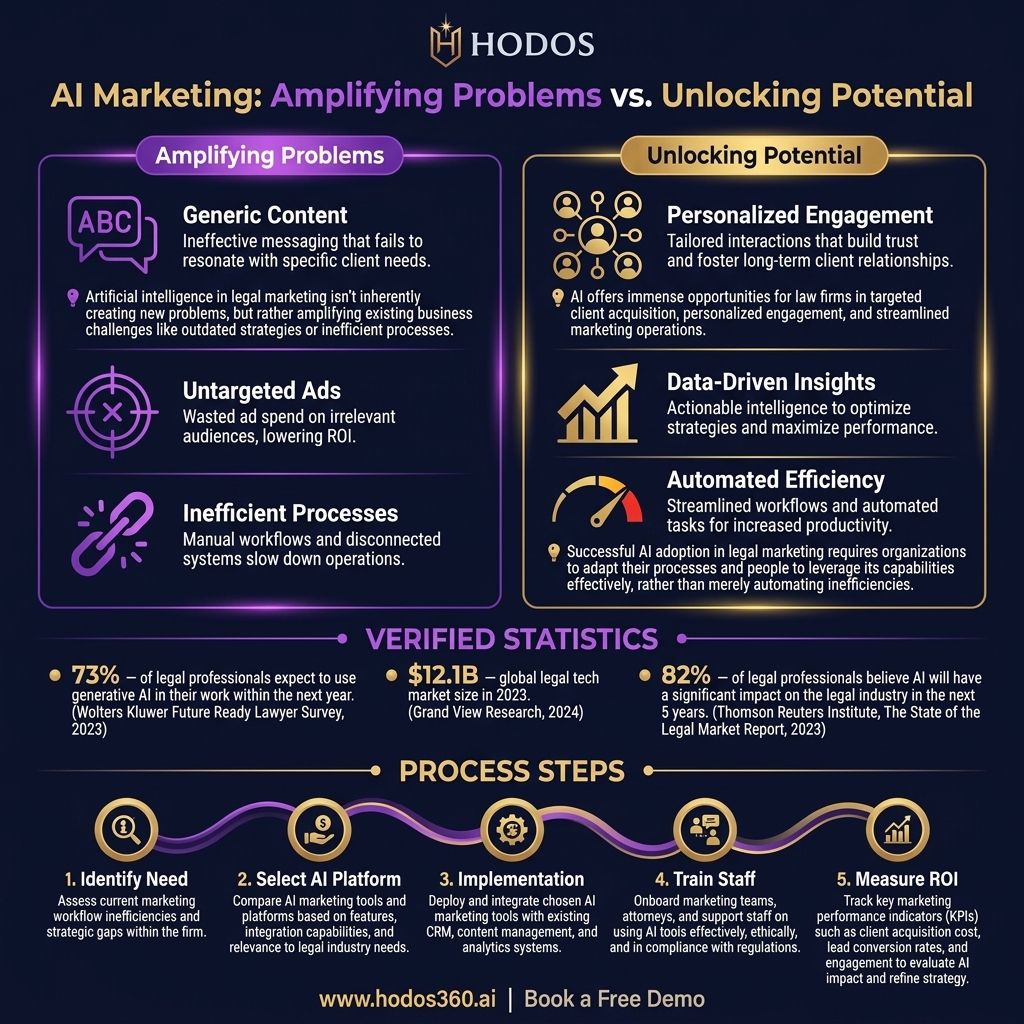
In an era defined by rapid technological shifts, the legal industry stands at a pivotal moment, grappling with how artificial intelligence is reshaping every facet of practice—especially marketing. Just as On-Target!, a veteran marketing firm, recently celebrated 25 years of marketing evolution, their observation resonates deeply within the legal sector: AI isn't inherently creating new problems, but rather amplifying existing business challenges. For law firms, this means that outdated strategies, inefficient processes, or a lack of clear value proposition will only become more glaringly apparent when scaled by powerful AI tools. The promise of AI in legal marketing is immense, offering unprecedented opportunities for targeted client acquisition, personalized engagement, and streamlined operations, yet its effectiveness hinges entirely on the foundational strategy a firm employs.
The journey of legal marketing has transformed dramatically, moving from static Yellow Pages ads and local referrals to complex digital ecosystems involving SEO, social media, and sophisticated content strategies. Today, the integration of an AI marketing strategy is not merely an advantage but a necessity for law firms aiming for sustainable growth and competitive differentiation. Firms that embrace this technological shift with a clear, well-defined strategy are poised to outperform those who view AI as a simple plug-and-play solution. As Brad Smith, Vice Chair and President of Microsoft, often emphasizes, successful AI adoption isn't just about the technology itself; it's about how organizations adapt their processes and people to leverage its capabilities effectively. This requires a deep understanding of one's existing marketing landscape, identifying historical pain points, and strategically deploying AI to address them, rather than merely automating inefficiencies.
- ✓The Evolution of Legal Marketing: From Print to AI-Powered Platforms
- ✓AI: Amplifying Existing Problems or Unlocking New Potentials for Law Firms?
- ✓Crafting a Robust AI Marketing Strategy: Lessons from Industry Leaders
- ✓Leveraging AI Marketing Platforms for Sustainable Law Firm Growth
- ✓Future-Proofing Your Law Firm's Marketing in the AI Era
- ✓Key Takeaways and Next Steps
The Evolution of Legal Marketing: From Print to AI-Powered Platforms
For decades, legal marketing was a relatively static field, heavily reliant on traditional methods. Think local newspaper advertisements, entries in the Yellow Pages, and, crucially, word-of-mouth referrals. The emphasis was on local presence and established reputation. However, the late 20th and early 21st centuries ushered in the digital age, fundamentally altering how law firms connected with potential clients. The internet introduced websites as virtual storefronts, and early search engine optimization (SEO) became a nascent but vital tool for visibility. Firms began to understand the power of digital footprints, albeit often through rudimentary means.
The past decade accelerated this legal marketing evolution exponentially. Learn more about AI Website Readability: Essential Strategies for Law Firms. Social media platforms, content marketing, and email campaigns became indispensable. Law firms started investing in sophisticated analytics to track website traffic, lead generation, and client conversion rates. This shift demanded a more strategic, data-driven approach to client acquisition. Yet, even with these advancements, many firms struggled with the sheer volume of data, the complexity of managing multiple digital channels, and the challenge of personalizing outreach at scale. This set the stage for the next major disruption: artificial intelligence, promising to offer smarter tools and unprecedented efficiency.
AI: Amplifying Existing Problems or Unlocking New Potentials for Law Firms?
The core insight from On-Target!'s 25-year reflection—that AI amplifies existing business challenges—is particularly poignant for law firms. Consider a firm with an ill-defined target audience, a generic brand message, or an inefficient client intake process. When such a firm deploys an AI marketing platform, it risks merely generating more irrelevant content, sending more untargeted emails, or accelerating the misqualification of leads. The AI, in this scenario, doesn't solve the underlying strategic vacuum; it merely scales the problem, potentially wasting resources and alienating prospective clients. This is a critical distinction, highlighted by legal tech leaders like Jack Newton, CEO of Clio, who consistently advocates for lawyers to integrate technology strategically, not just for the sake of it.
Conversely, for firms with a clear strategic vision, a deep understanding of their ideal client, and well-defined service offerings, AI becomes a powerful catalyst. Learn more about Marketing AI: Essential Tools to 10x Law Firm Growth. It transforms marketing from a labor-intensive, often hit-or-miss endeavor into a precise, data-driven engine for law firm growth. AI can analyze vast datasets to identify emerging trends, predict client needs, and personalize outreach with astonishing accuracy. Imagine an AI-powered platform identifying a surge in queries related to specific regulatory changes and instantly generating tailored content, scheduling social media posts, and even crafting personalized email sequences for potential clients. This is the promise of AI when applied to a sound marketing foundation, turning potential pitfalls into pathways for unprecedented success.
Understanding Your Firm's Core Marketing Challenges
Before diving into AI solutions, law firms must conduct an honest audit of their current marketing landscape. What are the persistent bottlenecks in client acquisition? Is it lead generation, conversion rates, or client retention? Are your firm's unique selling propositions clearly articulated and consistently communicated? According to a recent ABA TechReport, while AI adoption is growing, many firms still struggle with basic digital marketing competencies. Identifying these fundamental weaknesses—whether it's inconsistent branding, a lack of engaging content, or poor SEO performance—is the first step. Learn more about Legal AI Coordination: An Essential Shift for Law Firms. AI can then be strategically deployed to address these specific pain points, rather than blindly automating a flawed process. This introspective analysis ensures that AI serves as a solution accelerator, not just an amplification of existing inefficiencies.
Crafting a Robust AI Marketing Strategy: Lessons from Industry Leaders
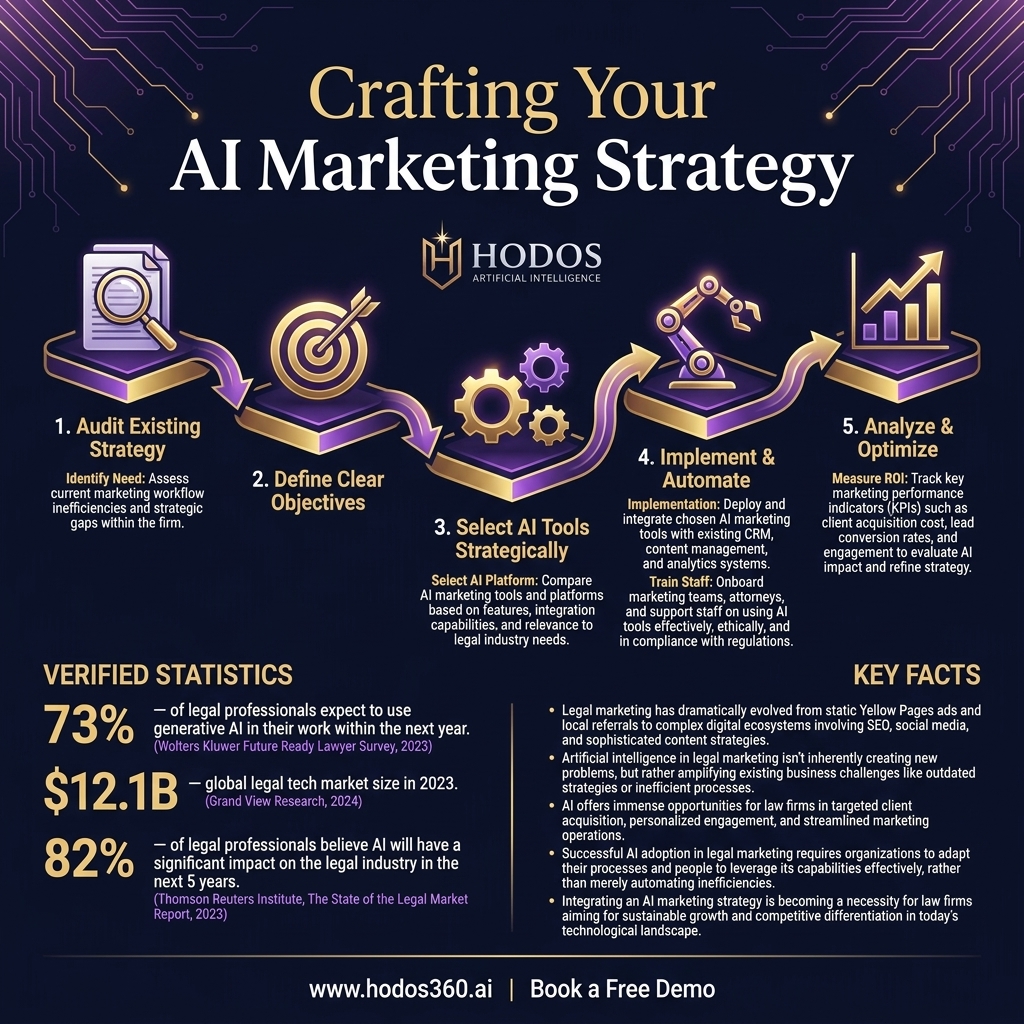
Building an effective AI marketing strategy for a law firm requires more than just purchasing the latest software; it demands a shift in mindset and a commitment to strategic planning. Leading firms and legal tech innovators are demonstrating that success hinges on integrating AI into a holistic marketing framework. For instance, firms like Allen & Overy, which famously partnered with Harvey AI, are not just using AI for legal research but exploring its potential to inform and refine their client outreach and business development strategies. Their approach emphasizes that technology must serve a clear business objective, whether it's enhancing client experience or identifying new market opportunities. This strategic alignment ensures that AI tools are purposeful, contributing directly to measurable outcomes.
The most successful AI marketing strategies are built on pillars of hyper-personalization, multi-channel integration, and continuous data analysis. Learn more about AI Voice Assistants: The Essential Evolution of Legal Client Interaction. This means leveraging AI to segment audiences with unprecedented precision, delivering highly relevant content across various platforms—from targeted social media campaigns to personalized email newsletters. Furthermore, a robust strategy involves predictive analytics, allowing firms to anticipate client needs and market shifts, positioning them proactively. This proactive stance, driven by AI's analytical prowess, transforms marketing from a reactive expense into a strategic investment, yielding tangible returns on investment (ROI). It's about using AI to make smarter tools truly smart, guided by human expertise and strategic foresight.
Data-Driven Decisions: The New Imperative in Legal Marketing
The advent of AI has made data analytics for law firms not just beneficial, but absolutely imperative. AI marketing platforms excel at collecting, processing, and interpreting vast amounts of data—from website visitor behavior and engagement metrics to social media trends and client feedback. This allows firms to move beyond guesswork and make truly data-driven decisions. Instead of assuming what content resonates, AI can tell you precisely which articles drive conversions or what keywords attract the most qualified leads. Learn more about AI Regulatory Monitoring: Essential for Law Firm Compliance. This feedback loop is crucial for iterative improvement, allowing firms to constantly refine their strategies, optimize campaigns, and allocate resources more effectively. Firms that master this data-driven approach, using AI to turn raw information into actionable insights, will gain a significant competitive edge in the crowded legal market.
Leveraging AI Marketing Platforms for Sustainable Law Firm Growth
The practical application of AI marketing platforms offers a myriad of benefits for law firms seeking sustainable law firm growth. Tools powered by AI can automate repetitive tasks, freeing up valuable attorney and marketing staff time for more strategic initiatives. For example, AI video creation can quickly generate engaging content for social media and website use, while social media automation ensures consistent brand presence and engagement. Content generation AI can assist in drafting blog posts, legal alerts, and website copy, ensuring a steady stream of valuable information for potential clients. Beyond content, AI-driven analytics provide deep insights into campaign performance, allowing for real-time adjustments and optimization, ensuring every marketing dollar is spent effectively.
Consider the comprehensive capabilities of platforms like HODOS 360's AI Marketing Platform. Learn more about AI in MarTech: The Ultimate Guide to Predictive Power. It integrates AI video creation, social media automation, content generation, and sophisticated analytics with ROI tracking, providing a unified ecosystem for legal marketing. This holistic approach means firms can not only create compelling campaigns but also accurately measure their impact on client acquisition. By automating routine tasks and providing actionable insights, such platforms enable law firms to scale their marketing efforts without proportionally increasing their overhead. This efficiency is critical for smaller to mid-sized firms looking to compete with larger entities, offering them access to cutting-edge tools previously available only to those with extensive marketing budgets.
Ethical Considerations and Client Trust in AI Marketing
While the benefits of AI in marketing are clear, law firms must navigate the ethical landscape with diligence. The legal profession is bound by strict rules regarding advertising, client confidentiality, and professional conduct. ABA Model Rule 7.1, for instance, mandates that lawyers' communications about their services must not be false or misleading. When using AI for content generation or targeted advertising, firms must ensure that the output adheres to these standards, maintaining transparency and accuracy. Similarly, the use of client data for personalized marketing must strictly comply with ABA Model Rule 1.6 on confidentiality and relevant data privacy regulations like GDPR or CCPA. Building and maintaining client trust requires not just effective marketing, but also ethical stewardship of information and responsible use of powerful AI tools. Firms must be transparent about their use of AI, ensuring clients understand how their information is handled and how marketing communications are generated.
Future-Proofing Your Law Firm's Marketing in the AI Era
The legal marketing landscape will continue its rapid digital transformation, driven by advancements in AI and evolving client expectations. Future-proofing your law firm's marketing strategy means embracing a culture of continuous learning and adaptation. This involves staying abreast of new AI capabilities, understanding their ethical implications, and being agile enough to integrate them into your firm's operations. Predictive marketing, where AI anticipates future client needs and market trends, will become even more sophisticated, allowing firms to offer proactive legal solutions rather than reactive services. Voice search optimization, augmented reality experiences, and even deeper integration of AI into client relationship management systems are on the horizon, promising even more personalized and immersive client journeys.
Ultimately, while AI provides unprecedented tools and efficiencies, the human element remains irreplaceable. Attorneys and legal marketing professionals will transition from purely execution-focused roles to strategic oversight, leveraging AI as an intelligent assistant. The ability to craft compelling narratives, build genuine client relationships, and exercise sound legal judgment will always be paramount. AI will empower these human strengths, allowing legal professionals to focus on the high-value, empathetic aspects of their work. Firms that invest in both cutting-edge technology and the continuous development of their human talent will be best positioned to thrive in this evolving AI era, ensuring their marketing efforts are not just effective, but truly future-proof.

Key Takeaways and Next Steps
The insights from On-Target!'s 25 years in marketing underscore a crucial truth for law firms: AI will amplify what's already there. If your foundational marketing strategy is robust, AI will accelerate your growth; if it's flawed, AI will magnify those flaws. The key is to approach AI not as a magic bullet, but as a powerful strategic partner. Law firms must prioritize understanding their core challenges, crafting a clear AI marketing strategy, and then leveraging sophisticated platforms to execute. This involves making data-driven decisions, ensuring ethical compliance, and continuously adapting to the rapid pace of technological change.
To truly thrive in this new era, law firms need integrated solutions that streamline operations, enhance client engagement, and drive measurable results. Exploring how AI-powered tools can transform your firm's marketing efforts is no longer optional. Discover how HODOS 360's AI Marketing Platform can enhance your client acquisition strategies and streamline your digital presence. Schedule a free consultation today to learn more about our comprehensive solutions tailored for the modern legal practice.
Frequently Asked Questions
How does AI marketing differ from traditional digital marketing for law firms?+
AI marketing leverages advanced algorithms and machine learning to automate, personalize, and optimize marketing efforts at scale. Unlike traditional digital marketing, which often relies on manual analysis and broad segmentation, AI can predict client behavior, generate tailored content, and optimize campaigns in real-time, leading to more efficient client acquisition and higher ROI for law firms.
What common marketing problems can AI amplify if not addressed first?+
AI can amplify problems such as an ill-defined target audience, generic messaging, inefficient client intake processes, or a lack of clear value proposition. If these foundational issues exist, AI will simply scale the generation of irrelevant content or misqualified leads, wasting resources and potentially damaging a firm's reputation rather than improving its marketing effectiveness.
What ethical considerations should law firms keep in mind when using AI for marketing?+
Law firms must ensure AI-generated content and targeted advertising comply with ABA Model Rule 7.1 (no false or misleading communications) and Model Rule 1.6 (client confidentiality). Transparency about AI use, responsible data handling, and adherence to privacy regulations (like GDPR) are crucial to maintain client trust and professional integrity in AI marketing efforts.
How can AI marketing platforms help with client acquisition for law firms?+
AI marketing platforms enhance client acquisition by enabling hyper-personalization of content, automating social media engagement, and providing advanced analytics for lead qualification. They can identify ideal client profiles, track engagement across channels, and optimize campaigns for higher conversion rates, ensuring firms attract and retain the most valuable clients efficiently.
What are the key components of a robust AI marketing strategy for law firms?+
A robust AI marketing strategy for law firms includes a clear understanding of the target audience, well-defined marketing goals, strategic deployment of AI tools for content creation, social media automation, and analytics, and a commitment to continuous data-driven optimization. It also requires ethical compliance and a focus on integrating AI as a strategic enabler rather than a standalone solution.