

Essential Harvard AI & Web Development Courses for Law Firms
The legal profession, long perceived as a bastion of tradition, is now standing at an undeniable crossroads. The recent announcement from financialexpress.com, detailing Harvard University's launch of six free online courses in AI, web development, and programming, isn't just an academic footnote—it's a clarion call for every law firm owner and legal professional.
This initiative, by one of the world's most prestigious institutions, underscores a seismic shift: technological literacy is no longer an optional asset but a fundamental requirement for legal competence and competitive survival. As AI tools like generative AI models from OpenAI and Google rapidly reshape legal research, document review, and client interaction, law firms are grappling with the urgent need to upskill their teams, not just to leverage these tools but to understand their underlying mechanics and ethical implications.
The tension between maintaining traditional legal rigor and embracing disruptive innovation has never been more acute, creating a landscape where proactive adaptation is the only path forward.
This trend isn't isolated; it reflects a broader industry-wide acknowledgment that the digital revolution has finally arrived at the courthouse doors.
Firms like Allen & Overy, for instance, have already demonstrated a significant commitment to AI by partnering with legal AI startup Harvey, integrating its generative AI platform into their operations. This move, championed by figures like A&O’s global head of advanced delivery, David Wakeling, highlights a growing divide: firms that invest in technological fluency are gaining unprecedented efficiencies, while those that hesitate risk falling behind.
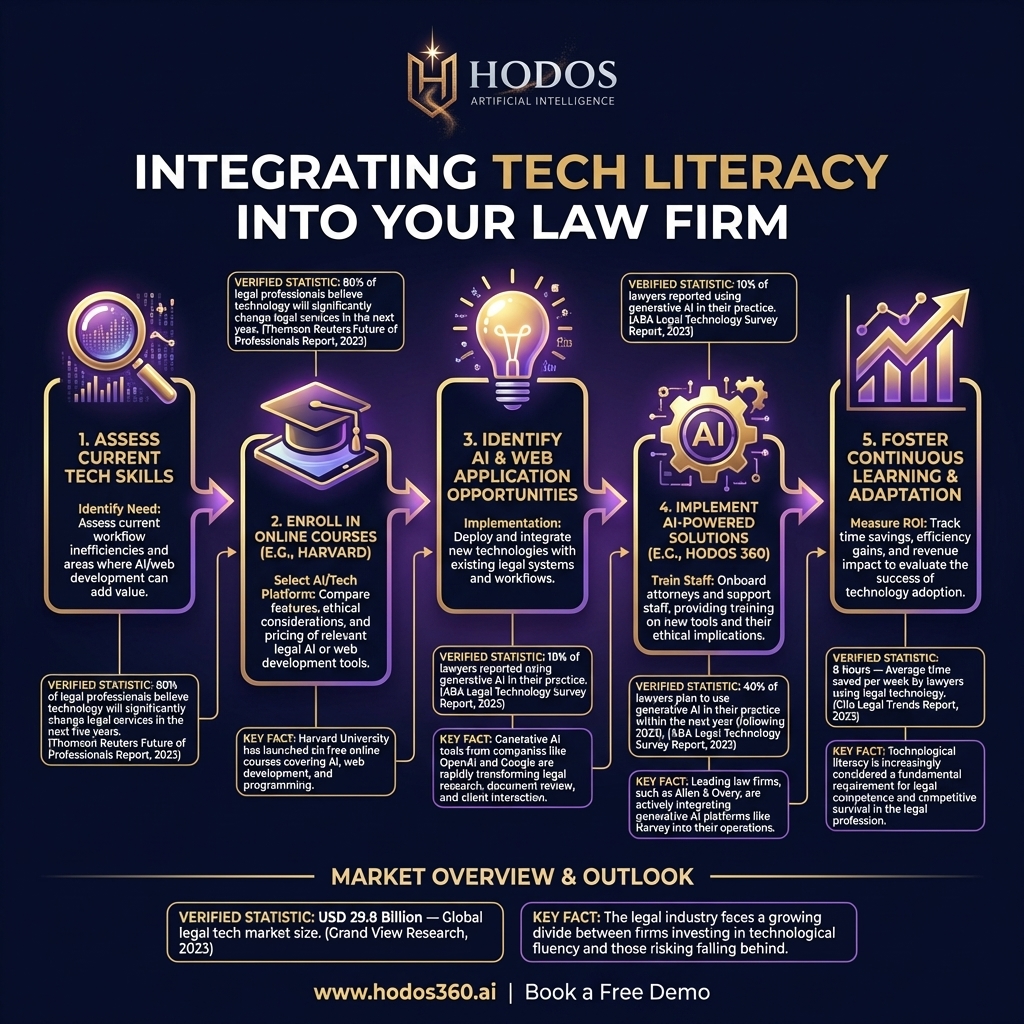
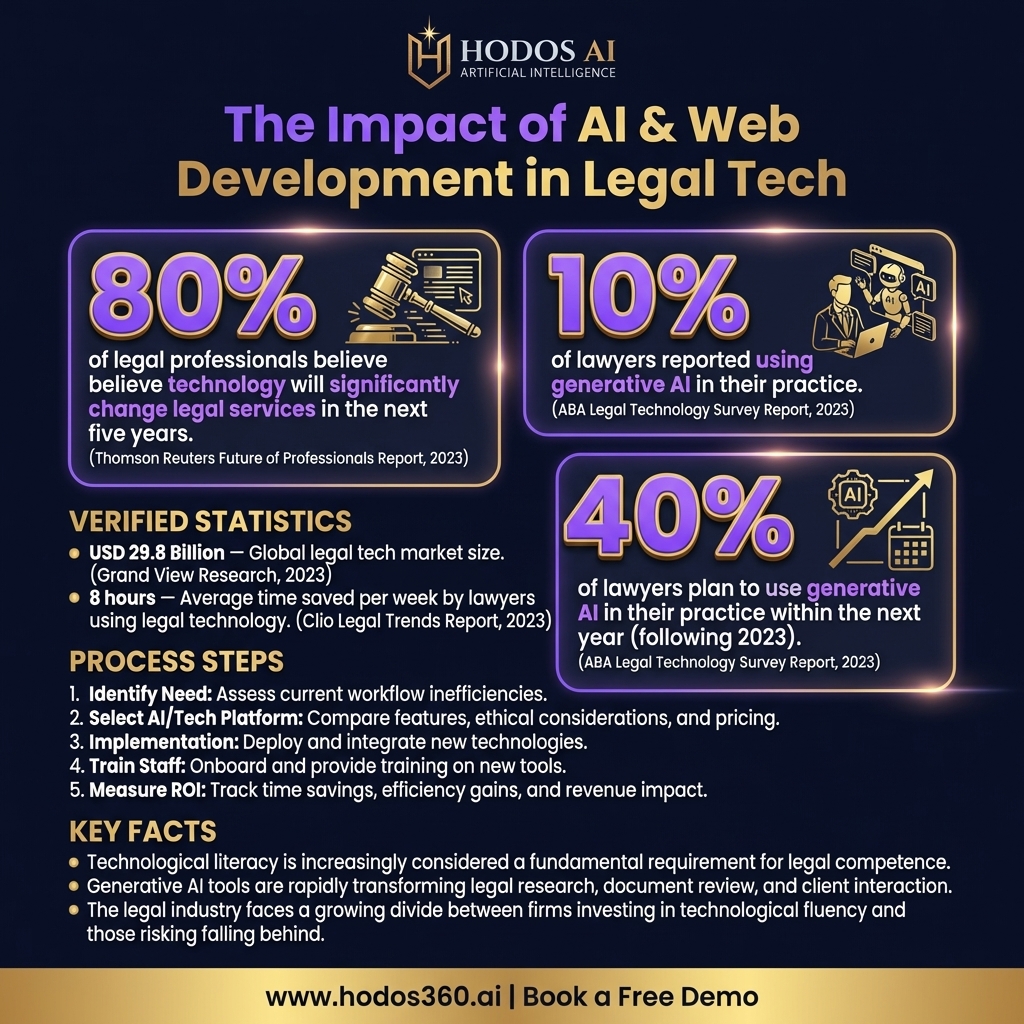
According to a 2023 report by Thomson Reuters, nearly 80% of legal professionals believe that technology will significantly change the way legal services are delivered in the next five years, yet only a fraction feel fully prepared. Harvard's accessible online courses offer a powerful antidote to this preparedness gap, providing a foundational understanding that can empower legal teams to not only adopt new technologies but to strategically integrate them into their practices, ensuring they meet the evolving standard of competence outlined in ethical guidelines such like ABA Model Rule 1.1, Comment [8], which emphasizes the duty to keep abreast of technology.
For law firms striving to maintain their edge in a rapidly evolving market, these Harvard AI and web development courses represent more than just free education; they are a strategic imperative. The ability to understand basic programming logic, how AI algorithms function, and the principles of effective web presence directly translates into better client service, more efficient operations, and a robust defense against emerging cyber threats.
This is not about turning lawyers into coders, but about equipping them with the knowledge to make informed decisions, evaluate legal tech solutions, and guide their firms through digital transformation. The stakes are high: the global legal tech market is projected to reach over $50 billion by 2027, driven by AI and automation, according to a report by MarketsandMarkets.
Firms that cultivate internal tech expertise will be best positioned to capitalize on this growth, innovate their service offerings, and ultimately, deliver superior value to their clients. Ready to navigate this new legal landscape? Discover how HODOS 360 empowers your firm with cutting-edge AI solutions.
The Unfolding Revolution: Harvard's Strategic Play in Legal Tech Training
Harvard's decision to offer these free AI and web development courses is a strategic move, reflecting a broader educational imperative to address the widening tech skills gap across industries, including law. This isn't merely about altruism; it's about preparing the workforce for an economy increasingly dominated by artificial intelligence and digital platforms.
Institutions like Stanford and MIT have long been at the forefront of tech education, but Harvard's foray into accessible online learning signals a mainstreaming of these critical skills. For the legal industry, this push couldn't come at a more opportune moment. Learn more about AI Marketing: Essential Strategies for Law Firm Growth.
Legacy systems, a natural resistance to change, and profound ethical considerations surrounding data privacy, algorithmic bias, and client confidentiality have historically slowed tech adoption in law firms. However, as generative AI tools become more sophisticated and readily available, the pressure to adapt intensifies. Jack Newton, CEO of Clio, a leading legal practice management software company, has consistently championed the importance of tech literacy, stating that "lawyers who embrace technology are not just more efficient, but more client-centric."
His insights, often shared at major legal tech conferences like LegalTech NYC, resonate deeply with the need for lawyers to understand the tools that are fundamentally changing their profession.
The "why now" behind Harvard's initiative is rooted in the exponential growth of AI and its profound impact on core legal functions. Consider the legal research landscape: platforms like LexisNexis and Westlaw are rapidly integrating advanced AI, moving beyond keyword searches to semantic understanding and predictive analytics.
Document drafting, once a painstaking manual process, is being revolutionized by AI models capable of generating first drafts, summarizing complex texts, and identifying discrepancies at unprecedented speeds. This acceleration is not without its dramatic tensions. The initial excitement around tools like ChatGPT has been tempered by concerns over hallucination, data security, and the potential for deskilling.
Learn more about ActiveCampaign 2026: AI Marketing Unleashes Law Firm Growth. However, the overall trajectory is clear: AI is here to stay, and its capabilities will only grow. Firms that are proactively educating their teams on the fundamentals of these technologies, rather than simply adopting them blindly, are better positioned to mitigate risks and maximize benefits.
This includes understanding the principles of machine learning and data science, which underpin many of these transformative tools.
The urgency for law firm partners and associates to acquire these skills extends beyond mere efficiency; it’s about competitive survival. A 2024 report by McKinsey & Company on the economic impact of generative AI estimated that the technology could add trillions of dollars to the global economy annually, with professional services, including legal, being a primary beneficiary.
However, realizing this potential requires a workforce capable of harnessing it. Firms that empower their legal teams with a foundational understanding of programming, artificial intelligence, and web development will be better equipped to innovate their service delivery, attract tech-savvy clients, and navigate the complex ethical and regulatory landscape of AI.
Learn more about AI Websites: Essential Digital Growth for Law Firms. This is a story of disruption versus tradition, where the firms that choose to invest in their human capital's technological prowess will emerge as leaders, while those clinging to outdated methodologies risk becoming historical footnotes.
Harvard's free online courses democratize access to this critical knowledge, making the path to digital competence more accessible than ever before.
Decoding the Curriculum: What Harvard's AI & Web Development Courses Offer Lawyers
The Harvard AI and web development courses cover a range of essential topics, including core concepts of artificial intelligence, machine learning, Python programming, web programming with JavaScript and HTML/CSS, and data science fundamentals. For legal professionals, understanding these areas translates directly into practical advantages. For instance, the machine learning course can demystify how predictive analytics are used in litigation, helping lawyers interpret expert witness testimony or challenge the methodologies of opposing counsel.
Python, often touted as the lingua franca of data science, offers lawyers the ability to automate routine tasks, analyze large datasets for e-discovery, or even build simple tools for case management. Learn more about Voice AI Unleashed: Transforming Law Firms in 2026 with HODOS 360.
Imagine a lawyer with Python skills being able to quickly parse thousands of discovery documents to identify specific patterns or keywords that a standard e-discovery platform might miss, or to automate the generation of compliance reports. This hands-on understanding moves beyond abstract concepts, enabling lawyers to engage with technology vendors more intelligently and even identify new opportunities for in-house innovation.
Beyond the Code: Practical Applications for Legal Professionals
The utility of these skills extends far beyond mere coding. Understanding web development, for example, empowers lawyers to oversee the creation of more secure, client-friendly portals, ensuring compliance with data protection regulations while enhancing the client experience. It allows them to understand the mechanics of search engine optimization (SEO) and digital marketing, critical for client acquisition in today's digital age.
Moreover, a grasp of AI principles is invaluable for evaluating the ethical implications of using AI in legal practice, such as potential biases in algorithms used for sentencing predictions or immigration evaluations. Learn more about Voice AI Landscape: Essential Strategies for Law Firms. This is particularly relevant following discussions at events like the 2026 ABA Techshow, where the ethical deployment of AI was a central theme.
Firms like Kirkland & Ellis, known for their innovative use of technology, are actively encouraging their lawyers to develop these transversal skills, recognizing that legal expertise combined with technological fluency creates a truly formidable professional.
Real-world examples already abound. Consider the use of AI in e-discovery: platforms like Relativity leverage sophisticated AI algorithms to identify relevant documents, prioritize review, and uncover hidden connections. While lawyers don't need to build these systems, understanding how they work allows for better strategy and more effective challenges to opposing counsel's e-discovery methods.
In intellectual property law, an understanding of artificial intelligence algorithms is becoming crucial for patent attorneys dealing with AI-generated inventions or disputes over AI model ownership. Learn more about Voice Assist: Essential AI Scheduling for Law Firms. Even in transactional law, AI is being used to analyze contracts for anomalies and compliance, a task made more effective when the legal professional understands the underlying logic.
The accessibility of these free courses from Harvard significantly lowers the barrier to entry for acquiring this knowledge, democratizing tech education within the legal field and fostering a new generation of tech-savvy legal leaders, ready to tackle challenges like those raised by the EU AI Act enforcement.
Strategic Imperatives: Integrating AI & Web Skills into Law Firm Operations
Integrating AI and web development courses knowledge into daily law firm operations offers a multitude of strategic benefits, from increased efficiency and significant cost reductions to vastly improved client service and the potential for entirely new revenue streams. By understanding the fundamentals of web programming, firms can develop more robust and secure client portals, streamline intake processes, and enhance secure communication channels—all of which contribute to a superior client experience.
This digital proficiency also enables firms to leverage data more effectively, moving beyond anecdotal decision-making to data-driven strategies for everything from case prediction to resource allocation. The operational shift required is not merely about adopting new software; it's about fostering a culture of continuous learning and innovation within the firm, requiring leadership to champion technological advancement and allocate resources for ongoing training and infrastructure updates.
This cultural transformation is precisely what differentiates leading firms from their competitors in an increasingly digital legal market.
Building an AI-Driven Digital Presence
The intersection of web development skills and AI marketing platform tools is particularly potent for building an AI-driven digital presence. Lawyers who understand the basics of SEO and web design can guide their marketing teams in creating high-converting websites and targeted online campaigns that resonate with potential clients.
Google's continuous updates, heavily influenced by AI algorithms, mean that a deep understanding of how search engines rank content is no longer just for marketers, but for anyone responsible for a firm's online visibility. This shift from traditional, often passive marketing to data-driven, proactive strategies is underscored by studies from the Legal Marketing Association, which consistently show higher ROI for digitally focused campaigns.
Ethical considerations, particularly regarding client data security and AI transparency, must remain paramount. Firms must adhere to strict data privacy regulations, referencing guidelines like the California State Bar Formal Opinion No. 2023-289, which provides ethical guidance for lawyers using generative AI, to ensure that their digital presence is not only effective but also compliant and trustworthy.
Ready to transform your firm's operations and client engagement? Explore HODOS 360's AI-powered Web & Mobile Development solutions.
Furthermore, the ethical landscape surrounding artificial intelligence in legal practice is evolving rapidly, necessitating an informed approach. Understanding the technical limitations and potential biases of AI tools, which these Harvard online courses can provide, is crucial for lawyers to uphold their professional responsibilities. For example, using AI in client intake or case assessment requires careful consideration of fairness and non-discrimination.
The American Bar Association's Standing Committee on Ethics and Professional Responsibility continues to issue guidance on these complex issues, emphasizing that lawyers must ensure their use of technology aligns with their ethical obligations. Firms that integrate AI and web development knowledge internally are better equipped to develop robust internal policies, conduct thorough vendor due diligence, and ultimately, protect their clients' interests while leveraging the power of new technologies.
This proactive stance on ethics and technology is a hallmark of truly innovative and responsible legal practices.
The Competitive Edge: How HODOS 360 Amplifies Your Digital Transformation
While Harvard's free AI and web development courses provide invaluable foundational knowledge, translating that theoretical understanding into actionable, firm-wide digital transformation requires robust tools and strategic implementation. This is where platforms like HODOS 360 come into play, offering a suite of AI-powered services designed specifically for the legal industry.
For instance, our Web & Mobile Development service directly complements the skills gained from these courses. If your team now understands responsive design and SEO optimization, HODOS 360 provides the AI-powered website building tools and high-converting templates to rapidly bring that knowledge to life. This isn't just about having a website; it's about creating a digital storefront that actively attracts and converts clients, leveraging AI for personalized user experiences and predictive analytics that optimize your online presence.
We bridge the gap between learning the *how* and effectively *doing* it at scale, allowing firms to focus on their core legal competencies.
Beyond web presence, HODOS 360 offers an integrated ecosystem that elevates every aspect of a law firm's operations. Our AI Law Firm Management System streamlines case management, billing, client intake, and document automation, incorporating AI-powered legal workflows that significantly boost efficiency. Imagine the insights gained from an AI and web development course applied to optimizing your firm’s internal processes, and then amplified by a system designed to automate and learn.
Similarly, our AI Marketing Platform leverages AI video creation, social media automation, and content generation, providing powerful analytics and ROI tracking that transform client acquisition strategies. Coupled with AI Voice Assistants offering 24/7 phone answering and lead qualification, HODOS 360 provides a holistic solution that turns theoretical technological understanding into measurable competitive advantages.
This comprehensive approach ensures that the investment in learning through Harvard AI courses yields maximum practical impact, positioning your firm at the forefront of legal innovation.
Future-Proofing Your Practice: Actionable Steps for Legal Professionals
The legal industry is undergoing a profound transformation, and the availability of Harvard AI and web development courses is a clear signal of the skills required to thrive in this new era. Future-proofing your practice demands more than just recognizing the shift; it requires proactive engagement.
For law firm leaders, this means fostering a culture of continuous learning and technological adoption. Consider establishing an internal 'innovation hub' or an 'AI committee' within your firm, tasked with evaluating new technologies, developing best practices, and championing ongoing education. This approach, championed by forward-thinking firms, ensures that technological insights are integrated into strategic decision-making, rather than being relegated to IT departments.
Designating an 'AI champion' within your firm—someone who takes these online courses and becomes an internal expert—can be a powerful catalyst for change, driving pilot projects and disseminating knowledge.

The Imperative of Continuous Learning
Beyond Harvard's valuable free offerings, the imperative of continuous learning cannot be overstated. The pace of technological change means that yesterday's cutting-edge is today's baseline. Law firms must commit to ongoing professional development that includes digital literacy, programming, and data science. This could involve encouraging participation in specialized legal tech bootcamps, attending industry conferences, or subscribing to leading legal tech publications.
The stakes are clear: firms that embrace technology will not only lead the market but also attract top talent and deliver superior client outcomes. Those that resist risk obsolescence, unable to meet the demands of a digitally empowered clientele and an increasingly sophisticated legal landscape.
Platforms like HODOS 360 are designed to be your strategic partner in this journey, providing the infrastructure and innovation to turn learned skills into tangible success. Don't get left behind. Schedule a free demo with HODOS 360 today to future-proof your law firm.
Frequently Asked Questions
Who are Harvard's free AI and web development courses for?+
These courses are designed for a broad audience, including legal professionals, who wish to gain foundational knowledge in artificial intelligence, machine learning, programming, and web development. They are particularly beneficial for law firm owners, attorneys, and legal support staff seeking to enhance their technological literacy and adapt their practices to the digital age. No prior programming experience is typically required for introductory courses.
How can AI and web development skills benefit my law firm?+
Acquiring AI and web development skills can significantly benefit your law firm by improving efficiency through automation of tasks like document review and legal research. It enhances your firm's digital presence with high-converting websites, optimizes client intake, and enables data-driven marketing. These skills also empower you to make informed decisions about legal tech investments and uphold ethical obligations regarding technology use.
Are these Harvard courses truly free, and how do I access them?+
Yes, Harvard University offers a selection of its online courses, including those in AI, web development, and programming, for free through platforms like edX. While the course content is free, there may be an option to pay for a verified certificate upon completion. You can typically access these courses directly by visiting the Harvard Extension School or edX websites and searching for their free course catalog.
What kind of legal tasks can AI help automate or improve?+
AI can automate and improve various legal tasks such as legal research, contract review and analysis, document drafting, e-discovery, case prediction, and client intake. It can also assist with compliance monitoring, intellectual property analysis, and even generate marketing content. AI tools enhance accuracy, reduce time spent on repetitive tasks, and provide deeper insights into complex legal data, freeing up lawyers for higher-value work.
How does HODOS 360 complement these educational opportunities?+
HODOS 360 complements these educational opportunities by providing a comprehensive AI-powered platform that turns theoretical knowledge into practical application. Our Web & Mobile Development service leverages AI to build high-converting websites, while our AI Law Firm Management and AI Marketing Platforms streamline operations and client acquisition. By understanding AI and web development, legal professionals can more effectively utilize and customize HODOS 360's integrated solutions to achieve their firm's digital transformation goals.