


AI Voice Revolution: Essential Automation for Law Firms
In a world increasingly shaped by artificial intelligence, the line between human and machine interaction continues to blur, often with startling results. A recent development from Vinnytsia, Ukraine, perfectly illustrates this paradigm shift: an IT company, GL.ua, successfully taught an AI to call various institutions, and the human recipients didn't immediately realize they were speaking with a bot.
This isn't a mere technological parlor trick; it's a potent signal of how advanced AI Voice Assistants are becoming, capable of nuanced communication that rivals human interaction. For law firms, this innovation isn't just intriguing; it's a blueprint for a future where operational efficiency and client engagement reach unprecedented levels.
The legal sector, traditionally cautious in its adoption of new technologies, is now at a critical juncture. The promise of AI Voice Assistants extends far beyond simple automated responses. Imagine a system that can handle the initial client intake, qualify leads with precision, book appointments seamlessly, and even provide multilingual support 24/7, all while maintaining a professional and empathetic tone.
This isn't science fiction; it's the current reality being deployed by forward-thinking firms. As the demands on attorneys grow—from managing complex cases to nurturing client relationships and navigating intricate regulatory landscapes—leveraging sophisticated AI becomes not just an advantage, but an essential component of modern legal practice.
Firms that embrace this technological wave, much like the innovative minds at GL.ua, are poised to redefine what's possible in legal service delivery. Discover how these advancements are reshaping the competitive landscape.
The Evolution of AI Voice Assistants in Legal Practice
The journey of AI in the legal field has accelerated dramatically in recent years, moving from rudimentary document review tools to sophisticated conversational agents. Early iterations of legal AI focused on tasks like e-discovery and contract analysis, processes that were data-intensive but lacked the human-like interaction now possible.
However, the breakthroughs in natural language processing (NLP) and speech synthesis, championed by companies like OpenAI with their GPT models and Anthropic with Claude, have propelled AI Voice Assistants into a new era. These advancements mean that an AI can not only understand complex legal queries but also respond in a coherent, context-aware, and even empathetic manner.
The ability for an AI to mimic human conversation, as demonstrated by the Vinnytsia company, signifies a leap from mere automation to true augmentation of human capabilities.
This evolution is not just about technology for technology's sake; it's about addressing critical pain points within law firms.
A 2023 report by Thomson Reuters found that legal professionals spend an average of 40% of their time on administrative tasks, a significant portion of which involves client communication and information gathering. This administrative burden detracts from high-value legal work and often leads to missed opportunities.
The introduction of advanced AI Voice Assistants offers a direct solution, offloading repetitive tasks and ensuring that every client interaction, from the first call to follow-up, is handled efficiently and professionally. Firms like Am Law 100 giant Allen & Overy, which famously partnered with Harvey AI for legal research, are already demonstrating the strategic advantage of integrating advanced AI across their operations.
Historically, the challenge with automated systems has been their inability to handle the nuances and complexities of human language, particularly in a field as intricate as law. Clients often call with emotional or urgent needs, requiring a delicate touch. Learn more about Ultimate AI Decision Automation: Transforming Legal Marketing.
Older IVR (Interactive Voice Response) systems were notorious for frustrating callers, leading to negative client experiences. However, modern AI Voice Assistants leverage deep learning models trained on vast datasets of human conversations, enabling them to understand intent, manage interruptions, and even detect sentiment. This allows them to engage in meaningful dialogue, whether it's qualifying a lead for a personal injury case or providing directions to the office, without the caller ever feeling like they're talking to a machine.
This level of sophistication is a game-changer for client satisfaction and operational flow.
Furthermore, the global nature of legal practice and client bases necessitates multilingual capabilities. Many law firms serve diverse communities, and the ability to communicate effectively in multiple languages is a significant competitive differentiator.
Traditional hiring of multilingual staff can be costly and challenging to scale for 24/7 operations. AI Voice Assistants overcome this by offering instant, accurate multilingual support, ensuring that language barriers never hinder access to legal services or compromise the initial client experience. This capability not only expands a firm's potential client base but also demonstrates a commitment to inclusivity, aligning with modern client expectations and ethical considerations outlined in principles such as ABA Model Rule 1.1 (Competence) which implicitly extends to effective communication.
Beyond Answering: AI for Strategic Client Engagement
The true power of AI Voice Assistants for law firms lies not just in answering calls, but in transforming client engagement into a strategic advantage. Consider the typical client journey: an individual searches for legal help, finds a firm, and makes the first call. If that call goes to voicemail or an unhelpful receptionist, the potential client might move on.
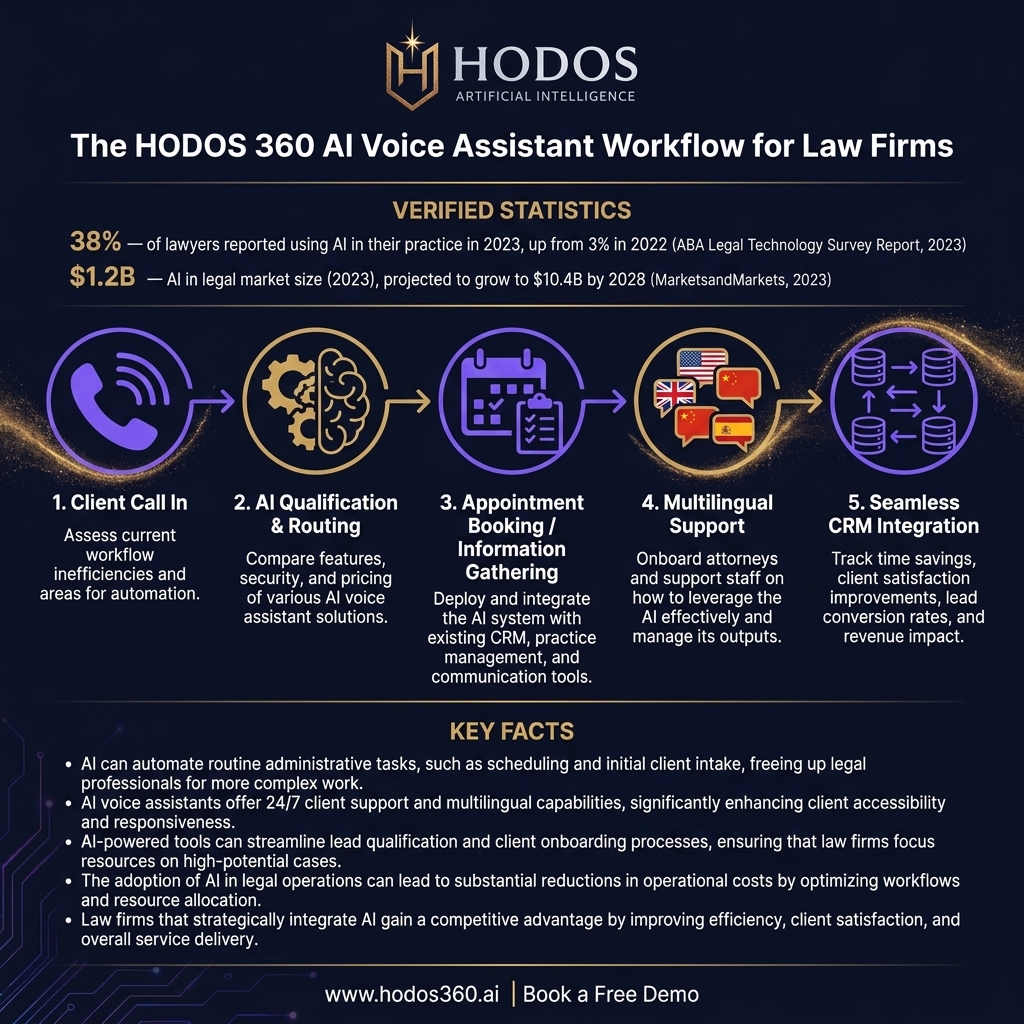
An AI voice assistant, however, acts as a tireless, always-on virtual receptionist, ensuring no call is missed and every inquiry is addressed promptly. This immediate responsiveness creates a positive first impression, a crucial factor in client acquisition. Moreover, these systems are designed to go beyond simple information relay, actively engaging callers to gather pertinent details, assess the urgency of their situation, and even explain basic legal processes in an accessible manner.
For instance, an AI can be programmed to ask specific qualifying questions for different practice areas—details about an accident for a personal injury claim, property specifics for a real estate inquiry, or business structure for corporate law. Learn more about Ultimate Inbound Marketing AI Guide for Law Firms.
This intelligent lead qualification ensures that attorneys receive pre-vetted leads, allowing them to focus their valuable time on cases with the highest potential. This dramatically streamlines the client intake process, which historically has been a bottleneck for many firms. According to a 2024 report by Clio, firms that effectively streamline their client intake can reduce the time to convert a lead by up to 30%, directly impacting revenue generation.
The AI can then seamlessly route qualified leads to the appropriate attorney or department, complete with a summary of the initial conversation, dramatically improving efficiency and reducing internal friction.
Implementing AI Voice Assistants: Practical Considerations for Law Firms
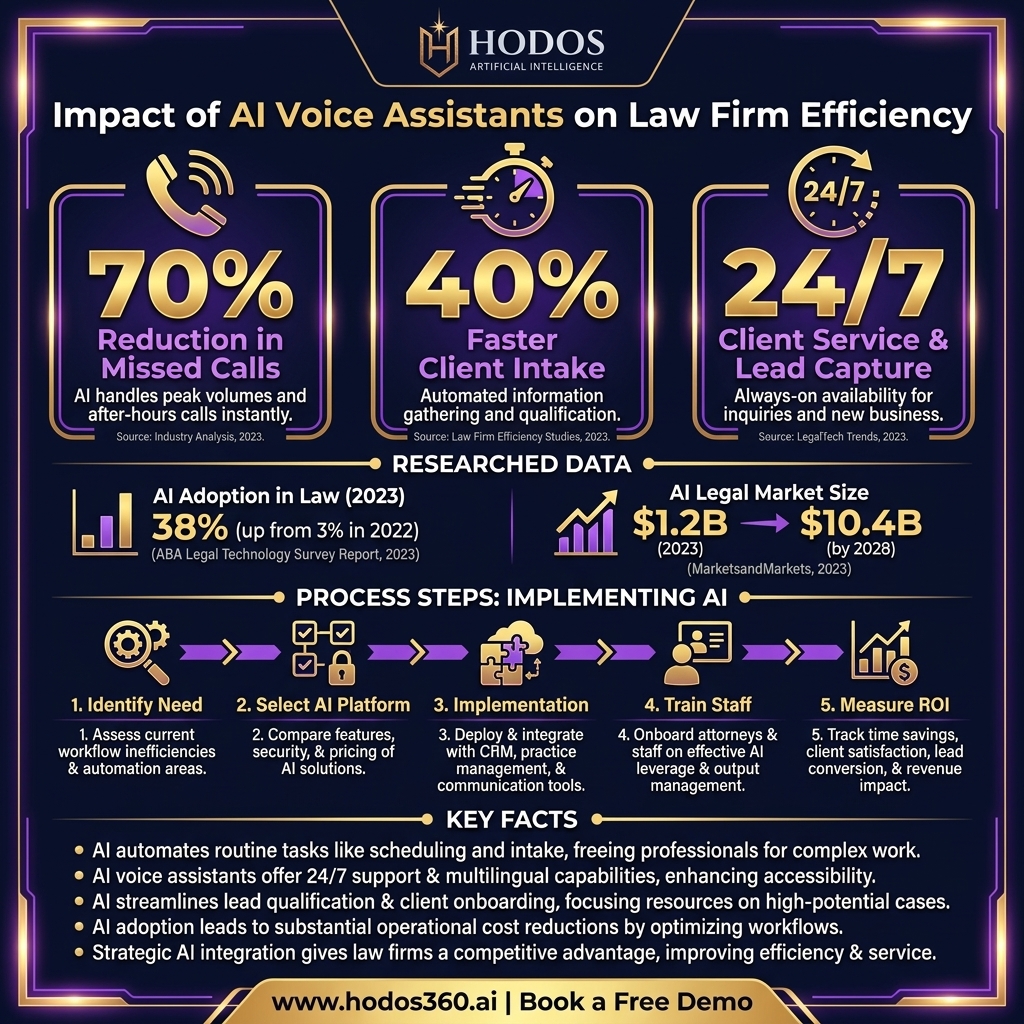
Adopting AI Voice Assistants requires careful planning and strategic integration to ensure maximum benefit for a law firm. It's not simply about plugging in a new tool; it's about re-evaluating workflows and defining clear objectives. The first step involves identifying which aspects of client communication are most suitable for AI automation.
While complex legal advice will always require human expertise, tasks such as appointment scheduling, frequently asked questions (FAQs), initial lead qualification, and basic information dissemination are prime candidates. Firms should conduct an internal audit of their current communication channels and identify bottlenecks or areas where staff time is disproportionately spent on repetitive calls.
This diagnostic approach ensures that the AI solution is tailored to solve specific problems rather than being a generic add-on.
Data privacy and security are paramount in the legal industry, and this concern extends to AI Voice Assistants. Firms must ensure that any AI solution chosen complies with stringent regulations like HIPAA for health-related information, state bar ethics rules regarding client confidentiality, and general data protection laws such as GDPR or CCPA.
This means selecting providers that offer robust encryption, secure data storage, and clear policies on data usage and retention. For example, firms should inquire about how voice recordings are stored, if they are used for AI training, and who has access to them. Transparency with clients about the use of AI in communication is also crucial, maintaining trust and adhering to ethical obligations concerning client communications, as highlighted in the spirit of Federal Rules of Civil Procedure concerning electronic discovery and data handling.
Integration with existing law firm management systems is another critical factor. Learn more about AI Marketing: Essential Strategies for Law Firm Growth. A standalone AI Voice Assistant might offer some benefits, but its true power is unleashed when it seamlessly connects with a firm's case management software, billing systems, and CRM.
This integration allows the AI to access client histories, update case files, and even initiate billing processes based on captured information. For instance, if an AI books an appointment, it should automatically update the attorney's calendar and create a new client entry in the firm's system.
Companies like HODOS 360, which offer comprehensive AI-powered platforms encompassing law firm management, marketing, and voice assistants, provide integrated solutions that eliminate data silos and create a unified operational ecosystem.
Training the AI is an ongoing process that involves human oversight. While AI Voice Assistants come pre-trained on vast datasets, tailoring them to a specific law firm's terminology, practice areas, and client demographics is essential.
This involves feeding the AI with firm-specific FAQs, typical client scenarios, and preferred response styles. Regular monitoring of AI interactions, listening to call recordings (with client consent), and providing feedback to the system helps refine its performance and improve accuracy over time. This iterative process ensures the AI continuously learns and adapts, becoming an increasingly valuable asset that perfectly mirrors the firm's brand and client service standards.
The goal is not to replace human interaction but to enhance it, allowing legal professionals to focus on the complex, empathetic, and strategic aspects of their work.
Overcoming the "Bot" Stigma: Building Trust with AI
The initial reaction to interacting with a bot can sometimes be skepticism or frustration, a challenge the legal industry must actively address when deploying AI Voice Assistants. The key to overcoming this "bot stigma" lies in transparency, performance, and strategic design. Firms should be upfront with clients about the use of AI, perhaps with a brief disclaimer at the beginning of a call, framing it as a tool to provide faster, more efficient service.
This transparency builds trust rather than eroding it. Furthermore, the AI's performance must live up to its promise; it must be genuinely helpful, capable of understanding complex queries, and able to seamlessly hand off to a human when necessary. This seamless escalation is critical, ensuring clients never feel trapped in an unresolvable automated loop.
Designing the AI's persona is also vital. The voice, tone, and conversational flow should be professional, reassuring, and aligned with the firm's brand. Learn more about AI Legal Website Optimization: Essential Guide for Law Firms. It should sound natural, avoiding robotic monotony, and be programmed with appropriate responses for common legal scenarios, including expressions of empathy.
Leading AI researchers like Dr. Fei-Fei Li, a pioneer in AI and computer vision, often emphasize the importance of "human-centric AI" – systems designed to augment human capabilities and improve human experiences, not detract from them. For law firms, this means developing an AI Voice Assistant that truly enhances the client experience, making them feel heard and valued, even when interacting with a machine.
The goal is to create an experience so fluid and helpful that, like the Vinnytsia case, clients might not even realize they're speaking to an AI, or if they do, they appreciate the efficiency it provides.
The Competitive Edge: How AI Voice Assistants Drive Growth
In today's fiercely competitive legal market, differentiation is key to growth and sustainability. AI Voice Assistants offer a powerful competitive edge by fundamentally transforming how law firms operate and interact with clients. Firms that embrace this technology can offer 24/7 service, a capability often limited to large, well-resourced organizations, thereby leveling the playing field for mid-sized and smaller firms.
This always-on availability ensures that potential clients, regardless of their time zone or schedule, can always reach someone (or something) that can initiate their legal journey. This dramatically increases lead capture rates and significantly reduces the number of missed opportunities that traditionally plague firms relying solely on human receptionists during business hours.
The ability to consistently capture and qualify leads around the clock translates directly into a larger, more robust client pipeline.
Beyond lead generation, AI Voice Assistants contribute to substantial cost savings and optimized resource allocation. By automating routine inquiries and initial client intake, law firms can significantly reduce the need for extensive front-office staff for basic administrative tasks.
This allows existing staff to be redeployed to higher-value activities, such as direct client support, complex case management, or business development. A study by McKinsey & Company on AI adoption across industries indicated that automation of routine tasks can lead to productivity gains of 15-20% in professional services.
For law firms, this means attorneys and paralegals can dedicate more time to billable work, improving profitability and overall operational efficiency. This strategic reallocation of human capital is essential for firms looking to maximize their talent and financial resources.
Furthermore, the enhanced client experience fostered by AI Voice Assistants translates into stronger client loyalty and positive word-of-mouth referrals.
Learn more about AI Scaling: Essential Change Management for Legal Leaders. Clients appreciate prompt responses, efficient processes, and the convenience of accessing information or scheduling appointments at their leisure. This superior service cultivates a reputation for innovation and client-centricity, attracting new clients and reinforcing relationships with existing ones.
In an era where online reviews and client testimonials heavily influence potential clients, positive experiences are invaluable. Firms leveraging sophisticated AI tools are seen as modern, efficient, and forward-thinking, making them a more attractive choice in a crowded market. This reputational boost is a critical, often underestimated, factor in long-term growth and market share expansion.
Finally, the data collected by AI Voice Assistants provides invaluable insights into client needs, common inquiries, and service gaps. Each interaction is a data point that can be analyzed to refine marketing strategies, develop new service offerings, and improve overall operational processes. For example, if the AI frequently encounters questions about a specific legal topic, the firm might consider creating more content on that subject or even launching a new practice area.
This data-driven decision-making empowers law firms to be more agile and responsive to market demands, ensuring their services remain relevant and competitive. This continuous feedback loop, facilitated by AI, is a strategic asset for any firm aiming for sustainable growth and market leadership.
- ✓24/7 Availability: Ensure no potential client call is missed, regardless of time zone or operational hours.
- ✓Intelligent Lead Qualification: Automatically gather crucial information from callers, pre-qualifying leads before they reach an attorney.
- ✓Seamless Appointment Booking: Integrate directly with calendars to schedule consultations efficiently, reducing administrative back-and-forth.
- ✓Multilingual Support: Provide immediate assistance in various languages, expanding client reach and enhancing inclusivity.
- ✓Automated FAQ Responses: Handle common inquiries instantly, freeing up staff for complex tasks and improving client satisfaction.
- ✓Efficient Call Routing: Direct callers to the most appropriate department or individual based on their needs, minimizing transfers and wait times.
- ✓Data-Driven Insights: Collect valuable data on client interactions to inform marketing, service development, and operational improvements.

The Future is Now: Integrating AI for a Resilient Legal Practice
The legal industry stands on the precipice of a transformative era, driven by the relentless march of AI innovation. The story of Vinnytsia's undetectable AI caller is not an isolated incident but a harbinger of the capabilities that are now within reach for every law firm.
AI Voice Assistants are no longer futuristic concepts; they are proven, effective tools that can redefine client service, optimize operational workflows, and provide a significant competitive advantage. Firms that hesitate risk being left behind in a rapidly evolving landscape where efficiency, responsiveness, and technological sophistication are becoming non-negotiable.
Embracing this technology is about more than just automation; it's about building a more resilient, client-centric, and profitable legal practice. By strategically integrating AI Voice Assistants, law firms can empower their human talent to focus on the intricate legal work that truly requires their expertise and empathy.
Learn more about AI Marketing Tools: Essential Strategies for Law Firm Growth. It’s about leveraging technology to expand reach, improve client experience, and unlock new avenues for growth. The legal profession is entering its most exciting chapter yet, and with the right AI partners, firms can confidently navigate this new terrain.
Explore how HODOS 360's comprehensive AI solutions can empower your firm to thrive in this new era. The time to act is now.
Frequently Asked Questions
What specifically can AI Voice Assistants do for my law firm?+
AI Voice Assistants can handle a wide range of tasks, including 24/7 phone answering, intelligent lead qualification, appointment booking, providing answers to frequently asked questions, multilingual support, and efficient call routing. They streamline client intake, reduce administrative burden, and ensure no potential client call is missed, enhancing overall efficiency and client satisfaction.
How do AI Voice Assistants ensure client confidentiality and data security?+
Reputable AI Voice Assistant providers prioritize data privacy and security. They implement robust encryption, secure data storage, and adhere to industry-specific compliance standards like HIPAA and legal ethics rules. Firms should choose solutions that offer clear data usage policies and transparency, ensuring client information is protected and ethical obligations are met.
Can AI Voice Assistants integrate with my existing law firm software?+
Yes, advanced AI Voice Assistants are designed for seamless integration with existing law firm management systems, CRMs, and calendaring software. This allows for automated updates to client files, case management systems, and attorney schedules, creating a unified and efficient workflow. Integration ensures data consistency and maximizes the AI's utility.
Will AI Voice Assistants replace human receptionists or legal staff?+
The primary goal of AI Voice Assistants is to augment, not replace, human legal staff. They handle routine, repetitive tasks, freeing up human receptionists and legal professionals to focus on more complex, empathetic, and strategic aspects of their work. This leads to a more efficient and productive team, enhancing overall job satisfaction and client service.
What is the return on investment (ROI) for implementing AI Voice Assistants?+
Implementing AI Voice Assistants can yield significant ROI through increased lead capture, higher client conversion rates, reduced administrative costs, and improved staff productivity. By ensuring 24/7 client engagement and efficient task automation, firms can see substantial gains in profitability, client satisfaction, and competitive positioning in the legal market.