


AI Law Firms: Essential Lessons from Successful Deployment
The legal landscape, traditionally rooted in precedent and meticulous human intellect, is now experiencing an unprecedented seismic shift, driven by artificial intelligence. The recent Law.com article, "What Law Firms Can Learn from AI Deployment," underscores a critical truth: AI law firms are no longer a futuristic concept but a present-day imperative. This transformation isn't just about adopting new tools; it's about fundamentally rethinking how legal services are delivered, managed, and monetized. Firms that embrace this evolution are not merely surviving but thriving, setting new benchmarks for efficiency, accuracy, and client satisfaction in a fiercely competitive market. The narrative emerging from early adopters reveals not just technological prowess, but a strategic foresight that separates leaders from laggards.
Consider the early moves by global giants like Allen & Overy, which famously partnered with Harvey AI, a generative AI platform backed by OpenAI. This wasn't a tentative experiment; it was a bold statement on the future of legal practice, signaling a commitment to integrating sophisticated AI into core legal workflows. Similarly, Paul, Weiss, Rifkind, Wharton & Garrison, under the leadership of Chairman Brad Karp, has been vocal about exploring AI's potential to enhance everything from litigation strategy to transactional due diligence. These firms understand that successful AI deployment is less about the technology itself and more about the cultural and operational shifts required to harness its power. The competitive tension is palpable, with firms racing to gain an edge, not just in client acquisition but in talent retention, as the next generation of lawyers demands cutting-edge tools.
The journey towards becoming an AI-powered law firm is fraught with challenges, from data privacy concerns and ethical considerations to the sheer complexity of integrating novel technologies into legacy systems. Yet, the rewards for those who navigate these waters successfully are immense. As we delve into the lessons learned from firms at the forefront of this revolution, we aim to provide a clear roadmap for legal professionals seeking to leverage AI for sustainable growth and unparalleled operational excellence. This isn't just about keeping pace; it's about leading the charge in a rapidly evolving legal ecosystem.
Ready to transform your practice? Discover how HODOS 360's AI Law Firm Management System can streamline your operations and elevate your client service. [Learn more about AI Law Firm Management]
The Imperative of AI Integration: Lessons from BigLaw Trailblazers
The narrative of AI deployment in legal circles is increasingly dominated by the proactive strategies of BigLaw firms, who, despite their traditional structures, are demonstrating remarkable agility. Firms like Latham & Watkins have been at the forefront, not just investing in AI tools but also actively integrating them into their daily operations, from due diligence to discovery. Their approach is less about replacing human lawyers and more about augmenting their capabilities, allowing associates to focus on higher-value, strategic tasks rather than repetitive, time-consuming ones. This strategic shift is echoed by insights from the American Bar Association's (ABA) 2024 Legal Technology Survey Report, which indicated a significant uptick in AI adoption among larger firms, with efficiency gains cited as the primary driver. The data suggests that firms leveraging AI for tasks like document review can see reductions in labor costs by up to 30%, freeing up resources for complex problem-solving.
The competitive stakes are undeniably high. As Casey Flaherty, co-founder of LexFusion, a legal tech advisory firm, frequently points out, artificial intelligence is no longer a luxury but a fundamental component of a modern legal business strategy. Firms that lag in AI adoption risk falling behind not just in efficiency but also in attracting top legal talent, who increasingly expect advanced tools as part of their professional environment. The tension between tradition and innovation is a constant theme, with some senior partners expressing skepticism while younger generations eagerly embrace the potential. Learn more about Voice AI Revolutionizes Legal: HODOS 360's 2026 Impact. This internal conflict often becomes the first hurdle in successful AI deployment, demanding strong leadership and a clear vision from firm management.
One of the most compelling examples of this integration comes from Linklaters, which collaborated with a legal tech startup to develop an AI tool for contract analysis, drastically cutting down the time spent on complex transactional reviews. This wasn't just a pilot; it was a deep dive into how AI could be customized to meet specific legal needs, demonstrating that off-the-shelf solutions are often just the starting point. The firm's success highlights the importance of internal champions and a willingness to invest in bespoke solutions or robust integrations. The lessons are clear: successful AI law firms prioritize deep integration over superficial adoption, viewing AI as a strategic asset rather than a mere technological novelty.
The rapid advancements in large language models (LLMs) from companies like OpenAI (with its GPT series) and Anthropic (with Claude) have fueled an AI news today cycle that constantly pushes the boundaries of what's possible. Dario Amodei, CEO of Anthropic, has often emphasized the need for "responsible scaling" of AI, a sentiment that resonates deeply within the legal sector where accuracy and ethical considerations are paramount. This focus on responsible AI is not just a moral obligation but a strategic necessity for firms seeking to build trust and avoid potential pitfalls, especially concerning data confidentiality and bias in AI outputs. The legal community is actively debating ethical guidelines, with organizations like the ABA publishing guidance on the responsible use of generative AI by lawyers, emphasizing competence, confidentiality, and supervision (e.g., ABA Model Rule 1.1 Competence and ABA Model Rule 1.6 Confidentiality of Information).
Navigating the Ethical AI Landscape
The ethical implications of AI deployment are perhaps the most critical challenge facing AI law firms. The potential for bias in algorithms, the safeguarding of client data, and the maintenance of professional responsibility are constant concerns. As renowned legal futurist Richard Susskind has often articulated, lawyers must understand AI's capabilities and limitations to effectively supervise its use and ensure its outputs are accurate and ethically sound. The debate around "hallucinations" in generative AI, where models produce plausible but factually incorrect information, underscores the absolute necessity for human oversight. Firms must implement rigorous validation processes, ensuring that AI-generated content is thoroughly reviewed by qualified legal professionals before client delivery or court submission.
Moreover, client confidentiality, a cornerstone of legal practice, takes on new dimensions with AI. Learn more about AI Voice Assistants: Essential Lessons from Chatbot Failures. Firms must ensure that sensitive client data used to train or query AI models remains secure and compliant with privacy regulations like GDPR or CCPA. This often involves robust data anonymization techniques and strict access controls. The tension here lies between leveraging AI's analytical power and upholding the sacred trust placed in lawyers by their clients. Firms that successfully navigate this delicate balance are not only mitigating risks but also building a reputation for responsible innovation, a significant competitive advantage in a market increasingly wary of technological overreach.
Beyond Hype: Tangible Benefits and ROI in Legal AI Deployment
The initial fascination with AI law firms is quickly maturing into a pragmatic assessment of tangible benefits and demonstrable return on investment. No longer content with vague promises, firm leaders are demanding concrete evidence that AI tools are improving their bottom line and enhancing service delivery. A recent McKinsey report highlighted that early adopters of AI across various industries, including professional services, are reporting significant productivity gains, often in the range of 10-15% in specific task categories. For legal practices, this translates directly into reduced billable hours for routine tasks, allowing attorneys to reallocate their time to strategic client advisory and complex problem-solving, thereby increasing overall firm profitability and client satisfaction.
Consider the case of CoCounsel, a generative AI legal assistant acquired by Thomson Reuters, which has demonstrated impressive capabilities in legal research, document summarization, and deposition preparation. Law firms utilizing CoCounsel report substantial time savings in these areas. For example, a task that might have taken a junior associate several hours of research can now be completed in minutes, with the AI providing a comprehensive summary of relevant case law or statutory provisions. This isn't just about speed; it's about consistency and accuracy, reducing the margin for human error in high-volume information processing. The investment in such platforms is increasingly justified by the measurable impact on operational efficiency and the ability to handle a greater volume of work without proportional increases in staffing.
The shift towards data-driven decision-making, powered by AI, extends beyond case work to the very core of legal business management. AI law firm management systems are integrating predictive analytics to forecast case outcomes, optimize resource allocation, and even identify potential client churn risks. This level of insight was previously unattainable, relying heavily on anecdotal experience. Learn more about Legal AI: The Ultimate Guide to Transforming Law Firms. Now, with sophisticated AI models analyzing vast datasets of past cases, billing histories, and client interactions, firms can make more informed strategic decisions. This demonstrates a clear ROI not just in direct cost savings but in improved strategic foresight and risk management, positioning firms for long-term sustainable growth.
The competitive landscape for AI law firms is also being shaped by those who can demonstrate clear value to clients. Clients are increasingly sophisticated and cost-conscious, demanding efficiency and transparency. Firms that can leverage AI to offer fixed-fee services for certain tasks, provide faster turnaround times, or deliver more comprehensive insights are gaining a significant edge. This client-centric approach to AI deployment is transforming how legal services are packaged and delivered, moving away from the traditional hourly billing model for all tasks. The ability to track ROI through improved efficiency, increased client retention, and enhanced service offerings is becoming a key differentiator, making AI an indispensable asset for firms aiming to stay competitive and relevant in the modern legal market.
Unlock unprecedented efficiency and client satisfaction with HODOS 360's AI Law Firm Management System. Our platform integrates case management, billing, and document automation with AI-powered workflows. [Request a Demo]
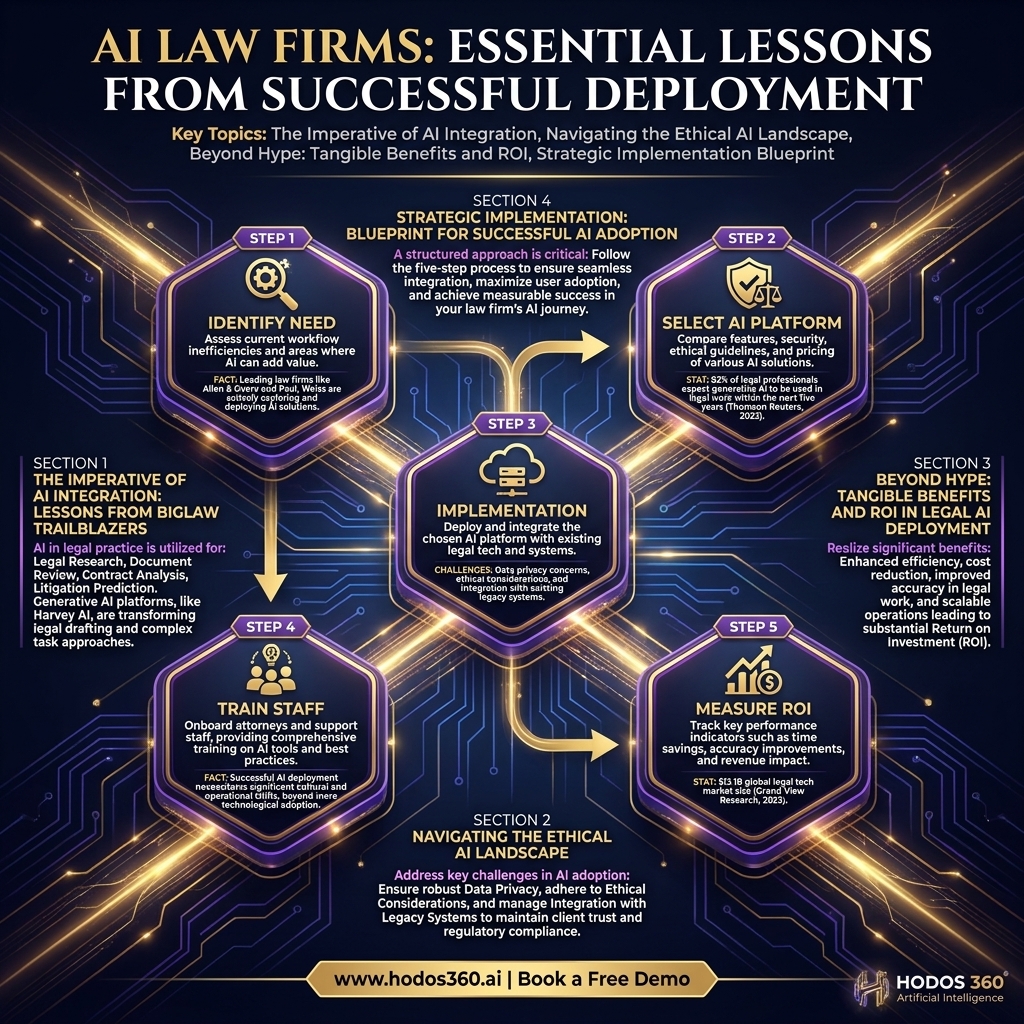
- ✓Automated Document Review & Analysis: AI significantly reduces time spent on large-scale document review for litigation, due diligence, and compliance, identifying key clauses, anomalies, and relevant information with higher accuracy.
- ✓Enhanced Legal Research: Generative AI tools rapidly synthesize vast legal databases, providing concise summaries of case law, statutes, and academic articles, speeding up the research process exponentially.
- ✓Predictive Analytics for Case Outcomes: AI models analyze historical data to predict potential litigation outcomes, inform settlement strategies, and assess risk, offering data-driven insights for strategic decision-making.
- ✓Intelligent Contract Drafting & Management: AI assists in drafting contracts, identifying inconsistencies, suggesting clauses, and managing contract lifecycles, ensuring compliance and reducing errors.
- ✓Client Intake & Relationship Management: AI-powered systems streamline client onboarding, automate communication, and analyze client data to personalize service and identify cross-selling opportunities, improving client experience.
- ✓Workflow Automation & Task Management: AI-driven platforms automate routine administrative tasks, calendar management, and document generation, freeing up legal professionals for higher-value work.
- ✓Legal Marketing & Business Development: AI-powered marketing platforms create targeted content, automate social media, and analyze campaign ROI, helping firms attract and retain clients more effectively.
Strategic Implementation: Blueprint for Successful AI Adoption
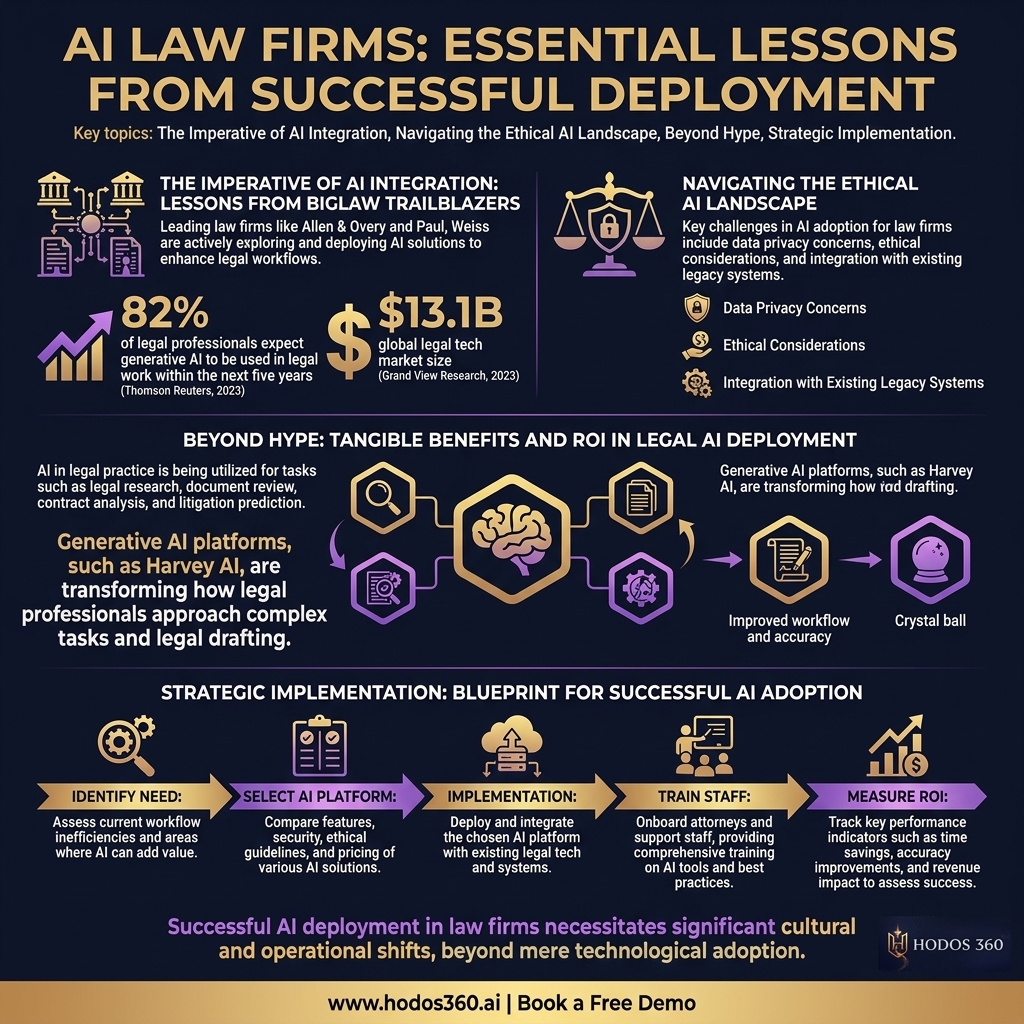
Implementing artificial intelligence into a law firm is not a one-size-fits-all endeavor; it requires a meticulously crafted strategic blueprint. The most successful AI law firms approach deployment not as a technological upgrade but as a comprehensive change management initiative. This begins with a clear understanding of the firm's specific needs and pain points. For instance, a firm specializing in M&A might prioritize AI for due diligence and contract analysis, while a personal injury firm might focus on AI-powered client intake and document automation. Identifying these critical areas allows for targeted investment and a phased rollout, minimizing disruption and maximizing impact. The "fail fast, learn faster" mantra often heard in the tech world applies here, encouraging experimentation in controlled environments before broad implementation.
A crucial component of this blueprint involves robust data governance. AI models are only as good as the data they are trained on. Firms must establish clear protocols for data collection, storage, and access, ensuring data quality, consistency, and compliance with all relevant privacy regulations. This includes categorizing and tagging internal documents, standardizing data entry processes, and ensuring secure cloud infrastructure. Without a solid data foundation, AI initiatives are likely to falter, yielding inaccurate results or even exacerbating existing inefficiencies. This foundational work often represents a significant initial investment, but it's an indispensable step for any firm serious about long-term AI deployment.
Furthermore, successful implementation hinges on comprehensive training and user adoption. Learn more about Essential Legal AI Access: NELLCO's Broad Impact. Even the most sophisticated AI tool will fail if lawyers and staff are unwilling or unable to use it effectively. Firms must invest in continuous education programs, demonstrating the practical benefits of AI and addressing any anxieties about job displacement. Workshops, online tutorials, and dedicated support teams can foster a culture of learning and experimentation. This human element is often overlooked in the rush to adopt new tech, but it’s paramount. As Sam Altman, CEO of OpenAI, frequently emphasizes, the future of AI lies in its ability to augment human capabilities, not replace them entirely. Educating legal professionals on this augmentative role is key to securing buy-in and achieving widespread adoption.
The integration of AI also demands a re-evaluation of existing workflows and processes. Simply overlaying AI tools onto inefficient manual processes will not yield optimal results. Instead, firms should use AI deployment as an opportunity to critically assess and redesign their operational workflows. This might involve creating new roles for "legal AI specialists" or "prompt engineers," establishing cross-functional teams to manage AI projects, or even restructuring departments to better leverage AI's capabilities. The goal is to create a symbiotic relationship where AI handles routine, data-intensive tasks, allowing human lawyers to focus on strategy, client relationships, and complex legal reasoning, ultimately elevating the overall quality and value of legal services provided.
Data Security and Client Confidentiality in an AI Era
The paramount importance of data security and client confidentiality cannot be overstated in the context of AI deployment. Law firms are custodians of highly sensitive information, making robust cybersecurity measures and strict adherence to ethical guidelines non-negotiable. When leveraging AI, firms must perform thorough due diligence on vendors, ensuring their platforms meet stringent security standards (e.g., ISO 27001, SOC 2 compliance). This includes understanding how client data is processed, stored, and protected within the AI system, particularly if third-party cloud services are involved. Firms must also consider the implications of data residency and cross-border data transfers, adhering to regulations like the EU AI Act or the California Consumer Privacy Act (CCPA).
Beyond technical safeguards, firms must establish clear internal policies governing the use of AI with client data. Learn more about AI Legal Tech Boom 2026: Unlocking Billions in Valuation. This includes prohibiting the input of confidential or personally identifiable information into public or insecure AI models and ensuring that all data shared with proprietary AI systems is subject to strict non-disclosure agreements. The potential for inadvertent data breaches or the misuse of confidential information through AI tools poses a significant reputational and legal risk. Therefore, continuous monitoring, regular security audits, and ongoing training for all staff on data privacy best practices are essential. The trust clients place in their legal counsel is built on the assurance of confidentiality, and AI law firms must demonstrate unwavering commitment to this principle in the digital age.
The Future-Proof Law Firm: Embracing AI for Competitive Advantage
Building a future-proof law firm in today's rapidly evolving legal landscape means embracing artificial intelligence not as a temporary trend but as a core pillar of competitive advantage. The firms that are truly setting themselves apart are those that are not just adopting AI tools, but are strategically embedding AI into their long-term vision, anticipating future market demands and technological advancements. This involves cultivating an innovation-driven culture where continuous learning and adaptation are celebrated. It's about recognizing that the legal profession is no longer solely about legal expertise, but also about technological fluency and the ability to leverage data for smarter decision-making. The current AI news today cycle, with breakthroughs in multimodal AI and autonomous agents, suggests that the pace of change will only accelerate, making proactive engagement with AI an absolute necessity.
The competitive edge gained through AI deployment extends beyond internal efficiencies to market positioning and client acquisition. Firms that can demonstrate a sophisticated understanding and application of AI are increasingly seen as forward-thinking, efficient, and capable of delivering superior value. This is particularly true for clients in tech-driven industries who expect their legal counsel to be equally innovative. For example, a firm might highlight its use of AI for faster patent searches, more accurate contract reviews, or predictive litigation analytics as a key differentiator. This strategic communication of AI capabilities can attract high-value clients and reinforce the firm's reputation as a leader in legal innovation, moving beyond the generic "legal topic" discussions to specific, impactful solutions.
Moreover, the firms that are truly future-proofing are exploring AI's potential to create entirely new service offerings. Learn more about ActiveCampaign 2026: AI Marketing Unleashes Law Firm Growth. This could involve developing AI-powered legal products for routine tasks, offering subscription-based access to AI-driven legal insights, or even partnering with legal tech startups to co-create bespoke solutions. The traditional boundaries of legal service delivery are blurring, and AI is a primary catalyst. Firms that are nimble enough to identify and capitalize on these emerging opportunities will be the ones that redefine the legal market. This entrepreneurial spirit, combined with deep legal expertise, is the hallmark of the most successful AI law firms that are shaping the future of the profession.
This forward-thinking approach also involves a commitment to ongoing ethical review and policy development. As AI technologies advance, new ethical dilemmas and regulatory challenges will inevitably arise. The future-proof firm proactively engages in these discussions, contributing to the development of industry best practices and internal guidelines that ensure responsible AI use. This includes considerations of fairness, transparency, and accountability in AI systems, especially as they become more autonomous. By staying ahead of the curve on ethical and regulatory fronts, firms not only mitigate risks but also enhance their credibility and trustworthiness, essential attributes for long-term success in the legal field.
Cultivating an AI-Ready Culture
Cultivating an AI-ready culture within a law firm is perhaps the most critical, yet often overlooked, aspect of successful AI deployment. It goes beyond merely purchasing software; it involves fostering an environment where innovation is encouraged, learning is continuous, and resistance to change is actively managed. This starts at the top, with firm leadership championing AI initiatives and demonstrating a clear vision for its integration. Partners and senior attorneys must actively participate in pilot programs, share success stories, and openly address challenges, setting an example for the entire firm. Without this top-down commitment, AI adoption often remains fragmented and underutilized.
Key to this cultural shift is providing ample opportunities for professional development and upskilling. This means offering training not just on how to use specific AI tools, but also on understanding the underlying principles of artificial intelligence, its limitations, and its ethical considerations. Creating internal "AI champions" – individuals who are passionate about legal tech and can serve as mentors and advocates – can significantly accelerate adoption. Furthermore, encouraging a mindset of continuous improvement and experimentation allows the firm to adapt quickly to new AI advancements and refine its strategies. An AI-ready culture is ultimately one that views technology as an enabler of legal excellence, empowering lawyers to deliver higher quality, more efficient, and more innovative services to their clients.

Key Takeaways and Next Steps
The journey for AI law firms is one of continuous adaptation and strategic innovation. The insights gleaned from leading firms underscore that successful AI deployment is not a destination but an ongoing process of learning, integrating, and refining. Firms that prioritize a clear strategy, robust data governance, comprehensive training, and a deep understanding of ethical implications are best positioned to thrive. The competitive landscape demands not just awareness of artificial intelligence but proactive engagement, transforming operational inefficiencies into opportunities for growth and enhanced client value. The future of legal practice is undeniably intertwined with AI, and those who embrace this reality with foresight and commitment will shape the next era of law.
For law firms ready to embark on this transformative journey, the path forward involves a blend of strategic planning and practical execution. It's about identifying specific pain points that AI can address, investing in scalable and secure solutions, and fostering a culture that embraces technological change. The goal is to leverage AI to augment human intelligence, allowing legal professionals to focus on the intricate, nuanced aspects of law that truly require human judgment. By doing so, firms can not only enhance their efficiency and profitability but also elevate the quality of their legal services, ensuring they remain relevant and indispensable in an increasingly digital world.
Don't get left behind. Explore how HODOS 360's comprehensive AI platform, including our AI Law Firm Management System and AI Marketing Platform, can power your firm's future. [Book a Free Demo Today]
Frequently Asked Questions
Q1: What are the primary benefits of AI deployment for law firms?+
AI deployment offers numerous benefits, including significant improvements in efficiency for tasks like document review and legal research, leading to reduced operational costs and faster service delivery. It also enhances accuracy, provides predictive insights for case strategy, and frees up lawyers to focus on higher-value, strategic work, ultimately boosting profitability and client satisfaction.
Q2: How do law firms ensure ethical AI use and client confidentiality?+
Ensuring ethical AI use requires rigorous oversight, human review of AI outputs, and adherence to professional responsibility guidelines like the ABA Model Rules. Client confidentiality is maintained through robust data security measures, careful vendor due diligence, data anonymization, and strict internal policies prohibiting sensitive information from public AI models.
Q3: What are the initial steps for a law firm looking to implement AI?+
Initial steps include identifying specific pain points where AI can provide the most value (e.g., contract analysis, client intake). This should be followed by thorough research into suitable AI tools, developing a robust data governance strategy, and planning for a phased implementation with comprehensive training for staff to ensure user adoption.
Q4: Can AI replace lawyers, or does it augment their work?+
The consensus among legal tech experts and thought leaders like Richard Susskind is that AI is designed to augment, not replace, lawyers. AI excels at processing vast amounts of data and automating routine tasks, allowing lawyers to dedicate more time to complex legal reasoning, client relationships, and strategic advisory, enhancing their overall capabilities.
Q5: What challenges should law firms anticipate during AI adoption?+
Law firms should anticipate challenges such as the initial investment cost, data integration complexities with legacy systems, ensuring data privacy and security, overcoming internal resistance to change, and navigating the evolving ethical and regulatory landscape surrounding AI. Strategic planning and change management are crucial for success.