


Legal AI: The Ultimate Guide to Transforming Law Firms
The legal landscape is in the midst of a seismic shift, propelled by the relentless advance of artificial intelligence. Just recently, StartupHub.ai featured Legora CEO Max Junestrand, highlighting his vision for an AI-powered legal workspace that promises to redefine how lawyers approach their daily tasks.
Junestrand’s insights underscore a critical truth: AI is no longer a futuristic concept but a present-day imperative for law firms striving for efficiency, precision, and competitive advantage. This narrative of transformation is not merely about adopting new tools; it's about fundamentally rethinking legal practice, from the minutiae of document review to the grand strategy of client acquisition.
The firms that embrace this change are poised to lead, while those that hesitate risk being left behind in an increasingly competitive market.
This isn't just about a single startup or a fleeting trend. The AI in legal tech sector has seen an explosion of innovation and investment, with companies like Harvey AI securing significant partnerships with global giants like Allen & Overy, demonstrating the profound impact AI is already having on sophisticated legal operations.
The tension between tradition and innovation is palpable, creating both challenges and unparalleled opportunities for law firm owners and legal professionals. The question is no longer *if* AI will integrate into legal practice, but *how* deeply and *how effectively*. This guide delves into the transformative power of AI across various facets of law firm operations, drawing on real-world examples, expert opinions, and tangible data to illustrate its undeniable influence.
We will explore how AI is not just automating tasks but augmenting human intelligence, allowing lawyers to focus on higher-value work and strategic counsel. From enhancing internal management to revolutionizing client outreach, AI is setting new benchmarks for legal excellence and operational agility.
- ✓The Shifting Landscape: Max Junestrand and Legora's Vision for Legal AI
- ✓Revolutionizing Law Firm Operations: AI Management Systems for Efficiency
- ✓AI in Legal Marketing: Redefining Client Engagement and Growth
- ✓The Rise of AI Voice Assistants: Enhancing Client Experience 24/7
- ✓Key Takeaways and Next Steps: Navigating the Future of Legal Tech
Ready to explore the practical applications of AI in your firm? Discover how HODOS 360 can empower your legal practice.
The Shifting Landscape: Max Junestrand and Legora's Vision for Legal AI
The recent spotlight on Max Junestrand, the visionary founder and CEO of Legora, by StartupHub.ai, vividly illustrates the direction of AI in legal tech. Junestrand’s emphasis on creating a "collaborative AI workspace" for lawyers resonates deeply within an industry often characterized by siloed information and repetitive, time-consuming tasks.
Legora, much like its peers, aims to empower legal professionals by providing an intuitive platform where AI streamlines document review, research, and drafting. This approach isn't merely about automation; it's about augmenting the human lawyer, freeing them from the drudgery to focus on the nuanced, strategic work that truly requires human intellect and empathy.
The idea of a shared, AI-powered environment where legal teams can interact seamlessly with intelligent tools represents a significant leap from traditional, disconnected software solutions.
The market for legal AI solutions is incredibly dynamic, marked by intense competition and substantial investment. While Legora, founded in 2023, has rapidly gained traction, raising an impressive $811 million according to market reports, it operates alongside established players and other innovative startups.
Companies like Clio, which has expanded its ecosystem through strategic acquisitions, and specialized AI platforms like Harvey AI, which recently announced a significant partnership with global law firm Allen & Overy, are all vying for market share. This competitive landscape fuels rapid innovation, pushing developers to create more sophisticated, user-friendly, and ethically sound AI tools.
The tension arises as firms weigh the benefits of early adoption against the risks of untested technology, and the constant evolution of these platforms means staying informed is paramount for any firm looking to leverage the best solutions.
Junestrand’s perspective, as highlighted in the StartupHub.ai article, often centers on the need for lawyers to engage actively with AI, seeing it not as a replacement but as a powerful co-pilot.
Learn more about Essential AI Website Security: Protecting Law Firms from Cyber Threats. This sentiment echoes the broader industry conversation, where leaders like Sam Altman of OpenAI and Dario Amodei of Anthropic consistently emphasize the collaborative potential of advanced AI models. For instance, the integration of large language models (LLMs) into legal research platforms has dramatically reduced the time lawyers spend sifting through vast amounts of data, allowing them to quickly identify relevant precedents and statutes.
According to a 2023 survey by Thomson Reuters, firms adopting AI for legal research reported an average 30% reduction in research time, directly impacting billable hours and client satisfaction. This data underscores the tangible benefits that go beyond mere conceptual appeal, translating into real operational improvements and a more strategic allocation of legal talent.
Furthermore, the collaborative AI workspace envisioned by leaders like Junestrand addresses a fundamental challenge in modern legal practice: the need for seamless teamwork and knowledge sharing. By centralizing information and providing AI-driven insights, these platforms enable legal teams to work more cohesively, reducing redundancies and improving the consistency of legal advice.
The shift towards such integrated environments is not just about efficiency; it's about creating a more intelligent, responsive, and adaptive legal practice capable of navigating the complexities of the 21st century. As firms explore alternatives and reviews of various AI platforms, the emphasis is increasingly on solutions that offer not just powerful individual features but a truly collaborative and comprehensive ecosystem.
Beyond Hype: Tangible Benefits of AI-Powered Legal Workflows
The conversation around AI in legal tech often veers into abstract discussions of innovation, but the real impact lies in its tangible benefits for daily legal workflows. For instance, in document review, a traditionally labor-intensive and error-prone process, AI-powered tools can analyze thousands of documents in minutes, identifying key clauses, anomalies, and relevant information with far greater speed and accuracy than human reviewers alone.
This not only dramatically reduces costs for clients but also frees up paralegals and junior associates for more complex, analytical tasks. A report by McKinsey & Company in 2024 estimated that generative AI could automate up to 70% of legal document drafting and review tasks, leading to potential efficiency gains of 20-30% across the legal sector.
These are not marginal improvements but fundamental shifts in how legal work is performed and priced.
Moreover, AI's predictive capabilities are transforming litigation strategy. Learn more about Scaling Legal AI: Essential Strategies to Prevent Tool Sprawl. By analyzing vast datasets of past case law, judicial rulings, and settlement outcomes, AI algorithms can provide lawyers with insights into the probable success rates of different legal arguments or the likelihood of a particular judgment.
This data-driven approach allows firms to make more informed decisions, manage client expectations more effectively, and allocate resources strategically. For example, a firm using AI for litigation analytics might identify a judge's historical propensity to rule a certain way on specific types of motions, giving them a significant strategic advantage.
Such tools move beyond mere information retrieval, offering true strategic foresight that was previously unattainable, thereby enhancing the overall quality and effectiveness of legal counsel.
Revolutionizing Law Firm Operations with AI Management Systems
The core operational engine of any law firm—its management system—is being fundamentally reshaped by AI. Traditional case management, billing, and client intake processes are often bottlenecks, consuming valuable time and resources. AI Law Firm Management Systems, such as those offered by HODOS 360, integrate intelligent automation across these critical functions.
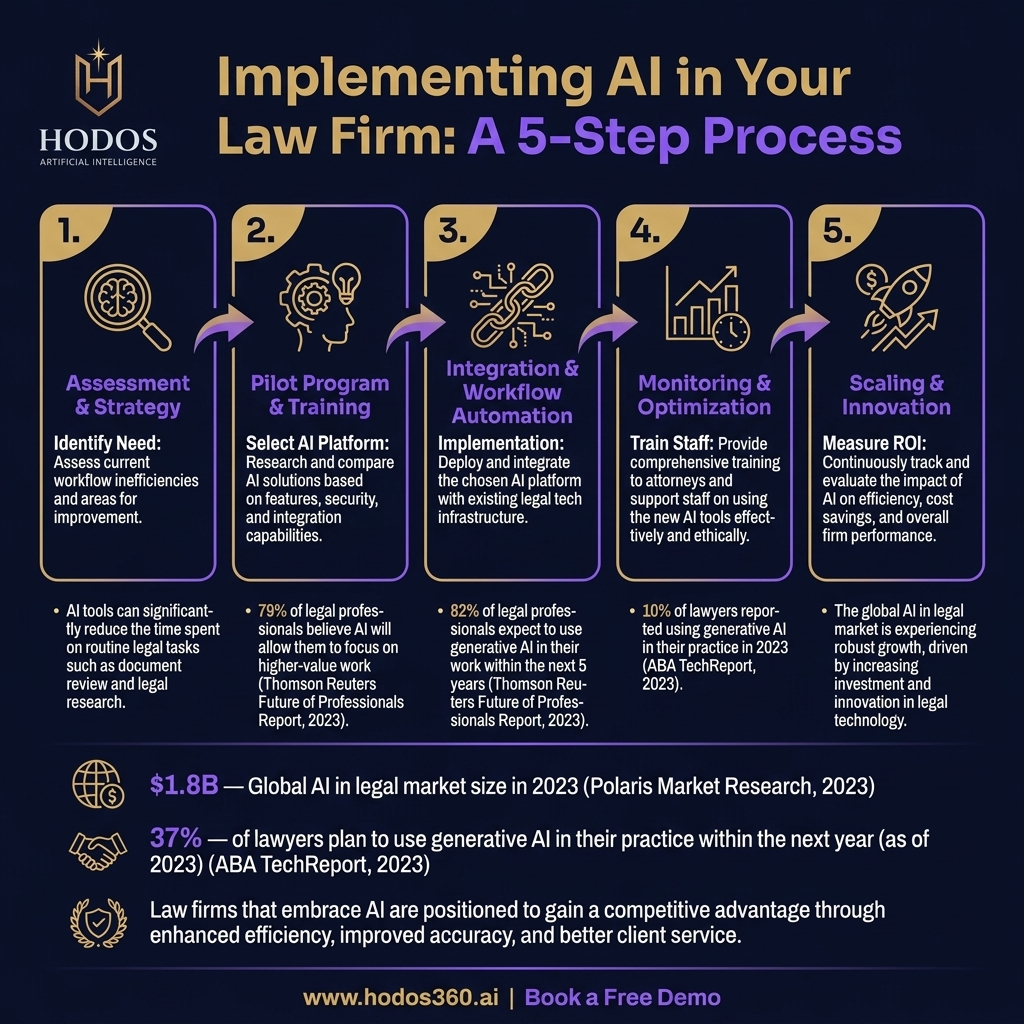
Imagine a client intake process where an AI assistant automatically gathers initial information, identifies potential conflicts of interest, and even drafts preliminary engagement letters based on predefined templates. This not only accelerates the onboarding process but also ensures consistency and compliance from the very first interaction.
Firms that have adopted such systems report significant reductions in administrative overhead, allowing their legal teams to focus more on substantive legal work and client relationships.
Beyond intake, AI is transforming case management itself. AI-powered legal workflows can analyze case documents, identify key deadlines, suggest relevant legal precedents, and even track the progress of complex litigation.
For instance, an AI system can monitor court dockets for updates, flagging critical dates or filings that require immediate attention, thereby minimizing the risk of missed deadlines—a pervasive concern addressed by ABA Model Rule 1.1 on competence. This proactive management capability is invaluable, especially for firms handling a high volume of diverse cases.
The system learns from historical data, continuously refining its suggestions and automating routine tasks like document tagging and categorization, which traditionally consume hundreds of hours annually. Learn more about AI Hallucinations: Essential Lessons for Legal Practice. This level of granular control and automated oversight ensures that every case progresses efficiently and effectively, optimizing resource allocation and improving overall firm profitability.
Billing, often a contentious and time-consuming aspect of law firm operations, also benefits immensely from AI integration. AI can automate time tracking, categorize expenses, and even identify patterns in billing data to predict future revenue streams or highlight inefficiencies. For example, an AI system might flag discrepancies between recorded time and actual task completion, prompting review and ensuring greater accuracy and transparency in client invoicing.
This not only enhances client trust but also provides firm management with robust data for strategic decision-making and resource allocation. The precision offered by AI in this area significantly reduces administrative burden and allows firms to maintain clearer, more defensible billing practices, aligning with ethical obligations for fair and reasonable fees.
Document automation, a cornerstone of efficiency, reaches new heights with AI. Beyond simple template filling, AI can generate complex legal documents, such as contracts, pleadings, and discovery requests, by extracting relevant information from existing case files and applying sophisticated legal reasoning. This drastically cuts down drafting time and minimizes errors, ensuring that all documents are consistent, legally sound, and tailored to specific client needs.
Firms that have implemented advanced document automation report a significant reduction in the time spent on drafting routine documents, often by 70% or more, allowing lawyers to dedicate their expertise to strategic thinking and complex problem-solving rather than repetitive writing. This transformation is not just about speed; it's about elevating the quality and reliability of all legal output, ensuring that firm resources are deployed where they add the most value.
Unlock unparalleled efficiency and innovation. Explore HODOS 360's AI Law Firm Management System today.
AI in Legal Marketing: Redefining Client Engagement and Growth
The competitive nature of the legal market demands innovative approaches to client acquisition and retention. AI Marketing Platforms are revolutionizing how law firms connect with potential clients, build brand presence, and measure their return on investment. Imagine an AI-powered system that analyzes market trends, identifies ideal client demographics, and then automatically generates targeted social media campaigns.
This level of precision marketing was once the exclusive domain of large corporations but is now accessible to law firms of all sizes. AI can create compelling video content, draft engaging blog posts, and even personalize email outreach, ensuring that every marketing effort resonates deeply with the intended audience.
This capability is critical for firms looking to stand out in a crowded digital landscape and attract high-value clients.
Social media automation, powered by AI, allows firms to maintain a consistent and engaging online presence without consuming excessive internal resources. AI algorithms can schedule posts, analyze engagement metrics, and even suggest optimal times for content delivery to maximize reach and impact.
This ensures that a firm's expertise and thought leadership are consistently shared across platforms, building authority and trust within the legal community and among potential clients. Furthermore, AI-driven content generation moves beyond basic templating, leveraging natural language processing to produce high-quality articles, whitepapers, and legal summaries that are both informative and SEO-optimized.
This continuous stream of valuable content not only boosts a firm's search engine rankings but also positions its attorneys as thought leaders in their respective practice areas, fostering credibility and attracting organic leads.
Analytics and ROI tracking, traditionally complex and time-consuming for marketing teams, become transparent and actionable with AI.
Learn more about Essential AI Tools: Reshaping Web Design for Law Firms. AI platforms can precisely track the performance of every marketing campaign, from initial impressions to final client conversions, providing granular data on what works and what doesn't. This allows firms to quickly pivot strategies, optimize spending, and ensure that their marketing budget is delivering the highest possible return on investment.
For example, an AI system might identify that LinkedIn ads targeting corporate counsels in a specific industry yield a 20% higher conversion rate than general legal service ads, enabling the firm to reallocate resources accordingly. This data-driven approach to marketing transforms it from a speculative expense into a measurable growth engine, empowering firms to make smarter, more effective decisions about their outreach efforts.
Beyond direct marketing, AI is enhancing the entire client journey. From the moment a potential client searches for legal services online to their ongoing engagement with a firm, AI tools can personalize interactions, provide relevant information, and streamline communication. For example, AI-powered chatbots on a firm's website can answer common questions 24/7, qualify leads, and direct prospective clients to the appropriate attorney, ensuring no opportunity is missed.
This seamless, responsive experience not only improves client satisfaction but also significantly increases the likelihood of conversion. The proactive and personalized nature of AI-driven client engagement creates a superior experience, differentiating firms in a competitive market and building long-lasting relationships.
The Power of Predictive Analytics in Legal Marketing
One of the most profound impacts of AI in legal marketing is its ability to harness predictive analytics. By analyzing vast datasets of client behavior, market trends, and historical conversion rates, AI can forecast which marketing channels will be most effective, which client segments are most likely to convert, and even predict the optimal pricing for services.
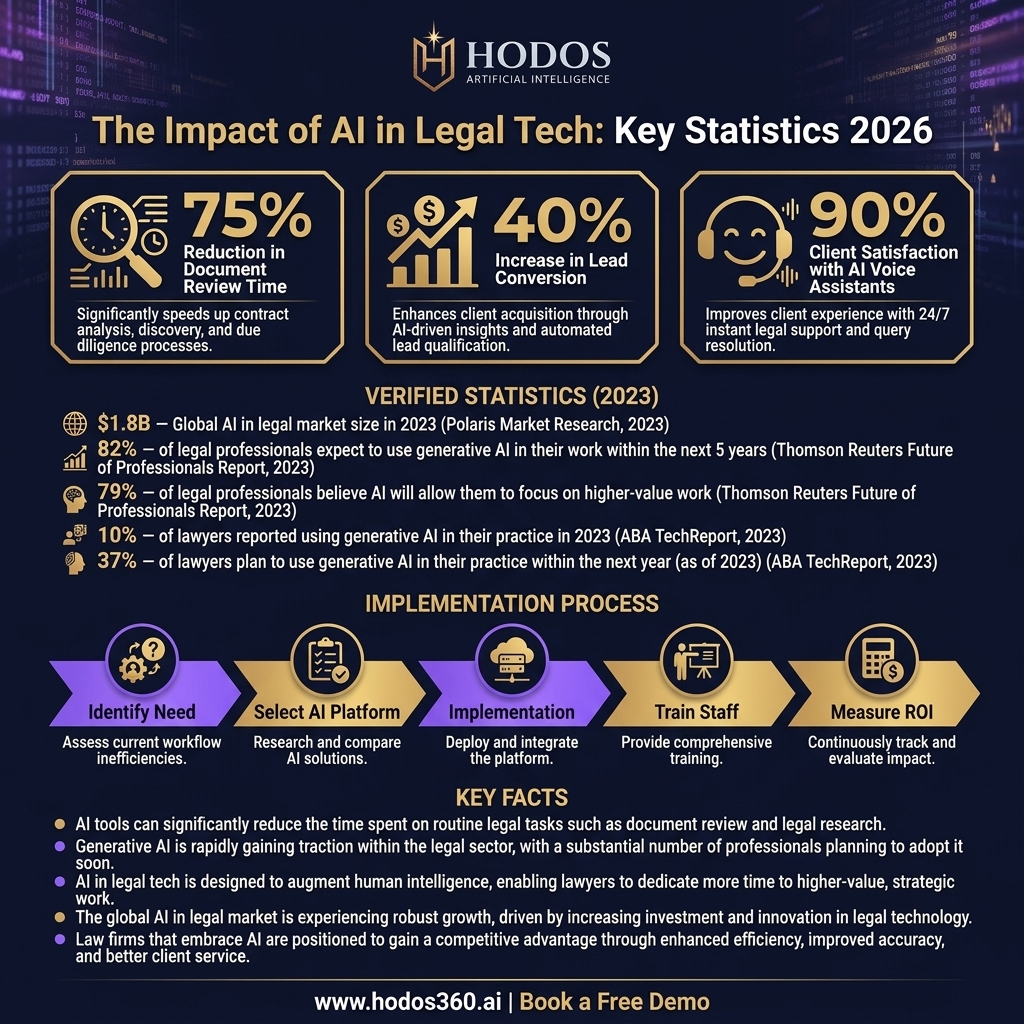
This moves marketing from a reactive, guesswork-driven activity to a proactive, data-informed strategy. For example, an AI model could identify emerging legal needs in a particular industry, allowing a firm to proactively develop and market specialized services before competitors even recognize the opportunity. This foresight is invaluable in a rapidly changing legal landscape.
Furthermore, predictive analytics enables hyper-personalization of client outreach. Learn more about AI Email Marketing: The Ultimate Guide for Law Firms. Instead of generic email blasts, AI can craft individualized messages based on a potential client's specific needs, past interactions, and demographic profile. This level of tailored communication significantly increases engagement rates and builds stronger connections.
Imagine a system that knows a potential client has visited pages related to intellectual property law and then sends them a curated article on recent IP case law authored by one of the firm's partners. This targeted, value-driven approach is far more effective than traditional mass marketing, fostering trust and demonstrating a deep understanding of the client's unique challenges.
The Rise of AI Voice Assistants: Enhancing Client Experience 24/7
The first point of contact for many potential clients is often a phone call, and this critical interaction is being revolutionized by AI Voice Assistants. These sophisticated systems offer 24/7 phone answering capabilities, ensuring that no lead is ever missed, regardless of business hours or geographical differences.
Unlike traditional answering services, AI voice assistants can do far more than just take messages; they can engage in natural language conversations, qualify leads based on predefined criteria, and even book appointments directly into an attorney's calendar. This level of responsiveness and efficiency immediately sets a positive tone for the client relationship, demonstrating a firm's commitment to accessibility and modern service delivery.
A 2023 report by Gartner predicted that by 2026, 80% of customer service organizations will have abandoned native mobile apps in favor of messaging and AI virtual assistants, a trend that is rapidly extending into the legal sector.
One of the most significant advantages of AI voice assistants is their ability to provide multilingual support.
In an increasingly globalized world, law firms often serve diverse client bases. An AI assistant can seamlessly switch between languages, providing information and support in a client's native tongue, thereby removing communication barriers and fostering inclusivity. This capability is not just a convenience; it's a strategic imperative for firms looking to expand their reach and cater to a broader market.
Moreover, these assistants can intelligently route calls to the appropriate department or attorney based on the client's needs, ensuring that inquiries are handled by the most qualified individual without unnecessary transfers or delays. This streamlined process enhances operational efficiency and significantly improves the client experience, reducing frustration and increasing satisfaction.
Beyond initial contact, AI voice assistants can handle routine inquiries, providing answers to frequently asked questions about firm services, fees, or general legal processes. Learn more about AI Marketing Intelligence: The Ultimate Guide for Law Firms. This frees up administrative staff to focus on more complex tasks, optimizing internal resource allocation.
By automating the handling of common queries, firms can ensure consistent, accurate information is always provided, reducing the potential for human error and improving overall service quality. This proactive approach to client communication not only enhances efficiency but also builds client trust, as they perceive the firm as highly responsive and well-organized.
The integration of such technology aligns with the spirit of ABA Formal Opinion 483, which encourages lawyers to embrace technology that enhances competence and client service.
However, the implementation of AI voice assistants also brings ethical considerations, particularly regarding data privacy and the potential for bias.
Firms must ensure that these systems are designed and deployed in compliance with data protection regulations and that their algorithms are free from biases that could lead to unfair treatment of certain client demographics. Transparency with clients about the use of AI in communications is crucial for maintaining trust and upholding professional responsibility.
The challenge lies in leveraging the immense benefits of AI while diligently mitigating its risks, ensuring that technology serves justice and client welfare above all else. This requires ongoing vigilance, regular audits, and a commitment to ethical AI development and deployment within the legal context.
Navigating Ethical Considerations in AI Adoption
As law firms increasingly integrate AI tools into their operations, a critical aspect of responsible adoption involves navigating the complex ethical landscape. The American Bar Association (ABA) has, through various opinions and guidelines, emphasized the lawyer's duty of competence (ABA Model Rule 1.1) to understand the benefits and risks associated with technology.
This extends to AI, requiring lawyers to comprehend how AI tools function, their limitations, and potential for bias. For example, if an AI system used for legal research or document review produces biased results due to flawed training data, the lawyer remains professionally responsible for any errors or unfair outcomes.
Diligence in selecting, implementing, and overseeing AI tools is paramount to upholding ethical obligations to clients and the justice system.
Furthermore, client confidentiality (ABA Model Rule 1.6) is a cornerstone of legal ethics and must be rigorously protected when using AI. Cloud-based AI platforms process vast amounts of sensitive client data, necessitating robust data security measures and clear contractual agreements with vendors.
Firms must ensure that client information is encrypted, access is restricted, and data handling practices comply with all relevant privacy laws, such as GDPR or CCPA, depending on jurisdiction. Transparency with clients about the use of AI and how their data is managed is also vital.
Lawyers have a duty to inform clients about the use of third-party AI services and obtain informed consent where necessary, ensuring that the integration of AI enhances, rather than compromises, the sacred trust between attorney and client.

Key Takeaways and Next Steps for Law Firms
The insights from leaders like Max Junestrand of Legora and the broader developments in the AI in legal tech sector signal an irreversible shift. Law firms today face a clear choice: embrace the transformative power of AI or risk obsolescence. The benefits—from unparalleled efficiency in case management and document automation to revolutionary client engagement through AI marketing and voice assistants—are too significant to ignore.
Firms that proactively integrate AI into their operations are not just gaining a competitive edge; they are redefining the standards of legal service delivery, offering greater value to clients, and fostering a more engaging and productive environment for their legal professionals. The future of law is undoubtedly intelligent, collaborative, and data-driven.
For law firm owners and managing partners, the journey into AI adoption should be strategic and incremental. Start by identifying specific pain points within your firm where AI can deliver immediate, measurable impact, such as automating client intake or streamlining document review. Invest in pilot programs, educate your team on the capabilities and ethical considerations of AI, and foster a culture of innovation.
It's crucial to partner with reputable legal tech providers that offer comprehensive, secure, and scalable solutions tailored to the unique needs of law firms. The goal is not to replace human lawyers but to empower them, allowing them to focus on the intricate legal analysis, strategic thinking, and empathetic client counsel that only humans can provide.
Ultimately, the successful integration of AI requires more than just purchasing software; it demands a holistic approach to technological transformation. This includes continuous learning, adapting workflows, and prioritizing ethical deployment. As the legal industry continues to evolve, firms that are agile, forward-thinking, and committed to leveraging cutting-edge technology will be best positioned to thrive.
The narrative arc of legal tech is clear: innovation is no longer optional, but essential for sustained success and delivering exceptional legal services in the 21st century. The opportunity to build a more efficient, responsive, and client-centric practice is here. HODOS 360 stands at the forefront of this revolution, offering a suite of AI-powered services designed to elevate your firm's capabilities across management, marketing, and client interaction.
Ready to harness the full power of AI for your firm? Book a free demo with HODOS 360 and transform your legal practice.
Frequently Asked Questions
What is AI in legal tech and why is it important for law firms?+
AI in legal tech refers to the application of artificial intelligence to automate, optimize, and enhance legal processes and services. It's crucial for law firms because it boosts efficiency, reduces costs, improves accuracy in tasks like document review and research, and enables better client engagement. This allows lawyers to focus on higher-value, strategic work, giving firms a significant competitive advantage in a rapidly evolving market.
How can AI Law Firm Management Systems benefit my practice?+
AI Law Firm Management Systems streamline core operations such as case management, billing, client intake, and document automation. Benefits include faster client onboarding, reduced administrative overhead, improved accuracy in time tracking, and automated generation of legal documents. These systems enhance overall productivity, ensure compliance, and provide valuable data insights for better decision-making, ultimately optimizing resource allocation and profitability.
Are AI Voice Assistants a reliable alternative to human receptionists?+
AI Voice Assistants are a highly reliable and efficient complement to human receptionists, especially for 24/7 availability and initial lead qualification. They can handle routine inquiries, book appointments, and offer multilingual support, ensuring no call is missed. While they excel at automating repetitive tasks and providing consistent information, complex or highly sensitive client interactions often still benefit from human touch, making them an augmentation rather than a full replacement.
What ethical considerations should law firms be aware of when adopting AI?+
Law firms must prioritize ethical considerations like client confidentiality (ABA Model Rule 1.6), data privacy, and the duty of competence (ABA Model Rule 1.1) when adopting AI. This includes ensuring data security, understanding AI tool limitations and potential biases, and maintaining transparency with clients about AI usage. Lawyers remain professionally responsible for AI-generated output, requiring diligent oversight and continuous learning to mitigate risks.
How can AI Marketing Platforms help my firm acquire new clients?+
AI Marketing Platforms help firms acquire new clients by enabling highly targeted campaigns, automating content creation, and providing robust ROI tracking. They analyze market data to identify ideal client segments, generate personalized content (videos, social media posts), and optimize ad spend for maximum impact. This results in more effective client outreach, stronger brand presence, and a data-driven approach to growth, converting leads into loyal clients more efficiently.