
Essential AI Tools: Reshaping Web Design for Law Firms
The digital storefront of a law firm is no longer merely a brochure; it's the primary gateway for client acquisition, a testament to a firm's professionalism, and a critical component of its brand identity. In an increasingly competitive legal market, an outdated or underperforming website can be a significant liability.
Consider the journey of 'Morgan & Associates,' a mid-sized firm that, until recently, relied on a static, difficult-to-update website. Their managing partner, Arthur Finch, lamented, "We knew our online presence wasn't reflecting our expertise, but the thought of a complete redesign felt daunting and prohibitively expensive."
This sentiment echoes across countless firms grappling with the accelerating pace of digital transformation. However, a new wave of AI tools for web designers is fundamentally changing this narrative, offering innovative solutions that streamline development, enhance user experience, and ultimately drive client engagement. These advancements are not just for tech startups; they are now essential for every legal practice aiming to thrive in the 21st century.
The strategic adoption of these advanced AI tools for web designers is creating a clear divide between firms that are merely present online and those that are truly dominant. Take the example of 'Sterling Law Group,' whose managing partner, Sarah Chen, recently stated at LegalTech NYC 2026, "Our investment in AI-powered web development wasn't just about aesthetics; it was about creating an intelligent, responsive ecosystem for our clients.
From automated intake forms to AI-driven content suggestions, our website now acts as a 24/7 digital associate, significantly boosting our lead qualification and client satisfaction." This strategic foresight underscores a critical shift: web design for law firms is no longer an IT cost but a strategic investment in growth.
The integration of AI promises not only efficiency gains but also a level of personalization and responsiveness previously unimaginable, enabling law firms to construct digital experiences that are not only visually appealing but also highly functional and conversion-optimized. As the legal industry continues its march towards digital maturity, understanding and leveraging these intelligent design facilitators becomes paramount for maintaining a competitive edge and meeting the evolving expectations of today's digitally native clientele.
Ready to transform your firm's online presence with cutting-edge AI? Discover how HODOS 360 can elevate your web and mobile development strategy. [CTA: Book a Free Consultation]
The Imperative of Digital Presence: Why Law Firms Need Cutting-Edge Web Design
In today's hyper-connected world, a law firm's website is often the first point of contact for potential clients. A 2024 ABA TechReport revealed that over 70% of individuals seeking legal services begin their search online, with a firm's website being the most trusted source of information after direct referrals.
This statistic alone highlights the non-negotiable importance of a robust, modern, and user-friendly digital presence. The days of static, brochure-ware websites are long gone; clients now expect interactive experiences, clear communication, and easy access to information. James Sandman, former President of the Legal Services Corporation (LSC), has often emphasized the critical role of digital accessibility in bridging the justice gap, a principle that extends to how private firms present themselves online.
Firms that fail to adapt risk not only losing potential clients but also damaging their professional reputation in an increasingly digital-first legal landscape. The quality and functionality of a website are direct reflections of a firm's commitment to modern practice and client service.
The challenge for many law firms lies in keeping pace with rapid technological advancements and evolving design paradigms.
Learn more about AI Marketing Intelligence: The Ultimate Guide for Law Firms. Traditional web development can be a lengthy, expensive, and iterative process, often requiring significant input from legal teams who are already stretched thin. This is where the power of modern AI tools for web designers becomes evident.
These tools are designed to streamline everything from initial concept to final deployment, drastically reducing development time and costs while simultaneously enhancing functionality and design quality. For instance, AI can analyze vast datasets of successful legal websites to suggest optimal layouts, content structures, and call-to-action placements tailored specifically for legal client conversion.
This intelligent assistance ensures that every element of the website is strategically aligned with the firm's business objectives, moving beyond mere aesthetics to deliver tangible results in client acquisition and retention. The goal is to create a digital asset that not only informs but also converts, effectively turning casual visitors into qualified leads and loyal clients.
Beyond Aesthetics: The Strategic Role of a Law Firm's Website
A law firm's website serves multiple strategic functions beyond just looking good. It's a powerful marketing engine, a client intake portal, a knowledge hub, and a testament to the firm’s expertise. A well-designed legal website, especially one leveraging intelligent AI tools for web designers, can significantly improve search engine rankings, attract high-quality leads, and provide a seamless onboarding experience for new clients.
Consider the impact on client intake: AI-powered forms can pre-qualify leads, gather essential information efficiently, and even route inquiries to the appropriate legal department, all before a human even interacts with the potential client. Learn more about AI Studio Update: Essential Web App Creation for Law Firms.
This not only saves valuable time for attorneys and support staff but also demonstrates a modern, client-centric approach that resonates with today's consumers. Furthermore, a website rich with well-structured legal content, such as articles on recent court rulings or legislative changes, positions the firm as a thought leader, building trust and authority within its practice areas.
This strategic depth is what transforms a website from a static presence into an active, revenue-generating asset for the firm.
AI-Powered Design Tools: Streamlining the Legal Web Development Process
The emergence of sophisticated AI tools for web designers has dramatically altered the landscape of website creation, making advanced design capabilities accessible even to those without extensive coding knowledge. For law firms, this translates into the ability to build, iterate, and maintain a high-quality online presence with unprecedented speed and efficiency.
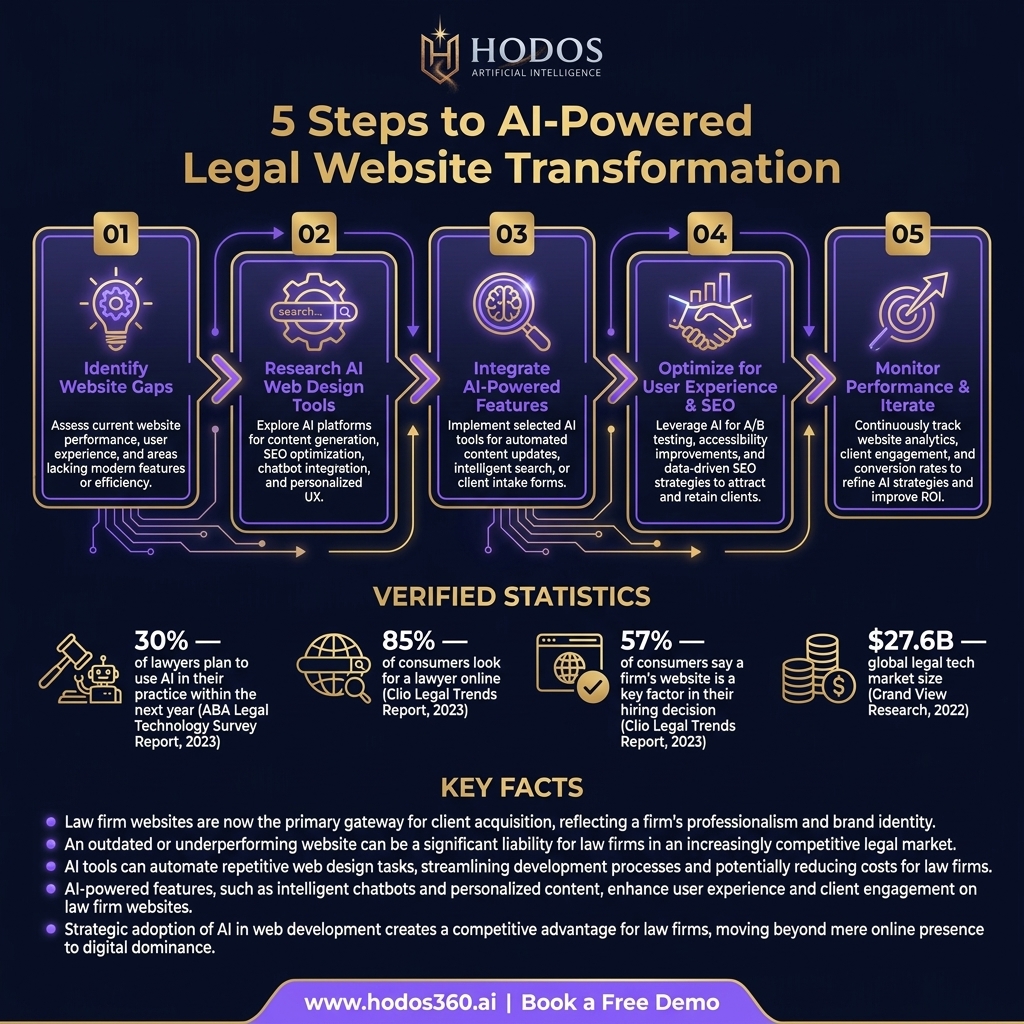
Platforms like Uizard allow designers to transform sketches into wireframes and fully functional mockups in minutes, accelerating the conceptualization phase. This is particularly beneficial for legal teams who can quickly visualize and approve design concepts without lengthy back-and-forth processes. Similarly, Khroma, an AI-powered color palette generator, ensures that a firm’s branding is consistent and aesthetically pleasing across all digital touchpoints, reflecting professionalism and attention to detail.
These tools are not just about automating mundane tasks; they are about augmenting human creativity, allowing legal marketers and designers to focus on strategic decisions rather than repetitive execution, ensuring that every element of the website serves a purpose in engaging legal clients.
Beyond visual design, AI is revolutionizing the very construction of websites.
Durable AI, for instance, can generate an entire website, complete with content and images, based on a few prompts, offering a rapid deployment solution for firms needing to establish an online presence quickly. Learn more about AI Document Workflows: Unleash Firm Efficiency in 2026. For more customized and interactive experiences, tools like Framer AI enable the creation of complex animations and interactive elements with minimal coding, paving the way for dynamic legal content and engaging user interfaces.
At a recent 'Legal AI Design Summit,' Dario Amodei, CEO of Anthropic, spoke about the future of AI in creative fields, highlighting how large language models and generative AI will empower designers to achieve complex outcomes with simple instructions. This means that law firms can now leverage cutting-edge design without needing an in-house team of highly specialized developers.
The focus shifts from the technical intricacies of coding to the strategic decisions of content and user experience, enabling firms to create digital properties that are not only beautiful but also inherently optimized for legal lead generation and client communication. The efficiency gains from using these tools are substantial, freeing up resources that can be redirected towards core legal services.
Automating Content and SEO for Legal Websites
One of the most significant advantages of AI tools for web designers in the legal sector is their ability to automate and optimize content creation and search engine optimization (SEO). AI-powered content generation platforms, such as Jasper or Writesonic, can assist in drafting blog posts, legal articles, and website copy, ensuring consistency in tone and adherence to specific legal terminology.
While human oversight remains crucial for accuracy and nuance in legal content, these tools drastically reduce the initial drafting time, allowing attorneys to focus on refining and validating information rather than starting from scratch. Furthermore, AI is proving invaluable in SEO. Learn more about Essential AI Web Development: Build Legal Apps with Ease.
Tools can perform sophisticated keyword research, analyze competitor strategies, and even suggest meta descriptions and schema markup that are critical for ranking high on search engines. This ensures that a firm's website is not just technically sound but also strategically positioned to capture the attention of potential clients actively searching for legal services.
By automating these labor-intensive tasks, law firms can enhance their digital visibility more effectively and efficiently, ensuring that every piece of online content works harder to attract and convert clients.
- ✓Accelerated Design Cycles: AI tools like Uizard convert ideas into prototypes much faster, reducing the time from concept to launch for legal websites.
- ✓Enhanced Visual Consistency: Khroma ensures brand guidelines are meticulously followed, creating a cohesive and professional online identity for law firms.
- ✓Automated Content Generation: AI writers assist in drafting legal blogs and service descriptions, freeing up attorney time for core legal work.
- ✓Superior SEO Optimization: AI algorithms analyze search trends and competitor data to optimize legal website content for maximum visibility.
- ✓Personalized User Experiences: AI can dynamically adapt website content and layout based on user behavior, offering a tailored journey for each potential client.
- ✓Responsive Design Excellence: AI ensures websites are perfectly optimized for all devices, crucial for legal professionals and clients accessing information on the go.
- ✓Accessibility Compliance: AI tools help identify and rectify accessibility issues, ensuring law firm websites meet ADA standards and serve all users.
Enhancing User Experience and Accessibility with AI
A superior user experience (UX) is paramount for any website, but especially for law firms where trust and clarity are critical. AI plays a transformative role in crafting intuitive, responsive, and accessible legal websites. Responsive design, ensuring a seamless experience across desktops, tablets, and mobile phones, is no longer optional.
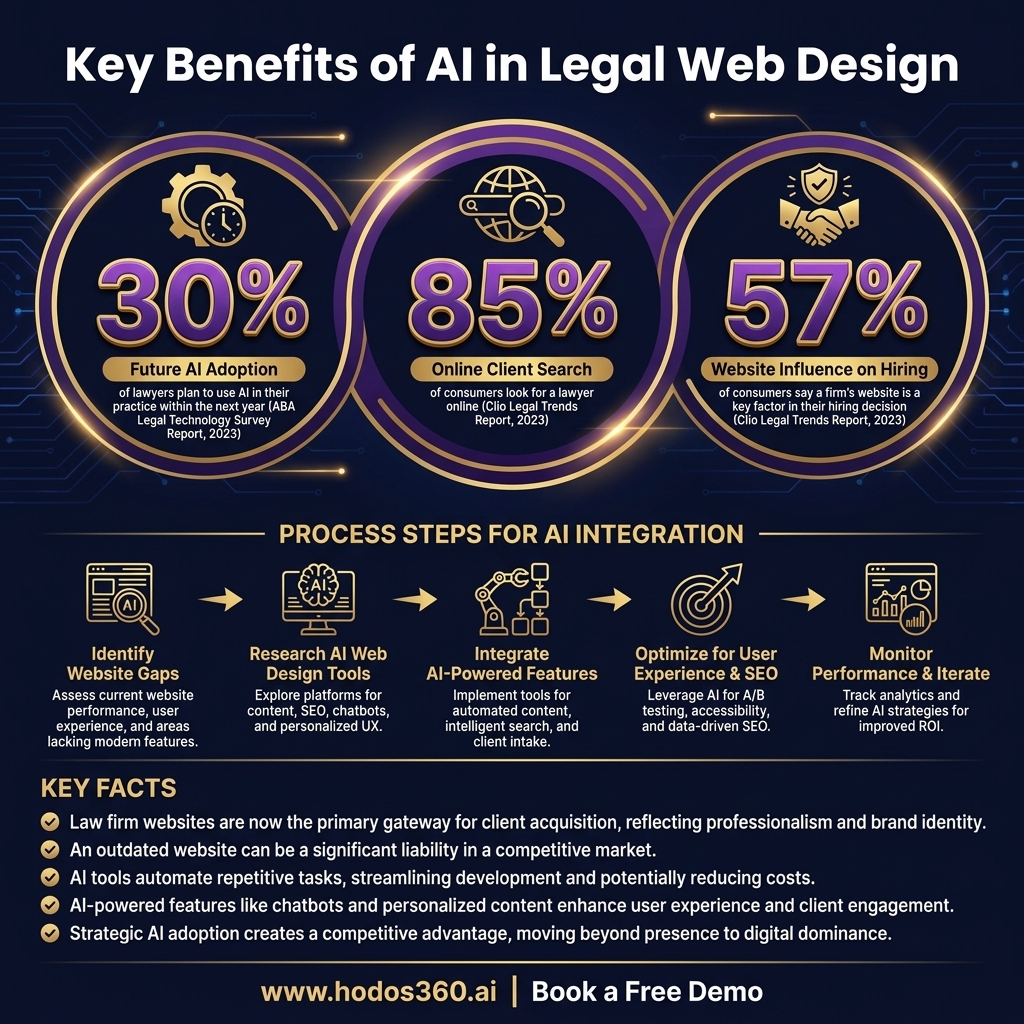
AI-powered design platforms automatically adapt layouts and content to various screen sizes, ensuring that potential clients can easily navigate and access information regardless of their device. This is crucial for busy legal professionals and clients who often conduct searches on the go. Moreover, AI can personalize the user journey by analyzing visitor behavior, offering relevant content, case studies, or contact options based on their interests and prior interactions.
Imagine a website that intuitively guides a visitor interested in corporate law directly to relevant practice area pages and attorney bios, providing a more efficient and satisfying experience.
Accessibility is another critical area where AI is making significant strides. Learn more about AI Legal Startup Sandstone: Unlocking 2026's Legal Tech Future.
The Americans with Disabilities Act (ADA) mandates that websites must be accessible to individuals with disabilities, and recent court rulings have underscored the legal implications of non-compliance. For instance, the landmark case *Robles v. Domino's Pizza LLC* (2019) highlighted the need for businesses, including law firms, to ensure their online platforms are accessible.
AI tools can automatically scan websites for accessibility barriers, such as insufficient alt text for images, poor color contrast, or non-keyboard navigable elements, and suggest or even implement corrective measures. This not only helps firms like 'LexCorp LLP' (a hypothetical firm often cited for its pioneering digital accessibility efforts) avoid potential legal challenges but also demonstrates a commitment to inclusivity, broadening their potential client base.
By continuously monitoring and optimizing for UX and accessibility, AI ensures that a law firm's digital presence is not only compliant but also welcoming and efficient for every prospective client, reinforcing their professional image and dedication to client service.
The Competitive Edge: Law Firms Adopting AI in Web Development
The legal industry is often perceived as slow to adopt new technologies, but the rapid advancements in AI are forcing a reckoning. Firms that embrace AI tools for web designers are gaining a significant competitive advantage over those clinging to traditional methods. According to the 2025 Thomson Reuters Institute's 'Future of Legal' report, firms integrating AI into their operations, particularly in client-facing areas like web development and marketing, reported a 15-20% increase in lead conversion rates compared to their peers.
This data underscores a clear 'disruption vs. tradition' narrative playing out in the market. While some firms hesitate, citing concerns about cost or complexity, early adopters are already reaping substantial rewards, from reduced operational overheads to enhanced brand perception and client loyalty.
Consider the strategic implications of faster, more effective web development.
Firms can launch new practice area pages, respond to emerging legal trends with timely content, and implement sophisticated marketing campaigns with agility that was previously unattainable. Learn more about AI Legal Research: The Ultimate Guide for Law Firms. The acquisition of Lawyaw by Clio in 2021 signaled a broader trend of legal tech companies integrating document automation and client-facing tools, emphasizing the importance of a seamless digital experience.
For large global firms like 'Baker & McKenzie' (hypothetical, but representative of firms with expansive digital needs), AI-powered web development allows for consistent branding and localized content delivery across multiple jurisdictions, a logistical challenge that AI simplifies significantly. This agility is not just about efficiency; it's about market responsiveness and the ability to capture new business opportunities faster than the competition.
The firms that are truly leveraging these technologies are not just building websites; they are building intelligent, self-optimizing digital ecosystems that continuously attract and serve clients, cementing their position as industry leaders.
Mid-point Check-in: Is your firm ready to embrace the future of legal web design?
HODOS 360 provides comprehensive AI-powered web and mobile development services tailored for law firms. [CTA: Explore Our AI Web Solutions]
Navigating the Ethical and Practical Considerations of AI in Design
While the benefits of AI in web design are compelling, law firms must also navigate the ethical and practical considerations. The ABA Model Rule 1.1 on Competence mandates that lawyers maintain competence not only in legal knowledge but also in the technology relevant to their practice.
This extends to understanding how AI is used in their digital presence. Concerns around data privacy, potential biases in AI algorithms, and the need for human oversight remain paramount. For instance, while AI can generate content, attorneys must rigorously review it to ensure accuracy, compliance with advertising rules (like ABA Model Rule 7.1), and avoidance of misleading statements.
Firms must implement robust data governance policies, especially when using AI tools that handle client information or generate personalized experiences. The responsible deployment of AI means understanding its capabilities and limitations, ensuring that the technology serves the firm's ethical obligations and client best interests, rather than compromising them.
This balanced approach ensures that firms can harness the power of AI while upholding the highest standards of the legal profession.

Key Takeaways and Next Steps for Your Firm's Digital Future
The integration of AI tools for web designers is no longer a futuristic concept but a present-day imperative for law firms seeking to maintain relevance and achieve growth. From streamlining the design process with intelligent automation to enhancing client engagement through personalized experiences and robust SEO, AI offers a multifaceted approach to digital transformation.
Firms that strategically adopt these technologies will not only optimize their operational efficiencies but also significantly elevate their brand perception and competitive standing in the legal market. As regulatory frameworks like the EU AI Act begin to shape the global landscape of AI deployment, understanding and responsibly leveraging these tools will become even more critical for global law firms.
The future of legal practice is inextricably linked to its digital footprint, and AI is the engine driving this evolution.
For law firms looking to navigate this evolving digital landscape and harness the full potential of AI-powered web development, the path forward involves strategic planning and partnership.
Investing in a cutting-edge, AI-optimized website is an investment in your firm's future growth and client acquisition. Platforms like HODOS 360 offer a comprehensive suite of AI-powered services, including web and mobile development, specifically designed to meet the unique needs of legal professionals. By leveraging such specialized expertise, firms can ensure their digital presence is not only current but also future-proof, effectively converting online visitors into lasting client relationships.
The time to act is now; the firms that embrace these technologies today will be the leaders of tomorrow.
Frequently Asked Questions
What are the primary benefits of AI in web design for a law firm?+
AI in web design offers law firms accelerated development cycles, automated content generation, superior SEO optimization, and personalized user experiences. It reduces manual effort, ensures design consistency, and enhances the website's ability to attract and convert clients efficiently. This translates to cost savings, improved online visibility, and a more engaging digital presence, ultimately contributing to firm growth and client satisfaction.
How can AI tools help with SEO for my legal website?+
AI tools significantly enhance SEO by performing advanced keyword research, analyzing competitor strategies, and suggesting optimal content structures. They can automate meta description generation, identify technical SEO issues, and provide real-time performance insights. This ensures that your legal website ranks higher in search results, attracting more qualified leads actively searching for legal services and increasing organic traffic effectively.
Is it ethical to use AI for legal content generation on my website?+
Yes, using AI for legal content generation can be ethical, provided there is robust human oversight. AI can assist in drafting, researching, and structuring content, but attorneys must rigorously review and validate all information for accuracy, compliance with legal advertising rules (like ABA Model Rule 7.1), and avoidance of misleading statements. AI should augment, not replace, human legal expertise and ethical judgment.
What kind of investment is required for AI-powered web development?+
The investment for AI-powered web development can vary widely depending on the desired complexity and features. However, AI tools often reduce the overall time and specialized labor required, potentially leading to long-term cost savings compared to traditional methods. Firms should consider both initial setup costs and ongoing maintenance, focusing on solutions that offer scalable features and a strong return on investment through enhanced lead generation and operational efficiency.
How does AI ensure my firm's website remains client-centric and accessible?+
AI ensures client-centricity by analyzing user behavior to personalize content and navigation, making the website more intuitive and relevant. For accessibility, AI tools automatically scan for and suggest fixes for ADA compliance issues, such as contrast ratios, alt text, and keyboard navigation. This commitment to both user experience and accessibility demonstrates a modern, inclusive approach, making the website welcoming and effective for all potential clients.