


AI Legal Research: The Ultimate Guide for Law Firms
The legal world is abuzz, and the recent announcement from LawSites by Robert Ambrogi has ignited a new wave of discussion: Benchly and Servient's joint venture to launch legagain, heralded as the first AI-native Legal Research Platform. This development, announced at Legalweek 2026, isn't just another incremental upgrade; it represents a seismic shift in how legal professionals will approach discovery, analysis, and strategy.
For decades, legal research has been a cornerstone of legal practice, often consuming significant billable hours and requiring meticulous, exhaustive manual review. The promise of legagain is to fundamentally alter this paradigm, offering attorneys a powerful co-pilot capable of navigating vast repositories of case law, statutes, and secondary sources with unprecedented speed and precision.
This moment, which many watch with keen interest, marks a critical juncture for firms grappling with the imperative to innovate and optimize.
This March 2026 unveiling highlights a broader trend: the accelerating integration of artificial intelligence across all facets of legal practice. From initial client intake to case management and document automation, AI is no longer a futuristic concept but a present-day reality driving competitive advantage.
The joint venture between Benchly, known for its advanced analytics, and Servient, a leader in e-discovery, creates a formidable force. Their combined expertise aims to tackle the most complex challenges in legal research, moving beyond keyword searches to deep semantic understanding and predictive insights. For law firms, understanding the implications of platforms like legagain is not merely about adopting new tools; it's about reimagining operational workflows, enhancing client service, and ultimately, securing their stake in an increasingly tech-driven future.
The liberty at stake for firms is the freedom to focus on high-value legal strategy, unburdened by the drudgery of manual research.
The Dawn of AI-Native Legal Research Platforms
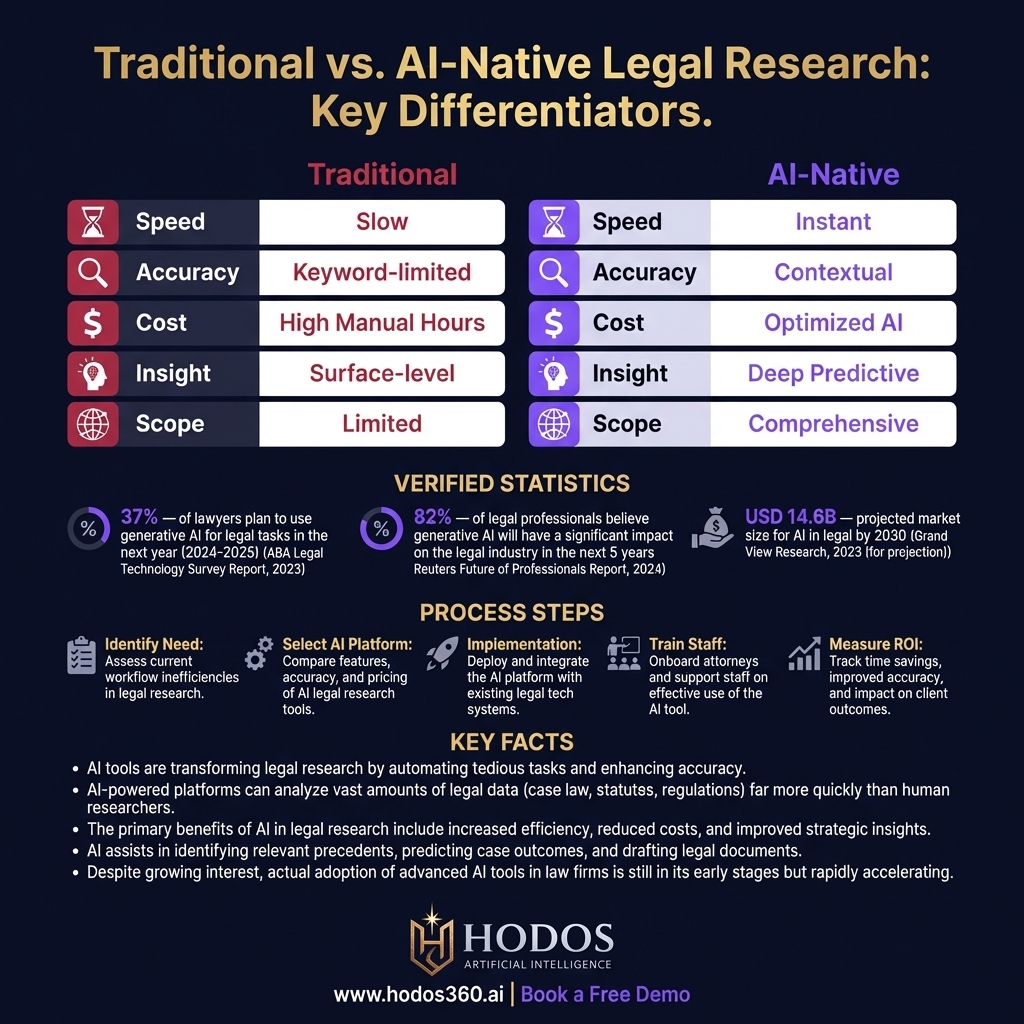
The legal industry has long sought ways to streamline its most laborious processes, and AI legal research stands at the forefront of this evolution. Traditionally, legal research involved hours spent poring over digests, reporters, and online databases like Westlaw and LexisNexis, which, while indispensable, relied heavily on keyword matching and human interpretation.
The joint venture of Benchly and Servient to create legagain signifies a departure from these legacy systems. As Robert Ambrogi noted in his LawSites article, legagain is not merely an AI-enhanced version of existing tools; it is "AI-native," meaning its core architecture and functionalities are built from the ground up to leverage advanced machine learning, natural language processing (NLP), and generative AI.
This distinction is crucial, promising a system that doesn't just find documents but understands legal concepts, identifies relevant precedents even with nuanced factual differences, and synthesizes information into actionable insights.
This new generation of AI legal research platforms is designed to address the inherent complexities and ambiguities of legal language.
Consider the challenge of identifying a comprehensive set of precedents for a novel class action lawsuit or a complex intellectual property dispute. A traditional search might miss cases where the legal principle is applied in a different context or uses slightly varied terminology Legal AI Problem: Mastering Ethical Tech in Law Firms 2026.
However, an AI-native platform, trained on vast quantities of legal data, can discern underlying legal principles, identify implicit connections, and even flag potential counterarguments. For instance, in a recent interview, Jack Newton, CEO of Clio, emphasized the shift from "data search" to "knowledge discovery," underscoring how AI empowers attorneys to gain deeper insights faster.
This capability is particularly vital in high-stakes litigation, where missing a critical case can have profound consequences. The ability to quickly identify a relevant servers liability case, for example, could be the difference between winning and losing. The competitive pressure to adopt these tools is mounting, as firms that cling to outdated methodologies risk falling behind in both efficiency and the quality of their legal analysis.
How AI is Redefining Legal Workflow and Case Management
The introduction of AI legal research platforms like legagain is not an isolated event; it's part of a broader technological wave that is fundamentally reshaping how law firms operate, particularly in case management and overall workflow. The integration of advanced AI tools promises to move beyond simple automation to intelligent assistance across various legal tasks.
For example, the initial client intake process, traditionally paper-intensive and time-consuming, is now being revolutionized by AI. Systems can automatically extract key information from new client documents, identify potential conflicts of interest, and even draft initial engagement letters, significantly reducing administrative overhead and accelerating the onboarding process.
This frees up legal assistants and junior associates to focus on more substantive tasks, enhancing firm efficiency from the very first interaction.
Beyond client intake, AI is transforming document automation and review, which are critical components of case management. Tools powered by machine learning can analyze vast quantities of discovery documents, identifying relevant clauses, red-flagging inconsistencies, and even predicting potential litigation outcomes Website Design Cost 2026: Strategic Investment for Law Firms.
This capability is especially crucial in large-scale class action lawsuits or complex corporate mergers, where manual review would be prohibitively expensive and prone to human error. For instance, a study by Thomson Reuters found that AI-powered contract review can reduce review time by up to 80% while increasing accuracy by 20%.
Firms that embrace these technologies are not just cutting costs; they are gaining a strategic advantage by being able to process and understand information at a speed and scale previously unimaginable. This also enhances the firm's ability to manage its stake in various cases more effectively.
Client Intake & Document Automation Transformed
The synergy between AI legal research and broader AI Law Firm Management Systems creates a truly integrated ecosystem. Imagine a scenario where a lawyer conducting research on legagain uncovers a critical precedent; this information can then be automatically flagged within the firm's case management system, triggering workflow updates, notifying relevant team members, and even suggesting adjustments to litigation strategy.
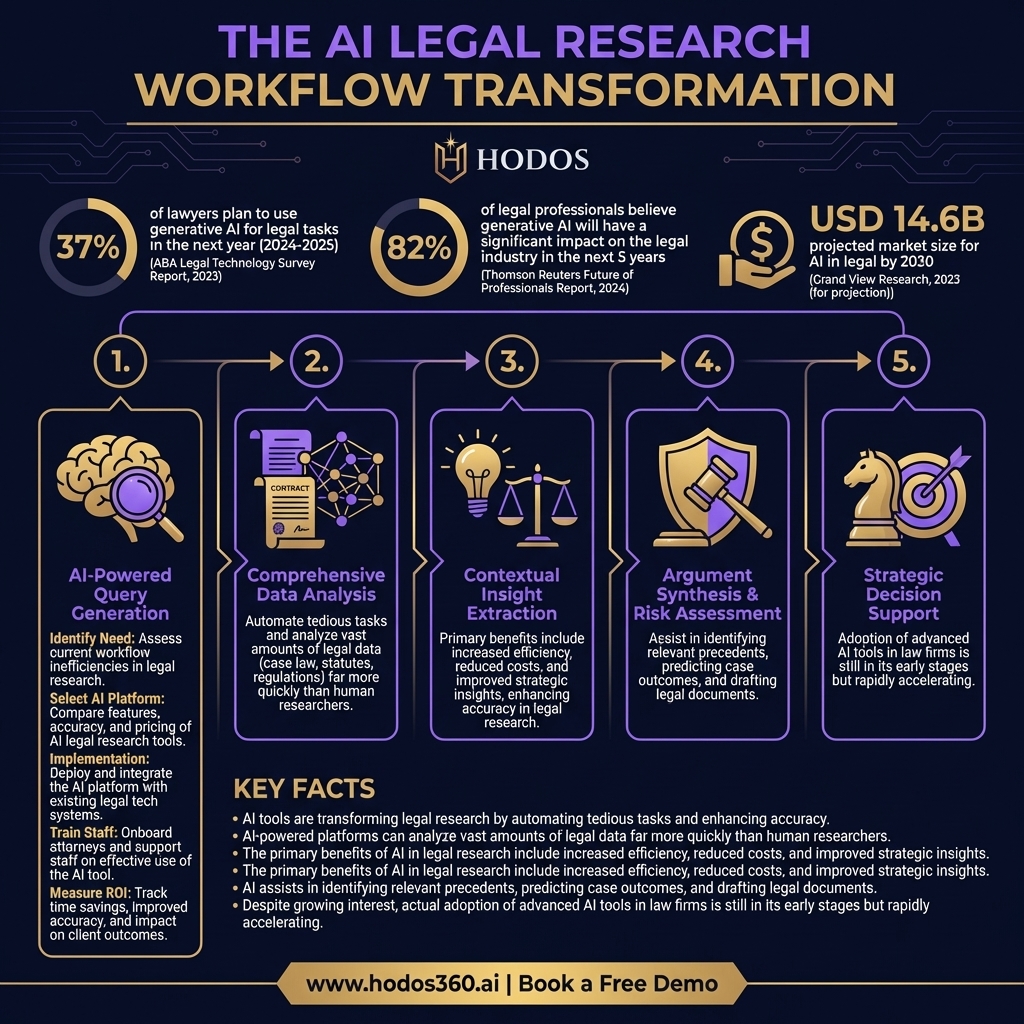
This interconnectedness is where the true power of AI lies: creating intelligent legal workflows that anticipate needs and proactively support decision-making Voice AI Adoption: Essential for Law Firms' Future Growth. Firms like Allen & Overy, through their partnership with Harvey AI, have demonstrated how generative AI can assist in drafting legal memos, summarizing complex documents, and even preparing initial legal research briefs, dramatically compressing the time spent on foundational tasks.
The liberty at stake for attorneys is the opportunity to transition from reactive document processing to proactive legal strategizing, allowing them to better serve clients and strengthen their stake in the legal market.
The Competitive Edge: How Firms Leverage AI for Superior Outcomes
In today's fiercely competitive legal market, the adoption of AI legal research and comprehensive AI Law Firm Management Systems is no longer a luxury but a strategic imperative for firms aiming for superior outcomes. The joint venture behind legagain is a clear signal that the race for technological supremacy is intensifying, and firms that hesitate risk being left behind.
Those who embrace these tools gain a distinct competitive edge in several critical areas. Firstly, they achieve unparalleled efficiency. By automating mundane, repetitive tasks such as document review, legal research, and client intake, attorneys can dedicate more time to high-value activities like client counseling, negotiation, and courtroom advocacy.
This translates directly into higher billable hours for strategic work and improved client satisfaction due to faster, more precise service delivery.
Secondly, AI enhances the quality and depth of legal analysis Legal AI ROI: Maximizing Law Firm Value in 2026. AI legal research platforms can identify subtle patterns and connections in vast datasets that might elude human researchers, no matter how diligent.
This leads to more robust legal arguments, better-informed strategic decisions, and a higher probability of favorable outcomes. For example, in a complex class action lawsuit, an AI system could analyze millions of documents to identify a crucial piece of evidence or a pattern of corporate behavior that a human team might miss, potentially altering the entire trajectory of the case.
This level of analytical power provides firms with a significant advantage in litigation, allowing them to anticipate counterarguments and build stronger cases. The stake in adopting these technologies is directly tied to a firm's reputation for excellence and success.
- ✓Enhanced Efficiency: Automate mundane tasks like document review and initial research, freeing up attorneys for high-value strategic work.
- ✓Superior Analytical Depth: AI platforms uncover subtle patterns and connections in vast legal datasets, leading to more robust arguments.
- ✓Faster Case Preparation: Rapidly synthesize information and identify critical precedents, significantly reducing preparation time for complex cases.
- ✓Improved Client Satisfaction: Deliver faster, more precise, and cost-effective services, meeting modern client demands for value.
- ✓Strategic Resource Allocation: Optimize staffing and budget by understanding where AI can best augment human efforts.
- ✓Innovation in Service Offerings: Develop new, unbundled legal services or competitive fixed-fee models enabled by AI-driven efficiencies.
Navigating the Ethical and Practical Considerations of AI in Law
While the transformative potential of AI legal research and integrated AI Law Firm Management Systems is undeniable, navigating their implementation comes with significant ethical and practical considerations. The joint venture of Benchly and Servient in creating legagain highlights the need for a thoughtful approach to adoption.
One primary concern revolves around data privacy and security. Legal professionals handle highly sensitive client information, and integrating AI systems requires robust safeguards to protect this data from breaches and misuse. Firms must ensure that any AI platform they utilize complies with stringent data protection regulations, such as GDPR or CCPA, and that vendors have clear policies on data anonymization, storage, and access.
The liberty at stake for clients demands the highest level of diligence in this area.
Another critical ethical consideration is the potential for bias in AI algorithms Legal AI Gap: Bridging the Divide for Law Firms in 2026. If the data used to train an AI legal research platform contains historical biases, the system could perpetuate or even amplify those biases in its analysis, leading to inequitable outcomes.
This is particularly relevant in areas like criminal law or civil rights cases, where historical disparities in legal outcomes are well-documented. Attorneys have a professional obligation under rules like ABA Model Rule 1.1 (Competence) and 1.6 (Confidentiality of Information) to ensure that the tools they use do not compromise their ethical duties.
This means firms must exercise due diligence in selecting AI vendors, demanding transparency about training data and algorithm design, and implementing human oversight to review and validate AI-generated insights. The watch for ethical implications is constant.
Addressing Algorithmic Bias and Data Privacy
Practically, the successful integration of AI legal research requires more than just purchasing software; it necessitates a cultural shift within the firm. Attorneys and staff need training, not only on how to operate the new tools but also on how to effectively collaborate with AI.
This involves understanding AI's capabilities and limitations, knowing when to trust its outputs, and when to apply human judgment. Firms that fail to invest in proper change management and training risk underutilizing their AI investments or facing internal resistance Voice AI: Ultimate Competitive Landscape for Law Firms.
As Karl Chapman, CEO of Kim Technologies, has consistently argued, successful AI adoption is 80% people and process, 20% technology. Therefore, firms considering platforms like legagain must also plan for comprehensive training programs and foster a firm-wide culture that embraces technological innovation and continuous learning, ensuring a smooth transition and maximizing their technological stake.
The Future is Integrated: Beyond Point Solutions to Holistic AI Management
The launch of legagain as a specialized AI legal research platform is a significant milestone, but the ultimate future of legal technology lies in integrated, holistic AI Law Firm Management Systems. While specialized tools offer deep functionality in specific areas, the real power emerges when these capabilities are seamlessly woven into a comprehensive operational framework.
Imagine a world where your client intake system automatically populates case management files, your document automation drafts tailored contracts, and your AI legal research tool not only finds precedents but also updates your litigation strategy and even predicts potential outcomes, all within a single, interconnected ecosystem.
This is the vision driving platforms like HODOS 360, which aims to provide a complete suite of AI-powered services designed to optimize every facet of a law firm's operations.
The move towards integrated systems addresses a common challenge in legal tech: tool sprawl. Many firms find themselves juggling multiple disparate software solutions for different functions, leading to inefficiencies, data silos, and increased IT complexity.
A holistic AI Law Firm Management System eliminates these pain points by centralizing data, streamlining workflows, and ensuring consistency across all firm operations. For instance, an AI-powered marketing platform can leverage insights from case management data to identify successful strategies, while AI voice assistants handle routine inquiries, freeing up legal staff.
This integrated approach not only boosts efficiency but also provides a unified view of firm performance, enabling better strategic decision-making and resource allocation. The stake in adopting such comprehensive solutions is substantial, impacting everything from profitability to client acquisition.
The Synergy of AI Across Firm Operations
Ultimately, the goal is to empower legal professionals to deliver exceptional value. The joint venture that created legagain is a testament to the ongoing innovation in specific legal tech verticals, yet the true competitive advantage will belong to firms that can orchestrate these powerful tools into a coherent, intelligent operational symphony.
This means moving beyond reactive technology adoption to proactive strategic planning, envisioning how AI can fundamentally elevate every aspect of legal service delivery. The firms that will thrive in this new era are those that see AI legal research not as a standalone tool, but as a vital component of an intelligent, interconnected legal enterprise, ready to face any class action or complex lawsuit with unparalleled preparedness.
This forward-thinking approach ensures not just survival, but sustained growth and leadership in the evolving legal landscape.

Key Takeaways and Next Steps
The legal industry is at an inflection point, with the joint venture of Benchly and Servient to create legagain serving as a powerful emblem of the transformative power of AI legal research. This shift isn't just about faster document retrieval; it's about fundamentally rethinking how legal professionals conduct research, manage cases, and deliver value to clients.
The firms that recognize this moment, and proactively integrate advanced AI into their operations, will be the ones that secure their stake in the future of law. From enhancing client intake and document automation to providing sophisticated case management and AI legal research, the benefits of these technologies are clear and compelling.
For law firm owners and managing partners, the immediate next step is not just to watch these developments unfold, but to actively explore how AI Law Firm Management Systems can be strategically deployed. This involves assessing current workflows, identifying pain points, and researching comprehensive solutions that offer more than just point-specific tools.
Consider platforms that provide an integrated suite of services, from AI legal research capabilities to AI Marketing and AI Voice Assistants, ensuring a cohesive and efficient technological ecosystem. The liberty at stake is the firm's ability to remain competitive, attract top talent, and deliver superior client outcomes in an increasingly complex legal landscape.
Embracing this innovation isn't just about technology; it's about securing a prosperous and sustainable future for your practice.
Frequently Asked Questions
What is AI-native legal research, and how does legalgain fit in?+
AI-native legal research, exemplified by legagain, means the platform is built from the ground up using advanced AI technologies like machine learning and NLP. Unlike traditional tools that are merely AI-enhanced, legagain leverages AI at its core to understand legal concepts, identify nuanced precedents, and synthesize information, offering deeper insights and superior efficiency compared to older keyword-based systems.
How will AI legal research impact a law firm's daily operations?+
AI legal research will dramatically streamline daily operations by reducing the time spent on manual document review and information gathering. It allows attorneys to quickly find relevant cases, identify key arguments, and even predict potential outcomes. This efficiency frees up legal professionals to focus on higher-value tasks like client strategy, negotiation, and courtroom advocacy, enhancing overall productivity and client service.
What are the ethical considerations when adopting AI legal research platforms?+
Ethical considerations include data privacy and security, as AI systems handle sensitive client information. Firms must ensure compliance with data protection regulations and scrutinize vendor policies. Additionally, there's a risk of algorithmic bias if the training data is flawed, potentially leading to inequitable legal outcomes. Human oversight and transparent AI design are crucial to maintain ethical standards and professional competence.
Can AI legal research tools replace human lawyers?+
No, AI legal research tools are designed to augment, not replace, human lawyers. While AI can automate research, document review, and data analysis, it lacks the critical thinking, emotional intelligence, ethical judgment, and client relationship skills inherent to human legal practice. AI acts as a powerful assistant, freeing up attorneys to focus on complex legal strategy, client counseling, and advocacy, elevating their role rather than diminishing it.
How does an AI-native platform differ from existing legal databases like Westlaw or LexisNexis?+
Existing legal databases primarily function as sophisticated search engines with some AI enhancements. An AI-native platform, such as legagain, is fundamentally different because its entire design is predicated on AI's ability to understand legal context, semantic meaning, and relationships between concepts. It moves beyond keyword matching to provide deep analytical insights, synthesize information, and even generate summaries, offering a more intelligent and proactive research experience.