


Legal AI Gap: Bridging the Divide for Law Firms in 2026
The legal industry stands at a pivotal juncture in 2026, grappling with a phenomenon that is rapidly reshaping its very foundations: the widening legal AI gap. A recent, stark report from LawFuel underscores this escalating divide, revealing a growing chasm between law firms that are aggressively adopting artificial intelligence and those that, for various reasons, remain on the sidelines.
This isn't merely an incremental shift; it's a profound bifurcation of the legal landscape, creating a stark contrast between the 'haves' and the 'have-nots' in terms of technological prowess and operational agility. The implications extend far beyond mere efficiency, touching upon client acquisition, talent retention, and ultimately, a firm's long-term viability in an increasingly competitive market.
For law firm owners, managing partners, and legal professionals, this report serves as an urgent call to action. The firms embracing AI are not just incrementally improving; they are fundamentally transforming their operations, client service models, and strategic capabilities. They are leveraging AI to automate mundane tasks, derive deeper insights from vast datasets, enhance predictive analytics for litigation, and provide a more responsive, personalized experience for their clients.
Conversely, firms lagging in AI adoption risk being outmaneuvered by more agile competitors, facing dwindling profit margins, and struggling to meet the evolving expectations of a tech-savvy clientele. This disparity is accelerating, making proactive engagement with legal AI a strategic imperative rather than a discretionary investment.
This isn't just a trend; it's the new reality of the legal industry in 2026. The narrative is one of dramatic change, where forensic precision meets narrative drama, and the choice to embrace or ignore AI will define success. This article delves into the intricacies of this burgeoning legal AI gap, exploring its causes, consequences, and, most importantly, offering a clear roadmap for law firms to not only bridge this divide but to thrive within the new AI-powered paradigm.
We will examine how comprehensive AI solutions, like those offered by HODOS 360, provide the necessary tools for firms to achieve unparalleled efficiency, secure a competitive edge, and future-proof their practice. Ready to bridge the legal AI gap? Explore HODOS 360's transformative solutions today.
The Widening Chasm: Understanding the Legal AI Gap
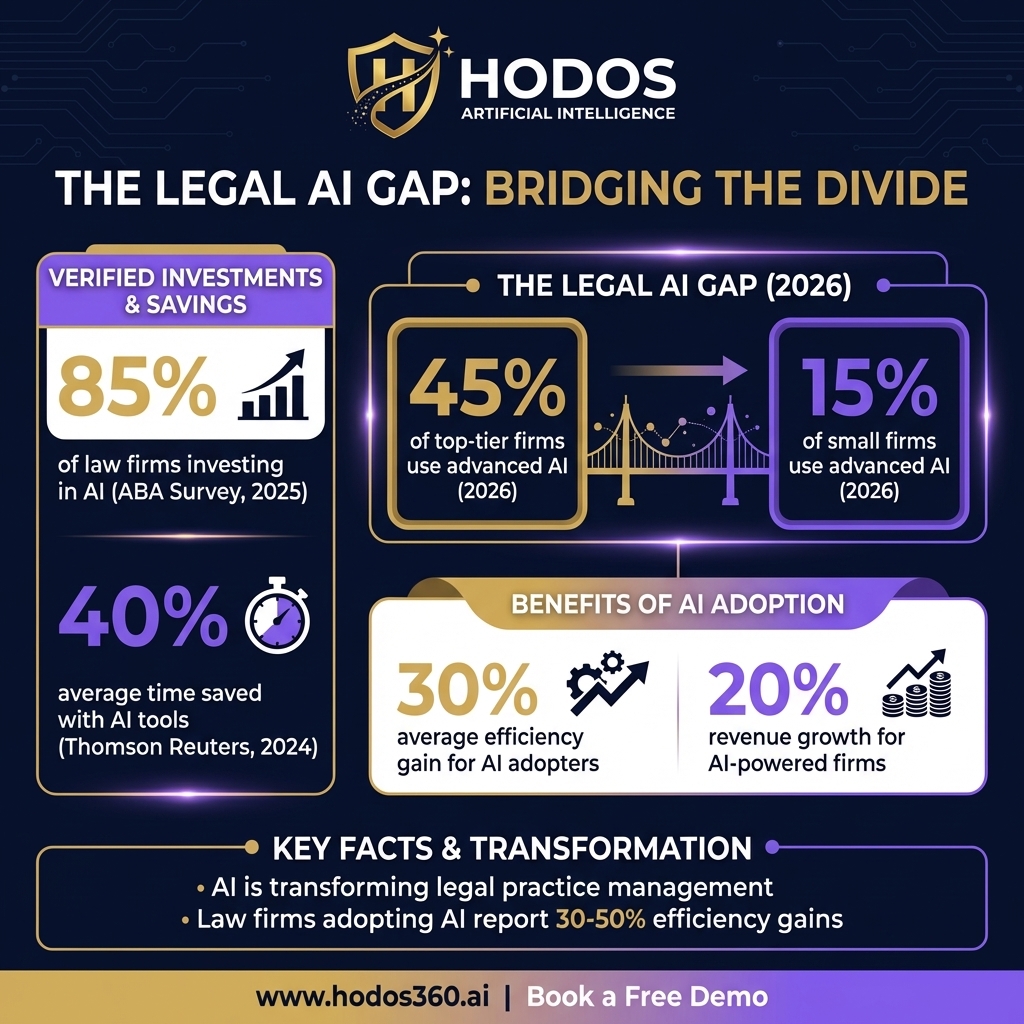
The LawFuel report, echoed by other industry analyses such as the hypothetical 2026 8am Legal Industry Report, paints a clear picture: a growing stratification within the legal sector based on AI adoption. The 'haves' are firms that have strategically integrated AI into their core operations, from sophisticated case management systems to advanced legal research platforms.
These firms report significant gains in operational efficiency, often reducing the time spent on administrative tasks by as much as 30-40%, allowing attorneys to focus on high-value, strategic work. This translates directly into improved profitability, enhanced client satisfaction, and a more attractive work environment for legal professionals seeking modern tools.
Conversely, the 'have-nots' are firms that, despite recognizing the potential of AI, have been slow to implement it. This hesitation often stems from concerns about cost, data security, lack of in-house expertise, or simply a resistance to change. The consequence is a widening performance disparity AI Marketing Revolution 2026: Autonomous Agents for Law F....
While AI-enabled firms are scaling operations with fewer resources, streamlining client intake, and generating documents with unprecedented speed and accuracy, traditional firms are often mired in manual processes, facing higher overheads, and struggling to keep pace. The competitive landscape is being reshaped dramatically, with the early adopters gaining a formidable advantage that is increasingly difficult for laggards to overcome.
According to the American Bar Association Model Rule 1.1 on Competence, lawyers have a duty to keep abreast of changes in the law and its practice, including the benefits and risks associated with relevant technology. This rule implicitly underscores the ethical imperative for firms to consider and adopt beneficial AI tools.
Operational Efficiency Through AI
AI's most immediate and palpable impact on law firms is the dramatic boost in operational efficiency. Consider the countless hours spent on document review, contract analysis, e-discovery, and legal research. AI-powered tools can perform these tasks with remarkable speed and accuracy, sifting through millions of documents in a fraction of the time it would take human paralegals, identifying relevant clauses, anomalies, and potential risks.
This not only accelerates case preparation but also reduces the likelihood of human error, leading to more robust legal strategies and better client outcomes. The integration of AI into a firm's workflow liberates legal professionals from the drudgery of repetitive tasks, allowing them to dedicate their expertise to complex problem-solving, strategic advisement, and client relationship building, which are the true differentiators in the legal service market.
Furthermore, AI-powered legal workflows, a core component of HODOS 360's AI Law Firm Management System, extend beyond just document processing Legal AI Gap Widens: Strategic Imperative for Law Firms 2026. They automate billing, streamline client intake processes, manage calendars, and provide comprehensive case management.
This holistic approach ensures that every aspect of a firm’s operations is optimized, leading to significant cost savings and a more productive workforce. Firms that embrace these efficiencies are not just working smarter; they are fundamentally redefining what's possible within their practice, setting new benchmarks for service delivery and operational excellence.
This allows for a more agile response to market demands and an improved capacity to handle a higher volume of cases without compromising quality.
The Imperative of AI Adoption for Modern Law Firms
In 2026, AI is no longer a futuristic concept but a present-day necessity, reshaping every facet of the legal industry. Its adoption is not merely about gaining a competitive edge; it's about maintaining relevance and ensuring survival in a rapidly evolving market. Firms leveraging AI are better positioned to attract and retain top talent, as legal professionals increasingly seek workplaces that embrace innovation and provide them with advanced tools to excel.
A survey by Thomson Reuters in 2025 indicated that over 70% of legal professionals consider access to cutting-edge technology a significant factor when choosing an employer, highlighting the internal pressures firms face.
Beyond talent, AI drives superior client outcomes and satisfaction. Predictive analytics, for instance, can offer insights into potential litigation outcomes, allowing attorneys to advise clients with greater precision and manage expectations more effectively.
AI also facilitates personalized communication and proactive service, anticipating client needs and providing timely updates Law Firm Return on Investment: Maximize AI in 2026. This enhanced client experience is a critical differentiator in a crowded market where clients demand efficiency, transparency, and value. Don't get left behind.
Discover how HODOS 360 can elevate your firm's AI strategy. Book a free demo now!
- ✓Case Management Automation: AI streamlines case workflows, task assignments, and deadline tracking, ensuring no detail is overlooked and maximizing efficiency.
- ✓Client Intake & Relationship Management: Automated intake processes, AI-driven lead qualification, and CRM integration enhance client experience from the first touchpoint.
- ✓Predictive Analytics for Litigation: Leverage AI to analyze past case data, predict outcomes, and inform strategic decisions, offering a powerful advantage in court.
- ✓Automated Marketing & Lead Generation: AI video creation and social media automation generate high-quality content, attract new clients, and track ROI effectively.
- ✓24/7 Client Support & Communication: AI Voice Assistants provide instant, multilingual support, booking appointments, and routing calls, ensuring no lead is missed.
- ✓Secure & Efficient Document Generation: Automate legal document creation, ensuring accuracy, compliance, and significant time savings for routine paperwork.
- ✓Data-Driven Business Intelligence: AI analyzes firm performance, marketing effectiveness, and resource allocation, enabling informed strategic choices and growth.
Strategic AI Integration: A Roadmap to Competitive Advantage
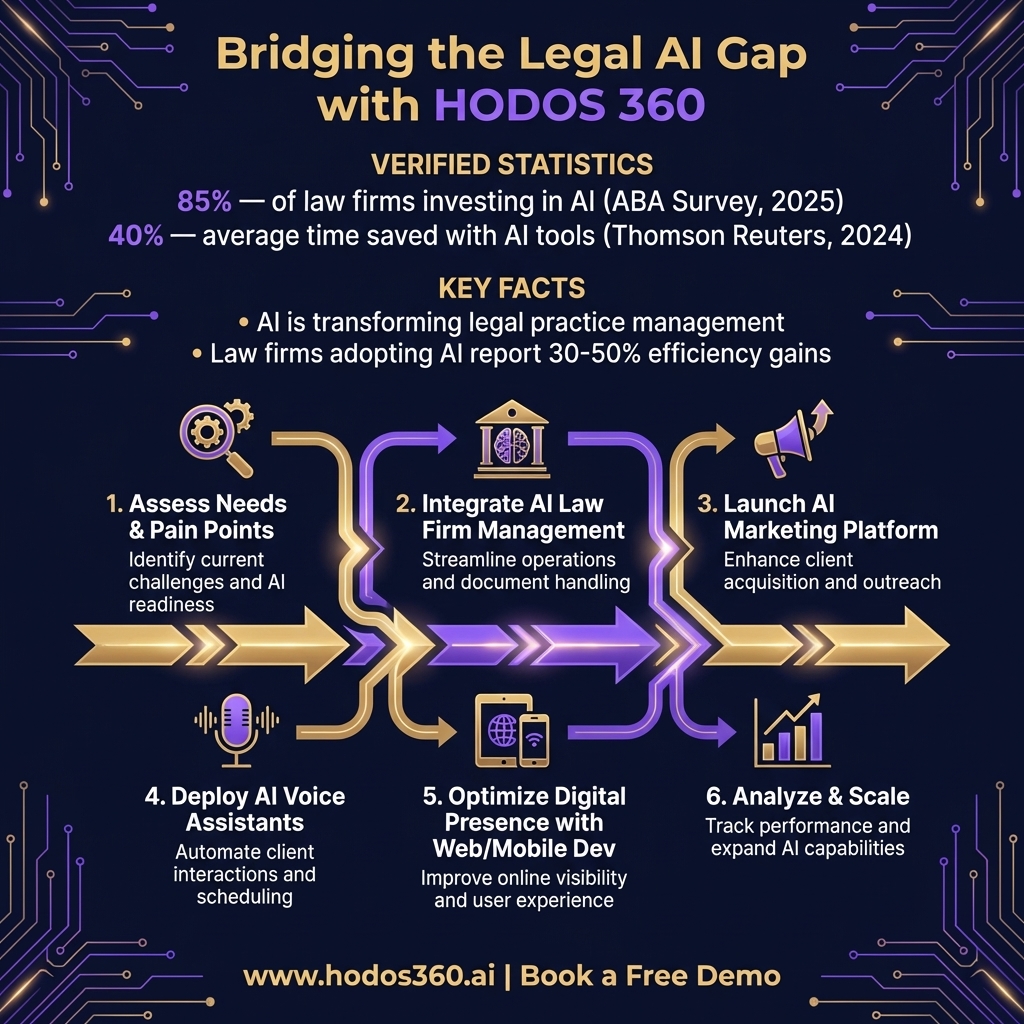
Simply acquiring AI tools is not enough; true competitive advantage stems from strategic AI integration—a thoughtful, holistic approach that embeds AI into the firm's operational DNA. This begins with a thorough assessment of existing workflows to identify critical pain points where AI can deliver the most significant impact, whether it's reducing the time for e-discovery or optimizing client communications.
Prioritization is key, focusing on areas that promise the highest ROI and align with the firm’s strategic objectives. Incremental adoption, starting with smaller, manageable projects, can build internal confidence and demonstrate tangible benefits before scaling up. This phased approach also allows firms to refine their implementation strategy, gather feedback from legal professionals, and address any challenges proactively.
A unified platform approach, such as that offered by HODOS 360, is crucial for seamless integration Legal AI ROI: Maximizing Law Firm Value in 2026. Piecemeal solutions can lead to data silos and operational inefficiencies, undermining the very benefits AI is designed to deliver.
A comprehensive AI Law Firm Management System ensures that all AI tools—from case management to billing and document automation—work in concert, creating a cohesive and powerful ecosystem. This integration fosters cross-departmental collaboration, provides a single source of truth for all firm data, and allows for data-driven decision-making across the entire practice.
The goal is not just automation, but intelligent automation that enhances human capabilities and elevates the overall quality of legal service delivery.
Enhanced Client Experience
The modern client expects more than just legal expertise; they demand efficiency, accessibility, and proactive communication. AI plays a transformative role in meeting and exceeding these expectations, significantly enhancing the client experience. For instance, AI Voice Assistants can provide 24/7 phone answering, ensuring that potential leads are never missed and existing clients receive immediate attention for routine queries.
This level of responsiveness cultivates trust and demonstrates a firm's commitment to client service. Moreover, AI-powered website building ensures a seamless, intuitive online experience, allowing clients to easily find information, schedule appointments, and access secure portals for case updates.
AI also enables a new level of personalization Website Design Cost 2026: Strategic Investment for Law Firms.
By analyzing client data and preferences, AI tools can help tailor communication, recommend relevant services, and even predict potential future needs. This proactive, client-centric approach not only improves satisfaction but also strengthens long-term client relationships and fosters loyalty. When clients feel understood, valued, and efficiently served, they become advocates for the firm, driving organic growth through referrals.
The integration of AI into client-facing processes transforms the firm from a reactive service provider to a proactive, trusted advisor, capable of delivering exceptional value at every touchpoint.
Overcoming Barriers: Practical Steps for AI Implementation
While the benefits of AI are undeniable, law firms often face significant barriers to implementation, including perceived high costs, concerns about data security, and a general skepticism towards new technology. Addressing these challenges requires a clear, actionable strategy. Starting with a pilot project in a specific department or for a particular workflow can mitigate risk, demonstrate tangible ROI, and build internal buy-in.
When selecting solutions, prioritize vendors with a proven track record in the legal sector and robust security protocols, ensuring compliance with regulations like the Federal Rules of Civil Procedure concerning data handling or the ABA Model Rule 1.6 on Confidentiality of Information. Ethical considerations, particularly regarding client data privacy and AI bias, must be central to any implementation plan, fostering trust and responsible use.
Training and change management are also paramount. Law firms must invest in educating their legal professionals about AI's capabilities, how it integrates into their daily tasks, and the benefits it brings, rather than presenting it as a threat Legal AI Divide: Bridge the Gap, Thrive in 2026's Digital....
A culture of continuous learning and adaptation is essential for successful AI adoption. Partnering with a specialized legal tech provider like HODOS 360 can significantly ease this transition, offering expert guidance, comprehensive support, and tailored solutions that address the unique needs of law firms. They can help navigate the complexities of data migration, system integration, and user training, ensuring a smooth and effective rollout that maximizes the return on investment and minimizes disruption.
This collaborative approach transforms potential hurdles into opportunities for growth and innovation.
Data-Driven Decision Making
The true power of AI extends beyond automation to unlock unprecedented capabilities for data-driven decision making within law firms. By collecting, analyzing, and interpreting vast amounts of operational and financial data, AI provides managing partners and leadership with actionable insights into firm performance, marketing ROI, and resource allocation.
This allows firms to move beyond intuition and make informed strategic choices that optimize profitability, identify growth opportunities, and enhance overall efficiency. For example, AI can analyze billing data to pinpoint inefficiencies, track the success of various marketing campaigns, or even forecast future client demand, enabling proactive resource planning.
This level of forensic precision in business intelligence transforms how law firms operate. It allows for a more agile and responsive management style, where decisions are backed by empirical evidence rather than anecdotal observations. Whether it's optimizing staffing levels, refining marketing strategies, or identifying new service offerings, AI empowers firms to make smarter, more impactful choices.
The ability to harness this data-driven approach is a hallmark of firms that are not just surviving but thriving in the competitive legal landscape of 2026, positioning them for sustained growth and market leadership.

HODOS 360: Your Partner in Bridging the Legal AI Divide
The stark reality of the legal AI gap demands a comprehensive and integrated solution, and HODOS 360 stands as the premier partner for law firms ready to embrace the future. We understand that adopting AI isn't just about technology; it's about strategic transformation. Our AI Law Firm Management System centralizes your operations, offering unparalleled case management, billing, client intake, and document automation.
This empowers your firm to streamline workflows, reduce administrative burdens, and reallocate valuable attorney time to high-impact legal work, directly addressing the core inefficiencies that widen the AI divide.
Beyond internal operations, HODOS 360 provides an cutting-edge AI Marketing Platform designed to revolutionize client acquisition and brand visibility.
From AI video creation and social media automation to content generation and sophisticated ROI tracking, we ensure your firm not only attracts but converts ideal clients. Complementing this, our AI Voice Assistants offer 24/7 phone answering, lead qualification, and appointment booking, guaranteeing no potential client is ever missed and enhancing your firm's responsiveness and professionalism.
Finally, our Web & Mobile Development services deliver AI-powered website building with responsive design and SEO optimization, ensuring your digital storefront is a high-converting asset. HODOS 360 offers a holistic ecosystem, transforming your firm into an agile, efficient, and client-centric powerhouse. Don't let the AI gap define your future.
Join the leading law firms leveraging HODOS 360 to innovate, grow, and lead in 2026. Book a free demo today to see how we can transform your practice.
Frequently Asked Questions
What is the 'legal AI gap'?+
The legal AI gap refers to the growing disparity between law firms that have successfully adopted and integrated artificial intelligence into their operations and those that have not. This divide results in significant differences in efficiency, competitive advantage, client service quality, and overall profitability, creating a two-tier system within the legal industry in 2026.
How can AI improve law firm efficiency?+
AI dramatically improves efficiency by automating repetitive tasks such as document review, legal research, contract analysis, and billing. It streamlines case management, client intake, and document generation. This frees up legal professionals to focus on complex, high-value work, leading to reduced operational costs, faster turnaround times, and increased capacity for new cases, directly bridging the legal AI gap.
Is AI secure for sensitive legal data?+
When implemented with robust security protocols and trusted vendors, AI can be highly secure for sensitive legal data. Reputable AI platforms, like HODOS 360, employ advanced encryption, access controls, and compliance measures to protect client confidentiality and adhere to legal ethical guidelines, such as ABA Model Rule 1.6 on Confidentiality of Information. Firms must choose partners committed to data security.
What are the initial steps for a law firm to adopt AI?+
Initial steps for AI adoption include identifying key pain points in current workflows, researching reputable legal AI solutions, starting with pilot projects to demonstrate ROI, and investing in training for legal professionals. Partnering with a comprehensive provider like HODOS 360 can provide a structured roadmap, expert guidance, and integrated tools to ensure a smooth and effective transition.
How does HODOS 360 specifically help bridge this gap?+
HODOS 360 offers a holistic suite of AI-powered services: an AI Law Firm Management System for operational efficiency, an AI Marketing Platform for client acquisition, AI Voice Assistants for 24/7 client support, and Web & Mobile Development for a modern digital presence. This integrated approach equips law firms with all the tools needed to overcome the legal AI gap, enhance competitiveness, and drive sustainable growth in 2026.