


Legal AI Gap Widens: Strategic Imperative for Law Firms 2026
In the rapidly evolving legal landscape of 2026, a stark reality is crystallizing: the chasm between law firms that have embraced artificial intelligence and those that haven't is expanding at an alarming rate. A recent LawFuel report, echoing sentiments across the legal industry, starkly highlights this widening legal AI gap, signaling a critical juncture for legal professionals worldwide.
This isn't merely about adopting new software; it's about a fundamental reshaping of how legal services are delivered, managed, and marketed, creating a competitive divide that threatens to marginalize traditional practices. Firms that delay their AI adoption risk not only operational inefficiencies but also losing market share, top talent, and relevance in an increasingly digital-first world.
The implications of this report extend far beyond mere technological preference; they speak to the very sustainability and profitability of law firms. Those on the 'have' side of the legal AI gap are leveraging sophisticated AI solutions for everything from predictive analytics in litigation to automating complex document generation, streamlining client intake, and optimizing billing processes.
This allows them to operate with unprecedented efficiency, reduce costs, and offer more competitive pricing, all while enhancing client satisfaction. Conversely, 'have-not' firms find themselves grappling with manual processes, higher overheads, and an inability to scale, struggling to keep pace with the demands of modern legal practice and the expectations of digitally native clients.
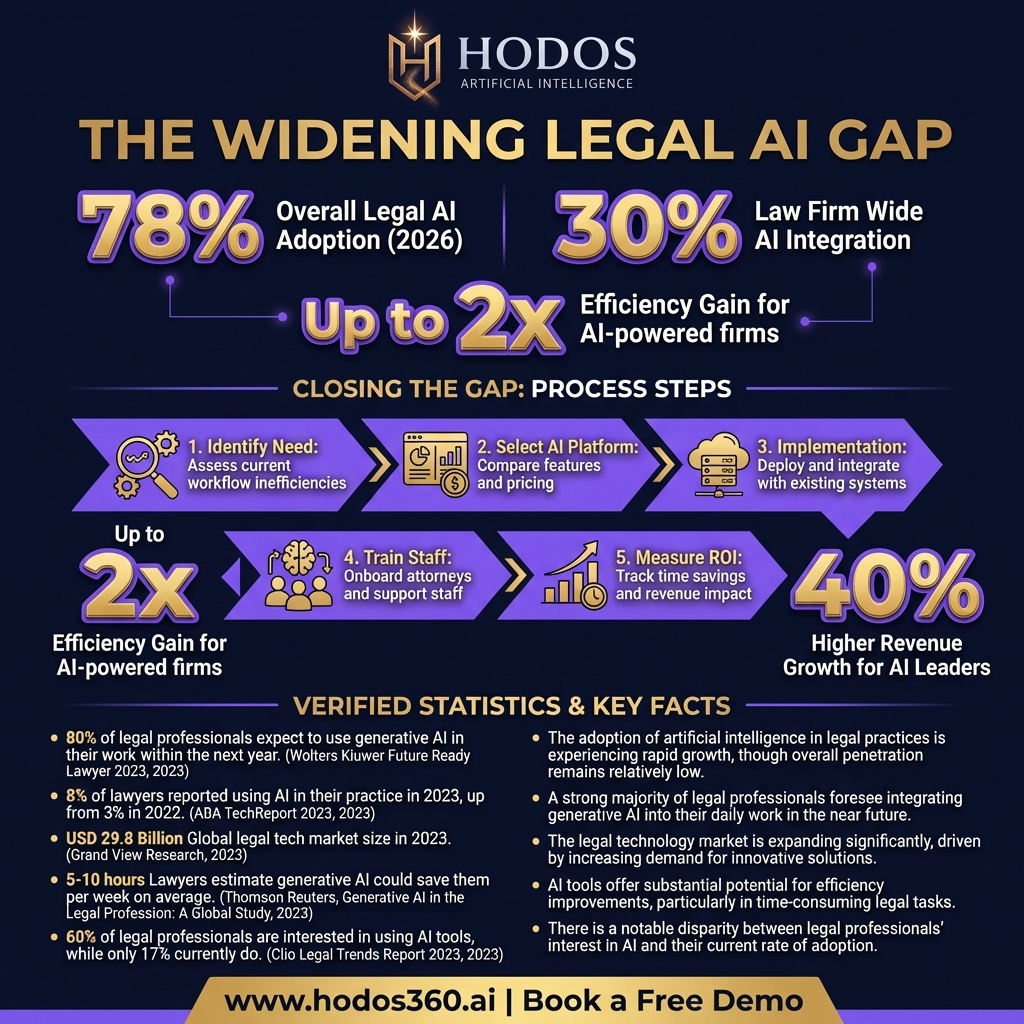
The data reveals a significant disparity in growth and profitability, underscoring that AI is no longer a luxury but a strategic imperative.
This isn't a future problem; it's a present challenge that demands immediate attention. The legal industry report reveals that AI adoption among legal professionals has more than doubled in the last year, yet a significant segment of law firms still lags behind.
This creates an urgent call to action for law firm owners, managing partners, and legal professionals to critically assess their current technological standing and devise a robust strategy for AI integration. Ignoring this trend is akin to ignoring the digital transformation that swept through other industries decades ago, with potentially dire consequences for those who hesitate.
The time to bridge the legal AI gap is now, transforming potential threats into unparalleled opportunities for innovation and growth.
The Alarming Reality of the Legal AI Gap
The LawFuel report, alongside other industry analyses, paints a vivid picture of a bifurcating legal market. On one side are the nimble, AI-powered firms that are redefining operational efficiency and client engagement. On the other, firms entrenched in legacy systems and traditional methodologies face mounting pressure.
This widening legal AI gap is not just about a few early adopters; it's about a fundamental shift in the state of the legal industry, where AI-driven insights and automation are becoming table stakes for competitive viability. For instance, firms utilizing AI for contract review report a reduction in review time by up to 70-80%, freeing up attorney hours for higher-value strategic work.
This translates directly into increased capacity, faster client service, and ultimately, enhanced profitability.
Moreover, the report highlights how AI is reshaping the competitive landscape. Clients, now more sophisticated and cost-conscious, are increasingly drawn to firms that can offer transparent, efficient, and technologically advanced services. The firms that have successfully integrated AI solutions are better positioned to meet these evolving client expectations, offering faster turnaround times and often more predictable fee structures Learn more about Legal AI Problem: Mastering Ethical Tech in Law Firms 2026.
This creates a significant advantage, as evidenced by a 2025 survey showing that 60% of corporate legal departments prioritize law firms demonstrating advanced legal tech capabilities. The 'have-nots' are left scrambling, often forced to compete on price alone or risk losing out on lucrative opportunities to their more technologically advanced rivals.
The human capital aspect of this divide is equally critical. Top legal talent, particularly younger generations entering the profession, are increasingly gravitating towards firms that offer cutting-edge tools and a forward-thinking work environment. They seek to leverage technology to enhance their practice, not to be bogged down by repetitive, manual tasks.
Firms that fail to adopt AI risk not only operational stagnation but also a brain drain, as ambitious legal professionals seek environments where innovation is fostered. The ability to attract and retain the best legal minds is intrinsically linked to a firm's commitment to embracing the future, making the legal AI gap a challenge of talent acquisition and retention as much as it is of technology.
Beyond the Hype: Deconstructing AI Adoption in Law Firms
While the overall AI adoption rate among legal professionals has surged, a closer look reveals a nuanced picture within law firms themselves. Many individual practitioners or smaller boutique firms are leveraging readily available AI tools, but large and mid-sized firms often face greater hurdles in enterprise-wide integration.
The report reveals that while 78 percent of legal professionals acknowledge the benefits of AI, only a fraction of law firms have fully integrated comprehensive AI platforms across their operations. This discrepancy is often attributed to the complexity of legacy IT infrastructures, resistance to change among senior partners, and a perceived high cost of initial investment.
However, the true cost of inaction far outweighs the investment, as firms that delay risk a permanent competitive disadvantage.
AI isn't a monolithic entity; its applications within law firms are diverse and transformative. From AI-powered legal research platforms that sift through vast databases of case law and statutes in seconds, to predictive coding for e-discovery that drastically reduces review costs, the breadth of AI solutions is immense.
Beyond these, AI is reshaping administrative and business development functions, automating client intake, managing billing, and even generating marketing content Learn more about Agentic AI Unleashed: 2026's Power in Legal Work. The challenge lies not in the availability of AI, but in strategically identifying and implementing the right tools that align with a firm's specific needs and practice areas.
This requires a comprehensive understanding of AI's capabilities and a proactive approach to digital transformation, moving beyond piecemeal solutions to integrated ecosystems.
For firms struggling to cross this technological Rubicon, the path forward begins with education and strategic planning. Many legal professionals are intimidated by the perceived complexity of AI, viewing it as a black box rather than a powerful assistant.
Overcoming this perception requires demonstrating tangible benefits, starting with pilot programs in specific practice areas, and fostering a culture of innovation. The competitive divide will only grow more pronounced as AI capabilities advance, making early and thoughtful adoption crucial. Firms must move beyond merely acknowledging the presence of AI to actively exploring how it can be leveraged to enhance every facet of their operation, from client service to internal management.
Understanding the 'Have-Nots': Barriers to Entry
The 'have-nots' are often characterized by a combination of factors, including a lack of clear strategic direction for technology, insufficient budget allocation for innovation, and a prevailing skepticism towards new tools. Many firms operate under the misconception that AI implementation is an all-or-nothing endeavor, requiring a complete overhaul of their systems overnight.
This perception often paralyzes action. Furthermore, the sheer volume of legal tech solutions available can be overwhelming, leading to analysis paralysis Learn more about Law Firm Return on Investment: Maximize AI in 2026. Without expert guidance, firms may struggle to identify scalable, secure, and integrated platforms that genuinely address their unique operational challenges and comply with ethical obligations, such as ABA Model Rule 1.1 (Competence), which implicitly mandates staying abreast of technological advancements relevant to practice.
The fear of disrupting established workflows or potential data security concerns also serves as significant barriers, despite advancements in secure cloud-based AI solutions specifically designed for the legal sector.
The Operational Imperative: Bridging the Divide with Smart Management
For law firms aspiring to move from the 'have-not' to the 'have' category, the operational imperative is clear: integrate AI into core management functions. This extends beyond basic task automation to a holistic transformation of how a firm operates. An AI-powered legal workflow, for instance, can automate routine administrative tasks, ensuring consistency and accuracy while freeing up paralegals and junior associates for more substantive work.
Imagine client intake processes that automatically gather information, conduct initial conflict checks, and generate engagement letters, all within minutes. This level of efficiency is not merely about saving time; it's about optimizing resource allocation and enhancing the overall client experience from the very first interaction.
Moreover, AI-powered legal firm management systems offer unprecedented insights into firm performance. Through advanced analytics, these platforms can track key metrics such as case progression, attorney utilization, billing realization rates, and profitability per client or practice area. This data-driven approach empowers managing partners to make informed strategic decisions, identify bottlenecks, and optimize resource deployment.
Without such capabilities, firms are often flying blind, relying on anecdotal evidence or outdated reports Learn more about Legal AI ROI: Maximizing Law Firm Value in 2026. The competitive advantage of having real-time, actionable intelligence cannot be overstated in today's fast-paced legal market. It allows firms to proactively adapt to market changes, allocate resources effectively, and maximize their return on investment.
The integration of AI also addresses critical compliance and risk management aspects. AI can monitor regulatory changes, flag potential compliance issues in contracts, and ensure adherence to best practices, significantly reducing the risk of errors or omissions. For example, in e-discovery, AI can quickly identify privileged or sensitive information, minimizing exposure and ensuring compliance with Federal Rules of Civil Procedure Rule 26 (Duty to Disclose; General Provisions Governing Discovery).
This forensic precision, coupled with narrative drama in presenting insights, allows firms to navigate complex legal landscapes with greater confidence and less risk. By embedding AI into the fabric of their operations, firms not only enhance efficiency but also fortify their defenses against an increasingly complex regulatory environment.
Integrating AI for End-to-End Efficiency
Achieving end-to-end efficiency requires a platform that seamlessly integrates various AI functionalities across the entire firm lifecycle. This means moving beyond standalone tools to a comprehensive ecosystem. Such a system would encompass AI-powered legal workflows for case management, automated billing, intelligent client intake, and sophisticated document automation.

It would also integrate calendar management and offer AI-driven insights for strategic planning Learn more about AI Legal Startup Sandstone: Unlocking 2026's Legal Tech F.... The goal is to create a unified operational backbone where data flows effortlessly, reducing redundancies and ensuring that every aspect of the firm's operations is optimized.
This holistic approach ensures that the benefits of AI are not isolated but permeate every department, fostering a truly transformative impact on productivity and service delivery, ultimately bridging the legal AI gap.
Client Expectations & Market Dynamics: The AI-Driven Competitive Edge
The legal market is no longer defined solely by reputation and expertise; it's increasingly shaped by technological prowess and responsiveness to client needs. Modern clients, accustomed to instant gratification and digital convenience in other sectors, expect the same from their legal providers. The legal AI gap directly impacts a firm's ability to meet these heightened expectations.
Firms leveraging AI can offer faster responses, more transparent communication, and access to client portals for real-time case updates. This enhanced client experience translates into stronger relationships, increased loyalty, and positive referrals – vital components for sustained growth in a competitive market. Furthermore, AI's ability to analyze vast amounts of data can provide predictive insights into case outcomes or potential risks, allowing firms to offer proactive, rather than reactive, advice, adding immense value to their client relationships.
Beyond individual client relationships, AI is fundamentally altering market dynamics. The ability to generate high-quality content, automate social media engagement, and create AI-powered video marketing campaigns allows tech-forward firms to significantly amplify their reach and attract new clients more effectively. An AI marketing platform can analyze market trends, identify niche client segments, and even personalize outreach, ensuring that marketing efforts are highly targeted and yield a superior ROI.
This contrasts sharply with traditional marketing approaches that often lack precision and measurable impact. As the market becomes increasingly saturated, the firms that can efficiently and effectively capture attention and demonstrate value through digital channels will be the ones that thrive, further widening the divide.
The advent of AI voice assistants represents another paradigm shift in client engagement and lead generation. Imagine a law firm that can answer client inquiries 24/7, qualify leads, book appointments, and even offer multilingual support without human intervention. This capability ensures that no potential client query goes unanswered, significantly improving conversion rates and client satisfaction.
For firms still relying solely on traditional receptionists, this represents a massive operational bottleneck and a missed opportunity for continuous engagement. The ability to route calls intelligently and provide immediate, accurate information positions AI-enabled firms as leaders in responsiveness and accessibility, cementing their competitive edge and underscoring the urgency of addressing the legal AI gap.
Reimagining Client Engagement and Growth
Reimagining client engagement means moving beyond transactional relationships to building enduring partnerships powered by technology. This involves leveraging AI for personalized communication, proactive legal advice based on predictive analytics, and seamless digital interaction channels. Firms can use AI to understand client sentiment, anticipate needs, and tailor services accordingly, fostering a deeper sense of trust and value.
Furthermore, the integration of AI into web and mobile development allows firms to create AI-powered websites with responsive designs, optimized for SEO, and featuring high-converting templates. These digital storefronts become powerful lead generation tools, capable of attracting and converting visitors into clients around the clock.
This comprehensive digital presence, fueled by AI, is essential for any firm looking to achieve sustainable growth and outmaneuver competitors in the digital age, effectively closing their part of the legal AI gap.

HODOS 360: Your Strategic Partner in AI Transformation
As the legal AI gap continues to widen, HODOS 360 stands as a beacon for law firms seeking to not only bridge this divide but to leapfrog their competition. Our comprehensive AI-powered platform is meticulously designed to address every facet of modern legal practice, providing an integrated suite of services that empower firms to thrive.
From an intuitive AI Law Firm Management System that streamlines case management, billing, and client intake with AI-powered legal workflows, to sophisticated document automation and calendar management, HODOS 360 ensures your internal operations are running at peak efficiency. We understand that operational excellence is the bedrock of competitive advantage, and our platform is engineered to deliver just that, transforming your firm's foundational processes.
Beyond internal efficiency, HODOS 360 propels your firm into the forefront of client acquisition and brand building with our AI Marketing Platform. Imagine effortlessly creating engaging AI videos, automating social media content, and generating compelling legal articles that resonate with your target audience. Our platform provides robust analytics and ROI tracking, ensuring that every marketing dollar is spent intelligently and yields measurable results.
In an era where digital presence is paramount, HODOS 360 equips your firm with the tools to dominate online, attracting a steady stream of qualified leads and establishing your authority in the legal marketplace. This proactive approach to marketing is crucial for firms looking to not just survive but flourish.
Revolutionizing client interaction and lead qualification, HODOS 360’s AI Voice Assistants offer unparalleled accessibility and responsiveness. Providing 24/7 phone answering, intelligent lead qualification, seamless appointment booking, and multilingual support, our AI assistants ensure that your firm is always available, always professional, and always converting. This capability transforms your client service, offering an immediate, professional touchpoint that sets your firm apart.
Complementing this, our Web & Mobile Development service delivers AI-powered website building, responsive design, SEO optimization, and high-converting templates, ensuring your digital storefront is as impressive and effective as your legal services. Together, these services form a formidable ecosystem designed to empower your firm.
HODOS 360 is more than just a technology provider; we are your strategic partner in navigating the complexities of the digital legal age.
We offer the holistic solution required to not only close the legal AI gap but to turn it into an opportunity for exponential growth and sustained success. Don't let your firm become another casualty of the widening divide. Embrace the future of legal practice with HODOS 360 and unlock unprecedented levels of efficiency, profitability, and client satisfaction.
The time for transformation is now. Join the ranks of firms that are not just adopting AI but defining the future of law.
Frequently Asked Questions
What is the 'legal AI gap' and why is it critical for law firms in 2026?+
The legal AI gap refers to the growing disparity between law firms that have successfully integrated AI into their operations and those that haven't. It's critical in 2026 because AI-powered firms are achieving significantly higher efficiencies, better client satisfaction, and stronger competitive advantages, while traditional firms risk operational stagnation, loss of talent, and reduced market share due to outdated practices and inability to scale effectively.
How can AI improve operational efficiency in a law firm?+
AI can drastically improve operational efficiency by automating routine tasks like document review, contract analysis, legal research, and client intake. It streamlines billing, case management, and calendar scheduling, reducing manual errors and freeing attorneys for complex legal work. This leads to faster turnaround times, lower overheads, and optimized resource allocation, enhancing overall firm productivity and profitability.
What role does AI play in attracting and retaining clients for law firms?+
AI plays a crucial role in modern client acquisition and retention. AI Marketing Platforms enable targeted content generation and social media automation, expanding reach. AI Voice Assistants provide 24/7 client support, lead qualification, and appointment booking, ensuring responsiveness. AI-powered websites offer superior user experience and SEO, attracting more leads. These tools collectively enhance client satisfaction, build trust, and create a competitive edge.
Is AI adoption an 'all-or-nothing' endeavor for law firms?+
No, AI adoption is not an all-or-nothing endeavor. Firms can start with targeted AI solutions in specific areas, such as legal research or document automation, and gradually expand. A comprehensive platform like HODOS 360 offers modular integration, allowing firms to scale their AI implementation based on their needs and budget. The key is strategic planning and a phased approach, rather than a complete overhaul.
How does HODOS 360 help law firms bridge the legal AI gap?+
HODOS 360 offers an integrated suite of AI-powered services to bridge the legal AI gap. Our AI Law Firm Management System optimizes internal operations, while the AI Marketing Platform boosts client acquisition. AI Voice Assistants revolutionize client engagement, and our Web & Mobile Development ensures a strong digital presence. HODOS 360 provides a holistic solution for efficiency, growth, and competitiveness, empowering firms to thrive in the AI era.