


Legal AI Divide: Bridge the Gap, Thrive in 2026's Digital Era
The legal landscape of 2026 is rapidly bifurcating, creating a stark divide that threatens to leave many firms in the dust. A recent LawFuel report, echoing widespread sentiment across the industry, starkly outlines a widening 'Legal AI Gap' – a chasm separating technologically advanced law firms from their less-equipped counterparts.
This isn't merely an incremental shift; it's a foundational transformation, a digital crucible where the future of legal practice is being forged. Firms that have embraced Legal AI are not just incrementally improving; they are fundamentally reshaping their operational models, client relationships, and competitive postures.
Conversely, those hesitating are finding themselves at an increasing disadvantage, facing pressures on efficiency, profitability, and their ability to attract top talent and clientele. The implications of this report are profound, signaling an urgent call to action for every legal professional contemplating their firm's trajectory in this new era.
This emerging reality demands more than just awareness; it necessitates strategic foresight and decisive action. The report's findings are not abstract statistics but a clear indicator of market forces at play, where AI adoption is no longer a luxury but a strategic imperative. The 'have-nots' are witnessing their 'have' counterparts streamline complex workflows, automate tedious tasks, and deliver insights with unprecedented speed and accuracy.
This disparity isn't confined to large, multinational firms; it permeates every segment of the legal market, from solo practitioners to mid-sized firms, impacting profitability, client satisfaction, and the overall quality of legal services. The competitive landscape is being redrawn with artificial intelligence as its primary architect, compelling legal professionals to reconsider their technological roadmap and investment priorities.
To ignore this trend is to risk obsolescence in an increasingly digital-first legal world.
The urgency highlighted by the LawFuel report underscores a pivotal moment for the legal industry. It's a moment where firms must decide whether to proactively shape their AI future or be passively shaped by it. The benefits of early and strategic AI adoption extend far beyond mere efficiency gains; they encompass enhanced decision-making, superior client outcomes, and a significant boost to a firm's market reputation Learn more about Legal AI ROI: Maximizing Law Firm Value in 2026.
As the lines blur between traditional legal services and technology-driven solutions, the firms that master Legal AI will be the ones that not only survive but thrive, setting new benchmarks for excellence and innovation. The time for deliberation is over; the era of action is here.
The Widening Chasm: Understanding the Legal AI Gap in 2026
The latest Legal AI Report from LawFuel paints a stark picture of the legal industry in 2026, revealing a dramatic acceleration of the AI gap between leading firms and their slower-moving competitors. This isn't just about early adopters gaining a slight edge; it's about a fundamental restructuring of market dynamics, where the 'haves' are consolidating power, talent, and client share at an unprecedented rate.
According to recent industry analyses, firms that have integrated advanced Legal AI solutions are reporting up to a 30% increase in operational efficiency and a 20% improvement in client satisfaction scores, figures that are simply unattainable through traditional methods. This competitive divide is fueled by the ability of AI-powered firms to handle larger case volumes, reduce turnaround times for complex legal research, and predict litigation outcomes with greater accuracy, fundamentally reshaping how legal services are delivered and consumed.
The implications for firms on the wrong side of this gap are severe, potentially leading to stagnation, client attrition, and a diminished capacity to compete for lucrative engagements. The narrative is clear: AI adoption is no longer optional.
This chasm is particularly pronounced in areas like document review, contract analysis, and legal research, where AI systems can process vast amounts of data in minutes, a task that would take human legal professionals hundreds of hours.
For example, a study by Thomson Reuters in late 2025 indicated that firms leveraging AI for e-discovery reduced review costs by an average of 40% compared to those relying solely on manual processes. This efficiency translates directly into lower client costs and higher profit margins, creating a significant competitive advantage.
Furthermore, the report highlights that firms with robust AI strategies are better positioned to attract and retain top legal talent, as younger generations of attorneys are increasingly seeking technologically forward-thinking workplaces. The perception of a firm's commitment to innovation is now a critical factor in recruitment, making AI integration a talent magnet.
The 'state' of AI in the legal industry is no longer one of cautious experimentation, but of full-scale strategic deployment, with significant consequences for market share and long-term viability.
The LawFuel report underscores that the competitive divide isn't just about access to technology but about the strategic integration and operational reality of AI Learn more about Agentic AI Unleashed: 2026's Power in Legal Work.
Many firms, while acknowledging the importance of AI, struggle with effective implementation, leading to underutilized tools and missed opportunities. This points to a deeper issue: the need for a comprehensive digital transformation strategy that encompasses not only technology acquisition but also workflow redesign, talent upskilling, and a cultural shift towards innovation.
Without a holistic approach, even firms investing in AI may find themselves failing to bridge the gap. The report reveals that firms with dedicated AI steering committees and clear implementation roadmaps are significantly more successful than those taking a piecemeal approach. This strategic clarity is what separates the true 'haves' from those merely dabbling in AI, further solidifying the competitive advantage of integrated solutions.
The economic implications of this widening gap are profound. Firms on the leading edge are not only cutting costs but also identifying new revenue streams through predictive analytics, enhanced legal marketing, and more efficient client intake processes. The ability to forecast legal trends, identify potential risks for clients proactively, and offer tailored, data-driven advice positions these firms as indispensable partners rather than mere service providers.
This strategic shift transforms the attorney-client relationship, moving it from reactive problem-solving to proactive, value-added consultation. The report suggests that firms failing to embrace this paradigm shift risk being relegated to handling less complex, lower-margin work, further exacerbating the economic disparity. The imperative to adopt AI is no longer a matter of future-proofing; it's about immediate financial health and sustained growth in a rapidly evolving market.
The Economic Imperative of AI Adoption in Legal Practice
The economic imperative for AI adoption within legal practice has never been clearer. Law firms are operating in an environment where clients demand greater transparency, efficiency, and value. AI directly addresses these demands by automating repetitive tasks, allowing legal professionals to focus on higher-value, strategic work.
This reallocation of resources not only improves job satisfaction for attorneys but also enhances the overall quality of legal services. The cost savings generated by AI in areas like contract review, due diligence, and e-discovery can be passed on to clients, making firms more competitive on pricing, or reinvested into growth initiatives, solidifying their market position Learn more about AI Document Workflows: Unleash Efficiency & ROI in 2026.
The return on investment for well-implemented AI solutions is becoming undeniable, with many firms seeing substantial gains within the first 12-18 months of deployment. This economic reality is a powerful driver behind the rapid AI adoption rates among leading legal entities, further widening the gap for those who remain hesitant.
The future profitability of law firms is intricately linked to their capacity for technological integration and innovation.
Beyond Hype: Tangible Benefits of AI for Law Firms in 2026
Moving beyond the initial hype, the tangible benefits of AI for law firms in 2026 are now demonstrably clear, translating directly into enhanced operational efficiency, superior client outcomes, and a significant boost to a firm's competitive standing. AI is reshaping every facet of legal operations, from the initial client intake to the final case resolution.
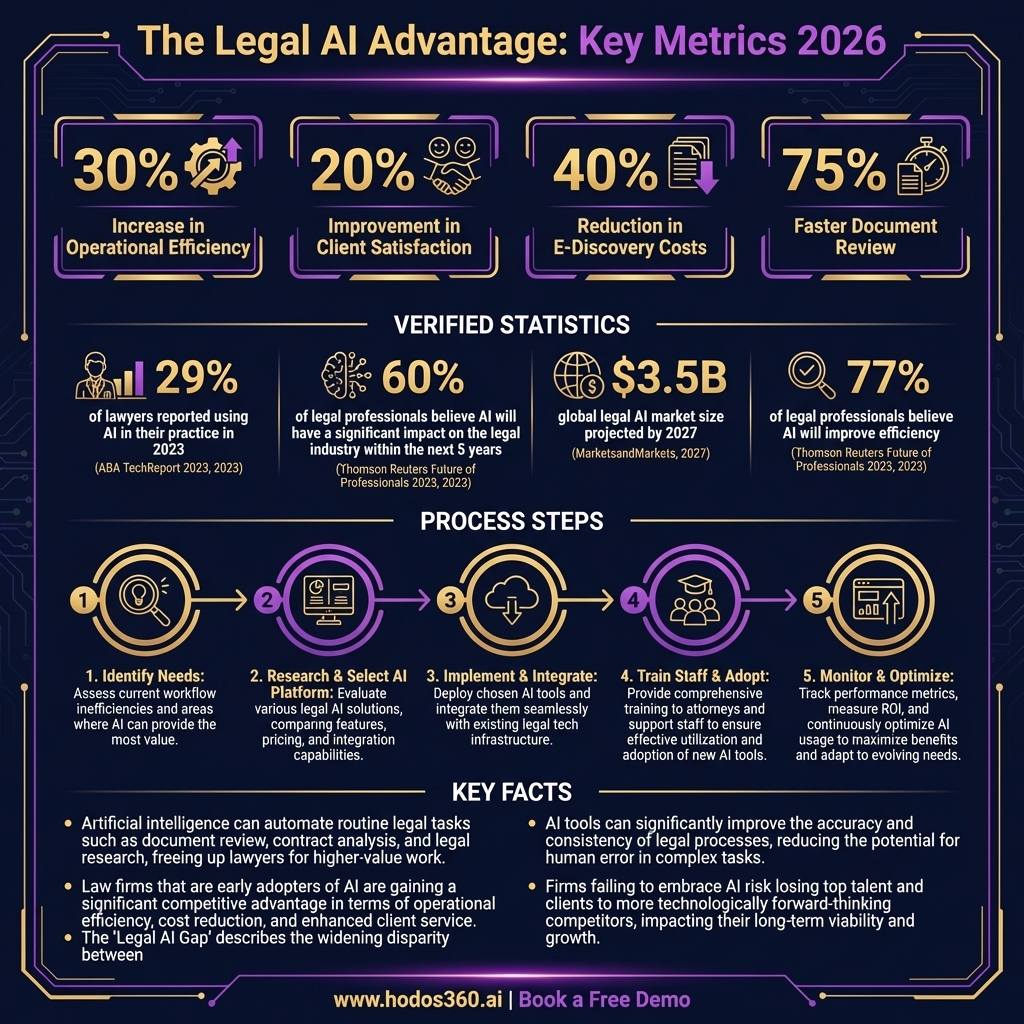
Consider the power of AI-driven analytics in litigation: by analyzing historical case data, judicial tendencies, and opposing counsel strategies, AI can provide predictive insights that empower attorneys to make more informed decisions, develop stronger arguments, and anticipate challenges. This level of foresight was previously unimaginable, offering a strategic advantage that can be the difference between victory and defeat.
Furthermore, AI's ability to automate mundane, time-consuming administrative tasks frees up valuable billable hours for legal professionals, allowing them to dedicate more time to complex problem-solving and direct client engagement, thereby increasing both productivity and job satisfaction. The industry is witnessing a profound shift where AI isn't just a tool, but a strategic partner.
The impact on client service is equally transformative. AI-powered client intake systems can rapidly onboard new clients, gather essential information, and route inquiries to the appropriate legal expert with minimal delay, setting a positive tone from the outset. Throughout the engagement, AI can assist in providing real-time updates, customizing communication, and even helping clients navigate complex legal jargon, thereby enhancing transparency and trust.
For instance, AI-driven chatbots and virtual assistants are increasingly being deployed to answer common client queries 24/7, providing immediate support and improving overall client satisfaction, especially for younger demographics accustomed to instant digital interactions. This level of responsiveness and personalized attention is a significant differentiator in a competitive legal market, ensuring that firms can meet and exceed client expectations.
The 'state' of client relations is evolving, demanding technological fluency.
Moreover, AI's role in legal marketing and business development is rapidly expanding. Firms are leveraging AI to analyze market trends, identify potential client segments, and even generate targeted content for social media and email campaigns Learn more about Legal AI Gap Widens: Strategic Imperative for Law Firms 2026.
This sophisticated approach to outreach ensures that marketing efforts are not only more efficient but also significantly more effective, yielding higher ROI. For example, AI-powered platforms can track the effectiveness of various marketing channels, providing actionable insights into what resonates with potential clients, allowing firms to optimize their spending and strategy continually.
This analytical capability is invaluable for firms looking to expand their reach, attract new business, and solidify their brand presence in an increasingly crowded digital space. The notion of 'AI news' isn't just for tech companies; it's central to legal business growth.
Finally, the benefits extend to risk management and compliance.
AI systems can continuously monitor vast databases of legal statutes, regulatory changes, and case law, alerting firms to potential compliance issues or emerging legal risks in real-time. This proactive approach helps firms avoid costly penalties, safeguard their reputation, and provide more robust advice to clients navigating complex regulatory environments.
The sheer volume and velocity of legal information make manual monitoring virtually impossible, making AI an indispensable tool for maintaining legal integrity and ensuring adherence to the highest professional standards. This capability is particularly critical in specialized areas like financial regulation, data privacy, and intellectual property, where regulatory landscapes are constantly shifting.
The ability to stay ahead of these changes is a clear competitive differentiator for firms committed to excellence. This shows the operational reality of AI in action.
- ✓Enhanced Legal Research & Discovery: AI algorithms sift through millions of documents and precedents in seconds, identifying relevant information and patterns far beyond human capabilities, drastically cutting discovery costs and time. (See Federal Rules of Civil Procedure 26(b)(1) on scope of discovery, emphasizing proportionality and efficiency.)
- ✓Automated Document Generation & Review: From initial drafts to complex contract analysis, AI automates repetitive document tasks, minimizes errors, and ensures consistency across legal instruments, accelerating workflows and reducing administrative burdens.
- ✓Predictive Analytics for Litigation: AI models analyze historical case data, judge behaviors, and settlement trends to forecast litigation outcomes, empowering attorneys with data-driven strategies and better client advice.
- ✓Streamlined Client Intake & Management: AI-powered systems automate client onboarding, gather pertinent information efficiently, and provide 24/7 support, enhancing client experience and operational fluidity.
- ✓Targeted Marketing & Business Development: AI analyzes market data and client demographics to create highly effective, personalized marketing campaigns, optimizing lead generation and firm growth strategies.
- ✓Robust Compliance & Risk Management: AI continuously monitors regulatory changes and internal policies, identifying potential compliance risks and ensuring adherence to legal standards, thereby safeguarding the firm's integrity and client interests.
Navigating Implementation Challenges & Ethical Considerations for AI
While the promise of AI in legal practice is immense, successful implementation is not without its challenges, and ethical considerations demand rigorous attention. Many firms grapple with the initial investment costs, the complexity of integrating new AI systems with existing legacy infrastructure, and the daunting task of upskilling their workforce.
The fear of job displacement among legal professionals, though largely unfounded when AI is viewed as an augmentation tool, can also create internal resistance. Overcoming these hurdles requires a clear strategic vision, strong leadership, and a phased implementation approach that prioritizes user adoption and continuous training.
Furthermore, firms must navigate the evolving landscape of data privacy regulations and cybersecurity threats, ensuring that AI systems are deployed securely and in compliance with all relevant laws. The initial 'operational reality' can be complex, requiring careful planning and execution.
Beyond technical and financial hurdles, the ethical implications of AI in law are paramount.
Questions surrounding algorithmic bias, data security, client confidentiality, and the ultimate responsibility for AI-generated output require careful deliberation. For instance, if an AI system used for predictive analytics exhibits bias based on historical data, it could perpetuate systemic injustices. Law firms have a professional and ethical obligation to ensure that the AI tools they employ are fair, transparent, and do not compromise the integrity of the legal process.
This necessitates robust internal governance frameworks, regular audits of AI systems, and clear guidelines for attorney oversight of AI-generated work. The American Bar Association (ABA) has begun to issue guidance on these matters, emphasizing the attorney's duty of competence and supervision when using technology (ABA Model Rule 1.1, Comment [8]).
This rule highlights that lawyers must understand the benefits and risks associated with relevant technology. Adherence to these ethical principles is not just about compliance; it's about maintaining the public's trust in the legal profession.
Another significant challenge lies in the quality and provenance of the data fed into AI systems Learn more about Law Firm Return on Investment: Maximize AI in 2026.
"Garbage in, garbage out" is a truism that applies acutely to AI. Firms must ensure that the data used to train their AI models is accurate, comprehensive, and relevant, avoiding proprietary or biased datasets that could skew results. This often requires significant data cleansing and curation efforts, which can be resource-intensive.
Moreover, maintaining client confidentiality while leveraging cloud-based AI solutions presents a continuous challenge, demanding stringent data encryption, access controls, and adherence to professional secrecy obligations. The complexity of these data-related issues often requires collaboration with IT specialists and external cybersecurity experts, underscoring the interdisciplinary nature of successful AI integration.
This is a critical aspect of ensuring responsible and effective AI adoption.
Finally, the human element remains irreplaceable. While AI can automate tasks and provide insights, it cannot replicate human judgment, empathy, or the nuanced understanding of human motivations that are central to legal practice.
The challenge, therefore, is not to replace attorneys with AI, but to empower them, transforming their roles from data processors to strategic advisors and empathetic counselors. Firms must invest in training programs that equip legal professionals with the skills to effectively interact with and leverage AI tools, fostering a culture of continuous learning and adaptation.
This human-AI collaboration is the ultimate goal, ensuring that technology serves to enhance, rather than diminish, the human touch in law. The latest 'ai news today' often focuses on such collaborative models, highlighting their growing importance.
Crafting Robust AI Policies for Responsible Innovation
To truly harness the power of AI while mitigating its risks, law firms must proactively develop and implement robust AI policies. These policies should cover data governance, ethical usage, security protocols, and guidelines for attorney supervision of AI outputs. A clear framework ensures consistency, accountability, and adherence to professional standards, building client trust and protecting the firm's reputation.
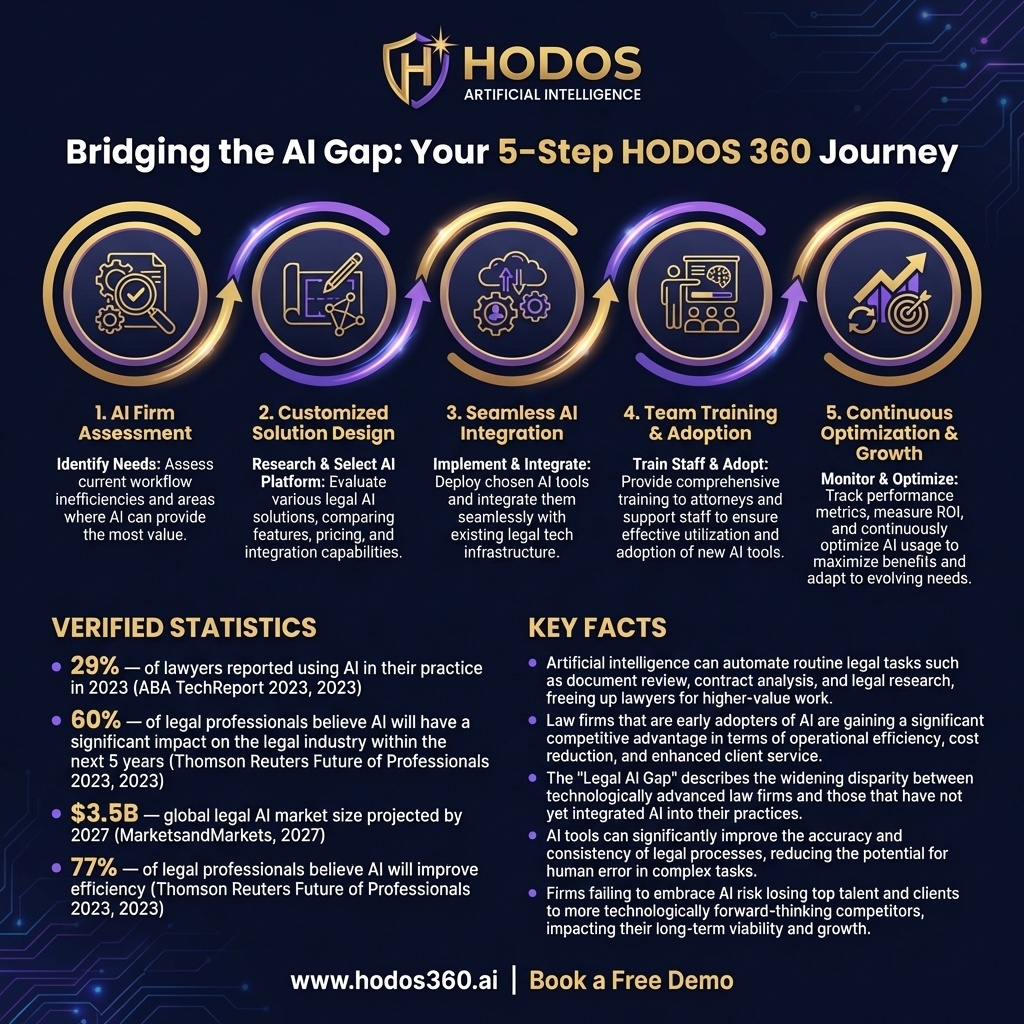
Such policies are not static; they must evolve with advancements in AI technology and changes in legal and ethical guidelines Learn more about AI Document Workflows: Revolutionize Your Firm in 2026 fo.... Firms should consider establishing an internal AI ethics committee to regularly review and update these policies, fostering a culture of responsible innovation.
This proactive approach is essential for navigating the complex interplay between technology and legal ethics, ensuring that AI serves justice rather than undermining it.
The Future is Now: AI's Impact on Legal Practice in 2026
The future of legal practice, once a distant horizon, is unequivocally now, with AI's pervasive impact shaping every aspect of the profession in 2026. This isn't a theoretical discussion but a practical reality for firms embracing digital transformation. The evolving role of attorneys is perhaps the most significant shift; freed from the drudgery of repetitive tasks, legal professionals are transitioning into roles that demand higher-order critical thinking, strategic advisory, and empathetic client engagement.
AI is not just augmenting capabilities; it's elevating the profession, allowing lawyers to focus on the unique human elements of law that technology cannot replicate. This paradigm shift requires firms to invest not only in technology but also in continuous professional development, ensuring their teams are equipped for these new, more strategic roles.
The legal industry is witnessing an exciting evolution, driven by the relentless pace of 'ai updates' and innovation.
Beyond individual roles, AI is fundamentally altering the business model of law firms. The traditional hourly billing model is being challenged by value-based pricing, enabled by the efficiency gains of AI.
Firms can now offer fixed-fee services for tasks that were once unpredictable in cost, providing greater transparency and predictability for clients. This shift is particularly appealing to corporate clients who are increasingly scrutinizing legal expenditures. Furthermore, AI is enabling the creation of entirely new legal services, such as predictive compliance auditing, AI-driven intellectual property portfolio management, and automated legal health checks for businesses.
These innovative offerings generate new revenue streams and position firms as cutting-edge providers, essential for navigating the complexities of modern commerce. The 'state' of legal services is becoming increasingly entrepreneurial.
Preparing for this AI-driven future involves more than just purchasing software; it requires a cultural transformation within the firm.
Leadership must champion a mindset of innovation, encouraging experimentation and continuous learning. Firms should foster environments where attorneys and staff feel empowered to explore new technologies and integrate them into their daily workflows. This includes establishing internal innovation labs, hosting regular tech training sessions, and promoting cross-departmental collaboration to identify new use cases for AI.
The firms that will thrive in 2026 are those that view AI not as a threat, but as an opportunity to reinvent themselves, to become more agile, responsive, and client-centric. The conversation around 'apple ai news' or 'openai news' should translate into actionable strategies for legal professionals.
Moreover, the competitive landscape is not static; it is constantly evolving with each new AI breakthrough. Firms must remain vigilant, monitoring emerging legal tech news and adapting their strategies accordingly. This includes staying abreast of advancements in natural language processing (NLP), machine learning (ML), and generative AI, which are continuously expanding the capabilities of legal AI tools.
Proactive engagement with the legal tech ecosystem, attending industry conferences, and collaborating with technology providers are crucial for staying ahead of the curve. The LawFuel report serves as a potent reminder that complacency is not an option; continuous innovation and strategic AI investment are the hallmarks of a successful legal practice in the digital age.
This ongoing adaptation is key to maintaining a competitive edge and ensuring long-term relevance in the industry.
AI-Powered Workflows: A Paradigm Shift for Legal Professionals
The integration of AI into daily legal workflows represents a paradigm shift for legal professionals. It moves beyond isolated tools to create interconnected, intelligent systems that automate sequences of tasks, from initial client contact to final document filing. Imagine an AI-powered legal workflow that automatically categorizes incoming client emails, extracts key information, populates case management systems, drafts initial responses, and schedules follow-up appointments – all with minimal human intervention.
This level of automation drastically reduces administrative overhead, ensures consistency, and allows attorneys to focus on the strategic, intellectual demands of their cases. It's about building a seamless, intelligent operational reality where technology supports every stage of legal service delivery, transforming how work is done and redefining what's possible.

How HODOS 360 Empowers Firms to Conquer the AI Divide
In light of the widening Legal AI Gap, HODOS 360 stands as the comprehensive solution for law firms determined to not only bridge this divide but to leapfrog their competition. Our integrated AI-powered platform is specifically designed to address the multifaceted challenges and opportunities highlighted in the latest industry reports.
HODOS 360’s AI Law Firm Management System is the bedrock of operational efficiency, combining case management, billing, client intake, and document automation into a single, intelligent ecosystem. This means your firm can eliminate manual bottlenecks, ensure data consistency, and free up valuable time for your legal professionals to focus on high-value client work.
Imagine AI-powered legal workflows that adapt to your firm's specific needs, learning and optimizing processes over time to deliver unparalleled efficiency. This is the operational reality that HODOS 360 brings to your practice, ensuring you are not just keeping pace, but setting the pace in 2026.
Beyond internal operations, HODOS 360 empowers your firm to dominate the digital marketplace with our AI Marketing Platform.
In an era where online presence dictates client acquisition, our platform offers AI video creation, social media automation, and advanced content generation tools that ensure your firm stands out. With built-in analytics and ROI tracking, you can precisely measure the effectiveness of your marketing spend, optimizing strategies to attract and convert more leads.
This is critical for firms looking to expand their reach and attract new client segments, leveraging the power of AI to craft compelling narratives and engage with potential clients across all digital channels. Our platform ensures your firm's brand resonates, transforming casual browsers into loyal clients and securing your competitive position in the market.
This is how HODOS 360 helps you reshape your firm's future.
Client acquisition and retention are further revolutionized by HODOS 360’s AI Voice Assistants. In today's 24/7 economy, missed calls are missed opportunities. Our AI Voice Assistants provide seamless, multilingual phone answering, ensuring no lead is ever lost.
They excel at lead qualification, appointment booking, and intelligent call routing, ensuring clients are always connected to the right attorney, at the right time. This level of responsiveness not only enhances client satisfaction but also significantly boosts your firm's capacity to handle inquiries, turning prospective clients into active cases with unparalleled efficiency.
The ability to provide immediate, intelligent support around the clock is a game-changer for firms looking to deliver exceptional service and capitalize on every incoming lead. This service alone can dramatically improve your firm's intake process and overall client experience.
Finally, your firm's digital storefront is its first impression, and HODOS 360’s Web & Mobile Development service ensures it’s a powerful one.
We offer AI-powered website building, crafting responsive designs that look stunning and perform flawlessly across all devices. With integrated SEO optimization and high-converting templates, your online presence will not only attract visitors but convert them into clients. In a market where digital visibility is paramount, having a cutting-edge, AI-optimized website is non-negotiable.
HODOS 360 integrates these services to provide a holistic solution, ensuring every aspect of your firm, from back-office operations to front-end client engagement, is powered by the most advanced AI technology. Don't let your firm become another 'have-not' in the AI divide. Embrace the future with HODOS 360 and secure your firm's legacy of innovation and success.
Book a free demo today and see how we can transform your practice.
Frequently Asked Questions
What is the 'Legal AI Gap' and why is it widening in 2026?+
The 'Legal AI Gap' refers to the growing disparity between law firms that have strategically adopted AI technologies and those that haven't. It's widening in 2026 due to the rapid advancement of AI capabilities, making AI-powered firms significantly more efficient, competitive, and profitable. Lagging firms face increased operational costs, reduced client attraction, and a diminished capacity to compete, as highlighted by recent industry reports like LawFuel's.
How can AI improve my law firm's operational efficiency?+
AI can drastically improve operational efficiency by automating repetitive tasks like document review, contract analysis, and legal research. It streamlines client intake, manages billing, and automates calendar scheduling. This frees up legal professionals to focus on higher-value work, reduces human error, and accelerates case workflows, leading to significant cost savings and increased productivity across the firm. HODOS 360's AI Law Firm Management System exemplifies this.
What are the ethical considerations when implementing AI in legal practice?+
Ethical considerations include ensuring data privacy and security, guarding against algorithmic bias, maintaining client confidentiality, and establishing clear accountability for AI-generated outputs. Attorneys must uphold their duty of competence, supervising AI tools to ensure fair and accurate results. Robust internal policies and adherence to professional guidelines, like ABA Model Rules, are crucial for responsible AI adoption and maintaining public trust.
Can AI help my firm with client acquisition and marketing?+
Absolutely. AI is transforming legal marketing by enabling targeted content generation, social media automation, and AI video creation. It analyzes market trends to identify ideal client segments and tracks ROI to optimize campaigns, leading to more effective lead generation and client acquisition. AI Voice Assistants also enhance client service by providing 24/7 support and efficient lead qualification, ensuring no potential client is missed. HODOS 360's AI Marketing Platform is built for this.
Is AI primarily for large law firms, or can mid-sized and small firms benefit?+
While large firms have been early adopters, AI is increasingly accessible and beneficial for mid-sized and small firms. Scalable AI solutions allow smaller practices to achieve efficiencies and competitive advantages previously reserved for larger entities. AI-powered platforms democratize access to advanced tools, enabling firms of all sizes to streamline operations, enhance client service, and compete effectively in the 2026 legal market. The 'AI gap' affects all sizes, making solutions like HODOS 360 vital.