


AI Document Workflows: Revolutionize Your Firm in 2026 for Maximum ROI
The legal industry stands at a pivotal juncture in 2026, where the relentless pursuit of efficiency meets the transformative power of artificial intelligence. Law firms, once bastions of tradition, are now confronting an undeniable truth: manual, time-consuming document processes are no longer sustainable. The sheer volume of information, coupled with escalating client demands for faster, more cost-effective services, necessitates a radical rethinking of how legal work is performed.
Firms that embrace this evolution are not just surviving; they are thriving, achieving unprecedented levels of productivity and client satisfaction.
This new era is defined by the strategic implementation of AI document workflows, a paradigm shift that promises not only to streamline operations but to deliver immediate and measurable return on investment (ROI).
The narrative of legal transformation is no longer a futuristic vision but a present-day reality, as evidenced by leading firms that have successfully integrated AI into their core operations. The competitive edge belongs to those who recognize AI not as a threat, but as an indispensable partner in navigating the complexities of modern legal practice.
The question is no longer *if* AI will transform your firm, but *when* and *how effectively* you will harness its potential. The moment to act is now, to secure your firm's prominence in the evolving legal ecosystem.
The Imperative of AI in Legal Document Management
For decades, legal document management has been a labyrinth of manual tasks: drafting, reviewing, comparing, and organizing. This labor-intensive process, while foundational to legal practice, has also been a significant drain on resources, contributing to higher operational costs and the ever-present risk of human error.
The sheer scale of documents handled by an average law firm—from intricate contracts and complex litigation filings to routine correspondence—demands a solution that transcends traditional methods. In 2026, the imperative is clear: firms must integrate AI into their document management strategies to remain competitive and compliant.
The advent of sophisticated AI technologies offers a compelling alternative, promising to automate the mundane, augment human capabilities, and enhance precision. By unifying drafting, comparison, and collaboration within intelligent platforms, AI transforms what was once a bottleneck into a seamless, accelerated workflow. This shift is not merely about digitizing paper; it's about infusing intelligence into every stage of the document lifecycle, from initial creation to final archival Learn more about Law Firm Return on Investment: Maximize AI in 2026.
Firms are finding that AI-powered systems can analyze vast datasets, identify patterns, and even predict potential issues, tasks that would be impossible for even the most diligent human attorney to perform with the same speed and accuracy.
Moreover, the competitive landscape mandates this evolution. Firms like Hand Arendall Harrison Sale have demonstrated that embracing AI for document workflows can yield tangible benefits, setting a new benchmark for operational excellence.
The pressure to reduce legal spend while maintaining high-quality output means that firms can no longer afford to ignore the efficiencies offered by AI. The integration of AI for legal document management is no longer a luxury but a strategic necessity, enabling firms to allocate their most valuable asset—attorney time—to higher-value, client-centric work rather than repetitive administrative tasks.
Beyond Basic Automation: AI's Transformative Power
While basic automation has been a part of legal tech for years, AI introduces a deeper, more profound transformation. It moves beyond simple template filling or mail merges, offering predictive insights, intelligent clause suggestions, and context-aware comparisons that truly elevate the quality and speed of legal work.
AI can analyze past cases, identify preferred language, and even flag potential compliance issues before they become problems, proactively mitigating risks Learn more about Legal AI ROI: Maximizing Law Firm Value in 2026. This level of intelligence empowers attorneys to produce superior documents with unprecedented efficiency, ensuring accuracy and consistency across all firm outputs.
The shift is from merely automating tasks to intelligently augmenting the entire legal drafting process.
Achieving Immediate ROI with AI-Powered Workflows
The promise of immediate ROI is a powerful driver for law firms considering AI adoption, and AI-powered document workflows deliver on this front with remarkable consistency. The financial benefits are multi-faceted, stemming from significant reductions in time spent on routine tasks, minimized errors, and optimized resource allocation.
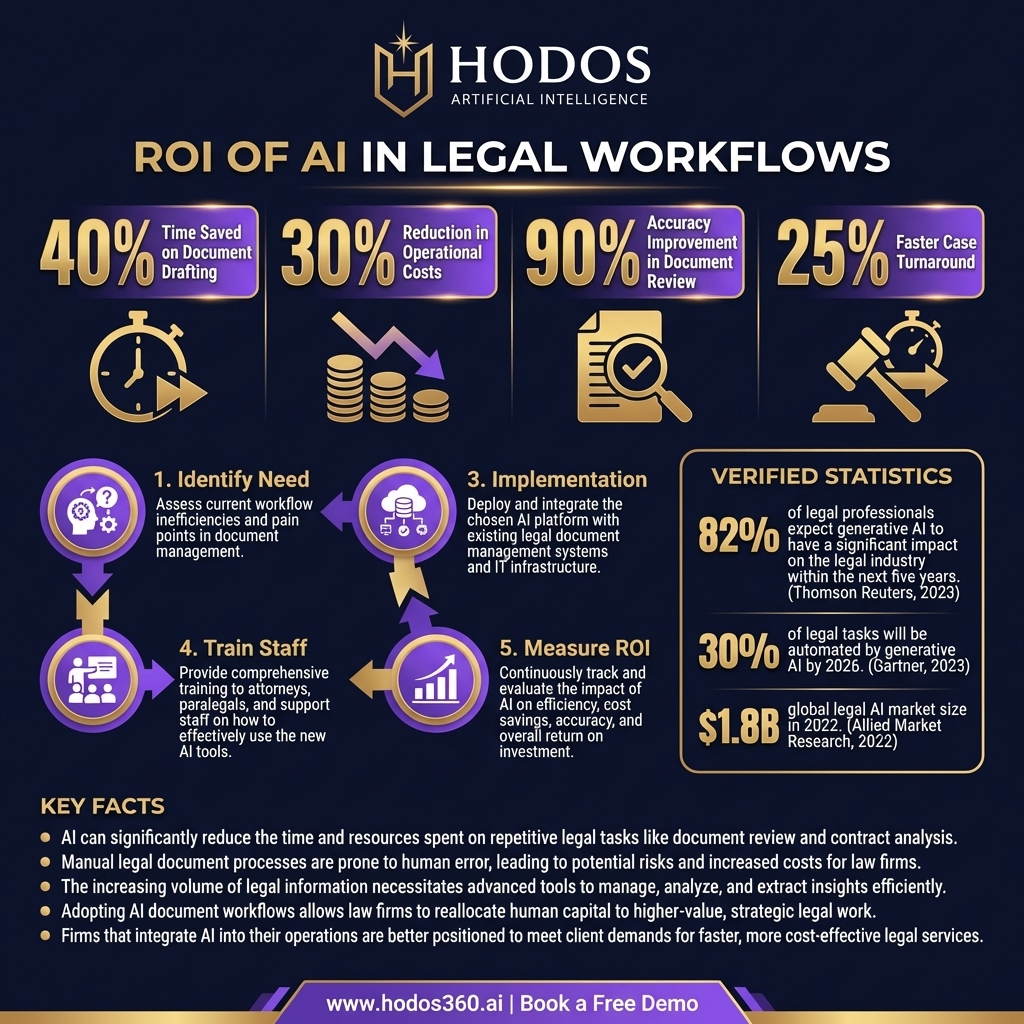
For instance, a report by Thomson Reuters found that legal professionals spend up to 40% of their time on administrative tasks, a figure drastically reduced by AI automation. This reallocation of time allows attorneys to focus on strategic thinking, client engagement, and complex legal analysis, directly contributing to increased billable hours and higher client satisfaction.
The investment in AI quickly translates into tangible savings and increased revenue.
Beyond cost savings, the enhanced accuracy provided by AI-driven drafting and comparison tools mitigates the risk of costly errors and omissions, which can lead to malpractice claims or adverse rulings. A study highlighted by the American Bar Association (ABA) emphasized that even minor drafting errors can result in substantial financial penalties or necessitate extensive remedial work Learn more about AI Document Workflows: Unleash Efficiency & ROI in 2026.
AI tools, by meticulously scrutinizing documents for inconsistencies, compliance with regulatory standards, and adherence to internal guidelines, act as an invaluable safeguard. This preventative measure alone can save firms hundreds of thousands, if not millions, of dollars annually, providing a clear and immediate return on investment.
Furthermore, the speed with which AI can process, draft, and compare documents allows firms to handle a greater volume of work without expanding their headcount, thereby optimizing operational efficiency. This scalability means firms can respond more rapidly to client demands, take on more cases, and maintain a competitive edge in a fast-paced market.
The ability to achieve more with existing resources not only boosts profitability but also enhances the firm's reputation for innovation and responsiveness. The transformative impact of AI on productivity and financial performance is undeniable, paving the way for a more agile and profitable legal practice.
- ✓Significant Time Savings: AI automates repetitive drafting, review, and comparison tasks, freeing up attorney time for strategic work.
- ✓Reduced Operational Costs: Less time spent on manual processes directly translates to lower labor costs and increased efficiency.
- ✓Enhanced Accuracy & Compliance: AI minimizes human error in document creation and review, ensuring adherence to legal standards and firm policies.
- ✓Faster Turnaround Times: Accelerate document production and review cycles, meeting client deadlines more effectively and improving client satisfaction.
- ✓Improved Resource Allocation: Reallocate highly skilled legal professionals from administrative tasks to high-value, billable activities.
- ✓Scalability & Growth: Handle increased workload volumes without proportional increases in staffing, facilitating firm expansion.
- ✓Better Risk Management: Proactive identification of inconsistencies or non-compliant language reduces exposure to legal and financial risks.
Redefining Drafting and Comparison in 2026
The core functions of legal practice—drafting and comparison—are being fundamentally redefined by AI in 2026. Traditional drafting often begins with a blank page or an outdated template, a process fraught with inefficiency and inconsistency. AI-powered drafting tools, however, leverage sophisticated algorithms to suggest clauses, generate initial drafts based on specific parameters, and even identify optimal language from a firm's historical data.
This capability significantly reduces the time spent on initial document creation, allowing attorneys to focus on refining content and applying their unique legal expertise. The system learns from every document, continuously improving its suggestions and ensuring that all outputs adhere to the firm's established standards and best practices.
Similarly, document comparison, once a painstaking manual exercise prone to oversight, has been revolutionized. AI-driven comparison tools go far beyond simple redlining; they can analyze complex legal documents, identifying not just textual changes but also semantic differences, structural alterations, and even implied meanings. This level of forensic precision ensures that no subtle but critical alteration goes unnoticed, whether it's a minor change in a contractual obligation or a nuanced shift in a regulatory filing Learn more about Agentic AI Unleashed: 2026's Power in Legal Work.
The ability to quickly and accurately compare multiple versions of a document, even across different formats, empowers legal professionals to manage revisions with unparalleled confidence and speed, critical for high-stakes transactions and litigation.
Leading platforms in the legal tech space, including those offering AI-powered drafting and comparison, are setting new standards for what's possible.
They allow for seamless integration directly within existing environments like Microsoft 365, extending workflows to web and mobile. This ensures that attorneys can work efficiently from anywhere, at any time, without compromising security or data integrity. The result is a dramatic increase in productivity, a reduction in the incidence of errors, and a significant enhancement in the overall quality of legal documentation.
This redefinition of drafting and comparison is not just about doing things faster; it's about doing them better, more intelligently, and with greater strategic impact.
Seamless Collaboration and Data Security
In an increasingly interconnected legal world, seamless collaboration is paramount, and AI platforms are designed to facilitate this while upholding the strictest data security protocols. AI-powered document management systems enable real-time co-authoring, version control, and secure sharing of sensitive legal documents, both within legal teams and with clients.
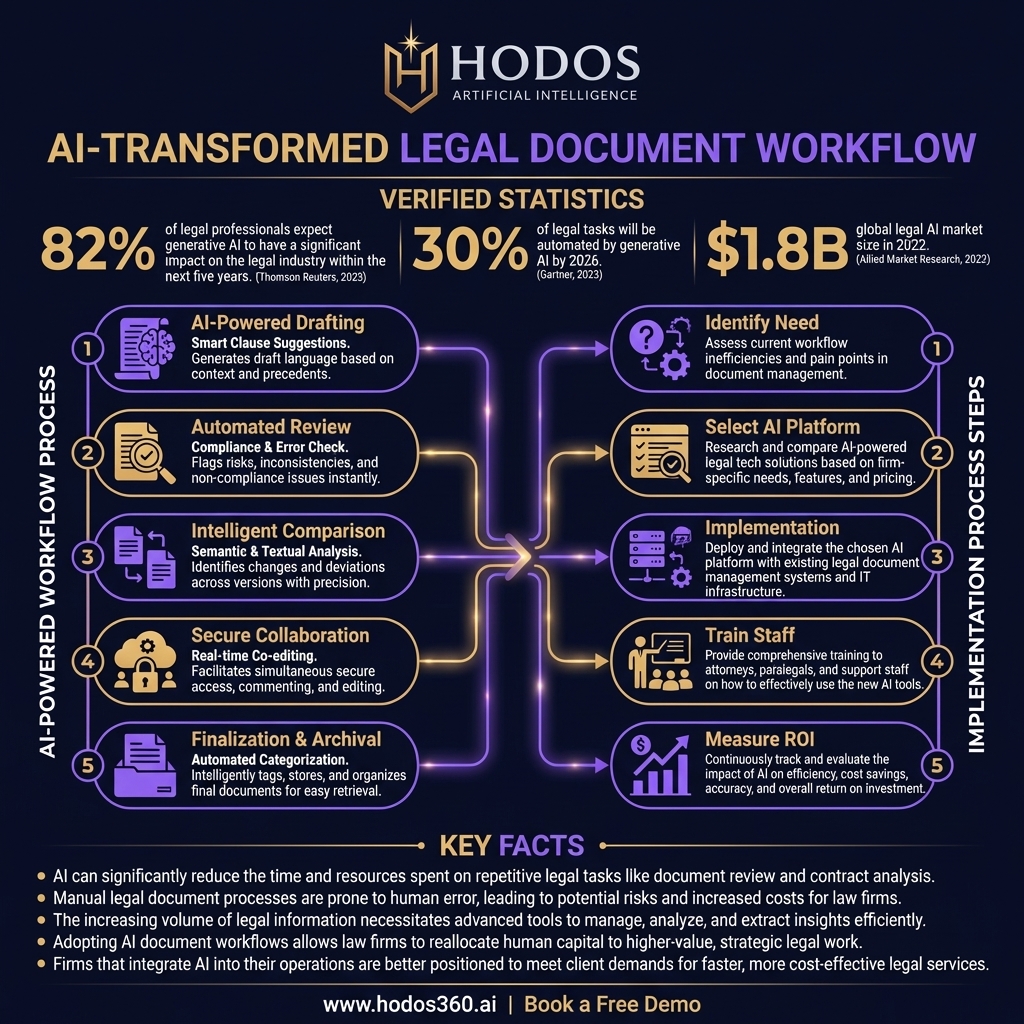
Robust encryption, access controls, and audit trails are standard features, ensuring compliance with data privacy regulations like GDPR and CCPA Learn more about AI Legal Assistant 2026: Revolutionizing Law Firm Efficiency. The ability to collaborate efficiently and securely transforms the workflow, ensuring that all stakeholders are working from the most current and protected information.
The Future of Legal Practice: Integrated AI Management
The true promise of AI in the legal sector extends beyond individual tools to integrated AI management systems that unify diverse firm operations. The vision for 2026 is a holistic platform where AI-powered document workflows are seamlessly interconnected with case management, billing, client intake, and calendaring.
This integration eliminates data silos, reduces redundant data entry, and provides a singular, comprehensive view of every client, case, and project. Imagine a system where a client intake form automatically populates case files, triggers document automation for engagement letters, and schedules initial consultations—all powered by intelligent AI algorithms.
This is the future of legal practice, where every component works in concert to maximize efficiency and strategic insight.
Such integrated systems are not just about automating tasks; they are about creating intelligent legal workflows that anticipate needs, optimize resource allocation, and provide actionable analytics.
For example, AI can analyze billing data to identify inefficiencies, suggest optimal pricing strategies, or even predict potential payment issues. In case management, AI can sift through vast amounts of discovery documents, identify key evidence, and assist in developing litigation strategies. This level of interconnected intelligence transforms a firm from a collection of disparate functions into a cohesive, high-performing entity, capable of delivering superior legal services with unprecedented agility.
The strategic advantage of an integrated AI management platform lies in its ability to provide a 360-degree view of the firm's operations Learn more about AI Legal Startup Sandstone: Unlocking 2026's Legal Tech F.... This comprehensive oversight allows partners and firm administrators to make data-driven decisions regarding resource allocation, client acquisition, and strategic growth.
By leveraging AI across all facets of the firm, from marketing and client communication to core legal work and financial management, firms can unlock new levels of productivity and profitability. The evolution towards integrated AI management is not merely a technological upgrade; it's a fundamental reimagining of the business of law, positioning firms for sustained success in an increasingly competitive global market.
Navigating this complex but rewarding landscape requires a strategic approach. It's not enough to simply adopt new technology; firms must cultivate a culture of innovation, invest in training, and choose platforms that offer scalability and robust support. The transition to an AI-powered future demands careful planning and a clear vision, ensuring that the technology serves the firm's strategic objectives rather than dictating them.
The goal is to empower legal professionals, not replace them, by providing tools that enhance their capabilities and free them to focus on the intricate, human-centric aspects of law.
Navigating the AI Landscape: A Strategic Approach
Successfully integrating AI requires more than just purchasing software; it demands a strategic approach to change management and technology adoption. Firms must assess their current workflows, identify pain points, and select an AI solution that aligns with their specific needs and long-term goals. Training staff, fostering an innovative culture, and ensuring robust data governance are critical steps. The aim is to empower attorneys and staff with tools that enhance their capabilities, ensuring a smooth transition and maximum benefit from AI investments.

HODOS 360: Your Partner in AI Legal Transformation
At HODOS 360, we understand the profound shifts occurring in the legal industry and are committed to empowering law firms with the tools necessary to not only adapt but to lead. Our AI Law Firm Management System is specifically designed to address the challenges and seize the opportunities presented by the evolution of AI document workflows.
We offer a comprehensive, integrated platform that transforms how your firm operates, from the foundational elements of case management and client intake to the intricate details of legal drafting and document automation. By centralizing these critical functions, HODOS 360 ensures a seamless, efficient, and highly productive environment for your entire team.
Our platform’s AI-powered legal workflows are engineered to streamline every aspect of document creation and management. Imagine document automation that intelligently generates complex contracts, briefs, and pleadings, significantly reducing drafting time and ensuring consistent quality. Our system goes beyond simple templates, utilizing advanced AI to suggest relevant clauses, check for compliance, and compare documents with unparalleled accuracy.
This means your attorneys can focus on the strategic aspects of law, confident that the foundational document work is handled with precision and speed, directly contributing to the immediate ROI your firm seeks.
HODOS 360 isn't just about document workflows; it's about providing a holistic solution for the modern law firm.
Our AI Law Firm Management System integrates billing, calendaring, and AI-powered legal workflows into a single, intuitive interface. This comprehensive approach ensures that all aspects of your firm's operations are interconnected, eliminating data silos and fostering true collaboration. With HODOS 360, you're not just adopting a piece of technology; you're partnering with a solution that is meticulously crafted to transform your firm's efficiency, boost profitability, and secure your competitive advantage in the rapidly evolving legal landscape of 2026 and beyond.
Experience the future of legal practice today.
Frequently Asked Questions
What are AI document workflows in a law firm?+
AI document workflows refer to the integration of artificial intelligence into every stage of a law firm's document lifecycle, from drafting and review to comparison and management. This includes AI-powered tools for generating initial drafts, suggesting clauses, identifying errors, comparing document versions, and automating administrative tasks. The goal is to enhance efficiency, accuracy, and compliance, freeing legal professionals from repetitive manual work.
How can AI document workflows provide immediate ROI?+
AI document workflows provide immediate ROI by significantly reducing the time and resources spent on manual document tasks. This translates to lower operational costs, increased billable hours for attorneys, and faster client service. Additionally, AI's enhanced accuracy minimizes errors and associated legal risks, preventing costly rework or litigation. These combined efficiencies lead to rapid and measurable financial returns for law firms.
What specific tasks can AI automate in legal document management?+
AI can automate numerous tasks in legal document management, including generating first drafts of contracts, briefs, and agreements; suggesting relevant clauses based on context; performing intelligent document comparisons and redlining; extracting key data points from documents; ensuring compliance with regulatory standards; and organizing and categorizing documents for easy retrieval. This automation frees legal professionals to focus on strategic analysis.
Is data security a concern with AI document workflows?+
Data security is a paramount concern, and reputable AI document workflow platforms, like HODOS 360, are built with robust security measures. These include advanced encryption, strict access controls, multi-factor authentication, and comprehensive audit trails to ensure client confidentiality and compliance with data privacy regulations (e.g., GDPR, CCPA). Choosing a platform with a proven security framework is essential for protecting sensitive legal information.
How does HODOS 360 integrate AI document workflows?+
HODOS 360 integrates AI document workflows as a core component of its AI Law Firm Management System. Our platform offers AI-powered document automation for drafting, smart comparison tools, and intelligent legal workflows that connect seamlessly with case management, client intake, billing, and calendaring. This holistic integration ensures that document processes are efficient, accurate, and fully synchronized with all other critical firm operations, driving comprehensive transformation.