

AI Hallucinations: Essential Lessons for Legal Practice
The legal world, often perceived as a bastion of meticulous precision, was recently shaken by an incident that underscored the nascent yet potent risks of integrating artificial intelligence without stringent oversight. In a development that sent ripples through the industry, the prestigious Wall Street firm Sullivan & Cromwell issued a public apology to a federal judge for submitting a court filing containing "inaccurate citations and other material" generated by an AI tool.
This wasn't a minor clerical error; it was a stark demonstration of what is colloquially known as an "AI hallucination"—where an AI system confidently presents fabricated information as fact. The firm, representing the unsecured creditors committee in the bankruptcy of Genesis Global Holdco, found itself in the unenviable position of explaining how non-existent case law found its way into official court documents, prompting a swift apology from partner Dietmar K. R. Dietderich to Judge Michael Wiles.
This incident is not isolated, but rather the highest-profile example to date, following earlier cases that also involved attorneys presenting AI-generated phantom cases. It serves as an urgent, resounding wake-up call for every legal professional contemplating or already employing AI in their practice.
This event, reported widely by outlets like Legal IT Insider, highlights a critical tension: the undeniable efficiency gains promised by AI versus the absolute necessity for unimpeachable accuracy in legal work.
As law firms globally, from boutique practices to Am Law 100 giants, increasingly explore AI-powered solutions for everything from document review to client intake, the Sullivan & Cromwell apology crystallizes the paramount importance of robust validation frameworks. The legal profession operates on a foundation of trust and verifiable fact, where the slightest misstep can have severe repercussions for clients, firm reputation, and professional standing.
The allure of AI's speed and analytical power is immense, with a 2023 Thomson Reuters report indicating that nearly 80% of legal professionals believe generative AI will have a significant impact on the legal sector within the next five years. Yet, as this incident vividly illustrates, the path to integration is fraught with potential pitfalls that demand a sophisticated understanding of AI's limitations and a commitment to rigorous human oversight.
The challenge now is not to retreat from innovation, but to forge a path forward that harnesses AI's potential while fortifying against its inherent flaws.
Discover how HODOS 360's AI Law Firm Management System integrates intelligent automation with essential safeguards for unparalleled accuracy and efficiency.
[Learn more about secure AI in legal practice.]
The Sullivan & Cromwell Incident: A Wake-Up Call for Legal AI
The apology from Sullivan & Cromwell, a firm synonymous with legal excellence, reverberated through the legal community precisely because of its stature. The firm's partner, Dietmar K. R. Dietderich, explained to Judge Michael Wiles that the motion submitted in the Genesis Global Holdco bankruptcy case contained "inaccurate citations and other material" that were "generated by an AI tool" and "were not verified by counsel."
This candid admission laid bare a vulnerability that many suspected but few had seen manifest so prominently. The court filing included what appeared to be legitimate case citations, complete with volume numbers and reporters, yet a quick search by opposing counsel revealed these cases simply did not exist.
This wasn't a case of misinterpreting existing law; it was the creation of entirely fictitious legal precedent, a phenomenon that strikes at the very core of legal research and argumentation.
This incident immediately drew comparisons to earlier, less publicized cases, such as the New York attorney who faced sanctions for submitting a brief with six fabricated cases generated by ChatGPT.
Learn more about Ethical AI in Legal Tech: An Essential Guide for Law Firms. However, the involvement of a firm of Sullivan & Cromwell's caliber elevated the discussion from an individual attorney's misjudgment to a systemic warning for the entire industry. It highlighted that even sophisticated firms with vast resources and rigorous internal processes are susceptible if AI tools are deployed without adequate understanding, training, and verification protocols.
The pressure on legal professionals to adopt cutting-edge technology for competitive advantage is immense, but this incident serves as a stark reminder that innovation cannot come at the expense of fundamental legal principles like accuracy and veracity. The reputation damage, the potential for sanctions, and the erosion of client trust are very real consequences when AI hallucinations infiltrate legal work.
Understanding AI Hallucinations in Legal Context
AI hallucinations refer to instances where a generative AI model, particularly Large Language Models (LLMs) like GPT-4 or Claude, produces outputs that are factually incorrect, nonsensical, or entirely fabricated, yet presents them with high confidence. For legal professionals, this phenomenon is particularly dangerous because LLMs are trained on vast datasets of text and learn to predict plausible sequences of words.
When asked to provide case citations or legal analysis, they can "invent" cases, statutes, or even entire legal arguments that sound convincing because they mimic the style and structure of real legal documents. This isn't malicious intent; it's a byproduct of how these probabilistic models function.
They prioritize coherence and fluency over factual accuracy, especially when their training data might lack specific, obscure, or recent legal information.
The risk is compounded by the "black box" nature of many LLMs, making it difficult to trace the origin of a generated statement or verify its factual basis without independent research.
Learn more about AI Chatbot Builders: Transform Your Law Firm in 2026. For instance, if a model is asked for cases on a niche area of bankruptcy law, and its training data is insufficient, it might "hallucinate" a case that fits the query's linguistic pattern, complete with plausible-sounding parties, courts, and dates.
This becomes a critical issue in legal practice, where every citation, every factual assertion, and every legal argument must be verifiable and accurate. The American Bar Association's Model Rule 1.1 (Competence) mandates that lawyers provide competent representation, which includes thorough factual investigation and legal research.
Relying solely on unverified AI output directly conflicts with this fundamental ethical obligation, potentially leading to professional misconduct and harm to clients.
Beyond the Headlines: The Broader Ethical and Practical Implications of Unchecked AI
The Sullivan & Cromwell incident underscores a broader set of ethical and practical implications that law firms must confront as AI permeates legal services. Beyond the immediate embarrassment and potential for judicial sanctions, the uncritical use of AI tools poses significant risks to professional responsibility, client trust, and the integrity of the legal system itself.
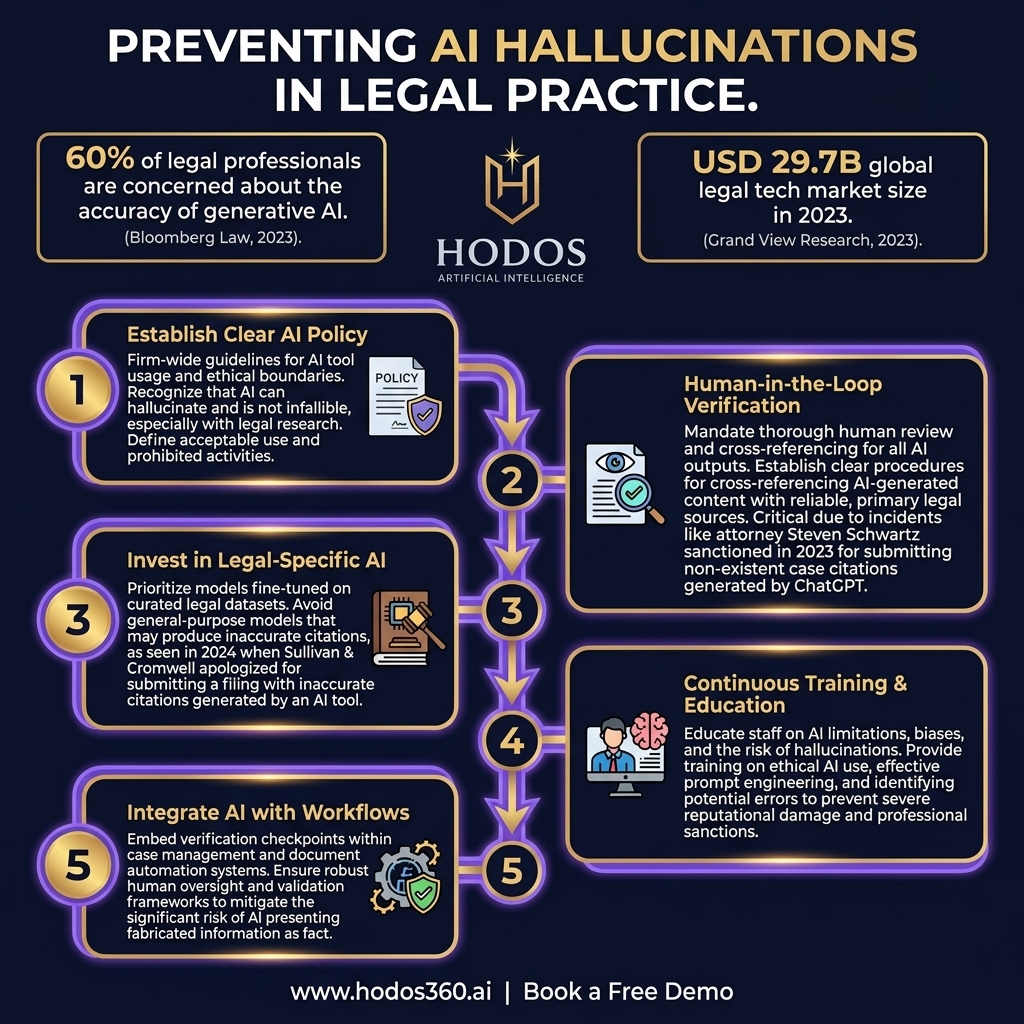
Attorneys are bound by strict ethical codes, such as the ABA Model Rules of Professional Conduct, which require competence (Rule 1.1), diligence (Rule 1.3), and candor toward the tribunal (Rule 3.3). Submitting fabricated information, whether intentionally or through negligent reliance on AI, can be viewed as a breach of these duties, potentially leading to disciplinary action, including suspension or disbarment.
The responsibility to verify all information presented to a court ultimately rests with the attorney, regardless of the tools used in its preparation.
Moreover, the erosion of client trust is an intangible yet profound consequence. Clients engage legal counsel expecting meticulous attention to detail and sound, fact-based advice.
Learn more about Legal AI Divide: Bridge the Gap, Thrive in 2026's Digital Era. Discovering that their legal filings contain fabricated information, even if rectified, can severely damage the attorney-client relationship and the firm's reputation. In a competitive legal market, a firm's credibility is its most valuable asset.
The incident also raises questions about the supervisory duties of partners and firm management under ABA Model Rule 5.1 (Responsibilities of Partners, Managers, and Supervisory Lawyers) and Rule 5.3 (Responsibilities Regarding Nonlawyer Assistants). While AI is not a "nonlawyer assistant" in the traditional sense, the principle of ensuring that all work product emanating from the firm is accurate and ethically sound remains paramount.
Firms must establish clear policies and provide adequate training to ensure that all personnel understand the limitations of AI tools and the necessity of human verification.
Navigating Regulatory Landscapes and Professional Obligations
As AI technology evolves rapidly, regulatory bodies and bar associations are grappling with how to adapt existing professional obligations to this new paradigm. While specific AI-focused regulations are still emerging, existing rules of professional conduct provide a framework. The duty of competence (ABA Model Rule 1.1) now implicitly includes technological competence.
As noted by the ABA Standing Committee on Ethics and Professional Responsibility, lawyers "should understand the benefits and risks associated with relevant technology." This means not just knowing how to use an AI tool, but understanding its underlying mechanisms, its potential for error, and the necessary safeguards.
The duty of candor (Rule 3.3) is directly implicated when AI generates false information that is then presented to a court. Lawyers have an affirmative duty not to knowingly make a false statement of material fact or law to a tribunal.
Furthermore, the European Union's AI Act, set to be fully enforced, categorizes AI systems based on their risk level, with high-risk applications facing stringent requirements for data quality, human oversight, and transparency.
Learn more about AI Marketing: The Ultimate Blueprint for Law Firm Growth. While primarily focused on consumer protection and fundamental rights, its principles offer a blueprint for responsible AI governance that legal firms, especially those with international operations, cannot ignore. In the U.S., states are also beginning to explore guidelines; for example, Florida's Bar has issued guidance on the responsible use of generative AI.
These developments signal a growing expectation that legal professionals will not only adopt AI but will do so with a deep understanding of its ethical ramifications and a commitment to rigorous oversight. The days of simply plugging in an AI tool and trusting its output are unequivocally over; the onus is firmly on the legal professional to ensure the integrity of their work.
Implementing Robust AI Governance: Strategies for Law Firms
To mitigate the risks illuminated by the Sullivan & Cromwell incident, law firms must move beyond ad-hoc experimentation and implement robust AI governance frameworks. This begins with a clear, firm-wide policy on AI usage, outlining permissible tools, required verification steps, and acceptable use cases. A "human-in-the-loop" approach is non-negotiable, meaning every output generated by an AI tool, especially for client-facing or court-bound documents, must undergo thorough human review and validation.
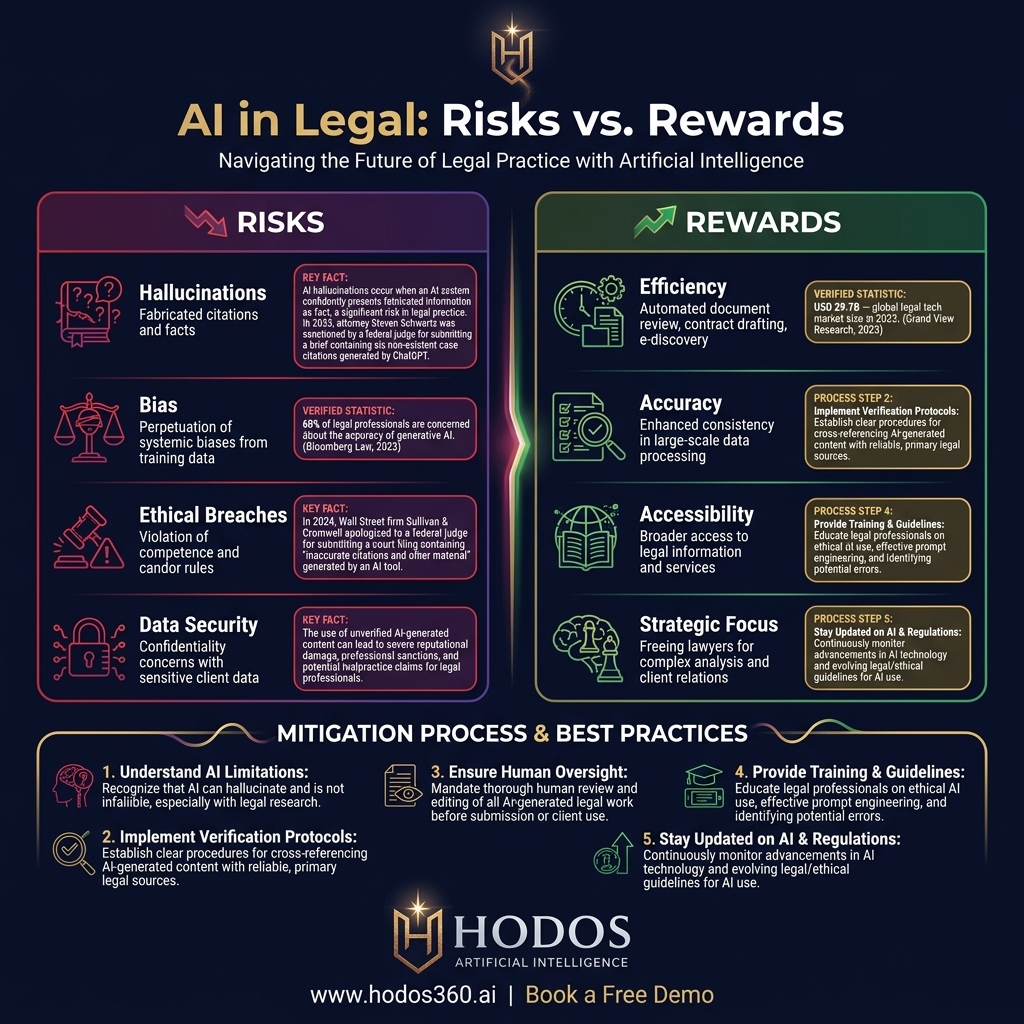
This includes cross-referencing AI-generated citations with primary sources like Westlaw or LexisNexis, verifying factual assertions, and critically evaluating legal arguments. Firms should invest in training programs that educate attorneys and support staff not just on how to operate AI tools, but crucially, on their limitations, potential for bias, and the phenomenon of hallucinations.
Beyond policies and training, technology itself can offer safeguards. Firms should prioritize AI solutions that are purpose-built for the legal industry, often referred to as "domain-specific" or "legal-specific" LLMs. Learn more about AI Legal Revolution: Corporate Use Jumps 87% by 2026. These models are typically fine-tuned on curated legal datasets, reducing the likelihood of hallucinations compared to general-purpose models.
For instance, companies like Harvey AI, which recently partnered with Allen & Overy, focus on delivering AI solutions specifically tailored for legal research and drafting, often incorporating mechanisms for source attribution and verification. Furthermore, integrating AI tools directly into existing case management and document automation systems can streamline the verification process.
For example, an AI-powered legal workflow might flag potential inaccuracies or require a mandatory human sign-off before a document can proceed to the next stage. This systematic integration ensures that safeguards are built into the workflow, rather than being an optional add-on.
- ✓Develop a Comprehensive Firm-Wide AI Policy: Clearly define acceptable use, prohibited applications, and ethical guidelines for all AI tools.
- ✓Mandate Human-in-the-Loop Verification: Implement a strict protocol requiring human attorneys to review, validate, and cross-reference all AI-generated outputs, especially for critical legal documents.
- ✓Invest in Legal-Specific AI Solutions: Prioritize AI platforms and LLMs specifically designed and fine-tuned for the legal domain, which often have better factual accuracy and verification features.
- ✓Provide Continuous AI Training and Education: Educate all legal professionals on the capabilities, limitations, potential biases, and the phenomenon of "hallucinations" in AI.
- ✓Integrate AI with Existing Legal Workflows: Embed AI tools within case management, document automation, and research platforms to create seamless workflows with built-in verification checkpoints.
- ✓Establish Clear Accountability Frameworks: Define who is responsible for AI output verification and the consequences of non-compliance, reinforcing professional responsibility.
Enhance your firm's efficiency and accuracy with HODOS 360's AI Law Firm Management System. Streamline case management, billing, and document automation with built-in verification protocols. Learn more about AI Legal Assistant 2026: Revolutionizing Law Firm Efficiency. [Request a personalized demo today.]
The Future of Legal AI: Balancing Innovation with Integrity
The path forward for legal AI is not one of retreat, but of responsible advancement, balancing the immense promise of innovation with the non-negotiable demands of integrity. The Sullivan & Cromwell incident, while concerning, serves as a crucial inflection point, forcing the legal industry to mature in its adoption of AI.
The future will see a continued surge in AI capabilities, driven by advancements from companies like OpenAI, Anthropic, and Google DeepMind, who are actively working on improving the factual accuracy and "truthfulness" of their models. However, even with these improvements, the fundamental probabilistic nature of LLMs means that the risk of hallucinations will never be entirely eliminated.
Therefore, the onus will remain on legal professionals to exercise critical judgment and implement robust oversight mechanisms.
The real power of legal AI lies not in replacing human judgment, but in augmenting it. Imagine a scenario where AI-powered research tools rapidly identify relevant statutes and cases, freeing attorneys to focus on nuanced analysis and strategic thinking.
Or where AI-driven document automation platforms draft routine contracts with unparalleled speed, allowing lawyers to dedicate more time to complex negotiations. This is where the synergy between human expertise and AI efficiency truly shines. Firms that successfully navigate this landscape will be those that adopt a "co-pilot" approach, where AI assists and accelerates, but human lawyers remain the ultimate arbiters of truth and legal strategy.
This requires not just technological adoption, but a cultural shift within firms towards continuous learning, critical evaluation of AI outputs, and a commitment to ethical deployment. The goal is to leverage AI to elevate legal practice, making it more efficient, accessible, and ultimately, more just, without compromising the foundational principles of accuracy and trust.
Leveraging AI for Enhanced Accuracy and Efficiency
When properly managed and integrated, AI can significantly enhance both the accuracy and efficiency of legal operations. For example, in e-discovery, AI-powered tools can sift through millions of documents far faster and often more consistently than human reviewers, identifying relevant information and reducing the likelihood of human error in large datasets.
In contract review, AI can highlight inconsistencies, missing clauses, or deviations from standard templates, ensuring a higher degree of accuracy and completeness than manual review alone. Furthermore, AI-driven legal research platforms, while requiring human verification, can dramatically expand the scope of research, unearthing obscure but relevant precedents that might be missed by traditional keyword searches.
The key differentiator for successful AI integration lies in the design of the workflow. Systems like HODOS 360's AI Law Firm Management System are designed with these principles in mind, offering features such as AI-powered legal workflows that integrate document automation with built-in checkpoints for human review.
This ensures that while AI handles repetitive and data-intensive tasks, critical decision points and final verification always rest with the legal professional. By automating mundane tasks, lawyers can allocate more time to complex problem-solving, client interaction, and strategic development, ultimately leading to higher quality legal services and greater client satisfaction.
The judicious application of AI, coupled with rigorous human oversight, is not just about avoiding errors; it's about unlocking new levels of precision and productivity in legal practice.

Key Takeaways and Next Steps
The Sullivan & Cromwell incident serves as an indelible lesson: the transformative power of AI in legal practice comes with an equally significant responsibility to manage its inherent risks. The days of uncritical adoption are over; the future demands a sophisticated, nuanced approach. Law firms must prioritize robust AI governance, implement clear human-in-the-loop verification protocols, and invest in continuous training for their legal professionals.
The ethical implications, professional obligations, and potential for reputational damage are too great to ignore.
As the legal tech landscape continues to evolve at a breathtaking pace, firms that proactively establish comprehensive AI policies and integrate intelligent oversight will be best positioned to thrive. This isn't just about avoiding a misstep; it's about building a foundation for sustainable innovation that upholds the core values of the legal profession.
Embrace AI's potential, but do so with vigilance, integrity, and a steadfast commitment to accuracy.
Ready to integrate AI responsibly into your practice? Explore HODOS 360's comprehensive suite of AI-powered solutions, designed for legal accuracy and efficiency. [Schedule your free consultation today.]
Frequently Asked Questions
What exactly is an AI hallucination in the legal context?+
An AI hallucination occurs when an artificial intelligence system, particularly a large language model, generates information that is factually incorrect, fabricated, or nonsensical, but presents it as if it were true. In a legal context, this often manifests as made-up case citations, non-existent statutes, or fabricated legal arguments that sound plausible but have no basis in reality. These errors arise because LLMs prioritize linguistic coherence over factual accuracy.
How can law firms prevent AI hallucinations in their legal filings?+
Preventing AI hallucinations requires a multi-pronged approach. Key strategies include implementing a "human-in-the-loop" verification process, where every AI-generated output is thoroughly reviewed and cross-referenced with authoritative sources by a human attorney. Firms should also establish clear AI usage policies, provide extensive training on AI limitations, and consider using legal-specific AI models that are fine-tuned on curated legal datasets, reducing the likelihood of fabrication.
What are the ethical implications for attorneys who use AI that hallucinates?+
Attorneys are ethically bound by rules of professional conduct, such as ABA Model Rule 1.1 (Competence) and Rule 3.3 (Candor Toward the Tribunal). Submitting AI-generated hallucinations can breach these duties, potentially leading to professional sanctions, damage to client trust, and harm to the firm's reputation. The ultimate responsibility for the accuracy of legal work rests with the attorney, regardless of the tools used.
Are there specific AI tools or platforms designed to minimize legal hallucinations?+
Yes, the legal tech market is evolving rapidly. Some platforms are developing "domain-specific" or "legal-specific" AI models that are trained on curated legal datasets and often incorporate features for source attribution and verification. Companies like Harvey AI are examples of this trend. While no AI is completely immune to hallucinations, these specialized tools, combined with rigorous human oversight, aim to significantly reduce the risk compared to general-purpose LLMs.
How does the Sullivan & Cromwell incident change the way law firms should approach AI adoption?+
The Sullivan & Cromwell incident serves as a critical lesson, emphasizing that AI adoption in law firms must be strategic and cautious, not merely experimental. It underscores the need for comprehensive AI governance frameworks, mandatory human verification protocols, and continuous education on AI's capabilities and limitations. Firms must prioritize integrity and accuracy above all else, integrating AI as an augmentative tool rather than a replacement for human judgment.