
AI Chatbot Builders: Transform Your Law Firm in 2026
The legal industry stands at the precipice of a profound transformation, driven by the relentless march of artificial intelligence. For law firms in 2026, the question is no longer *if* to adopt AI, but *how* to strategically integrate it to maintain relevance, enhance efficiency, and secure a competitive edge.
At the heart of this revolution are AI chatbot builders, sophisticated platforms that are redefining client engagement, operational workflows, and the very fabric of legal service delivery. These aren't the rudimentary, rule-based chatbots of yesteryear; today's AI-powered solutions, often evolving into advanced AI voice assistants, leverage cutting-edge natural language processing (NLP) to understand context, intent, and even legal nuances, offering a level of interaction previously unimaginable outside human intervention.
This seismic shift is not merely about automation; it's about empowerment. Law firm owners and legal professionals are grappling with escalating client expectations for 24/7 accessibility, efficient communication, and personalized service, alongside the perennial challenges of managing caseloads, optimizing billing, and navigating complex regulatory landscapes.
AI chatbot builders offer a compelling answer, serving as tireless digital allies that can handle initial client intake, qualify leads, answer common queries, and even schedule appointments, freeing up invaluable human capital for high-value legal work. The narrative is clear: firms that embrace these technologies are not just modernizing; they are strategically positioning themselves for unparalleled growth and client satisfaction in a rapidly evolving digital ecosystem.
This article delves into the critical role these intelligent systems play, exploring their multifaceted applications, integration possibilities, and the ethical considerations inherent in their deployment, ultimately showcasing how a holistic approach to legal AI, such as that offered by HODOS 360, can redefine your firm’s future.
The Imperative of AI Chatbot Builders for Modern Law Firms
Modern law firms operate in an increasingly demanding environment, characterized by intense competition, a burgeoning volume of administrative tasks, and clients who expect immediate, round-the-clock responsiveness. Traditional models, reliant solely on human interaction for every touchpoint, are simply unsustainable. This creates bottlenecks in client acquisition, strains administrative resources, and can lead to missed opportunities.
The imperative for adopting AI chatbot builders stems directly from these pressures, offering a scalable, efficient, and consistently available solution that can fundamentally transform how firms operate. By automating the initial stages of client interaction, these AI tools ensure that no lead goes unanswered, even outside business hours, providing a crucial competitive advantage in a market where responsiveness often equates to client conversion.
Consider the sheer volume of inquiries a busy law firm receives daily. Many are routine questions about services, fees, or appointment availability. Each of these interactions, while seemingly minor, consumes valuable staff time that could otherwise be dedicated to complex legal analysis, client advocacy, or strategic planning.
AI chatbot builders are engineered to handle this initial triage with forensic precision. They can instantly answer frequently asked questions, collect preliminary client information, and even guide potential clients through a structured intake process, ensuring all necessary data is gathered before a human attorney ever becomes involved Agentic AI Unleashed: 2026's Power in Legal Work.
This not only streamlines operations but also significantly enhances the prospective client’s experience by providing immediate answers and a clear path forward, fostering trust and demonstrating the firm’s commitment to modern efficiency.
Furthermore, the strategic deployment of AI chatbot builders extends beyond mere efficiency gains; it’s a powerful tool for lead qualification and nurturing.
Imagine an AI system that can engage with a website visitor, assess their legal needs, determine their case viability based on predefined criteria, and then seamlessly route them to the most appropriate legal professional within the firm. This intelligent pre-screening ensures that attorneys spend their time on genuinely qualified leads, optimizing their productivity and increasing conversion rates.
A recent industry report highlighted that law firms leveraging advanced AI voice assistants for initial client contact reported a 25% increase in qualified leads and a 10% improvement in client retention over a two-year period, underscoring the tangible ROI these technologies deliver.
The true power of these AI chatbot builders lies in their ability to free human attorneys and staff from repetitive, low-value tasks, allowing them to focus on the intricate legal work that demands their specialized expertise and judgment.
This reallocation of resources not only boosts internal efficiency but also elevates the quality of service provided to clients. When attorneys are less burdened by administrative overhead, they can dedicate more time to client relationships, case strategy, and professional development, ultimately enhancing the firm’s reputation and fostering a more fulfilling work environment.
The adoption of these sophisticated legal tech solutions is no longer a luxury but a strategic necessity for firms aiming to thrive in the competitive landscape of 2026 and beyond, ensuring they remain agile, client-centric, and supremely efficient.
Streamlining Client Intake and Lead Qualification
The initial client intake process is often a bottleneck for law firms, characterized by manual data entry, repetitive questioning, and potential for human error. AI chatbot builders fundamentally transform this critical first step. By deploying a sophisticated conversational AI on a firm’s website or via a dedicated phone line, potential clients can engage in a guided, interactive dialogue that systematically collects essential information—from contact details and case type to specific legal issues and desired outcomes.
This automated data collection ensures consistency, completeness, and accuracy, laying a solid foundation for the legal team. The AI can dynamically adapt its questions based on responses, mimicking the flow of a human conversation, but with the added benefit of instant data capture and integration into the firm's systems.
Beyond mere data collection, the true genius of these AI voice assistants lies in their capacity for nuanced lead qualification Legal AI Gap: Bridging the Divide for Law Firms in 2026. Through a series of carefully designed questions, the AI can assess the urgency, complexity, and potential value of a case, effectively pre-screening prospects against the firm’s specific criteria.
For instance, an AI might identify if a case falls within the firm's practice areas, if the client meets certain financial thresholds, or if there are any immediate conflicts of interest. This intelligent filtering mechanism ensures that when a human attorney finally engages, they are speaking with a genuinely qualified lead, armed with a comprehensive summary of their needs.
This dramatically reduces wasted time and resources on unqualified inquiries, allowing legal professionals to focus their expertise where it matters most, significantly improving the firm's overall conversion rates and operational efficiency through optimized legal workflows.
Beyond Basic Chat: Advanced Conversational AI Features for Legal Practice
The evolution of AI chatbot builders has moved far beyond simple script-based interactions. Today's advanced conversational AI systems, especially those tailored for the legal sector, are equipped with sophisticated features that elevate them to indispensable tools. At their core is highly refined Natural Language Processing (NLP), enabling them to not just recognize keywords but to understand the context, sentiment, and even the subtle nuances of legal terminology within a client's query.
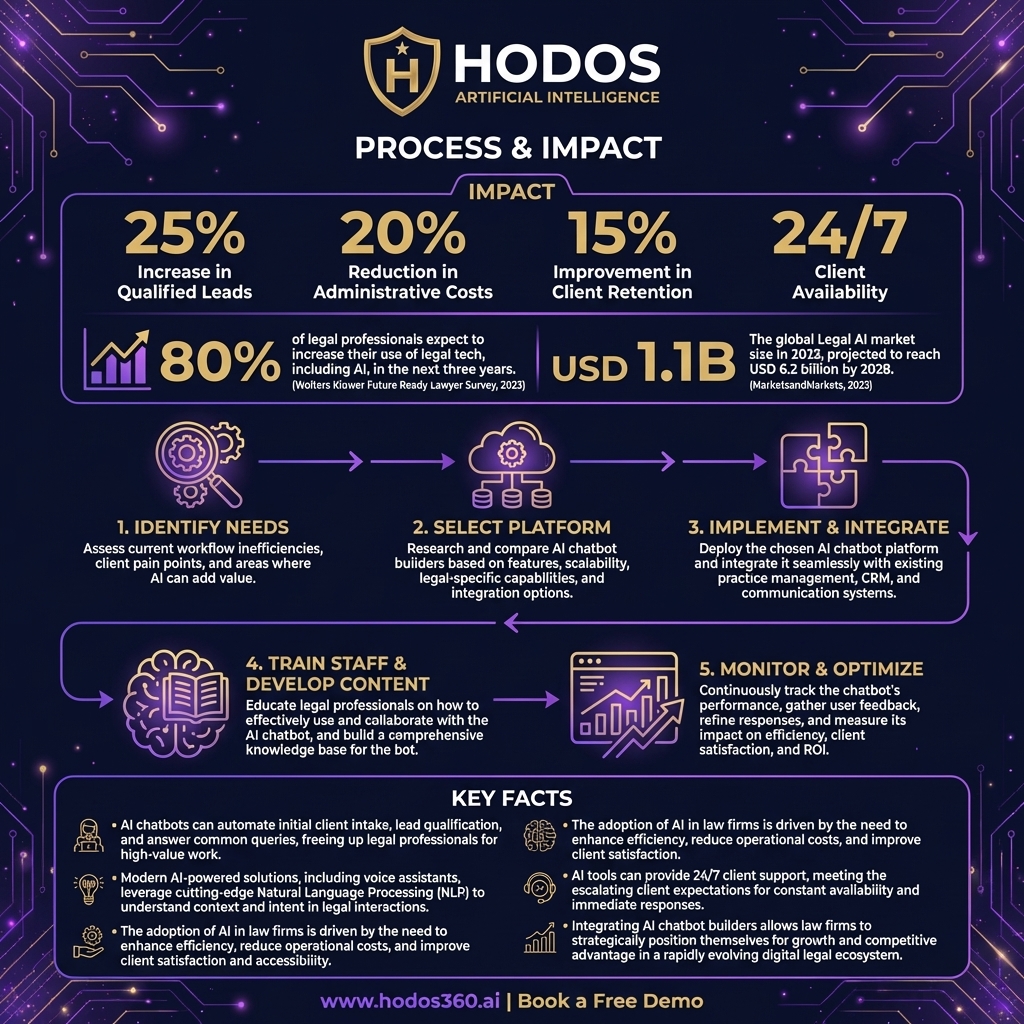
This deep understanding allows for more empathetic and accurate responses, crucial in sensitive legal matters. Furthermore, these platforms often integrate advanced machine learning algorithms, allowing them to continuously learn and improve from every interaction, becoming more efficient and precise over time. This adaptive intelligence ensures that the AI's performance scales with the firm's evolving needs and client base.
One of the most impactful features for diverse legal practices is multilingual support. In a globalized world, law firms often serve clients from various linguistic backgrounds. Modern AI voice assistants can seamlessly switch between languages, providing accessible and equitable service to a broader demographic. This capability not only expands a firm's potential client base but also enhances client satisfaction by communicating in their native tongue, fostering clearer understanding and trust.
Imagine a prospective client receiving immediate, accurate information in Spanish, Mandarin, or French, regardless of the time zone. This level of accessibility positions firms as truly client-centric, breaking down communication barriers that often deter individuals from seeking legal assistance, thereby broadening access to justice and significantly enhancing the overall client experience.
Advanced AI chatbot builders also excel in proactive client communication and automated appointment booking AI Document Workflows: Revolutionize Your Firm in 2026 fo.... Rather than waiting for clients to initiate contact, these systems can send automated reminders for court dates, document deadlines, or follow-up actions, ensuring clients remain informed and engaged throughout their legal journey.
For scheduling, they can integrate directly with legal professionals' calendars, allowing clients to book consultations at their convenience, without the need for manual coordination. This reduces administrative overhead, minimizes missed appointments, and provides a seamless, self-service experience that aligns with modern digital expectations. Platforms like HODOS 360’s AI Voice Assistants exemplify this, offering 24/7 appointment booking and intelligent call routing, ensuring clients connect with the right expert, right away.
Moreover, the best AI platforms offer robust analytics and ROI tracking capabilities. Firms can gain invaluable insights into client interaction patterns, common inquiries, lead conversion rates, and the overall efficiency of their AI deployments. This data-driven approach allows for continuous optimization of both the AI's performance and the firm's outreach strategies.
By tracking metrics such as time saved on administrative tasks, increase in qualified leads, and improvements in client satisfaction, firms can clearly quantify the return on investment from their AI development efforts. This forensic precision in measurement empowers legal leaders to make informed decisions, refining their digital strategy and demonstrating the tangible value that sophisticated conversational AI brings to the bottom line, moving beyond anecdotal success to verifiable impact.
Many leading AI chatbot builders, including those from Google Gemini, ChatGPT, and Microsoft Copilot, now offer advanced analytics dashboards.
Enhancing Client Experience and Accessibility
In the legal profession, client experience is paramount, and accessibility is a cornerstone of effective service. AI chatbot builders are revolutionizing both by providing instant, reliable, and personalized interactions around the clock. Clients no longer need to wait for business hours to get answers to pressing questions or initiate contact; a sophisticated AI voice assistant is always available, offering immediate gratification and reducing client anxiety.
This 24/7 availability significantly improves client satisfaction, as individuals feel supported and heard at all times. The ability of AI to provide consistent, accurate information also builds trust, positioning the firm as a reliable and modern legal partner. This digital omnipresence fosters a sense of responsiveness that traditional methods simply cannot match, creating a superior client journey from the very first touchpoint.
Furthermore, the inherent scalability of AI chatbot builders means that every client, regardless of their case size or background, receives the same high-quality, attentive initial interaction Legal AI ROI: Maximizing Law Firm Value in 2026. This democratizes access to legal information and services. For clients who might feel intimidated by direct human contact or who have language barriers, interacting with an AI can be a less daunting first step.
The multilingual capabilities of advanced conversational AI further enhance accessibility, ensuring that vital information and initial consultations are available in a client’s preferred language. This commitment to inclusivity not only broadens a firm’s reach but also aligns with the ethical obligations of the legal profession to serve a diverse public.
By leveraging these technologies, firms can ensure that their services are not only efficient but also equitably accessible to all who seek legal guidance.
Integrating AI Chatbots with Your Legal Tech Ecosystem
The true power of AI chatbot builders for law firms is fully realized when they are seamlessly integrated into the firm's broader legal tech ecosystem. A standalone chatbot, no matter how advanced, will only offer partial benefits. The real transformation occurs when these AI voice assistants communicate fluidly with an AI Law Firm Management System, case management software, billing platforms, client intake systems, and document automation tools.
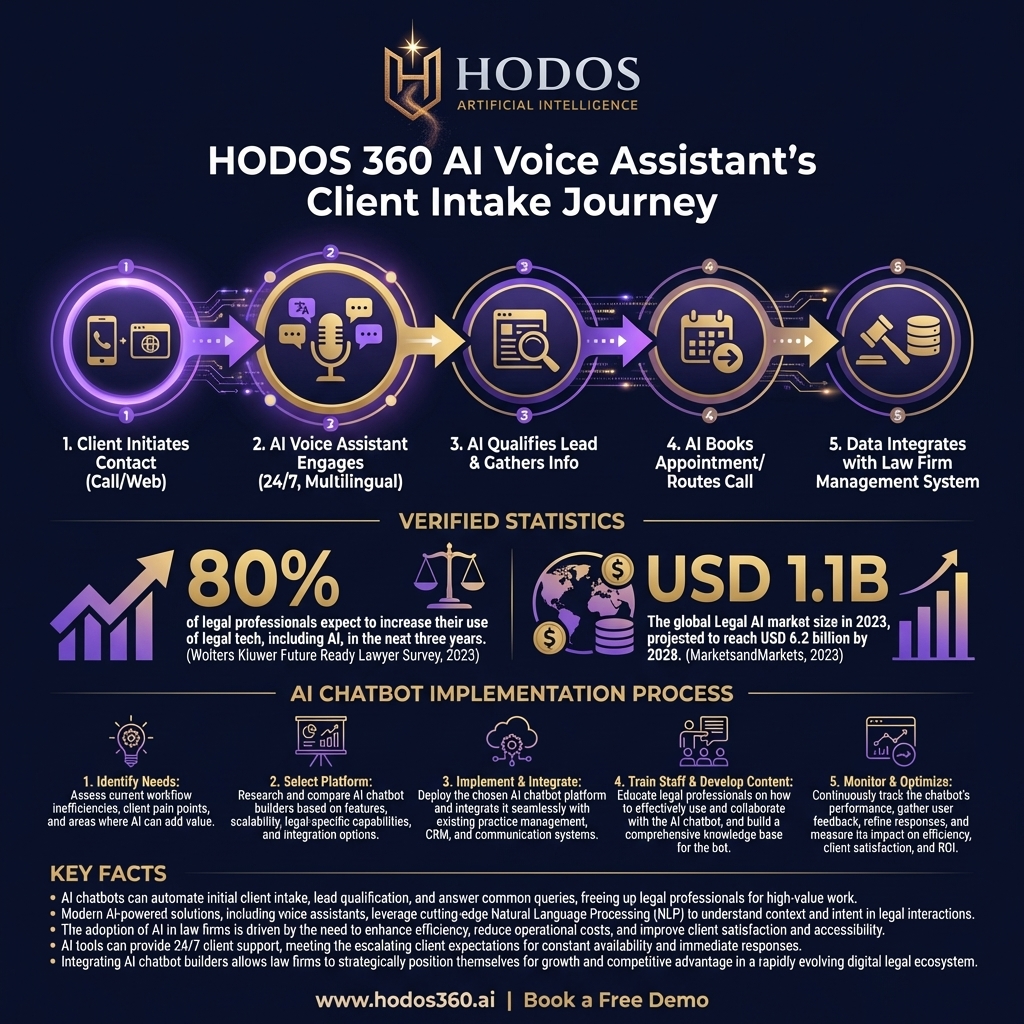
This interconnectedness creates a unified operational environment where data flows effortlessly between systems, eliminating redundancies, reducing manual data entry, and providing a holistic view of each client and case. For example, once an AI chatbot collects client information and qualifies a lead, that data should automatically populate a new client file in the case management system, trigger a billing setup, and initiate the generation of initial retainer agreements via document automation.
This level of integration is paramount for optimizing practice management.
Achieving this seamless integration requires robust APIs and a strategic approach to software architecture. Firms must look for AI chatbot builders that are designed for compatibility and interoperability, capable of exchanging data securely and efficiently with their existing tech stack.
This avoids the creation of fragmented systems, which often lead to data silos and operational inefficiencies that negate the benefits of automation. Platforms like HODOS 360 understand this critical need, offering not just AI Voice Assistants but a comprehensive suite of services, including an AI Law Firm Management System and Web & Mobile Development, specifically designed to work in concert.
This integrated approach ensures that every piece of technology contributes to a cohesive, optimized workflow, from client acquisition to case closure, ultimately enhancing the firm's overall digital infrastructure and strategic capabilities.
Moreover, the integration extends to the client-facing experience Website Design Cost 2026: Strategic Investment for Law Firms.
An AI-powered website, built with responsive design and SEO optimization in mind (often part of a Web & Mobile Development service), can host the AI chatbot builders directly, providing a consistent brand experience. When clients interact with the AI, their information and conversation history should be accessible across all relevant internal systems, allowing attorneys to pick up exactly where the AI left off, without asking redundant questions.
This continuity of service is a hallmark of truly advanced legal tech integration, fostering client satisfaction and operational clarity. It ensures that every interaction, whether with an AI or a human, builds upon previous engagements, creating a streamlined and highly personalized client journey that reflects the firm’s commitment to modern service delivery.
This holistic integration strategy is not just about adopting new tools; it's about fundamentally rethinking and optimizing legal workflows. By leveraging AI to automate routine tasks, manage data, and facilitate communication across platforms, law firms can achieve unprecedented levels of efficiency and accuracy. It means less time spent on administrative chores and more time dedicated to strategic legal work, client advocacy, and firm growth.
The synergy between AI chatbot builders and a comprehensive AI Law Firm Management System creates a powerful engine for success, enabling firms to scale operations, improve service quality, and maintain a competitive edge in the rapidly evolving legal landscape. This forward-thinking approach to technology integration defines the successful law firm of 2026.
Data Privacy and Compliance in AI Implementations
The deployment of AI chatbot builders and AI voice assistants in law firms necessitates a rigorous focus on data privacy and compliance. Handling sensitive client information demands adherence to stringent ethical obligations and legal regulations, such as the ABA Model Rules of Professional Conduct and various data protection statutes like GDPR and CCPA.
Firms must ensure that any AI system used for client interaction employs robust encryption protocols, secure data storage, and strict access controls. The AI must be designed to anonymize or redact privileged information where appropriate, and all data handling must be transparently communicated to clients through clear privacy policies.
Failing to uphold these standards can lead to severe penalties, reputational damage, and, critically, a breach of client trust, making compliance a non-negotiable aspect of AI adoption.
Furthermore, legal professionals have an ethical duty of competence, which now extends to understanding the risks and benefits of technology, including AI Voice AI Revolution 2026: Agentic Platforms Transform Law....
ABA Model Rule 1.1, Comment [8], explicitly states that lawyers should keep abreast of changes in the law and its practice, including the benefits and risks associated with relevant technology. This means firms must conduct thorough due diligence on AI chatbot builders, selecting vendors that prioritize data security, offer transparent data processing practices, and are compliant with relevant legal and ethical standards.
Regular security audits, employee training on data handling protocols, and clear internal policies for AI use are essential components of a comprehensive compliance strategy. The integrity of client data and the firm's ethical standing depend entirely on the meticulous implementation of these privacy and compliance measures, ensuring that the convenience of AI never compromises the sacred trust between attorney and client.
Navigating the Ethical and Security Landscape of AI in Law
Beyond data privacy, the broader ethical and security landscape surrounding AI chatbot builders in legal practice presents complex challenges that demand careful navigation. One primary concern is the potential for algorithmic bias. If the data used to train an AI voice assistant reflects historical biases present in legal records or societal norms, the AI might inadvertently perpetuate discriminatory outcomes, which is antithetical to the principles of justice.
Law firms must actively seek AI development partners who prioritize fairness, transparency, and accountability in their algorithms, implementing rigorous testing and auditing processes to mitigate bias. This requires a commitment to diverse training datasets and continuous monitoring of AI performance to ensure equitable treatment for all clients, upholding the ethical standards enshrined in legal practice, such as ABA Model Rule 8.4 (Misconduct) concerning fairness and non-discrimination.
Another critical ethical consideration revolves around the limits of AI and the necessity of human oversight. While AI chatbot builders can automate routine tasks and provide information, they cannot replicate human judgment, empathy, or the nuanced strategic thinking required in complex legal matters. Firms must establish clear guidelines for when an AI handles a task autonomously versus when human intervention is required, particularly in areas involving legal advice or sensitive decision-making.
The client must always be aware they are interacting with an AI, maintaining transparency in communication. This balance ensures that AI serves as a powerful augmentative tool, enhancing human capabilities rather than replacing the indispensable human element of legal counsel. It underscores the principle that the ultimate responsibility for legal advice and client outcomes always rests with the human attorney, aligning with ABA Model Rule 5.3 (Responsibilities Regarding Nonlawyer Assistants) which can be broadly interpreted to apply to AI tools.
From a security standpoint, the integration of AI platforms into a law firm’s infrastructure introduces new vectors for cyber threats. Sophisticated AI chatbot builders process vast amounts of confidential information, making them attractive targets for malicious actors. Firms must implement multi-layered security protocols, including advanced threat detection, intrusion prevention systems, and regular vulnerability assessments, to protect their AI assets and the data they handle.
This extends to ensuring that all third-party AI development partners adhere to the highest security standards, undergoing thorough vetting processes. The legal profession’s obligation to maintain client confidentiality (ABA Model Rule 1.6) mandates a proactive and robust cybersecurity posture, where the security of AI systems is as critical as the security of traditional data storage, safeguarding against breaches that could compromise privileged information and client trust.
Finally, the evolving regulatory landscape for AI necessitates continuous vigilance. Governments and legal bodies worldwide are developing frameworks to govern AI use, particularly in sectors dealing with sensitive information. Law firms must stay abreast of these developments, adapting their AI implementation strategies to remain compliant with new laws and ethical guidelines.
This includes understanding potential liabilities associated with AI errors or misuse, and ensuring that their AI chatbot builders are configurable to adapt to changing legal requirements. Navigating this complex ethical and security terrain requires not just technological expertise but a deep understanding of legal principles and a steadfast commitment to client welfare.
By proactively addressing these challenges, law firms can harness the transformative power of AI responsibly, building trust and ensuring the long-term sustainability of their practices.

How HODOS 360 Leads the Way with AI Voice Assistants
In a market flooded with generic AI chatbot builders, HODOS 360 stands apart by offering a specialized, comprehensive suite of AI-powered services tailored specifically for the unique demands of law firms. Our AI Voice Assistants are not merely chatbots; they are sophisticated, intelligent virtual receptionists and client engagement specialists designed to seamlessly integrate into your firm's operations.
Imagine an AI that offers 24/7 phone answering, ensuring no client call goes missed, no matter the hour. This round-the-clock availability is a game-changer for client satisfaction and lead capture, addressing a critical pain point for firms that often struggle with after-hours inquiries. Our voice assistants are trained on legal terminology and client interaction best practices, providing a professional and empathetic first point of contact that immediately elevates your firm's image and responsiveness.
Beyond basic answering services, HODOS 360's AI Voice Assistants excel in intelligent lead qualification and appointment booking. They can engage prospective clients in natural, flowing conversations, gathering essential case details, assessing the viability of their legal needs, and pre-screening them based on your firm's specific criteria.
This ensures that when a human attorney steps in, they are engaging with a genuinely qualified lead, armed with all the necessary background information. Furthermore, our AI can directly integrate with your firm’s calendar, allowing clients to book consultations effortlessly, reducing administrative burden and optimizing attorney schedules.
This intelligent automation of the initial client journey means your team spends less time on administrative tasks and more time on high-value legal work, significantly boosting productivity and conversion rates.
What truly differentiates HODOS 360 is our holistic approach. Our AI Voice Assistants are part of a larger, integrated ecosystem designed to power the modern law firm.
They seamlessly connect with our AI Law Firm Management System, which encompasses case management, billing, client intake, document automation, and AI-powered legal workflows. This means the data collected by your AI Voice Assistant instantly populates client files, initiates billing processes, and informs automated document generation, creating an unparalleled level of operational synergy.
This integrated platform eliminates data silos, ensures data consistency, and provides a single source of truth for all client and case information, a critical advantage for efficient practice management in the digital age.
Moreover, HODOS 360 extends its value proposition with an AI Marketing Platform and Web & Mobile Development services.
Our AI Marketing Platform leverages AI for video creation, social media automation, content generation, and ROI tracking, ensuring your firm's digital presence is as sophisticated as its internal operations. Our Web & Mobile Development team builds AI-powered website building with responsive design and SEO optimization, creating high-converting templates that attract and engage your target audience.
This comprehensive suite, with AI chatbot builders at its core, ensures that HODOS 360 provides a 360-degree solution for law firms seeking to embrace the future of legal tech, from attracting clients to managing cases, all powered by intelligent AI. We are committed to providing robust security and compliance, ensuring your firm's data and client confidentiality are always protected, aligning with the highest ethical standards of the legal profession.
- ✓24/7 Phone Answering: Never miss a potential client call again, ensuring round-the-clock availability and immediate client engagement, a key component of effective client intake automation.
- ✓Intelligent Lead Qualification: AI Voice Assistants pre-screen callers, gathering essential information and assessing case viability, directing qualified leads to your legal team, optimizing legal workflows.
- ✓Automated Appointment Booking: Seamlessly integrate with your firm's calendar, allowing clients to schedule consultations directly, reducing administrative overhead and enhancing convenience.
- ✓Multilingual Support: Break down language barriers and serve a diverse client base effectively, expanding your reach and demonstrating a commitment to accessibility in legal services.
- ✓Call Routing & Transfer: Efficiently direct calls to the appropriate department or attorney based on client needs, ensuring a smooth and professional client experience.
- ✓Seamless Integration: Our AI Voice Assistants integrate effortlessly with your AI Law Firm Management System and other core legal tech, creating a unified and efficient operational ecosystem.
- ✓Enhanced Client Experience: Provide instant answers to FAQs, proactive communication, and personalized interactions, fostering trust and boosting overall client satisfaction through advanced conversational AI.
Frequently Asked Questions
What is the difference between a basic chatbot and an AI voice assistant for law firms?+
A basic chatbot typically follows predefined scripts and offers limited conversational depth. An AI voice assistant, like those from HODOS 360, uses advanced Natural Language Processing (NLP) to understand context, sentiment, and legal nuances. It can engage in more natural, adaptive conversations, offer multilingual support, and perform complex tasks like lead qualification and appointment booking, making it a far more sophisticated tool for legal practice.
How do AI chatbot builders help with lead qualification?+
AI chatbot builders assist with lead qualification by engaging potential clients in a structured dialogue to gather key information about their legal needs, urgency, and case viability. They can intelligently assess if a prospect meets the firm's criteria and then route genuinely qualified leads to the appropriate attorney, saving valuable time and increasing conversion rates by focusing human efforts on promising opportunities.
Are AI voice assistants secure for handling sensitive client information?+
Yes, reputable AI voice assistants are designed with robust security features. HODOS 360, for instance, prioritizes data privacy with encryption, secure storage, and strict compliance protocols. Firms must choose providers that adhere to legal and ethical standards like ABA Model Rule 1.6 (Confidentiality) and relevant data protection laws (e.g., GDPR, CCPA), ensuring client information is handled with the utmost care and security.
Can AI tools integrate with my existing law firm management software?+
Absolutely. The effectiveness of AI chatbot builders is maximized through seamless integration with your existing legal tech ecosystem, including case management, billing, and document automation software. HODOS 360's AI Voice Assistants are built for interoperability, ensuring data flows effortlessly between systems, creating a unified client and case profile, and streamlining legal workflows for optimal practice management.
What are the ethical considerations for using AI in legal practice?+
Ethical considerations include avoiding algorithmic bias, maintaining client confidentiality (ABA Model Rule 1.6), ensuring transparency with clients about AI interaction, and preserving human oversight for critical legal judgment. Lawyers must also uphold their duty of competence (ABA Model Rule 1.1) regarding technology. Firms must select AI development partners committed to ethical AI, transparency, and robust security protocols to navigate these complexities responsibly.