


Voice AI Revolution 2026: Agentic Platforms Transform Law Firms
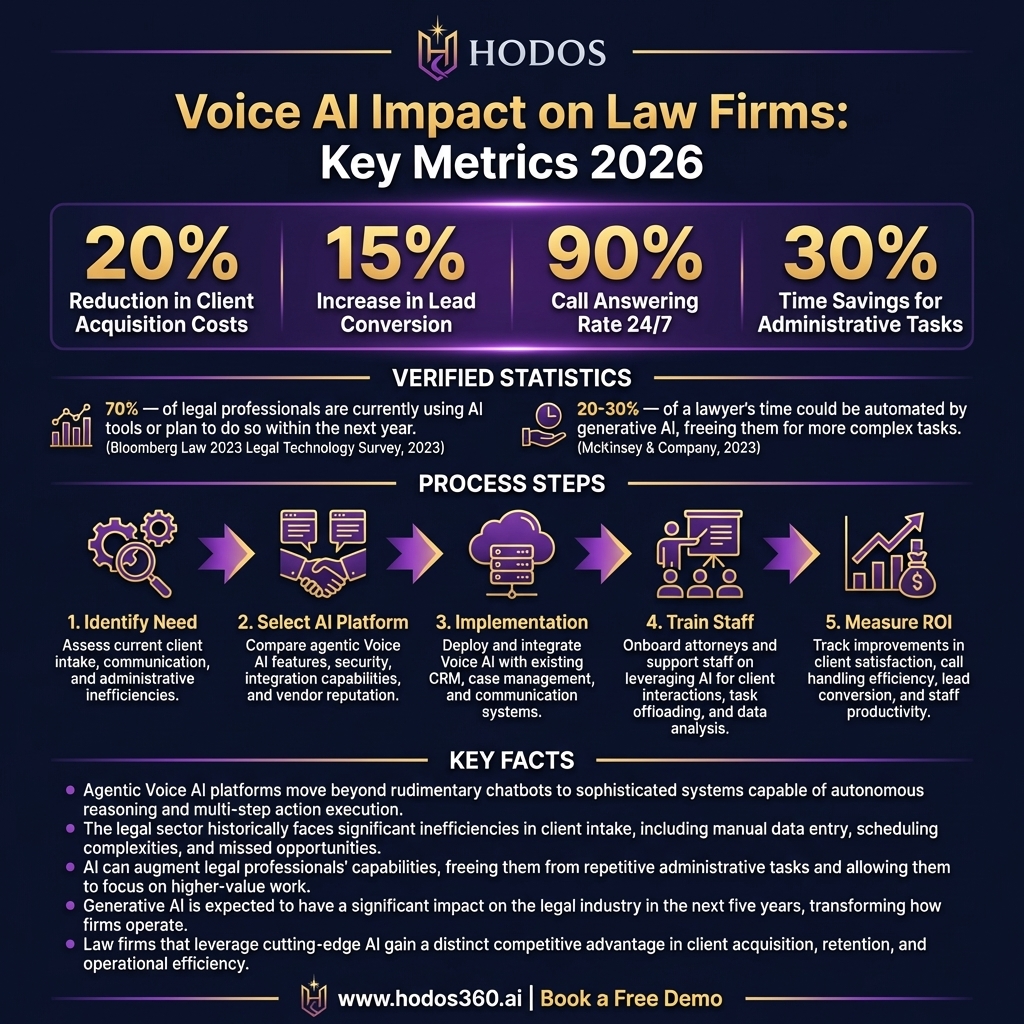
The legal sector, often characterized by its reliance on established protocols and human expertise, stands at the precipice of a dramatic technological shift in 2026. The recent unveiling of advanced agentic Voice AI platforms, such as RingCentral's AIR Pro, signals a pivotal moment, moving beyond rudimentary chatbots to sophisticated systems capable of autonomous reasoning and multi-step action execution.
This evolution is not merely an incremental upgrade but a fundamental redesign of how law firms will interact with prospective and existing clients, manage their substantial call volumes, and allocate invaluable human capital. The implications for efficiency, client satisfaction, and competitive advantage are immense, demanding immediate attention from every forward-thinking legal professional.
Historically, the bottleneck in legal service delivery often begins at the intake stage—a process fraught with manual data entry, scheduling complexities, and the inherent limitations of human availability. Traditional law firms grapple with missed calls, inconsistent lead qualification, and the administrative burden of initial client vetting, often leading to lost opportunities and frustrated potential clients.
These inefficiencies, though seemingly minor in isolation, compound to create significant operational drag and revenue leakage. The promise of agentic Voice AI lies in its capacity to address these systemic vulnerabilities head-on, offering a scalable, always-on solution that maintains professionalism and precision.
As we navigate further into 2026, the imperative for law firms to embrace cutting-edge technology becomes undeniable.
The competitive landscape is rapidly evolving, with firms that leverage AI for law firms gaining a distinct edge in client acquisition and retention. This isn't about replacing human attorneys or legal staff, but rather augmenting their capabilities, freeing them from repetitive administrative tasks, and allowing them to focus on the complex, nuanced legal work that truly requires their expertise.
The integration of intelligent legal voice assistants is poised to become a non-negotiable component of a modern, efficient, and client-centric legal practice.
The Rise of Agentic Voice AI in 2026: A Paradigm Shift
The Voice AI landscape of 2026 is fundamentally different from just a few years ago. We've moved beyond simple interactive voice response (IVR) systems that merely route calls or answer basic, scripted questions. Today's agentic platforms are characterized by their ability to understand context, engage in natural language conversations, and execute complex, multi-step actions autonomously Learn more about Agentic AI Unleashed: 2026's Power in Legal Work.
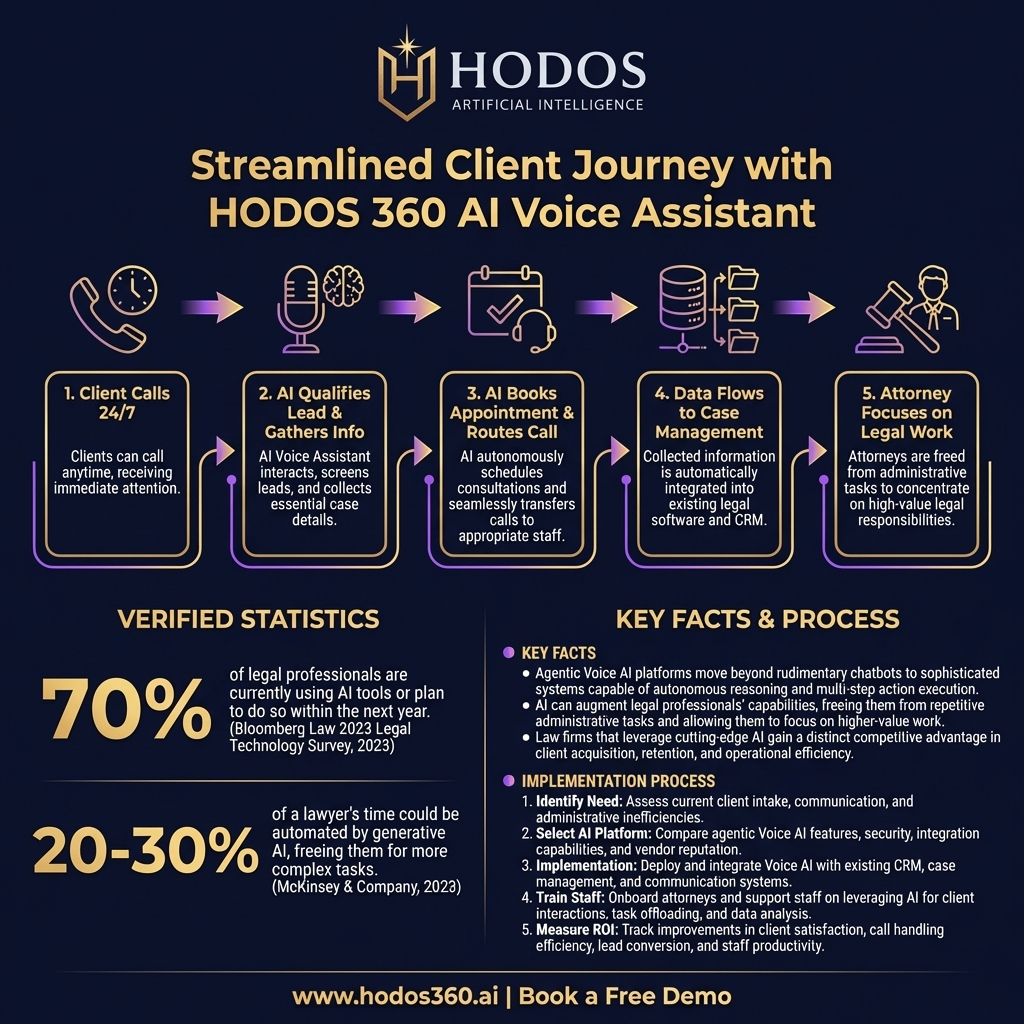
This sophisticated level of interaction means an AI can not only answer a client's question about office hours but also schedule an appointment, qualify the lead based on specific criteria, and even initiate the document automation process for client intake, all without human intervention. This shift represents a significant leap in the capabilities of legal voice assistants, transforming them from mere tools into integral members of a firm's operational team.
The underlying technology powering these agentic Voice AI systems involves advanced natural language processing (NLP), machine learning (ML), and deep learning algorithms. These components allow the AI to learn from every interaction, improving its accuracy and conversational flow over time. For law firms, this translates into an ever-improving client experience, where callers receive prompt, accurate, and personalized assistance 24/7 Learn more about AI Legal Startup Sandstone: Unlocking 2026's Legal Tech F....
The ability to handle high volumes of inquiries simultaneously ensures that no potential client is left waiting, a critical factor in today's fast-paced legal market where responsiveness can make or break a new client relationship. This evolution places a powerful client engagement platform directly at the fingertips of legal professionals, empowering them to scale their reach without scaling their overhead.
Beyond Simple Chatbots: The Agentic Leap
The distinction between traditional chatbots and agentic Voice AI is crucial. While chatbots operate within predefined scripts and decision trees, agentic systems possess a degree of autonomy and reasoning. They can interpret intent, adapt to unexpected turns in conversation, and even infer necessary actions based on context, much like a human legal assistant Learn more about AI Legal Assistant 2026: Revolutionizing Law Firm Efficiency.
For example, if a caller expresses distress and mentions a specific legal issue, an agentic AI can not only register the inquiry but also prioritize it, gather initial details, and route it to the most appropriate attorney or department, ensuring that urgent matters receive immediate attention.
This proactive capability is a game-changer for law firm voice automation and legal client engagement, moving beyond reactive responses to truly intelligent assistance.
This leap in intelligence means that the AI for law firms is no longer just about automation, but about intelligent augmentation. It’s about creating an always-on, highly efficient extension of your legal team that can handle the initial heavy lifting of client interactions. According to a 2025 report by Thomson Reuters, firms adopting advanced AI solutions for client intake saw an average 20% reduction in client acquisition costs and a 15% increase in conversion rates Learn more about Legal AI ROI: Maximizing Law Firm Value in 2026.
This data underscores the profound impact of agentic Voice AI, not just as a technological novelty, but as a strategic asset that delivers tangible, measurable benefits to the bottom line.
Transforming Legal Client Engagement with AI
The integration of Voice AI into legal client engagement strategies promises a revolution in how law firms attract, onboard, and serve their clients. Imagine a potential client calling your firm at 2 AM, anxious about a sudden legal issue. Instead of an answering machine or a costly after-hours service, they are met by an intelligent legal voice assistant that can empathetically listen, gather critical preliminary information, and even schedule an urgent consultation for the next morning Learn more about Legal AI Gap Widens: Strategic Imperative for Law Firms 2026.
This immediate responsiveness not only alleviates client stress but also significantly increases the likelihood of converting that lead into a retained client. The ability to provide 24/7, high-quality interaction fundamentally redefines the client experience, setting new benchmarks for service excellence in the legal industry.
Beyond initial intake, Voice AI streamlines numerous aspects of client communication. From providing case status updates and answering frequently asked questions to managing appointment reminders and facilitating secure document exchanges, these systems reduce the administrative burden on human staff. This allows attorneys and paralegals to dedicate more time to complex legal analysis, strategy development, and direct client advocacy, thereby enhancing the quality of legal services Learn more about Legal AI Problem: Mastering Ethical Tech in Law Firms 2026.
The efficiency gains are not just theoretical; studies by the American Bar Association (ABA) have consistently highlighted administrative tasks as a major time sink for legal professionals. Automating these with AI for law firms directly addresses this challenge, improving overall operational fluidity.
Furthermore, the multilingual capabilities of advanced Voice AI platforms break down significant barriers to access. In a diverse society, law firms often encounter potential clients who speak languages other than English. An AI voice assistant equipped with robust multilingual support can seamlessly communicate in multiple languages, ensuring that language is no longer an impediment to seeking legal counsel.
This expands a firm's potential client base and reinforces its commitment to inclusivity, aligning with contemporary ethical guidelines for client access to justice. This feature alone can significantly broaden a firm's market reach and enhance its reputation as a modern, client-focused practice.
The precision of Voice AI in lead qualification is another invaluable asset. By asking targeted questions and analyzing responses, these systems can accurately assess the viability and urgency of a potential case, identifying high-priority leads and filtering out unqualified inquiries. This intelligent triage ensures that human legal professionals spend their time on cases with the highest potential, optimizing resource allocation and improving conversion rates.
This forensic precision in initial client interaction is vital for law firm management, ensuring that every minute of an attorney's time is utilized effectively. Firms can refine their criteria, allowing the AI to learn and adapt, making the qualification process increasingly effective over time.
- ✓24/7 Client Availability: Ensure no call is missed, providing instant responses and capturing leads regardless of business hours.
- ✓Intelligent Lead Qualification: AI accurately assesses potential cases, prioritizing high-value leads and filtering out unqualified inquiries, saving valuable attorney time.
- ✓Automated Appointment Booking: Seamlessly schedule consultations directly into your firm's calendar, reducing administrative overhead.
- ✓Multilingual Support: Break down language barriers, serving a diverse client base and expanding market reach.
- ✓Efficient Call Routing: Direct callers to the correct department or attorney with precision, minimizing transfers and client frustration.
- ✓Personalized Case Updates: Provide automated, secure updates on case status, reducing inbound inquiries and improving client satisfaction.
- ✓Enhanced Client Data Collection: Systematically gather essential information during initial calls, populating CRM systems and streamlining intake.
Navigating the Challenges of AI Implementation
While the benefits of Voice AI are compelling, the journey to successful implementation in a law firm is not without its challenges. The initial investment in a robust AI for law firms platform can be significant, encompassing not just software licenses but also potential hardware upgrades, integration with existing case management systems, and staff training.
Law firms must conduct a thorough cost-benefit analysis, weighing the upfront expenditure against the long-term gains in efficiency, client satisfaction, and revenue. Furthermore, the cultural shift required for legal professionals to embrace AI as a partner, rather than a threat, is a crucial hurdle. Overcoming resistance to change through comprehensive training and demonstrating tangible benefits will be key to adoption.
Integration with existing legacy systems often presents a complex technical challenge. Many law firms operate with a patchwork of disparate software solutions for billing, case management, and client relationship management. A new Voice AI platform must seamlessly integrate with these systems to avoid creating new data silos or workflow disruptions.
This requires careful planning, robust API capabilities, and potentially custom development to ensure a cohesive technological ecosystem. Firms should look for platforms designed with open architecture and extensive integration capabilities to minimize friction during deployment. The goal is to enhance, not complicate, existing law firm management processes.
Ensuring Ethical AI and Data Privacy
Perhaps the most critical challenge for AI for law firms lies in navigating the complex ethical and data privacy landscape. Legal professionals are bound by strict rules of confidentiality and professional conduct, such as those outlined in the ABA Model Rules of Professional Conduct, specifically Rule 1.6 (Confidentiality of Information) and Rule 1.1 (Competence).
Any Voice AI system handling client communications must adhere to the highest standards of data security, encryption, and privacy compliance. Firms must ensure that their chosen AI platform is not only technologically secure but also legally compliant with relevant regulations like HIPAA (if applicable to sensitive client data), GDPR, and state-specific privacy laws.
Transparency with clients about AI interaction is also paramount to maintaining trust and ethical standards. Failure to address these concerns can lead to severe reputational damage and legal repercussions.
The ethical considerations extend beyond data security to the very nature of AI interaction. Firms must consider how AI agents are designed to avoid bias, ensure fairness, and prevent misrepresentation. While agentic Voice AI is designed for accuracy, the risk of misinterpretation or inappropriate advice, however small, must be mitigated through rigorous testing and human oversight.
Establishing clear protocols for when and how human intervention is required, and ensuring that clients are aware they are interacting with an AI, are vital components of ethical deployment. The future of legal tech 2026 depends on responsible innovation that upholds the core values of the legal profession.
The Strategic Advantage of Voice AI for Law Firms
For law firms operating in 2026, embracing Voice AI is no longer just an option; it's a strategic imperative for sustained growth and competitiveness. The ability to dramatically improve responsiveness, expand service availability, and intelligently filter leads provides an unparalleled advantage. Firms utilizing these agentic platforms can capture a larger share of the market by offering superior client service that is both immediate and highly efficient.
This enhanced client experience translates directly into higher client retention rates and stronger word-of-mouth referrals, which remain the bedrock of successful legal practices. The investment in advanced AI for law firms is an investment in future growth and market leadership.
Beyond client-facing benefits, Voice AI contributes significantly to internal operational excellence. By automating routine inquiries and administrative tasks, firms can reallocate their highly skilled legal professionals to more complex and revenue-generating activities. This optimization of human resources leads to increased productivity, reduced overhead costs associated with administrative staff, and a more engaged workforce.
Attorneys and paralegals, freed from repetitive tasks, can focus on the intellectual challenges of law, leading to greater job satisfaction and reduced burnout. This internal transformation driven by law firm voice automation is as critical as its external impact on client relations, creating a more sustainable and profitable business model.
Measuring ROI: Quantifying AI's Impact
Quantifying the return on investment (ROI) for Voice AI implementation is essential for demonstrating its value and securing ongoing support. Key metrics to track include reduced call handling times, increased lead conversion rates, decreased missed calls, improvements in client satisfaction scores, and the measurable time savings for legal staff.
For instance, a firm might track the number of qualified leads generated by the AI versus human intake, or the reduction in average client wait times. A study by Bloomberg Law in late 2025 indicated that law firms leveraging AI for law firms in client intake reported an average ROI of 150% within the first 18 months, primarily driven by improved lead conversion and operational efficiency.
This data provides a compelling business case for adoption.
The long-term benefits extend beyond immediate financial metrics to include enhanced firm reputation, improved attorney well-being, and a stronger competitive position. A firm known for its cutting-edge technology and exceptional client service will naturally attract both top legal talent and high-value clients. The data gathered by agentic platforms can also provide invaluable insights into client needs and market trends, allowing firms to refine their service offerings and marketing strategies.
This continuous feedback loop ensures that the legal tech 2026 investment continues to yield strategic advantages, making it a cornerstone of modern legal practice.

How HODOS 360 Leads the Way in Legal Voice AI
At HODOS 360, we understand the unique demands and opportunities facing law firms in 2026. Our AI Voice Assistants are engineered specifically for the legal sector, combining the power of agentic Voice AI with an intuitive understanding of legal workflows and client expectations. Unlike generic platforms, HODOS 360 offers a comprehensive suite of features designed to address the specific pain points of law firms: 24/7 phone answering, intelligent lead qualification, seamless appointment booking, and robust multilingual support.
We ensure that every potential client interaction is professional, efficient, and aligned with your firm's brand and legal standards. Our platform is not just about automation; it's about intelligent augmentation that elevates your entire practice.
Our AI Voice Assistants integrate flawlessly with other critical HODOS 360 services, creating a cohesive and powerful ecosystem for your firm. Imagine an AI Voice Assistant qualifying a lead, booking an appointment, and then automatically initiating a client intake workflow within your AI Law Firm Management System.
This seamless data flow reduces manual entry, eliminates errors, and ensures that every new client journey begins with precision. Furthermore, insights gathered by our Voice AI can feed directly into your AI Marketing Platform, helping you refine campaigns, generate targeted content, and track ROI more effectively.
This synergy across our services provides an unparalleled advantage in the competitive legal market of legal tech 2026.
HODOS 360 is committed to upholding the highest standards of data security and ethical AI practices. Our platforms are built with robust encryption and compliance features, ensuring that client confidentiality and regulatory requirements are always met. We understand the sensitivity of legal data and provide a secure environment for all interactions.
Our continuous learning algorithms mean that our legal voice assistants are constantly improving, adapting to your firm's specific needs and evolving legal terminology, ensuring that your client engagement platform remains cutting-edge and highly effective. We believe that responsible innovation is the cornerstone of trust in legal technology.
The future of legal practice is intelligent, efficient, and client-centric. With HODOS 360's AI Voice Assistants, your firm can confidently step into this future, transforming challenges into opportunities. Empower your team, delight your clients, and achieve unprecedented operational efficiency. Don't let your firm be left behind in the Voice AI revolution 2026.
Partner with HODOS 360 and experience the power of truly agentic AI for law firms, designed to propel your practice forward. We are more than just a vendor; we are your strategic ally in navigating the complex world of legal technology.
Frequently Asked Questions
What is agentic Voice AI and how does it differ from traditional IVR systems?+
Agentic Voice AI represents a significant advancement over traditional IVR (Interactive Voice Response) systems. While IVR typically follows rigid scripts and predefined menus, agentic AI uses advanced natural language processing to understand context, infer intent, and perform multi-step actions autonomously. It can engage in natural conversations, qualify leads, book appointments, and adapt to complex inquiries, offering a far more sophisticated and personalized interaction than a basic IVR system.
How can Voice AI improve client intake and lead qualification for law firms?+
Voice AI dramatically enhances client intake by providing 24/7 availability, ensuring no potential lead is missed. It can intelligently qualify leads by asking targeted questions, gathering essential information, and assessing case viability, prioritizing high-value prospects. This automation frees up legal staff from repetitive screening, allowing them to focus on qualified leads, thereby accelerating the intake process, reducing administrative costs, and improving conversion rates for your firm.
Is Voice AI compliant with legal confidentiality and data privacy regulations?+
Yes, reputable Voice AI platforms designed for the legal sector, like HODOS 360, are built with stringent security and compliance measures. They incorporate robust encryption, adhere to data privacy regulations (e.g., HIPAA, GDPR, state laws), and are developed with ethical considerations in mind. Firms must ensure their chosen provider transparently outlines its security protocols and compliance certifications to maintain client confidentiality in accordance with professional rules like the ABA Model Rules of Professional Conduct.
Can Voice AI integrate with existing law firm management software?+
Effective Voice AI solutions are designed for seamless integration with existing law firm management systems, including case management, CRM, and billing software. This ensures a unified workflow, preventing data silos and manual data entry. Integration allows the AI to automatically update client records, schedule appointments in shared calendars, and initiate document automation processes, creating a cohesive and efficient technological ecosystem within the firm. HODOS 360 prioritizes such integrations.
What kind of ROI can law firms expect from implementing Voice AI?+
Law firms can expect a significant return on investment (ROI) from implementing Voice AI, primarily through improved operational efficiency, increased lead conversion, and enhanced client satisfaction. Metrics include reduced missed calls, faster client intake, lower administrative costs, and measurable time savings for legal professionals. Industry data suggests firms can see ROI upwards of 150% within 18-24 months, driven by these tangible benefits and a stronger competitive position in the market.