

AI Email Marketing: The Ultimate Guide for Law Firms
The legal industry, often characterized by its adherence to tradition, is currently experiencing an unprecedented wave of technological disruption. For years, law firms have grappled with the challenge of effective marketing—how to cut through the noise, reach the right clients, and articulate their unique value proposition in a crowded market. Traditional methods, from local advertisements to generic email blasts, often yield diminishing returns, consuming valuable time and resources without delivering measurable impact. This struggle is particularly acute for mid-sized firms like Vance & Associates, where Senior Partner Eleanor Vance recently shared her frustration at a regional bar association meeting: “We’ve poured significant budget into email campaigns, but our engagement rates are stagnant. It feels like we’re shouting into the void, while our competitors seem to be having personalized conversations with potential clients.” Vance’s sentiment echoes a widespread concern across the legal sector.
The question posed by TechRadar, "Should AI write your marketing emails? Where to automate and where to step in," encapsulates the pivotal dilemma facing legal professionals today. The answer, as this comprehensive guide will explore, is not a simple yes or no, but rather a strategic integration that leverages AI's power for efficiency and personalization while preserving the indispensable human touch of legal expertise. Firms that master this balance are not just surviving, but thriving, transforming their marketing efforts from a cost center into a powerful engine for client acquisition and retention. The key lies in understanding AI's capabilities and limitations, and applying it judiciously to enhance, rather than replace, human judgment.
At the forefront of this transformation are platforms like HODOS 360, which provide AI-powered solutions specifically designed for the unique needs of law firms. Our AI Marketing Platform, for instance, offers advanced tools for AI video creation, social media automation, and content generation—capabilities that extend directly to revolutionizing email marketing. By embracing these intelligent systems, law firms can move beyond the era of generic outreach and step into a future where every communication is tailored, timely, and impactful, ensuring that firms like Vance & Associates can finally have those personalized conversations they desperately seek. The journey begins with a clear strategy for automation and intervention.
The Evolving Landscape of Legal Marketing: Why AI is Indispensable
The legal client of today is fundamentally different from that of a decade ago. Empowered by instant information access and sophisticated digital experiences in other sectors, they expect a similar level of responsiveness, personalization, and clarity from their legal providers. Generic, one-size-fits-all email campaigns, once a standard practice, now fall flat, often relegated to spam folders or ignored entirely. This shift isn't merely a preference; it's a paradigm change driven by broader digital literacy and the sheer volume of information vying for attention. Law firms are no longer just competing with each other; they're competing with every other digital experience a potential client encounters daily, from e-commerce giants to personalized news feeds. The imperative to stand out, to truly connect, has never been stronger, making traditional approaches increasingly unsustainable in a rapidly digitizing world.
Data reinforces this urgent need for change. A McKinsey & Company 2023 report on AI adoption in professional services projected that early adopters could realize efficiency gains of up to 30% in marketing operations within two years. This isn't theoretical; it's being demonstrated by forward-thinking firms. Consider Axiom Law, known for its innovative approach to legal services, which has consistently leveraged technology to streamline operations and client engagement, setting a benchmark for agile legal practices. Learn more about Voice AI: Ultimate Competitive Landscape for Law Firms. While often focused on internal legal workflows, the principles of technological efficiency extend directly to marketing. The legal sector's competitive pressures are also intensifying, with firms like Allen & O’Very making headlines for their strategic partnership with Harvey AI to enhance internal legal research and drafting. This signals a broader trend: firms that embrace AI are gaining a significant competitive edge, not just in service delivery but also in client acquisition.
For law firms, the adoption of AI in marketing, particularly AI email marketing, is no longer a luxury but an indispensable strategy for relevance and growth. It's about moving from broad outreach to hyper-personalization, from reactive responses to proactive engagement. Firms that delay risk being left behind, struggling to attract and retain clients who have grown accustomed to a more sophisticated, tailored digital experience. The question is no longer *if* AI will transform legal marketing, but *how quickly* firms can adapt to harness its power. This adaptation requires not just investing in technology, but also fostering a culture of innovation and continuous learning, recognizing that AI is a tool to augment human capabilities, allowing legal professionals to focus on higher-value tasks and deeper client relationships.
From Mass Blasts to Hyper-Personalization: A Paradigm Shift
The days of sending the same generic newsletter to every contact in a firm’s database are rapidly becoming obsolete. Modern AI email marketing allows for unprecedented levels of segmentation and personalization, treating each potential client as an individual with unique needs and interests. By analyzing data points such as website browsing history, past inquiries, demographic information, and even industry trends relevant to a client's business, AI can craft messages that resonate deeply. Imagine a prospective client who recently searched for "intellectual property litigation" on your firm's website receiving an email detailing recent successes in IP cases or an invitation to a webinar on patent law, rather than a general firm update. Learn more about Voice AI Assistants: The Ultimate Law Firm Advantage. This level of targeted communication fosters trust and demonstrates a clear understanding of the client's specific challenges, dramatically increasing the likelihood of engagement and conversion. This shift is critical for firms aiming to build lasting relationships rather than just secure one-off cases.
Strategic Automation: Where AI Excels in Legal Email Campaigns
AI's prowess in automation and data processing makes it an invaluable asset for optimizing legal email campaigns. One of its most significant contributions is in content generation. AI tools can analyze vast amounts of existing legal content, industry news, and successful marketing copy to draft initial email body text, compelling subject lines, and clear calls to action. This doesn't mean AI replaces the human writer; rather, it acts as a highly efficient first-draft assistant, freeing up legal marketers and attorneys from the time-consuming task of staring at a blank page. The AI can quickly generate multiple variations, allowing the human editor to select and refine the most effective ones, ensuring brand voice and legal accuracy are maintained. This capability is particularly beneficial for firms seeking to scale their outreach without exponentially increasing their marketing team's workload, a common challenge for growth-oriented legal practices.
Beyond content creation, AI excels in hyper-personalization and audience segmentation. Traditional email marketing platforms allow for basic segmentation, but AI takes this to a new level. It can identify subtle patterns in client behavior and demographics, creating micro-segments for highly targeted email campaigns. Learn more about Legal AI Startup Mergers: An Essential Growth Strategy. For instance, AI can analyze which practice areas specific clients consistently engage with, what types of content they prefer, and even their preferred communication times, ensuring messages are delivered when they are most likely to be opened and acted upon. This predictive analytics capability ensures that the right message reaches the right person at the right time, maximizing engagement and conversion rates. It’s a strategic shift from broadcasting to truly connecting, allowing law firms to nurture leads more effectively and build stronger relationships even before the initial consultation.
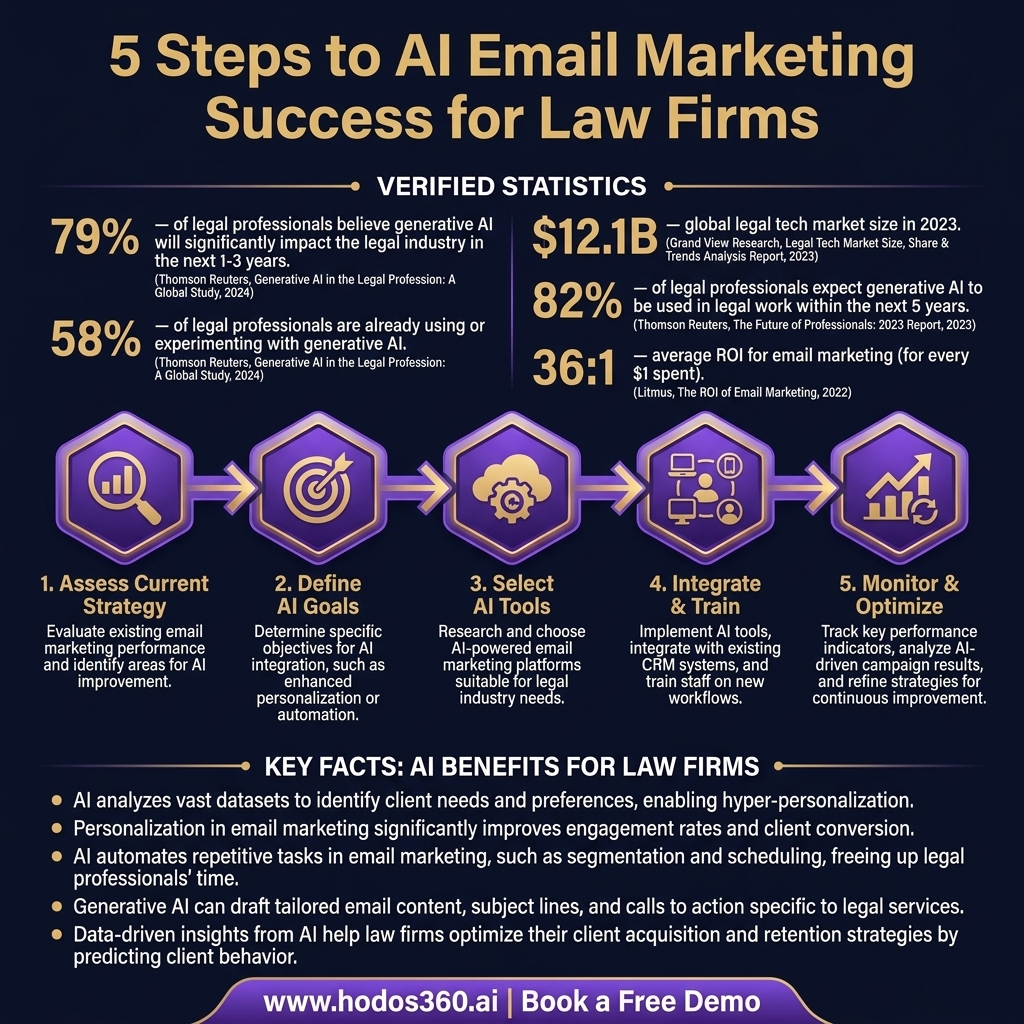
Furthermore, AI streamlines the entire campaign management process, from scheduling and drip campaigns to A/B testing and performance monitoring. Platforms leveraging AI, like HODOS 360's AI Marketing Platform, can automate the deployment of multi-stage nurture sequences, ensuring consistent follow-up without manual intervention. They can also dynamically adjust campaign parameters—such as send times or subject line variations—based on real-time performance data, continuously optimizing for better results. This level of email campaigns automation and intelligent optimization ensures that marketing efforts are always learning and improving, driving more efficient client acquisition and stronger ROI tracking legal performance. The automation of these repetitive, data-intensive tasks allows legal professionals to dedicate their valuable time to strategic planning, client relationship building, and, most importantly, the practice of law.
Crafting Compelling Content and Subject Lines with Generative AI
Generative AI models have revolutionized the creation of marketing content, offering law firms an unparalleled opportunity to produce engaging and relevant email copy. These advanced algorithms can analyze vast datasets of successful legal marketing materials, identify key persuasive elements, and then generate original text tailored to specific campaign goals. For instance, a firm aiming to attract clients for estate planning can prompt an AI to create a series of emails highlighting the importance of wills, trusts, and probate, infused with empathetic language and clear calls to action. The AI can even generate multiple subject line options, A/B testing them to determine which resonates best with the target audience, significantly boosting open rates. This capability dramatically reduces the time and effort traditionally associated with content creation, allowing firms to maintain a consistent and high-quality communication cadence with their prospects and clients. The efficiency gains here are not just marginal; they are transformative for marketing workflows.
However, the power of generative AI lies not in its ability to operate autonomously, but in its role as a sophisticated assistant under human guidance. Consider the trending keyword scenario: "arjun used ai to create a marketing email for his fitness studio. Learn more about Legal Technology: Essential Steps to Reset Your AI Strategy. the ai draft looked good, but he added his studio name, contact details, and a local discount offer before sending it. what does this show about effective ai use?" This perfectly illustrates the symbiotic relationship between AI and human expertise. While AI can produce a structurally sound and persuasive draft, it often lacks the specific, nuanced details that make a communication truly authentic and impactful for a law firm. A lawyer or legal marketer must step in to infuse the firm's unique brand voice, ensure factual accuracy, add specific case references, and tailor the message to the precise legal context and ethical guidelines. This human layer of refinement transforms a generic AI output into a powerful, firm-specific marketing asset, ensuring that the message not only converts but also upholds the firm's professional integrity and unique identity. The output of AI is a starting point, not a final destination.
- ✓Time Savings: AI automates repetitive tasks like drafting, scheduling, and segmentation, freeing up legal professionals for higher-value work.
- ✓Enhanced Personalization: AI analyzes client data to deliver highly targeted and relevant messages, improving engagement and conversion rates.
- ✓Improved Engagement: Personalized content and optimized delivery times lead to higher open rates, click-through rates, and overall client interaction.
- ✓Data-Driven Insights: AI-powered analytics provide deep insights into campaign performance, allowing for continuous optimization and better strategic decisions.
- ✓Scalability: Firms can manage a larger volume of sophisticated email campaigns without a proportional increase in manual effort or marketing staff.
- ✓Cost Efficiency: By streamlining processes and improving campaign effectiveness, AI reduces the overall cost per acquisition for new clients.
- ✓Competitive Advantage: Early adopters of AI email marketing gain a significant edge in attracting and retaining clients in a crowded legal market.
The Human Touch: When Legal Expertise Must Guide AI
Despite AI's impressive capabilities, the concept of fully automating legal marketing emails without human oversight is fraught with peril. The practice of law is inherently human-centric, built on trust, ethics, and nuanced understanding that AI, in its current form, cannot fully replicate. A lawyer's duty extends beyond mere information dissemination; it involves upholding the integrity of the profession and ensuring all communications are accurate, truthful, and compliant with stringent ethical standards. The ABA Model Rules of Professional Conduct, specifically Rule 7.1 (Communications Concerning a Lawyer’s Services), mandates that lawyers shall not make false or misleading communications about their services. Relying solely on AI without rigorous human review risks inadvertently violating these rules, potentially leading to professional disciplinary action, reputational damage, and loss of client trust. The ultimate responsibility for all firm communications, regardless of their origin, rests squarely with the attorneys.
A critical concern for law firms leveraging AI is data privacy and client confidentiality. The trending keyword query, "why is it important not to share confidential documents with free ai tools like chatgpt? they cannot read pdfs they have no privacy guarantees and data could be ingested they cannot analyze documents ai cannot summarize large documents," highlights a fundamental risk. Free, public-facing AI tools often use user input to train their models, meaning any confidential client information or sensitive case details entered could become part of the public domain. This presents an unacceptable risk for law firms, violating the core tenets of ABA Model Rule 1.6 (Confidentiality of Information). Learn more about Essential AI Search for Law Firms: Beyond Hosting Limits. Law firms must exclusively use enterprise-grade, secure AI platforms that offer robust data encryption, strict privacy policies, and contractual guarantees that client data will not be used for model training or shared with third parties. The choice of AI tool is not just a technical decision; it is an ethical imperative.
Furthermore, AI models, while sophisticated, are trained on existing data, which can sometimes reflect and perpetuate biases present in that data. This is particularly relevant in legal contexts, where fairness and impartiality are paramount. An AI generating marketing content could inadvertently create discriminatory language or target demographics in an ethically questionable manner. This raises the question: "what should you do if ai gives you an answer that seems incorrect or biased?" The answer is simple yet profound: human intervention is non-negotiable. Lawyers and legal marketers must critically review all AI-generated content for accuracy, fairness, and adherence to the firm's ethical principles and brand voice. AI should serve as an augmentative tool, providing a foundation that is then meticulously shaped and refined by human legal expertise and judgment. It is the lawyer's duty to ensure that AI's output aligns with the firm's values and legal obligations, transforming raw AI output into ethically sound and strategically effective communication.
Navigating Ethical AI Use and Client Confidentiality
The responsible integration of AI into a law firm's marketing strategy demands a clear understanding of ethical boundaries and a steadfast commitment to client confidentiality. The ABA Formal Opinion 498 (Virtual Practice and the Ethical Use of Technology) reinforces the lawyer's duty of technological competence, which includes understanding the risks and benefits of technology. This extends to selecting AI tools that are not only effective but also demonstrably secure and compliant with data privacy regulations like GDPR, CCPA, and HIPAA, where applicable. Firms must conduct thorough due diligence on any AI vendor, scrutinizing their data handling practices, security protocols, and terms of service. Learn more about Legal AI Pricing: The Ultimate Guide to Value, Not Fear. Implementing strong internal policies for AI use, including mandatory human review processes for all client-facing communications, is paramount. This proactive approach safeguards client information, maintains professional integrity, and builds trust, ensuring that the firm's adoption of AI is both innovative and ethically sound.
Measuring Success: Analytics, ROI, and Continuous Optimization
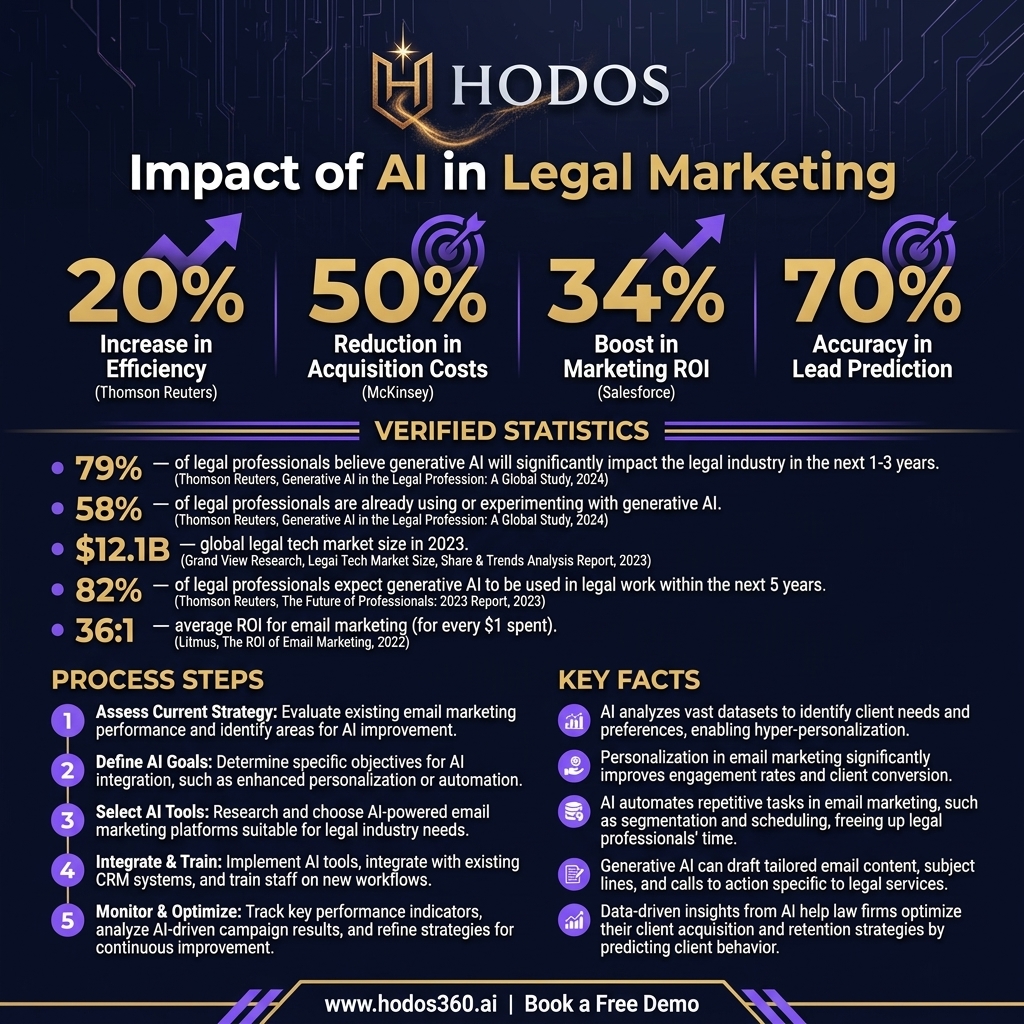
The true power of AI in legal marketing extends beyond initial content generation and personalization; it lies in its ability to provide deep, actionable insights into campaign performance, enabling continuous optimization and demonstrable ROI tracking legal. Traditional marketing often relies on superficial metrics like open rates or click-through rates. While these are important, AI-powered analytics delve deeper, correlating email engagement with actual client acquisition, conversion rates, and even the lifetime value of clients. For example, by tracking which specific email sequences lead to a signed retainer agreement, or which content topics attract the highest-value clients, firms can precisely identify what works and why. This data-driven approach moves marketing from an art to a science, allowing firms to allocate resources more effectively and justify marketing spend with concrete results. This continuous feedback loop is critical for refining strategies and ensuring every marketing dollar contributes to the firm's growth.
Leading market research underscores the tangible benefits of this analytical approach. Gartner's 2024 marketing technology survey revealed that companies leveraging AI for marketing analytics reported an average increase of 15% in marketing ROI. For law firms, this translates into a more efficient allocation of resources and a clearer path to client acquisition. Platforms like HODOS 360's AI Marketing Platform are specifically designed to provide these robust analytics, offering dashboards that track key performance indicators, identify trends, and even suggest areas for improvement. This allows legal marketers to move beyond guesswork, making data-driven marketing decisions that are informed by real-world client behavior. The ability to quickly identify underperforming campaigns and pivot strategies based on data is a significant competitive advantage, ensuring that marketing efforts are always aligned with business objectives and delivering maximum impact.
Ultimately, measuring success in AI email marketing is about understanding the holistic impact on the firm's bottom line. It's about more than just sending emails; it's about building relationships, generating qualified leads, and converting them into loyal clients. AI facilitates A/B testing on an unprecedented scale, allowing firms to experiment with different subject lines, call-to-action buttons, or even entire email templates to determine which yields the best results. This iterative process of testing, analyzing, and refining ensures that marketing strategies are not static but continuously evolving to meet market demands and client preferences. By focusing on true engagement and conversion metrics, law firms can leverage AI not just to automate tasks, but to strategically grow their client base and enhance their reputation as forward-thinking, client-centric practices.
Beyond Open Rates: Understanding True Engagement and Conversion
While open rates provide a basic indicator of interest, they offer a superficial view of a client's journey. True engagement and conversion in legal marketing extend to how prospects interact with content after opening an email, whether they click through to specific articles, download whitepapers, register for webinars, or ultimately schedule a consultation. AI-driven analytics can track these deeper interactions, identifying patterns that signify genuine interest versus casual browsing. For example, an AI can flag a prospect who repeatedly visits pages related to corporate mergers and acquisitions as a high-potential lead, even if they haven't directly contacted the firm yet. This allows for proactive follow-up and targeted nurturing, ensuring that valuable leads are not overlooked and that marketing efforts are focused on converting genuine interest into tangible business opportunities. Understanding this comprehensive client journey is paramount to maximizing ROI.

Future-Proofing Your Firm: Integrating AI for Sustainable Growth
The integration of AI into your law firm's marketing strategy is more than a tactical upgrade; it's a strategic imperative for future-proofing your firm in an increasingly competitive and technologically advanced legal landscape. Firms that embrace AI are not just optimizing current operations; they are building a foundation for sustainable growth, attracting a new generation of clients who expect digital fluency and personalized service. This forward-thinking approach positions a firm as innovative and client-centric, enhancing its reputation and appeal. As the legal industry continues its digital transformation, driven by advancements from OpenAI's GPT models to Anthropic's Claude, the gap between AI-enabled firms and those relying on outdated methods will only widen. Proactive adoption ensures your firm remains relevant, resilient, and ready to meet the evolving demands of the market, securing its place as a leader in the digital age.
Successfully integrating AI requires a holistic approach, extending beyond just email marketing. It involves leveraging AI across various facets of the firm, from streamlining law firm operations with AI-powered case management to enhancing client interactions through AI voice assistants and building a robust online presence with AI-powered web development. This comprehensive strategy, offered by platforms like HODOS 360, creates a synergistic effect where each AI tool amplifies the others, leading to exponential gains in efficiency, client satisfaction, and profitability. Firms must invest not only in the technology itself but also in training their teams to effectively utilize these tools, fostering a culture of continuous learning and adaptation. This commitment to innovation is what distinguishes market leaders from followers, ensuring long-term competitive advantage.
In conclusion, the question of whether AI should write your marketing emails is best answered with a resounding "yes," but always with a critical caveat: AI must be guided by human legal expertise, ethical considerations, and a firm's unique brand voice. When deployed strategically, AI email marketing transforms client acquisition and engagement, offering unprecedented levels of personalization, efficiency, and measurable ROI. It allows law firms to navigate the complexities of modern marketing with precision, ensuring every communication is impactful and compliant. By embracing this powerful synergy between cutting-edge AI and human ingenuity, law firms can unlock new efficiencies, cultivate deeper client relationships, and secure a prominent position in the legal landscape of tomorrow. The future of legal marketing is here, and it's intelligently automated, ethically guided, and profoundly human-centric.
Frequently Asked Questions
Can AI truly understand legal nuances for marketing emails?+
While AI can generate highly relevant and persuasive content based on vast data sets, it lacks true human understanding and legal judgment. It can draft excellent starting points for marketing emails, but human legal professionals must always review and refine the content to ensure accuracy, compliance with ethical rules, and the nuanced reflection of legal principles and the firm's specific expertise. AI is a powerful assistant, not a replacement for legal acumen.
What are the biggest risks of using AI for law firm email marketing?+
The primary risks include potential breaches of client confidentiality if insecure or public AI tools are used, inadvertent generation of misleading or biased content, and ethical non-compliance if human oversight is insufficient. Lawyers are ultimately responsible for all communications. It's crucial to use enterprise-grade AI platforms with strong privacy guarantees and implement rigorous human review processes for all AI-generated marketing materials.
How can I ensure AI-generated content reflects my firm's unique voice?+
To maintain your firm's unique voice, train your AI tools on your existing marketing materials, website content, and style guides. Provide clear prompts that specify tone, style, and key messaging. Treat AI as a collaborative writing partner: let it generate drafts, then have your legal marketing team or attorneys refine the output to infuse it with your firm's specific personality, values, and legal precision. Consistent human editing is key.
Is AI email marketing compliant with legal ethics and data privacy?+
Yes, AI email marketing can be compliant, but only with diligent human oversight and careful selection of technology. Lawyers must adhere to ABA Model Rules regarding advertising (e.g., Rule 7.1) and confidentiality (e.g., Rule 1.6). This means ensuring AI-generated content is not false or misleading and using secure, privacy-compliant AI platforms that protect client data. The lawyer remains responsible for all ethical and privacy obligations.
How do I measure the ROI of AI in my email campaigns?+
Measuring ROI involves tracking key metrics beyond simple open rates. Focus on conversion rates (e.g., leads generated, consultations booked, new client acquisitions), reductions in client acquisition costs, and time saved in content creation and campaign management. Utilize AI-powered analytics platforms, like those within HODOS 360's AI Marketing Platform, to correlate email engagement with tangible business outcomes and continuously optimize your strategies for maximum return.