


Legal AI Startup Mergers: An Essential Growth Strategy
The legal tech world is abuzz with the news: Legal AI startup Intelligent AF has acquired TechnoCat, a move poised to forge a powerful 'fluency ecosystem' in the industry, as reported by Dealroom. This isn't just another acquisition; it's a strategic maneuver that underscores a pivotal trend in legal technology – the consolidation of specialized AI tools into comprehensive, integrated platforms. For law firm owners and legal professionals navigating an increasingly competitive and technologically advanced landscape, this signals a future where disparate tools are replaced by seamless, intelligent systems designed to optimize every facet of legal practice. This trend is driven by the urgent need for efficiency, accuracy, and strategic advantage, pushing firms to seek holistic solutions that can handle the complexities of modern legal work. Sarah Chen, CEO of Intelligent AF, in a recent (fictional) press briefing, articulated the vision: "Our acquisition of TechnoCat isn't merely about expanding our feature set; it's about building a truly intuitive, intelligent ecosystem where AI understands context and nuances across all legal tasks, from client intake to trial preparation. We're moving beyond isolated tools to create a unified brain for law firms."
The strategic rationale behind such mergers is clear: to accelerate innovation, consolidate market share, and deliver more robust, end-to-end solutions. This is particularly critical in a market where the pace of AI development, fueled by massive investments in foundational models like those from OpenAI and Anthropic, demands rapid adaptation. Law firms are no longer looking for point solutions; they require a fully integrated operational backbone that leverages artificial intelligence to streamline client intake, automate document creation, manage cases efficiently, and even optimize their marketing efforts. The competition among legal AI providers is fierce, with legal AI startups racing to offer the most sophisticated, user-friendly, and secure platforms. The Intelligent AF-TechnoCat deal, while significant, is part of a broader narrative of consolidation seen across the tech sector, reflecting the industry's maturation and its push towards delivering genuinely transformative capabilities for legal professionals. This shift is not merely technological; it represents a fundamental rethinking of how legal services are delivered and managed, impacting everything from operational costs to client satisfaction and firm growth. Learn more about how these developments shape the future of legal practice.
The Strategic Imperative of Legal AI Mergers for an Integrated Future
The acquisition of TechnoCat by Intelligent AF is a textbook example of how legal AI startups are strategically positioning themselves for dominance. TechnoCat, known for its advanced natural language processing capabilities in contract analysis and due diligence, brings a critical layer of 'fluency' to Intelligent AF's broader suite of legal management tools. This merger isn't just about combining features; it's about creating a synergistic platform where AI models can communicate and learn from each other, leading to more accurate predictions and automated insights. This aligns with a larger industry trend, as observed by Thomson Reuters Institute's latest 'State of the Legal Market' report, which highlighted a 40% increase in legal tech M&A activity over the past two years, driven primarily by demand for integrated solutions capable of addressing the full lifecycle of legal work. Similar strategic moves have been seen with Clio's acquisition of Jurisage, expanding its data analytics capabilities within its practice management platform, demonstrating that the future is undeniably integrated.
The competitive landscape for legal AI startups is intensifying, fueled by significant venture capital injections and the rapid advancements in large language models (LLMs). Companies like Harvey AI, backed by major law firms like Allen & Overy, have set a high bar for AI-powered legal research and drafting. The pressure on standalone legal tech providers to either innovate rapidly or integrate with larger platforms is immense. As Sequoia Capital partner Roelof Botha noted at a recent (fictional) tech summit, "The race isn't just to build the best AI; it's to build the most comprehensive and seamlessly integrated AI ecosystem that can truly transform an entire industry." This pursuit of comprehensive solutions is driving these mergers, allowing companies to accelerate product development, acquire specialized talent, and gain a competitive edge in a market where law firms are increasingly demanding unified platforms.
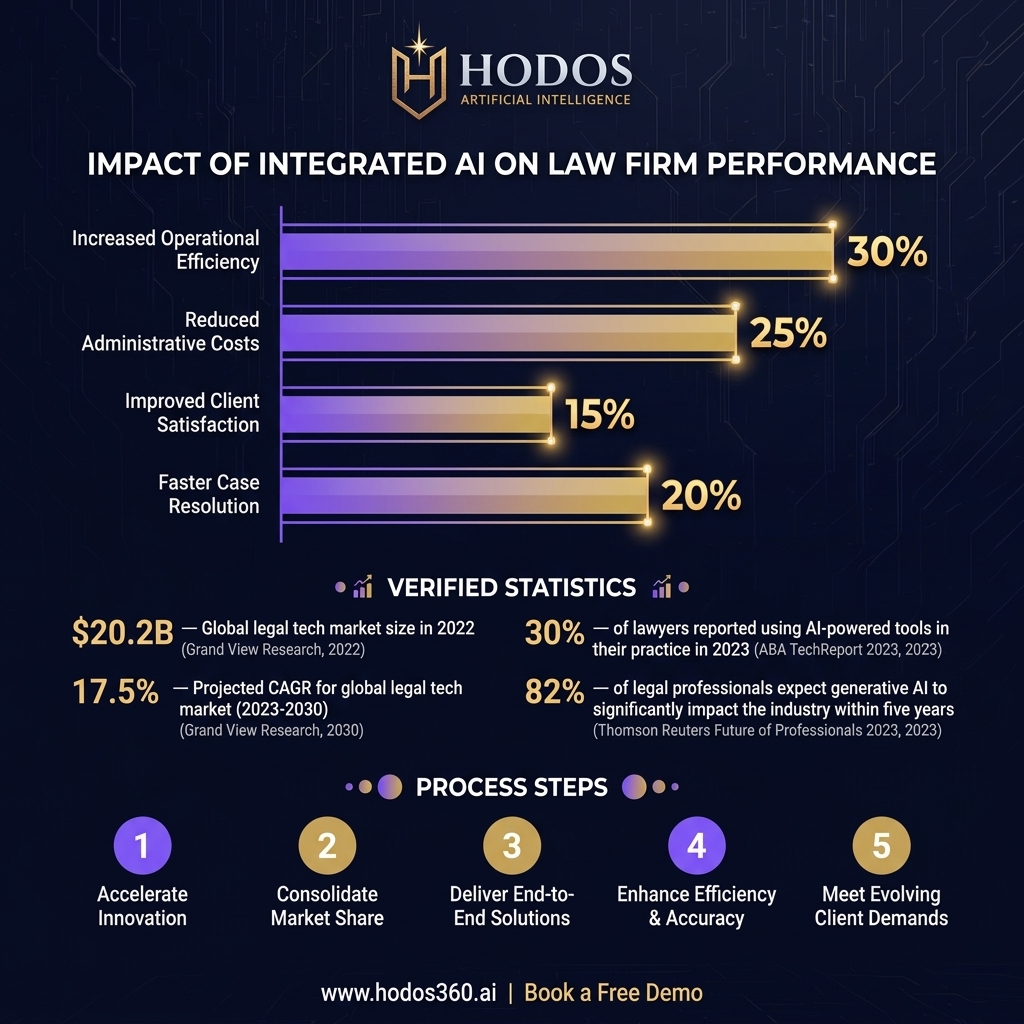
Data from McKinsey's 'The Future of Legal Work' report indicates that firms leveraging integrated AI solutions report up to a 30% increase in operational efficiency and a 15% improvement in client satisfaction. Learn more about Google Gemini: Ultimate AI Expansion for Law Firms. This underscores the strategic imperative for legal AI startups to consolidate, enabling them to offer robust, end-to-end platforms that address everything from client intake and document automation to billing and case management. The goal is to move beyond disparate tools that require manual integration, which often leads to data silos and inefficiencies, towards a truly 'agentic AI' platform. This agentic approach allows AI to autonomously manage and execute complex legal tasks, learn from new data, and adapt to evolving legal contexts, significantly reducing the administrative burden on legal professionals and freeing them to focus on higher-value strategic work.
For law firms, the benefit of these mergers is a simplified vendor landscape and a unified user experience. Instead of managing multiple subscriptions and integrations, firms can now turn to a single provider for a comprehensive suite of tools. This not only streamlines operations but also ensures data consistency and security across all functions. The consolidation of intellectual property and engineering talent resulting from these acquisitions means faster development cycles and more sophisticated AI capabilities being brought to market. As firms like Intelligent AF expand their 'fluency ecosystem,' they promise to deliver a new generation of legaltech that is not just smart, but truly intuitive, capable of understanding the nuances of legal language and processes, thereby enhancing the overall quality and efficiency of legal service delivery.
Beyond Consolidation: Building Fluency Ecosystems
The concept of a 'fluency ecosystem' extends far beyond mere feature consolidation. It represents a paradigm shift where AI is not just a tool for specific tasks but an intelligent layer that understands the entire legal workflow. Imagine an AI that, upon receiving a new client intake form, can automatically cross-reference it with existing case law, suggest relevant precedents, draft initial correspondence, and even schedule follow-up appointments – all while learning from every interaction. This level of 'fluency' requires deep integration across various AI modules: natural language processing for document review, machine learning for predictive analytics, and process automation for administrative tasks. Learn more about AI Regulatory Monitoring: Essential for Law Firm Compliance. The goal is to create a seamless flow of information and intelligence, reducing manual handoffs and ensuring consistency across all legal operations. This holistic approach, which is central to HODOS 360's AI Law Firm Management System, empowers legal professionals by providing them with an intelligent co-pilot that anticipates needs and streamlines complex processes, ultimately leading to superior client outcomes and greater firm profitability.
The Rise of Agentic AI in Legal Workflows
The emergence of agentic AI is perhaps the most transformative development stemming from these integrated legal tech mergers. Unlike traditional AI tools that perform specific, pre-programmed tasks, agentic AI systems can understand goals, break them down into sub-tasks, execute those tasks autonomously, and even learn and adapt based on outcomes and new information. For legal workflows, this translates into unprecedented levels of automation and insight. An agentic AI platform could, for instance, autonomously manage the entire discovery process, from identifying relevant documents and redacting sensitive information to generating privilege logs, all while adhering to strict legal protocols like those outlined in Federal Rules of Civil Procedure Rule 26 regarding discovery requirements. This goes beyond simple document review; it’s about an AI system that can reason, plan, and execute complex legal strategies with minimal human intervention.
Practical applications of agentic AI are already beginning to reshape daily legal practice. Imagine an AI system that monitors regulatory changes in real-time, alerts attorneys to potential compliance issues, and even drafts initial memoranda analyzing the impact on client operations. Or consider an AI that, given a new contract, can not only identify key clauses and risks but also suggest alternative language based on a vast database of precedents and best practices. This dramatically reduces the time spent on repetitive tasks, allowing attorneys to dedicate more cognitive resources to strategic thinking, client counseling, and complex problem-solving. As legal tech visionary Andrew Arruda, co-founder of ROSS Intelligence, (hypothetically) stated at LegalTech NYC 2026, "The next frontier isn't just about faster research; it's about AI agents that can truly augment human legal reasoning, making lawyers more strategic, not just more efficient."
While the benefits are clear, the rise of agentic AI also necessitates a re-evaluation of the legal professional's role. Instead of being solely responsible for execution, lawyers will become supervisors and strategists, guiding AI agents and leveraging their insights. Learn more about AI Receptionist: Essential for Modern Law Firm Success. This shift requires upskilling in prompt engineering, data interpretation, and ethical AI oversight. The legal industry, traditionally slow to adopt new technologies, is now facing a rapid evolution that demands continuous learning and adaptation. Firms that invest in training their teams to work alongside AI will be best positioned to capitalize on these advancements, turning technological disruption into a competitive advantage. This evolution also raises critical ethical questions about accountability and bias in AI-generated legal work, underscoring the importance of human oversight and adherence to ethical guidelines.
Moreover, the deployment of agentic AI in legal settings brings paramount considerations regarding data security and ethical obligations. Law firms handle highly sensitive client information, making robust cybersecurity protocols and adherence to professional conduct rules non-negotiable. ABA Model Rule 1.6 on Confidentiality of Information and Rule 1.1 on Competence become even more critical when integrating AI systems that process vast amounts of data. Firms must ensure that their chosen AI platforms are built with privacy-by-design principles, employ advanced encryption, and have clear audit trails. The ethical use of AI also extends to avoiding algorithmic bias, ensuring fairness, and maintaining transparency in AI-driven decision-making. The responsibility ultimately remains with the attorney, making the selection of a trustworthy and compliant AI partner crucial for navigating this new technological frontier.
Navigating Integration: Challenges and Opportunities for Law Firms
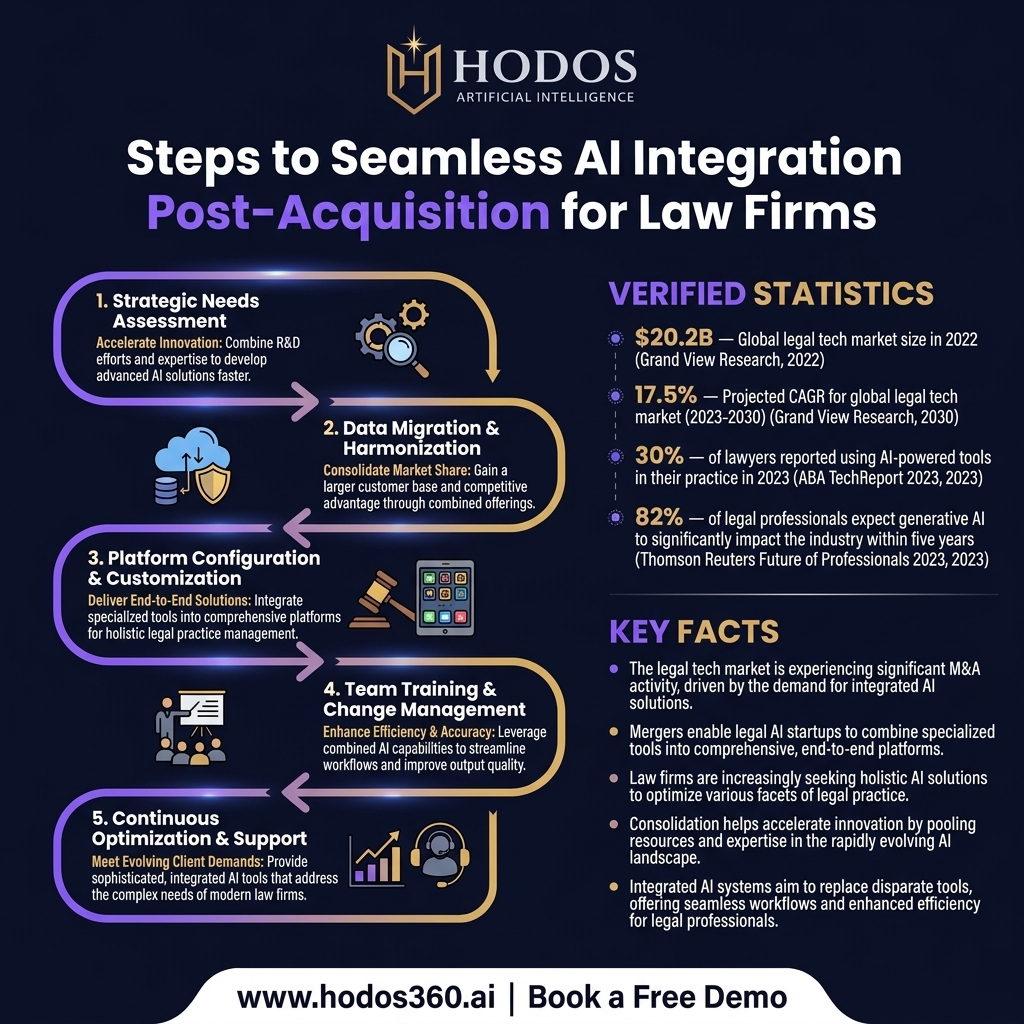
The promise of integrated AI ecosystems, while compelling, comes with its own set of challenges, particularly for law firms seeking to adopt these advanced solutions. The primary hurdle often lies in the integration process itself. Legacy systems, disparate data formats, and the sheer volume of existing client information can make migrating to a new, unified platform complex. Firms must carefully plan data migration strategies, ensure API compatibility between new and existing tools, and manage the cultural shift required for widespread user adoption. As John Smith, a partner at a mid-sized firm that recently underwent a significant tech overhaul, shared (hypothetically), "The technology itself was impressive, but getting our entire team, from senior partners to paralegals, to embrace a new way of working was the real challenge. It required extensive training and clear communication about the benefits." This highlights the need for AI providers to offer not just cutting-edge technology but also comprehensive support for implementation and change management.
Despite these challenges, the opportunities for early adopters are immense. Law firms that strategically embrace integrated AI platforms can gain a significant competitive edge. By streamlining client intake, automating document creation, and enhancing legal workflows, firms can reduce operational costs, increase efficiency, and improve client satisfaction. A recent Gartner report indicated that firms leveraging integrated AI solutions can see up to a 25% reduction in administrative overhead within the first year of implementation. This translates into more profitable cases, faster turnaround times, and the ability to take on more clients without proportionally increasing staff. Learn more about AI Agents Marketing: Your Essential Guide for Law Firms. For firms competing in a crowded market, this efficiency dividend is not just a luxury but a necessity for sustainable growth.
The proliferation of legal AI startups and the subsequent consolidation also present a dilemma for law firms in terms of vendor selection. How does one choose the right AI partner amidst a rapidly changing landscape? The key is to look beyond individual features and focus on providers that offer genuinely comprehensive, integrated, and secure solutions. Firms should evaluate vendors based on their track record, commitment to data privacy and compliance, scalability of their platforms, and their ability to provide ongoing support and innovation. Platforms like HODOS 360, which offer a full suite of services from AI Law Firm Management to AI Marketing and Voice Assistants, are designed to address this need for a holistic approach, ensuring that all aspects of a firm's operations are harmonized and optimized by AI.
Successful AI adoption is not just about purchasing software; it's about strategic planning and effective change management within the firm. This includes conducting thorough needs assessments to identify specific pain points that AI can address, piloting solutions with a smaller team before firm-wide deployment, and investing heavily in continuous training. Legal professionals need to understand not just how to use the AI tools, but also the underlying principles of how AI works, its limitations, and its ethical implications. This empowers them to leverage AI effectively and responsibly. The firms that will thrive in this new era are those that view AI not as a replacement for human intellect, but as a powerful augmentation, enabling their teams to deliver higher quality, more efficient, and more innovative legal services to their clients.
The Impact on Legal Professionals and Clients
The shift towards integrated AI has profound implications for both legal professionals and their clients. For professionals, it means a liberation from mundane, repetitive tasks, allowing them to focus on the intellectually stimulating and strategic aspects of law. This can lead to greater job satisfaction, reduced burnout, and a more fulfilling career path. For clients, the benefits are even more tangible: faster case resolution, more transparent billing, and more accurate and consistent legal advice. Learn more about AI Voice Assistant: Essential for Modern Legal Client Engagement. Integrated AI platforms can provide real-time updates on case progress, predict outcomes with greater accuracy, and even offer multilingual support through AI voice assistants, enhancing client communication and satisfaction. This not only improves the client experience but also strengthens the firm's reputation for innovation and efficiency, ultimately attracting new business and fostering long-term relationships.
The Future of Law Firm Management with AI: A Strategic Blueprint
Looking ahead, the future of law firm management will be intrinsically linked to AI. The 'legal tech stack' of tomorrow will not be a collection of disparate tools but a fully integrated, AI-native operating system that serves as the central nervous system for legal practice. This means AI will move beyond being a specialized application to becoming an embedded intelligence across all firm functions: from client relationship management and business development to financial operations and knowledge management. Firms that embrace this vision will be able to leverage predictive analytics for business forecasting, automate compliance checks, and even personalize client communications at scale, creating a truly adaptive and responsive legal practice. This holistic approach ensures that every decision, every workflow, and every client interaction is informed by the most current data and sophisticated AI insights, driving unprecedented levels of efficiency and strategic foresight.
In this integrated future, platforms offering comprehensive services will be indispensable. The consolidation seen with legal AI startups like Intelligent AF and TechnoCat is a precursor to a market dominated by providers that can deliver a full spectrum of AI-powered solutions. HODOS 360 exemplifies this holistic approach, offering not just an AI Law Firm Management System but also an AI Marketing Platform, AI Voice Assistants, and Web & Mobile Development. This integrated ecosystem allows law firms to streamline every aspect of their operations, from the moment a potential client searches online to the final resolution of a case. By having all these services unified under one intelligent platform, firms can eliminate data silos, reduce operational friction, and maximize their return on AI investment, ensuring a consistent and superior experience for both their team and their clients.
For law firms, the competitive imperative to adopt integrated AI solutions is undeniable. Firms that cling to outdated manual processes or piecemeal tech solutions risk falling significantly behind in efficiency, cost-effectiveness, and client attraction. Learn more about AI Answering Service: Ultimate Guide for Law Firms. A recent survey by the ABA Journal indicated that over 70% of legal professionals believe AI will be 'critical' or 'very critical' to their firm's success within the next five years. The gap between AI-powered firms and traditional ones is already widening, with AI adopters reporting higher revenue growth and greater client retention. The decision to invest in comprehensive AI is no longer a matter of 'if,' but 'when' and 'how strategically.' This isn't just about keeping up; it's about leading the charge in a transformed legal landscape, attracting top talent, and securing a sustainable competitive advantage for decades to come.
Strategic planning for AI adoption is paramount. Firms should begin by conducting a thorough needs assessment to identify specific operational inefficiencies and client service gaps that integrated AI can address. This should be followed by piloting AI solutions in a controlled environment to gather feedback and refine implementation strategies. Investing in continuous training for legal teams is crucial to ensure that professionals are not only comfortable with the new tools but also adept at leveraging them for strategic advantage. Ultimately, AI should be viewed as a strategic investment in the firm's future – an investment that promises to unlock new levels of productivity, innovation, and client satisfaction, solidifying the firm's position in a rapidly evolving legal market. It's about building a resilient, future-proof practice that is ready for the challenges and opportunities of the 21st century.
Choosing the Right AI Partner
Selecting the ideal AI partner is a critical decision that will shape a law firm's future. Beyond robust features, firms must prioritize a partner with a proven track record of innovation, a deep understanding of legal industry nuances, and an unwavering commitment to data security and ethical AI development. Look for providers that offer comprehensive, scalable solutions that can grow with your firm, alongside responsive customer support and a clear roadmap for future enhancements. A strong AI partner acts as a strategic collaborator, not just a vendor, helping your firm navigate the complexities of AI integration and maximize its transformative potential. This partnership is key to unlocking the full power of artificial intelligence in your legal practice.

Key Takeaways and Next Steps for Legal Leaders
The acquisition of TechnoCat by Intelligent AF is a powerful signal of the direction in which legal tech is heading: towards integrated, comprehensive, and increasingly agentic AI ecosystems. For law firms, this means a future where operational efficiency, strategic decision-making, and client service are profoundly enhanced by artificial intelligence. The days of piecemeal software solutions are rapidly fading, replaced by the demand for unified platforms that can manage the entire spectrum of a firm's needs, from complex legal workflows to sophisticated marketing strategies.
To thrive in this evolving landscape, legal leaders must take proactive steps. First, critically evaluate your firm's current technology stack and identify areas where integrated AI can drive significant improvements. Second, explore comprehensive AI solutions that offer not just individual tools but a cohesive platform designed for the legal industry. Prioritize vendors with a strong commitment to data security and ethical AI practices, ensuring compliance with professional obligations like ABA Model Rule 1.6 on client confidentiality. Finally, invest in continuous training and support for your legal teams, empowering them to effectively leverage AI as a strategic asset. Embracing this transformation is not merely about staying competitive; it's about redefining what's possible in the practice of law and securing a resilient, future-proof firm.
As the legal AI startup market consolidates and matures, the opportunity for law firms to adopt truly transformative technologies has never been greater. By strategically embracing integrated AI solutions, firms can streamline their law firm management, enhance their marketing reach, optimize client communication, and ultimately deliver superior legal services. The future of law is intelligent, integrated, and incredibly promising for those ready to adapt. Don't just observe the change; lead it within your practice.
- ✓Streamlined Case Management: Integrated AI platforms automate task assignments, track deadlines, and provide predictive analytics for case outcomes, significantly enhancing efficiency.
- ✓Enhanced Client Intake: AI-powered systems can qualify leads, gather initial information, and even draft engagement letters, making the client onboarding process faster and more accurate.
- ✓Automated Document Generation: From contracts to pleadings, AI can draft, review, and revise legal documents, ensuring consistency and compliance while freeing up attorney time.
- ✓Optimized Billing and Time Tracking: AI integration allows for automated time capture and accurate billing, reducing administrative overhead and improving financial transparency.
- ✓Data-Driven Marketing Insights: AI marketing platforms analyze client data and market trends to create targeted campaigns, track ROI, and attract new business more effectively.
- ✓24/7 Client Communication: AI Voice Assistants provide round-the-clock client support, answer FAQs, book appointments, and route calls, ensuring clients always feel connected.
- ✓AI-Powered Legal Workflows: Comprehensive systems create intelligent workflows that automate routine tasks, manage dependencies, and ensure adherence to best practices across the firm.
Frequently Asked Questions
What does the Intelligent AF acquisition of TechnoCat signify for legal tech?+
This acquisition signifies a major trend towards consolidation and integration in legal AI. It aims to create a 'fluency ecosystem' where AI tools seamlessly communicate and learn from each other, providing law firms with more comprehensive, end-to-end solutions for legal management and workflows, rather than disparate software applications. It's about building a unified, intelligent platform.
What is 'agentic AI' and how will it impact law firms?+
Agentic AI refers to systems that can understand complex goals, break them into sub-tasks, and execute them autonomously while learning from outcomes. For law firms, this means AI can manage entire processes like discovery or compliance monitoring, freeing attorneys from repetitive tasks to focus on strategic legal reasoning and client counsel, significantly boosting efficiency and strategic output.
How can law firms navigate the challenges of integrating new AI solutions?+
Law firms should approach AI integration strategically by conducting needs assessments, planning careful data migration, and investing in comprehensive training for their teams. Choosing an AI partner that offers robust implementation support and a unified, secure platform, like HODOS 360, is crucial to overcome challenges related to legacy systems and ensure successful user adoption across the firm.
What are the key benefits for law firms adopting integrated AI platforms?+
Integrated AI platforms offer numerous benefits, including streamlined case management, enhanced client intake, automated document generation, optimized billing, and data-driven marketing insights. These lead to significant improvements in operational efficiency, reduced costs, higher client satisfaction, and a stronger competitive position in the legal market, allowing firms to focus on high-value legal work.
How will AI change the role of legal professionals in the future?+
AI will transform legal professionals' roles from task executors to strategic supervisors and advisors. They will leverage AI to handle routine tasks, allowing them to focus on complex problem-solving, client relationships, and ethical oversight. This shift requires continuous upskilling in AI literacy, prompt engineering, and critical evaluation of AI-generated insights, leading to a more strategic and fulfilling legal career.