

AI Answering Service: Ultimate Guide for Law Firms
The reverberations of technological disruption are reshaping every sector, and the legal industry is certainly no exception. Just recently, the announcement of NevTech launching its AI Web Design and AI Answering Service for Indiana Businesses, as reported by EIN Presswire, underscored a growing market trend: the pervasive integration of artificial intelligence into core business operations. For law firms, this isn't just a headline; it's a clarion call to re-evaluate traditional client communication strategies. Imagine a scenario like that faced by partners at 'Lexington & Grey,' a mid-sized litigation firm in Chicago. For years, they grappled with the perennial challenge of missed calls after hours, during peak court days, or when their human receptionists were simply overwhelmed. Leads were slipping through the cracks, potential clients grew frustrated, and the firm’s growth felt constrained by the limitations of a 9-to-5 service model. This isn't an isolated incident; it's a common narrative across the legal landscape, where the demand for immediate, always-on support often clashes with operational realities.
This evolving landscape compels legal professionals to consider how AI can bridge these gaps. The promise of an AI answering service extends far beyond mere call redirection; it represents a fundamental shift towards proactive, intelligent client engagement. As firms like NevTech bring these capabilities to the forefront, the competitive pressure on law firms to adopt similar innovations intensifies. The question is no longer *if* AI will transform legal services, but *how* rapidly firms will embrace these tools to enhance efficiency, improve client satisfaction, and secure a competitive edge. This guide delves into the transformative potential of AI answering services, exploring how these sophisticated AI voice assistants are becoming an indispensable asset for law firms aiming for operational excellence and sustained growth in the digital age.
AI Answering Service: A Strategic Imperative for Modern Law Firms
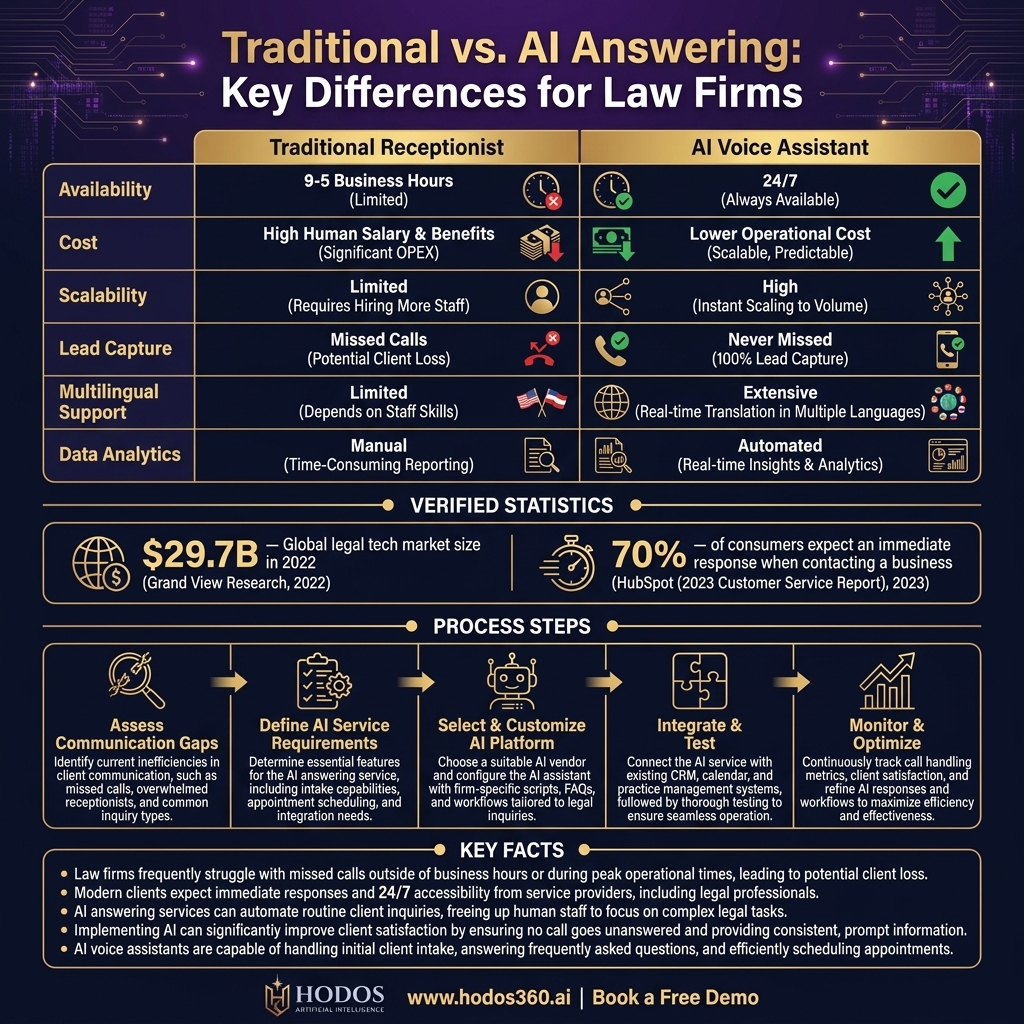
In an era where client expectations are shaped by instant gratification from tech giants like Amazon and Google, law firms can no longer afford to operate with outdated communication infrastructures. The traditional model of a single, human receptionist handling all incoming calls, while valuable for personalized interactions, often falls short in scalability and 24/7 availability. This limitation directly impacts a firm's ability to capture new leads and provide continuous support, especially in high-stakes legal situations where prompt communication is paramount. Data from the ABA 2023 Legal Technology Survey Report consistently highlights that client communication and responsiveness remain top priorities for both clients and firms, yet many firms struggle to meet these demands consistently. The rise of AI-powered solutions, such as the AI answering service, addresses this critical gap by offering an intelligent, always-on front line for client engagement. This technology isn't replacing the human element but augmenting it, allowing legal professionals to focus on complex legal work while AI handles routine inquiries and initial client interactions.
The strategic adoption of an AI answering service is becoming a non-negotiable for law firms looking to thrive in a competitive market. Consider the insights shared by Thomson Reuters' Future of Professionals Report, which emphasizes the growing importance of technology in delivering legal services efficiently and cost-effectively. Learn more about Voice AI: An Essential Leap for Law Firms' Client Engagement. Firms that embrace AI are better positioned to manage higher call volumes, reduce wait times, and ensure no potential client inquiry goes unanswered. This capability is particularly crucial for firms operating in diverse geographic areas or serving clients across multiple time zones. Furthermore, the ability of AI voice agents to provide consistent, branded interactions ensures a professional first impression, regardless of when a call comes in. The investment in such technology is not merely an operational upgrade; it's a strategic move that reflects a firm's commitment to modern client service and operational resilience. The market entry of companies like NevTech, providing AI answering services to businesses in Indianapolis and beyond, signals a broader trend that law firms must heed to maintain relevance and competitive advantage.
Beyond Basic Calls: Advanced AI Voice Assistants in Legal Practice
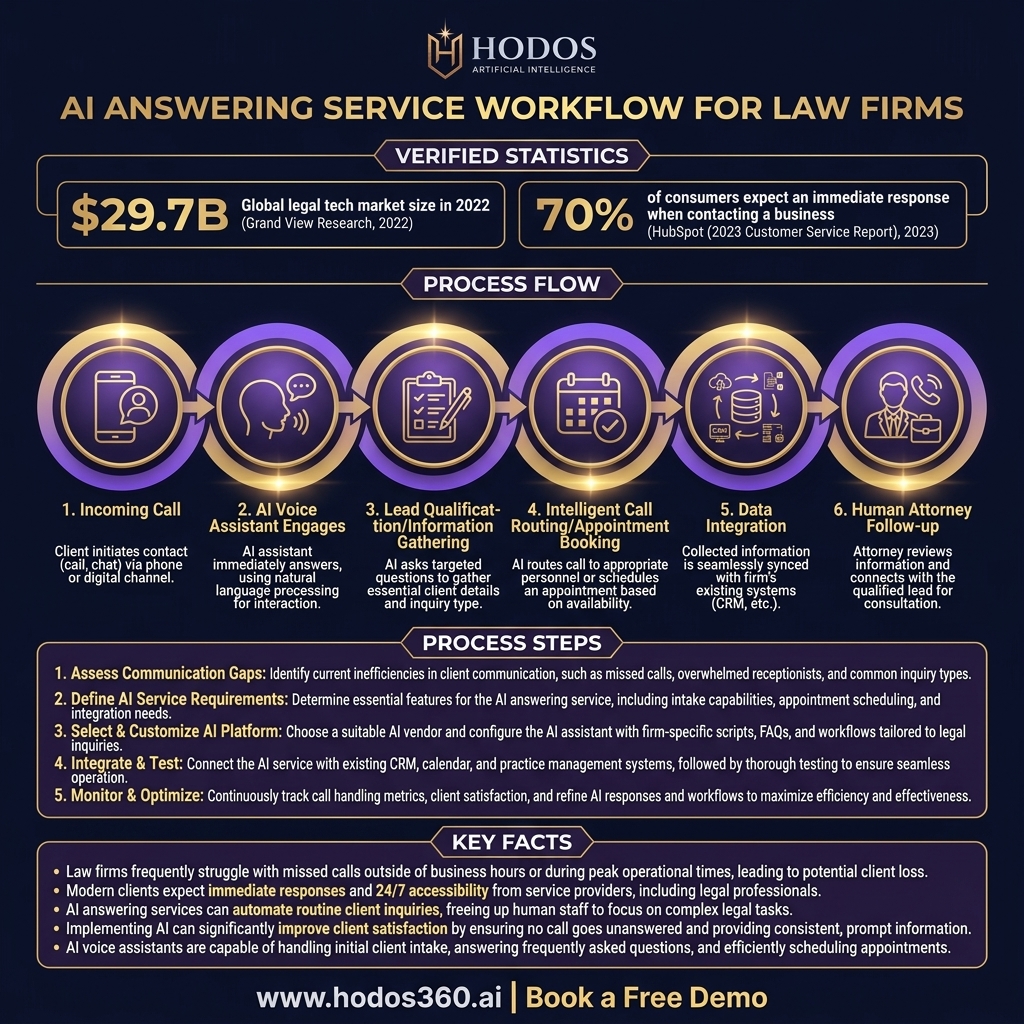
The capabilities of modern AI voice assistants extend far beyond simple call answering. These sophisticated systems are engineered to perform a multitude of tasks essential to a law firm's daily operations. For instance, intelligent call routing ensures that clients are immediately directed to the appropriate department or attorney, whether it's for a specific case inquiry, billing question, or new client consultation. This precision minimizes client frustration and maximizes efficiency. Moreover, advanced AI can handle initial lead qualification, asking pertinent questions to determine the nature and urgency of a potential client's legal needs. This pre-screening process saves valuable attorney time, ensuring that only genuinely qualified leads reach a human professional. The AI can even integrate with existing calendars to book appointments automatically, sending confirmations and reminders, thereby streamlining the client intake automation process significantly. This level of automated interaction ensures that even during off-hours, the firm remains fully operational in terms of initial client engagement.
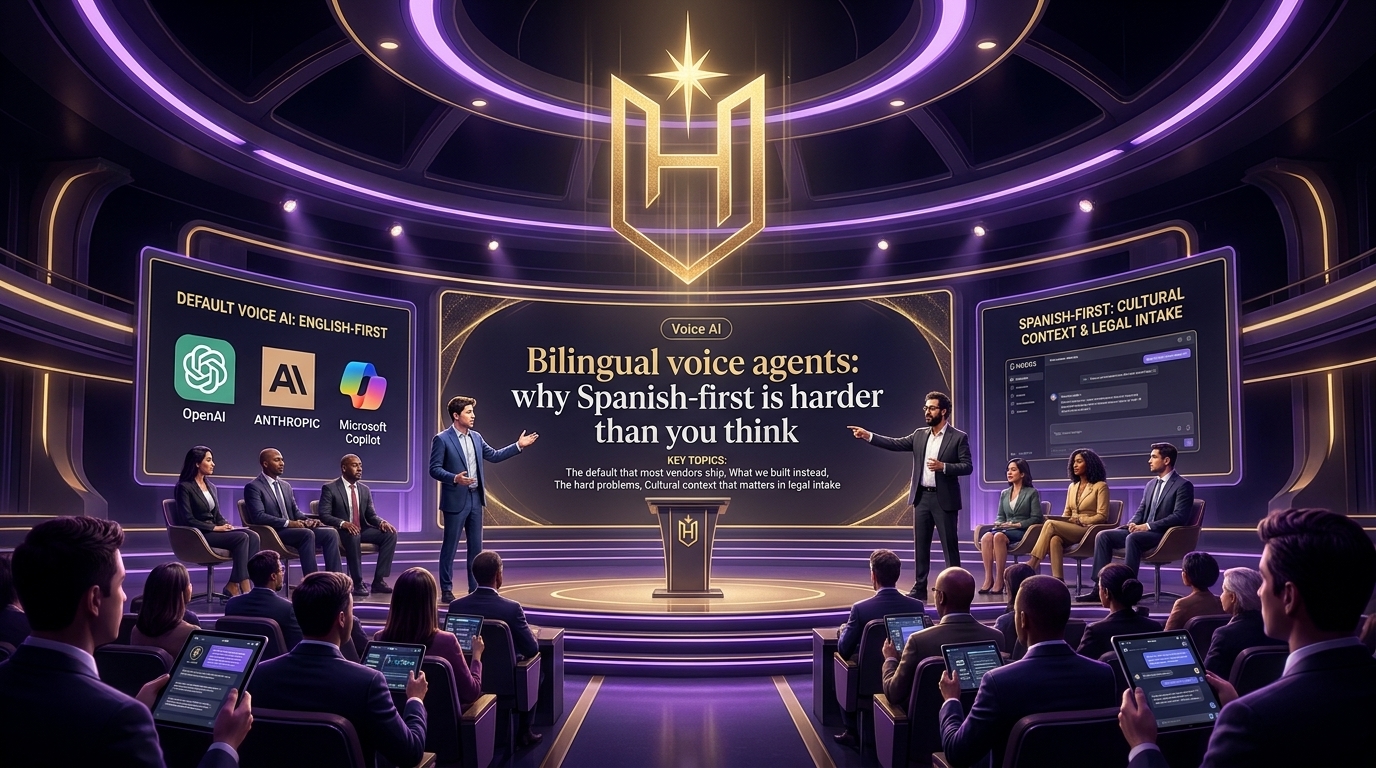
Crucially, the power of AI answering service also lies in its multilingual support capabilities. Learn more about AI Web Development: Essential Strategies for Legal Liability. In a globalized world, law firms often serve diverse client bases. An AI voice assistant can communicate effectively in multiple languages, breaking down communication barriers and making legal services more accessible to a broader demographic. This not only enhances client satisfaction but also expands a firm's potential market reach. Beyond language, these AI agents can answer common FAQs, provide updates on general case statuses (within pre-approved parameters), and gather essential information for case files, which can then be seamlessly integrated into a firm's AI-powered legal workflows and case management and billing systems. The ability to integrate with the firm's existing technological ecosystem, such as HODOS 360's AI Law Firm Management System, amplifies its value, transforming disparate tasks into a cohesive, automated operational flow. This comprehensive approach to client communication, powered by AI, allows law firms to offer 24/7 support without the prohibitive costs associated with human staffing, ultimately enhancing the firm's service delivery model and freeing up human talent for more complex, empathetic interactions.
Streamlining Client Intake with AI
One of the most significant pain points for law firms is the initial client intake automation process. Traditionally, this involves multiple phone calls, manual data entry, and potentially lengthy delays. AI voice assistants revolutionize this by acting as the first point of contact, capable of gathering crucial information such as contact details, case type, and preliminary facts, all while the client is on the phone. This data can then be automatically populated into the firm's CRM or case management system, reducing administrative burden and minimizing errors. Learn more about Siri AI Revolution: Essential Legal Voice Assistant Strategies. For example, a prospective client calling about a personal injury claim can be guided through a series of questions by the AI, capturing essential details like the date of the incident, parties involved, and a brief description of damages. This structured approach ensures consistency and completeness in initial client data, setting a strong foundation for the legal process ahead. This capability is not just about speed but about creating a more organized and efficient start to every client relationship.
The Competitive Edge: Driving Growth and Client Satisfaction with AI
The legal market is increasingly competitive, with firms constantly seeking differentiators beyond legal expertise. An AI answering service provides a powerful competitive edge by elevating client satisfaction and driving measurable growth. By offering 24/7 support, firms can capture leads that competitors operating on traditional hours might miss. This constant availability means no potential client is turned away, and urgent inquiries receive immediate attention, fostering trust and demonstrating a commitment to client service that resonates deeply. According to a study by McKinsey, businesses that effectively leverage AI in customer service can see a 15-20% increase in customer satisfaction and a significant reduction in operational costs. For law firms, this translates into higher lead qualification rates, improved client retention, and ultimately, a healthier bottom line. The ability of AI to handle routine tasks allows human staff, including highly paid attorneys and paralegals, to dedicate their time to complex legal strategy, client counseling, and high-value work, optimizing their expertise and contributing more directly to the firm's core mission.
Beyond immediate client interactions, the data collected by AI voice assistants offers invaluable insights into client needs, common inquiries, and service gaps. This analytical capability allows firms to continuously refine their services and marketing strategies. Learn more about Agentic AI: The Ultimate Marketing Edge for Law Firms. For instance, if the AI frequently identifies specific legal questions, the firm might consider developing new practice areas or creating targeted content through an AI Marketing Platform. The ethical considerations, however, are paramount. As per ABA Model Rule 1.4 (Communication), lawyers must keep clients reasonably informed and explain matters to the extent necessary. While AI can provide information, it’s crucial to ensure that complex legal advice is always delivered by a qualified human attorney. Firms must design their AI protocols to clearly delineate the AI's role and ensure that clients are aware they are interacting with an AI. Maintaining transparency and ensuring that the AI provides only pre-approved, general information, while routing specific legal inquiries to human experts, is key to upholding professional obligations and building lasting client trust.
Enhancing Lead Qualification and Conversion
For law firms, every incoming call is a potential lead. The challenge lies in efficiently qualifying these leads and converting them into retained clients. An AI answering service excels at this by implementing a structured qualification process. The AI can ask a series of predefined questions to ascertain the nature of the legal issue, the client's urgency, and their financial capacity, immediately flagging high-priority prospects. This intelligent pre-screening means that attorneys and paralegals spend less time on unqualified calls and more time engaging with individuals who are genuinely ready to retain legal services. Learn more about AI Marketing: An Essential Guide for Law Firm CMOs. This focused approach dramatically improves conversion rates, turning more inquiries into billable work. Furthermore, the AI can capture detailed notes during the qualification process, providing human staff with comprehensive context before they even speak to the client, leading to more productive initial consultations and a smoother onboarding experience. This efficiency is a direct boost to firm profitability and growth.
Strategic Implementation: Integrating AI Answering into Your Law Firm
Implementing an AI answering service requires a thoughtful, strategic approach to ensure seamless integration and maximum benefit. The first step involves a thorough assessment of your firm's current communication processes, identifying bottlenecks, and defining clear objectives for AI integration. What specific pain points do you aim to solve? Is it missed calls, overwhelmed receptionists, or slow client intake solutions? Next, selecting the right vendor is crucial. Look for platforms that offer robust customization, secure data handling, and seamless integration with your existing legal tech stack, from document automation to your practice management software. HODOS 360, for example, offers AI Voice Assistants designed specifically for the legal sector, integrating with its comprehensive AI Law Firm Management System. A phased rollout plan is often advisable, starting with basic call answering and gradually expanding to more complex tasks like appointment booking and preliminary lead qualification. Training human staff on how to collaborate with the AI, understanding its capabilities and limitations, is equally important to ensure a harmonious workflow and maximize the efficiency gains.
Data security and client confidentiality are paramount in legal practice, as mandated by ABA Model Rule 1.1 (Competence), which implies a duty to understand and mitigate risks associated with technology. Learn more about WordPress AI Unlocked: Legal Websites Mastered 2026. Firms must ensure that any AI answering service provider adheres to stringent security protocols, including encryption, access controls, and compliance with relevant data privacy regulations like HIPAA or GDPR, if applicable. Transparent communication with clients about the use of AI is also essential, building trust rather than eroding it. When choosing a solution, consider providers that offer not only advanced AI capabilities but also a strong track record in legal tech, understanding the unique regulatory and ethical landscape of the profession. The goal is to leverage AI to enhance service delivery without compromising the ethical obligations and client trust that are the bedrock of legal practice. This careful implementation ensures that the AI becomes a true asset, supporting both operational efficiency and professional responsibility.
Navigating Ethical Considerations and Client Trust
While the efficiency of AI is undeniable, law firms must carefully navigate the ethical landscape. The use of an AI answering service requires transparency with clients. They should be informed when they are interacting with an AI, not a human. This ensures compliance with ethical duties regarding communication and honesty. Furthermore, safeguards must be in place to prevent the AI from inadvertently providing legal advice, which is the sole purview of licensed attorneys. AI should be programmed to gather information, answer factual questions, and route calls, but never to interpret law or offer opinions. The firm remains ultimately responsible for the advice given and the confidentiality of client information. Robust data privacy protocols and adherence to professional conduct rules are non-negotiable, ensuring that AI enhances, rather than compromises, the attorney-client relationship.
The Future of Legal Communication: AI and the Evolving Client Experience
The trajectory of AI in legal communication points towards increasingly sophisticated and personalized interactions. We are moving beyond reactive AI answering service to proactive engagement where AI might anticipate client needs, offer relevant information based on case progress, or even assist in drafting initial communications for attorney review. The advancements in natural language processing (NLP) and machine learning, driven by leading AI research labs like OpenAI and Google DeepMind, promise even more human-like and context-aware interactions from AI voice assistants. Firms that invest in these technologies now are not just improving current operations; they are building the infrastructure for future growth and innovation. The vision is a legal practice where AI seamlessly handles the administrative and repetitive communication tasks, allowing human attorneys to dedicate their unparalleled expertise to strategic thinking, complex problem-solving, and the empathetic client relationships that define the legal profession. This synergy between human intellect and artificial intelligence will redefine what it means to deliver exceptional legal services in the 21st century.
The competitive landscape, as evidenced by players like NevTech entering the market, underscores the urgency for law firms to adapt. Those who embrace AI will not only streamline their operations but also set new standards for client experience, attracting and retaining a generation of clients accustomed to digital-first interactions. This isn't about replacing the human touch but enhancing it, ensuring that legal professionals can focus on the unique value they bring, while AI handles the operational heavy lifting. The future of legal communication is intelligent, always-on, and deeply integrated with the firm's strategic objectives, driven by the transformative power of AI.

Key Takeaways and Next Steps
The rapid evolution of AI, exemplified by the proliferation of AI answering service providers, marks a pivotal moment for law firms. Adopting these AI voice assistants is no longer a luxury but a strategic necessity for enhancing client engagement, streamlining operations, and maintaining a competitive edge. From client intake automation and lead qualification to providing 24/7 support and multilingual capabilities, AI offers a robust solution to many of the communication challenges faced by modern legal practices. Firms that proactively integrate these technologies, while carefully navigating ethical considerations, will be best positioned to thrive. HODOS 360 offers a comprehensive suite of AI solutions, including advanced AI Voice Assistants, designed to empower law firms to embrace this future with confidence. Your journey towards a more efficient, client-centric, and technologically advanced practice begins now. Don't be left behind in the evolving legal tech landscape.
Frequently Asked Questions
What is an AI answering service for law firms?+
An AI answering service for law firms utilizes artificial intelligence to handle incoming calls, manage client inquiries, and perform administrative tasks automatically. These AI voice assistants can provide 24/7 support, qualify leads, book appointments, and route calls, freeing up human staff for more complex legal work. They are designed to streamline communication and enhance client experience while adhering to legal industry standards.
How can AI voice assistants improve client intake?+
AI voice assistants significantly improve client intake by automating the initial information gathering process. They can ask prospective clients a series of predefined questions, collect essential contact details and case facts, and automatically populate this data into the firm's CRM or case management system. This reduces manual data entry, minimizes errors, and ensures a consistent, efficient start to every new client relationship, speeding up the overall intake process.
Are AI answering services compliant with legal ethics and confidentiality?+
Yes, when implemented correctly, AI answering services can comply with legal ethics and confidentiality. Firms must ensure transparency, informing clients they are interacting with an AI. AI should be programmed not to provide legal advice, only factual information or call routing. Robust data security, encryption, and adherence to privacy regulations are crucial. The firm remains responsible for client confidentiality and professional conduct, making vendor selection and protocol design paramount.
What are the benefits of 24/7 AI support for law firms?+
24/7 AI support offers numerous benefits, including never missing a potential lead or urgent client inquiry, regardless of the time of day or night. This continuous availability enhances client satisfaction, improves lead capture rates, and projects an image of constant responsiveness. It also reduces the operational costs associated with hiring human staff for off-hours coverage, allowing firms to provide premium service around the clock without stretching their budget.
How do AI answering services handle multilingual support?+
Advanced AI answering services are equipped with sophisticated natural language processing (NLP) capabilities that allow them to understand and respond in multiple languages. This means a single AI voice assistant can serve a diverse client base, breaking down language barriers and making legal services more accessible. This capability is invaluable for firms with international clients or those operating in multicultural communities, ensuring effective communication and broader market reach.