
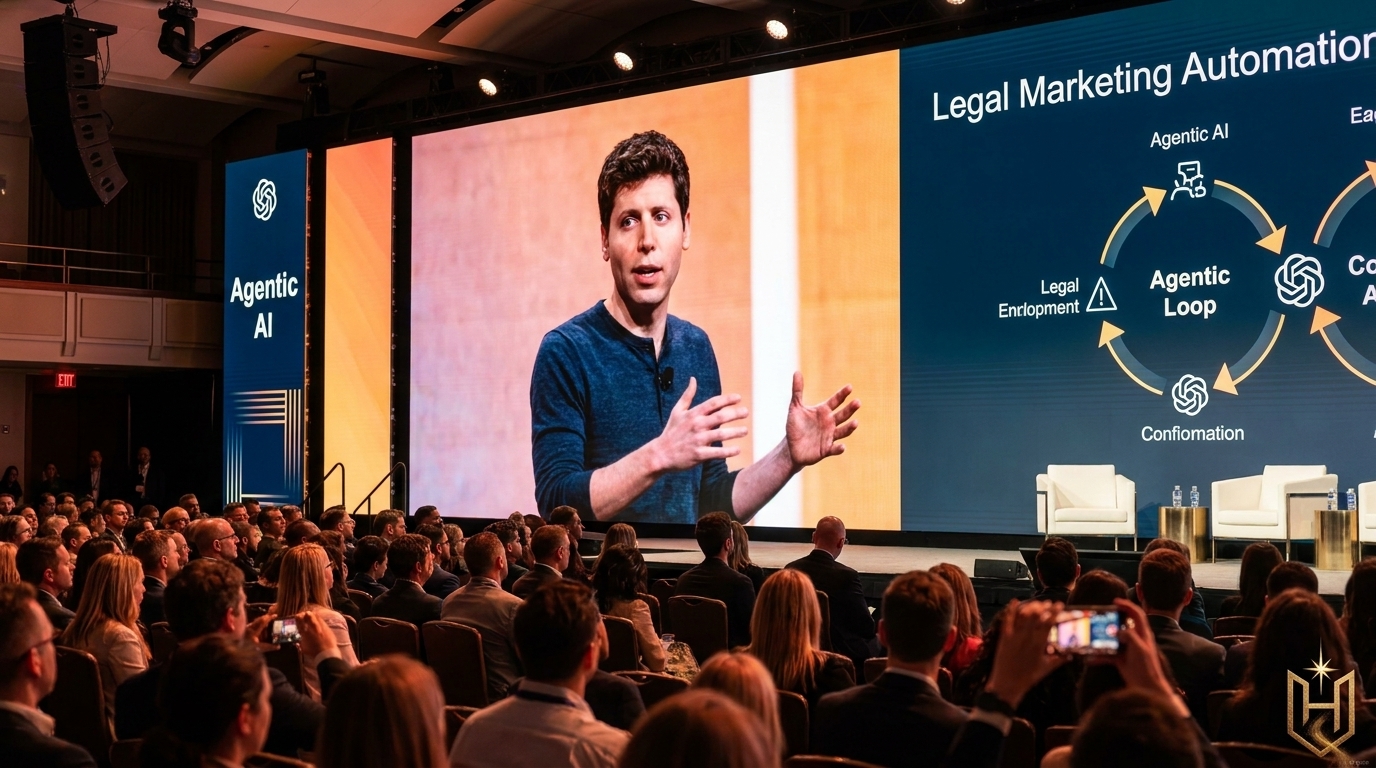
Agentic AI: The Ultimate Marketing Edge for Law Firms
At LegalTech NYC 2026, the buzz wasn't just about large language models, but about their evolution into "agentic" systems. Sarah Chen, a managing partner at the boutique IP firm Chen & Associates, recounted her initial skepticism. "We were drowning in manual client intake and content creation," Chen shared during a panel, "Our marketing efforts felt like throwing darts in the dark." Her firm, like many across the legal sector, struggled to cut through the digital noise. The traditional approach, often reliant on ad-hoc campaigns and inconsistent content, yielded diminishing returns, especially as competition intensified. This familiar narrative highlights a critical tension in the legal industry: the push for innovation against the ingrained caution of a profession built on precedent. The challenge isn't just about adopting new tools, but fundamentally rethinking legal operations and client engagement strategies in a rapidly evolving digital landscape.
The advent of agentic AI marketing marks a pivotal shift, moving beyond mere automation to truly autonomous, goal-driven systems. Unlike conventional AI tools that execute predefined tasks, agentic AI agents can perceive their environment, make decisions, plan complex actions, and learn independently to achieve specific marketing objectives for law firms. This represents a profound leap, promising to transform everything from hyper-personalized client outreach to sophisticated lead qualification. For legal professionals grappling with the demands of modern practice, this technology isn't just an efficiency booster; it's a strategic imperative. Firms like Chen & Associates, after embracing these advanced systems, reported a significant uptick in qualified leads and a reduction in client acquisition costs, illustrating the tangible impact of these intelligent agents.
This blog post delves into how agentic AI marketing systems are reshaping the competitive landscape for law firms. We will explore the core mechanics of these autonomous agents, their practical applications in client acquisition and engagement, and the critical ethical considerations legal professionals must navigate. By understanding and strategically implementing agentic AI, law firms can unlock an ultimate edge, ensuring their marketing efforts are not just effective but also intelligent, adaptive, and consistently aligned with their growth objectives. The question is no longer *if* AI will impact legal marketing, but *how* firms will leverage its most advanced forms to thrive. Discover how these transformative capabilities can redefine your firm's future.
Understanding Agentic AI: Beyond Automation in Legal Marketing
The legal sector, traditionally cautious about technological adoption, is now confronting a wave of innovation that transcends simple process automation. For years, firms have utilized AI for document review, contract analysis, and even basic client intake. However, agentic AI marketing introduces a paradigm shift. Imagine a system that doesn't just draft a social media post based on a prompt, but autonomously researches trending legal topics, identifies the optimal platforms and times for publication, generates compelling content tailored to specific client segments, and then analyzes engagement metrics to refine its strategy for future campaigns—all without constant human oversight. This is the essence of agentic AI: systems that can perceive, reason, plan, and act independently to achieve a defined goal. Dario Amodei, co-founder and CEO of Anthropic, often speaks about the need for AI systems that can operate with greater autonomy while remaining aligned with human values, a principle directly applicable to how these agents can function within legal marketing.
This evolution is critical for law firms struggling with the sheer volume and complexity of modern marketing. Manual content creation, social media management, and email campaigns are time-consuming and often yield inconsistent results. Agentic AI agents, in contrast, offer a scalable and highly adaptive solution. Consider the case of "Lexi," a hypothetical agentic AI system deployed by a mid-sized personal injury firm. Learn more about AI Legal Plugins: The Ultimate Guide to Anthropic's Impact. Lexi might be tasked with increasing lead generation by 20% within a quarter. It would then independently monitor relevant news (e.g., new traffic laws, significant court rulings), analyze competitor marketing strategies, identify high-value potential client demographics, and then orchestrate a multi-channel campaign. This could involve generating targeted blog posts, creating short-form video content using AI video creation tools, scheduling social media updates, and even initiating personalized email sequences—all while continuously learning from real-time performance data to optimize its approach.
The distinction between traditional AI and agentic AI lies in the latter's capacity for complex goal-oriented behavior and self-correction. Traditional automation tools streamline existing workflows; agentic AI redefines them. For instance, a basic AI tool might automate the sending of follow-up emails. An agentic AI, however, would analyze a prospect's engagement with previous emails, their website activity, and even publicly available data, then decide the *optimal time*, *content*, and *channel* for the follow-up, potentially even generating a custom legal resource to address a specific query the prospect has shown interest in. This level of dynamic adaptation and independent decision-making allows law firms to achieve unprecedented levels of personalization and efficiency in their marketing efforts, transforming the entire client journey from initial awareness to conversion.
Perception, Planning, and Action: The Agentic Loop
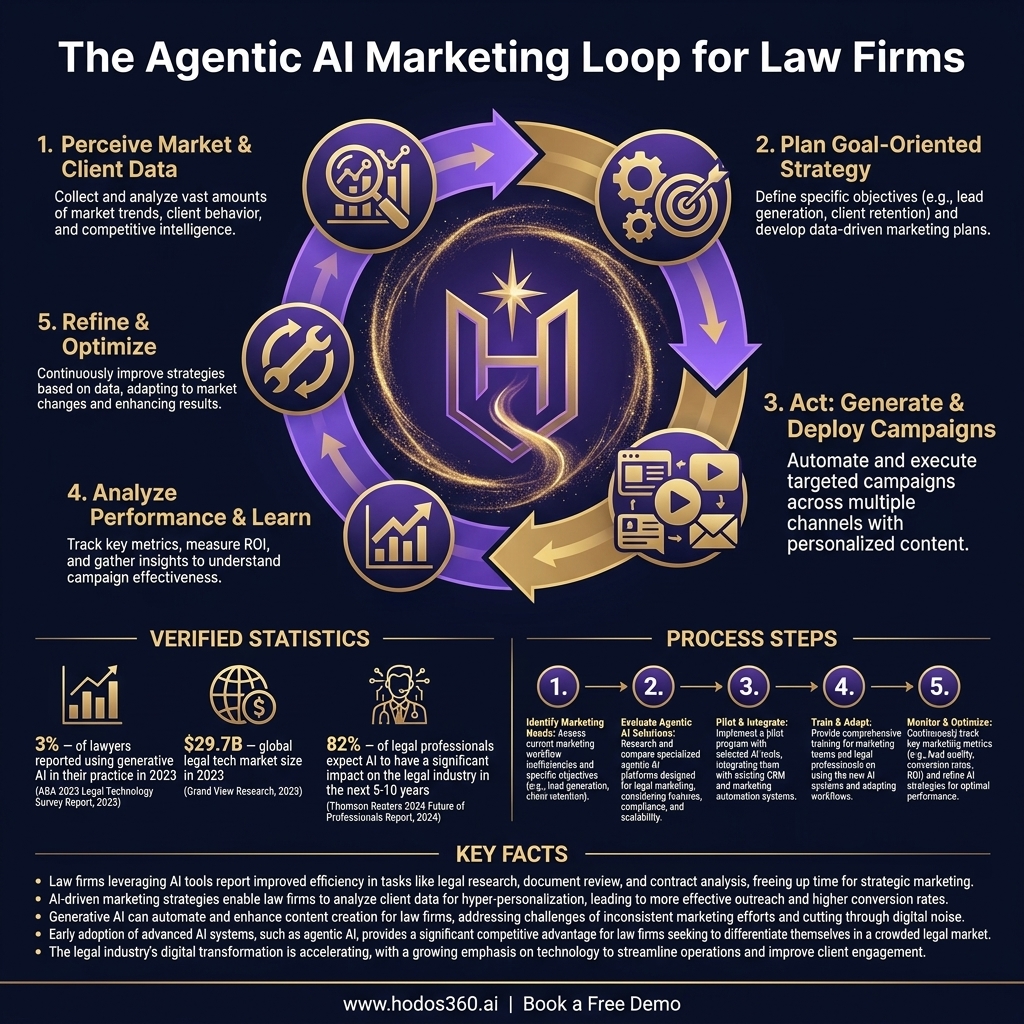
At the heart of every agentic AI system is a continuous feedback loop: perceive, plan, and act. These agents are equipped with advanced sensory capabilities, allowing them to "perceive" vast amounts of data—from market trends and competitor activities to individual client behaviors and engagement metrics. Drawing upon sophisticated large language models (LLMs) and other AI components, they can then "plan" a sequence of actions designed to achieve their overarching marketing objective. This planning involves breaking down complex goals into smaller, manageable sub-tasks and determining the most efficient path forward. Learn more about AI-Native Law Firms: The Ultimate Guide to Thriving in a New Era. Finally, they "act" by executing these plans, whether through content generation, social media automation, or direct client communication. This iterative process allows agentic AI to learn from the outcomes of its actions, adapting and refining its strategies over time, much like a seasoned human marketer but at an exponential scale. This continuous learning cycle is what makes these systems so powerful and distinguishes them from simpler automated tools.
The Mechanics of Agentic AI Marketing Systems for Law Firms
The operational framework of agentic AI marketing systems is a sophisticated orchestration of several interconnected AI components, designed to operate with minimal human intervention once a goal is set. At its core, an agentic system for a law firm’s marketing begins with a clearly defined objective, such as "increase qualified leads for family law services by 15%." The system then leverages a suite of tools, including advanced LLMs like those developed by OpenAI or Google, to perform tasks that traditionally required extensive human input. These tools allow the agent to understand complex natural language, generate highly coherent and contextually relevant content, and even synthesize information from disparate sources across the web. For example, an agent might autonomously research recent family court rulings in a specific jurisdiction, analyze public sentiment on related social media discussions, and identify key pain points expressed by potential clients, all within minutes.
This deep understanding forms the basis for the agent's strategic planning. Unlike a simple content generator, an agentic system doesn't just produce text; it strategizes. It might decide to launch a series of blog posts addressing specific divorce law FAQs, simultaneously creating targeted social media campaigns on platforms like LinkedIn and Facebook, and even drafting personalized email outreach sequences for individuals who have previously engaged with similar content. HODOS 360's AI Marketing Platform, for instance, integrates these capabilities, allowing law firms to deploy AI video creation for explainer content or automate social media scheduling based on agent-driven insights. This holistic approach ensures that marketing efforts are not fragmented but are part of a cohesive, intelligently designed campaign aimed at maximizing impact and return on investment (ROI). Learn more about AI Legal Management: The Essential Build vs. Buy Strategy. The ability to scale personalization, as noted by industry analysts like Gartner, is a key differentiator, with reports indicating that firms leveraging advanced AI for marketing see a 20-30% improvement in customer engagement metrics.
Furthermore, the "action" phase of an agentic system is robust and multi-faceted. It involves not only content creation but also dynamic campaign management. An agent might A/B test different ad creatives or email subject lines, analyze real-time performance data, and then autonomously adjust its strategy based on which variations are performing best. This continuous optimization loop is critical for maximizing efficiency and effectiveness. For example, if a particular social media ad targeting small business owners for contract review services isn't converting well, the agent could independently pivot to a different demographic or rephrase the ad copy, all while tracking the impact on lead quality. This level of dynamic adaptation contrasts sharply with traditional marketing, where such adjustments often require significant human analysis and manual implementation, leading to slower response times and missed opportunities.
Hyper-Personalization at Scale
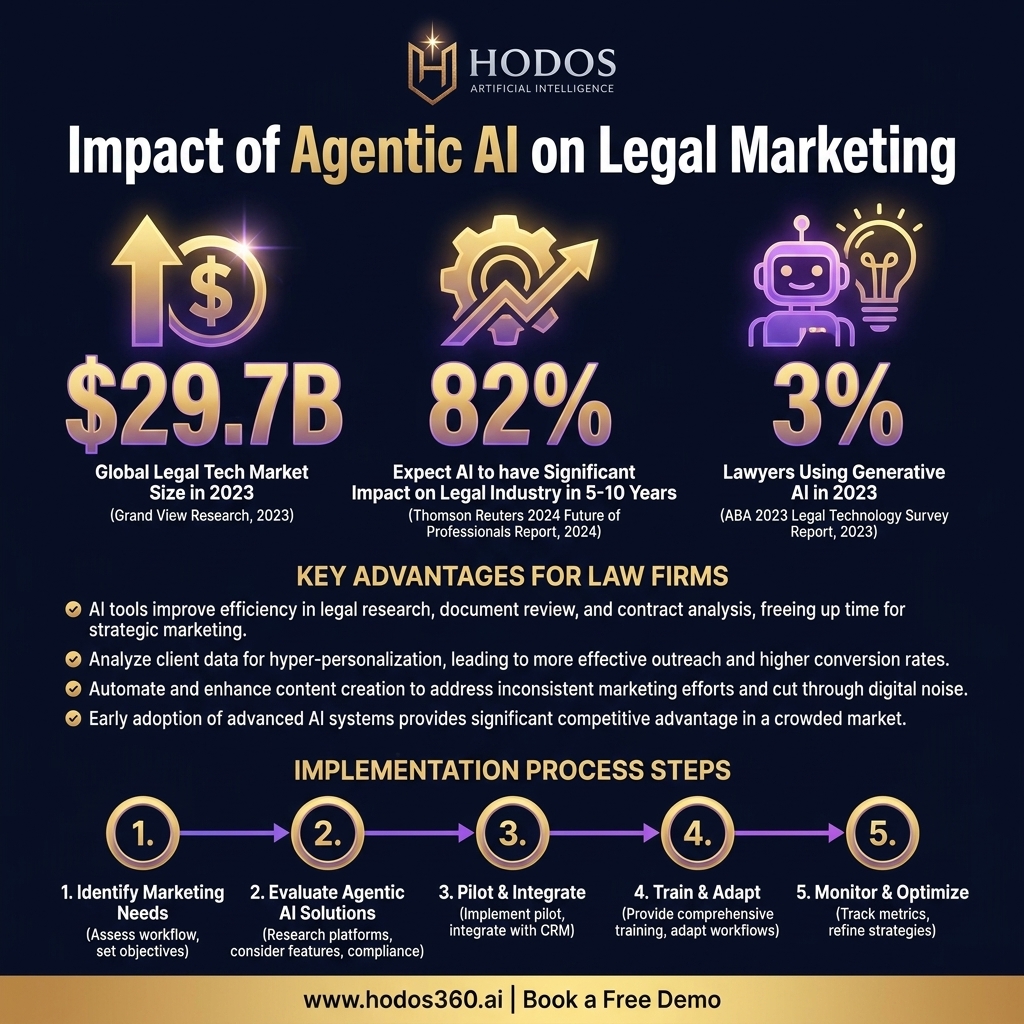
One of the most profound impacts of agentic AI in legal marketing is its capacity for hyper-personalization at scale. Traditionally, delivering highly customized content and outreach was resource-intensive, often limited to high-value clients. Agentic AI agents can overcome this barrier by analyzing vast datasets—client demographics, past interactions, expressed needs, and even real-time behavioral cues—to craft unique, individualized marketing messages. This goes beyond inserting a client's name into an email; it means tailoring the legal information, the tone, and even the recommended next steps to resonate deeply with each prospect's specific situation. Learn more about Marketing AI: Essential Tools to 10x Law Firm Growth. For a law firm, this translates into more relevant client engagements, higher conversion rates, and ultimately, stronger client relationships built on perceived understanding and value. A 2024 report by Thomson Reuters Institute highlighted that firms adopting advanced AI for client engagement reported a 15% increase in client satisfaction scores. Your firm's journey towards an agentic future starts now.
Transforming Client Acquisition and Engagement with Autonomous Agents
The practical implications of deploying autonomous marketing systems within a law firm are vast, directly impacting the core functions of client acquisition and ongoing engagement. One of the most significant transformations is in lead generation and qualification. Instead of relying on broad advertising campaigns, agentic AI can identify and target potential clients with unparalleled precision. Imagine an agent autonomously sifting through public data, legal forums, and social media discussions to identify individuals or businesses expressing specific legal needs – perhaps questions about new intellectual property regulations or concerns over recent corporate compliance changes. The agent could then proactively engage these prospects with tailored informational content, offering insights directly relevant to their queries, and guiding them through a personalized journey towards consultation. This proactive, intelligent outreach drastically improves the quality of leads, reducing the time and resources spent on unqualified prospects.
Beyond initial acquisition, agentic AI revolutionizes client intake and onboarding. Once a lead is qualified, an agent can manage the initial stages of interaction, from answering common FAQs about legal services to collecting preliminary information and scheduling appointments. HODOS 360's AI Voice Assistants, for example, can handle 24/7 phone answering, lead qualification, and appointment booking, ensuring no potential client is left unattended, even outside business hours. Learn more about Claude's Visual Coding: An Essential Guide for Law Firms. This not only enhances client experience by providing immediate support but also frees up valuable attorney and administrative staff time, allowing them to focus on complex legal work. Moreover, these agents can ensure a seamless transition from initial contact to formal engagement, automating the generation of retainer agreements and initial document requests, all while maintaining strict data privacy protocols.
Furthermore, agentic AI agents play a crucial role in enhancing ongoing client engagement and retention. Post-engagement, these systems can monitor relevant legal developments that might impact a client, proactively sending updates or suggesting additional services. For instance, if a corporate client has recently undergone a merger, an agent could flag new regulatory requirements or potential legal risks and prompt the firm to reach out with relevant advice. This continuous, intelligent engagement fosters deeper client relationships, positioning the law firm as a proactive, indispensable partner rather than just a reactive service provider. This approach aligns with the principles of client-centric practice, ensuring that legal services are not only delivered effectively but also anticipated and communicated proactively, thereby enhancing client loyalty and driving repeat business.
Ensuring Transparency and Accountability
While the capabilities of agentic AI are transformative, their deployment in legal marketing necessitates a steadfast commitment to transparency and accountability. Law firms must ensure that the use of AI agents is disclosed where appropriate, particularly in direct client communications, to maintain trust and comply with ethical guidelines such as ABA Model Rule 7.1 concerning communications about a lawyer's services. This rule prohibits false or misleading communications, a principle that extends to AI-generated content. Firms must implement robust oversight mechanisms to monitor agent behavior, content generation, and decision-making processes. Learn more about Agentic AI Unleashed: 2026's Power in Legal Work. Establishing clear human review points and audit trails is paramount to prevent unintended biases, ensure accuracy, and uphold professional responsibilities. The "explainability" of AI decisions, often referred to as XAI, becomes a critical factor, allowing firms to understand *why* an agent took a particular action, ensuring it aligns with legal and ethical standards.
Navigating the Ethical and Regulatory Landscape of Agentic AI
The rapid advancements in agentic AI bring with them a complex web of ethical and regulatory challenges, particularly for the legal profession. As these autonomous systems begin to perceive, plan, and act independently, questions of accountability, bias, and data privacy become paramount. The ABA Model Rules of Professional Conduct, specifically Rule 1.1 (Competence) and Rule 7.1 (Communications Concerning a Lawyer's Services), provide foundational guidance. Lawyers have a duty of competence, requiring them to understand the risks and benefits of technology used in their practice. This extends to ensuring that any AI-generated marketing content is not false or misleading and that the firm maintains appropriate oversight. The EU AI Act, expected to be fully enforced by late 2026, offers a glimpse into future regulatory frameworks, classifying AI systems based on risk and imposing stringent requirements on high-risk applications, which could include certain sophisticated marketing systems handling sensitive client data.
One of the primary concerns revolves around potential biases embedded within AI algorithms. If an agentic AI system is trained on historical marketing data that reflects past biases in client acquisition (e.g., favoring certain demographics or socio-economic groups), it could inadvertently perpetuate or even amplify those biases in its autonomous operations. This not only raises ethical red flags but could also lead to legal challenges under anti-discrimination laws. Firms must meticulously audit the data sources used to train their agentic AI and implement continuous monitoring for discriminatory outcomes. As Jensen Huang, CEO of NVIDIA, often emphasizes, responsible AI development requires a deep understanding of its societal impact, urging developers and users alike to prioritize fairness and ethical considerations from the outset.
Data privacy and security are equally critical. Agentic AI agents, to perform effectively, often require access to vast amounts of client data, market intelligence, and sensitive firm information. Protecting this data from breaches and ensuring compliance with regulations like GDPR, CCPA, and HIPAA (where applicable for health-related legal practices) is non-negotiable. Law firms must implement robust cybersecurity measures and ensure that their agentic AI systems are designed with privacy-by-design principles. This includes anonymization of data where possible, stringent access controls, and clear policies on data retention and usage. Failure to uphold these standards could result in severe reputational damage, substantial fines, and potential malpractice claims, underscoring the need for a comprehensive risk management strategy.
Finally, the question of accountability when an autonomous agent makes a "mistake" in a marketing campaign is a nascent but crucial area. If an agent generates misleading content or makes an erroneous claim, who is ultimately responsible? Under current legal frameworks, the law firm and its supervising attorneys would almost certainly bear the ultimate liability. This reinforces the necessity for human oversight and intervention points within agentic workflows. Firms must establish clear protocols for human review of critical AI-generated content or strategic decisions, especially before public dissemination. As legal tech continues its rapid evolution, the legal profession must proactively engage with policymakers and developers to shape regulations that foster innovation while safeguarding ethical practice and public trust.
- ✓Ethical Review & Bias Mitigation: Regularly audit AI training data and outputs for inherent biases, ensuring fairness and compliance with anti-discrimination laws.
- ✓Data Privacy & Security: Implement robust cybersecurity protocols and adhere to regulations like GDPR and CCPA, prioritizing privacy-by-design in all agentic systems.
- ✓Human Oversight & Accountability: Establish clear human review points for critical AI-generated content and strategic decisions to maintain professional responsibility and prevent errors.
- ✓Transparency with Clients: Disclose the use of AI in client communications where appropriate, fostering trust and complying with ethical guidelines like ABA Model Rule 7.1.
- ✓Continuous Learning & Adaptation: Design agentic AI systems that continuously learn from performance data, refining strategies while remaining aligned with legal and ethical standards.
- ✓Integration with Existing Workflows: Ensure seamless integration of agentic AI with current law firm management systems, such as case management and client intake platforms, for optimal efficiency.

Key Takeaways and Strategic Imperatives for Legal Leaders
The shift towards agentic AI marketing is not merely a technological upgrade; it represents a fundamental re-imagining of how law firms connect with and serve their clients. For legal leaders, the imperative is clear: embrace this evolution strategically or risk falling behind. Firms that proactively integrate these autonomous agents into their marketing and operational frameworks will gain a significant competitive advantage, characterized by enhanced efficiency, hyper-personalized client engagement, and superior lead generation. The anecdotal evidence from early adopters, such as the firms highlighted at LegalTech NYC, confirms that the benefits extend beyond cost savings to a more dynamic, responsive, and ultimately more profitable practice.
The journey to effective agentic AI implementation begins with a clear vision and a commitment to responsible innovation. Legal professionals must prioritize understanding the capabilities and limitations of these AI agents, investing in appropriate training for their teams, and establishing robust governance frameworks. This includes a careful selection of technology partners, ensuring that platforms like HODOS 360's AI Marketing Platform offer the necessary security, customization, and ethical safeguards required by the legal profession. Building a culture that values data-driven decision-making and continuous learning will be crucial for maximizing the long-term ROI of these advanced systems.
Ultimately, the future of legal marketing is intelligent, autonomous, and deeply personalized. By leveraging agentic AI marketing systems, law firms can move beyond reactive outreach to proactive, predictive client engagement. This not only streamlines internal operations but also elevates the client experience, building stronger relationships and a more resilient practice. The legal industry stands at a crossroads, and those who choose to lead with intelligent automation will be best positioned to thrive in the complex, digitally-driven legal landscape of tomorrow. Your firm's journey towards an agentic future starts now.
Frequently Asked Questions
Q1: What exactly is agentic AI in the context of legal marketing?+
Agentic AI refers to advanced artificial intelligence systems that can perceive their environment, make independent decisions, plan complex actions, and execute them autonomously to achieve specific marketing goals. Unlike simpler automation tools, these AI agents learn and adapt over time, continuously optimizing campaigns for law firms. This includes tasks like content generation, social media management, lead qualification, and personalized client outreach, all with minimal human intervention once objectives are set.
Q2: How do agentic AI marketing systems benefit law firms specifically?+
For law firms, agentic AI marketing systems offer benefits such as hyper-personalization of client communications at scale, significantly improved lead generation and qualification efficiency, and automation of repetitive marketing tasks. This frees up attorney time for core legal work, reduces client acquisition costs, and enhances client engagement through proactive, relevant outreach. Firms can achieve greater market reach and a stronger competitive edge.
Q3: What are the main ethical considerations for law firms using agentic AI?+
Key ethical considerations include ensuring transparency with clients about AI usage, mitigating potential biases in AI algorithms that could lead to discriminatory outcomes, and safeguarding client data privacy and security. Law firms must also maintain human oversight and accountability for AI-generated content and decisions, adhering to professional conduct rules like ABA Model Rule 7.1, which prohibits false or misleading communications.
Q4: Can agentic AI replace human marketing professionals in a law firm?+
No, agentic AI is designed to augment, not replace, human marketing professionals. While AI agents can automate routine and data-intensive tasks, human oversight, strategic direction, and creative input remain essential. Legal marketing professionals will evolve into roles focused on strategy, ethical compliance, complex problem-solving, and managing the AI systems, ensuring they align with the firm's brand and values.
Q5: How does HODOS 360 support law firms in adopting agentic AI marketing?+
HODOS 360's AI Marketing Platform provides law firms with tools for AI video creation, social media automation, content generation, and analytics. While not explicitly "agentic AI" in every feature, it provides the foundational components and AI-powered workflows that can be leveraged for more autonomous and intelligent marketing strategies, enabling firms to move towards agentic capabilities in a controlled and effective manner.
Q6: What data does agentic AI use to personalize marketing for law firms?+
Agentic AI uses a variety of data points to personalize marketing, including client demographics, past interactions with the firm, website behavior, expressed legal needs, engagement with previous marketing campaigns, and publicly available market trends or legal news. By analyzing this comprehensive data, the AI agent can craft highly relevant and individualized messages, services, or legal insights for each potential or existing client.