


AI Bill: Essential Pricing Strategies for Law Firms
In early 2026, Sarah Chen, a managing partner at the boutique M&A firm Lex Innovate LLP, found herself in a familiar predicament. Her firm had just closed a significant due diligence project for a major acquisition, a task typically requiring weeks of associate time. However, thanks to Lex Innovate’s recent investment in an advanced AI-powered document review platform, the core due diligence was completed in a mere three days. While the efficiency was revolutionary, Chen grappled with the billing: how do you justify a traditional hourly rate when AI has slashed human effort by 90%? This tension, highlighted by a recent "Legal IT Insider" guest post titled "The AI bill many law firms haven’t priced in," is rapidly becoming the defining challenge for legal professionals globally. It's a stark reminder that the true cost and value of artificial intelligence extend far beyond initial software subscriptions, demanding a complete re-evaluation of how AI pricing law firms operate and bill.
The industry is at a crossroads. As generative AI tools become ubiquitous, the legal market faces a fundamental shift in service delivery and, consequently, in its economic underpinnings. The question is no longer *if* AI will transform legal services, but *how* firms will adapt their financial models to reflect this new reality. Many law firms haven't adequately priced in the multifaceted implications of AI, from the hidden operational costs to the ethical considerations of billing for machine-driven efficiency. This oversight threatens not only profitability but also client trust and competitive standing. Navigating this complex landscape requires strategic foresight, a deep understanding of evolving ethical guidelines, and the courage to innovate traditional billing paradigms. Firms that proactively address the AI bill law firms face today will be the ones that thrive in tomorrow's legal ecosystem.
The Unseen Costs of AI Integration and its Impact on Realization Rates
The initial wave of AI adoption in the legal sector often focused on acquiring cutting-edge software licenses. Firms eagerly invested in platforms like Harvey AI, which famously partnered with Allen & Overy to deploy its generative AI capabilities across its global operations. Similarly, Clio's ongoing AI integrations, unveiled at LegalTech NYC 2026, promised streamlined workflows and enhanced client management. However, what many firms failed to anticipate was the extensive "AI bill" that lurks beneath the surface of these initial investments. Beyond the per-seat license fees, the true cost encompasses significant outlays for data governance, cybersecurity enhancements to protect sensitive client information, continuous model fine-tuning to maintain accuracy, and substantial infrastructure upgrades to support complex AI computations. Michael Jordan, Linklaters’ Chief Technology Officer, has publicly discussed the firm's considerable internal investments in developing and maintaining proprietary AI models, highlighting that off-the-shelf solutions are merely the starting point for deep integration.
This deeper integration profoundly impacts realization rates, a critical metric for law firm profitability. Historically, the billable hour model linked revenue directly to human effort. When AI dramatically reduces the time required for tasks like contract review, legal research, or due diligence – tasks that once accounted for hundreds of billable hours – traditional billing becomes problematic. A recent Thomson Reuters Institute report on the State of the Legal Market highlighted a concerning trend: firms that have not adjusted their pricing models are experiencing declining realization rates, with some reporting a 15-20% drop on AI-assisted matters. This erosion of profitability underscores the urgency for recalibration.
Clients, too, are becoming increasingly sophisticated. Learn more about Voice AI: The Essential Shift to Personal Legal Assistants. General Counsel at major corporations, such as the GCs of Goldman Sachs and other Wall Street banks, are openly questioning why their law firms haven't leveraged AI to staff five associates instead of thirty for complex projects. This serp insight guest post from Legal IT Insider emphasizes that firms are under pressure from informed clients who expect efficiency gains to translate into cost savings. Firms that cling to outdated billing structures risk not only losing revenue but also client trust and market share to more agile competitors who are transparent about their AI-driven efficiencies. The market is shifting, and firms must adapt or face significant competitive disadvantages.
Moreover, the hidden costs extend to the continuous upskilling and training of legal professionals. Lawyers and support staff require extensive education to effectively utilize AI tools, understand their limitations, and integrate them seamlessly into existing workflows. This ongoing investment in human capital, while crucial for maximizing AI's benefits, is often overlooked in initial budget forecasts. Failure to invest in training can lead to underutilization of expensive AI platforms, further exacerbating the disconnect between perceived AI value and actual law firm revenue. The comprehensive nature of the AI bill demands a holistic financial strategy, moving beyond simplistic software procurement to a deep understanding of total cost of ownership and value generation.
Navigating Ethical Minefields in AI Billing
The ethical implications of billing for AI-augmented legal services are paramount and demand careful consideration. The American Bar Association's (ABA) Model Rules of Professional Conduct, particularly Rule 1.5 concerning Fees, mandates that lawyers' fees must be reasonable. When AI can complete a task in minutes that previously took hours, what constitutes a "reasonable" fee? Firms face a dilemma: billing the traditional hourly rate for tasks completed by AI could be perceived as unethical or even fraudulent, as it may not reflect the actual human effort expended. Conversely, under-billing for the immense value and speed AI provides could undermine profitability and the investment in cutting-edge technology. Learn more about Digital Marketing: Essential Strategies for Law Firms. Transparency with clients is key, requiring clear communication about how AI is used and how its efficiency is reflected in billing. Furthermore, Rule 1.1 on Competence obligates lawyers to understand the benefits and risks associated with relevant technology, including AI, ensuring its responsible and ethical deployment to serve client interests effectively. ABA Model Rule 1.5 (Fees) provides essential guidance.
Evolving Billing Models: From Billable Hour to Value-Based Pricing
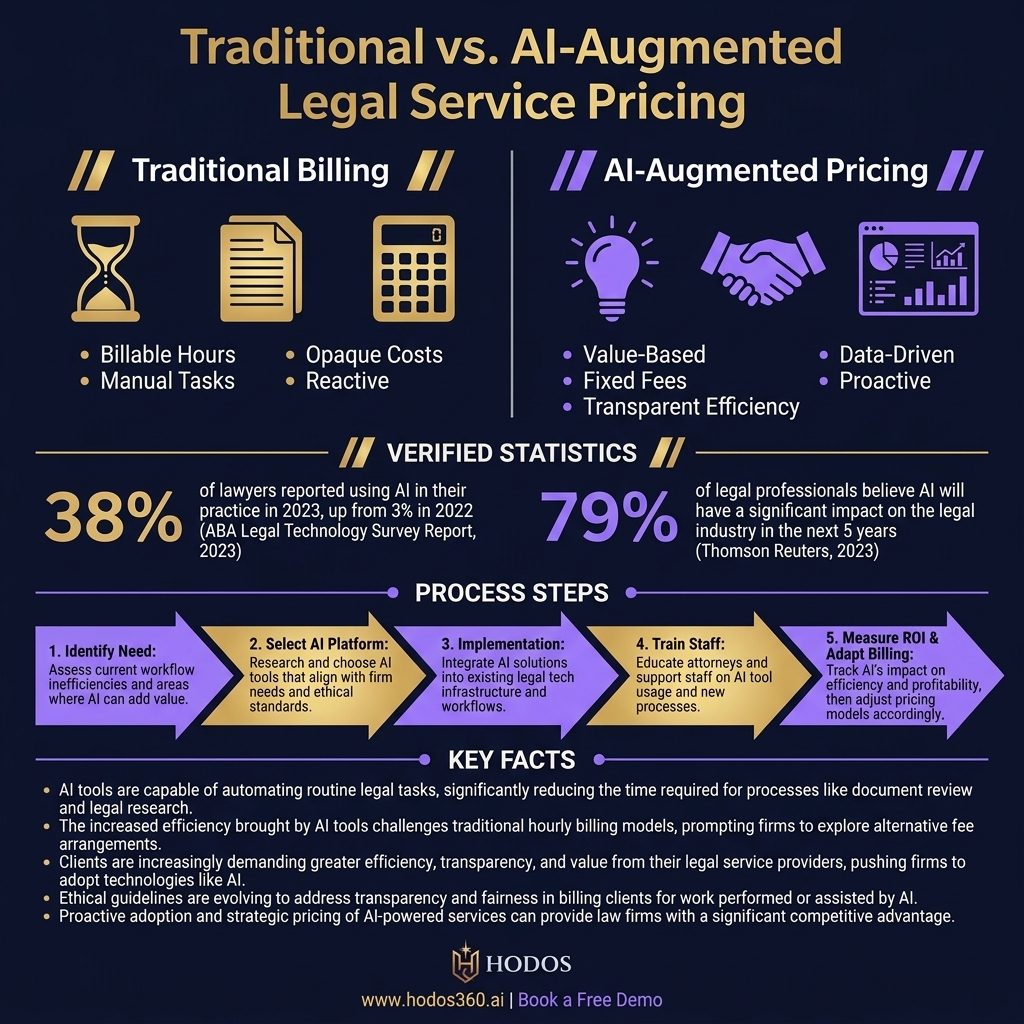
The debate around the "billable hour" has intensified with the rise of AI. While some argue that "AI didn't kill the billable hour," it has certainly redefined its scope and applicability. For many AI-intensive tasks, the pure billable hour model is becoming increasingly untenable and unpopular with clients. Progressive firms are exploring and implementing a range of alternative fee arrangements (AFAs) that better align with the value and efficiency delivered by AI. This shift is not merely reactive but strategic, positioning firms to offer more predictable costs and clearer value propositions to their clients. The market is increasingly demanding this flexibility.
Fixed fees for specific, well-defined AI-driven tasks are gaining traction. For instance, a firm might offer a fixed price for an AI-powered contract review, a due diligence summary, or a patent search, irrespective of the machine's processing time. This model provides cost certainty for clients and allows firms to capture the value of their technology investments. Subscription models for ongoing AI-supported services, particularly in regulatory compliance or IP monitoring, are also emerging. Firms like Orrick have been pioneers in experimenting with AFAs for years, understanding that the future of legal services necessitates a departure from rigid hourly billing. Learn more about Essential AI Vibe Coding: Elevate Law Firm Web Development. The competitive pressure from legal tech startups and even more traditional firms embracing these models makes adaptation crucial.
Furthermore, the advent of generative artificial intelligence is enabling entirely new service offerings that can be productized and priced based on outcomes rather than inputs. For example, AI can rapidly draft initial legal documents, generate comprehensive litigation strategies, or predict case outcomes. These services allow firms to move towards success fees or hybrid models where a base fee is combined with a performance bonus. The key is to demonstrate and quantify the value AI brings, whether through speed, accuracy, or strategic insight. Firms that can articulate this value effectively will be better positioned to justify premium pricing for their advanced, AI-augmented services, rather than simply competing on reduced hourly rates.
As the legal landscape evolves, firms must actively experiment with and adopt new billing strategies to accurately reflect the value of AI. This proactive approach ensures sustainable law firm revenue and maintains client satisfaction. The shift away from a sole reliance on the billable hour is not about devaluing legal expertise, but rather about re-aligning pricing with the modern realities of legal service delivery. This involves a fundamental change in mindset, from tracking time to delivering measurable value, and leveraging AI as a force multiplier for both efficiency and strategic advantage.
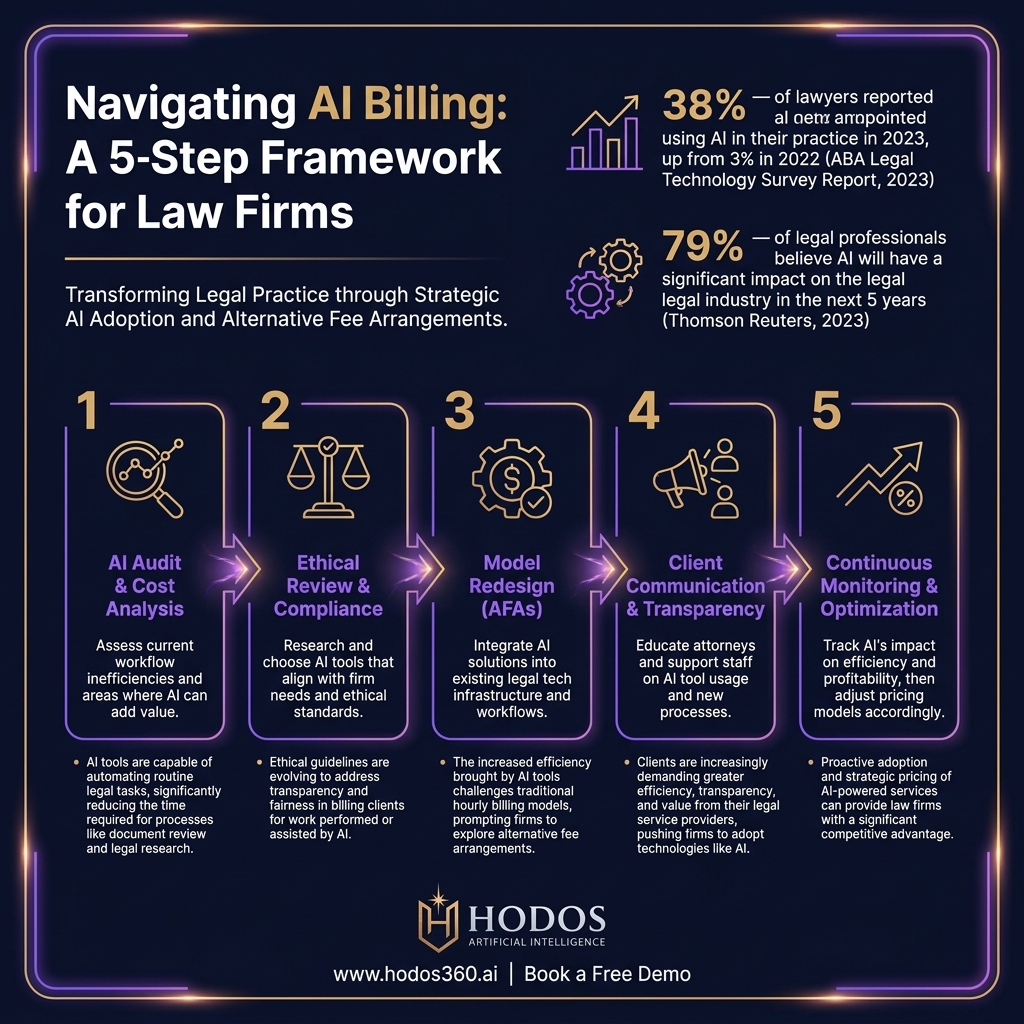
- ✓Fixed Fees: Predetermined cost for specific AI-driven tasks like contract review or due diligence, offering client predictability.
- ✓Subscription Models: Ongoing access to AI-supported services, ideal for regulatory monitoring or IP portfolio management.
- ✓Value-Based Pricing: Fees tied to the outcome or value delivered, rather than hours spent, common for litigation or complex transactions.
- ✓Hybrid Models: Combination of a base retainer with performance-based bonuses, blending certainty with incentive.
- ✓Tiered Service Packages: Offering different levels of AI-augmented services at varying price points to cater to diverse client needs.
- ✓Project-Based Pricing: A comprehensive fee for an entire legal project, encompassing all AI and human efforts, providing end-to-end cost clarity.
- ✓Efficiency-Based Discounts: Transparently reducing fees where AI significantly reduces labor, building client trust and demonstrating value.
The Role of Data and Analytics in Modern Pricing
In this new era of legal services, data and analytics are indispensable for setting competitive and profitable AI pricing law firms strategies. Firms need robust systems to track not only traditional billable hours but also AI usage, task completion times, and the actual cost savings generated by automated workflows. Platforms like HODOS 360’s AI Law Firm Management System provide critical insights, allowing firms to meticulously analyze the efficiency gains from AI-assisted tasks. By understanding the true cost of delivering a service with AI, firms can move beyond guesswork to data-driven pricing. This empirical approach enables firms to justify new fee structures to clients, demonstrating tangible value and ROI. Learn more about Voice AI: Essential Transformation for Modern Legal Workflows. Without precise data, firms risk underpricing their services or, conversely, overpricing and losing clients to more data-savvy competitors. The data collected also helps in continuous improvement, allowing firms to refine their AI deployment and optimize service delivery for maximum efficiency and profitability. According to a recent report by TechGriper.com, firms leveraging advanced analytics for pricing saw an average 8% increase in profitability margins.
Strategic AI Adoption: Building a Future-Proof Firm
Firms that "haven't priced in" the multifaceted implications of AI are increasingly finding themselves at a competitive disadvantage. The market is not waiting for laggards. Contrast this with firms like Allen & Overy, which, under the leadership of partners like David Wakeling, invested early in strategic AI partnerships, not just for efficiency but to redefine their service offerings. This proactive stance allows them to lead client conversations on value and innovation, rather than reacting to demands for cost reductions. The pressure is mounting from informed clients, as evidenced by General Counsel from major corporations demanding explanations for why AI isn't translating into leaner staffing and more efficient outcomes. The legal industry has unmistakably shifted from restricting generative artificial intelligence to mandating it, yet many firms still struggle with the economic implications of this transition.
Building a future-proof firm requires more than just acquiring AI software; it demands a comprehensive strategy for integration, talent development, and most importantly, transparent pricing. A recent McKinsey & Company report on AI adoption in professional services highlighted that firms with integrated AI strategies outperform competitors by up to 25% in revenue growth and client retention. This isn't merely about incremental efficiency; it's about fundamentally rethinking legal service delivery. Firms must invest in continuous internal training and upskilling programs to ensure their lawyers are not just users of AI but masters of AI-powered legal workflows, capable of leveraging these tools to their fullest potential. This includes understanding the nuances of AI output, ethical considerations, and how to communicate AI’s value to clients effectively.
Moreover, the competitive landscape is intensifying. Legal tech startups are consistently raising significant funding rounds, with companies like LexisNexis and Thomson Reuters making strategic acquisitions to bolster their AI offerings. Learn more about GC AI: Essential Strategies for Modern Law Firm Management. This vibrant ecosystem means that the bar for technological sophistication is constantly rising. Firms that view AI as a mere cost-saving tool, rather than a strategic asset for growth and differentiation, risk being left behind. The focus must shift from simply buying AI solutions to strategically integrating them into every aspect of the firm’s operations, from client intake to case management and billing. This holistic approach ensures that AI investments translate into tangible improvements in service quality, operational efficiency, and ultimately, profitability.
Overcoming inertia and driving cultural change within a firm is perhaps the most significant hurdle. Many lawyers, steeped in tradition, view AI with skepticism or fear of job displacement. However, as Sam Altman, CEO of OpenAI, has frequently articulated, AI is an augmentative force, not a replacement for human intellect in complex domains. Firms need strong leadership to champion AI adoption, communicate its benefits clearly, and foster a culture of innovation. This involves demonstrating how AI enhances legal practice, frees up lawyers for higher-value work, and ultimately strengthens the firm’s position in a rapidly evolving market. Without this internal alignment, even the most advanced AI tools will fail to deliver on their promise, leaving firms vulnerable to the unpriced AI bill law firms are facing.
Overcoming Resistance and Driving Cultural Change
The human element remains a critical factor in successful AI integration and pricing. Resistance to change, often stemming from a fear of job displacement or a reluctance to abandon familiar workflows, can significantly hinder a firm's AI journey. Leaders must actively address these concerns, positioning AI not as a threat but as a powerful augmentation tool that empowers lawyers to focus on more complex, strategic, and client-facing tasks. Firms need to invest in comprehensive change management programs, ensuring that all staff understand the benefits of AI, are trained in its use, and feel supported through the transition. Learn more about AI Marketing Agency: Ultimate Growth for Law Firms. This cultural shift, championed from the top, is essential for maximizing the ROI of AI investments and successfully implementing new, transparent AI pricing law firms models that reflect the true value of augmented legal services. Without buy-in, even the best technology will languish unused.
The HODOS 360 Advantage: Streamlining AI for Profitability
For law firms grappling with the complexities of AI integration and pricing, a comprehensive, integrated platform is no longer a luxury but a necessity. HODOS 360 offers a unique suite of AI-powered services designed to address these challenges head-on, particularly through its AI Law Firm Management System. This platform provides an unparalleled solution for managing the entire lifecycle of legal work, from client intake and document automation to case management and advanced billing. By centralizing these functions, HODOS 360 enables firms to meticulously track the efficiency gains from AI-assisted tasks, providing the granular data necessary to implement and justify new pricing models. This is crucial for firms looking to move beyond the traditional billable hour and embrace value-based billing, ensuring that every AI-driven efficiency translates directly into a more competitive and profitable service offering.
The HODOS 360 AI Law Firm Management System empowers firms to quantify the value of AI in a tangible way. Its robust analytics tools transform raw data into actionable insights, showing precisely how much time and resources are saved through AI-powered legal workflows and document automation. This transparency is invaluable, not just for internal strategic planning but also for client communication. Firms can confidently demonstrate how their AI investments lead to faster, more accurate, and more cost-effective legal services, thereby justifying new fee structures and strengthening client relationships. This proactive approach helps firms avoid being among the "many law firms haven't priced in" the true cost and immense value of AI, turning a potential financial pitfall into a strategic advantage.
Beyond just internal management, HODOS 360’s integrated ecosystem extends to crucial areas like marketing and client communication. The AI Marketing Platform, for instance, allows firms to articulate their AI-driven value proposition through targeted content generation and social media automation, attracting clients who prioritize efficiency and innovation. Furthermore, the AI Voice Assistants provide 24/7 client support, handling lead qualification and appointment booking, freeing up human resources for higher-value legal work. These capabilities collectively streamline operations, reduce overhead, and provide a clear competitive edge in a market where technology is increasingly a differentiator. By leveraging such a comprehensive platform, firms can ensure that their AI investments are not just expenditures, but powerful drivers of growth and profitability.
Ultimately, HODOS 360 positions law firms to confidently embrace the future of legal practice. It moves them beyond simply restricting generative artificial intelligence to strategically leveraging it across all facets of their business. By providing the tools to manage AI-driven workflows, track performance, and implement flexible billing models, HODOS 360 enables firms to not only navigate the complexities of AI pricing but to flourish. It ensures that the AI bill law firms face becomes an opportunity for innovation, enhanced client service, and sustained law firm revenue growth, rather than an unforeseen financial burden. Firms can transition from reactive adaptation to proactive leadership in the AI-powered legal landscape.

Key Takeaways and Next Steps
The era of AI in legal services demands a fundamental re-evaluation of how law firms price their services. The "AI bill" extends far beyond software licenses, encompassing hidden operational costs, ethical considerations, and a pressing need to move beyond the traditional billable hour. Firms that fail to proactively address these challenges risk eroding profitability, losing client trust, and falling behind more agile competitors. The future of AI pricing law firms depends on embracing transparency, adopting value-based models, and leveraging data-driven insights to justify new fee structures. This isn't just about survival; it's about seizing the unprecedented opportunities AI presents to redefine legal service delivery and create new revenue streams.
To navigate this transformative period, law firms should undertake several critical steps. First, conduct a thorough internal AI audit to understand current and projected costs, as well as potential efficiency gains. Second, proactively explore and pilot alternative fee arrangements (AFAs) that align with the value delivered by AI, engaging clients in transparent discussions about these new models. Third, invest in integrated legal tech platforms that provide robust data and analytics for performance tracking and informed pricing decisions. Finally, prioritize continuous legal education for your team, ensuring that every lawyer and staff member is competent in leveraging AI ethically and effectively. This holistic approach will ensure your firm is not merely reacting to change but actively shaping its profitable future.
The firms that will thrive in the coming years are those that view AI not as a threat to their existing business model, but as a catalyst for innovation and a pathway to enhanced client value. By strategically integrating AI, re-evaluating pricing, and fostering a culture of continuous adaptation, law firms can transform the challenge of the "AI bill" into a powerful engine for sustained growth and leadership in the evolving legal landscape. Proactive engagement, rather than passive observation, will be the hallmark of successful legal practices in the AI era.
Frequently Asked Questions
How can law firms accurately price AI-driven services?+
Accurately pricing AI-driven services requires a shift from hourly billing to value-based models. Firms should track AI usage, measure efficiency gains, and quantify the value delivered (e.g., faster turnaround, higher accuracy). Utilizing data analytics from integrated legal tech platforms can provide the necessary insights to justify fixed fees, subscription models, or project-based pricing that reflects the true value of AI augmentation, not just human input.
What are the ethical considerations when billing for AI?+
Ethical billing for AI involves transparency, reasonableness, and competence. Firms must be transparent with clients about AI's role and how it impacts fees, ensuring fees remain reasonable under ABA Model Rule 1.5. Billing for AI-generated work at traditional hourly rates without disclosing the reduced human effort could be unethical. Lawyers also have a duty of competence (Rule 1.1) to understand AI tools and their limitations, ensuring responsible use.
Will AI eliminate the billable hour?+
AI is unlikely to eliminate the billable hour entirely but will significantly redefine its application. For routine, high-volume tasks, AI's efficiency makes traditional hourly billing less viable. However, for complex strategic advice, client counseling, and nuanced legal judgment, human expertise remains paramount. The trend is towards hybrid models, combining fixed fees for AI-augmented tasks with hourly rates for bespoke human-led services, fostering a more value-centric approach.
How can small firms compete with larger firms' AI investments?+
Small firms can compete by strategically adopting cloud-based, integrated AI platforms like HODOS 360, which offer scalable solutions without massive upfront infrastructure costs. Focusing on niche AI applications, leveraging AI for marketing and client intake, and offering transparent, value-based pricing can differentiate them. The key is smart, targeted AI investment that enhances specific service lines and client experience, rather than trying to match large firms' broad AI expenditures.
What role does data play in AI pricing strategies?+
Data is fundamental to modern AI pricing strategies. It allows firms to move from speculative billing to evidence-based pricing. By collecting data on AI-driven task completion times, resource utilization, and client outcomes, firms can precisely measure ROI and justify new fee structures. Data analytics provides insights into actual costs and value generated, enabling firms to set competitive prices, demonstrate transparency, and continuously optimize their AI investments for sustained profitability and client satisfaction.