
Digital Marketing: Essential Strategies for Law Firms
The legal industry, often perceived as a bastion of tradition, is currently in the throes of a profound digital transformation. Consider the recent ALM Corp “Digital Marketing News Roundup: June 1–15, 2026,” which highlighted the relentless pace of innovation, from Google's continued emphasis on AI in advertising to the widespread adoption of AI tools like ChatGPT for content creation.
This isn't merely a fleeting trend; it’s a seismic shift in how legal professionals must engage with potential clients. In 2026, a law firm’s digital footprint isn't just an advantage; it's a fundamental requirement for survival and growth. Firms that fail to adapt risk becoming footnotes in an increasingly competitive market, while those embracing cutting-edge digital marketing strategies are poised to dominate.
Historically, legal marketing relied on word-of-mouth, referrals, and static advertising. Today, the client journey begins online, often with a Google search or a scroll through social media. Data from the American Bar Association (ABA) consistently shows that a significant majority of individuals seeking legal services start their search online.
This presents both a challenge and an immense opportunity. The challenge lies in cutting through the digital noise; the opportunity is to leverage advanced tools, particularly artificial intelligence, to connect with clients more effectively and authentically than ever before. This article delves into the essential digital marketing strategies that law firms must master to thrive in this new era, exploring how AI-powered platforms are redefining client acquisition, brand building, and measurable success.
From sophisticated content generation to hyper-targeted advertising, the future of legal marketing is here, and it's powered by intelligence.
The New Frontier: AI-Powered Content Generation for Legal Expertise
In the cutthroat world of legal services, thought leadership is paramount. Yet, the demands of billable hours often leave little time for crafting compelling articles, whitepapers, or insightful blog posts. This is where AI-powered content generation steps in, transforming how law firms articulate their expertise.
Platforms leveraging advanced large language models, such as OpenAI's GPT-4.5 and Anthropic's Claude 3.5, are no longer just experimental tools; they are integral to a firm's content strategy. For instance, firms like Dentons, one of the largest law firms globally, have openly discussed experimenting with AI tools to enhance internal knowledge management and, by extension, accelerate the creation of client-facing content.
This isn't about replacing human lawyers; it’s about augmenting their capabilities, allowing them to focus on complex legal work while AI handles the heavy lifting of drafting, structuring, and optimizing content for digital consumption. The result is a consistent stream of high-quality, SEO-friendly material that establishes the firm as an authority in its practice areas, drawing in clients actively searching for specific legal solutions.
The ethical implications of using AI in legal content are not to be overlooked, aligning directly with ABA Model Rule 1.1 (Competence) and Rule 5.3 (Responsibilities Regarding Nonlawyer Assistance). Learn more about Agentic AI Unleashed: 2026's Power in Legal Work. Firms must ensure that AI-generated content is accurate, reviewed by a qualified attorney, and free from misrepresentations.
The goal is to leverage AI for efficiency, not to abdicate professional responsibility. For example, a legal blog post drafted by AI on recent changes to intellectual property law in the EU AI Act would still require a human lawyer to verify factual accuracy and legal nuances before publication.
This human-in-the-loop approach ensures that while AI handles the initial draft, the final output reflects the firm's expertise and adheres to the highest ethical standards. HODOS 360's AI Marketing Platform, for instance, offers robust content generation tools designed with these safeguards in mind, enabling firms to produce a high volume of quality content without compromising integrity.
This strategic deployment of AI allows law firms to maintain a dynamic online presence, consistently engaging with their audience and reinforcing their position as trusted advisors in a constantly evolving legal landscape.
Crafting Compelling Narratives with AI
Beyond mere information dissemination, effective legal marketing requires compelling storytelling. AI can analyze vast datasets of successful legal narratives, case studies, and client testimonials to identify patterns and structures that resonate with specific client segments. Imagine an AI assisting in the creation of a series of targeted email campaigns for high-net-worth individuals seeking estate planning, or drafting empathetic yet professional social media posts addressing common concerns in family law.
This level of personalization, driven by AI's ability to process and adapt to audience preferences, significantly increases engagement rates. Learn more about AI Legal Tech: Essential Strategies for Market Growth. For example, a study by McKinsey & Company on AI in marketing found that personalization can reduce acquisition costs by as much as 50% and increase revenue by 5-15%, making it a critical differentiator for law firms in a crowded market.
By empowering legal teams to tell their stories more effectively and reach the right audience with the right message, AI transforms content from a generic outreach tool into a powerful client acquisition engine.
Maximizing Reach: Leveraging Social Media & Video for Legal Visibility
The modern legal client lives on social media, making platforms like LinkedIn, Facebook, and even newer channels like TikTok and YouTube indispensable for law firms. The ALM Corp roundup underscored the surging importance of video content, with short-form video dominating engagement metrics across industries. Law firms can no longer afford to be absent from these digital arenas.
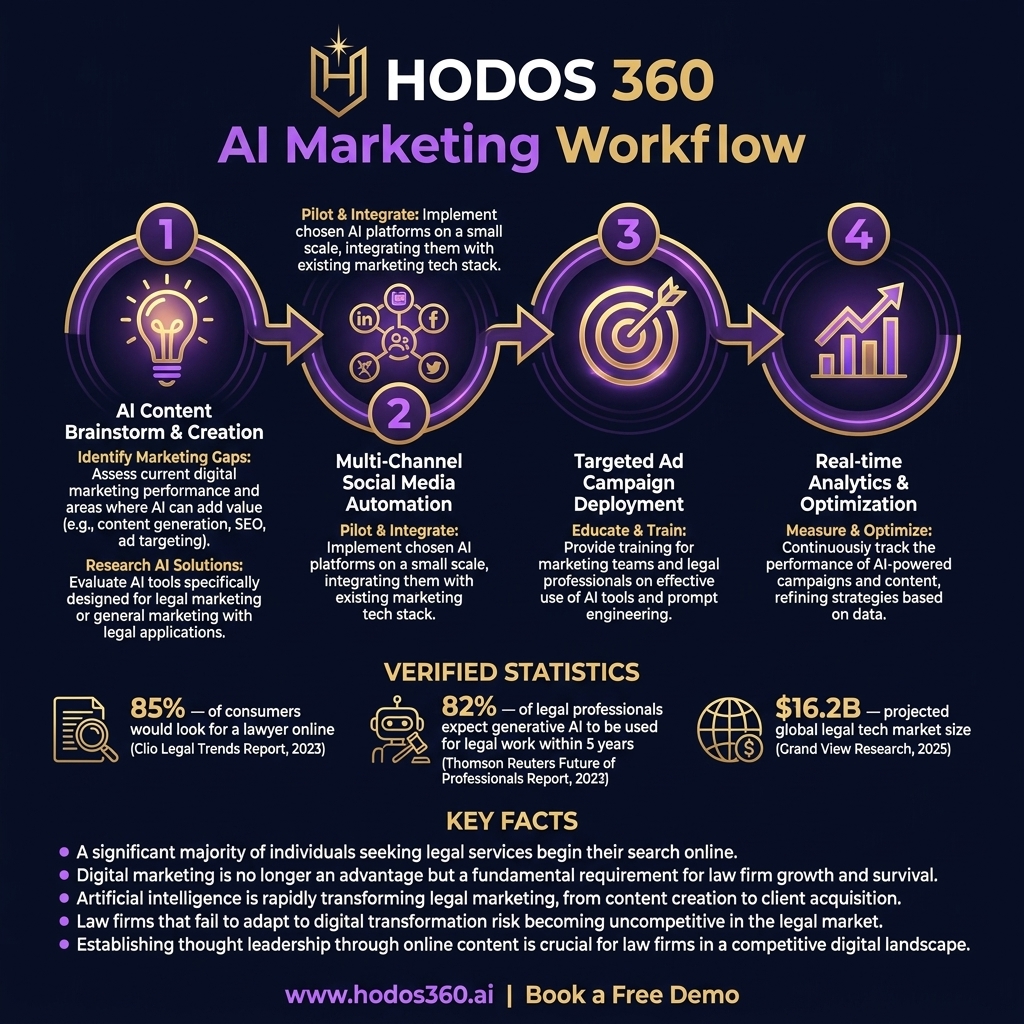
Visionary firms are using AI-powered video creation tools to produce professional, engaging content – from brief explainers on legal concepts to partner interviews – without the need for expensive production studios. Platforms offering social media automation then ensure this content reaches the right audience at optimal times, freeing up legal marketing teams from manual scheduling and monitoring.
Consider how LegalZoom, while not a traditional firm, leverages broad digital reach through diverse content formats to educate and attract a massive client base, demonstrating the power of scale in online visibility. This proactive approach to social media and video isn't just about brand awareness; it's about direct lead generation, allowing potential clients to connect with a firm's expertise and personality before ever picking up the phone.
However, navigating the complexities of social media, particularly with ethical advertising considerations, requires a strategic hand. Learn more about Law Firm AI Funding: The Ultimate Insurer Debate. The line between informative content and direct solicitation can be blurred, requiring careful adherence to state bar advertising rules.
For instance, a firm might use LinkedIn to share an article about recent corporate governance changes, establishing expertise, but must avoid language that could be construed as an unsolicited offer of legal services. AI marketing platforms can assist in content compliance by flagging potentially problematic phrases, though final review by a human remains crucial.
The real competitive edge comes from understanding the nuances of each platform: LinkedIn for professional networking and thought leadership, YouTube for in-depth legal explanations, and targeted Facebook campaigns for specific community outreach. By strategically deploying AI-driven social media and video campaigns, law firms can significantly amplify their message, transforming casual scrollers into engaged prospects and ultimately, loyal clients.
This blend of AI efficiency and human oversight is the hallmark of effective digital marketing in the legal sector today.
- ✓Targeted Content Creation: Utilize AI to generate highly relevant articles, blog posts, and video scripts addressing specific client pain points.
- ✓Multi-Channel Distribution: Automate content posting across LinkedIn, Facebook, YouTube, and other relevant platforms for maximum reach.
- ✓Video Marketing Integration: Leverage AI video tools to create engaging legal explainers, firm introductions, and client testimonials.
- ✓Social Media Listening: Employ AI to monitor online conversations, identify emerging legal issues, and understand client sentiment.
- ✓Performance Analytics: Track engagement, lead generation, and ROI across all social channels to continually refine strategies.
- ✓Ethical Compliance Checks: Integrate AI tools that assist in ensuring all marketing content adheres to professional legal ethics guidelines.
- ✓Personalized Client Journeys: Use AI to tailor content and outreach based on individual client needs and online behavior.
Foundations of Growth: SEO & Web Development for Client Acquisition
A beautifully designed website is futile if it can't be found by potential clients. This underscores the critical importance of Search Engine Optimization (SEO) and robust web development in legal marketing. For law firms, SEO isn't just about generic keywords; it's about hyper-local targeting (e.g., "personal injury lawyer Miami"), long-tail keyword strategies, and ensuring technical excellence.
Google’s continuous core updates, as frequently reported in digital marketing news roundups, mean that SEO is a dynamic, ongoing process. A law firm's website must be fast, mobile-responsive, secure (HTTPS), and structured with clear schema markup for legal services, allowing search engines to understand its content effectively.
Without these foundational elements, even the most compelling AI-generated content or sophisticated social media campaigns will struggle to convert. Firms that invest in AI-powered website building and SEO optimization, like those offered by HODOS 360, gain a significant competitive edge by ensuring their digital storefront is not only aesthetically pleasing but also a high-performing lead generation machine.
Beyond mere visibility, the user experience (UX) of a law firm's website is paramount for client acquisition. Learn more about Voice AI: Essential Revenue Protection for Law Firms. A potential client arriving at a slow, confusing, or poorly designed site is unlikely to stay, let alone contact the firm.
AI-powered website builders integrate responsive design principles and leverage data to suggest high-converting templates and call-to-action placements. For example, AI can analyze user behavior patterns to optimize navigation paths, ensuring that a visitor seeking a specific legal service can quickly find relevant information and contact details.
This focus on intuitive design, coupled with powerful SEO, transforms a website from a static brochure into an active participant in the client intake process. Firms that prioritize both robust technical SEO and a seamless, AI-informed user experience are building digital gateways that not only attract traffic but also convert it into valuable client relationships, demonstrating a clear understanding of the modern client's journey from search query to consultation.
Building High-Converting Digital Gateways
The journey from a casual web visitor to a committed client is paved by effective digital gateways. This means more than just a presence; it demands a strategically optimized online experience. AI-powered web development platforms can rapidly deploy high-converting landing pages tailored for specific campaigns, such as a special offer for estate planning or a seminar registration for business law.
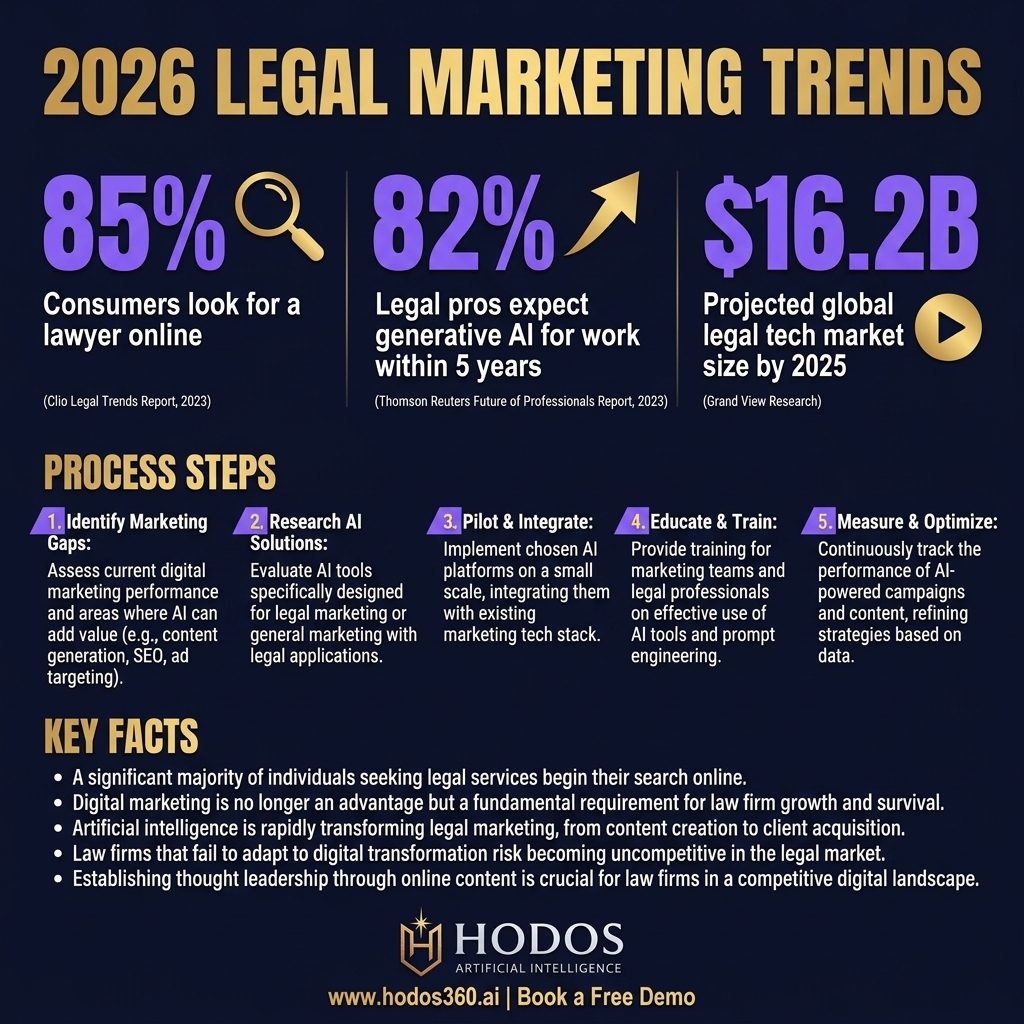
These pages are designed with clear calls to action, minimal distractions, and persuasive copy, often A/B tested by AI to maximize conversion rates. Learn more about AI Call Assistant: The Ultimate Legal Firm Transformation. Furthermore, AI can personalize website content based on a visitor's geographic location, search history, or expressed interests, presenting them with the most relevant legal services and testimonials.
This sophisticated approach to web development ensures that every click has the potential to become a meaningful client interaction, transforming a law firm's website from a passive information hub into an active, intelligent client acquisition tool that continuously adapts and optimizes for success.
Data-Driven Decisions: The Power of Analytics in Legal Marketing
In an era where every marketing dollar counts, guesswork is a luxury law firms cannot afford. The true power of modern digital marketing lies in its measurability. Analytics platforms, from Google Analytics 4 to sophisticated CRM integrations, provide granular data on campaign performance, website traffic, lead sources, and client acquisition costs.
This isn't just about tracking clicks; it's about understanding the entire client journey, identifying what’s working, and pinpointing areas for improvement. Thomson Reuters’ annual reports on law firm business development consistently highlight that firms with robust analytics capabilities outperform their peers in terms of client growth and profitability.
AI takes this a step further by not only collecting data but also analyzing it to predict future trends, optimize ad spend in real-time, and identify high-value client segments. For example, AI can discern that clients from a specific geographic area who engage with video content on LinkedIn are 30% more likely to convert, allowing a firm to reallocate resources to maximize ROI.
This data-driven approach transforms marketing from an art into a science, ensuring every investment yields tangible results.
The competitive landscape of legal marketing demands a sophisticated understanding of campaign effectiveness. Learn more about AI Scaling: Essential Change Management for Legal Leaders. Without clear metrics, firms are essentially operating blind, pouring resources into channels that may not be delivering.
By leveraging AI-powered analytics, law firms can gain a granular understanding of key performance indicators (KPIs) such as cost per lead (CPL), client acquisition cost (CAC), and conversion rates across different marketing channels. This allows for rapid iteration and optimization of campaigns. For instance, if an AI-driven analysis reveals that Google Ads for "divorce lawyer" are generating leads at a significantly lower CPL than social media ads, resources can be swiftly reallocated.
This agility is crucial in a fast-evolving digital environment. Moreover, AI can help identify client lifetime value (CLV) by analyzing past client data, enabling firms to focus on acquiring clients who will generate the most long-term revenue. This strategic, data-informed decision-making is the hallmark of successful law firm marketing in 2026, moving beyond simple impressions to concrete, measurable business growth.
Unlocking Insights from Marketing Performance
The sheer volume of marketing data can be overwhelming, but AI excels at sifting through this noise to unlock actionable insights. Beyond basic metrics, AI can identify correlations and causalities that human analysts might miss. For example, it can determine that specific keywords coupled with certain ad copy on Google Ads yield a higher conversion rate for a particular practice area during specific times of the day.
This level of predictive analytics allows law firms to optimize their marketing budget with unparalleled precision, ensuring maximum impact for every dollar spent. Furthermore, AI can help segment audiences with greater accuracy, enabling hyper-targeted campaigns that resonate deeply with individual client needs. This profound understanding of marketing performance, driven by AI, moves law firms from reactive adjustments to proactive, strategic planning, securing a distinct competitive advantage in client acquisition.

Key Takeaways and Next Steps
The digital marketing landscape for law firms in 2026 is dynamic, complex, and filled with unprecedented opportunities. As evidenced by the rapid shifts highlighted in recent industry roundups, staying competitive requires more than just a basic online presence; it demands a strategic, AI-powered approach to content creation, social media engagement, SEO, web development, and data analytics.
Firms that embrace these innovations are not merely adapting; they are redefining client acquisition and establishing themselves as leaders in the legal tech era. The tension between traditional legal practices and the imperative of digital transformation is real, but the path forward is clear: innovation is no longer optional.
For law firms looking to navigate this new terrain and unlock their full growth potential, the integration of advanced AI-powered platforms is essential. HODOS 360 offers a comprehensive suite of services – from an AI Law Firm Management System that streamlines operations to an AI Marketing Platform that drives client acquisition – designed to empower legal professionals.
By adopting these cutting-edge tools, firms can enhance their online visibility, generate high-quality leads, and build lasting client relationships. The time to act is now. Embrace the future of legal marketing, leverage the power of AI, and position your firm for unparalleled success in the digital age.
Your next client is searching online; ensure your firm is the one they find.
Frequently Asked Questions
Why is digital marketing crucial for law firms in 2026?+
In 2026, the majority of potential clients begin their search for legal services online. A strong digital marketing presence ensures visibility, builds credibility, and enables firms to connect with a broader audience. Without it, firms risk being overlooked in a highly competitive market, making digital strategies essential for sustained growth and client acquisition in the modern legal landscape.
How can AI assist with content generation for law firms?+
AI tools can significantly streamline content creation by generating drafts for blog posts, articles, and social media updates, saving valuable attorney time. They can also optimize content for SEO, personalize messages for specific audiences, and ensure a consistent flow of high-quality, informative material, all while maintaining human oversight for accuracy and ethical compliance.
What role does social media play in legal marketing today?+
Social media platforms are vital for building brand awareness, demonstrating expertise, and engaging directly with potential clients. Firms can use platforms like LinkedIn and YouTube to share insights, legal news, and firm updates, fostering trust and rapport. Strategic social media presence, amplified by AI automation, can significantly expand a firm's reach and lead generation capabilities.
How important is SEO for a law firm's website?+
SEO is critical because it ensures a law firm's website ranks high in search engine results when potential clients look for legal services. Effective SEO, including local SEO and targeted keywords, drives organic traffic, increases visibility, and positions the firm as an authoritative resource. A well-optimized website is a primary channel for attracting and converting new clients.
How can law firms measure the ROI of their digital marketing efforts?+
Law firms can measure ROI through various analytics tools that track website traffic, lead generation, conversion rates, and client acquisition costs. By analyzing these metrics, often with AI assistance, firms can identify which campaigns are most effective, optimize their marketing spend, and make data-driven decisions to improve future strategies and ensure a positive return on investment.