


AI Call Assistant: The Ultimate Legal Firm Transformation
The legal landscape is in constant flux, but few shifts have been as profound or as rapid as the integration of artificial intelligence. The recent announcement that Equal AI secured $30 million in a Series B funding round, co-led by global technology investors Prosus Ventures and Tomales Bay Capital, signals a monumental acceleration in the adoption of AI-powered call assistant platforms.
While Equal AI's immediate focus may be on tackling call screening challenges in markets like India, this significant investment sends a clear message to professional services worldwide: conversational AI is not just a futuristic concept, but a present-day imperative for operational excellence and client engagement.
This substantial capital injection into a dedicated AI call assistant platform underscores a broader market trend where sophisticated voice AI is moving beyond simple chatbots to intelligent, autonomous agents capable of complex interactions. For law firms, where client communication is paramount and administrative burdens can be stifling, the implications are transformative.
Imagine a world where every potential client call is answered promptly, qualified accurately, and routed efficiently, regardless of the hour or day. This isn't science fiction; it's the reality that advanced AI voice assistants are bringing to legal practices, fundamentally reshaping how firms manage their front office and initial client touchpoints.
The competitive edge for law firms in 2026 and beyond will increasingly depend on their ability to leverage such technologies. Firms that embrace AI call assistants are not just streamlining operations; they are redefining client accessibility, improving responsiveness, and freeing up valuable human capital for higher-level legal work.
This shift from manual, time-consuming processes to intelligent automation represents a strategic pivot, allowing legal professionals to focus on what they do best: practicing law, rather than being bogged down by administrative overhead. The narrative arc of legal tech is clear: innovation is no longer optional, but essential for survival and growth.
Ready to explore the transformative power of AI for your firm? [CTA: Discover HODOS 360's AI Voice Assistants]
The Rise of AI Voice Assistants: A New Era for Legal Services
The evolution of AI voice assistants has been nothing short of remarkable. What began with rudimentary voice recognition systems has blossomed into sophisticated conversational AI, powered by advancements in natural language processing (NLP) and machine learning models like those pioneered by OpenAI and Google. These systems can now understand context, detect sentiment, and engage in nuanced dialogues, making them ideal for high-stakes environments like law firms.
The traditional legal front office, often burdened by missed calls, after-hours inquiries, and the sheer volume of initial client contact, is ripe for disruption by this technology. According to a 2024 report by Thomson Reuters, nearly 60% of law firms cite client intake and communication as significant areas for improvement, directly correlating with client satisfaction and retention.
This isn't just about answering the phone; it's about intelligent engagement. Firms are realizing that the first interaction often sets the tone for the entire client relationship. A prospective client calling after business hours, only to reach voicemail, is a lost opportunity. An AI call assistant, operating 24/7, ensures that no lead is missed.
It can perform initial lead qualification, gather essential contact information, understand the nature of the inquiry, and even provide preliminary information about the firm's services. Learn more about AI Website Coding: An Essential Guide for Law Firms. This proactive approach to client acquisition and service delivery is a game-changer, moving firms from reactive to highly responsive.
The deployment of these advanced voice AI solutions is also a strategic response to changing client expectations. Today's clients, accustomed to instant gratification in other sectors, expect similar responsiveness from their legal providers. A study by the American Bar Association (ABA) in 2025 revealed that client satisfaction is heavily influenced by communication frequency and clarity.
AI voice assistants bridge this gap, offering consistent, professional, and immediate interaction, elevating the client experience from the very first touchpoint. This level of service was previously unachievable without a massive investment in human resources, making AI an equalizer for firms of all sizes.
Moreover, the integration capabilities of modern AI call assistant platforms are becoming increasingly seamless.
They can connect directly with existing CRM systems, calendaring software, and case management platforms, ensuring that all captured information is immediately logged and accessible to legal teams. This reduces manual data entry errors, saves administrative time, and creates a unified client record from the outset.
For example, a system like HODOS 360's AI Law Firm Management System is designed to integrate fluidly with such voice AI, creating a comprehensive, end-to-end solution for legal operations.
From Lead Qualification to Appointment Booking: Maximizing Efficiency
The functional scope of an AI call assistant extends far beyond mere answering services. Consider the critical process of lead qualification. Instead of a human receptionist spending valuable time asking a series of standard questions, an AI can handle this with precision and consistency. It can identify the type of legal matter, assess potential conflicts of interest based on predefined criteria, and even screen for specific client needs, ensuring that only genuinely qualified leads are passed on to attorneys.
This intelligent filtering mechanism optimizes the use of legal professionals' time, allowing them to engage only with high-potential prospects.
Furthermore, these assistants are adept at appointment booking. Learn more about Essential Harvard AI & Web Development Courses for Law Firms. Integrating directly with attorneys' calendars, they can suggest available slots, confirm appointments, and send automated reminders.
This eliminates the back-and-forth typically involved in scheduling, a notorious time sink for law firms. For instance, a small firm partner, previously reliant on their paralegal for scheduling, can now have their AI assistant manage dozens of inquiries and bookings simultaneously, ensuring their calendar is optimized for client meetings and court appearances.
This shift is not just about automation; it's about strategic time reallocation, allowing firms to maximize their billable hours and enhance overall productivity without compromising client service.
Beyond Answering Calls: Strategic Advantages for Law Firms
The strategic advantages of adopting AI call assistant technology for law firms extend far beyond immediate operational efficiencies. At its core, it's about creating a superior client experience that differentiates a firm in an increasingly competitive market. A 24/7 accessible firm that can respond instantly, qualify leads intelligently, and schedule appointments seamlessly projects an image of modernity, professionalism, and client-centricity.
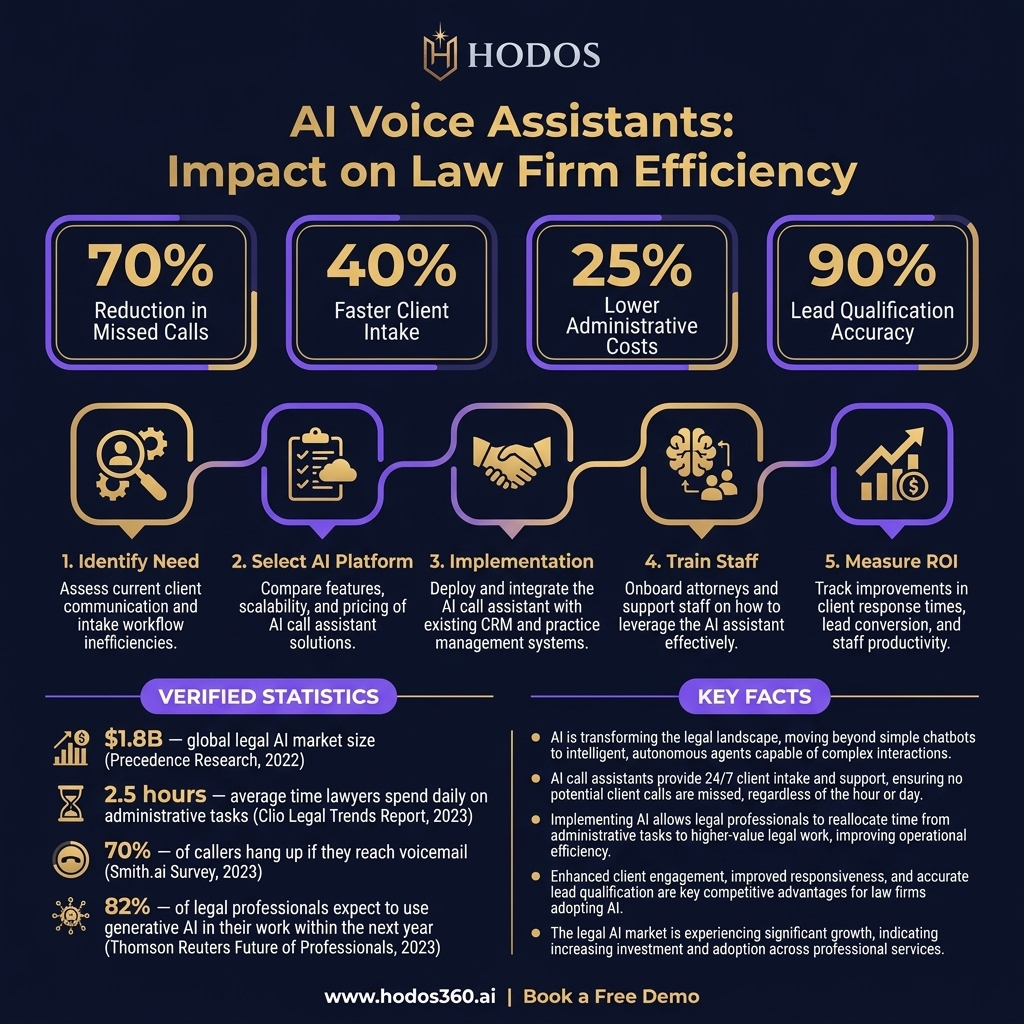
This enhanced responsiveness can be a critical factor in client acquisition, especially for younger generations of clients who prioritize digital interaction and immediate feedback. Firms that delay adoption risk being perceived as outdated and less client-friendly, potentially losing out to more technologically agile competitors.
Moreover, AI voice assistants generate invaluable data.
Every interaction, every qualified lead, every booked appointment provides actionable insights into client demand, common inquiries, and even potential marketing opportunities. This data, when analyzed through an AI marketing platform, can inform more targeted advertising campaigns, content generation strategies, and even service line expansions. For example, if an AI assistant consistently receives inquiries about a nascent legal area, the firm can proactively develop expertise and marketing materials around it.
This data-driven approach moves law firms from reactive service providers to proactive market leaders, anticipating client needs rather than merely responding to them.
Leading analysts like Gartner and McKinsey have consistently highlighted AI as a key driver of productivity and competitive advantage across industries. Learn more about AI Voice Assistants: The Ultimate Guide for Law Firms.
McKinsey's 2023 report on generative AI, for instance, projected significant productivity gains from AI adoption, with professional services among the sectors poised to benefit most. For law firms, this translates into the ability to handle a higher volume of inquiries with the same or even fewer administrative resources, thereby increasing revenue potential without proportional increases in overhead.
This scalability is particularly crucial for growing firms looking to expand their client base without compromising service quality.
Consider the global implications highlighted by Equal AI's funding. The ability of AI to handle diverse languages and accents, a feature often built into advanced platforms, means firms can extend their reach to a broader, multilingual client base.
This is a significant competitive differentiator in diverse urban centers or for firms specializing in international law. By leveraging AI call assistant technology, firms can break down communication barriers, ensuring that every potential client feels understood and valued, fostering trust and loyalty from the outset.
This global accessibility is a powerful tool for modern legal practices seeking growth beyond traditional demographics.
- ✓24/7 Client Accessibility: Ensure no lead is missed and clients receive immediate attention, fostering trust and satisfaction.
- ✓Automated Lead Qualification: Efficiently filter and prioritize potential clients based on predefined criteria, optimizing attorney time for high-value cases.
- ✓Reduced Overhead Costs: Minimize the need for extensive administrative staff for routine tasks, reallocating resources to core legal work.
- ✓Improved Data Capture & Analytics: Automatically log call details, client information, and inquiry types, providing valuable insights for marketing and business development.
- ✓Multilingual Client Support: Offer seamless communication in multiple languages, expanding client reach and catering to diverse communities.
- ✓Enhanced Client Satisfaction: Provide consistent, professional, and prompt responses, leading to higher client retention and positive referrals.
- ✓Scalability for Growth: Easily manage increased call volumes and client inquiries without proportional increases in staffing, supporting firm expansion.
Navigating Ethical AI and Client Trust in Voice Automation
While the benefits of AI call assistant technology are compelling, law firms must navigate the ethical landscape with diligence and foresight. The legal profession is built on trust, confidentiality, and professional responsibility. Therefore, the deployment of AI in client-facing roles raises critical questions regarding data privacy, client consent, and the duty of competence.
The American Bar Association's Model Rules of Professional Conduct provide a foundational framework, particularly Rule 1.1 (Competence), which requires lawyers to keep abreast of changes in the law and its practice, including the benefits and risks associated with relevant technology. This extends to understanding how AI systems handle sensitive client information.
Transparency is paramount. Clients interacting with an AI voice assistant should be clearly informed that they are speaking with an automated system. This disclosure is crucial for maintaining trust and fulfilling ethical obligations regarding communication, as outlined in ABA Model Rule 1.4. Misleading clients, even inadvertently, about the nature of their interaction could erode confidence and potentially lead to ethical breaches.
Firms must ensure their AI platforms are programmed to make this disclosure upfront and clearly, allowing clients to make informed choices about how they wish to communicate.
The human element, even with advanced AI, remains irreplaceable in many aspects of legal practice. Learn more about AI Future: Essential Insights for Law Firm Innovation.
AI voice assistants are powerful tools for augmentation, not outright replacement of human interaction. The ethical challenge lies in determining the appropriate boundaries for AI involvement, ensuring that complex legal advice or highly sensitive discussions are always handled by a human attorney. The goal is to free up legal professionals for these nuanced tasks, not to delegate the core responsibilities of legal counsel to a machine.
This balance requires careful consideration and ongoing oversight of AI system performance and client feedback.
Furthermore, the legal industry is grappling with the broader implications of AI regulation, as seen with the enforcement of the EU AI Act and ongoing discussions in the U.S. and other jurisdictions.
Law firms must remain aware of evolving legal frameworks that may impact the use of AI in client communications and data handling. Compliance with these regulations, alongside existing data protection laws, is not just an ethical imperative but a legal necessity, ensuring the firm and its clients are protected from potential liabilities.
Data Privacy and Compliance: Upholding Professional Responsibility
The cornerstone of legal practice is client confidentiality, enshrined in ABA Model Rule 1.6. When deploying an AI call assistant, a firm must ensure that the technology adheres to the highest standards of data privacy and security. This means selecting platforms that offer robust encryption, secure data storage, and strict access controls.
Firms must conduct thorough due diligence on their AI vendors, scrutinizing their data handling policies, security certifications, and compliance with relevant regulations like HIPAA (for health-related legal matters), GDPR, and CCPA, depending on their jurisdiction and client base. Any breach of client data, whether due to human error or technological vulnerability, can have catastrophic consequences for a law firm's reputation and legal standing.
Moreover, firms must implement clear internal policies for the use of AI voice assistants, including guidelines for data retention, deletion, and employee training on data security protocols. Learn more about Voice AI Adoption: Essential for Law Firms' Future Growth. It’s not enough to simply acquire the technology; firms must actively manage its ethical deployment.
This includes regular audits of the AI's performance, ensuring it doesn't inadvertently collect or process sensitive information beyond its intended scope, and establishing clear protocols for human oversight and intervention when necessary. Upholding professional responsibility in the age of AI requires a proactive and comprehensive approach to data governance.
Implementing AI Voice Assistants: A Phased Approach for Success
Successfully integrating an AI call assistant into a law firm requires a thoughtful, phased approach rather than a sudden overhaul. The initial step involves a thorough assessment of the firm's specific needs and pain points. Where are the bottlenecks in client communication? What types of inquiries consume the most administrative time?
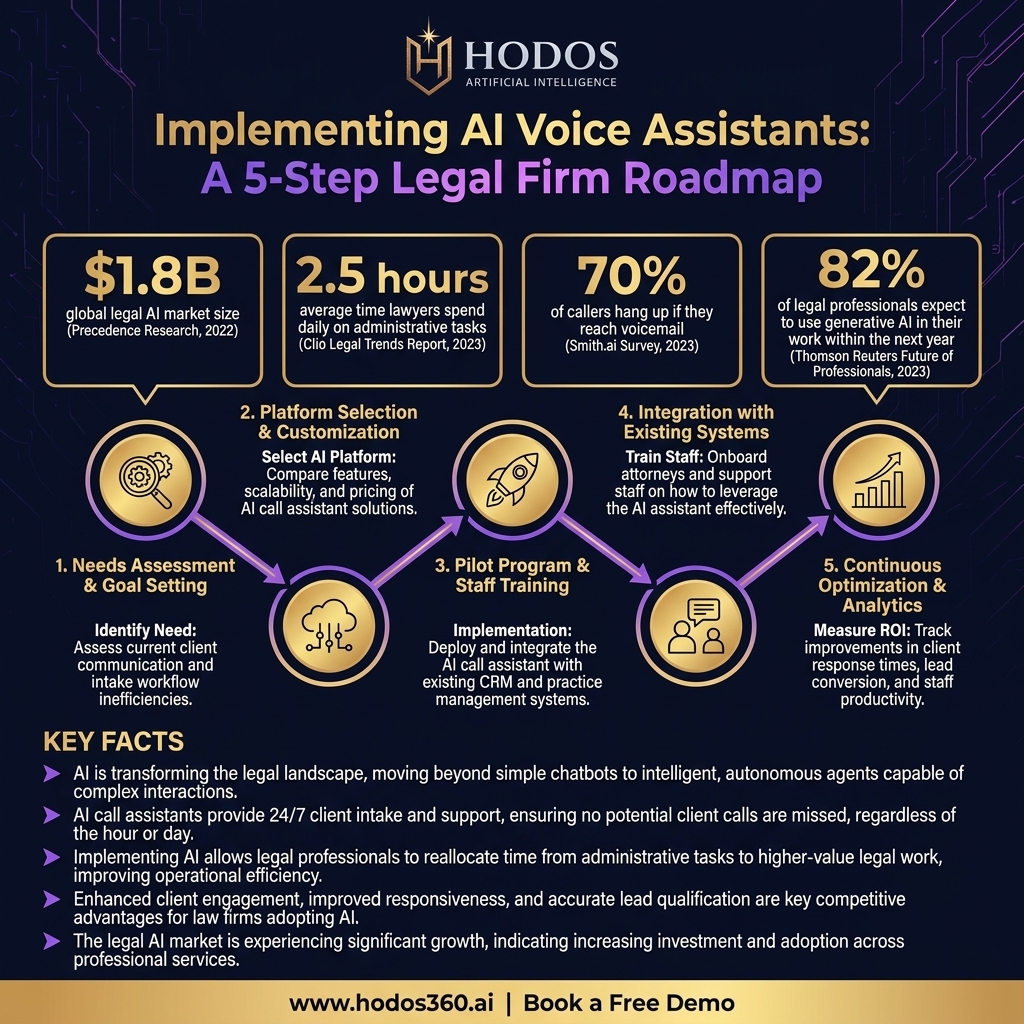
Setting clear, measurable goals—such as reducing missed calls by 50% or decreasing client intake time by 30%—will guide the implementation process and provide benchmarks for success. This foundational analysis ensures that the AI solution is tailored to the firm's unique operational rhythm and client demographics, rather than being a generic, off-the-shelf deployment.
Following the assessment, a pilot program is highly recommended. This involves deploying the AI voice assistant in a limited capacity, perhaps for after-hours calls or for a specific practice area. This allows the firm to observe its performance in a real-world setting, gather feedback from clients and staff, and make necessary adjustments without disrupting the entire operation.
This iterative process of testing, learning, and refining is crucial for optimizing the AI's efficacy and ensuring a smooth transition. Training staff on how to interact with and leverage the AI is equally important, transforming potential skeptics into advocates who understand how the technology enhances their roles.
Integration with existing systems is a critical technical consideration. A truly effective AI voice assistant should seamlessly connect with the firm’s current case management, CRM, and calendaring software. Learn more about AI Web Design: Essential Strategies for Law Firms in the AI Search Era. This interoperability prevents data silos and ensures a unified flow of information across the firm.
For example, when a client books an appointment via AI, that event should automatically populate the attorney's calendar and create a new client record in the firm’s practice management system. Platforms like HODOS 360 are designed with this comprehensive integration in mind, offering not just AI voice assistants but also AI-powered legal workflows and robust case management to create a cohesive technological ecosystem.
Finally, the implementation process should be viewed as ongoing optimization. AI systems are not static; they learn and improve over time. Regular monitoring of call metrics, client feedback, and lead conversion rates will allow firms to continually refine the AI's scripts, responses, and capabilities. This continuous improvement cycle ensures that the AI call assistant remains a highly effective and evolving asset, adapting to changing client needs and firm priorities.
Embracing this dynamic approach ensures long-term success and maximal return on investment from AI adoption.
Selecting the Right Platform: What to Look for in an AI Voice Assistant
Choosing the right AI call assistant platform is a pivotal decision for any law firm. Key features to prioritize include advanced natural language processing (NLP) capabilities, ensuring the AI can understand complex legal jargon and diverse accents. Multilingual support is also essential for firms serving diverse client bases.
Integration capabilities with existing legal tech stacks—such as case management, billing, and document automation systems—are non-negotiable for seamless workflow. A platform that acts as a silo will only create more administrative burdens.
Security and compliance should be at the forefront of the selection process. Look for vendors with robust data encryption, clear privacy policies, and a proven track record of adherence to legal industry standards.
Customization options are also vital; the ability to tailor scripts, responses, and call flows to the firm’s specific brand voice and practice areas ensures the AI feels like a natural extension of the firm. Finally, consider the vendor's commitment to ongoing support, updates, and their understanding of the unique demands of the legal sector.
A partner with legal industry specialization, like HODOS 360, can provide tailored solutions that truly meet the specific needs of law firms.
Curious how HODOS 360's comprehensive AI suite can integrate into your existing operations? [CTA: Schedule a Free Consultation]
The Future is Conversational: Preparing Your Firm for AI Integration
The trajectory of legal technology points unmistakably towards a future where conversational AI plays an increasingly central role in law firm operations. Beyond current applications, we can anticipate AI call assistant platforms evolving to offer even more sophisticated functionalities. Imagine AI not just qualifying leads but performing initial legal research based on client inquiries, cross-referencing against internal knowledge bases, or even drafting preliminary communications.
This integration will create a "super-assistant" that not only manages client interactions but actively supports the legal team in substantive ways, fundamentally altering the paralegal and junior attorney roles by automating routine cognitive tasks.
The broader vision is one of a fully intelligent law firm, where AI augments every process, from client intake and case management to legal research and marketing.
The data collected by AI voice assistants will feed into predictive analytics models, allowing firms to anticipate market trends, identify potential legal risks for clients, and optimize their service offerings with unprecedented precision. This holistic approach to AI integration, where voice AI is a critical component of a larger, interconnected system, represents the next frontier for legal innovation.
Firms that start laying the groundwork now by adopting foundational AI tools will be best positioned to capitalize on these future advancements.
As legal tech luminaries like Richard Susskind have long predicted, the legal profession is undergoing a profound transformation, moving from bespoke, labor-intensive services to more standardized, technology-enabled solutions.
AI call assistant technology is a prime example of this shift, democratizing access to professional, 24/7 client service that was once the exclusive domain of large, well-resourced firms. This trend will continue to accelerate, driven by continuous innovation from companies like Equal AI and the growing demand from law firms for efficiency and competitive advantage.
The future of legal services is conversational, intelligent, and deeply integrated with AI, promising a more efficient, client-centric, and ultimately more profitable practice for those willing to embrace the change.
Embracing this future is not merely about adopting a new tool; it's about fostering a culture of innovation within the firm.
It requires leadership to champion technological change, invest in staff training, and continually evaluate the ethical and practical implications of AI. The firms that thrive will be those that view AI voice assistants not as a threat, but as an opportunity to elevate their practice, enhance client value, and secure their position at the forefront of the evolving legal industry.

Key Takeaways and Next Steps
The significant investment in Equal AI's platform underscores a clear mandate for the legal sector: AI voice assistants are no longer a luxury but a strategic imperative. Firms that embrace this technology stand to gain substantial competitive advantages through enhanced client accessibility, streamlined operations, and data-driven insights.
From 24/7 lead qualification and appointment booking to multilingual support, the benefits translate directly into improved efficiency, reduced overhead, and ultimately, greater profitability. However, ethical considerations, especially concerning data privacy and transparent client communication, must guide every step of implementation. The future of legal practice is undeniably intertwined with intelligent automation, and early adopters will be best positioned to thrive.
For law firms looking to navigate this new era, the path forward involves a thoughtful assessment of needs, a phased implementation strategy, and a commitment to selecting robust, secure, and legally compliant AI solutions. Platforms like HODOS 360 offer comprehensive AI services, including advanced AI Voice Assistants seamlessly integrated with law firm management and marketing systems, providing a holistic approach to modernization.
The time to prepare for the conversational future of law is now, ensuring your firm is not just keeping pace, but leading the charge in leveraging AI for unparalleled client service and operational excellence.
Don't let your firm be left behind in the AI revolution. [CTA: Explore HODOS 360 Today]
Frequently Asked Questions
What specifically is an AI call assistant for law firms?+
An AI call assistant for law firms is an intelligent virtual agent powered by artificial intelligence that handles inbound and outbound phone communications. It can answer calls 24/7, perform initial client intake, qualify leads, book appointments, route calls, and provide multilingual support, integrating seamlessly with existing firm management systems to streamline operations and enhance client service.
How do AI call assistants improve client intake efficiency?+
AI call assistants significantly improve client intake by ensuring every call is answered promptly, even outside business hours. They can gather essential client information, identify the nature of the legal matter, and pre-qualify leads based on firm criteria, reducing the administrative burden on staff and ensuring attorneys only engage with high-potential prospects. This dramatically speeds up the initial client journey.
What are the ethical considerations for using AI voice assistants in legal practice?+
Ethical considerations include maintaining client confidentiality (ABA Model Rule 1.6), ensuring transparent communication (ABA Model Rule 1.4) by disclosing AI interaction, and upholding the duty of competence (ABA Model Rule 1.1) in selecting and overseeing AI technology. Data privacy, secure data handling, and compliance with relevant regulations like GDPR or CCPA are also paramount to protect sensitive client information.
Can AI call assistants integrate with existing law firm software?+
Yes, modern AI call assistants are designed for seamless integration with a firm's existing legal tech stack, including case management systems, client relationship management (CRM) platforms, billing software, and calendaring tools. This interoperability ensures that all data captured by the AI is automatically logged and accessible, preventing data silos and creating a unified, efficient workflow across the firm.
What return on investment (ROI) can a law firm expect from an AI call assistant?+
Law firms can expect a significant ROI from AI call assistants through reduced administrative costs, increased lead conversion rates due to 24/7 availability, and improved client satisfaction leading to better retention and referrals. The ability to reallocate human resources to higher-value legal work, coupled with enhanced data analytics for strategic decision-making, further contributes to a strong financial return on investment.