


AI Future: Essential Insights for Law Firm Innovation
The legal world watched with bated breath in early 2026 as Bloomberg Law reported on Kirkland & Ellis's strategic posture towards artificial intelligence. The headline, "Kirkland Signals Meaningful but Not Transformational AI Future," reverberated through partner meetings and legal tech conferences, challenging the prevailing narrative of an impending, sweeping AI revolution.
For a firm of Kirkland's stature, with its formidable financial clout and reputation for innovation, this statement was not merely an observation; it was a declaration, signaling a nuanced approach that warrants careful examination by every law firm owner and legal professional. This wasn't a cautious retreat from AI, but rather a deliberate recalibration of expectations, emphasizing practical integration over speculative upheaval.
The firm's substantial investment, reportedly in the hundreds of millions, into building proprietary AI solutions underscored a commitment to leveraging technology for efficiency and competitive advantage, yet with a measured understanding of its current limitations and the profound human element still central to legal practice.
It forces us to ask: what does "meaningful but not transformational" truly mean for the broader legal ecosystem, and how can other firms interpret and act on this signal?
This strategic stance from a global powerhouse like Kirkland & Ellis, a firm consistently ranked among the world's highest-grossing, offers a crucial lens through which to view the evolving AI future in law.
It moves beyond generic pronouncements of "AI will change everything" to a more grounded assessment of where AI currently delivers tangible value. The tension lies in balancing the allure of cutting-edge innovation with the practical realities of legal service delivery, client expectations, and ethical responsibilities.
Many firms, observing the rapid advancements from companies like OpenAI with their GPT models or specialized legal AI startups like Harvey AI, feel immense pressure to adopt. However, Kirkland's approach suggests a sophisticated discernment: investing heavily in AI tools that enhance existing workflows and generate clear ROI, rather than chasing a wholesale transformation that might be years, if not decades, away.
This perspective is vital for law firms grappling with their own AI strategies, prompting them to consider what specific problems AI can solve today, how to integrate it effectively, and what constitutes a truly meaningful AI implementation within their unique operational contexts.
Ready to redefine your firm's operational efficiency with AI? Discover how HODOS 360 can elevate your practice.
The Kirkland & Ellis AI Strategy: A Deeper Look
Kirkland & Ellis's reported $500 million investment in developing proprietary AI tools, as detailed by Bloomberg Law, represents a significant commitment, yet one couched in pragmatism. This isn't merely purchasing off-the-shelf software; it's a strategic decision to build tailor-made solutions designed to integrate seamlessly into their highly specific, complex workflows.
Partners likely spearheaded internal initiatives, focusing on areas where AI could augment, rather than replace, human expertise. This includes automating repetitive tasks in due diligence, contract review, and e-discovery—areas where the sheer volume of data makes human-only processing inefficient. The firm's move mirrors a broader trend among elite institutions, such as JPMorgan Chase's substantial internal AI development efforts, indicating a recognition that generic AI solutions may not suffice for highly specialized, high-stakes environments.
This bespoke approach allows Kirkland to maintain granular control over data security, intellectual property, and algorithmic transparency, critical concerns for any law firm.
This strategy underscores a fundamental belief that while AI can significantly enhance operational efficiency and data analysis, it is not yet capable of replicating the nuanced judgment, strategic thinking, and client relationship management that define top-tier legal practice.
When Alex Karp, CEO of Palantir, often speaks about the need for human-in-the-loop AI, his sentiments resonate with Kirkland's stance. The firm is likely using AI to empower its lawyers to focus on higher-value tasks, rather than envisioning a future where AI attorneys handle entire cases autonomously.
Learn more about AI SEO Lead Generation: Essential Strategies for Law Firms. This selective application of AI, targeting specific pain points, is what makes their investment meaningful. It’s about leveraging AI as a force multiplier for their existing talent, allowing them to process more information, identify patterns faster, and deliver more precise advice.
This contrasts sharply with some of the more hyperbolic predictions about AI's transformational impact, which often overlook the intricate human elements and ethical considerations embedded in legal work.
The decision to develop in-house rather than solely rely on external vendors like Harvey AI or even established players like Thomson Reuters and LexisNexis, also reflects a desire for competitive differentiation.
While platforms like Harvey AI, backed by investments from firms like Allen & O'Very, offer powerful general-purpose legal AI capabilities, Kirkland’s scale allows them to invest in highly specialized systems that might give them an edge in complex litigation or transactional work. This bespoke development ensures that their AI tools are perfectly aligned with their unique methodologies, client base, and risk profile.
It’s an acknowledgment that for a firm operating at the apex of the legal market, generic solutions might offer incremental improvements, but truly meaningful advancements require deep integration and customization. This approach, while capital-intensive, positions Kirkland to control its technological destiny, safeguarding its intellectual capital and adapting rapidly to new legal and technological challenges without being dependent on vendor roadmaps.
The Cost of Bespoke AI Development
The investment required for bespoke AI development, as exemplified by Kirkland, is substantial, reportedly in the hundreds of millions. This financial commitment covers not only the technology itself—infrastructure, algorithms, and data scientists—but also the significant organizational change management necessary to integrate these tools effectively. Firms must consider the opportunity cost of dedicating internal resources to building rather than buying, a tension that was palpable at LegalTech NYC 2026, where discussions often revolved around the "build vs. buy" dilemma.
For most law firms, particularly those outside the Am Law 100, such a scale of investment is simply not feasible. The talent pool required—AI engineers, data privacy specialists, and legal domain experts—is expensive and in high demand, often competing with tech giants like Google or Amazon for top talent.
This disparity creates a significant competitive gap, where larger firms can afford to innovate in ways smaller firms cannot, potentially exacerbating existing market power imbalances.
Furthermore, maintaining and updating these proprietary systems requires ongoing investment. Learn more about Voice Assist: Essential AI Scheduling for Law Firms.
AI models are not static; they need continuous training, refinement, and adaptation to evolving legal precedents, client needs, and technological advancements. This long-term commitment includes licensing data, managing data security and privacy protocols (especially important with regulations like GDPR or CCPA), and ensuring compliance with ethical guidelines for AI use, such as those outlined by the ABA Model Rules of Professional Conduct.
The sheer complexity of developing and deploying AI that can withstand legal scrutiny and maintain client confidentiality is immense. For example, ensuring that an AI-powered document review system doesn't inadvertently expose privileged information requires rigorous testing and robust architectural design, a task far more demanding than simply integrating a third-party API.
This high barrier to entry for in-house development reinforces why most firms will continue to rely on external vendors, making the choice of the right vendor even more critical for their AI future.
Build vs. Buy: Navigating Legal AI Solutions
The "build vs. buy" conundrum is at the heart of legal tech strategy, acutely highlighted by Kirkland's move. While Kirkland opts for a significant investment in building, smaller and mid-sized firms often find the "buy" option more pragmatic and cost-effective. Companies like Clio, which has expanded its suite of services through strategic acquisitions, offer integrated legal practice management solutions that incorporate AI-driven features for client intake, billing, and document automation.
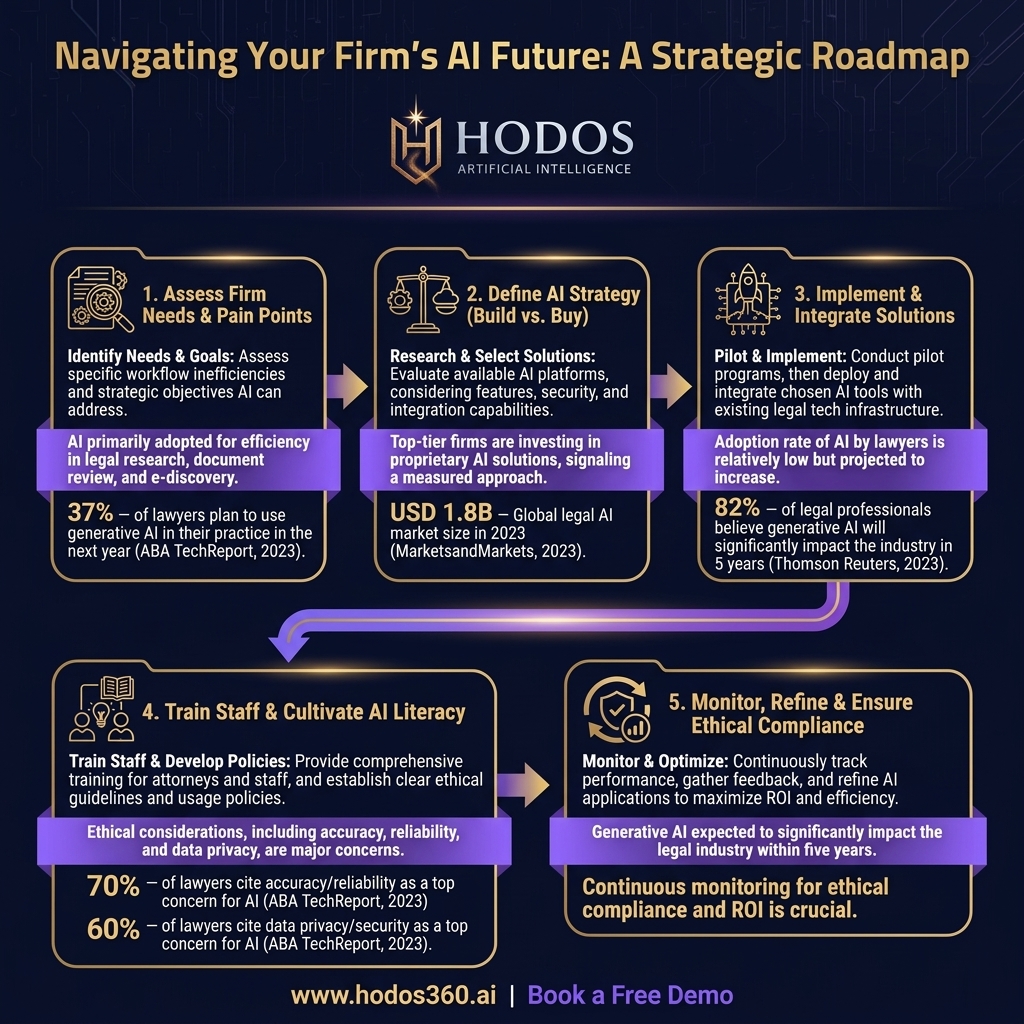
Similarly, specialized AI vendors such as Casetext (acquired by Thomson Reuters) or Disco AI provide robust tools for legal research and e-discovery that are accessible without the immense capital outlay of in-house development. The advantage of buying lies in leveraging economies of scale, benefiting from continuous updates and expert support provided by the vendor, and faster deployment times.
This allows firms to immediately tap into the benefits of AI without diverting precious internal resources away from core legal work.
However, the "buy" approach comes with its own set of considerations. Firms must carefully vet vendors for data security, ethical AI practices, and alignment with their specific needs.
The integration of multiple vendor solutions can also create interoperability challenges, leading to data silos and inefficient workflows if not managed properly. This is where platforms like HODOS 360, offering a comprehensive suite of AI-powered services from law firm management to marketing and voice assistants, aim to provide a more unified solution.
Learn more about AI Marketing Intelligence: The Ultimate Guide for Law Firms. The goal is to offer the benefits of integrated AI without the "build" burden. The market competition among legal AI providers is intense, with startups constantly emerging and established players innovating. This dynamic environment means firms have a growing array of choices, but also the responsibility to conduct thorough due diligence, ensuring that chosen solutions genuinely enhance rather than complicate their operations and contribute positively to their AI future.
The decision ultimately hinges on a firm's size, budget, specific needs, and strategic vision. For a global firm like Kirkland, with unique needs for highly specialized, secure, and integrated systems, the "build" strategy, despite its cost, makes strategic sense for competitive differentiation. For the vast majority of firms, however, a carefully curated "buy" strategy, focusing on best-of-breed solutions that offer demonstrable ROI and seamless integration, will be the path to a meaningful AI future.
This might involve adopting an AI-powered legal workflow system for automated document generation and contract review, or leveraging AI voice assistants for 24/7 client intake. The key is to identify specific pain points where AI can deliver tangible value, rather than pursuing AI for its own sake.
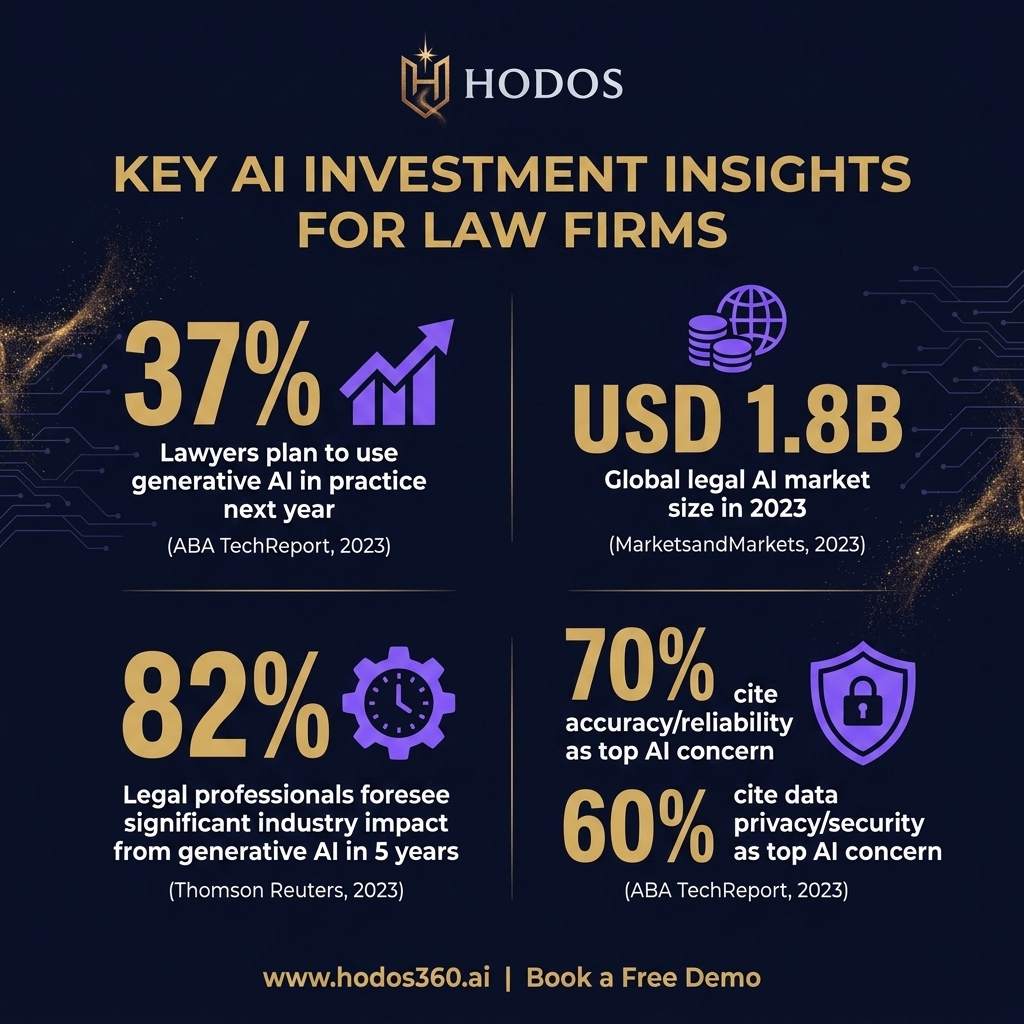
The ABA's recent surveys consistently show that while AI adoption is growing, many firms are still in the early stages, often deterred by cost or lack of clear understanding of its benefits.
Transform your firm's efficiency and client engagement. Explore HODOS 360's integrated AI solutions today!
The Broader Impact on Legal Practice and Efficiency
The adoption of AI, whether built in-house or bought from vendors, is undeniably reshaping the landscape of legal practice, even if the transformation isn't yet "wholesale." McKinsey's recent reports on AI's impact across industries consistently highlight significant productivity gains from automation and enhanced data analysis.
In law, this translates to faster document review, more accurate legal research, and streamlined case management. For example, AI-powered tools can analyze millions of documents for relevance in a fraction of the time it would take human paralegals, drastically reducing discovery costs and timelines. This efficiency gain isn't just about saving money; it allows legal teams to focus on the strategic aspects of a case, delving deeper into complex legal arguments rather than getting bogged down in administrative minutiae.
The AI future promises to elevate the role of the lawyer, shifting the focus from rote tasks to sophisticated problem-solving and client advocacy.
Beyond efficiency, AI is also driving innovation in client service and access to justice. AI-powered marketing platforms enable firms to identify and target potential clients more effectively, while AI voice assistants can provide immediate, multilingual support for client inquiries, qualifying leads and booking appointments 24/7. This enhanced responsiveness can significantly improve client satisfaction and expand a firm's reach.
Consider the impact on smaller firms or solo practitioners: AI tools can democratize access to sophisticated legal analytics previously only available to large firms, leveling the playing field. Learn more about AI Legal Revolution: Corporate Use Jumps 87% by 2026. For instance, AI in predictive analytics can offer insights into case outcomes based on historical data, empowering lawyers to make more informed strategic decisions.
This democratizing effect is a meaningful aspect of AI's evolution, ensuring that the benefits of advanced technology are not confined to the industry's giants.
However, this shift also presents challenges. The legal profession, traditionally resistant to rapid change, must adapt its training and education to prepare the next generation of lawyers for an AI-augmented world.
Law schools are beginning to integrate legal tech courses, but continuing legal education for existing practitioners is crucial. Furthermore, the ethical implications of using AI, particularly concerning bias in algorithms, data privacy, and the unauthorized practice of law, require constant vigilance. The ABA Model Rules of Professional Conduct, specifically Rule 1.1 (Competence) and Rule 1.6 (Confidentiality of Information), are increasingly being interpreted to include technological competence and safeguarding client data in an AI context.
Firms must invest in training their staff not just on how to use AI tools, but also on understanding their limitations and ethical boundaries.
Beyond Case Management: AI's Expanding Role
While AI Law Firm Management systems form the bedrock of AI adoption, AI's influence extends far beyond the traditional confines of case and document management. The AI Marketing Platform for law firms, for instance, is revolutionizing how legal services are promoted. AI can analyze market trends, predict client needs, generate compelling content for social media and blogs, and even assist in creating AI-powered video campaigns.
This targeted, data-driven approach to marketing ensures that firms reach the right audience with the right message, maximizing ROI on their marketing spend. Similarly, AI Voice Assistants are transforming client intake and engagement, offering round-the-clock support, screening potential clients, and scheduling consultations, freeing up human staff for more complex interactions.
These applications are not just "nice-to-haves"; they are becoming essential for competitive firms looking to enhance client experience and operational efficiency in a crowded market.
The rise of AI-powered Web & Mobile Development is another critical area. Learn more about Voice AI Unleashed: Essential Innovation for Modern Law Firms.
Firms can now build highly responsive, SEO-optimized websites with AI assistance, ensuring a strong digital footprint. These platforms use AI to analyze user behavior, personalize content, and optimize conversion rates, transforming a firm's online presence from a static brochure to a dynamic lead-generation engine. For example, AI can suggest optimal website layouts based on industry best practices and predict which design elements will resonate most with a legal client demographic.
This holistic integration of AI across various operational and client-facing functions underscores its meaningful impact. It's not just about one AI tool; it's about a synergistic ecosystem of AI applications that collectively drive efficiency, growth, and client satisfaction, shaping a truly modern legal practice.
Ethical AI and Data Governance in Law Firms
As law firms embrace the AI future, the ethical implications and robust data governance become paramount. The legal profession is inherently built on trust, confidentiality, and accuracy, making the responsible deployment of AI a non-negotiable. Concerns around algorithmic bias, for example, are significant. If an AI tool is trained on historical data that reflects societal biases (e.g., in sentencing or bail decisions), it could perpetuate or even amplify those biases, leading to unjust outcomes.
This is not a hypothetical concern; studies have shown how certain AI systems used in criminal justice have exhibited racial bias. Firms must rigorously vet their AI solutions, whether built or bought, to ensure fairness and prevent discriminatory results. This due diligence extends to understanding the provenance of training data, the algorithms' design, and the continuous monitoring of their outputs.
The EU AI Act, with its stringent requirements for high-risk AI systems, provides a glimpse into the future regulatory landscape that law firms will increasingly need to navigate globally.
Data privacy and security are equally critical. Law firms handle vast amounts of sensitive client information, much of which falls under attorney-client privilege and work product doctrine.
Any AI system integrated into a firm's operations must adhere to the highest standards of cybersecurity and data protection. This means robust encryption, secure data storage, strict access controls, and transparent data usage policies. Learn more about AI Legal Research: The Ultimate Guide for Law Firms.
The potential for data breaches, especially with cloud-based AI solutions, poses a significant risk to client confidentiality and a firm's reputation. Firms must ensure that their AI vendors are compliant with relevant data protection laws (e.g., HIPAA for health-related data, CCPA for California consumer data) and that their contracts include strong data security clauses.
Moreover, lawyers have an ethical duty to understand the technology they use, as articulated in numerous state bar ethics opinions interpreting ABA Model Rule 1.1, requiring technological competence.
The question of who is responsible when AI makes an error also looms large. If an AI-powered legal research tool misses a critical precedent, or an AI-driven contract review system overlooks a crucial clause, where does the liability lie?
Ultimately, the lawyer remains professionally responsible for the advice given to clients, regardless of the tools used. This necessitates a "human-in-the-loop" approach, where AI acts as an assistant, but final decisions and critical reviews are always performed by a qualified human attorney. Firms must establish clear protocols for AI oversight, ensuring that lawyers understand how to verify AI outputs and challenge its conclusions.
This blend of human expertise and AI efficiency is the hallmark of a responsible and meaningful AI future in legal practice, mitigating risks while maximizing technological benefits.
Furthermore, the ethical use of AI extends to intellectual property rights and the potential for AI to generate content that infringes on existing copyrights or inadvertently plagiarizes.
As AI models become more sophisticated in generating legal briefs or marketing content, firms must exercise caution and implement robust review processes to ensure originality and compliance. The debate around AI-generated content and copyright ownership is still evolving in courts and legislative bodies, underscoring the need for firms to stay abreast of these developments.
This complex interplay of technology, ethics, and law demands a proactive and informed approach from legal professionals, ensuring that their adoption of AI remains both innovative and ethically sound.
Preparing Your Firm for the AI Future
For law firms looking to thrive in the evolving AI future, proactive preparation is key. Kirkland's strategic investment isn't just about technology; it's about cultivating a culture of innovation and adaptability. The first step for any firm is to conduct a comprehensive audit of its current operations to identify areas where AI can deliver the most meaningful impact.
This could range from automating client intake processes with AI voice assistants, streamlining document generation with AI-powered legal workflows, or enhancing marketing efforts with an AI marketing platform. The goal is not to implement AI for its own sake, but to solve specific business problems, reduce overhead, and improve client service.
This strategic identification of pain points ensures that AI adoption is targeted and yields measurable returns, avoiding costly investments in solutions that don't align with the firm's core objectives.
Investing in human capital is equally crucial. The most advanced AI tools are only as effective as the people who wield them.
Firms must prioritize continuous learning and development for their attorneys and staff, focusing on digital literacy, AI literacy, and critical thinking skills. This includes training on how to interact with AI tools, interpret their outputs, and understand their limitations. Consider the success of firms like Linklaters, which has invested heavily in internal tech academies for its lawyers, recognizing that technological competence is now a core requirement.
This commitment to upskilling ensures that the workforce is not just ready to use AI, but actively contributes to its effective and ethical deployment. Creating an environment where experimentation with new technologies is encouraged, alongside robust governance, fosters a dynamic and future-ready legal practice.
Furthermore, developing a clear AI strategy, even if it's a "buy" strategy rather than a "build" one, is essential.
This strategy should outline the firm's objectives for AI adoption, the types of technologies it will consider, its approach to data governance and ethics, and its plan for change management. It should also include a framework for evaluating the ROI of AI investments. This structured approach, championed by legal tech thought leaders such as Casey Flaherty, author of "Legal Project Management," helps firms avoid ad-hoc implementations and ensures that AI initiatives are aligned with overall business goals.
Whether it's a small firm leveraging AI for local SEO or a mid-sized firm integrating AI into its litigation support, a well-defined strategy is the compass for navigating the complexities of the AI future.
Cultivating an AI-Ready Culture
Cultivating an AI-ready culture goes beyond technology adoption; it's about fostering a mindset of continuous improvement and embracing change. This involves leadership buy-in, ensuring that senior partners champion AI initiatives and communicate their strategic importance across the firm. When leaders like Brad Karp of Paul, Weiss discuss the imperative of technological adoption, it sends a powerful message.
It also means creating opportunities for lawyers and staff to experiment with AI tools in a safe environment, share best practices, and provide feedback. This iterative process allows firms to refine their AI strategies based on real-world experiences, ensuring that the technology genuinely serves the needs of its users.
A culture that values innovation over inertia is critical for sustained success in an increasingly tech-driven legal market.
A key component of an AI-ready culture is transparency. Firms should openly communicate about their AI initiatives, addressing concerns about job displacement (by emphasizing augmentation over replacement) and explaining how AI will enhance efficiency and client service.
This transparency builds trust among employees and clients, mitigating resistance to change. Furthermore, establishing clear internal guidelines and policies for AI use, in alignment with professional ethics and legal citations such as ABA Model Rule 1.6 (Confidentiality of Information) and Rule 5.3 (Responsibilities Regarding Nonlawyer Assistants), ensures responsible deployment.
By fostering an environment where AI is seen as a tool to empower legal professionals, rather than replace them, firms can successfully transition into a more technologically advanced and efficient AI future.

Key Takeaways and Next Steps
- ✓Assess Current Operations: Identify specific bottlenecks or inefficient processes where AI can provide immediate, measurable value, such as client intake, document review, or billing.
- ✓Define Your AI Strategy: Develop a clear roadmap outlining your firm's AI goals, budget, ethical guidelines, and integration plan, whether building in-house or partnering with vendors.
- ✓Invest in AI Literacy: Provide ongoing training for all staff on AI tools, their capabilities, limitations, and ethical considerations to foster confident and competent adoption.
- ✓Prioritize Data Governance: Implement robust policies for data security, privacy, and compliance with regulations like the EU AI Act or ABA Model Rules to ensure responsible AI use.
- ✓Vet Vendors Thoroughly: If buying, conduct due diligence on AI providers for security, ethical practices, integration capabilities, and continuous support to ensure long-term compatibility.
- ✓Embrace a Human-in-the-Loop Approach: Ensure that AI tools augment, rather than replace, human judgment, maintaining attorney oversight for all critical legal decisions and outputs.
- ✓Foster a Culture of Innovation: Encourage experimentation and feedback within the firm to adapt AI solutions to unique needs and continuously improve technological integration.
Kirkland & Ellis's "meaningful but not transformational" stance on AI future offers a powerful lesson for all law firms: AI's impact is real, but its integration requires strategic discernment, not unbridled enthusiasm. The legal industry is not facing an overnight revolution, but rather a profound evolution driven by targeted technological advancements.
Firms must move beyond generic discussions of AI and focus on specific applications that deliver demonstrable value, whether through proprietary development like Kirkland's or through smart adoption of vendor solutions. This means prioritizing solutions that enhance efficiency, improve client service, and empower legal professionals to focus on their highest-value work.
The key is to identify specific pain points within your firm's operations—from client intake to document review—and strategically deploy AI to address them, ensuring a clear return on investment.
For firms looking to navigate this complex landscape, the path forward involves a multi-pronged approach: a clear AI strategy, continuous investment in human capital through training, and a commitment to ethical AI deployment.
The choice between "build" and "buy" will largely depend on a firm's scale and specific needs, but the underlying imperative is to embrace technology to remain competitive and relevant. Platforms like HODOS 360 offer an integrated ecosystem of AI-powered services—from AI Law Firm Management and AI Marketing Platforms to AI Voice Assistants and Web & Mobile Development—designed to empower firms of all sizes to harness the power of AI without the prohibitive costs of bespoke development.
By focusing on practical, ethical, and strategically aligned AI adoption, law firms can ensure a prosperous and innovative AI future, delivering enhanced value to clients and maximizing operational efficiency.
Ready to take the next step in your firm's AI journey? Contact HODOS 360 for a personalized consultation.
Frequently Asked Questions
What does "meaningful but not transformational" AI mean for law firms?+
It means AI is delivering significant, tangible benefits by improving efficiency, automating tasks, and enhancing data analysis, but it's not yet fundamentally altering the core nature of legal practice or replacing human lawyers. Firms should focus on practical AI applications that augment human capabilities and provide clear ROI, rather than expecting a complete overhaul of the legal profession in the short term.
Should my law firm build its own AI solutions or buy from vendors?+
The "build vs. buy" decision depends on your firm's size, budget, and specific needs. Large firms like Kirkland with unique requirements and substantial resources might build bespoke solutions for competitive advantage. Most firms, however, will find "buying" integrated, specialized AI tools from reputable vendors more cost-effective and efficient, leveraging external expertise and continuous updates.
What are the biggest ethical considerations when adopting AI in a law firm?+
Key ethical concerns include algorithmic bias, ensuring data privacy and security (especially for privileged client information), maintaining client confidentiality, and upholding the lawyer's ultimate professional responsibility for AI-generated outputs. Firms must implement robust vetting, oversight, and training protocols to mitigate these risks and comply with ethical rules.
How can AI improve client service and marketing for law firms?+
AI can revolutionize client service through 24/7 AI voice assistants for lead qualification and appointment booking, offering multilingual support and faster responses. For marketing, AI platforms can generate targeted content, automate social media, analyze market trends, and optimize website SEO, leading to more effective client acquisition and engagement.
What steps can a law firm take to prepare its staff for the AI future?+
Firms should invest in continuous AI literacy and digital skills training for all staff, focusing on how to effectively use AI tools, understand their limitations, and integrate them into workflows. Fostering a culture of innovation, transparency, and collaboration around AI adoption is also crucial to ensure successful and ethical implementation.