

Essential AI Vibe Coding: Elevate Law Firm Web Development
Imagine Sarah Chen, managing partner at Chen & Associates, a mid-sized firm in Chicago, staring at her firm’s website – a relic from 2018. The design felt dated, the navigation clunky, and the mobile experience, frankly, embarrassing. She knew their digital presence was failing to capture the modern clientele increasingly accustomed to sleek, intuitive online interactions.
The traditional route of hiring expensive agencies for months-long development cycles felt daunting and financially prohibitive. Then, she heard whispers about 'vibe coding,' an AI-driven approach to web development that promised to translate abstract design concepts into functional, aesthetically pleasing digital realities with unprecedented speed and efficiency.
Could this truly be the answer to her firm's digital dilemma, offering a viable path to a lovable and engaging online presence without requiring her to become a coding expert herself? The buzz around tools like those highlighted by Hostinger's recent article certainly suggested a paradigm shift.
This emerging field of AI vibe coding represents a profound shift in how digital products are conceived and built, especially pertinent for industries like legal services that have historically lagged in rapid technological adoption. It’s not merely about generating lines of code faster; it's about democratizing the entire web development process, allowing legal professionals to articulate their vision in natural language and have AI translate that intent into sophisticated, full-stack applications.
This capability is critical as law firms face escalating pressure to enhance their digital footprint, improve client onboarding, and deliver seamless online experiences. The tension between traditional, risk-averse legal practices and the accelerating pace of digital innovation creates a fertile ground for AI to bridge the gap, enabling firms to innovate their client interactions and operational efficiencies without needing a dedicated team of software engineers.
For law firms, the promise of AI vibe coding extends beyond mere aesthetics. It’s about leveraging advanced AI platform capabilities to create dynamic websites, client portals, and internal tools that are not only visually appealing but also highly functional, secure, and compliant. This article will delve into how AI vibe coding is poised to revolutionize web development for law firms, offering a strategic advantage in a competitive market.
We will explore the practical applications, ethical considerations, and strategic integration required to harness this transformative technology, ensuring your firm's digital presence truly reflects its expertise and commitment to modern client service. The ability to quickly prototype and iterate through prompts means firms can stay agile in a rapidly changing digital landscape, ensuring their online image is always current and impactful.
The Dawn of AI Vibe Coding in Legal Tech
The concept of 'vibe coding' has rapidly moved from niche developer discussions to mainstream tech discourse, driven by advancements in large language models and generative AI. At its core, vibe coding refers to using AI, often through natural language prompts, to generate, refine, and iterate on web application code and design, enabling users to capture the 'vibe' or intent of their desired digital product without deep technical coding expertise.
This evolution is a natural progression from earlier AI-assisted coding tools like GitHub Copilot, which augmented developers' workflows by suggesting code snippets. Today, tools are emerging that can create entire web pages, interactive components, and even full-stack applications from simple textual descriptions, fundamentally changing the barrier to entry for digital creation.
This shift is championed by tech leaders like Sam Altman of OpenAI, whose vision for AI democratizes complex tasks, making sophisticated digital creation accessible to a broader audience, including non-technical professionals in the legal sector.
For law firms, this signifies a monumental opportunity to overcome historical challenges in digital adoption.
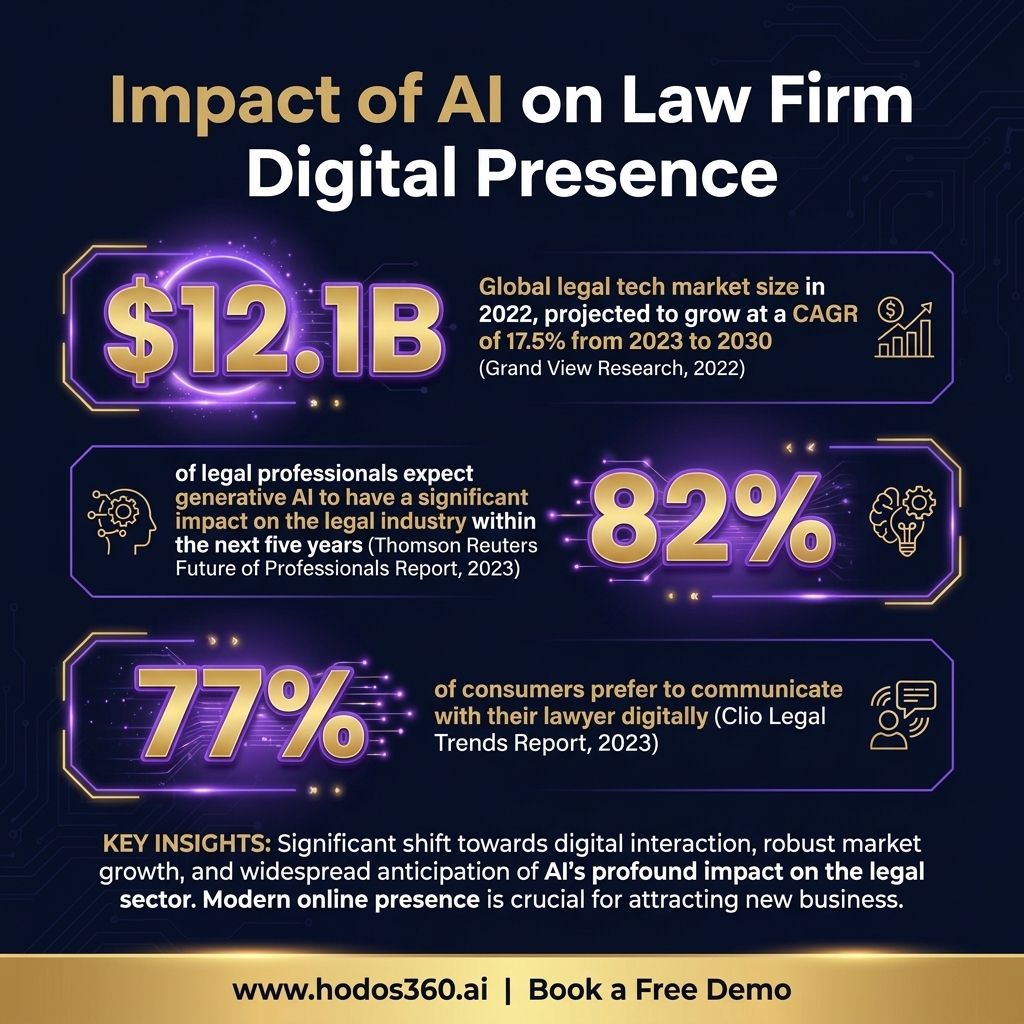
According to the 2024 ABA TechReport, while AI adoption is growing, a significant portion of law firms still struggle with fully optimized, mobile-responsive websites, despite overwhelming client expectations for seamless digital access. This gap between client demand and firm capabilities can be attributed to the traditional complexities and costs associated with custom web development.
AI vibe coding directly addresses this by offering a more agile, cost-effective, and intuitive approach. Firms can now envision a new client intake portal, describe its functionalities and aesthetic to an AI, and rapidly generate a working prototype. This allows for quick iteration and feedback, ensuring the final product perfectly aligns with the firm's brand and client needs, ultimately leading to a more lovable user experience.
The strategic implications for legal tech are profound. Learn more about AI-Powered Websites: Essential Digital Workforce for Law Firms. AI vibe coding transforms the firm's ability to innovate its client-facing interfaces and internal operational tools. Instead of relying on external agencies for every minor website update or new feature, firms can empower their marketing teams or even paralegals to manage and evolve their digital presence.
This internal capability reduces dependency, accelerates deployment cycles, and ensures that the firm's online persona remains dynamic and current. The focus shifts from the intricate mechanics of coding to the strategic vision and user experience, enabling law firms to be more responsive to market changes and client feedback.
The ability to quickly compare different design iterations and functionalities through AI-generated alternatives is a game-changer for digital strategy.
Moreover, the rise of AI in web development isn't just about speed; it's about intelligence. Modern AI development platforms can learn from vast datasets of successful website designs and user interaction patterns, suggesting improvements for responsive design, accessibility, and conversion optimization.
This means a law firm's website isn't just built quickly; it's built intelligently, with best practices embedded from the outset. This is a crucial distinction from generic templates, as AI can tailor suggestions to the specific nuances of the legal industry, ensuring compliance with ethical advertising rules and presenting information in a manner appropriate for legal clients.
The days of a static, uninspired legal website are numbered, replaced by a new era of dynamic, AI-powered digital assets that truly serve the firm's strategic objectives.
Transforming Legal Web Presence with AI-Powered Development
The application of AI vibe coding in the legal sector extends far beyond superficial website redesigns; it enables a fundamental transformation of a firm's entire digital ecosystem. Firms like Allen & Overy, known for their innovative partnership with Harvey AI for internal legal research, are now looking at how similar AI principles can enhance client-facing technologies.
At events like LegalTech NYC 2026, many firms showcased next-generation client portals and interactive legal resource hubs, many of which leveraged AI assistance for rapid prototyping and deployment. This demonstrates a clear trend: AI is moving from back-office efficiency to front-office client engagement, directly impacting how legal services are accessed and perceived online.
The focus is on creating a seamless digital journey for clients, from initial contact to ongoing case management, all facilitated by intelligent web development.
AI vibe coding directly addresses several critical pain points for law firms. Firstly, it allows for the rapid prototyping of new service landing pages or specialized practice area microsites.
If a firm identifies a new market opportunity, an AI can generate a fully functional, SEO-optimized landing page in a fraction of the time it would take human developers. Secondly, it can create highly personalized client intake forms and secure portals, enhancing the initial client experience and streamlining data collection.
Thirdly, AI can automate updates for regulatory compliance sections on a website, ensuring that disclaimers, privacy policies, and terms of service are always current, a crucial aspect of legal practice. This capability is not just about speed; it's about accuracy and agility, allowing firms to quickly adapt to new legal landscapes and client needs, ensuring their digital presence is always useful and up-to-date.
### Crafting Seamless Client Experiences Through AI
Central to a successful legal digital presence is an exceptional user experience (UX). Learn more about Essential Guide: Customer Support Voice AI for Law Firms. AI vibe coding empowers law firms to achieve this by analyzing user behavior data, predicting preferences, and suggesting design improvements that optimize client engagement.
For instance, an AI can generate multiple A/B test variations for website layouts or call-to-action buttons (e.g., 'Book a Consultation,' 'Request a Case Review') to determine which performs best in converting visitors into leads. This data-driven approach ensures that every design choice is optimized for the firm's strategic goals.
Consider the success story of 'LexConnect,' a boutique firm that revamped its client portal using AI-generated components. They reported a 30% increase in client satisfaction scores for online interactions and a 20% reduction in administrative time spent on initial client data entry, demonstrating the tangible benefits of intelligent design.
AI-powered web development for law firms is about more than just building a website; it's about building an intelligent, adaptive digital ecosystem. It helps firms write code effectively, translating sophisticated legal processes into intuitive online tools. This includes creating interactive tools for potential clients to assess their legal needs, secure document upload portals, and personalized dashboards for existing clients to track case progress.
The goal is to make legal services more accessible and transparent, fostering trust and loyalty. By focusing on the 'vibe' – the overall feeling and functionality – AI helps firms create a digital presence that resonates deeply with their target audience, ensuring every cursor click leads to a positive interaction.
- ✓Rapid Prototyping: Quickly conceptualize and launch new legal service pages, marketing campaigns, or internal tools within days, not months, significantly reducing time-to-market.
- ✓Enhanced Client Portals: Develop secure, intuitive, and personalized client intake and case management portals that improve communication and client satisfaction.
- ✓SEO Optimization: Leverage AI to generate search-engine-optimized content and website structures, boosting organic traffic and visibility for specific legal services.
- ✓Cost Efficiency: Reduce reliance on expensive external web development agencies by empowering internal teams with AI-assisted creation and maintenance capabilities.
- ✓Responsive Design: Ensure all digital assets are automatically optimized for various devices (desktops, tablets, mobile phones), providing a consistent and accessible user experience.
- ✓Data-Driven Design: Utilize AI to analyze user behavior and suggest design improvements, leading to higher conversion rates for inquiries and consultations.
- ✓Compliance Automation: Integrate AI to assist in keeping legal disclaimers, privacy policies, and regulatory compliance sections of the website up-to-date automatically.
Strategic Implementation: Integrating AI into Your Firm's Digital Strategy
Adopting AI vibe coding requires a strategic approach, not just a technical one. Many law firm leaders express initial hesitancy, often asking, "Will AI replace my marketing team or web developers?" or "Is this technology secure enough for sensitive legal data?" The answer lies in viewing AI not as a replacement but as a powerful augmentation.
It frees human talent from repetitive coding tasks, allowing them to focus on strategic oversight, creative direction, and client relationship building. Firms like Linklaters have successfully integrated AI into their legal operations, not by replacing lawyers, but by empowering them with advanced tools. The key is to implement AI thoughtfully, starting with clear objectives and a phased rollout to maximize benefits while mitigating risks.
This journey involves careful planning, from initial needs assessment to continuous optimization, ensuring the firm's digital strategy is robust and future-proof.
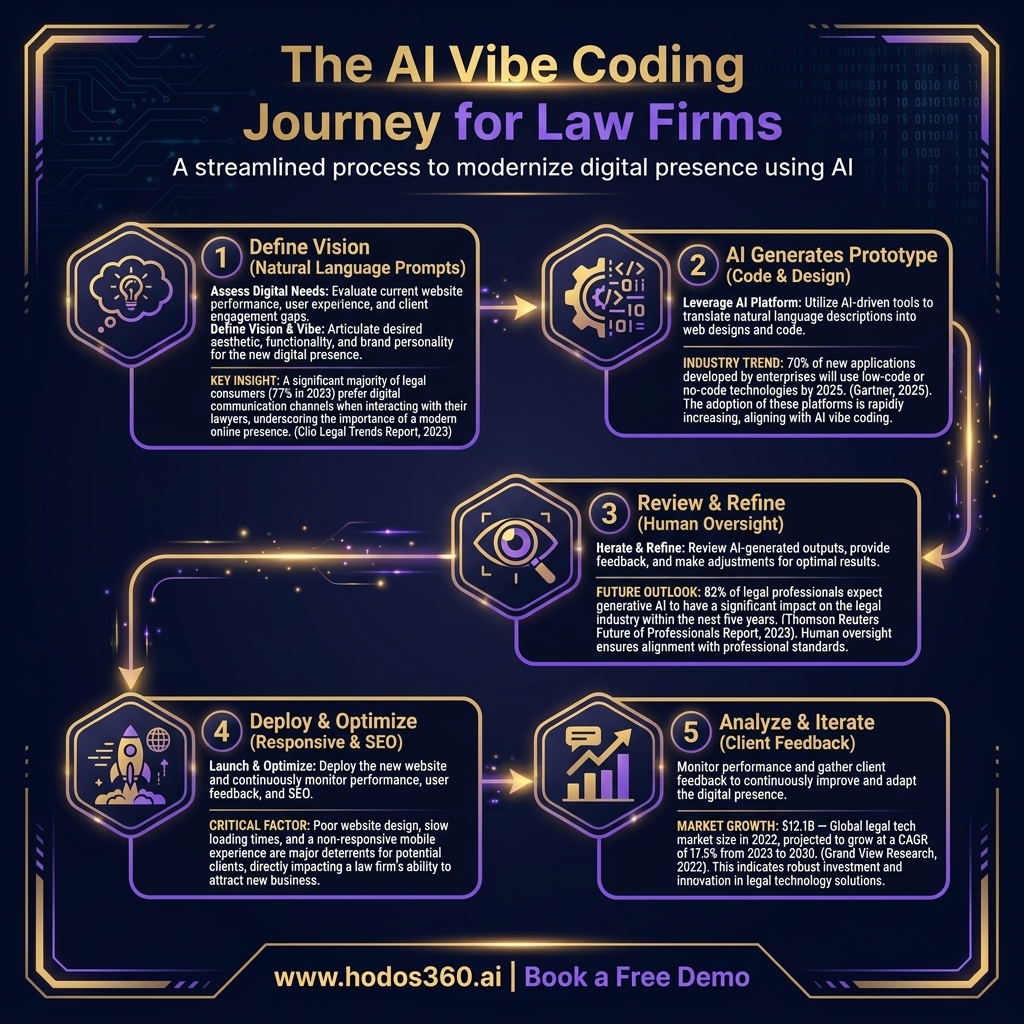
The strategic implementation process for leveraging AI vibe coding in a law firm typically involves several key steps. First, conduct a thorough needs assessment to identify specific pain points in your current web presence or digital operations.
Are clients struggling with your online intake forms? Is your website's load time hindering engagement? Second, initiate a pilot project with a smaller, low-risk endeavor, such as revamping a specific practice area landing page or creating an internal knowledge base portal. This allows your team to gain hands-on experience with the tools and understand their capabilities without significant upfront investment.
Third, meticulously select the right AI coding tools, evaluating them not just on their generative capabilities but also on their ease of use, integration potential with existing systems, and, critically, their security features. Learn more about AI Voice Assistants: Ultimate Competitive Edge for Law Firms.
Not all 'vibe coding' platforms are created equal; some are more robust for full-stack development while others excel at rapid prototyping, so it’s essential to compare options.
### The Role of AI in Content Generation and SEO for Law Firms
Beyond structural web development, AI vibe coding has a transformative impact on a law firm's content strategy and SEO optimization.
AI can assist in generating high-quality blog posts, FAQs, and detailed service descriptions that are not only informative but also optimized for search engines. By analyzing trending legal queries and competitor content, AI can suggest keywords and content structures that improve organic traffic. This synergy between AI-driven content generation and structural SEO is crucial for maintaining a competitive edge.
Firms can use AI to quickly draft content for new legal developments or practice areas, ensuring their website remains a timely and authoritative resource for potential clients, making it more useful and discoverable.
However, it's vital to remember that AI-generated content still requires human oversight and legal expertise.
While AI can efficiently write initial drafts, a lawyer must review and refine them to ensure accuracy, ethical compliance, and alignment with the firm's voice. Google's evolving algorithms increasingly prioritize high-quality, authoritative content, and while AI can assist in production, the human element of legal insight remains irreplaceable.
The combination of AI for efficiency and human expertise for quality creates a powerful content engine, allowing law firms to scale their digital content efforts without compromising on accuracy or professionalism. This hybrid approach ensures that the firm's online presence is both expansive and credible, effectively reaching potential clients through targeted information.
Navigating the Ethical and Security Landscape of AI Web Development
The promise of AI vibe coding is undeniable, but its implementation in the legal sector necessitates a rigorous examination of ethical and security implications. Law firms handle highly sensitive and confidential client information, making data privacy and security paramount. The American Bar Association (ABA) Model Rules of Professional Conduct provide a critical framework.
Specifically, ABA Model Rule 1.1: Competence mandates that attorneys must stay abreast of changes in the law and its practice, including the benefits and risks associated with relevant technology. This directly applies to understanding the security protocols and potential vulnerabilities of AI-powered web development tools.
Furthermore, ABA Model Rule 1.6: Confidentiality of Information obligates lawyers to make reasonable efforts to prevent the inadvertent or unauthorized disclosure of, or unauthorized access to, information relating to the representation of a client. Using third-party AI platforms for web development requires due diligence to ensure client data is protected at every stage.
Real concerns persist regarding the intellectual property of AI-generated code, potential biases embedded in AI design suggestions, and the overall security posture of cloud-based AI coding tools. For instance, if an AI generates code that inadvertently infringes on existing copyrights, who bears the liability? Reputable AI development providers are actively addressing these concerns by implementing robust security protocols, offering explainable AI features, and adhering to strict ethical guidelines.
Companies like Anthropic, led by Dario Amodei, emphasize 'Constitutional AI' to build safer and more transparent models, which is crucial for sensitive applications in legal tech. Law firms must prioritize AI partners that offer clear data ownership policies, end-to-end encryption, and compliance certifications such as ISO 27001 or SOC 2. Learn more about Voice Search Optimization: The Ultimate Guide for Law Firms.
The legal industry cannot afford to compromise on security for the sake of efficiency, particularly when client trust is at stake.
### Ensuring Data Security and Compliance in AI-Powered Legal Websites
Ensuring data security and regulatory compliance is not just an ethical imperative but a legal one.
When adopting AI for web development for law firms, it is critical to select AI platforms that are built with privacy by design principles and adhere to relevant data protection regulations like GDPR, CCPA, and evolving state-specific privacy laws. This means having robust data governance policies that clearly outline how client information is processed, stored, and protected when interacting with AI-generated website components or data collection forms.
Firms must also scrutinize the terms of service of any AI tools used to understand how data is handled, whether it's used for model training, and what safeguards are in place against data breaches. The recent enforcement of the EU AI Act further underscores the need for transparency and accountability in AI systems, especially those deployed in high-risk sectors like legal services.
Beyond external compliance, firms must cultivate an internal culture of security awareness. This includes training staff on the responsible use of AI coding tools, understanding the implications of inputting sensitive data into AI prompts, and establishing protocols for auditing AI-generated content and code for potential vulnerabilities or biases.
The goal is to create an AI-powered digital presence that is not only innovative and client-centric but also impregnable and trustworthy. The integration of AI into web development should enhance, not diminish, the firm's commitment to client confidentiality and data integrity, ensuring that every digital interaction reflects the highest professional standards.

Key Takeaways and The Future of Legal Digital Footprints
The narrative of AI vibe coding for law firms is one of profound transformation, moving beyond incremental improvements to a fundamental reimagining of digital engagement. It is clear that AI vibe coding is not a passing trend but a foundational shift in web development for law firms, enabling them to build more dynamic, client-centric, and efficient digital presences.
Firms that embrace this technology will be better positioned to meet evolving client expectations, attract new business, and maintain a competitive edge in an increasingly digital legal landscape. The ability to rapidly iterate, personalize experiences, and optimize for performance without deep technical coding expertise empowers legal professionals to take greater control of their digital destiny, making their online presence truly reflective of their modern practice.
This ensures that their digital assets are always useful and relevant.
For law firm owners and legal professionals, the time to explore and experiment with AI-powered web development is now. Learn more about AI Marketing: Proven Strategies for Legal Growth Beyond Efficiency. The future of legal services is inextricably linked to digital innovation, and AI vibe coding offers a powerful avenue to accelerate that journey.
HODOS 360’s Web & Mobile Development service is specifically designed to meet these evolving needs, offering AI-powered website building, responsive design, and SEO optimization tailored for the legal sector. As part of a comprehensive suite that includes an AI Law Firm Management System and an AI Marketing Platform, HODOS 360 provides the integrated AI solutions necessary to revolutionize your firm’s entire digital strategy and operational efficiency.
Ready to revolutionize your firm's online presence? Discover how HODOS 360 can elevate your digital strategy and build a truly impactful digital footprint.
Frequently Asked Questions
What is AI vibe coding?+
AI vibe coding is an innovative approach to web development that uses artificial intelligence, often through natural language prompts, to generate, refine, and iterate on code and design elements. It allows users to translate their abstract ideas or 'vibe' for a digital product into a functional website or application without needing extensive traditional coding knowledge, making web development more accessible and efficient for law firms.
How can AI vibe coding benefit my law firm?+
For law firms, AI vibe coding offers numerous benefits: rapid prototyping of new service pages, creation of personalized client intake portals, enhanced SEO optimization, and significant cost and time savings on web development projects. It enables firms to maintain a modern, responsive, and client-centric digital presence, improving client experience and lead generation while reducing reliance on external developers. It makes digital transformation more agile.
Is AI vibe coding secure for sensitive legal data?+
Security is paramount in legal tech. While AI vibe coding offers immense benefits, law firms must carefully select AI platforms that adhere to strict data privacy regulations (e.g., GDPR, CCPA), provide end-to-end encryption, and have robust security certifications like ISO 27001. It's crucial to understand how client data is handled and to ensure compliance with ABA Model Rules regarding confidentiality and competence when using these tools.
Do I need to be a coder to use AI vibe coding tools?+
No, a primary advantage of AI vibe coding is its accessibility to non-technical users. It empowers legal professionals, marketing teams, or paralegals to create and manage digital assets by describing their vision using natural language prompts. While a basic understanding of web design principles is helpful, the need for deep coding expertise is significantly reduced, democratizing web development within law firms.
What are the first steps for a law firm to adopt AI web development?+
Begin with a needs assessment to identify specific digital pain points. Then, initiate a small pilot project, like a new landing page, using an AI vibe coding tool to gain experience. Carefully select tools based on security, integration capabilities, and ease of use, ensuring they align with your firm's strategic goals and ethical obligations. Finally, invest in training your team to effectively leverage these powerful new technologies.