
AI Voice Assistant: Essential for Modern Legal Client Engagement
Just a year ago, Sarah Chen, managing partner at a bustling mid-sized firm, Chen & Associates, vividly recalled the exasperation of trying to integrate a general-purpose AI voice assistant into her firm's client communication strategy. "It was like talking to a well-meaning but utterly clueless intern," Chen stated at a recent LegalTech NYC panel. "It couldn't grasp legal nuances, fumbled simple appointment bookings, and often left potential clients more frustrated than before." Her experience wasn't isolated; the trending *forkast.news* article, "One Year In, Your AI Voice Assistant Still Can’t Do Its Job," perfectly encapsulated the skepticism prevalent across many industries, particularly in the complex legal field. The article highlighted the persistent challenges of reliability, contextual understanding, and the sheer inability of many mainstream voice AI models to move beyond rudimentary commands. This narrative of underperformance has unfortunately cast a long shadow, obscuring the significant strides made by specialized legal AI solutions.
However, the landscape for AI voice assistant technology in legal has dramatically shifted, especially for those designed from the ground up to understand the intricacies of law firm operations and client interactions. While consumer-grade voice assistants like Google Assistant or Alexa struggle with the specific vocabulary and complex inquiries of a legal practice, a new generation of sophisticated AI agents is proving to be a game-changer. These platforms are built with advanced natural language processing (NLP) models, specifically trained on vast legal datasets, enabling them to comprehend nuanced questions, manage sensitive information, and execute legal workflows with a precision previously unimaginable. This isn't just about answering basic questions; it's about intelligent, empathetic, and efficient engagement that elevates a law firm's service.
The real story isn't about AI voice assistants failing, but about the critical distinction between general-purpose and specialized legal AI. The former, as highlighted by the *forkast.news* piece, often lacks the depth and contextual understanding required for professional services. The latter, however, represents a paradigm shift, offering law firms an unprecedented opportunity to optimize client intake, streamline administrative tasks, and provide 24/7 support. The challenge now lies in educating legal professionals about these cutting-edge capabilities and demonstrating how a truly effective AI voice assistant can become an indispensable asset, moving beyond the initial frustrations to unlock tangible value and competitive advantages. Discover how your firm can harness this transformative technology for superior client engagement and operational excellence.
The Evolution of Voice AI in Legal: From Frustration to Functionality
The early days of AI voice assistant adoption in the legal sector were, for many firms, a journey marked by more frustration than functionality. General-purpose voice platforms, while adept at setting timers or playing music, proved woefully inadequate for the complex demands of legal client interaction. Attorneys like David Miller, a partner at a litigation firm in Chicago, recounted instances where potential clients were confused by generic responses or dropped calls due to the AI's inability to understand even slightly nuanced legal terminology. This widespread sentiment contributed to the perception that voice AI was simply not ready for prime time in professional services, fostering a reluctance to invest further in the technology. The core issue wasn't the concept of voice AI itself, but the lack of specialized training and contextual awareness inherent in consumer-grade models.
Industry reports from organizations like the American Bar Association (ABA) in their annual TechReport have consistently highlighted a cautious approach to AI adoption, with lawyers citing concerns about reliability and ethical implications. However, the data also indicates a growing curiosity and a recognition of AI's potential, particularly as specialized solutions emerge. The market competition among legal tech startups has intensified, with companies like Harvey AI, backed by OpenAI's Sam Altman, demonstrating the power of large language models (LLMs) trained on legal data. While Harvey focuses on legal research and document analysis, its success underscores the principle: domain-specific AI vastly outperforms its generalist counterparts when applied to specialized fields. This shift in development strategy has been crucial for the maturation of effective legal AI voice assistant technology.
The turning point arrived with the advent of advanced generative AI models and targeted investment in legal-specific datasets. Learn more about AI SEO: Ultimate Content Strategy for Law Firms. Developers moved beyond simple keyword recognition to build sophisticated natural language understanding (NLU) capabilities tailored for legal jargon, client intake questions, and common procedural inquiries. This meant that an AI voice assistant could not only transcribe speech accurately but also interpret the underlying intent and context of a caller's query, even when faced with regional accents, emotional tones, or complex legal scenarios. The focus shifted from mere transcription to intelligent conversation, allowing the AI to ask follow-up questions, qualify leads, and provide accurate, pre-approved information, a significant leap in functionality that addresses the core criticisms leveled against earlier voice AI iterations.
Furthermore, the integration capabilities of modern legal AI voice assistant platforms have transformed their utility. Unlike standalone general assistants, these specialized solutions are designed to seamlessly connect with existing law firm management systems, client relationship management (CRM) software, and calendaring tools. This means that a voice assistant can not only book an appointment but also check attorney availability, update client records, and even initiate document automation workflows based on the call's outcome. This level of integration is critical for law firms looking to streamline operations and enhance efficiency. According to a recent Thomson Reuters report, law firms that effectively integrate technology across their practice areas see an average of 15-20% improvement in operational efficiency and client satisfaction, solidifying the case for adopting specialized voice AI.
Enhancing Client Intake and Communication
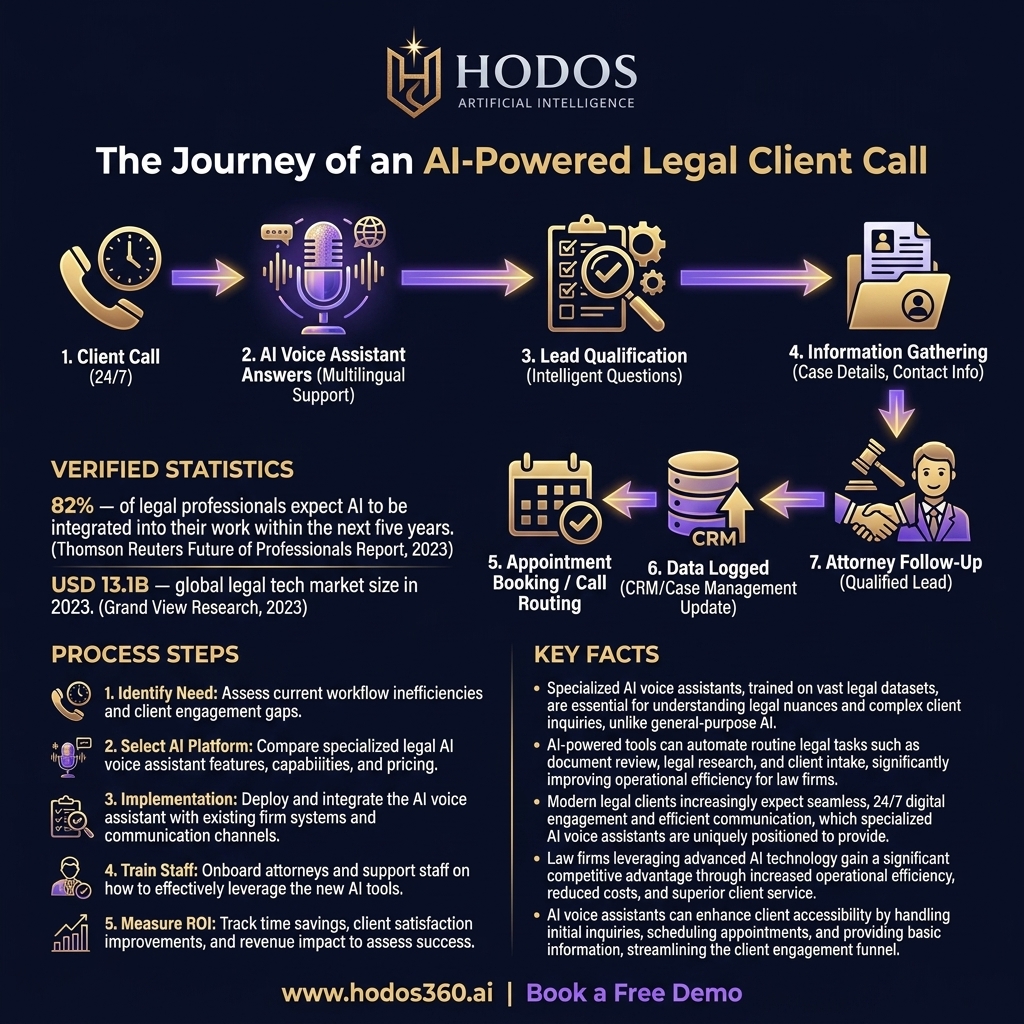
One of the most immediate and impactful applications of a specialized AI voice assistant in a law firm is the transformation of client intake and communication. Traditional client intake processes are often bottlenecks, characterized by missed calls, delayed responses, and inconsistent information gathering, especially outside of regular business hours. A 24/7 AI voice assistant fundamentally changes this dynamic, ensuring that every potential client interaction is captured, qualified, and managed efficiently. Imagine a prospective client calling at 10 PM with an urgent inquiry; instead of reaching an answering machine or an overwhelmed receptionist, they engage with an intelligent AI that can understand their question, gather essential contact details, and even pre-qualify their case based on predefined criteria, ensuring no valuable lead is lost. This always-on availability significantly boosts client satisfaction and improves conversion rates.
Beyond simple answering services, advanced legal AI voice assistant platforms are equipped to handle complex intake forms, guide callers through initial consultations, and provide instant access to FAQs. For instance, if a caller asks about the firm's experience with real estate disputes, the AI can access a knowledge base to provide relevant information, firm credentials, and even direct them to specific attorney profiles on the firm's website. This not only frees up administrative staff to focus on more complex tasks but also ensures a consistent, professional, and knowledgeable first impression for every caller. Learn more about AI Web Design: Essential Agentic Workflows for Law Firms. The ability of the AI to understand and respond to specific legal questions, rather than giving generic responses, is paramount here, building trust and demonstrating the firm's expertise from the very first interaction.
Furthermore, the data collected by an AI voice assistant during client interactions is invaluable for law firm management. Every call can be transcribed, analyzed for key terms, and categorized, providing rich insights into client needs, common inquiries, and even potential areas for firm growth. This data can then be seamlessly integrated into a firm's case management system, creating a comprehensive client profile before an attorney even speaks to the individual. This pre-qualification and data enrichment dramatically reduce the time attorneys spend on initial screening, allowing them to focus on substantive legal work. Firms using these systems report up to a 30% reduction in administrative time spent on initial client contact, according to recent legal tech surveys, showcasing the tangible ROI.
Beyond Simple Queries: The Promise of Specialized Legal Voice Assistants
The true promise of the modern AI voice assistant lies in its capacity to move beyond basic call answering to become an integral part of a law firm's operational backbone. This isn't about replacing human interaction but augmenting it, allowing legal professionals to focus on high-value, complex tasks that require human judgment and empathy. For example, a specialized AI can manage appointment scheduling, intelligently routing calls to the most appropriate attorney based on practice area, availability, and even language preference. It can send automated reminders, reschedule appointments, and handle cancellations, significantly reducing no-shows and optimizing attorney calendars. This level of proactive management ensures that firm resources are utilized efficiently, and client needs are met promptly.
Consider the scenario of lead qualification, a critical but often time-consuming process for law firms. A sophisticated AI voice assistant can engage potential clients in a structured conversation, asking specific questions to determine the viability of a case, the urgency of the matter, and the client's financial capacity. Based on these responses, the AI can then either book a consultation with the appropriate attorney, direct the caller to self-help resources, or gently decline cases that don't fit the firm's practice areas, all while maintaining a professional and courteous tone. This intelligent pre-screening saves attorneys countless hours that would otherwise be spent on unproductive calls, allowing them to dedicate their expertise to viable cases. Companies like Clio and MyCase are continually exploring deeper AI integrations into their practice management platforms, signaling a future where such voice capabilities become standard.
Furthermore, the multilingual support offered by advanced AI voice assistant platforms is a game-changer for firms serving diverse communities. Learn more about Voice Search: Essential Strategies for Modern Law Firms. In an increasingly globalized world, the ability to communicate effectively with clients in their native language can be a significant competitive advantage. An AI voice assistant can seamlessly switch between languages, ensuring that language barriers do not impede access to legal services or create communication inefficiencies. This not only broadens a firm's potential client base but also demonstrates a commitment to inclusivity, enhancing the firm's reputation and client loyalty. This capability extends beyond merely translating words; it involves understanding cultural nuances and legal terminology in various languages, a feat only achievable with highly trained, specialized AI models.
Finally, the ability to seamlessly integrate with a firm's existing IT infrastructure transforms the AI voice assistant from a standalone tool into a central nervous system for client communication. Whether it’s updating a client’s status in the case management system, triggering a document automation workflow based on a new intake, or generating analytics reports on call volumes and lead conversion, the AI acts as a smart conduit. This connectivity ensures data consistency, reduces manual entry errors, and provides a holistic view of client interactions, empowering firms with actionable insights. At LegalTech NYC 2026, several vendors showcased new APIs and integration tools demonstrating this trend towards a unified, AI-powered legal ecosystem, emphasizing the critical role voice AI plays in this interconnected future.
The Role of LLMs in Contextual Legal Dialogue
The significant leap in the capabilities of an AI voice assistant for legal applications is largely attributable to the rapid advancements in Large Language Models (LLMs). Unlike rule-based systems or older machine learning models, LLMs possess a deep understanding of language structure, context, and even subtle nuances, allowing them to engage in much more natural and sophisticated conversations. For legal contexts, this means an LLM-powered voice assistant can not only recognize legal terms but also understand their application within specific scenarios, differentiating between, for example, a "motion to dismiss" in a civil case versus a "motion to suppress" in a criminal case. This contextual awareness is paramount for providing accurate information and avoiding miscommunication, which can have severe implications in legal matters.
The training of these LLMs on vast repositories of legal documents, case law, statutes, and legal commentaries from sources like Thomson Reuters Westlaw and LexisNexis is what imbues them with this specialized intelligence. Researchers at Google AI and Anthropic, under the leadership of figures like Dario Amodei, have continually pushed the boundaries of LLM development, creating models that are not just larger but also more adept at reasoning and understanding complex domains. Legal tech companies then fine-tune these foundational models with proprietary legal datasets, ensuring the AI voice assistant speaks the language of law with precision. Learn more about AI Legal Research: The Ultimate Guide for Modern Law Firms. This specialized training allows the AI to handle ambiguous queries, ask clarifying questions, and even infer intent from incomplete statements, mimicking the problem-solving approach of a human legal professional.
Furthermore, the generative capabilities of LLMs enable the AI voice assistant to craft coherent, contextually appropriate responses in real-time. Instead of relying on pre-scripted answers, the AI can synthesize information from its knowledge base and formulate unique, personalized replies tailored to each caller's specific situation. This dynamic interaction is crucial for building rapport and effectively addressing client concerns. When a caller asks a complex question about, for example, the implications of the EU AI Act on data privacy regulations for their business, a well-trained LLM-powered assistant can provide a concise yet informative summary, or even cite relevant sections of the regulation, demonstrating a level of competence that was once the exclusive domain of human experts. This ability to generate relevant, accurate, and nuanced responses is what truly sets modern legal voice AI apart from its predecessors.
Implementing an Effective AI Voice Assistant Strategy for Your Firm
Successfully integrating an AI voice assistant into your law firm requires a strategic approach that goes beyond simply activating the technology. It begins with a thorough assessment of your firm's specific needs, pain points, and client interaction patterns. Are you struggling with missed calls during peak hours? Is your administrative staff overwhelmed by routine inquiries? Do you need better lead qualification? Identifying these areas will help tailor the AI's functions to deliver maximum impact. Firms that invest time in this initial analysis, often collaborating with legal tech consultants, tend to see higher ROI and smoother adoption. This proactive planning minimizes friction and ensures the AI complements, rather than complicates, existing workflows.
The next step involves careful customization and training of the AI voice assistant to align with your firm's unique brand voice, practice areas, and specific legal processes. This isn't a one-size-fits-all solution; the AI should sound like an extension of your firm, using appropriate legal terminology and adhering to your client communication protocols. This customization includes programming specific FAQs, integrating with your firm's calendar and CRM, and defining escalation paths for complex inquiries that require human intervention. Firms like Allen & Overy, known for their innovative tech adoption, emphasize the importance of internal training for staff to effectively collaborate with AI tools, ensuring a seamless transition and optimal utilization of the new technology. This dual focus on technology and human adaptation is crucial for success.
Data privacy and security are paramount when implementing any legal tech, especially an AI voice assistant handling sensitive client information. Firms must ensure that the chosen AI platform complies with all relevant regulations, including client confidentiality rules (e.g., ABA Model Rule 1.6) and data protection statutes like HIPAA or GDPR, depending on jurisdiction and client base. Learn more about Essential Risk Management for Law Firms in the AI Era. It's not enough for the AI to be smart; it must also be secure and ethical. This involves robust encryption, secure data storage, and clear policies on how client data is accessed, processed, and retained by the AI system. Selecting a vendor with a proven track record in legal data security is non-negotiable, providing peace of mind for both the firm and its clients. For further guidance, consult the ABA's formal opinions on the ethical use of technology.
Finally, continuous monitoring and refinement are essential for optimizing the performance of your AI voice assistant. AI models learn and improve over time, but they also require human oversight to identify areas for improvement and adapt to evolving firm needs or legal changes. Regularly review call transcripts, analyze performance metrics such as call resolution rates and client satisfaction scores, and solicit feedback from both clients and staff. This iterative process ensures the AI remains a highly effective tool, constantly enhancing its ability to understand the question, provide accurate responses, and streamline operations. Firms that embrace this ongoing optimization will unlock the full potential of their voice AI, transforming it into a reliable and invaluable asset.
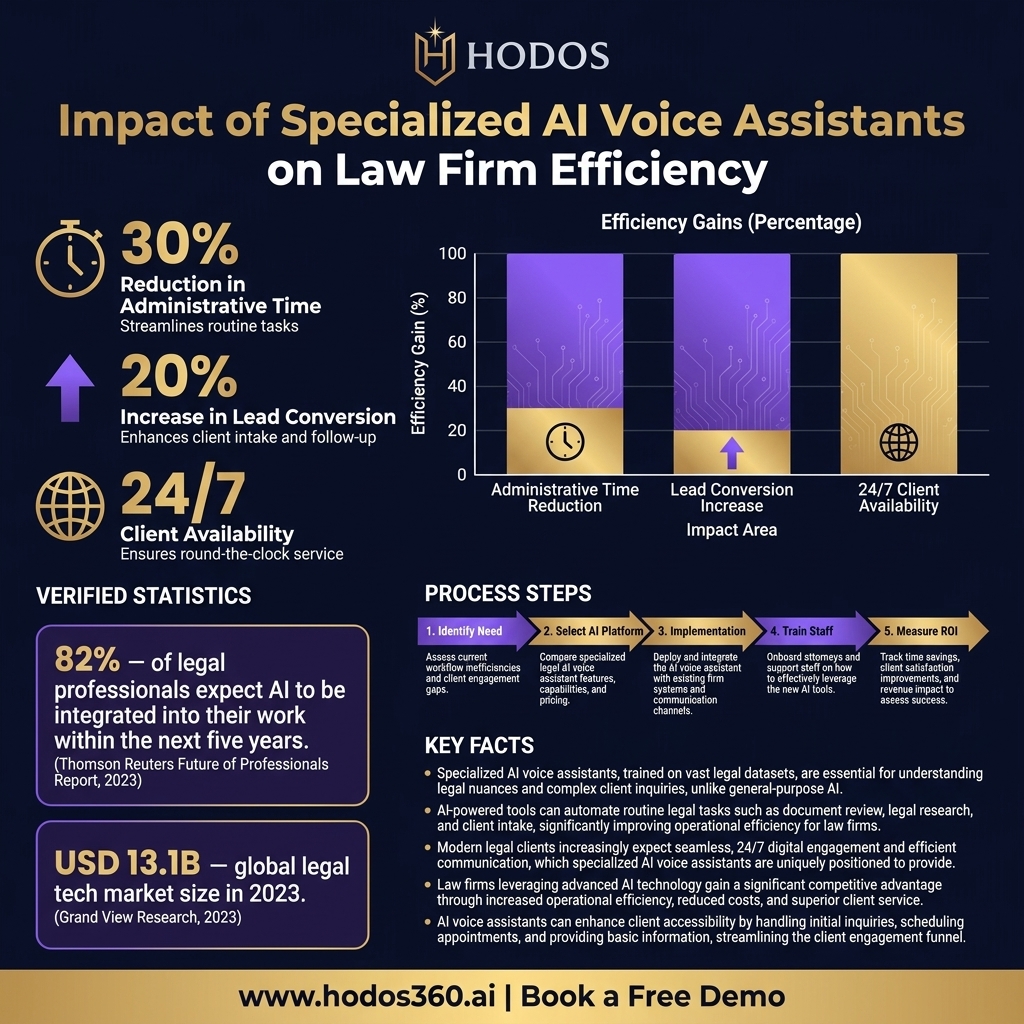
- ✓Define Clear Objectives: Identify specific client interaction pain points or administrative tasks your AI voice assistant will address (e.g., 24/7 client intake, appointment booking, lead qualification).
- ✓Customize & Train: Tailor the AI's knowledge base with your firm's specific practice areas, FAQs, and brand voice. Ensure it understands your unique legal terminology and processes.
- ✓Ensure Data Security & Compliance: Select a vendor that prioritizes robust data encryption, secure storage, and adheres to legal ethical guidelines like ABA Model Rule 1.6 on confidentiality.
- ✓Integrate with Existing Systems: Seamlessly connect the voice AI with your case management, CRM, and calendaring software for unified data flow and automated workflows.
- ✓Develop Escalation Protocols: Establish clear rules for when and how the AI should transfer calls to human staff, ensuring complex or sensitive issues receive appropriate attention.
- ✓Provide Staff Training: Educate your team on how to effectively collaborate with the AI, understand its capabilities, and leverage its data for improved efficiency.
- ✓Monitor & Optimize Continuously: Regularly review performance metrics, client feedback, and call logs to refine the AI's responses and adapt to evolving firm needs.
Key Considerations for Seamless Integration
Seamless integration of an AI voice assistant goes beyond mere technical connectivity; it encompasses a holistic approach to change management within the firm. One critical consideration is ensuring that the AI’s capabilities align with the expectations of both staff and clients. Over-promising and under-delivering can lead to quick disillusionment, as highlighted by the initial frustrations with general AI voice platforms. Therefore, clear communication about what the AI can and cannot do is vital. For instance, while an AI can qualify a lead, it cannot provide legal advice, a distinction that must be clearly communicated to callers. This transparency builds trust and manages expectations effectively, ensuring the AI is perceived as a valuable tool, not a flawed replacement for human interaction.
Another key aspect is the user experience for both the caller and the firm's internal team. For callers, the voice assistant should be intuitive, responsive, and provide a natural conversational flow, minimizing frustration often associated with automated systems. For staff, the integration should simplify their tasks, not complicate them. Learn more about AI Website Builders vs. Traditional: Proven Edge for Law Firms. This means the AI should seamlessly update client records, schedule appointments directly into calendars, and provide concise summaries of interactions, reducing manual data entry and administrative burden. Platforms that offer intuitive dashboards and easy access to call analytics empower staff to leverage the AI's output effectively. Thoughtful design, considering the entire user journey, is essential for truly successful integration of an AI voice assistant.
Finally, future-proofing your investment means choosing an AI voice assistant solution that is scalable and adaptable to technological advancements and changes in legal practice. The legal tech landscape is rapidly evolving, with new generative AI models and speech recognition improvements emerging constantly. Opting for a platform that regularly updates its AI models, offers flexible APIs for future integrations, and has a clear development roadmap ensures that your firm's investment remains relevant and competitive. This forward-thinking approach protects your firm from technological obsolescence and allows you to continuously leverage the latest innovations in voice AI, maintaining an edge in client service and operational efficiency.
The HODOS 360 Difference: Elevating Your Firm with Intelligent Voice AI
While many firms have experienced the shortcomings of generic voice AI, the HODOS 360 platform offers a specialized AI voice assistant specifically engineered for the unique demands of the legal industry. Recognizing the frustrations highlighted by articles like the *forkast.news* piece, HODOS 360 has developed a robust system that transcends basic answering services, providing intelligent, context-aware interactions that genuinely enhance a law firm's capabilities. Our AI voice assistants are trained on extensive legal datasets, ensuring they understand complex legal terminology and client inquiries with unparalleled accuracy, moving beyond the 'still can't do its job' narrative to deliver reliable, actionable support 24/7. This focused development means our AI doesn't just process words; it comprehends legal intent.
The HODOS 360 AI Voice Assistant addresses the critical need for seamless client engagement and operational efficiency. It provides 24/7 phone answering, ensuring no potential client call is ever missed, regardless of time zones or office hours. This constant availability means leads are captured immediately, improving your firm's responsiveness and client conversion rates. Furthermore, our AI excels at lead qualification, engaging callers in intelligent conversations to gather essential information and determine case viability before routing them to the appropriate human attorney. This pre-screening saves valuable attorney time, allowing your legal team to focus on substantive legal work and high-value clients, optimizing their productivity and impact.
Beyond initial contact, the HODOS 360 AI Voice Assistant streamlines administrative tasks with advanced features like appointment booking and multilingual support. It can intelligently schedule consultations directly into your firm's calendar, send automated reminders, and even handle cancellations, significantly reducing administrative burden. For diverse client bases, our multilingual capabilities ensure that language is never a barrier to accessing legal services, expanding your firm's reach and inclusivity. Coupled with sophisticated call routing, which directs inquiries to the most suitable department or attorney based on practice area and availability, HODOS 360 empowers law firms to provide an exceptional, efficient, and professional client experience from the very first interaction. This comprehensive approach ensures that your firm's voice AI is not just working, but truly excelling.

Key Takeaways and Next Steps
The narrative surrounding AI voice assistant technology in the legal sector has matured significantly. While initial experiences with general-purpose AI often led to frustration, specialized legal AI solutions have emerged as powerful tools capable of transforming client engagement and operational efficiency for law firms. The key distinction lies in domain-specific training and advanced LLM capabilities, which enable these platforms to understand legal nuances, manage complex inquiries, and seamlessly integrate into existing legal workflows. Firms that embrace this evolution are positioned to gain a significant competitive edge, offering superior client service and optimizing internal resources.
For law firms looking to leverage this technology, the imperative is clear: move beyond skepticism born from early, inadequate solutions and explore the robust capabilities of modern, specialized AI voice assistant platforms. Prioritize solutions that offer 24/7 availability, intelligent lead qualification, seamless integration with your practice management systems, and strong data security. By strategically implementing an AI voice assistant, your firm can enhance client satisfaction, reduce administrative overhead, and free up attorneys to focus on core legal work. The future of legal client engagement is conversational, intelligent, and always available. Take the step to embrace it.
Ready to transform your law firm's client engagement and operational efficiency with a cutting-edge AI voice assistant?
Explore how HODOS 360's AI Voice Assistants can redefine your firm's client experience and streamline operations. Book a free demo today!
Frequently Asked Questions
Why have AI voice assistants struggled in the legal sector previously?+
Earlier AI voice assistants were often general-purpose, lacking the specialized training and contextual understanding required for legal terminology and nuanced client inquiries. This led to misinterpretations, generic responses, and frustration for both law firms and potential clients, contributing to the perception that the technology wasn't suitable for legal applications. The complexity of legal language demands a more sophisticated, domain-specific AI model to ensure reliability.
How do specialized legal AI voice assistants differ from general ones?+
Specialized legal AI voice assistants are trained on vast datasets of legal documents, case law, and industry-specific language. This enables them to understand complex legal questions, differentiate between nuances, and provide accurate, contextually relevant responses. They integrate seamlessly with legal practice management systems, offering features like intelligent lead qualification, appointment booking, and multilingual support, far beyond what a general AI voice assistant can offer.
Can an AI voice assistant provide legal advice?+
No, a specialized AI voice assistant for law firms is designed to streamline administrative tasks, qualify leads, book appointments, and provide pre-approved information, but it cannot and should not provide legal advice. Its role is to augment human legal professionals, not replace them. Firms must implement clear protocols to ensure the AI directs callers to human attorneys for any advice-seeking inquiries, adhering to ethical guidelines like ABA Model Rule 1.1 on competence.
What are the key benefits of using an AI voice assistant in a law firm?+
Key benefits include 24/7 client availability, ensuring no missed calls or leads; improved lead qualification, saving attorney time; streamlined client intake processes; automated appointment booking and reminders; multilingual support to serve diverse client bases; and enhanced operational efficiency by reducing administrative burden. These benefits collectively lead to increased client satisfaction, higher conversion rates, and better resource allocation within the firm.
How can law firms ensure data privacy and security with voice AI?+
Law firms must select AI voice assistant providers that prioritize robust data encryption, secure data storage, and compliance with relevant legal and privacy regulations (e.g., ABA Model Rule 1.6 on confidentiality, HIPAA, GDPR). It's crucial to understand the vendor's data handling policies, ensure secure integration with existing systems, and establish clear internal protocols for AI interaction with sensitive client information to maintain ethical obligations and client trust.