


AI Legal Research: The Ultimate Guide for Modern Law Firms
The legal profession stands at an exhilarating, yet challenging, crossroads. For decades, legal research has been the bedrock of effective advocacy, a meticulous process demanding countless hours poring over statutes, precedents, and scholarly articles. However, the advent of artificial intelligence (AI) has initiated a seismic shift, fundamentally altering how lawyers approach this critical task. The recent buzz around products that offer only cases—rather than generated answers—underscores a pivotal tension: is AI best utilized as a direct answer engine, or as a sophisticated tool to unearth foundational legal principles and primary sources? This debate, highlighted by Robert Ambrogi's LawSites article, reflects a growing maturity in the legal tech market, moving beyond the initial hype to a more nuanced understanding of AI's practical application and inherent limitations.
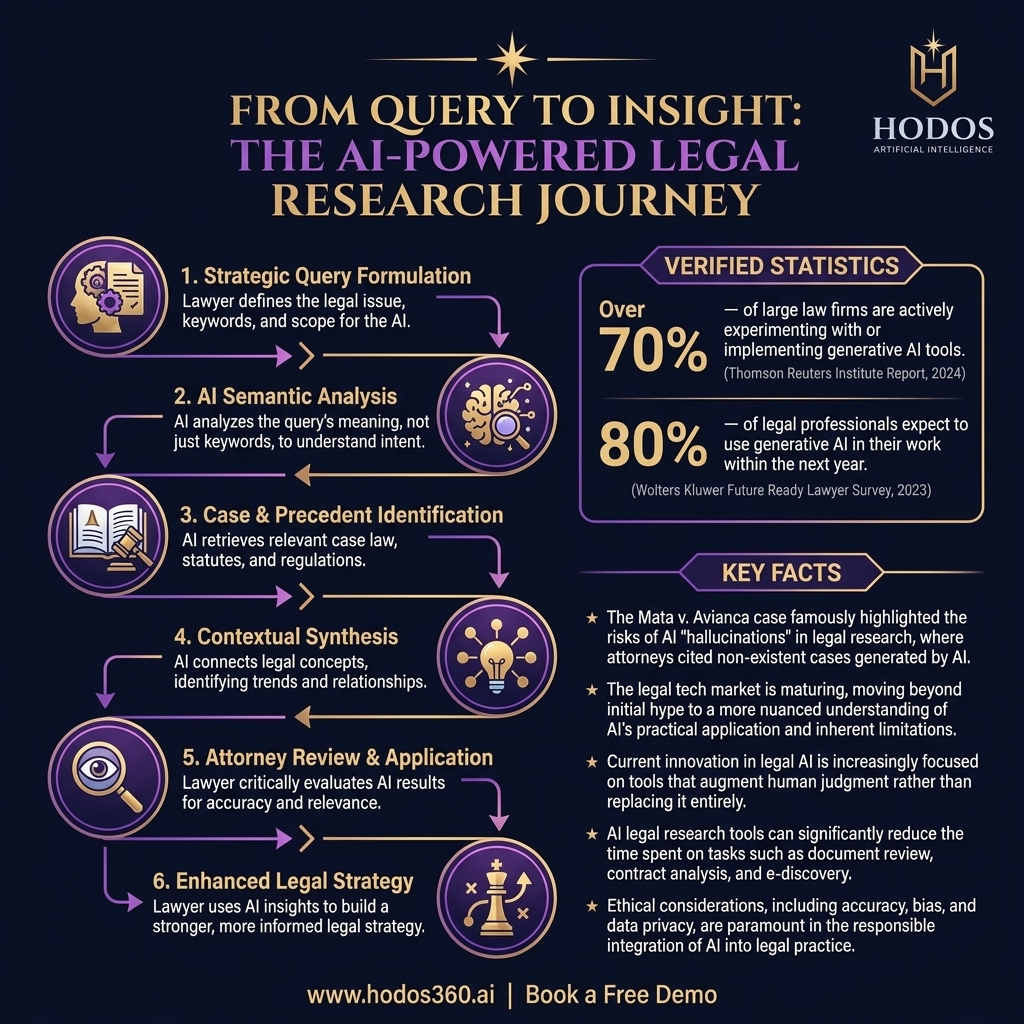
The early days of generative AI in law saw a rush to create tools that could instantly draft, summarize, and even answer complex legal questions. While impressive, these early iterations often came with a significant caveat: the potential for "hallucinations"—AI confidently presenting factually incorrect or non-existent information. This issue famously materialized in cases like *Mata v. Avianca*, where attorneys relied on AI-generated case citations that proved entirely fabricated, leading to sanctions and a stark reminder of the ethical perils. This very real human conflict between efficiency and reliability has fueled innovation, pushing developers to refine their offerings. According to a 2024 Thomson Reuters Institute report, over 70% of large law firms are now actively experimenting with or implementing generative AI tools, a significant leap from previous years, demonstrating both the irresistible pull of the technology and the imperative for responsible integration. The focus is increasingly shifting towards AI that augments, rather than replaces, human judgment, providing meticulously curated data rather than potentially fallible interpretations.
This evolving landscape demands that modern law firms, from solo practitioners to global enterprises, strategically integrate AI into their legal research practices. It's no longer a question of *if* AI will transform the industry, but *how* firms will leverage it to gain a competitive edge while upholding their professional obligations. Understanding the distinction between AI that generates answers and AI that provides verified cases is paramount for mitigating risks and maximizing benefits. This comprehensive guide will explore the strategic advantages, ethical considerations, and best practices for adopting AI in legal research, ensuring your firm is not just keeping pace, but leading the charge. Discover how HODOS 360's AI-powered solutions can empower your firm to navigate this new frontier. Learn more about our AI Law Firm Management System today!
The Evolving Landscape of AI Legal Research Tools
The current market for AI Legal Research tools is a vibrant ecosystem, characterized by intense competition and rapid innovation. Traditional giants like LexisNexis and Westlaw have invested heavily, launching their own generative AI offerings—Lexis+ AI and Westlaw AI-Assisted Research, respectively—aiming to revolutionize how lawyers conduct inquiries. These platforms promise to streamline the initial stages of research, offering capabilities like drafting, summarizing, and identifying relevant legal documents with unprecedented speed. However, the core challenge remains the inherent propensity of large language models (LLMs) to "hallucinate," a phenomenon where the AI generates plausible-sounding but factually incorrect information. This risk has prompted a critical re-evaluation among legal professionals, with firms like Allen & Overy, through its partnership with Harvey AI, emphasizing the need for robust verification processes.
This tension between speed and reliability has given rise to innovative approaches, such as the product highlighted by Robert Ambrogi, which focuses solely on delivering cases. This strategy directly addresses the hallucination problem by providing primary sources rather than synthesized answers, allowing legal professionals to perform their own critical analysis. Learn more about AI Workflows: Essential for Modern Legal Teams' Efficiency. This shift acknowledges that while AI can significantly accelerate information retrieval, the ultimate responsibility for legal accuracy rests with the attorney. Firms are increasingly seeking tools that act as powerful research assistants, capable of sifting through vast amounts of data—including obscure precedents and specific statutory interpretations—to present a curated list of highly relevant cases. This approach enhances the lawyer's capacity for deep analytical work, ensuring that every argument is built on a solid, verifiable foundation. The debate isn't about whether to use AI, but how to use it intelligently and ethically, safeguarding the integrity of the legal process.
Strategic Advantages of Integrating AI in Legal Research Practices
Integrating AI Legal Research into a firm's daily operations offers a multitude of strategic advantages that extend far beyond mere efficiency. One of the most significant benefits is the dramatic reduction in time spent on foundational research tasks. A 2023 report by the American Bar Association (ABA) revealed that lawyers spend, on average, 20-30% of their time on research-related activities. AI tools can cut this time by more than half, freeing up valuable billable hours for higher-value analytical work, client interaction, and strategic planning. For instance, tools from LexisNexis and Westlaw equipped with AI can quickly identify nuances in case law that might take a human researcher days to uncover, thereby enhancing the precision and comprehensiveness of legal arguments. This capability is particularly crucial in complex litigation or mergers and acquisitions, where missing a single precedent could have significant ramifications.
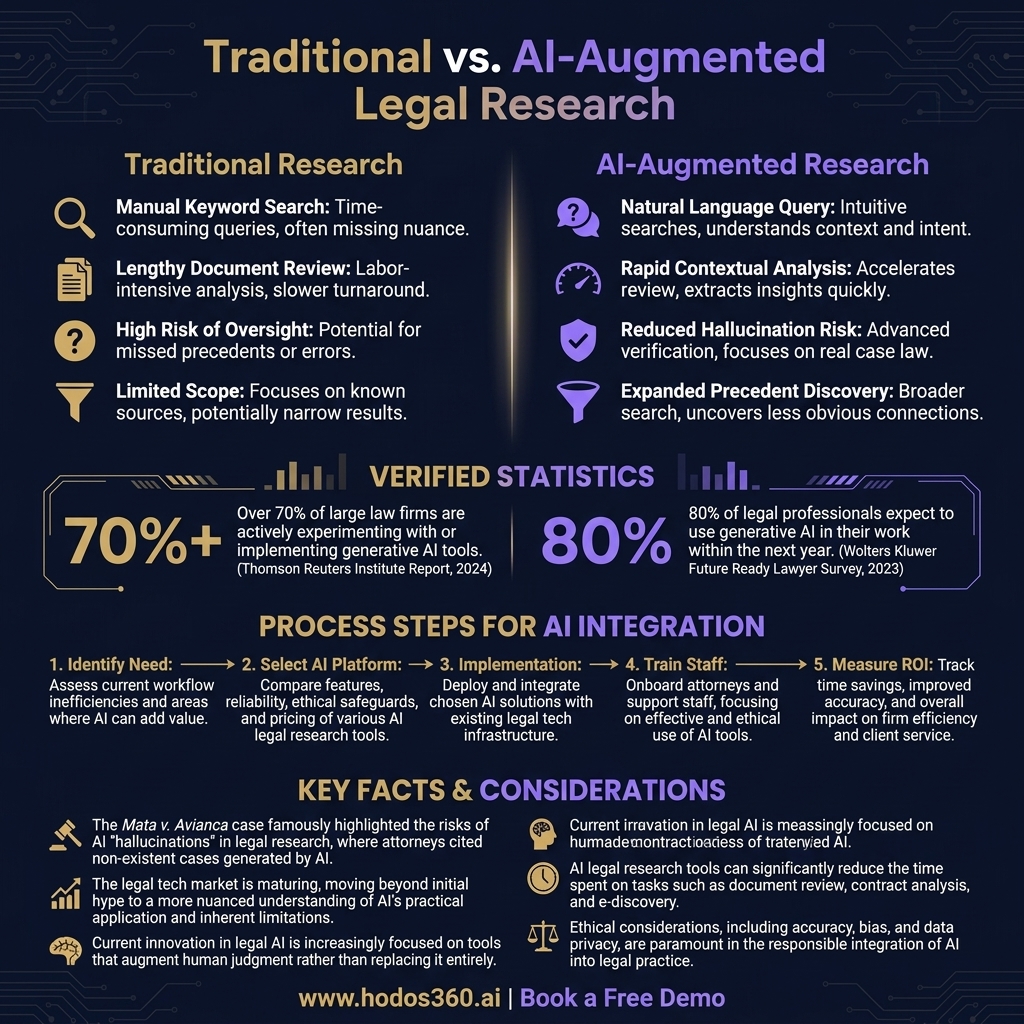
Furthermore, AI-powered legal tools are transforming the scope of legal research practices by enabling more thorough and less biased investigations. Traditional keyword searches are inherently limited by the researcher's initial assumptions and vocabulary. Learn more about Legal AI Adoption: An Essential Roadmap for Law Firms. AI, with its natural language processing capabilities, can understand the *context* and *intent* behind a query, unearthing highly relevant documents and cases that might have been overlooked using conventional methods. This expanded scope ensures that firms can build stronger cases, anticipate counter-arguments more effectively, and provide more comprehensive advice to clients. The ability of AI to analyze vast datasets, including millions of court documents, legislative histories, and secondary sources, means that even small firms can now access a depth of information previously available only to the largest legal institutions. This democratization of advanced research capabilities levels the playing field, allowing firms of all sizes to deliver exceptional legal services. Ready to see how AI can transform your firm's efficiency and client outcomes? Explore HODOS 360's AI solutions today!
Enhancing Precision and Mitigating Risks
The drive for enhanced precision and risk mitigation is central to the evolution of AI Legal Research. While early generative AI models faced criticism for their hallucination tendencies, the latest generation of tools, particularly those emphasizing case retrieval over answer generation, directly addresses these concerns. By focusing on verifiable primary sources, these tools significantly reduce the risk of presenting inaccurate information. This shift allows attorneys to critically assess the reliability of sources, fulfilling their ethical obligations under rules such as ABA Model Rule 1.1 (Competence) and Rule 3.3 (Candor Toward the Tribunal). Learn more about AI Voice Platform: Essential for Modern Legal Operations. The value lies in AI's ability to quickly surface all potentially relevant cases, including those that might be obscure or from less common jurisdictions, ensuring a comprehensive foundation for legal strategy. Human oversight remains indispensable, but AI empowers lawyers to conduct more thorough due diligence in a fraction of the time, leading to more robust and defensible legal positions.
Beyond Research: AI's Role in Modern Law Firm Management
The impact of AI extends far beyond AI Legal Research, fundamentally transforming legal operations and law firm management AI. The insights gained from advanced research tools can seamlessly integrate into broader legal workflows, creating a more cohesive and efficient practice. For instance, once relevant cases and statutes are identified, AI-powered document automation tools can rapidly draft motions, briefs, and contracts, populating them with precise citations and clauses. This integration not only saves time but also ensures consistency and reduces human error across all firm documents. Major players like Clio have recognized this synergy, with their platform increasingly incorporating AI capabilities to connect various aspects of firm operations, from client intake to billing, demonstrating a holistic approach to legal tech adoption. This integrated strategy is crucial for firms looking to optimize their entire operational footprint.
Consider the operational benefits: AI can analyze past case data to predict litigation outcomes, optimize resource allocation, and even assist in strategic client acquisition. Learn more about AI Website Design: Essential Strategies for Law Firms. For example, a firm might use AI to identify patterns in successful cases, informing future litigation strategies or marketing efforts. This analytical power helps firms move from reactive problem-solving to proactive strategic planning. The rise of integrated platforms, such as HODOS 360's AI Law Firm Management System, exemplifies this trend, offering comprehensive solutions that span case management, billing, client intake, and AI-powered legal workflows. These systems ensure that the efficiency gains from AI Legal Research are not isolated but cascade across the entire firm, enhancing productivity and profitability. The integration of AI tools across various functions is not just about adopting new technology; it's about fundamentally rethinking how legal services are delivered and managed, creating a more agile, data-driven, and client-centric firm.
Streamlining Workflows with AI-Powered Platforms
The true power of AI in law firms emerges when AI Legal Research capabilities are seamlessly integrated into a comprehensive legal workflow automation system. Imagine a scenario where a lawyer researches a complex legal question, and the AI not only provides relevant cases but also suggests clauses for a contract, populates a brief with appropriate citations, and even schedules follow-up tasks in the firm's calendar—all within a single platform. This level of integration, offered by platforms like HODOS 360, eliminates manual data transfer, reduces redundancy, and minimizes the potential for errors. Such systems act as intelligent co-pilots, centralizing research findings, automating document generation based on those findings, and streamlining the entire litigation or transactional process. Learn more about AI Marketing Automation: Law Firms' 2026 Growth Catalyst. This allows legal professionals, including paralegals, to focus on strategic analysis and client engagement, rather than administrative overhead, significantly boosting overall firm efficiency and client satisfaction. It's about creating a unified, intelligent operational ecosystem.
Navigating the Future: Ethical Considerations and Best Practices for AI Adoption
As law firms embrace AI Legal Research, navigating the ethical landscape is paramount. The use of AI implicates several core ABA Model Rules of Professional Conduct, particularly Rule 1.1 (Competence), Rule 1.6 (Confidentiality of Information), and Rules 5.1 & 5.3 (Responsibilities Regarding Nonlawyer Assistants). Attorneys have an ethical duty to understand the technology they employ, including its limitations and potential for error. This means not blindly trusting AI-generated outputs but actively verifying information, especially when it comes to legal precedent or factual assertions. The New York State Bar Association, for example, issued guidance in early 2024 emphasizing the need for lawyers to apply human judgment and critical thinking to all AI-generated content. Firms must establish clear protocols for AI usage, including training for all legal professionals on how to effectively integrate AI tools and, crucially, how to vet their results. The challenge lies not in avoiding AI, but in using it responsibly and transparently.
Beyond competence, confidentiality is another critical concern. Learn more about AI Website Coding: An Essential Guide for Law Firms. Feeding client-sensitive information into public or inadequately secured AI models could constitute a breach of attorney-client privilege. Firms must ensure that any AI platform used complies with stringent data security and privacy standards, such as those outlined in the Federal Rules of Civil Procedure concerning e-discovery and data handling. The perplexity of balancing innovation with ethical obligations requires a proactive approach. Firms should invest in secure, enterprise-level AI solutions and implement internal policies that mandate the anonymization of client data where possible, or restrict its input into AI systems unless adequate safeguards are in place. The future of legal research practices will undoubtedly involve AI, but its successful and ethical adoption hinges on continuous education, robust internal controls, and a steadfast commitment to professional responsibility. This human-centric approach ensures that AI serves as a powerful assistant, enhancing the quality and integrity of legal services.
The Imperative of Continuous Learning and Oversight
The dynamic nature of AI technology necessitates an ongoing commitment to continuous learning and vigilant oversight within law firms. It is not enough for lawyers and paralegals to simply adopt AI Legal Research tools; they must continuously update their understanding of AI's evolving capabilities, limitations, and ethical implications. This includes participating in CLE courses focused on legal tech, attending industry conferences like LegalTech NYC, and engaging with legal tech developers. Firms should also implement internal training programs and establish review mechanisms where AI-generated output is routinely checked by experienced attorneys. This layered approach ensures that while firms benefit from AI's speed and analytical power, they also maintain the highest standards of accuracy and professional responsibility. The goal is to cultivate a culture where AI is seen as a valuable partner, whose contributions are always subject to expert human scrutiny and validation.

Key Takeaways and Next Steps for Your Firm
The journey through the evolving landscape of AI Legal Research reveals a clear path forward for modern law firms: strategic adoption, ethical vigilance, and continuous learning are not optional, but essential. The distinction between AI that generates answers and AI that meticulously surfaces cases is critical for mitigating risks and maximizing the benefits of this transformative technology. Firms that embrace AI thoughtfully will find themselves equipped with unprecedented capabilities to conduct comprehensive research, streamline workflows, and deliver superior client outcomes. The legal profession is not just witnessing technological change; it is undergoing a fundamental redefinition of its operational core, where AI serves as a powerful amplifier of human intellect and legal expertise.
To effectively navigate this future, your firm should consider several actionable steps. First, evaluate your current legal research practices to identify areas where AI can provide the most significant impact, whether in initial case analysis, document review, or precedent identification. Second, invest in secure, reliable AI platforms that prioritize accuracy and transparency, offering verifiable sources rather than potentially fallible interpretations. Third, foster a culture of continuous learning, ensuring all lawyers and paralegals are trained in the ethical and practical application of AI tools. Lastly, consider an integrated platform that connects your AI research capabilities with broader law firm management AI systems. HODOS 360 offers a comprehensive suite of AI-powered services, from an AI Law Firm Management System that integrates case management and document automation with advanced legal workflows, to AI Marketing Platforms and AI Voice Assistants, all designed to empower your firm for the future. By strategically leveraging these tools, your firm can not only enhance efficiency and reduce costs but also elevate the quality of your legal services, securing a competitive advantage in an increasingly AI-driven world. Ready to future-proof your law firm? Request a personalized demo of HODOS 360 today!
Frequently Asked Questions
What is the primary difference between AI generating answers and AI providing cases?+
AI generating answers uses large language models to synthesize information and provide direct responses, which carries a risk of 'hallucination' or factual inaccuracies. AI providing cases, conversely, focuses on retrieving verified primary legal sources like court opinions and statutes, allowing attorneys to perform their own analysis and reduce the risk of relying on fabricated information. This approach prioritizes reliability and human oversight.
How can AI Legal Research tools mitigate the risk of 'hallucination'?+
The most effective way to mitigate hallucination in AI Legal Research is by using tools specifically designed to retrieve and present primary legal sources (cases, statutes) rather than generating novel content or summarized answers. Additionally, firms must implement rigorous human oversight, where attorneys verify all AI-generated citations and information against original documents. Training and ethical guidelines are also crucial.
What ethical considerations should law firms keep in mind when using AI for legal research?+
Law firms must adhere to ethical duties of competence (ABA Model Rule 1.1), confidentiality (Rule 1.6), and supervision (Rules 5.1, 5.3). This includes understanding AI's limitations, verifying all AI-generated content, ensuring data privacy and security for client information, and providing adequate training to staff. Transparency with clients about AI usage is also a growing consideration.
How does AI Legal Research integrate with overall law firm management?+
AI Legal Research integrates with law firm management by feeding directly into workflows like document automation, case management, and legal analytics. Research findings can automatically populate briefs, contracts, and other documents. AI can also analyze research data to inform strategic decisions, predict case outcomes, and optimize resource allocation across the firm, streamlining operations and enhancing efficiency.
What are the key benefits of adopting AI-powered legal research for law firms?+
Key benefits include significant time savings in research, enhanced accuracy through comprehensive data analysis, identification of obscure precedents, and improved strategic planning. AI empowers attorneys to focus on high-value tasks, reduces the risk of human error, and provides a competitive edge by enabling faster, more thorough, and data-driven legal strategies. It ultimately leads to better client outcomes and firm profitability.