


AI Workflows: Essential for Modern Legal Teams' Efficiency
The legal landscape is in a perpetual state of flux, yet few shifts have been as profound or as rapid as the integration of artificial intelligence. Just a few short years ago, the notion of AI agents drafting legal documents or autonomously managing case loads felt like a distant sci-fi fantasy. Today, it's a tangible reality, underscored by groundbreaking developments like LegalOn's recent launch of over 100 attorney-built AI prompt workflows for in-house legal teams. This move, spearheaded by LegalOn CEO Masahiro Kato, signifies a critical inflection point: the era of sophisticated, specialized AI workflows is not just approaching; it's here, and it’s reshaping the very fabric of legal practice. For law firm owners and legal professionals, understanding and adopting these advanced AI solutions is no longer optional—it's an essential strategic imperative for survival and growth in a hyper-competitive market.
Historically, the legal sector has been characterized by a cautious approach to technological adoption. While other industries embraced automation and digital transformation, many law firms and corporate legal departments remained tethered to traditional, often manual, processes. This resistance stemmed from valid concerns about data security, ethical obligations, and the perceived irreplaceable nuance of human legal judgment. However, the exponential advancements in large language models (LLMs) and specialized AI agents, coupled with mounting pressures for efficiency and cost-effectiveness, have created an undeniable impetus for change. The competitive tension is palpable: firms that proactively integrate AI are gaining significant advantages in productivity, client service, and strategic capacity, leaving those who hesitate struggling to keep pace. The current environment demands a proactive stance, a willingness to engage with innovation that promises not to replace legal professionals, but to empower them to achieve more.
This new wave of legal AI, exemplified by LegalOn’s robust offering, moves beyond simple keyword searches or basic document review. It’s about creating intelligent, multi-step AI workflows that replicate and optimize complex legal processes. Imagine an AI agent that can review a commercial contract for specific clauses, flag potential risks, suggest revisions based on jurisdictional precedents, and even generate a summary for a business stakeholder—all in a fraction of the time a human lawyer would require. This isn't theoretical; it's operational. For law firms and in-house legal departments alike, the ability to deploy such sophisticated automation across areas like commercial contracts, data privacy, employment law, and M&A due diligence represents an unprecedented opportunity to streamline operations, reduce human error, and reallocate valuable attorney time to high-level strategic counsel. The question is no longer *if* AI will transform legal practice, but *how quickly* you can harness its power. Discover how HODOS 360’s AI-powered platform can integrate these transformative workflows into your firm's operations. Learn more today.
The Evolution of AI Workflows in Legal Practice
The journey of AI in the legal field has been a remarkable ascent, evolving from rudimentary tools to sophisticated, attorney-built AI workflows that are now reshaping daily operations. Early iterations of legal tech, primarily in the e-discovery space, focused on tasks like keyword searching and basic document clustering. Platforms like Relativity, while revolutionary for their time, were essentially glorified search engines requiring extensive human oversight for nuanced legal analysis. The paradigm shifted dramatically with the advent of advanced machine learning and, more recently, generative AI. Companies like OpenAI with its GPT series and Anthropic with Claude demonstrated the potential of large language models to understand and generate human-like text, sparking a new wave of innovation.
However, the real breakthrough for legal came with the specialization of these general-purpose LLMs into purpose-built legal AI agents. This is where the concept of 'prompt engineering' truly shines, transforming generic AI capabilities into highly specific, actionable legal tools. LegalOn's recent announcement is a prime example, showcasing a library of over 100 prompt workflows meticulously crafted by experienced attorneys. This move represents a significant leap from merely assisting lawyers to actively performing 'review-ready' legal work under attorney supervision. Learn more about Voice Assistant Market: An Essential Guide for Law Firms. The distinction is crucial: instead of general assistance, these agents are trained on vast corpuses of legal data, jurisdictional precedents, and best practices, enabling them to handle complex tasks like identifying contractual ambiguities, assessing regulatory compliance, or even drafting initial responses to legal queries with a high degree of accuracy and relevance. The American Bar Association's 2023 TechReport indicated a growing, albeit still nascent, adoption of AI in legal research and e-discovery, but the current wave of workflow automation promises to accelerate these figures dramatically as tangible benefits become undeniable.
This evolution is not just about technology; it's about a fundamental redefinition of legal roles and processes. Firms that once viewed AI with skepticism are now investing heavily. For instance, Allen & Overy's widely publicized partnership with Harvey AI, an AI platform designed specifically for legal applications, demonstrates how top-tier firms are integrating advanced AI into their daily operations, from due diligence to litigation support. These collaborations highlight a critical shift: the most effective AI workflows are those co-created by technologists and legal experts, ensuring that the AI understands the nuances of legal language, the complexities of case law, and the ethical boundaries of practice. The goal isn't to replace the attorney, but to augment their capabilities, allowing them to focus on strategic thinking, client relationships, and complex problem-solving that truly requires human intuition and judgment. The competitive landscape is forcing firms to innovate, and those embracing these specialized AI agents are poised to gain a significant competitive edge by enhancing both efficiency and the quality of their legal services.
From Generative AI to Specialized Legal Agents
The transition from broad generative AI models to highly specialized legal agents marks a pivotal moment in legal tech. While models like GPT-4 from OpenAI and Claude from Anthropic are incredibly powerful for general text generation and understanding, their application in a legal context often requires extensive fine-tuning and careful prompt engineering to ensure accuracy, compliance, and ethical soundness. Specialized legal AI agents, on the other hand, are built from the ground up or heavily adapted with legal-specific datasets, ontologies, and rules, making them inherently more reliable for tasks requiring precision and adherence to legal standards. Companies like LegalOn, Harvey AI, and even emerging startups are focusing on this niche, understanding that the 'generalist' approach falls short for the exacting demands of legal practice.
These specialized agents are designed to perform defined tasks within complex AI workflows, such as contract analysis, regulatory compliance checks, intellectual property review, or even initial case assessment. They learn from millions of legal documents, statutes, case precedents, and attorney feedback, allowing them to identify patterns, extract relevant information, and generate outputs that are not only accurate but also contextually appropriate for legal use. For example, a specialized contract review agent can be trained to identify specific clauses common in M&A agreements, flag deviations from standard terms, and even suggest alternative language based on a firm's internal playbooks—a capability far beyond a general LLM without significant, ongoing human intervention. Learn more about Conversational AI: Essential Strategies for Legal Success. This 'attorney-in-the-loop' design is paramount, ensuring that while the AI accelerates the process, the ultimate legal judgment and responsibility remain with the human attorney, aligning with ethical obligations such as ABA Model Rule 1.1 (Competence), which mandates a lawyer's duty to provide competent representation.
Furthermore, the development of these specialized agents is often driven by direct collaboration with legal professionals, ensuring that the technology addresses real-world pain points and integrates seamlessly into existing legal operations. This co-creation process, as championed by firms partnering with AI developers, helps build trust and ensures the tools are genuinely useful and practical. The market competition among these specialized AI platforms is intense, with companies vying to offer the most accurate, efficient, and user-friendly solutions. This rivalry fuels rapid innovation, pushing the boundaries of what AI workflows can achieve in areas traditionally considered exclusive to human expertise. The result is a growing ecosystem of AI tools that are not just smart, but smart *for legal*, offering a tangible path to enhanced productivity and strategic advantage for law firms and in-house counsel globally.
Unpacking the Impact: Efficiency and Strategic Advantage
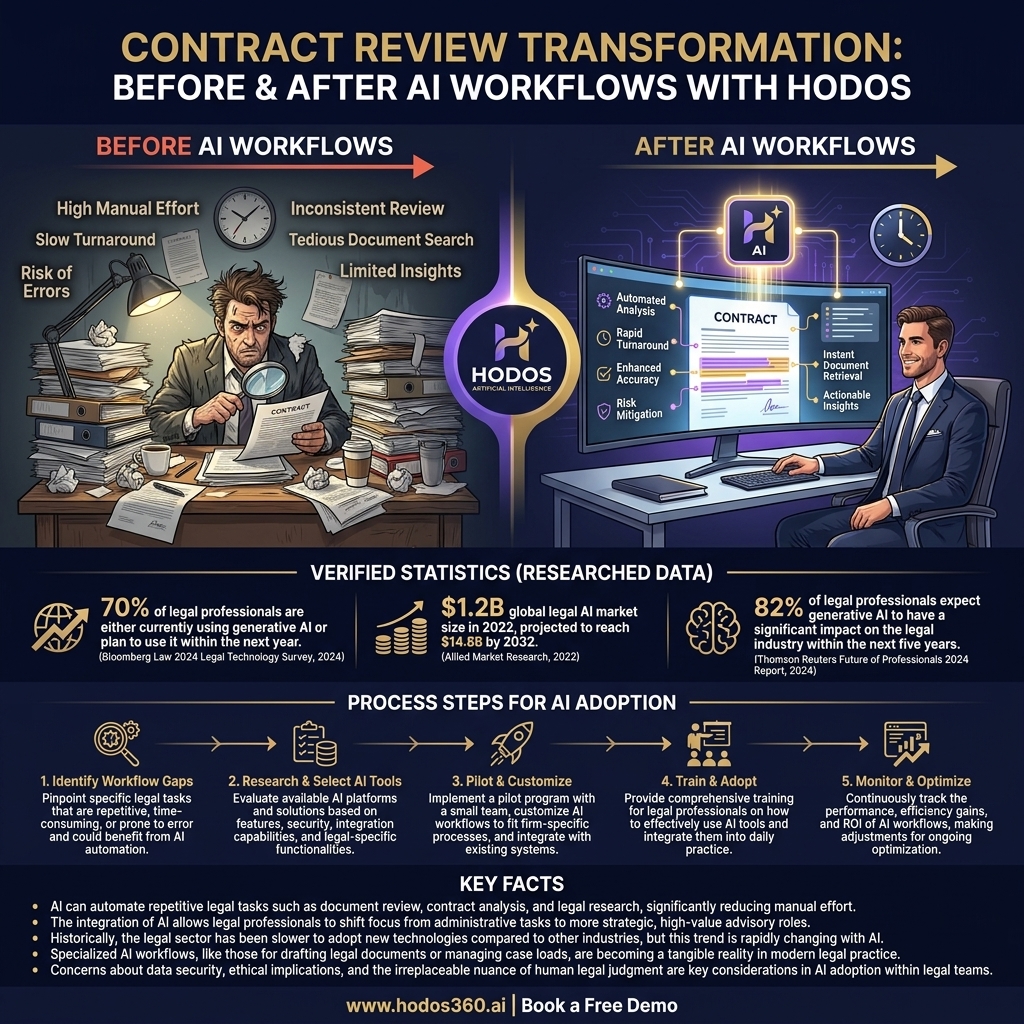
The direct impact of advanced AI workflows on legal practice is most evident in the dramatic improvements in efficiency and the resultant strategic advantages for firms and legal departments. Consider the sheer volume of contracts, documents, and regulatory filings that legal teams must process daily. Traditionally, tasks like contract review, due diligence, and compliance checks consume hundreds, if not thousands, of attorney hours. According to a 2023 Thomson Reuters report, legal professionals spend up to 40% of their time on administrative or low-value tasks. AI-powered automation directly addresses this by significantly reducing the time required for these labor-intensive activities, often by 50% or more, allowing legal professionals to reallocate their expertise to more complex, high-value strategic work.
For in-house legal teams, this translates into faster turnaround times for business units, enabling quicker decision-making and reducing bottlenecks. LegalOn's focus on commercial contracts, for instance, means that sales agreements, vendor contracts, and NDAs can be reviewed and approved in minutes rather than hours or days. This operational agility is a direct competitive advantage for the parent company. For law firms, enhanced efficiency means increased capacity without necessarily increasing headcount, leading to higher profitability and the ability to take on more cases or clients. It also allows firms to offer more competitive pricing for routine legal services, attracting a broader client base while maintaining quality. Learn more about Voice AI Revolution 2026: Agentic Platforms Transform Law Firms. The strategic advantage extends beyond mere cost savings; it's about optimizing the deployment of human capital, ensuring that the most valuable resource—the attorney's intellect—is applied where it matters most.
Furthermore, AI workflows contribute to a higher degree of consistency and accuracy in legal work. Human error, while inevitable, can have significant repercussions in legal contexts. AI agents, when properly trained and supervised, can maintain a consistent standard of review and analysis across vast datasets, reducing the likelihood of missed clauses, overlooked risks, or inconsistent application of legal principles. This enhanced reliability not only mitigates risk but also strengthens a firm's reputation for meticulousness and quality. The integration of such tools, particularly those offered by platforms like HODOS 360's AI Law Firm Management System, means that firms are not just adopting technology; they are fundamentally reshaping their operational model to be more resilient, responsive, and strategically astute in an increasingly demanding legal market. Explore how HODOS 360 can elevate your firm's efficiency and strategic positioning. Schedule a free consultation today.
Navigating the Legal Tech Landscape: Challenges and Opportunities
While the promise of AI workflows in legal practice is immense, navigating this evolving landscape comes with its own set of challenges and opportunities that demand careful consideration. One of the primary concerns revolves around data security and privacy. Legal professionals handle highly sensitive client information, and integrating AI tools necessitates robust cybersecurity measures and strict adherence to data protection regulations like GDPR, CCPA, and various state bar rules. The potential for data breaches or misuse, however remote, remains a significant hurdle for adoption, requiring vendors to demonstrate ironclad security protocols and transparency in data handling.
Another significant challenge is the 'human conflict' inherent in any disruptive technological shift: resistance to change. Many seasoned attorneys, accustomed to traditional methods, may view AI with skepticism or even apprehension, fearing job displacement or a devaluation of their expertise. This necessitates comprehensive training programs, clear communication about AI's role as an augmentation tool rather than a replacement, and demonstrating tangible benefits to foster acceptance. Upskilling lawyers in 'prompt engineering' and AI literacy is becoming crucial, transforming their roles from pure legal practitioners to hybrid legal-tech strategists. Learn more about AI Voice Assistants: Essential Balance for Law Firms. Firms that successfully manage this internal transition will unlock the full potential of their AI workflows.
Despite these challenges, the opportunities presented by the legal tech landscape are transformative. Firms that strategically adopt AI can achieve significant market differentiation, attracting forward-thinking clients who value efficiency and innovation. It also positions firms as attractive employers for younger legal talent who are digital natives and expect modern tools. Furthermore, AI enables the development of entirely new service models, such as subscription-based legal advice powered by AI-driven insights, or highly specialized niche services that leverage AI for deep analytical capabilities. The global regulatory environment, particularly with the enforcement of legislation like the EU AI Act, which sets stringent requirements for high-risk AI systems, also presents both a challenge in compliance and an opportunity for firms to become leaders in ethical AI deployment, shaping the future of responsible legal AI. This dynamic interplay of challenges and opportunities defines the current frontier of legal innovation.
Ethical Considerations and Regulatory Compliance
The ethical implications of deploying AI workflows in legal practice are paramount and require rigorous attention from law firms and legal tech developers alike. A lawyer's fundamental duties of competence, confidentiality, and supervision, as outlined in the ABA Model Rules of Professional Conduct, are directly impacted by AI adoption. For instance, Model Rule 1.1 (Competence) implies a duty to understand the benefits and risks associated with relevant technology, including AI. This means attorneys must not only be proficient in using AI tools but also understand their limitations, potential for bias, and the necessity of human oversight to ensure accuracy and prevent errors. The risk of algorithmic bias, where AI models inadvertently perpetuate or amplify societal biases present in their training data, is a serious concern, especially in areas like sentencing recommendations or immigration law, potentially leading to inequitable outcomes. Lawyers must exercise due diligence in selecting AI tools and validating their outputs.
Confidentiality, governed by Model Rule 1.6, is another critical area. Using cloud-based AI services or third-party platforms for sensitive client data requires careful vetting of vendor security protocols, data encryption, and data residency policies to prevent unauthorized access or disclosure. Firms must ensure that their engagement with AI tools aligns with their professional obligations to protect client information. Furthermore, the duty of supervision (Model Rule 5.1 for partners/supervising lawyers and 5.3 for nonlawyer assistance) extends to the oversight of AI systems. Learn more about AI Marketing: The Ultimate Guide to Loyalty & Growth. Attorneys remain ultimately responsible for the work product generated or influenced by AI, emphasizing the need for robust internal review processes and human verification of AI-generated outputs. This is why the 'attorney-in-the-loop' model, where AI assists but humans make final decisions, is so crucial for ethical and compliant AI deployment.
The rapidly evolving regulatory landscape for AI, such as the EU AI Act, introduces further layers of compliance. This landmark legislation categorizes AI systems by risk level, imposing stringent requirements for high-risk applications, which could include certain legal AI workflows. These requirements cover data governance, human oversight, transparency, robustness, and accuracy. While the Act primarily targets developers and providers, law firms using such systems must be aware of their downstream obligations. Adhering to these evolving ethical and regulatory frameworks is not merely about avoiding penalties; it's about maintaining public trust in the legal profession and ensuring that AI serves justice responsibly. Firms must proactively develop internal policies, conduct regular risk assessments, and engage in continuous education to navigate this complex ethical terrain successfully.
Building Your Own AI Workflow Strategy: A Practical Guide
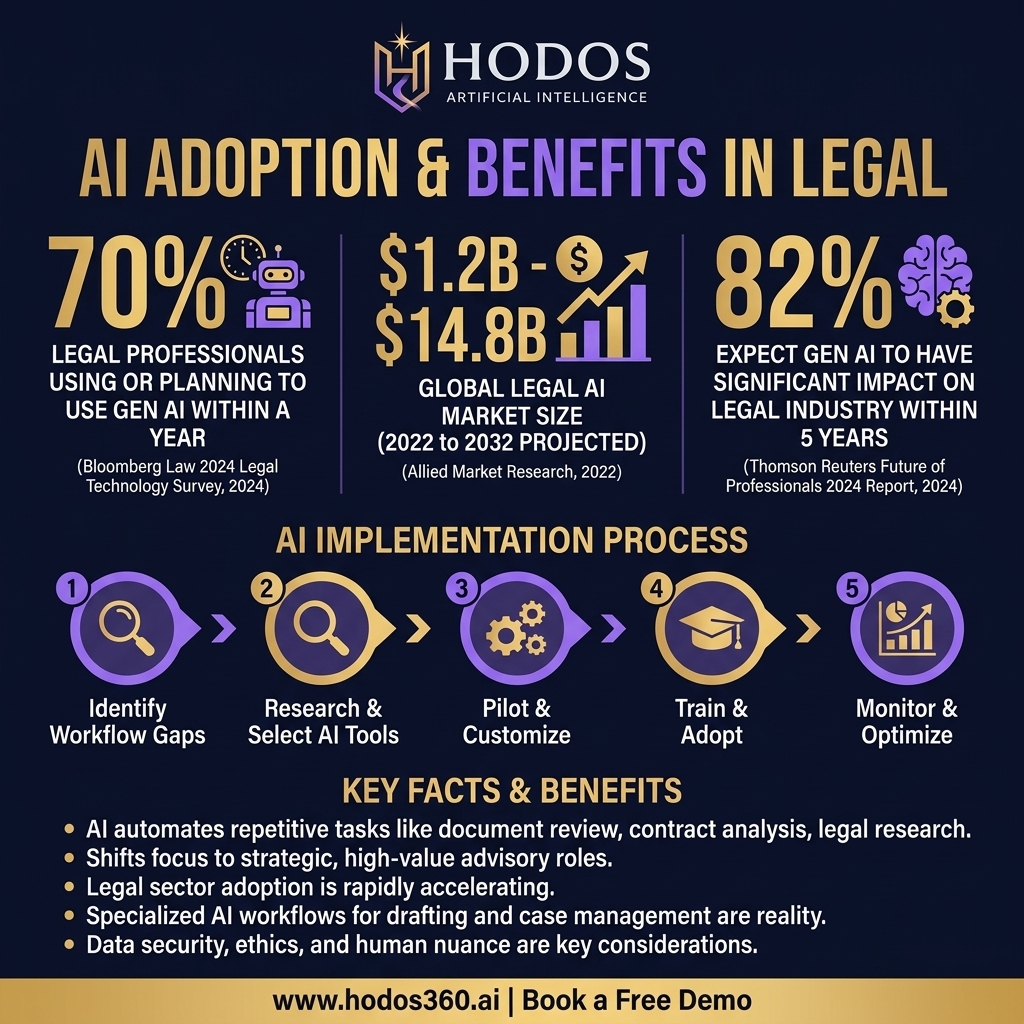
For law firms and in-house legal departments looking to harness the power of AI workflows, a well-defined strategy is paramount. The journey begins not with technology, but with a thorough needs assessment. What are your firm's biggest bottlenecks? Which tasks are repetitive, time-consuming, and prone to human error? Identifying these pain points will guide your selection of AI tools and ensure they address genuine operational inefficiencies. For instance, if contract drafting and review consume significant resources, a platform specializing in document automation and AI-powered contract analysis, like LegalOn's new workflows, would be a logical starting point. Avoid the temptation to adopt AI for AI's sake; focus on solutions that solve specific, measurable problems within your practice.
Once needs are identified, the next step involves exploring vendor solutions and conducting pilot programs. The market is burgeoning with legal AI providers, each offering specialized capabilities. Engage with vendors, request demos, and crucially, involve your attorneys and legal staff in the evaluation process. A pilot program, perhaps on a smaller, contained project, allows your team to test the AI's efficacy, integration capabilities, and user-friendliness in a real-world setting without committing firm-wide resources. This iterative approach helps refine requirements and identifies potential challenges early on. Look for platforms that offer flexibility, robust security, and dedicated support, ensuring a smooth implementation and ongoing optimization. Learn more about AI Legal Guidance: Your Essential Compass for Regulatory Complexity. This stage is critical for building internal buy-in and demonstrating the tangible benefits of AI to your team.
Finally, successful implementation of AI workflows requires a phased approach, coupled with comprehensive training and change management. Rolling out new technology across an entire firm simultaneously can be disruptive. Instead, consider a staggered implementation, starting with a specific department or practice area, learning from the experience, and then expanding. Crucially, invest in training your legal professionals—not just on how to use the tools, but on how to integrate AI into their existing workflows and how to effectively 'prompt' the AI for optimal results. Change management strategies, including clear communication, showcasing success stories, and addressing concerns, are vital to overcome resistance and foster a culture of innovation. Remember, the most advanced AI tool is only as effective as the team using it. By empowering your people with the right tools and knowledge, you transform technological adoption into strategic advantage. HODOS 360's integrated AI Law Firm Management System provides the comprehensive framework to support your firm through every stage of this digital transformation, from client intake to AI-powered legal workflows, ensuring seamless integration and maximum impact.
The Role of Data and Customization
At the heart of effective AI workflows lies the quality and relevance of data, coupled with the ability to customize AI solutions to a firm's unique needs. Generic AI models, while powerful, often fall short when confronted with the highly specific lexicon, stylistic preferences, and historical precedents of an individual law firm or legal department. The true power of AI in a legal context is unlocked when it can be trained or fine-tuned on a firm's proprietary data—its past contracts, internal memos, litigation documents, and client-specific guidelines. This firm-specific data allows the AI to learn the nuances of how *your* firm operates, ensuring that the outputs are not just legally sound, but also align with your firm's particular standards and client expectations. This customization is what transforms a general AI tool into a bespoke strategic asset.
The ability to customize extends beyond data training; it also involves the flexibility of the AI platform itself. Modern legal AI solutions should offer configurable AI workflows that can be adapted to specific practice areas, client requirements, or internal processes. For example, a firm specializing in M&A might need different contractual clause analysis workflows than one focused on intellectual property. The best platforms allow legal professionals to define parameters, integrate with other firm software (like case management or billing systems), and even create their own custom prompts or 'playbooks' for the AI to follow. This level of customization ensures that the AI is not a rigid, one-size-fits-all solution, but a dynamic, adaptable tool that evolves with the firm's needs. Without this level of tailoring, AI's full potential for efficiency and strategic impact remains untapped, leading to generic results that fail to meet the exacting demands of legal practice. Therefore, when evaluating AI solutions, firms must prioritize platforms that emphasize data security, robust customization options, and seamless integration capabilities.

Key Takeaways and Next Steps
The legal industry stands at the precipice of a profound transformation, driven by the rapid evolution and adoption of AI workflows. As demonstrated by LegalOn's innovative launch, the era of sophisticated, attorney-built AI agents is not a distant future but a present reality, offering unprecedented opportunities for efficiency, strategic advantage, and enhanced client service. For law firm owners and legal professionals, the message is clear: embracing these technologies is no longer a matter of competitive advantage, but a foundational requirement for sustained relevance and growth. The firms that proactively integrate AI, manage the associated ethical and regulatory considerations, and empower their teams through comprehensive training will be the ones that thrive in this new digital legal landscape.
To navigate this shift successfully, firms must adopt a strategic, informed, and proactive approach. Start by identifying specific pain points within your operations where AI can deliver tangible value. Explore the burgeoning market of legal AI solutions, prioritizing those that offer robust security, customization capabilities, and proven results. Crucially, invest in your people, providing the training and support necessary to integrate AI seamlessly into their daily work, transforming apprehension into proficiency. The future of legal practice is collaborative, with human expertise augmented by intelligent automation, enabling attorneys to focus on the strategic, empathetic, and uniquely human aspects of law. The time to act is now. Discover how to leverage AI workflows for your firm's success.
Frequently Asked Questions
What are AI workflows in the legal context?+
AI workflows in legal refer to automated, multi-step processes powered by artificial intelligence to perform specific legal tasks. This can include anything from AI-driven contract review and document drafting to compliance checks, lead qualification, and case management. These workflows aim to streamline operations, reduce manual effort, and enhance accuracy, allowing legal professionals to focus on higher-value strategic work rather than repetitive administrative duties.
How do AI workflows benefit law firms and in-house legal teams?+
AI workflows offer numerous benefits, including significant efficiency gains by automating routine tasks, leading to faster turnaround times and reduced operational costs. They enhance accuracy and consistency in legal outputs, mitigating risks associated with human error. Furthermore, AI frees up attorneys' time for complex analysis, strategic planning, and client relationship building, ultimately improving profitability, client satisfaction, and overall strategic positioning in the market.
What are the ethical considerations when implementing legal AI workflows?+
Ethical considerations for legal AI workflows include ensuring competence (understanding AI's capabilities and limitations), maintaining client confidentiality (secure data handling), preventing algorithmic bias (ensuring fair outcomes), and upholding the duty of supervision (attorneys remaining responsible for AI-generated work). Firms must vet AI tools thoroughly, implement robust data security, and provide continuous training to ensure ethical and compliant use of AI.
How does specialized legal AI differ from general generative AI?+
Specialized legal AI differs from general generative AI (like GPT-4) by being specifically trained on vast legal datasets, statutes, case law, and attorney-built playbooks. This specialization allows them to understand legal nuances, jargon, and precedents with greater accuracy and relevance. While general AI can assist, specialized legal agents are purpose-built to perform complex legal tasks reliably, often producing 'review-ready' outputs that require minimal human intervention for final legal judgment.
What steps should a law firm take to adopt AI workflows?+
A law firm should start by conducting a needs assessment to identify specific pain points and repetitive tasks that AI can address. Next, research and pilot promising AI solutions with a small team to test efficacy and integration. Implement a phased rollout, starting with a specific practice area. Crucially, invest in comprehensive training for legal staff on how to use and integrate AI tools effectively, coupled with a strong change management strategy to foster adoption and maximize impact.
- ✓Conduct a Comprehensive Needs Assessment: Identify specific, repetitive tasks that consume significant attorney time and are prone to error.
- ✓Research and Vet AI Providers Thoroughly: Evaluate solutions based on security, customization, integration capabilities, and proven legal-specific features.
- ✓Start with Pilot Programs: Implement AI tools on a smaller scale to test their effectiveness, gather feedback, and refine your strategy before firm-wide deployment.
- ✓Invest in Attorney Training and Upskilling: Equip your legal professionals with the knowledge and skills to effectively use AI tools and understand their limitations.
- ✓Develop Robust Internal Policies: Establish clear guidelines for AI use, data privacy, ethical considerations, and attorney oversight to ensure compliance.
- ✓Foster a Culture of Innovation: Encourage experimentation and open dialogue about AI's benefits and challenges to drive adoption and continuous improvement.
- ✓Monitor and Iterate: Continuously evaluate the performance of your AI workflows, gather metrics, and make adjustments to optimize efficiency and impact.