
Essential Risk Management for Law Firms in the AI Era
The legal profession stands at an inflection point, navigating the tumultuous yet promising currents of artificial intelligence. Just last year, at the highly anticipated LegalTech NYC 2026, a palpable tension filled the air as industry titans like John Quinn, founder of Quinn Emanuel Urquhart & Sullivan, cautioned against the "rush to deploy" AI without robust safeguards.
His remarks underscored a growing concern: while AI promises unprecedented efficiencies, it simultaneously introduces a complex web of new risks, from data breaches and algorithmic bias to professional responsibility dilemmas. Law firms, particularly those eager to leverage generative AI for tasks like legal research and document review, are confronting a stark reality: innovation without meticulous risk management for law firms is not just imprudent, it's perilous.
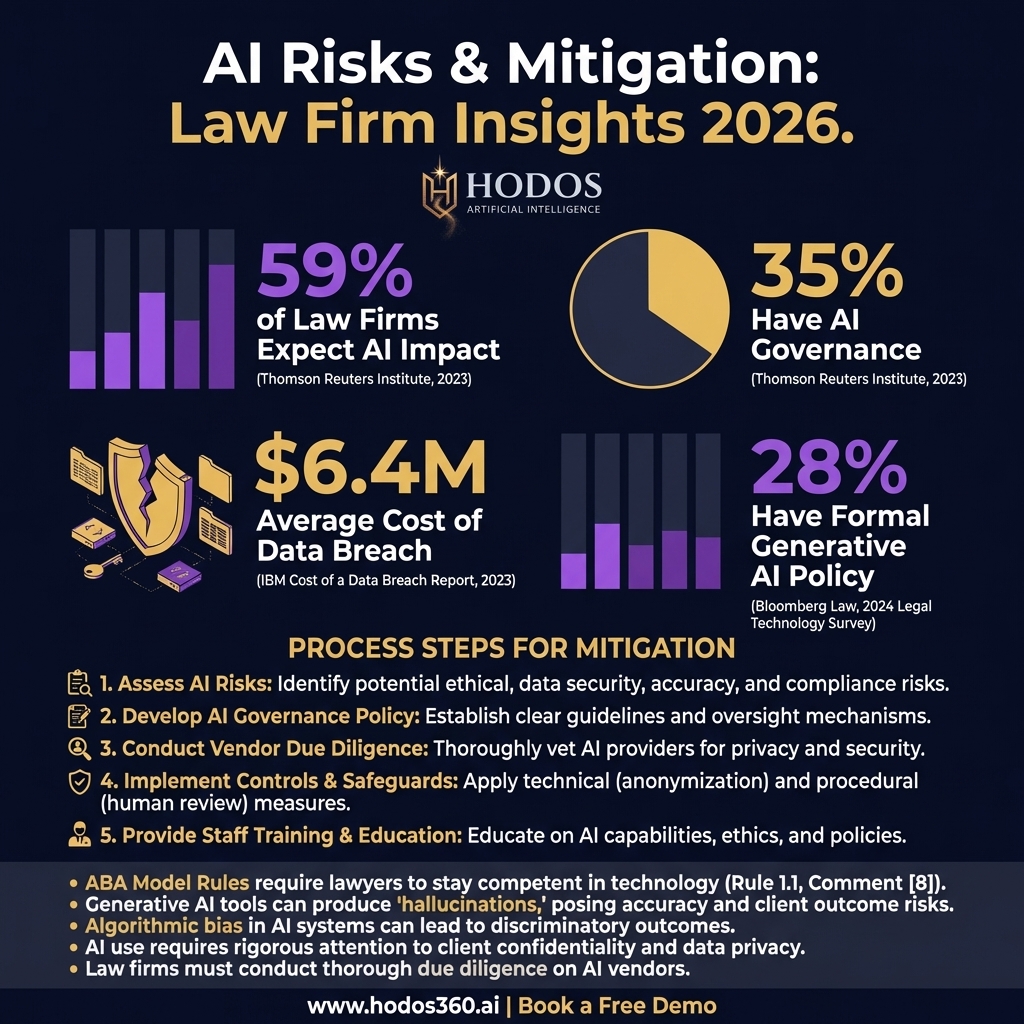
The stakes are higher than ever. A recent report by the Thomson Reuters Institute highlighted that nearly 60% of law firms globally expect AI to significantly impact their operations within the next three years, yet only 35% reported having a comprehensive AI governance strategy in place.
This discrepancy reveals a critical vulnerability. Firms that embrace AI without a proactive approach to identifying, assessing, and mitigating its inherent risks face potential ethical violations, client trust erosion, and severe financial penalties. The Law Society of Scotland's recent emphasis on "Risk management for law firms in the age of AI and legal tech" is a timely reminder that regulators and clients alike demand accountability.
The challenge for legal professionals isn't merely to adopt AI, but to master its complexities and ensure its integration enhances, rather than compromises, the integrity of legal service delivery.
Understanding the Evolving Landscape of AI Risks for Law Firms
The rapid proliferation of AI tools, from large language models (LLMs) like OpenAI's GPT-4 and Anthropic's Claude 3 to specialized legal AI platforms, has unveiled a new frontier of legal risks. These aren't merely extensions of existing technological hazards; they are fundamentally different, demanding a sophisticated understanding from legal practitioners.
One of the most glaring issues is the phenomenon of "hallucinations," where AI generates plausible-sounding but factually incorrect information. This was starkly demonstrated in the infamous *Mata v. Learn more about Law Firm Return on Investment: Maximize AI in 2026. Avianca* case, where a lawyer submitted a brief citing non-existent cases generated by ChatGPT, leading to sanctions and severe reputational damage.
Such incidents highlight the imperative for stringent human oversight and verification, as the reliance on unvetted AI output can directly violate a lawyer's duty of candor to the tribunal, as outlined in ABA Model Rule 3.3.
Beyond hallucinations, firms grapple with the profound implications of data integrity and client confidentiality. AI models are trained on vast datasets, and if these datasets contain biases or inaccuracies, the AI's output will reflect them, potentially leading to discriminatory legal advice or outcomes. Furthermore, the inputting of sensitive client information into third-party AI tools raises critical questions about data security and privacy.
Learn more about Strategic AI Tools Adoption: Essential Guide for Law Firms. Many cloud-based AI services pool data for model improvement, creating a potential vector for inadvertent disclosure of confidential client data. The European Union's GDPR and California's CCPA already impose strict data protection requirements, and the burgeoning EU AI Act, set to be enforced, will introduce even more stringent regulations, particularly for high-risk AI applications, making robust data governance a cornerstone of effective AI implementation strategies for firms.
The competitive landscape also presents a subtle yet significant risk. Firms that hesitate to adopt AI risk being outmaneuvered by more agile competitors, losing out on efficiency gains and client attraction. Conversely, firms that rush into adoption without proper due diligence risk implementing tools that are not fit-for-purpose, lack necessary security features, or create more work than they save.
This tension between innovation and caution creates a strategic dilemma. Learn more about Legal AI Gap Widens: Strategic Imperative for Law Firms 2026. As Sam Altman, CEO of OpenAI, frequently emphasizes, the responsible development and deployment of AI require continuous vigilance and an adaptive approach to governance.
For law firms, this translates into establishing clear policies for AI use, conducting thorough vendor due diligence, and ensuring that all AI-driven processes align with their ethical obligations and business objectives.
The sheer pace of technological change means that legal professionals must continually educate themselves on the capabilities and limitations of AI. This includes understanding how AI systems make decisions, the potential for "black box" outcomes, and the challenges of explainability, especially when AI is used in critical decision-making processes.
The lack of transparency in some proprietary AI models can make it difficult for lawyers to fulfill their professional duties to clients, particularly when explaining the basis of legal advice or strategy. Learn more about AI Legal Practice Management: The Ultimate Firm Advantage. The Law Society of Scotland's report rightly points out that managing these technological complexities is not just an IT issue; it’s a fundamental practice management concern that requires a multidisciplinary approach involving legal, technical, and ethical expertise.
Without this holistic understanding, firms risk misidentifying or underestimating the true scope of AI-related challenges.
Discover how HODOS 360's AI Law Firm Management System can streamline your operations and mitigate risks. [Book a Free Demo Today!]
Developing a Robust AI Risk Management Framework
Establishing a comprehensive AI risk management framework is no longer a luxury but a strategic imperative for modern law firms. This framework must be integrated into the firm's overall governance structure, mirroring the importance given to financial and operational risks. It begins with a thorough risk assessment, identifying potential vulnerabilities across all AI touchpoints, from client intake and document review to legal research and case strategy.
Learn more about AI Marketing: Essential Strategies for Law Firm Growth. This assessment should consider both internal uses of AI and client-facing applications, evaluating the potential for misinterpretation, data leakage, or ethical breaches. Firms like Allen & Overy, through their pioneering partnership with Harvey AI, have demonstrated the importance of developing bespoke internal guidelines and training programs that specifically address the unique challenges of generative AI in a legal context, setting a precedent for responsible integration.
A critical component of this framework is the development of clear, actionable internal policies and protocols for AI use. These policies should dictate which types of data can be processed by AI, the level of human supervision required for AI-generated output, and the procedures for verifying information.
For instance, policies could mandate that all AI-assisted legal research must be cross-referenced with primary sources, or that client-sensitive data cannot be uploaded to public-facing generative AI tools without explicit client consent and robust anonymization. Learn more about AI App Development: Essential for Law Firms' Digital Future.
The ABA Standing Committee on Ethics and Professional Responsibility's Formal Opinion 506 (2023) on "Lawyers’ Use of Generative AI" provides crucial guidance, emphasizing the duties of competence, confidentiality, and supervision when employing AI. Firms must not only be aware of these guidelines but actively embed them into their daily workflows and training curricula.
Client Confidentiality and Data Security in the AI Era
Another significant challenge lies in maintaining client confidentiality and data security. When client information is processed by AI, firms must ensure that vendors adhere to stringent security protocols and that data is not used for purposes beyond the scope of the legal service. A breach of confidentiality, whether due to a vendor's lax security or a lawyer's inadvertent input of sensitive data into an unsecure AI, can lead to severe disciplinary action and irreversible damage to client trust.
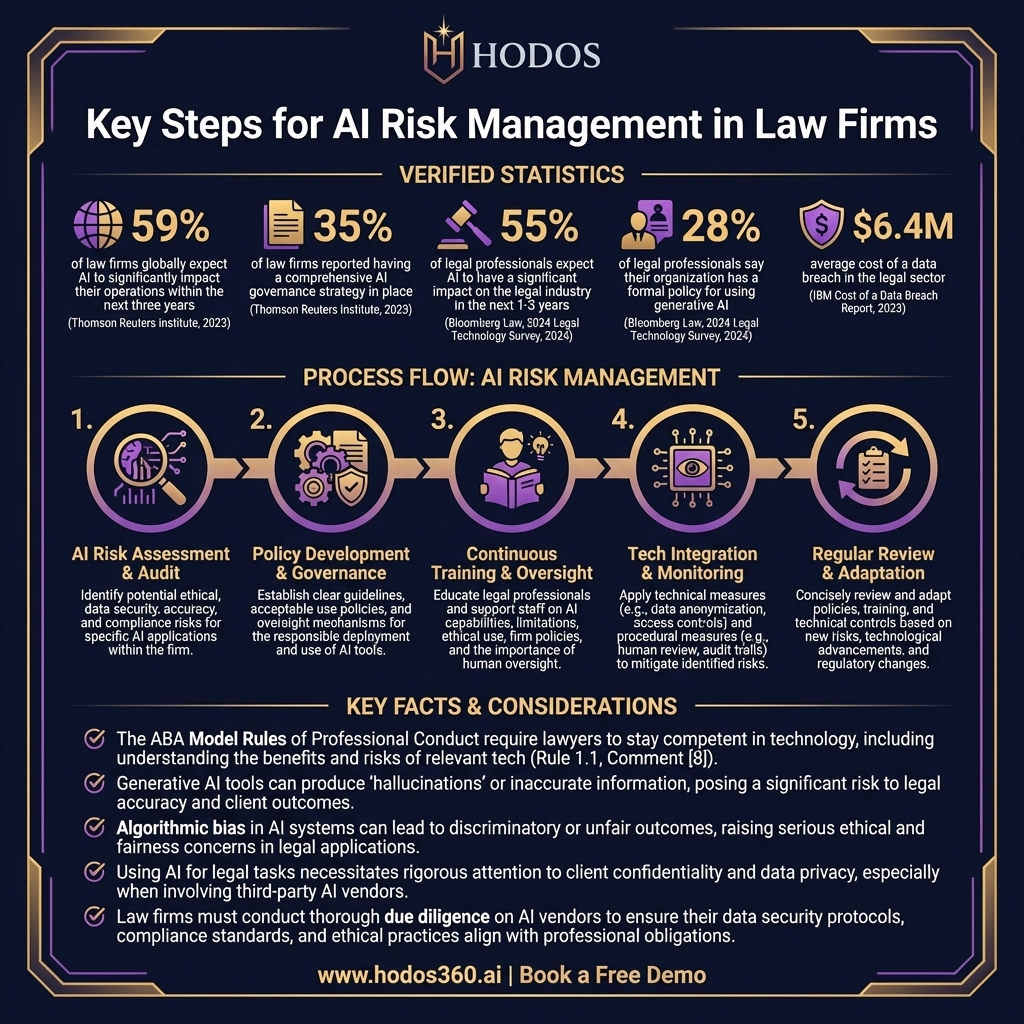
The stakes are particularly high given the increasing sophistication of cyber threats. Recent data from the FBI's Internet Crime Report indicates a consistent rise in cyberattacks targeting professional services, underscoring the need for advanced cybersecurity measures that extend to AI deployments. Firms must conduct regular security audits and ensure their AI tools are compliant with relevant data protection regulations like HIPAA for health data or PCI DSS for payment information, where applicable.
Navigating Ethical and Professional Responsibility Challenges
The ethical landscape for lawyers is constantly evolving, and AI introduces a new layer of complexity to traditional duties. The core principles of legal ethics—competence, confidentiality, independent professional judgment, and supervision—are directly impacted by AI adoption. ABA Model Rule 1.1 on Competence mandates that lawyers "keep abreast of changes in the law and its practice, including the benefits and risks associated with relevant technology."
This isn't just about understanding the technology, but about understanding its limitations and ensuring its use serves the client's best interests without compromising professional standards. Firms must invest in continuous education for their attorneys and staff, ensuring they are proficient in both the capabilities and the potential pitfalls of AI tools.
The implications of biased AI extend to the very foundation of justice. A 2023 study by MIT researchers highlighted how certain AI models, when applied to legal document analysis, exhibited racial and gender biases in identifying "at-risk" individuals or predicting case outcomes. Such findings demand that firms adopt a critical lens when selecting and deploying AI-powered legal tools.
This involves not just technical due diligence but also an ethical assessment, ensuring that the AI complements human judgment rather than replacing it with an unexamined, potentially prejudiced algorithm. Firms should establish internal ethical review boards or protocols to regularly assess the outputs of AI tools, ensuring they align with principles of fairness, equity, and due process, thereby upholding the integrity of the legal system.
Mitigating Bias and Ensuring Fairness in AI-Powered Legal Tools
Algorithmic bias represents one of the most insidious ethical considerations in AI. If the data used to train AI models reflects historical biases present in legal records, the AI output can perpetuate or even amplify those biases, leading to unfair or discriminatory outcomes for clients.
This is especially critical in areas like predictive policing, sentencing recommendations, or even in evaluating legal precedents where historical disparities exist. For instance, a system trained predominantly on data from one demographic might inadvertently disadvantage another. Legal professionals have a duty to ensure fairness and equal access to justice.
Therefore, firms must proactively vet AI tools for bias, ideally through independent audits or by demanding transparency from vendors regarding their training data and bias mitigation strategies.
Transform your firm's efficiency and ensure compliance with HODOS 360's AI Law Firm Management System. [See Our Features in Action!]
Leveraging Technology for Proactive Risk Mitigation
While AI introduces new risks, it also offers potent solutions for proactive risk mitigation. Advanced legal tech platforms, such as HODOS 360's AI Law Firm Management System, are specifically designed to address many of the challenges posed by AI integration. These systems often incorporate sophisticated features for document automation, intelligent case management, and robust compliance tracking, helping firms to standardize workflows and reduce human error—a common source of risk.
For example, AI-powered document automation can ensure that contracts and filings are generated with consistent language and correct legal citations, minimizing the risk of errors that could lead to litigation or client dissatisfaction, thereby enhancing overall practice management.
The power of AI can be harnessed for internal auditing and monitoring. AI-driven compliance tools can continuously scan documents, communications, and internal processes for deviations from established policies or potential ethical red flags. Imagine an AI system that flags unusual data access patterns, identifies potential conflicts of interest based on client intake data, or even analyzes internal communications for adherence to confidentiality protocols.
This level of automated vigilance significantly reduces the burden on human compliance officers and provides real-time insights into potential vulnerabilities. According to a 2024 report by Gartner, firms adopting AI for compliance and governance reported a 25% reduction in regulatory fines and penalties, demonstrating a clear return on investment for such technological solutions.
Implementing AI-Powered Compliance and Monitoring Systems
The implementation of AI-powered compliance and monitoring systems is a game-changer for managing legal risks. These systems leverage machine learning to analyze vast amounts of data, identify anomalies, and predict potential compliance breaches before they escalate. For instance, a sophisticated AI could monitor email communications for keywords related to insider trading, detect unusual billing patterns that might indicate fraud, or identify potential conflicts of interest by cross-referencing new client data against existing client and matter databases.
This proactive stance moves firms from reactive problem-solving to preventive risk management, allowing them to address issues before they become crises.
Furthermore, these systems can automate the generation of compliance reports, making it easier for firms to demonstrate adherence to regulatory requirements and internal policies. This not only saves significant administrative time but also provides an auditable trail, which is invaluable during regulatory inspections or internal investigations.
The ability to quickly retrieve and analyze compliance data strengthens a firm's position in the face of scrutiny and reinforces its commitment to ethical practice. When integrated with a comprehensive AI Law Firm Management System, these tools provide a holistic view of a firm's operational and ethical health, offering actionable insights for continuous improvement and solidifying the firm's reputation for integrity and responsible innovation.

Key Takeaways and Next Steps
The journey through the AI era for law firms is one of immense opportunity intertwined with substantial risk. The insights from the Law Society of Scotland, coupled with the experiences of leading firms and legal tech innovators, underscore a singular truth: effective risk management for law firms is paramount.
It’s not about shunning AI, but about embracing it intelligently, with a clear-eyed understanding of its potential pitfalls and a robust strategy to mitigate them. Firms must prioritize continuous education, develop clear internal governance policies, and invest in technologies that enhance both efficiency and compliance.
For firms seeking to navigate this complex landscape with confidence, platforms like HODOS 360 offer a strategic advantage. Our AI Law Firm Management System provides the tools necessary to standardize workflows, automate document processes, enhance data security, and ensure ethical AI deployment, thereby transforming potential risks into managed opportunities.
By integrating AI into a secure, compliant, and well-governed framework, law firms can not only protect their practice but also unlock unprecedented levels of productivity and client satisfaction, solidifying their position as leaders in the evolving legal market. The future of legal practice is AI-powered, and the firms that thrive will be those that master its risks as adeptly as they harness its rewards.
Ready to secure your firm's future with intelligent AI solutions? [Contact HODOS 360 for a Personalized Consultation!]
Frequently Asked Questions
Q1: What are the primary AI risks facing law firms today?+
A1: Law firms primarily face risks related to AI hallucinations (generating false information), data privacy breaches from sensitive client data input into AI tools, algorithmic bias leading to unfair outcomes, and ethical non-compliance with duties of competence and confidentiality. These challenges demand careful oversight and robust internal policies to mitigate potential harm.
Q2: How can law firms ensure client confidentiality when using AI tools?+
A2: Firms must implement strict data governance policies, conduct thorough vendor due diligence to ensure AI providers have robust security protocols, and obtain explicit client consent for data processing. Anonymization of sensitive data and avoiding public-facing generative AI for confidential information are critical steps.
Q3: What role does human oversight play in AI risk management for legal practice?+
A3: Human oversight is indispensable. Lawyers must critically review all AI-generated output for accuracy and bias, ensuring it aligns with legal principles and ethical duties. AI should serve as an assistant, augmenting human judgment, not replacing the lawyer's ultimate responsibility for advice and work product.
Q4: Can AI help mitigate risks within a law firm, or does it only introduce new ones?+
A4: AI can significantly help mitigate risks. Advanced AI Law Firm Management Systems can automate compliance checks, identify conflicts of interest, enhance data security monitoring, and standardize workflows to reduce human error. When implemented thoughtfully, AI becomes a powerful tool for proactive risk management.
Q5: What are the ethical considerations regarding AI bias in legal tech?+
A5: AI bias arises when training data reflects historical prejudices, leading to discriminatory outcomes. Firms must critically evaluate AI tools for inherent biases, demand transparency from vendors, and implement ethical review processes to ensure AI-powered decisions uphold principles of fairness and equal justice for all clients.
Q6: What specific ABA Model Rules are relevant to AI use in law firms?+
A6: Several ABA Model Rules are highly relevant, including Rule 1.1 (Competence), requiring lawyers to stay technologically current; Rule 1.6 (Confidentiality of Information), governing client data protection; Rule 5.3 (Responsibilities Regarding Nonlawyer Assistants), which extends to supervising AI tools; and Rule 3.3 (Candor Toward the Tribunal), prohibiting false statements.
Q7: How can a small law firm afford and implement effective AI risk management?+
A7: Small firms can start by defining clear AI usage policies, investing in affordable, integrated legal tech solutions designed for smaller practices, and leveraging free educational resources. Prioritizing critical areas like client data security and ethical training, and scaling AI adoption gradually, makes it manageable and cost-effective.