


AI App Development: Essential Guide for Law Firms
The legal landscape of September 2026 is one defined by rapid technological evolution, a shift that is compelling law firms to rethink their operational frameworks and client engagement strategies. Just recently, Mashable highlighted a game-changing development: the Swiftspeed AI App Builder, a tool capable of transforming an idea or website into a fully functional iOS, Android, and web application without a single line of code, even offering three years of Pro access for a mere $40. While this news snippet might initially seem targeted at individual entrepreneurs and "side-hustle" enthusiasts, its underlying message resonates deeply within the legal sector: the power of AI app development is no longer exclusive to tech giants or firms with vast IT departments. It signals a new era where bespoke legal applications, once prohibitively expensive and time-consuming to create, are now within reach for firms of all sizes, democratizing access to powerful digital tools that can redefine practice management and client service.
This trend isn't a fleeting fad; it's a fundamental shift in how legal services can be delivered and managed. Consider the pronouncements from industry leaders at events like LegalTech NYC 2026, where prominent figures such as Clio CEO Jack Newton have consistently emphasized the imperative for legal professionals to embrace technological innovation to meet evolving client expectations and operational demands. The ability to quickly prototype and deploy custom applications—whether for secure client portals, automated intake processes, or specialized legal research tools—moves from a futuristic aspiration to a current strategic necessity. The tension between traditional, often manual, legal processes and the disruptive potential of AI-driven automation is palpable, creating a competitive divide between firms that proactively adopt these innovations and those that risk being left behind in a rapidly digitizing market.
For law firms, the implications of accessible AI app development are profound. It offers a pathway to not only streamline internal operations but also to innovate client service, creating unique value propositions that differentiate them in a crowded market. Imagine a small firm in Des Moines, Iowa, traditionally struggling with the cost of custom software, now able to build a secure mobile app for clients to track case progress, upload documents, and communicate with their legal team, all powered by AI-driven insights and automation. This capability moves beyond mere efficiency gains; it's about fundamentally enhancing the client experience, building trust through transparency, and ultimately, securing a more resilient and competitive future. The focus is no longer just on legal expertise, but on how that expertise is delivered and supported by cutting-edge technology.
Discover how HODOS 360’s Web & Mobile Development services can empower your firm to build custom AI-powered applications. Book a Free Demo Today!
The Rise of No-Code AI in Legal Tech and Its Strategic Imperative
The legal industry has historically been cautious in its adoption of new technologies, often prioritizing precedent and stability over rapid innovation. However, the advent of sophisticated no-code and low-code platforms, supercharged by advancements in artificial intelligence, is dismantling these traditional barriers at an unprecedented pace. The Swiftspeed AI App Builder, with its promise of transforming ideas into functional apps for a modest investment, serves as a stark reminder that the tools for digital transformation are becoming increasingly accessible. This accessibility is creating a strategic imperative for law firms to engage with AI app development, moving beyond off-the-shelf solutions to craft bespoke tools that precisely address their unique operational challenges and client needs. According to a 2026 report by Thomson Reuters, nearly 70% of law firms surveyed indicated an intention to increase their investment in legal technology over the next two years, with a significant portion specifically citing AI and automation as key areas of focus. This data underscores a growing recognition that custom digital solutions are no longer a luxury but a fundamental component of competitive differentiation.
The drive towards no-code AI app development for law firms is fueled by several critical factors. Firstly, it addresses the pervasive talent gap in legal tech; firms no longer need to hire expensive software developers or rely heavily on external vendors for every digital enhancement. Platforms like Microsoft Power Apps or Google AppSheet, now increasingly integrated with advanced AI capabilities, allow legal professionals themselves—or dedicated legal operations specialists—to design and deploy applications with minimal technical expertise. This internal capability fosters agility, enabling firms to respond quickly to market demands or internal process inefficiencies. Secondly, the bespoke nature of these applications allows for unparalleled integration with existing legal workflows. Learn more about Law Firm CRM Automation: Essential Guide to Integration. Rather than adapting firm processes to generic software, firms can build software that seamlessly integrates with their specific case management systems, document repositories, and billing platforms, creating truly optimized, end-to-end digital environments. This level of customization ensures that the technology serves the firm's unique methodology, rather than dictating it.
The strategic imperative extends beyond mere efficiency; it's about future-proofing the practice. As clients become accustomed to seamless digital experiences in every other aspect of their lives, their expectations for legal service delivery are rising. A firm that can offer a custom mobile client portal for secure communication, document sharing, and real-time case updates will inherently gain a competitive edge over one that relies on email and phone calls alone. This isn't just about convenience; it's about enhanced security, transparency, and responsiveness, all hallmarks of modern client service. For instance, firms like Wilson Sonsini Goodrich & Rosati have long been pioneers in leveraging technology, not just for internal efficiency, but to provide innovative client-facing solutions. Their approach demonstrates that strategic AI app development can be a powerful differentiator, attracting and retaining clients who value progressive, tech-enabled legal services. The competitive landscape is shifting, and the ability to rapidly iterate and deploy custom AI-powered applications is becoming a non-negotiable aspect of sustained success.
Enhancing Client Experience with Mobile Apps
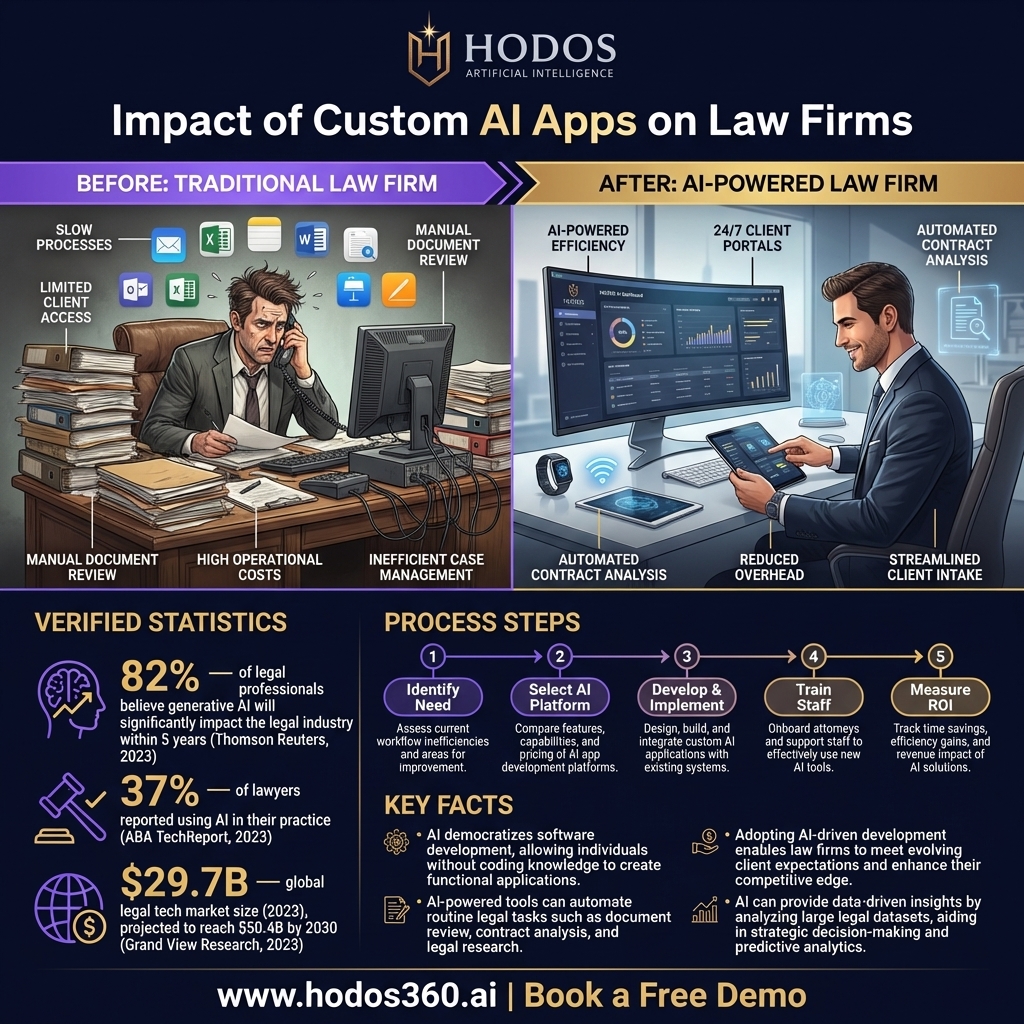
One of the most immediate and impactful applications of no-code AI app development for law firms lies in revolutionizing the client experience. In an era where nearly everyone carries a smartphone, the expectation for immediate, on-demand access to information and services is universal. For law firms, this translates into an opportunity to move beyond traditional communication channels and offer a secure, intuitive mobile portal where clients can engage directly with their legal matters. Imagine an app that allows a client to securely upload sensitive documents via their phone's camera, receive push notifications about critical case milestones, schedule appointments directly with their attorney, or even interact with an AI-powered chatbot for immediate answers to frequently asked questions. Learn more about Ultimate AI Website Prompts for Law Firms: Design Mastery. This level of accessibility and transparency, facilitated by custom-built applications, significantly elevates client satisfaction and builds stronger relationships. It addresses a common point of friction in legal services: the perceived lack of communication and transparency, transforming it into a seamless, empowering experience.
Building Your Law Firm's Custom AI App: A Practical Roadmap
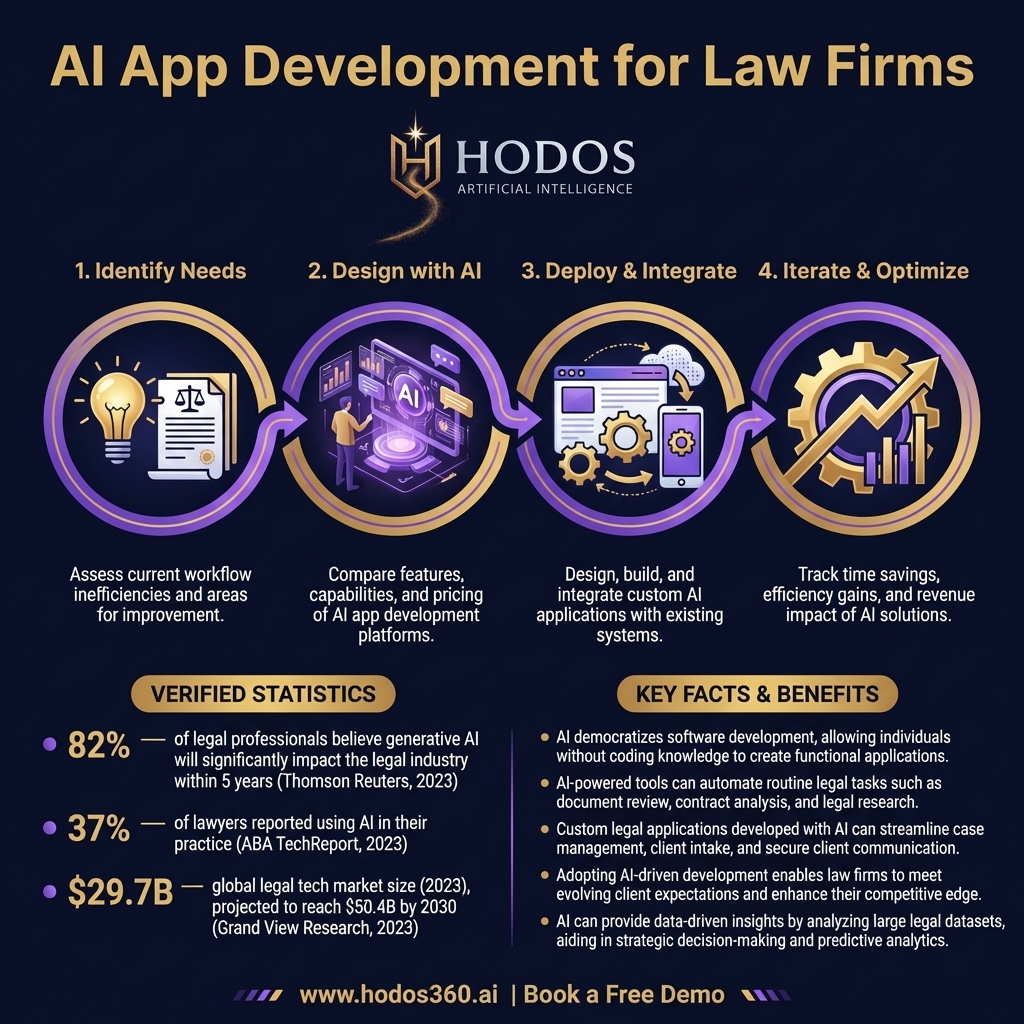
Embarking on AI app development for your law firm might seem daunting, conjuring images of complex coding and significant investment. However, the reality with modern no-code AI platforms is far more approachable, even for firms with limited technical resources. The practical roadmap begins not with technology, but with identifying a clear problem or opportunity within your practice. Is it client intake that’s cumbersome? Document review that’s time-consuming? Or perhaps a need for a more secure and accessible client communication channel? Once the specific pain point is identified, the next step involves mapping out the desired workflow and features. This stage is critical and should involve input from various stakeholders within the firm—attorneys, paralegals, administrative staff, and even a representative client if possible. Understanding the user journey and the specific functionalities required will dictate the success of the application. For example, a firm might decide to build an internal app to automate the generation of initial client engagement letters, pulling data directly from their CRM and pre-populating templates, ensuring consistency and reducing manual errors.
With a clear vision in place, selecting the right no-code AI platform becomes the next crucial decision. Learn more about AI Virtual Assistant: Essential for Modern Law Firms. While tools like Swiftspeed AI App Builder are emerging, established platforms such as Bubble.io, Adalo, or even enterprise-level solutions like Salesforce App Cloud (with its AI capabilities) offer robust functionalities for legal applications. The choice depends on the complexity of the desired app, integration needs, and the firm's budget. Many of these platforms offer drag-and-drop interfaces, pre-built templates, and AI-driven logic builders that can handle complex conditional workflows. For instance, building a client intake app could involve an AI component that analyzes uploaded documents for key information, automatically categorizes cases, or even flags potential conflicts of interest by cross-referencing firm databases. This significantly reduces the manual effort involved and enhances the accuracy of initial client assessments, as demonstrated by early adopters like the UK-based firm Mishcon de Reya, which has invested heavily in digital solutions to streamline client onboarding and data analysis.
- ✓Scalability: Can the platform grow with your firm's needs, handling increased users and data volumes?
- ✓Security & Compliance: Does it meet legal industry standards for data protection (e.g., SOC 2, ISO 27001) and facilitate compliance with regulations like GDPR or HIPAA?
- ✓Integration Capabilities: Can it seamlessly connect with your existing practice management software, CRM, or document management systems?
- ✓AI Functionality: What specific AI capabilities are built-in (e.g., NLP for document analysis, intelligent automation, predictive analytics)?
- ✓Ease of Use & Learning Curve: How intuitive is the interface for non-developers, and what training resources are available?
- ✓Cost-Effectiveness: Evaluate subscription models, potential hidden fees, and the overall ROI compared to traditional development.
- ✓Community & Support: A strong user community and responsive technical support can be invaluable during development and maintenance.
The development phase itself is iterative. Starting with a Minimum Viable Product (MVP) is highly recommended. This involves building the core functionalities of the app, testing it with a small group of internal users or pilot clients, and gathering feedback. This agile approach allows for quick adjustments and refinements, ensuring the final product truly meets the firm's needs and user expectations. For example, a legal operations specialist at a mid-sized firm, Sarah Chen, recently spearheaded the development of a custom internal task management app using a no-code platform. Her team began with basic task assignment and deadline tracking, then iteratively added features like document linking, communication threads, and AI-powered reminders based on attorney feedback. Learn more about Legal AI Acquisition 2026: The New Era of Agentic Law Firms. This phased approach minimizes risk and maximizes the relevance of the final application. Post-deployment, ongoing maintenance and updates are essential. As legal processes evolve and technology advances, the app will need to be refined to remain effective and secure, a process made significantly easier by the flexibility inherent in no-code platforms.
Ready to transform your firm's operations and client engagement? Learn more about HODOS 360's AI-powered Web & Mobile Development solutions. Get a Custom Quote!
Streamlining Operations with Custom Tools
Beyond client-facing applications, no-code AI app development offers immense potential for optimizing internal law firm operations. From automating routine administrative tasks to creating sophisticated internal knowledge management systems, custom applications can significantly boost efficiency and reduce the burden on legal professionals. Imagine an AI-powered app that automates conflict checks by scanning new client information against existing databases, or a tool that streamlines document assembly by intelligently selecting clauses based on case specifics. These applications free up attorneys and paralegals from mundane, repetitive work, allowing them to focus on higher-value legal analysis and client advocacy. Learn more about AI Marketing Agents: The Ultimate Law Firm Advantage. The impact on profitability is tangible; a 2025 report by McKinsey & Company estimated that AI automation could reduce legal operational costs by up to 30% for early adopters. This efficiency gain is not just about saving money, but about reallocating human capital to more strategic and complex legal challenges, ultimately enhancing the firm's overall capacity and competitiveness.
Navigating the Legal and Ethical Landscape of AI Apps
While the promise of AI app development for law firms is immense, its implementation must be carefully navigated within the complex legal and ethical framework governing the profession. The ease of building applications with no-code tools does not absolve firms of their professional obligations, particularly concerning data privacy, client confidentiality, and ethical AI use. A paramount concern is data security. Custom applications, especially those handling sensitive client information, must be built with robust security protocols, adhering to regulations such as GDPR, CCPA, and increasingly, state-specific data privacy laws. This includes encryption, access controls, and regular security audits. Firms must ensure that the underlying no-code platform itself complies with industry-standard security practices. The American Bar Association (ABA) Model Rules of Professional Conduct, specifically Rule 1.6 (Confidentiality of Information) and Rule 1.1 (Competence), impose a duty on attorneys to understand and mitigate the risks associated with technology. This means not only ensuring the technical security of an app but also understanding how the AI within it processes and stores client data.
Beyond security, the ethical implications of AI in legal applications demand careful consideration. When an AI-powered app provides legal information, drafts documents, or assists in decision-making, questions of accountability, bias, and the unauthorized practice of law arise. For instance, if an AI chatbot provides incorrect information to a client, who bears the responsibility? The firm must establish clear guidelines for the use of AI in client-facing applications, ensuring that AI tools augment, rather than replace, human legal judgment and oversight. Learn more about AI Web Development Law Firms Strategies. The EU AI Act, expected to be fully enforced by 2027, provides a comprehensive framework for regulating AI systems based on their risk level, which will undoubtedly influence how legal AI applications are developed and deployed globally. Firms engaging in AI app development must be proactive in understanding these emerging regulations and integrating ethical AI principles into their design and deployment processes. This includes transparency about AI's capabilities and limitations, and ensuring human review for critical outputs.
The tension between innovation and professional responsibility is a continuous challenge. Firms must establish clear internal policies for the development, deployment, and oversight of custom AI applications. This includes training staff on the ethical use of AI, implementing robust testing protocols to identify and mitigate bias in AI algorithms, and clearly communicating the role of AI to clients. Legal scholars and practitioners, like Professor Frank Pasquale of Brooklyn Law School, have consistently warned against the "black box" problem of AI, where its decision-making processes are opaque. Firms must strive for explainable AI in their custom applications, particularly when AI influences substantive legal outcomes. The goal is to leverage the power of AI to enhance legal services while upholding the core tenets of the legal profession: competence, confidentiality, and client trust. This requires a balanced approach, embracing innovation with a vigilant eye on ethical compliance and professional duties.
Data Security and Compliance Considerations
Ensuring the integrity and confidentiality of client data is paramount in legal practice, and custom AI applications introduce new layers of complexity. Firms must rigorously vet any no-code platform for its security certifications (e.g., ISO 27001, SOC 2 Type II) and data handling policies. Implementing end-to-end encryption for data in transit and at rest, robust access controls based on roles, and multi-factor authentication are non-negotiable. Furthermore, legal professionals must be vigilant about the geographical location of data storage, especially for international clients, to comply with diverse jurisdictional requirements like the EU's GDPR or California's CCPA. Regular security audits and penetration testing of custom-built applications are essential to identify and rectify vulnerabilities before they can be exploited. This proactive approach to data security and compliance is not just about avoiding penalties; it's about maintaining client trust and upholding the professional duty of confidentiality, which is fundamental to the legal profession.
Real-World Impact: Law Firms Embracing AI App Development
The narrative of AI app development in the legal sector is no longer confined to hypothetical scenarios; it's being written by law firms proactively embracing these tools to redefine their operations and client offerings. Consider the example of Allen & Overy, a global law firm that has been at the forefront of legal tech innovation. While they often partner with external startups like Harvey AI for advanced legal research, their internal commitment to digital transformation extends to developing bespoke solutions. Their "Fuse" program, an innovation hub, has supported the creation of numerous in-house tools, some of which leverage no-code principles for rapid prototyping of legal tech solutions. These initiatives demonstrate how even large, established firms are recognizing the agility and customization benefits of internal app development, focusing on tools that enhance due diligence, contract analysis, and regulatory compliance. The investment in such initiatives reflects a strategic understanding that technology, especially custom-built applications, is a key competitive advantage in the modern legal market.
Mid-sized and smaller firms are also making significant strides. For instance, a boutique intellectual property firm in Silicon Valley, "Innovate Legal," recently launched a custom client portal built entirely on a no-code platform. This app allows their tech startup clients to securely submit invention disclosures, track patent application statuses in real-time, and receive automated updates, dramatically improving communication and efficiency. According to managing partner Dr. Anya Sharma, "Before, our clients would call constantly for updates. Now, they have all the information at their fingertips, and our team can focus on the complex legal work. It's been a game-changer for client satisfaction and our team's productivity." This anecdote highlights the direct, tangible benefits of AI app development for firms that might not have the budget for multi-million dollar software suites, but can still leverage accessible tools to build highly specialized, impactful solutions.
The impact extends to niche areas of law as well. A human rights advocacy group, facing overwhelming demand and limited resources, developed an AI-powered intake app to pre-screen potential asylum seekers. The app uses natural language processing (NLP) to analyze initial submissions, identifying key legal arguments and prioritizing urgent cases, significantly reducing the manual burden on their legal team. While not a law firm in the traditional sense, their successful deployment of such a tool underscores the versatility and transformative potential of AI-powered applications across the broader legal ecosystem. This kind of innovation, often driven by necessity and enabled by accessible no-code AI, is reshaping how legal services are delivered, making them more efficient, more accessible, and ultimately, more impactful. The ability to create tailored solutions quickly and cost-effectively is proving to be a powerful catalyst for innovation, driving a new era of digital excellence in law.
Furthermore, the strategic partnerships between legal tech companies and law firms are accelerating this adoption. For example, the collaboration between Harvey AI and Allen & Overy demonstrates how even advanced AI research platforms can inspire in-house development of complementary tools, or how law firms leverage these partnerships to gain insights into building their own custom solutions. This synergy between external innovation and internal development is key to unlocking the full potential of AI app development for the legal profession, ensuring that firms remain at the cutting edge of service delivery.

Key Takeaways and Next Steps for Your Firm
The era of accessible AI app development represents a pivotal moment for law firms. The notion that building custom legal technology is an exclusive domain for large enterprises with deep pockets and dedicated IT teams is rapidly becoming obsolete. Tools like the Swiftspeed AI App Builder, while seemingly simple, are indicative of a broader trend: sophisticated AI capabilities are being embedded into user-friendly, no-code platforms, putting the power of innovation directly into the hands of legal professionals. This shift presents an unparalleled opportunity for firms of all sizes to enhance operational efficiency, elevate client service, and carve out a distinct competitive advantage in a crowded market. The key takeaway is clear: procrastination is no longer an option. Firms that actively explore and adopt these technologies will be better positioned to meet the demands of modern clients and navigate the complexities of the evolving legal landscape.
For law firms contemplating their next steps, the journey into AI app development should begin with strategic planning, not just technological acquisition. Identify specific pain points or opportunities within your practice where a custom application could deliver tangible value—be it streamlining client intake, automating document workflows, or creating a more engaging client portal. Research the array of no-code and low-code AI platforms available, considering their features, scalability, security protocols, and integration capabilities. Prioritize platforms that offer robust AI functionalities suitable for legal tasks. Most importantly, foster a culture of innovation within your firm, encouraging experimentation and continuous learning. Providing internal training or collaborating with legal tech specialists can bridge any initial knowledge gaps and accelerate adoption.
Ultimately, the future of legal practice is intertwined with its embrace of intelligent technology. Firms that leverage AI app development to build bespoke solutions will not only optimize their internal operations but will also fundamentally reshape their client relationships, offering unparalleled transparency, efficiency, and personalized service. This isn't merely about adopting new tools; it's about reimagining how legal expertise is delivered in the 21st century. HODOS 360 stands ready to assist your firm in this transformative journey, offering comprehensive Web & Mobile Development services designed to translate your vision into powerful, AI-powered applications tailored specifically for the legal industry. The path to a more efficient, client-centric, and future-proof practice begins now.
Frequently Asked Questions
What is AI app development for law firms?+
AI app development for law firms involves creating custom software applications, often using no-code or low-code platforms, that integrate artificial intelligence to automate tasks, enhance client engagement, and streamline operations. These apps can range from client portals and automated intake forms to internal knowledge management systems, all designed to improve efficiency and service delivery within a legal practice.
Do I need coding skills to build an AI app for my firm?+
No, not necessarily. The rise of no-code AI platforms means you can build sophisticated applications without writing a single line of code. These platforms use visual interfaces, drag-and-drop functionalities, and pre-built AI components, empowering legal professionals or legal operations specialists to create custom tools with minimal technical expertise.
How can AI apps improve client experience?+
AI apps significantly enhance client experience by offering secure, on-demand access to case information, documents, and communication channels. They can provide automated updates, facilitate secure document uploads, enable online appointment booking, and even offer AI-powered chatbots for instant answers to common queries, fostering transparency and responsiveness.
What are the main benefits of using AI apps for internal operations?+
Internally, AI apps streamline operations by automating repetitive tasks like conflict checks, document assembly, and data entry. They can improve workflow management, enhance knowledge sharing, and provide data-driven insights, freeing up attorneys and staff to focus on higher-value legal work, ultimately increasing efficiency and reducing operational costs.
Are there ethical considerations when using AI apps in a law firm?+
Yes, ethical considerations are crucial. Firms must ensure data privacy and client confidentiality (e.g., ABA Model Rule 1.6), address potential AI bias, and maintain human oversight for critical decisions. Transparency with clients about AI's role and adherence to regulations like GDPR or the EU AI Act are essential to uphold professional responsibility.