

AI Virtual Assistant: Essential for Modern Law Firms
In the fast-paced world of legal practice, every missed call can represent a lost opportunity, a potential client slipping through the cracks. Sarah Chen, the diligent managing partner at Innova Legal, knows this all too well. For years, her firm grappled with the challenge of after-hours inquiries and inconsistent lead follow-ups, leading to palpable frustration and a tangible impact on growth.
Her experience mirrors that of countless legal professionals who, despite their dedication, found themselves constrained by traditional operational models. Yet, a growing number of firms are now leveraging a game-changing solution that promises to redefine client engagement and operational efficiency: the AI Virtual Assistant.
This isn't merely about answering phones; it's about intelligent, proactive client interaction that never sleeps.
The broader business world has already embraced this shift, as evidenced by recent reports, such as Goodcall's feature on Constant Contact's adoption of AI Virtual Assistant technology to boost business. This trend underscores a pivotal moment for law firms: either adapt to these technological advancements or risk being outmaneuvered by competitors who are already harnessing the power of artificial intelligence to optimize their client touchpoints and internal processes.
The question is no longer *if* AI will impact your firm, but *how* comprehensively you choose to integrate it into your core operations.
Today, the AI Virtual Assistant stands as a testament to how technology can augment human capabilities, allowing legal professionals to focus on high-value tasks while ensuring no client inquiry goes unanswered.
This transformative tool is becoming an essential component for law firms aiming to enhance their client intake, streamline their operations, and maintain a competitive edge in an evolving legal market. From initial contact to lead qualification and appointment booking, these intelligent assistants are poised to revolutionize how law firms manage their most critical client interactions, ensuring seamless and efficient engagement around the clock.
The Transformative Shift to AI Voice Assistants in Legal Client Engagement
For decades, legal client intake has been a bottleneck, a labor-intensive process fraught with inefficiencies. Firms historically relied on human receptionists, often overwhelmed by the sheer volume of calls, especially during peak hours or after the workday concluded. The result? Missed calls, voicemail tag, and inconsistent initial client experiences, all contributing to a significant loss of potential revenue.
According to a 2023 ABA Legal Technology Survey Report, nearly 30% of small to mid-sized firms still rely solely on traditional phone answering, highlighting a critical vulnerability in their client acquisition strategy. Clients today, accustomed to instant gratification across all service sectors, expect immediate responses, and a delay can often mean they move on to the next firm in their search.
Early innovators in legal tech, such as Clio with its robust practice management suite, have long championed the importance of streamlining client touchpoints through automation, from online booking to automated reminders. Jack Newton, CEO and co-founder of Clio, has frequently emphasized that "client-centricity is the new competitive battleground for law firms."
However, even with these advancements, the initial, crucial interaction — the phone call — remained largely human-dependent. This created a tension between the desire for a personal touch and the undeniable need for scalable, 24/7 availability. Learn more about AI Legal Startup Sandstone: Unlocking 2026's Legal Tech Future.
The advent of sophisticated AI Voice Assistants offers a compelling resolution, effectively bridging this gap by providing intelligent, always-on engagement that can handle the initial influx of inquiries with precision and professionalism.
This shift is not merely an incremental improvement; it represents a fundamental rethinking of the client journey.
A Thomson Reuters report from 2024 revealed that law firms adopting AI-powered tools for client intake reported a 15-20% increase in lead conversion rates and significantly higher client satisfaction scores. Firms like Innova Legal, after integrating an AI Virtual Assistant, saw an immediate reduction in missed calls by over 90% and a noticeable improvement in the quality of qualified leads entering their pipeline.
This allows legal teams to focus their valuable time on substantive legal work, rather than administrative triage. The technology moves beyond simple automated responses, employing natural language processing to understand nuanced inquiries, creating a more professional and efficient first impression for prospective clients, regardless of when they call.
Beyond Basic Answering: Advanced Capabilities of AI Virtual Assistants for Law Firms
The modern AI Virtual Assistant for law firms is far more than a simple answering machine; it's a sophisticated, intelligent agent capable of performing a wide array of functions that were once exclusively the domain of human staff. Drawing inspiration from general AI advancements like Google Duplex's ability to book appointments with human-like conversation, these legal-specific solutions are engineered to understand complex legal inquiries and respond appropriately.
They excel in lead qualification, for instance, by asking targeted questions to ascertain the nature and urgency of a potential client's case – differentiating a serious personal injury claim from a general legal query – and then routing it to the most appropriate attorney or department.
This pre-screening dramatically reduces the time lawyers spend on unqualified leads, ensuring they focus on high-value prospects.
Furthermore, these advanced assistants offer seamless appointment booking, integrating directly with attorneys' calendars to schedule consultations without human intervention. This capability is particularly vital for busy legal professionals who often struggle to find time for scheduling amidst court appearances and client meetings.
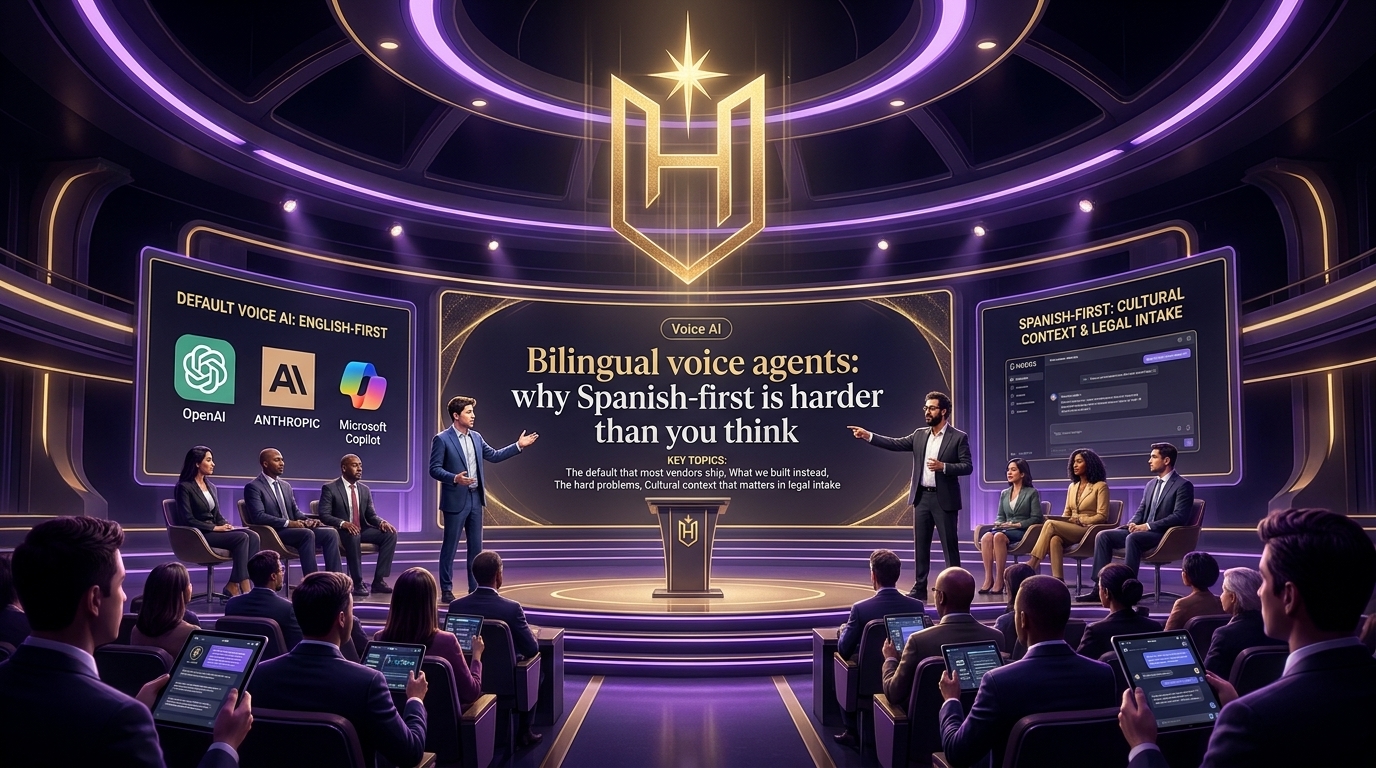
Beyond English, many AI Virtual Assistants provide robust multilingual support, a crucial feature in today's diverse legal landscape. A 2023 survey by the American Bar Association found that nearly 15% of legal inquiries in major U.S. cities came from non-English speakers, underscoring the necessity of breaking down language barriers to expand a firm's reach and provide equitable access to legal services.
Learn more about AI-Native Law Firms: The Ultimate Guide to Modern Legal Practice. This ensures that a firm can cater to a broader client base, regardless of their linguistic background.
Intelligent call routing is another cornerstone capability, ensuring that calls are directed to the correct department or individual based on the client's needs and the AI's qualification process.
This minimizes transfers and wait times, significantly enhancing the client experience. Moreover, these systems are adept at gathering essential client information during the initial call, populating it directly into a firm's case management system. This automation eliminates manual data entry, reducing the potential for human error and accelerating the client onboarding process.
The efficiency gains are substantial: a recent McKinsey report estimated that AI automation could free up to 30% of a legal professional's time currently spent on administrative tasks, allowing them to dedicate more resources to strategic legal work and client advocacy. This transformation is moving legal operations from reactive to proactive, ensuring that every client interaction is optimized for efficiency and positive outcomes.
Streamlining Legal Workflows with Intelligent Automation
The true power of an AI Virtual Assistant extends beyond the initial client contact; it lies in its ability to integrate seamlessly into and enhance the broader ecosystem of AI-powered legal workflows. By automating the initial data capture and lead qualification, these assistants feed vital information directly into a firm's AI Law Firm Management System, populating client profiles, initiating case files, and even triggering automated follow-up communications.

This level of integration ensures that the entire client journey, from first call to case resolution, is streamlined and efficient, minimizing the administrative burden on paralegals and junior associates.
This intelligent automation reduces the risk of human error in data transcription and ensures consistency across all client interactions.
For example, rather than a human receptionist manually inputting details from a phone call into a spreadsheet or CRM, the AI Virtual Assistant captures, categorizes, and transfers this information with precision, initiating the necessary steps for client onboarding or document generation. Learn more about Web Application Development: Essential AI Workflows Emerge.
This adherence to systematic processes not only boosts efficiency but also aligns with the spirit of ABA Model Rule 1.1 (Competence), which implicitly encourages lawyers to stay abreast of the benefits and risks associated with relevant technology. By leveraging such tools, firms demonstrate a commitment to utilizing competent means to deliver legal services, thereby enhancing their overall professional responsibility and client service.
The Competitive Edge: Law Firms Embracing AI for Sustainable Growth
In a legal market characterized by intense competition and evolving client expectations, the adoption of an AI Virtual Assistant is no longer a luxury but a strategic imperative for sustainable growth. Firms that hesitate to embrace this technology risk falling behind, losing valuable leads to more technologically advanced competitors who can offer 24/7 availability and instant responses.
The ability to scale operations without proportionally increasing overheads is a significant advantage, allowing smaller and mid-sized firms to compete effectively with larger, resource-rich institutions. This democratization of advanced tools echoes sentiments from leaders like Brad Smith, Microsoft's Vice Chair and President, who has consistently highlighted AI's potential to empower businesses of all sizes, making sophisticated capabilities accessible to a broader market.
Consider the stark contrast: Firm A, reliant on traditional methods, closes its doors at 5 PM, missing calls from potential clients who are only free to call in the evening. Firm B, equipped with an AI Virtual Assistant, is always open, capturing every lead, qualifying them, and scheduling appointments seamlessly.
The impact on lead generation and conversion is profound. This competitive dynamic is further amplified by the rapid innovation in the legal tech startup ecosystem, exemplified by companies like Harvey AI, which, backed by OpenAI, is pushing the boundaries of legal automation. Learn more about AI Voice Assistants: Essential Balance for Law Firms.
Their success signals a broader market shift where AI-driven efficiency is becoming a non-negotiable aspect of modern legal practice, influencing everything from marketing campaigns to daily operations.
Beyond just lead capture, the data collected by AI Virtual Assistants offers invaluable insights for ROI tracking and strategic decision-making.
Firms can analyze call patterns, lead qualification success rates, and conversion metrics to refine their AI-powered marketing strategies and allocate resources more effectively. This data-driven approach moves firms away from guesswork and towards optimized growth. Gartner projects that by 2027, generative AI will be embedded in 80% of enterprise applications, further solidifying its role across all industries, including legal.
Firms leveraging these tools are not just improving efficiency; they are building a resilient, future-proof operational model that consistently delivers superior client experiences and achieves measurable growth, transforming their practice management.
Enhancing Client Experience and Building Trust
While some might initially perceive an AI Virtual Assistant as a move away from the personal touch, its strategic implementation can actually enhance the client experience and build trust. The consistency, immediate responsiveness, and accurate information provided by an AI system often surpass what a human receptionist, working under pressure, can consistently deliver.
Clients appreciate promptness and clarity, and a well-designed AI ensures every interaction begins on a professional and efficient note. This consistent level of service fosters an environment of reliability, which is critical in the legal field where trust is paramount.
Moreover, the AI can be programmed to communicate with a tone that is both empathetic and professional, ensuring that even initial automated conversations convey a sense of care and understanding.
Learn more about AI Adoption: The Ultimate Guide for Law Firm Growth. This aligns perfectly with ABA Model Rule 1.4 (Communication), which mandates that lawyers keep clients reasonably informed about their representation and promptly comply with reasonable requests for information. While the AI doesn't provide legal advice, it facilitates this communication by ensuring initial inquiries are handled transparently and efficiently, setting a positive precedent for the client-attorney relationship.
By managing the initial triage effectively, the AI frees up human staff to engage more deeply and personally with clients when their expertise is truly needed, creating a more balanced and effective client service model.
- ✓24/7 Availability: Ensures no potential client call is missed, regardless of time zones or after-hours inquiries.
- ✓Intelligent Lead Qualification: Screens and prioritizes incoming calls, directing qualified leads to the appropriate legal professional.
- ✓Automated Appointment Booking: Integrates with calendars to schedule consultations seamlessly, reducing administrative burden.
- ✓Multilingual Support: Broadens client reach by communicating effectively in multiple languages, fostering inclusivity.
- ✓Data Collection & Integration: Gathers essential client information and populates it directly into case management systems, minimizing errors.
- ✓Customizable Workflows: Adapts to specific practice areas and firm needs, ensuring tailored and efficient client interactions.
- ✓Cost Efficiency: Reduces overheads associated with human receptionists and administrative staff, improving profitability.
Navigating Ethical and Practical Considerations of AI in Legal Intake
While the benefits of an AI Virtual Assistant are clear, law firms must navigate several crucial ethical and practical considerations to ensure responsible and compliant implementation. Paramount among these is data privacy and security. Law firms handle highly sensitive client information, making robust encryption and secure data handling protocols non-negotiable.
Firms must ensure that any AI solution they adopt complies with relevant data protection regulations, such as HIPAA for health-related information or the evolving privacy standards set forth by the EU AI Act enforcement, which carries significant implications for data processing and transparency even for non-EU firms interacting with EU citizens.
Another critical ethical consideration is transparency. Clients interacting with an AI Virtual Assistant should be clearly informed that they are speaking with an AI, not a human. This disclosure is vital for maintaining trust and avoiding any misrepresentation. Leaders in AI ethics, such as Sam Altman of OpenAI and Dario Amodei of Anthropic, consistently emphasize the importance of transparency and user understanding in AI interactions.
Furthermore, it is imperative that the AI is explicitly programmed *not* to provide legal advice. Learn more about AI Web Development: Essential Collaboration for Law Firms. Its role is to gather information, qualify leads, and facilitate communication, never to offer interpretations of law or specific counsel.
This distinction is crucial to avoid unauthorized practice of law and to uphold professional responsibility.
From a practical standpoint, firms must also consider the quality of the AI's natural language processing. A poorly performing AI can lead to client frustration and damage the firm's reputation.
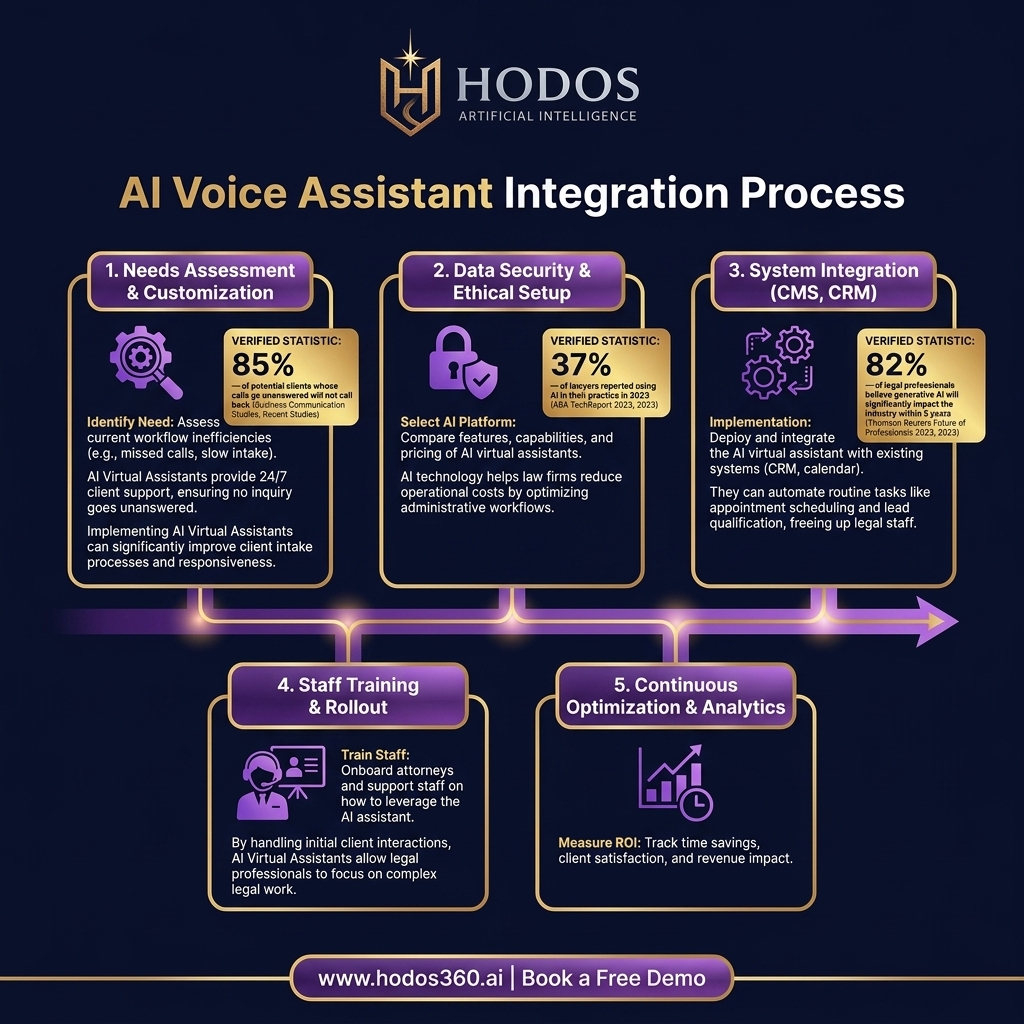
Therefore, thorough testing and continuous refinement are essential. Firms should also establish clear protocols for when and how an AI interaction transitions to a human, ensuring a seamless handover for complex or sensitive inquiries. The integration of such a system requires careful planning, robust cybersecurity measures, and ongoing training for human staff on how to best leverage the AI's capabilities while adhering to the highest ethical standards.
This holistic approach ensures that the AI Virtual Assistant acts as a powerful tool for augmentation, rather than a source of potential liability or client dissatisfaction.
The Importance of Seamless Integration and Customization
An AI Virtual Assistant cannot operate effectively in isolation; its true value is unlocked through seamless integration with a firm's existing technological ecosystem. This includes linking with case management, billing, and client intake systems to ensure a unified and efficient workflow. Imagine an AI that qualifies a lead, books an appointment, and then automatically creates a new client file in your practice management software, populating it with all captured information – this is the power of a truly integrated solution.
Without this, the AI becomes another siloed tool, failing to deliver its full potential for optimizing practice management.
Moreover, customization is key. Each law firm has unique practice areas, client demographics, and operational nuances. A generic AI chatbot designed for general business will fall short of the specific requirements of legal intake.
Firms need solutions that can be tailored to understand legal terminology, manage specific intake questionnaires for different case types (e.g., family law vs. corporate litigation), and align with the firm's specific brand voice. This is where comprehensive platforms offering not just AI Voice Assistants, but also an AI Law Firm Management System and even Web & Mobile Development for building high-converting legal websites, become invaluable.
Such integrated platforms ensure that the AI is not just a tool, but a cohesive part of a firm's strategy for automated client communication and holistic growth.

Key Takeaways and Next Steps for Forward-Thinking Law Firms
The legal landscape is undeniably shifting, and the AI Virtual Assistant is emerging as a cornerstone technology for firms looking to thrive in this new era. From enhancing client engagement and streamlining legal workflows to providing a robust competitive edge and ensuring 24/7 operational efficiency, the benefits are clear and compelling.
The narrative of firms like Innova Legal, transforming their client intake from a point of weakness to a source of strength, underscores the tangible impact of these intelligent tools. This isn't about replacing the irreplaceable human element of legal practice, but rather augmenting it, freeing attorneys and staff to focus on the complex, nuanced work that truly requires their expertise.
For forward-thinking law firms, the next step is not to debate the inevitability of AI, but to strategically evaluate how an AI Virtual Assistant can be integrated into their existing operations. Begin by assessing your current client intake pain points: Are you missing calls? Are leads consistently qualified?
Is your team spending too much time on administrative tasks? Identifying these areas will illuminate where AI can provide the most immediate and significant impact. The goal is to create a more responsive, efficient, and client-centric practice that is prepared for the demands of the modern legal market.
Platforms like HODOS 360 offer an integrated suite of AI-powered services, including advanced AI Voice Assistants, designed specifically to meet these evolving needs, ensuring your firm remains at the forefront of legal innovation.
Frequently Asked Questions
What exactly is an AI Virtual Assistant for law firms?+
An AI Virtual Assistant for law firms is an intelligent, automated system designed to handle initial client communications, primarily via phone. It uses natural language processing to understand inquiries, qualify leads, book appointments, and route calls, ensuring 24/7 availability and efficient client intake without human intervention for routine tasks. It acts as an always-on digital receptionist.
How does an AI Virtual Assistant handle sensitive client information?+
Reputable AI Virtual Assistants for law firms employ robust security measures, including end-to-end encryption and compliance with data privacy regulations like HIPAA. They are designed to collect necessary information securely and integrate it into a firm's protected case management system, ensuring client confidentiality and data integrity. Transparency about data handling is also a key ethical consideration.
Can an AI Virtual Assistant give legal advice?+
No, an AI Virtual Assistant is strictly designed not to provide legal advice. Its function is to gather information, qualify potential clients, answer frequently asked questions, and facilitate communication between the client and a human attorney. It is programmed to identify when a legal opinion or counsel is required and to escalate the interaction to a qualified legal professional.
What's the typical ROI for a law firm implementing an AI Virtual Assistant?+
The ROI for implementing an AI Virtual Assistant can be significant, often seen through reduced operational costs (e.g., lower receptionist salaries), increased lead conversion rates due to 24/7 availability, improved client satisfaction, and more efficient staff utilization. Firms often report a noticeable increase in qualified leads and a decrease in administrative overhead within months of deployment.
How long does it take to integrate an AI Virtual Assistant into an existing firm?+
Integration time varies depending on the complexity of the firm's existing systems and the level of customization required. Typically, a basic setup and deployment can take a few weeks to a couple of months. Comprehensive integration with existing case management software and full customization of scripts and workflows might extend this period, but most solutions offer a phased implementation.
Can AI Virtual Assistants support multiple languages?+
Yes, many advanced AI Virtual Assistants offer robust multilingual support. This capability is crucial for law firms serving diverse communities, allowing them to engage with potential clients in their native language. Multilingual support expands a firm's reach, improves accessibility, and enhances the client experience by removing language barriers in initial interactions.