
AI Adoption: The Ultimate Guide for Law Firm Growth
The legal industry stands at a pivotal juncture, grappling with both the promises and perils of artificial intelligence. Just last month, the 'New England Biz Law Update' prominently declared, "AI adoption surges across legal industry," a headline that merely scratches the surface of a profound, accelerating shift.
This isn't just a trend; it's a fundamental redefinition of legal practice, driven by the imperative for greater efficiency, precision, and client responsiveness. Firms that once viewed AI with skepticism, like many, are now recognizing its undeniable potential to revolutionize operations, from the minutiae of document review to the strategic foresight of case management.
The competitive landscape is being redrawn, and those who delay risk being left behind in an increasingly AI-powered legal ecosystem.
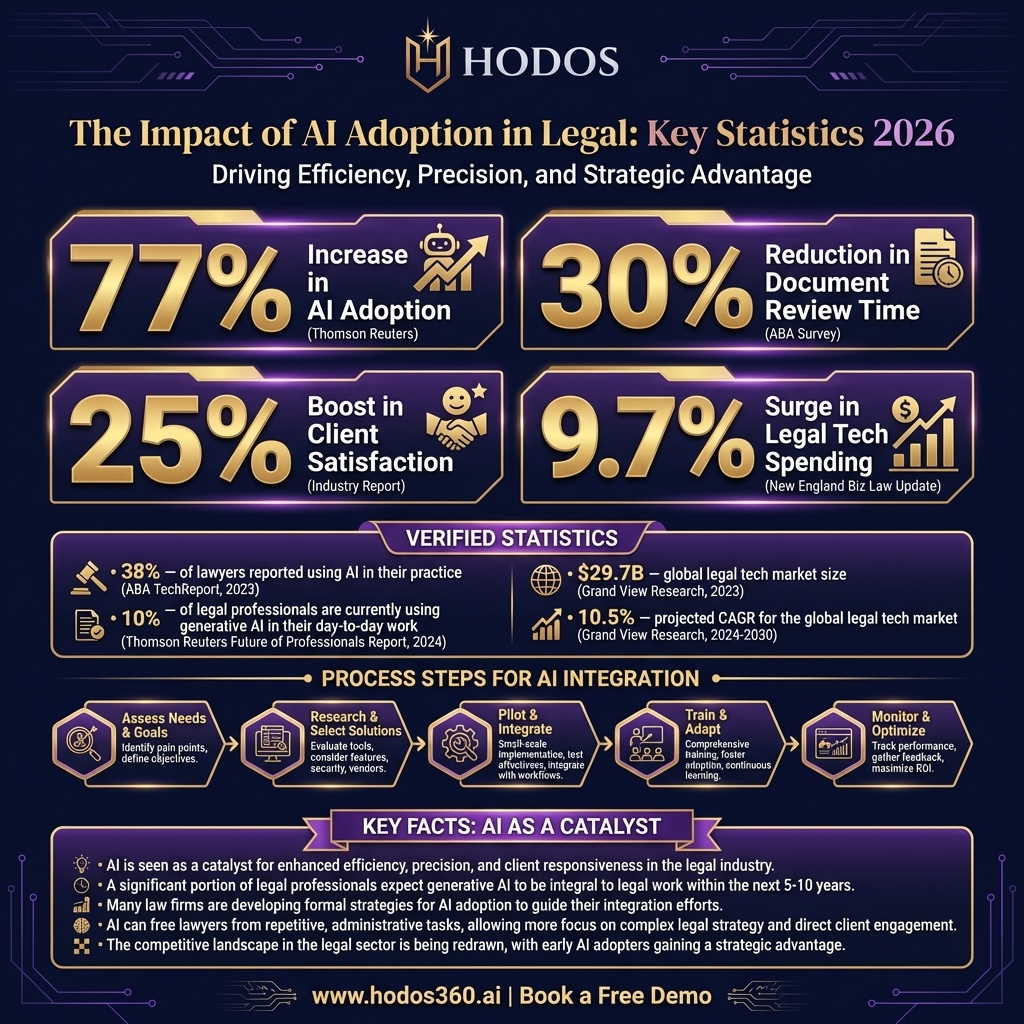
Indeed, the data corroborates this narrative of rapid transformation. A recent 2026 Thomson Reuters Institute report revealed a staggering 77% increase in AI adoption among US legal organizations over the past two years, with spending on legal tech surging by 9.7% annually.
This surge isn't confined to large corporate firms; it's permeating mid-sized and even boutique practices, driven by a new generation of legal professionals eager to shed the burdens of manual, repetitive tasks. As Jack Newton, CEO of Clio, a pioneer in cloud-based legal practice management, often emphasizes, "The future of law is client-centered, and technology is the key to unlocking that focus."
AI is now the most potent key in that toolkit, promising to free lawyers from administrative overhead, allowing them to dedicate more time to complex legal strategy and direct client engagement, areas where human expertise remains irreplaceable.
This comprehensive guide delves into the multifaceted ways AI is reshaping the legal sector, offering actionable insights for law firm owners and attorneys.
We will explore how AI is not just a tool for automation but a catalyst for strategic growth, enhanced client satisfaction, and a more sustainable practice model. From streamlining complex workflows to revolutionizing marketing and client communication, AI's impact is broad and deep. By understanding these shifts, legal professionals can strategically integrate AI solutions, ensuring their firms remain competitive, efficient, and forward-thinking in this new era.
The time for passive observation is over; the era of active AI integration in legal practice is here.
The Unstoppable Surge of AI in Legal Operations
The momentum behind AI adoption in the legal industry is undeniable, moving beyond experimental phases to become an integral part of daily operations for many firms. This rapid integration is largely fueled by AI's proven ability to tackle some of the most time-consuming and resource-intensive legal tasks.
For instance, generative AI tools, exemplified by platforms like Harvey AI, which famously partnered with Allen & Overy, are drastically shortening the time required for legal research, contract analysis, and due diligence. Lawyers who once spent hours sifting through thousands of documents can now leverage AI to identify relevant clauses, flag inconsistencies, and summarize key information in minutes, a paradigm shift that redefines productivity benchmarks.
This efficiency gain is not merely incremental; it's exponential, allowing firms to handle larger caseloads without proportional increases in staffing, thereby optimizing resource allocation and improving profitability.
The competitive landscape is intensifying, creating a clear division between firms embracing AI and those clinging to traditional methods.
Firms like Gunderson Dettmer, known for their work with startups and venture capital, have openly discussed their early adoption of AI tools to accelerate dealmaking and provide quicker insights to their tech-savvy clients. This proactive stance isn't just about efficiency; it's about delivering a superior client experience.
When clients demand speed and cost-effectiveness, AI-powered firms can meet these expectations, while their slower counterparts struggle to keep pace. The strategic advantage gained through AI adoption is becoming a key differentiator in attracting and retaining top-tier clients, particularly in fast-moving sectors where legal advice must be delivered with unprecedented agility.
Beyond specific tasks, AI is fundamentally reshaping the structure of legal workflows. Learn more about AI Voice Assistants: Essential Balance for Law Firms. From initial client intake to final case resolution, AI-powered platforms are creating seamless, automated processes that reduce human error and enhance consistency.
Consider the impact on streamlined client intake: AI can automate the collection of client information, conflict checks, and initial case assessments, freeing up paralegals and junior attorneys for more complex analytical work. This not only accelerates the onboarding process but also improves the accuracy of data, laying a solid foundation for the entire legal matter.
The integration of AI into these foundational processes ensures that every step of a legal case is managed with optimal efficiency and precision, from documentation to billing.
Furthermore, the increasing sophistication of AI models, driven by massive investments from tech giants like Microsoft and Google, means these tools are becoming more intuitive and reliable.
Microsoft's partnership with legal tech providers, for example, is bringing advanced AI capabilities directly into familiar legal environments, making the transition smoother for attorneys. This broader industry trend suggests that AI will soon be an expected component of any modern law firm's infrastructure, not an optional add-on.
Firms that proactively integrate AI-powered legal workflows are not just adapting to the future; they are actively shaping it, establishing new standards for legal service delivery and operational excellence. This proactive approach is crucial for maintaining relevance and competitiveness in a rapidly evolving market.
Transforming Law Firm Operations with AI Management Systems
The core of modern law firm efficiency lies in robust management systems, and AI is elevating these platforms to unprecedented levels of capability. An AI Law Firm Management System integrates various operational facets—case management, billing, client intake, document automation, and calendaring—into a cohesive, intelligent ecosystem.
This goes far beyond mere digitization; it involves AI actively learning from historical data, predicting potential bottlenecks, and suggesting optimal pathways for case progression. For instance, AI can analyze past cases to identify patterns in litigation outcomes, helping attorneys better advise clients on strategy and potential risks.
It can also flag potential billing discrepancies or predict cash flow, providing critical financial insights previously requiring extensive manual analysis.
Document automation, powered by AI, is a game-changer for legal practices burdened by repetitive paperwork. Instead of manually drafting standard contracts, pleadings, or discovery requests, attorneys can leverage AI to generate these documents with remarkable speed and accuracy, pulling relevant data directly from case files.
This significantly reduces the time spent on drafting and proofreading, minimizing human error and ensuring consistency across all firm outputs. Firms can customize templates, and AI ensures compliance with specific jurisdictional requirements and client preferences, thereby enhancing both efficiency and the quality of legal documentation.
This frees up valuable attorney time, allowing them to focus on the nuanced legal arguments and client interactions that truly differentiate their services.
AI-powered legal workflows are not just about automation; they are about intelligent automation that adapts and improves over time. Learn more about AI Marketing: Essential Strategies for Law Firm Growth.
Imagine a system that automatically assigns tasks based on attorney workload and expertise, tracks deadlines with predictive alerts, and even analyzes client communications for sentiment to identify potential issues before they escalate. Such a system ensures that no critical deadline is missed, no task falls through the cracks, and every team member is optimally utilized.
This level of operational foresight and control was once aspirational, but with current AI capabilities, it is becoming a standard feature of leading legal management platforms, allowing firms to operate with unparalleled precision and responsiveness.
Beyond internal efficiencies, AI management systems are also enhancing the client experience.
By automating routine inquiries and providing transparent access to case progress, firms can improve client satisfaction and communication. For example, AI can power client portals that offer real-time updates on case status, document sharing, and secure messaging, reducing the need for constant phone calls and emails.
This proactive communication, driven by AI, fosters trust and transparency, strengthening the client-attorney relationship. The integration of AI into every layer of law firm management ensures that firms are not only operating more efficiently but are also delivering a superior, more responsive service to their clients.
- ✓Case Management Efficiency: AI analyzes case data to predict outcomes, suggest strategies, and automate task assignments, optimizing resource allocation.
- ✓Automated Billing & Financial Forecasting: AI streamlines invoicing, tracks billable hours, and provides predictive cash flow analysis, improving financial health.
- ✓Intelligent Client Intake: AI automates data collection, conflict checks, and initial assessments, accelerating client onboarding and improving data accuracy.
- ✓Advanced Document Automation: AI generates precise legal documents from templates, reducing drafting time and ensuring compliance with jurisdictional rules.
- ✓Predictive Calendar & Deadline Management: AI provides smart alerts for deadlines, court dates, and appointments, minimizing the risk of missed critical events.
- ✓AI-Powered Legal Workflows: AI learns from historical data to optimize processes, identify bottlenecks, and recommend efficient pathways for legal matters.
- ✓Enhanced Client Communication: AI-driven portals offer real-time case updates and secure messaging, improving transparency and client satisfaction.
Integrating AI for Enhanced Case Management and Billing
The power of AI in case management extends to its ability to process vast amounts of unstructured data—from deposition transcripts to expert reports—and distill critical insights. This capability is paramount in complex litigation, where identifying key evidence or contradictory statements can be needle-in-a-haystack work. AI platforms can rapidly cross-reference documents, identify relevant precedents, and even flag potential risks or opportunities that human review might miss.
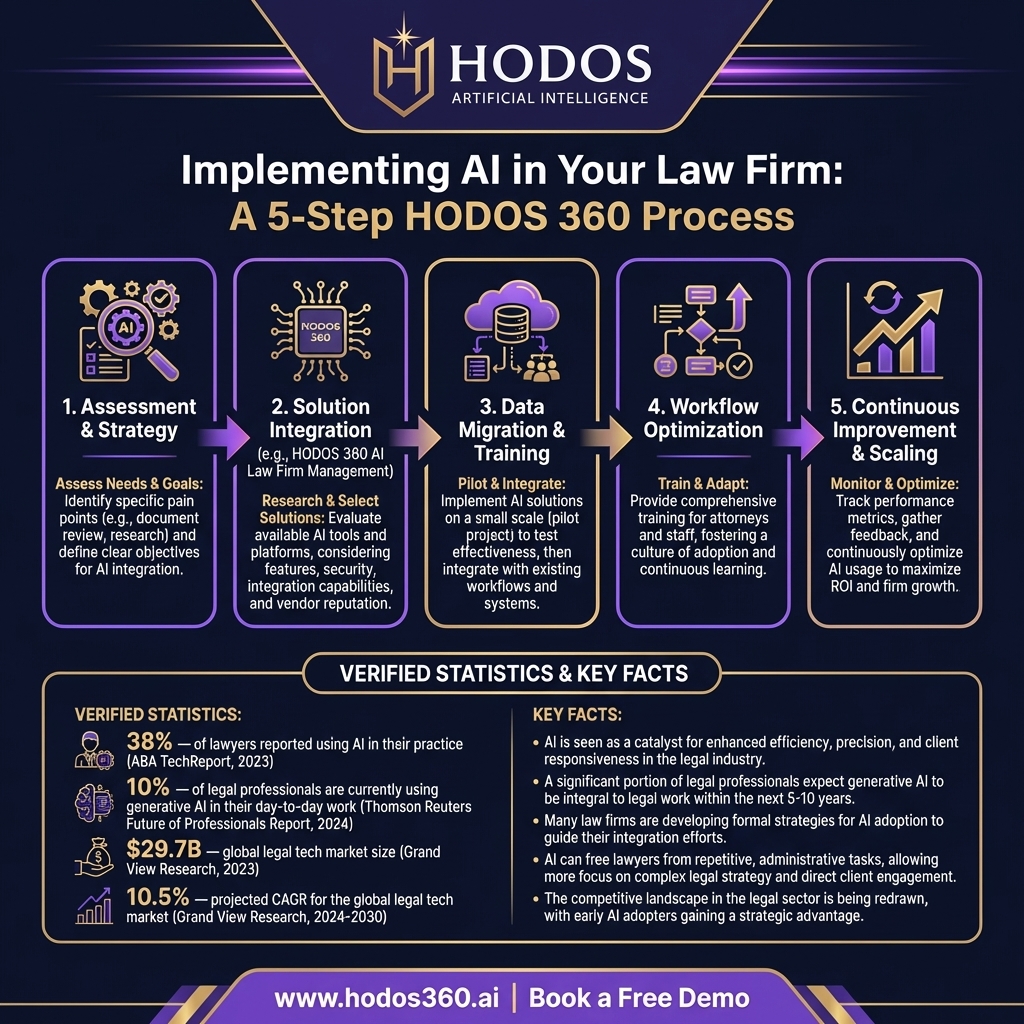
This analytical depth empowers attorneys to build stronger cases, anticipate opposing counsel's moves, and strategize more effectively, ultimately leading to better outcomes for clients. The integration of such tools ensures that every case is managed with maximum informational advantage.
In the realm of billing, AI offers solutions to persistent challenges such as leakage, inaccurate time tracking, and inefficient invoicing.
Learn more about AI Marketing Automation: An Essential Guide for Law Firms. AI-powered systems can automatically track billable hours with greater precision, categorize expenses, and even identify non-billable time spent on tasks that could be automated. This not only ensures accurate billing but also provides valuable data on attorney productivity and firm profitability.
By analyzing billing patterns, AI can help firms optimize their pricing strategies, identify areas for cost reduction, and forecast revenue with greater accuracy. This financial intelligence is crucial for sustainable growth, allowing firms to make data-driven decisions about staffing, investments, and overall business strategy.
Navigating Ethical AI in Legal Practice: Competence and Confidentiality
As AI adoption surges, so too does the imperative for ethical considerations. The legal profession, bound by stringent rules of conduct, must meticulously navigate the implications of AI on competence and confidentiality. The American Bar Association (ABA) Model Rules of Professional Conduct, particularly Rule 1.1 (Competence), mandates that lawyers provide competent representation, which now implicitly includes understanding the benefits and risks associated with relevant technology.
This means attorneys are professionally obligated to educate themselves on how AI tools function, their limitations, and how to use them responsibly. The failure to do so could lead to malpractice claims, especially if a lack of technological understanding compromises client representation or leads to significant errors in AI-generated output.
Confidentiality, governed by ABA Model Rule 1.6, presents another critical ethical frontier. When using AI tools, especially those that rely on cloud-based processing or large language models, firms must ensure that client data remains protected from unauthorized access or disclosure. This requires careful vetting of AI vendors, understanding their data security protocols, and implementing robust internal policies for data anonymization or redaction before inputting sensitive information into AI systems.
For example, the use of public-facing generative AI tools for client work without proper safeguards could inadvertently expose confidential client information, leading to severe ethical breaches and reputational damage. Firms must prioritize data governance and security as paramount when integrating AI solutions, ensuring that client trust is never compromised for the sake of technological advancement.
Beyond these foundational rules, the specter of AI bias looms large. Learn more about AI Web Development: Ultimate Guide to Law Firm Lead Generation. AI models are trained on vast datasets, and if these datasets reflect historical biases present in legal documents or societal data, the AI itself can perpetuate or even amplify those biases.
This could manifest in discriminatory outcomes in areas like predictive policing, bail recommendations, or even contract analysis if the AI disproportionately flags certain demographic groups or legal entities. Attorneys have an ethical duty to ensure fairness and avoid discrimination, which means critically evaluating the outputs of AI tools and understanding their potential for bias.
This requires a human-in-the-loop approach, where human oversight and judgment remain central to validating AI-generated recommendations and ensuring equitable application of the law.
Furthermore, the transparency, or lack thereof, in certain AI algorithms poses challenges for accountability. The "black box" nature of some advanced AI systems makes it difficult to understand *how* they arrive at specific conclusions, which can complicate a lawyer's duty to explain legal advice to clients.
Firms must seek AI solutions that offer explainability and auditability, allowing legal professionals to trace the reasoning behind AI-generated insights. This ensures that attorneys can fulfill their professional obligations to fully inform clients and remain ultimately responsible for the advice given, regardless of the technological assistance received.
Navigating these ethical complexities requires a proactive and informed approach, balancing innovation with the unwavering commitment to justice and client advocacy.
Ensuring Data Privacy and Security with AI Tools
The integration of AI into legal operations necessitates a heightened focus on data privacy and security, as mandated by statutes like the California Consumer Privacy Act (CCPA) and the European Union's General Data Protection Regulation (GDPR). Legal firms process some of the most sensitive personal and proprietary information, making them prime targets for cyberattacks.
AI tools, while offering immense benefits, also introduce new vectors for data risk if not properly managed. This means implementing end-to-end encryption for data in transit and at rest, conducting regular security audits of AI platforms, and ensuring compliance with all relevant data protection laws.
Moreover, firms must establish clear protocols for employee training on AI usage and data handling. Learn more about AI-Native Law Firms: The Ultimate Guide to Thriving in a New Era. Even the most secure AI system can be compromised by human error or negligence. Regular workshops and mandatory compliance modules on data privacy, cybersecurity best practices, and the responsible use of AI are essential.
By fostering a culture of security awareness, firms can mitigate risks associated with AI adoption and safeguard the confidential information entrusted to them by clients, ensuring that technological advancement never comes at the expense of privacy or trust.
The Competitive Edge: Marketing & Client Engagement with AI
In today's competitive legal market, a strong online presence and proactive client engagement are no longer optional—they are essential. AI is rapidly transforming how law firms attract new clients and nurture existing relationships. An AI Marketing Platform can automate content generation, manage social media, create compelling AI video creation for law firms, and track the return on investment (ROI) of marketing efforts with unprecedented precision.
Instead of dedicating countless hours to drafting blog posts or social media updates, firms can leverage AI to generate high-quality, SEO-optimized content tailored to specific legal topics and target audiences. This not only saves time but also ensures a consistent and impactful digital footprint, reaching potential clients where they are most active.
AI-powered social media automation allows firms to schedule posts, analyze engagement metrics, and even identify trending legal topics to inform content strategy. This ensures that a firm's online presence remains dynamic and relevant, capturing the attention of prospective clients. Furthermore, AI can personalize outreach, segmenting potential clients based on their specific legal needs and engaging them with targeted messages.
This level of personalized marketing, once the exclusive domain of large corporations, is now accessible to law firms of all sizes, enabling them to build stronger connections and convert leads more effectively. The data-driven insights provided by AI marketing platforms allow firms to continuously refine their strategies, ensuring maximum impact for every marketing dollar spent.
Beyond digital marketing, AI is revolutionizing direct client engagement through sophisticated voice assistants. Learn more about Voice Assistant Market: An Essential Guide for Law Firms. AI Voice Assistants offer 24/7 phone answering, ensuring that no potential lead or urgent client query goes unanswered. These intelligent assistants can qualify leads, book appointments, and even provide multilingual support, significantly expanding a firm's reach and accessibility.
For example, a prospective client calling after hours can be seamlessly guided through an initial intake process, have an appointment scheduled, and receive immediate answers to common questions, all without human intervention. This capability is particularly crucial in high-stakes legal matters where timely response can be the difference between securing a client and losing them to a competitor.
Moreover, AI voice assistants can intelligently route calls to the appropriate department or attorney, ensuring clients connect with the right expert immediately. This reduces client frustration and improves the overall efficiency of internal communication. By handling routine inquiries, AI frees up administrative staff and attorneys to focus on more complex tasks, enhancing productivity across the firm.
The ability of AI to provide consistent, high-quality, and instant support around the clock fundamentally reshapes client service expectations, setting a new benchmark for responsiveness and accessibility in the legal industry. Firms leveraging these AI-powered tools are not just improving efficiency; they are building a reputation for cutting-edge service and client-centricity.
Building a Strong Online Presence with AI-Powered Web Development
A firm's website is its digital storefront, and AI is making it more dynamic, responsive, and conversion-focused than ever before. Web & Mobile Development powered by AI can build sophisticated, responsive website development with SEO optimization and high-converting templates. AI can analyze user behavior on a firm's website, identifying navigation patterns, popular content, and points of friction.
This data then informs AI-driven design adjustments, ensuring the website is constantly optimized for user experience and lead generation. This iterative optimization means a firm's website is always performing at its peak, attracting more visitors and converting them into clients.
Furthermore, AI-powered SEO optimization ensures that a firm's website ranks highly in search engine results for relevant keywords, driving organic traffic.
AI can identify trending search terms, analyze competitor strategies, and suggest content improvements to boost visibility. This proactive approach to SEO is critical for attracting new clients who typically begin their legal search online. By combining intuitive design with powerful SEO, AI-driven web development creates a formidable online presence that serves as a constant source of new business, making the firm highly discoverable and compelling to potential clients.
Future-Proofing Your Firm: Strategic AI Integration
The strategic integration of AI is no longer a luxury but a necessity for future-proofing law firms against an ever-evolving legal landscape. Firms must move beyond ad-hoc tool adoption to a holistic, firm-wide AI strategy. This begins with a thorough assessment of existing workflows, identifying areas where AI can deliver the most significant impact, whether it's in automating administrative tasks, enhancing legal research, or improving client communication.
A well-defined strategy considers the firm's specific practice areas, client base, and growth objectives, ensuring that AI investments align with the overall business vision. This forward-thinking approach is what distinguishes market leaders from those merely reacting to change.
Successful AI integration also hinges on cultivating an AI-literate workforce.
This involves continuous training and professional development to equip attorneys and staff with the skills to effectively utilize AI tools. It's not about replacing human lawyers but augmenting their capabilities, empowering them to focus on higher-value tasks that require critical thinking, empathy, and strategic judgment.
Firms that invest in their people's AI proficiency will foster a culture of innovation, ensuring smooth adoption and maximizing the return on their AI investments. This commitment to human capital development alongside technological advancement is crucial for long-term success.
Moreover, firms must establish clear governance frameworks for AI usage, addressing ethical considerations, data security, and compliance with professional rules.
This includes developing internal policies on data input into AI systems, reviewing AI-generated outputs, and ensuring client consent where necessary. As Dario Amodei, CEO of Anthropic, a leading AI safety company, often emphasizes, "Responsible AI development is not just about technical capability, but about aligning systems with human values and societal norms."
For law firms, this translates into establishing guardrails that uphold the highest standards of legal ethics and client protection, ensuring that AI serves as an ethical partner in justice.
Finally, the path to future-proofing involves a commitment to continuous innovation and adaptation. The AI landscape is dynamic, with new tools and capabilities emerging constantly.
Firms must remain agile, regularly evaluating new AI solutions, and being prepared to iterate on their strategies. This might involve piloting new technologies, gathering feedback from users, and scaling successful implementations across the firm. By embracing a mindset of continuous learning and evolution, law firms can not only navigate the current wave of AI disruption but also position themselves as pioneers, ready to leverage the next generation of legal technology.
The future of law is intertwined with AI, and proactive, strategic integration is the key to thriving.

Key Takeaways and Next Steps for Your Firm
The undeniable surge in AI adoption legal industry is not merely a passing trend but a fundamental shift demanding immediate attention from law firm leaders. As the 2026 Thomson Reuters report highlights, firms that embrace AI are already gaining a significant competitive edge, experiencing enhanced efficiency, deeper insights, and superior client engagement.
The choice is clear: either strategically integrate AI to future-proof your practice or risk being outpaced by more agile, tech-forward competitors. This means moving beyond piecemeal solutions to a holistic strategy that leverages AI across operations, marketing, and client service. For firms seeking to make this transition seamlessly and effectively, platforms like HODOS 360 offer an integrated suite of AI-powered services designed specifically for the legal sector, from AI Law Firm Management Systems to AI Voice Assistants and AI Marketing Platforms.
The time to act is now, transforming challenges into opportunities for unprecedented growth and lasting success in the modern legal landscape.
Frequently Asked Questions
What is AI adoption in the legal industry?+
AI adoption in the legal industry refers to the integration of artificial intelligence technologies into law firm operations and legal services. This includes using AI for tasks like legal research, document review, contract analysis, case management, client intake, marketing automation, and virtual assistants. The goal is to enhance efficiency, accuracy, reduce costs, and improve client satisfaction by automating repetitive tasks and providing data-driven insights to legal professionals.
How can AI improve law firm efficiency?+
AI significantly boosts law firm efficiency by automating time-consuming tasks. It can rapidly analyze vast amounts of legal data for research and due diligence, automate document generation, streamline client intake processes, and manage calendars with predictive alerts. This frees up attorneys and staff to focus on complex legal strategy, client interaction, and other high-value activities, leading to faster case resolution and increased productivity across the firm.
What are the ethical considerations for AI in law?+
Ethical considerations for AI in law primarily revolve around competence (ABA Model Rule 1.1) and confidentiality (ABA Model Rule 1.6). Firms must ensure attorneys are competent in using AI tools responsibly, understanding their limitations and potential for bias. Protecting client data when using AI, especially with cloud-based services, is paramount to maintain confidentiality. Transparency in AI's decision-making and avoiding discriminatory outputs are also critical ethical concerns.
Can AI help with legal marketing and client engagement?+
Yes, AI can revolutionize legal marketing and client engagement. AI Marketing Platforms can automate content creation, manage social media, and track campaign ROI. AI Voice Assistants offer 24/7 phone answering, lead qualification, and appointment booking, ensuring no client inquiry is missed. AI-powered website development optimizes SEO and user experience, driving lead generation. These tools enable firms to attract new clients and provide superior, responsive service.
How does HODOS 360 support AI integration for law firms?+
HODOS 360 provides a comprehensive AI-powered platform designed for law firms. Its services include an AI Law Firm Management System for case management, billing, and document automation; an AI Marketing Platform for content and social media; AI Voice Assistants for 24/7 client support; and Web & Mobile Development for optimized online presence. HODOS 360 aims to offer an integrated solution to drive efficiency, growth, and client satisfaction for legal professionals.